ASIPP Submits Comment Letters to CMS on Key CY 2027 Medicare Policies
The American Society of Interventional Pain Physicians (ASIPP) has submitted four comment letters to the Centers for Medicare & Medicaid Services (CMS) addressing important policy, payment, and coding issues affecting interventional pain physicians, independent practices, ambulatory surgery centers, and Medicare beneficiaries.
The letters address the CY 2027 Physician Fee Schedule proposed rule, the Ambulatory Specialty Model (ASM), proposed changes to ambulatory surgical center payments and neuromodulation procedure reimbursement, and CMS’s Request for Information regarding the Current Procedural Terminology (CPT) coding and valuation process.
Across these comments, ASIPP continues to advocate for appropriate reimbursement, preservation of independent practices, continued beneficiary access to non-opioid interventional pain care, and greater transparency and fairness in Medicare payment and coding policies.
Read the full comment letters below:
| |
ASIPP/SIPMS Comments on CY 2027 Physician Fee Schedule Proposed Rule (CMS-1848-P)
September 8, 2026
The Honorable Mehmet Oz, MD
Administrator Centers for Medicare & Medicaid Services
Department of Health and Human Services
Attention: CMS-1848-P
RE: Protecting Medicare beneficiary access to non-opioid interventional pain care and elimination of independent practices — CY 2027 Payment Policies Under the Physician Fee Schedule (CMS-1848-P) Proposed Rule
| | |
On behalf of the American Society of Interventional Pain Physicians (ASIPP), representing 49 state societies and the Puerto Rico Society of Interventional Pain Physicians, and the Society of Interventional Pain Management Surgery Centers (SIPMS), we appreciate the opportunity to comment on the CY 2027 Physician Fee Schedule (CMS-1848-P) proposed rule. Interventional pain physicians furnish the image-guided, non-opioid procedures that keep Medicare beneficiaries with chronic pain functional and out of the operating room. Inflation-adjusted Medicare payment for these services has fallen approximately 41% from 2001 to 2025 and is approaching 47% in 2027, and utilization per 100,000 traditional Medicare beneficiaries declined 16.8% between 2019 and 2024. The CY 2027 rules would compound that decline. We write to raise five concerns that together threaten the survival of independent interventional pain practices and beneficiary access to office- and facility-based pain care.
1. The Ambulatory Specialty Model (ASM)
The most important aspect is make or break of survival of independent practices. The ASM becomes mandatory on January 1, 2027, sweeping interventional pain physicians into two-sided risk of up to ±9% with no opt-out, no historical benchmark data, and an “excess utilization” measure that remains undefined months before performance begins. Unlike MIPS, the model is not budget neutral: CMS redistributes only 85% of the at-risk pool to clinicians and retains 15% as guaranteed program savings, so average performance produces a payment reduction by design. Worst of all, Medicare Advantage and other payers will adopt reduced payment.
We ask CMS to: withdraw or substantially redesign the ASM, and at minimum to:
- Convert the ASM to a voluntary model for an initial five-year period, or provide a voluntary on-ramp before mandatory participation begins;
- Set the redistribution percentage at 100% so the model is budget neutral among participants and functions as a performance program rather than a payment reduction;
- Exempt low-volume and small practices below a defined threshold, consistent with the low-volume threshold already used in the Quality Payment Program;
- Calculate the cost based on office, ASC, or hospital-based practices;
- Publish attribution, risk adjustment, and measure specifications, and provide a dry-run reporting period with practice-level feedback reports before any payment adjustment is calculated; and
- Delay the first payment adjustment until at least two full performance years of validated data are available to participants.
2. A separate modifier identifying facility-based services furnished by independent physicians Medicare pays physicians less for services furnished in a facility on the premise that a separate institution bears the overhead of the encounter based on miscalculation. That premise holds for a hospital outpatient department. It fails for an ambulatory surgery center. This resulted in almost a 10% cut when independent physicians (overall 40%, IPM 70%) work in ASCs or HOPDs. Establishing the modifier is within CMS’s existing HCPCS authority, requires no statutory change, and commits the agency to no payment change — it simply creates the instrument. ASIPP has also developed draft statutory language adding a new subsection (s) to Section 1848 of the Social Security Act (42 U.S.C. 1395w-4) increasing
| | |
professional payment for services billed with the modifier by 10 percent, with facility fees unaffected, budget neutrality preserved, and verification, audit authority, and civil monetary penalties for knowing misuse.
3. Compounding Reductions to Interventional Pain and Facility-Based Services
These proposals do not fall in isolation. Beyond the conversion-factor reduction discussed below, several elements of the CY 2027 Physician Fee Schedule rule compound the impact on interventional pain management services. First, CMS proposes to phase out the Indirect Practice Cost Index and reduce reliance on specialty-specific practice-expense-per-hour data. Because interventional pain procedures carry substantial imaging, supply, medication, and staffing costs, the new methodology risks understating the true cost of furnishing these services. Second, CMS continues to apply and extend the site-of-service payment differential finalized in the CY 2026 final rule, which lowers professional payment for services furnished in ambulatory surgical centers and hospital outpatient departments. Many interventional pain procedures are appropriately performed in those settings for patient-safety reasons; reducing professional payment there penalizes the higher-acuity, image-guided care that belongs there. Third, CMS proposes to pay only the higher-valued service at 100%, and each additional service at 50%, when a separately identifiable E/M visit is furnished on the same day as a 0-, 10-, or 90-day global procedure. Interventional pain physicians routinely furnish a distinct, medically necessary E/M service alongside a procedure, and this proposal undervalues that legitimate work.
We ask CMS to: publish an interventional-pain-specific impact analysis (including common epidural, facet, medial-branch, and radiofrequency ablation services); narrow the same-day E/M reduction so that distinct E/M services remain fairly valued; and ensure the practice-expense and site-of-service policies do not understate the cost of office- and facility-based interventional care.
4. A Conversion-Factor Reduction at a Time of Rising Practice Costs
For CY 2027, CMS proposes a qualifying-APM conversion factor of $33.17 (down about 1.19% from $33.57) and a non-qualifying conversion factor of $32.84 (down about 1.68% from $33.40). Despite modest statutory updates and a positive budget-neutrality adjustment, these are net cuts, driven principally by the expiration of the temporary 2.5% increase Congress provided for CY 2026 under Public Law 119-21. The reduction arrives as practice costs continue to outpace Medicare updates: physician payment has persistently lagged the Medicare Economic Index (MEI), while interventional pain practices absorb rising costs for clinical staff, supplies, imaging equipment, and compliance.
We ask CMS to: use all available authority to mitigate the reduction and to support a permanent, MEI-based annual update.
We respectfully urge CMS to adopt the changes above in the final rules. We would welcome the opportunity to meet with you or your staff, and we are glad to provide claims-level data or clinical input at any time. These changes would help preserve independent practices and maintain beneficiary access to non-opioid interventional pain care.
Thank you for your consideration.
| | |
Laxmaiah Manchikanti, MD
Chairman of the Board and
Chief Executive Officer,
ASIPP and SIPMS
Paducah, KY · drcm@asipp.org
Annu Navani, MD
President, ASIPP
Walnut Creek, CA · annu@navani.net
| | |
Mahendra Sanapati, MD
Vice Chairman of the Board and COO
ASIPP Vice President, SIPMS
Evansville, IN · msanapati@gmail.com
Amol Soin, MD
President, SIPMS; Lifetime Director, ASIPP Dayton, OH · drsoin@gmail.com
| |
ASIPP/SIPMS Comments on the Ambulatory Specialty Model (ASM)
September 8, 2026
The Honorable Mehmet Oz, MD
Administrator Centers for Medicare & Medicaid Services
Department of Health and Human Services
Attention: CMS-1848-P
RE: CMS-1848-P — Ambulatory Specialty Model (ASM): Request to Withdraw or Substantially Redesign the Model
| | |
On behalf of the American Society of Interventional Pain Physicians (ASIPP), representing 49 state societies and the Puerto Rico Society of Interventional Pain Physicians, and the Society of Interventional Pain Management Surgery Centers (SIPMS), we respectfully submit these comments regarding the Ambulatory Specialty Model (ASM).
ASIPP supports efforts to improve outcomes, quality, and efficiency for Medicare beneficiaries with low back pain. However, we are deeply concerned that the ASM, as presently designed, will threaten the survival of independent interventional pain practices, reduce beneficiary access to non-opioid pain care, and accelerate consolidation into higher-cost hospital systems.
The ASM should be withdrawn or substantially redesigned before mandatory implementation.
The model becomes mandatory January 1, 2027, placing participating interventional pain physicians into two-sided financial risk of up to ±9%, with no opt-out and without adequate historical benchmark data or a meaningful opportunity for practices to understand their performance before financial consequences begin. Critical elements—including attribution, risk adjustment, and the application of utilization and cost measures—must be sufficiently transparent and validated before physicians are held financially accountable.
This is particularly concerning for interventional pain management. Low back pain is not a single, uniform clinical condition. Independent interventional pain practices frequently care for Medicare beneficiaries with severe degenerative disease, prior spine surgery, multiple comorbidities, chronic opioid exposure, and other factors that substantially affect utilization, outcomes, and cost. Without appropriate attribution and risk adjustment, physicians who accept the most difficult patients may be penalized precisely because they care for patients with the greatest clinical needs.
The financial structure of the ASM creates an additional and fundamental concern. CMS proposes to redistribute only approximately 85% of the at-risk payment pool to participating clinicians while retaining approximately 15% as program savings. Consequently, the model is not budget-neutral among participants. Average performance can produce a payment reduction by design rather than as a consequence of poor performance. Even high-performing physicians collectively cannot recover the full amount placed at risk.
For independent practices, these reductions do not occur in isolation. Inflation-adjusted Medicare payment for interventional pain management has already declined approximately 41% from 2001 through 2025 and is approaching a 47% decline in 2027. In addition, the 2% Medicare sequester continues, while utilization of interventional techniques per 100,000 traditional Medicare beneficiaries declined 16.8% between 2019 and 2024. Adding mandatory downside risk of up to 9% could be the difference between remaining independent and being forced to sell or consolidate with a hospital or other large entity.
Such consolidation does not eliminate the need for these services. Instead, patients may receive the same care in more expensive settings, increasing Medicare expenditures while reducing access to community-based independent physicians.
There is also a substantial difference in the cost structure of services furnished in physician offices, independently owned ambulatory surgery centers (ASCs), and hospital outpatient departments. A cost methodology that fails to recognize these differences can unfairly penalize independent physicians and ASCs.
| | |
ASM cost calculations therefore must appropriately account for the actual site of service and the fundamentally different economics of office-, ASC-, and hospital-based care.
ASIPP and SIPMS respectfully urge CMS to withdraw the ASM or substantially redesign it before implementation. At a minimum, CMS should:
1. Convert the ASM to a voluntary model for an initial five-year period, or provide a voluntary on-ramp before mandatory participation begins. A new payment model should first be tested, validated, and refined before physicians are compelled to assume substantial financial risk.
2. Set the redistribution percentage at 100% so the ASM is budget neutral among participants and functions as a true performance program rather than producing a guaranteed aggregate payment reduction.
3. Exempt low-volume and small practices below a defined threshold, consistent with the low-volume protections already recognized under the Quality Payment Program. Small independent practices should not be placed at disproportionate financial and administrative risk.
4. Calculate costs appropriately based on the site of service, including physician office, independently owned ASC, and hospital-based settings. Physicians should not be penalized because the model fails to recognize substantial differences in practice structure and facility costs.
5. Publish complete attribution, risk-adjustment, cost, utilization, and measure specifications and provide a dry-run reporting period with practice-level feedback before any payment adjustment is calculated. Physicians must be able to understand and validate how their patients, costs, utilization, quality scores, and financial risk are determined before being held accountable.
6. Delay the first payment adjustment until at least two full performance years of validated data are available to participants. Practices need sufficient experience and reliable data to identify problems, improve care, and correct methodological errors before financial penalties are imposed.
The ASM represents a major change in Medicare payment policy for interventional pain physicians. Implementing an untested mandatory model with substantial downside risk, incomplete transparency, and a built-in reduction in the amount redistributed to physicians places independent practices and Medicare beneficiary access at unnecessary risk.
We respectfully urge CMS to withdraw the ASM as currently designed. If CMS elects to proceed, the model should be substantially redesigned with the protections outlined above before mandatory participation or financial adjustments begin.
ASIPP and SIPMS stand ready to work with CMS and to provide practice-level data regarding patient complexity, referral patterns, site-of-service costs, utilization, and the operational impact of the ASM on independent practices. We would welcome the opportunity to meet with CMS and participate in any technical expert panel or stakeholder process addressing the model.
Thank you for your consideration and for your commitment to preserving Medicare beneficiaries’ access to high-quality, evidence-based, non-opioid interventional pain care.
| | |
Laxmaiah Manchikanti, MD
Chairman of the Board and
Chief Executive Officer,
ASIPP and SIPMS
Paducah, KY · drcm@asipp.org
Annu Navani, MD
President, ASIPP
Walnut Creek, CA · annu@navani.net
| | |
Mahendra Sanapati, MD
Vice Chairman of the Board and COO
ASIPP Vice President, SIPMS
Evansville, IN · msanapati@gmail.com
Amol Soin, MD
President, SIPMS; Lifetime Director, ASIPP Dayton, OH · drsoin@gmail.com
| |
ASIPP/SIPMS Comments on CY 2027 OPPS and ASC Payment System Proposed Rule (CMS-1850-P)
August 27, 2026
The Honorable Mehmet Oz, MD
Administrator
Centers for Medicare & Medicaid Services
Department of Health and Human Services
Attention: CMS-1850-P
RE: CMS-1850-P — CY 2027 Hospital Outpatient Prospective Payment System and Ambulatory Surgical Center Payment System Proposed Rule. Comments on proposed payment reductions for interventional pain procedures and multiple-procedure discounting of neuromodulation procedures in the ambulatory surgical center setting
| | |
On behalf of the American Society of Interventional Pain Physicians (ASIPP), representing 48 state societies and the Puerto Rico Society of Interventional Pain Physicians, and Society of Interventional Pain Management Surgery Centers (SIPMS), we appreciate the opportunity to comment on the CY 2027 Hospital Outpatient Prospective Payment System (OPPS) and Ambulatory Surgical Center (ASC) Payment System proposed rule. We write principally to urge CMS to reconsider the proposed CY 2027 ASC payment reductions for eight interventional pain procedures: interlaminar epidural steroid injections (CPT 62321 and 62323), transforaminal epidural steroid injections (CPT 64479 and 64483), facet joint injections (CPT 64490 and 64493), and facet radiofrequency ablation (CPT 64633 and 64635). These procedures are important non-opioid treatment options for Medicare beneficiaries with chronic pain, particularly for patients who have failed conservative care. Continued payment reductions may adversely affect beneficiary access to these essential services.
Requested action
ASIPP respectfully requests that CMS:
1. Reconsider and reverse the proposed CY 2027 ASC payment reductions for CPT 62321, 62323, 64479, 64483, 64490, 64493, 64633, and 64635.
2. Ensure that ASC payment rates for interlaminar epidural steroid injections, transforaminal epidural steroid injections, facet joint injections, and facet radiofrequency ablation adequately reflect the imaging, monitoring, sterile supplies, staffing, and other facility resources required to furnish these procedures safely.
3. Evaluate the cumulative effect of successive payment reductions and the office-based payment cap on beneficiary access to these non-opioid interventional pain procedures, particularly in independent and rural ASCs.
4. We also urge CMS to retain the current multiple-procedure discounting exemption for neuromodulation implantation and revision codes.
I. Continued erosion of payment for epidural steroid injections, transforaminal epidural steroid injections, facet joint injections and facet radiofrequency ablation procedures
Despite the 2.4% system-wide update, CMS proposes payment reductions for eight interventional pain procedures: interlaminar epidural steroid injections (CPT 62321 and 62323), transforaminal epidural steroid injections (CPT 64479 and 64483), facet joint injections (CPT 64490 and 64493), and facet radiofrequency ablation (CPT 64633 and 64635). The proposed reductions include approximately 3.8% for the injection procedures and 4.3% for radiofrequency ablation. These procedures are important non-opioid treatment options for Medicare beneficiaries with chronic pain who have failed conservative care. Their relative weights have declined over successive years, while the office-based payment cap further limits ASC facility reimbursement. ASIPP strongly urges CMS to reconsider these proposed reductions and ensure that ASC payment rates accurately reflect the imaging, monitoring, sterile supplies, staffing, and other facility resources required to furnish these procedures safely.
| | |
II. Retain the current multiple-procedure discounting exemption for neuromodulation implantation and revision codes
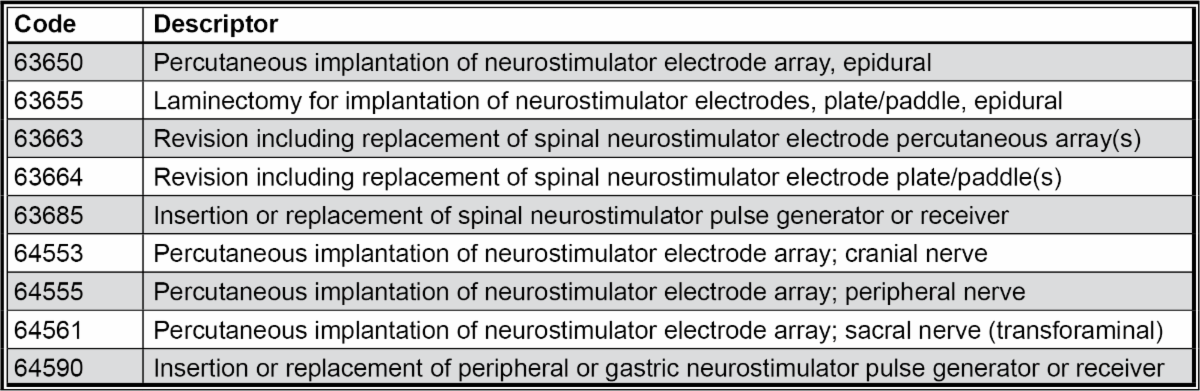
CMS proposes to apply multiple-procedure discounting to nine neuromodulation procedures that are currently designated as exempt. In Addendum AA to the proposed rule — Proposed ASC Covered Surgical Procedures for CY 2027 — the following codes move from "No" to "Yes" in column 4, Subject to Multiple Procedure Discounting (see table below).
Under the ASC multiple-procedure discounting policy, Medicare pays 100 percent of the highest-paying covered surgical procedure on the claim and 50 percent of each additional procedure subject to the discount. Applied to these codes, the practical effect is a 50 percent reduction on the electrode or lead component of nearly every neurostimulator implantation and revision performed in an ASC — because these procedures are, by clinical necessity, reported together with the pulse generator code in a single operative session.
ASIPP respectfully submits that this change should not be finalized for four reasons:
1. Integrated therapy, not duplicative services. Neuromodulation requires both the electrode and pulse generator, each with distinct implants, supplies, and facility resources. Device costs do not decrease when the components are implanted together, and a 50% reduction may result in inadequate payment.
2. The proposal may negate the payment increases in this rule. Although CMS proposes increases for CPT 63685 and 63650, these codes are commonly performed together. Discounting the lead code by 50% may eliminate those gains and reduce total case payment.
3. The proposal may create an inappropriate staging incentive. Discounting the lead when implanted with the generator may encourage separate operative sessions, increasing anesthesia exposure, infection risk, and facility costs. Payment policy should support clinically appropriate single-session care.
4. The proposal may shift care to higher-cost hospital settings. Independent and rural ASCs may be unable to absorb reduced neuromodulation payments, limiting Medicare access and shifting cases to hospital outpatient departments with higher program and beneficiary costs.
Consequently, we request that CMS retain the current “No” multiple-procedure discounting designation in Addendum AA for CPT codes 63650, 63655, 63663, 63664, 63685, 64553, 64555, 64561, and 64590.
III. Prior authorization asymmetry. ASIPP appreciates that the proposed expansion of prior authorization to additional botulinum toxin injection codes applies to hospital outpatient departments and not to ASCs, and urges CMS to maintain that distinction. ASIPP also encourages CMS to evaluate whether existing hospital outpatient prior-authorization requirements for facet interventions and percutaneous SCS lead implantation are delaying medically necessary care.
ASIPP appreciates CMS’s consideration of these comments and welcomes the opportunity to provide claims-level data or clinical input as CMS develops the final rule. Please contact us with any questions.
| | |
Laxmaiah Manchikanti, MD
Chairman of the Board and
Chief Executive Officer,
ASIPP and SIPMS
Paducah, KY · drcm@asipp.org
Annu Navani, MD
President, ASIPP
Walnut Creek, CA · annu@navani.net
| | |
Mahendra Sanapati, MD
Vice Chairman of the Board and COO
ASIPP Vice President, SIPMS
Evansville, IN · msanapati@gmail.com
Amol Soin, MD
President, SIPMS; Lifetime Director, ASIPP Dayton, OH · drsoin@gmail.com
| |
ASIPP/SIPMS Comments on CMS Request for Information on Current Procedural Terminology (CPT)
September 14, 2026
The Honorable Mehmet Oz, MD
Administrator
Centers for Medicare & Medicaid Services
Department of Health and Human Services
RE: CMS-1848-P — Medicare Program; CY 2027 Revisions to Payment Policies Under the Physician Fee Schedule; Request for Information on Current Procedural Terminology (CPT)
| | |
On behalf of the American Society of Interventional Pain Physicians (ASIPP), representing 49 state societies and the Puerto Rico Society of Interventional Pain Physicians submits, representing interventional pain physicians and their patients nationwide, We appreciate the opportunity to comment on the Request for Information (RFI) on the role of Current Procedural Terminology (CPT) included in the CY 2027 Physician Fee Schedule proposed rule (CMS-1848-P).
ASIPP has direct, extensive experience with the CPT code development and valuation process, and that experience has repeatedly exposed problems that CMS's RFI rightly seeks to examine. We offer the points below, drawn from our own dealings with the CPT Editorial Panel, the AMA/Specialty Society RVS Update Committee (RUC), and the associated licensing structure, and we also identify where we believe CMS's inquiry — and the current system — are on the right track.
1. Licensing and access costs impede education and patient care, not just innovation. AMA's copyright over CPT codes requires a licensing agreement before the codes can even be reproduced in educational materials such as textbooks written for physicians in training. Royalty obligations attach to books distributed even when they are given away free of charge to fellows, residents, and other trainees, meaning organizations pay royalties on copies that generate no revenue at all. Separately, access to CPT-linked educational databases can carry corporate licensing fees exceeding $13,000 — a cost that is prohibitive for many specialty societies and training programs. These costs fall hardest on the educational and non-profit uses that most directly serve patient care, which is the opposite of what a national coding standard should produce.
2. The code-development process has treated similarly situated specialty societies inconsistently. ASIPP invested substantial time and resources developing and presenting new epidural injection codes to the CPT Editorial Panel, in good faith and at the Panel's request. After being asked to revise our submission, we learned within a day that a competing organization's code proposal had already been approved, with an invitation for ASIPP to “participate” in codes we had no role in developing. A process that asks one applicant to keep revising while approving a competing proposal in parallel, with no visibility into why, undermines confidence that the CPT process treats specialty societies equitably.
3. Committee composition and survey methodology raise conflict-of-interest and validity concerns. In the coding of peripheral nerve stimulation devices, a small number of committee participants — including physicians who do not perform the procedure and others positioned to compete with the affected technology — were able to force reconsideration of codes a full year after those codes had already cleared the CPT Editorial Panel and the RUC, while ASIPP itself was removed from the discussion. We do not read this as deliberate misconduct so much as a structural flaw: a volunteer committee process with no firewall against participants who hold a direct competitive or financial stake in the outcome. Separately, the RUC physician-time survey methodology is widely regarded among our members as burdensome and unreliable, which discourages participation and, in turn, yields valuation data that likely understates real-world physician work.
4. Selection of CPT committee membership. The current membership selection process appears to favor individuals affiliated with a limited number of major professional societies. Qualified physicians and other stakeholders who are not members of these organizations have little or no meaningful opportunity to be considered for appointment. This approach may exclude important perspectives and does not ensure broad, balanced representation across the specialty. We recommend establishing a more open, transparent, and inclusive nomination and selection process that provides qualified individuals from all relevant professional organizations, including smaller and specialty-specific societies, a fair opportunity to participate.
5. Transparency of the code change application process. To maintain its integrity and trust in the recommendations being made to CMS, the entire code change application process should be transparent and available to all interested parties. This means:
a. The Code Change Application (CCA) submitted should list all of the authors who
| | |
contributed, including staff and specialty society advisors. Where AMA staff submit a CCA, the staff and any supporting specialty advisor or specialty representative taking part in the drafting or submission should be made public.
b. All submitted comments should require authoritative references (e.g., FDA clearance and Instructions for Use (IFU) citations); comments should not differ from FDA-cleared product definitions and defined surgical procedures (i.e., off-label comments).
c. All interested parties should have access to all submitted comments. Today, specialty society comments are not made available or transparent to all participants.
d. These measures would support continued transparency, oversight, and compliance — that is, a compliant process that yields trusted recommendations to CMS for code development.
6. Recommendations submitted to CMS outside the AMA CPT process. Interested parties routinely exercise their right to submit recommendations to CMS outside of the AMA CPT process. Making all AMA CPT processes transparent and available, including full transparency of the CCA process, allows the public to compare and contrast the information used within the AMA CPT process against information that similar participants may submit directly to CMS outside of the CPT process — again supporting a transparent framework that CMS can depend on in policymaking.
7. Oversight of AMA interpretive platforms. Currently, fee-for-service AMA interpretive platforms (CPT Assistant, CPT Knowledge Base, and RBRVS DataManager) are not subject to oversight or public input, yet these platforms drive policy. Conflicts of interest should be disclosed for all active participants who develop and deliver content within these platforms. Establishing a clear, public, and transparent editorial process would help these interpretive platforms provide compliant and trusted information to practicing physicians and the public.
8. A more active FDA role in the AMA CPT process. The FDA should review its own clearance process and take a more active role in the AMA CPT process:
a. The FDA should review technology and procedure (IFU) standards for terminology.
b. The FDA should work within the AMA CPT process and with CMS to ensure that on-label clearances for technologies and procedures are consistently maintained.
c. The FDA should review its policies on “brand name” versus “technology nomenclature” within its clearance process — alignment across FDA, AMA CPT, and CMS is critical for physicians and patients.
We want to be clear about what ASIPP is not asking for. We do not support abolishing the CPT Editorial Panel, the RUC, or physician-led code development. Two aspects of this RFI and the underlying system give us confidence that reform, not replacement, is the right path:
- CMS is asking the right RFI questions. We are encouraged that Question 4 seeks objective, evidence-based alternatives to the current RUC valuation methodology rather than assuming today's process is the only workable one, and that Question 1's call for documented licensing harms, and Question 2's interest in medical-necessity-linked coding models used elsewhere, are exactly the kind of evidence the episodes above are meant to supply.
- Physician-led coding, done right, remains the right foundation. ASIPP supports a specialty-informed, physician-led process for developing and valuing procedural codes; our concerns are with its governance, cost structure, and susceptibility to conflicts of interest — not with the premise that physicians who perform a procedure should help define how it is coded and valued.
ASIPP appreciates CMS's willingness to scrutinize a process that directly affects patient access to interventional pain care, and we welcome the opportunity to provide additional documentation of the specific episodes described above to support any resulting policy changes.
| | |
Laxmaiah Manchikanti, MD
Chairman of the Board and
Chief Executive Officer,
ASIPP and SIPMS
Paducah, KY · drcm@asipp.org
Annu Navani, MD
President, ASIPP
Walnut Creek, CA · annu@navani.net
| | |
Mahendra Sanapati, MD
Vice Chairman of the Board and COO
ASIPP Vice President, SIPMS
Evansville, IN · msanapati@gmail.com
| |
Emergency declaration sets up pathway for sublingual ketamine to treat pain in service members
At first, the Federal Register notice set off alarm bells: The secretaries of health and defense were collaborating on emergency use of medical countermeasures for U.S. military forces -- but they didn't specify why.
In July, Defense Secretary Pete Hegseth determined there was a military emergency -- or significant potential for one -- involving a higher risk of a chemical, biological, radiological, or nuclear attack on U.S. forces.
The next month, HHS Secretary Robert F. Kennedy Jr. determined that circumstances existed to justify emergency use of drugs, specifically targeting moderate-to-severe acute pain caused by such attacks.
The notice, posted Sept. 3, left many scratching their heads. Then, a few days later, a press release appeared: Singapore-based iX Biopharma announced that the U.S. government cleared an emergency use pathway for its sublingual ketamine product Wafermine.
Click here to read the full article.
| |
The Comments Worked — Partly. What the Final Peripheral Nerve LCDs Give Back, and What They Still Take.
For ASIPP members.
Effective for services on or after October 25, 2026.
| |
Eleven months ago, five Medicare Administrative Contractors proposed to end coverage for nearly every peripheral nerve intervention in chronic pain. Occipital. Stellate ganglion. Suprascapular. Genicular. Pudendal. Posterior tibial. Thoracic. Digital. Ulnar. Three procedures would have survived: radiofrequency neurolysis for trigeminal neuralgia, three lifetime corticosteroid injections for median neuropathy at the wrist, two lifetime injections for Morton’s neuroma. Complex regional pain syndrome was named as investigational.
The finals posted September 10, 2026. They are not what was proposed.
That difference did not happen on its own, and members should understand clearly what produced it. ASIPP filed. So did ASA, AAPM, ASRA, AANA, the Multisociety Pain Workgroup, state medical associations, and eventually the AMA House of Delegates, which adopted a resolution in November 2025 and followed with a formal letter to CMS in December. The contractors read the submissions. We know this because they tell us, section by section, exactly how many systematic reviews, randomized trials, observational studies, and guidelines arrived during the comment period and precisely what each body of evidence changed.
That is the most important thing in these documents, and it is not a coverage criterion. It is a demonstration that a well-evidenced comment campaign moves a multi-jurisdictional LCD.
First, understand what you are actually reading
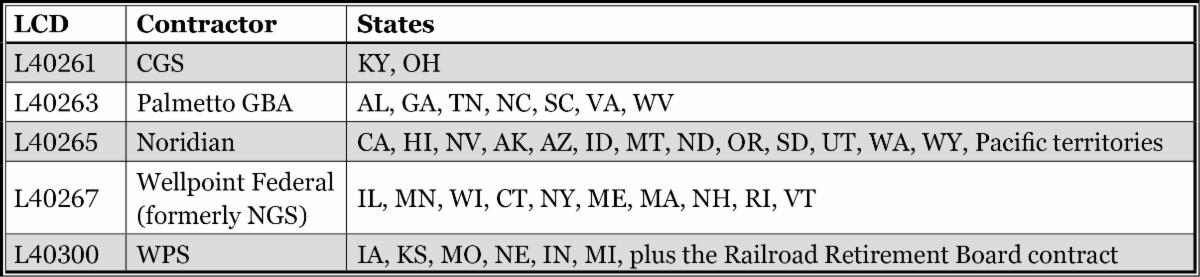
There are five LCD numbers. There is one policy.
| |
Remove the contractor table from the top of each document and the remaining text is identical — not comparable, identical. Same definitions, same twelve-item limitations list, same Kellgren-Lawrence thresholds, same bibliography numbering.
The operational consequence is that a reconsideration request filed with CGS does not move Palmetto, and a favorable ALJ decision in Ohio establishes nothing in Missouri. Future advocacy has to be filed five times or coordinated through the multi-jurisdictional CAC process. Members in the Noridian footprint should confirm L40265’s posting status directly with the contractor; its four siblings are verified, and Noridian participated in the same joint effort, but I have not independently confirmed the final document.
What came back
Sympathetic blocks for CRPS. This is the headline reversal. Stellate ganglion and lumbar sympathetic blocks moved from “investigational” to covered, conditionally. The conditions are demanding and every one of them is a documentation requirement:
-
IASP-criteria diagnosis: continuing pain disproportionate to the inciting event, at least one symptom in three of four categories (sensory, vasomotor, sudomotor/edema, motor/trophic), at least one sign on examination in two of four, and no better explanation
-
CRPS Severity Score documented at baseline, including pain intensity and functional impairment
-
Standard-of-care options tried without improvement, with the treating provider documenting that no alternatives remain
-
Ongoing care by an interdisciplinary or multidisciplinary team addressing psychological effects and functional impairment
For repeat blocks, add ≥50% immediate pain reduction and objective evidence of sympathetic blockade: transient Horner’s syndrome for stellate; for lumbar sympathetic, a ≥2°C rise in the ipsilateral foot or a ≥1.5°C interfoot differential at twenty minutes post-block. Beyond five lifetime blocks, you must document a sustained five-point CSS decrease from baseline lasting three months or longer.
Note how that ceiling was set. Absent any guideline or moderate-quality trial on optimal frequency, the contractors pulled national Medicare claims for 64510 and 64520 from December 2015 through 2025, found 80% of beneficiaries received one to five blocks, and adopted that as the threshold. This is worth flagging in future comments. Utilization is a description of practice, not a measure of medical necessity, and enshrining the observed distribution as a coverage limit converts current practice into a permanent ceiling.
Genicular procedures. Diagnostic genicular nerve injection is covered as the gateway to denervation when all of the following are met: moderate-to-severe OA with pain and disability documented on a validated scale, pain ≥3 months with documented failure of conservative care as tolerated, and radiographic KL grade 3–4. Exclusions: intra-articular injection or knee surgery within three months, inflammatory arthropathy, non-FDA-designated injectates, and high injectate volume — the LCD specifies 0.3–0.5 mL on the rationale that larger volumes destroy prognostic accuracy. Two diagnostic sessions per knee.
Ablation, by radiofrequency or cryoneurolysis, requires ≥50% improvement in pain or function sustained at least three months after the diagnostic injection (difficult to achieve), plus documentation that the patient is a poor surgical candidate or has declined arthroplasty. Two radiofrequency sessions per knee per rolling twelve months.
One documentation trap deserves emphasis: the pain scale must be the same scale at baseline and after each diagnostic procedure. A baseline NRS followed by a post-procedure VAS does not satisfy the criterion. Fix your templates now.
Lifetime caps removed. Median nerve injection converts from a lifetime allowance to a frequency limit: up to three per same median nerve at intervals of no less than two months, individualized to documented response. The Morton’s neuroma lifetime limit was likewise removed.
What did not come back
- Ganglion impar block and denervation: investigational, non-covered, on a very-low-certainty finding across risk of bias, imprecision, indirectness, and inconsistency.
- Therapeutic genicular injection: non-covered — the contractors accepted the nerve as an ablation target while rejecting the block as standalone therapy.
- Genicular ablation after total knee arthroplasty, outside the perioperative period: non-covered.
- The explanation-of-changes section records substantial new literature submitted for occipital, suprascapular, and pudendal nerve blocks but does not record a coverage change for any of them, and the thoracic section states explicitly that no coverage change was made. Members should read sections F through L of their own jurisdiction’s document directly before assuming any of these moved.
- The catch-all survives intact: any therapeutic peripheral nerve injection or denervation not listed as covered is non-covered.
The Bottomline - Pudendal nerve blocks and intercostal nerve blocks: Not Covered.
Two provisions that will generate denials in compliant practices
Anesthesia. Moderate sedation, deep sedation, general anesthesia, and monitored anesthesia care are declared usually unnecessary or rarely indicated for nerve injections, and therefore not reasonable and necessary. Needle phobia and anxiety are addressed by name — the LCD states that oral anxiolytics typically suffice. Exceptions require documentation establishing the need for the specific patient. A standing practice protocol will not survive review.
Image guidance. Ultrasound is covered only where necessary to identify the nerve and visualize needle placement. Fluoroscopy is covered for reasonable and necessary peripheral nerve RFA. Critically, image guidance performed for a non-covered injection is itself non-covered — a denied primary procedure takes the guidance code with it.
Before October 25
-
Pull your jurisdiction’s Billing and Coding Article, not just the LCD. The CPT and ICD-10 detail lives there, and those articles drive the claim edits.
-
Rebuild CRPS and genicular templates around the named criteria — CSS at baseline, temperature differential with time stamp, same pain scale throughout, explicit surgical-candidacy statement. These are not clinical niceties; they are the coverage criteria.
- Decide now which services become patient responsibility and build the ABN workflow before the first denial, not after it.
-
Audit your sedation documentation. If MAC is routine in your practice for nerve injections, that changes October 25.
The unfinished work
The sections that moved, moved because evidence arrived. The sections that did not move — ganglion impar, therapeutic genicular injection, post-arthroplasty ablation, pudendal nerve blocks, intercostal nerve blocks, and the several nerves where new literature was logged but coverage was not changed — did not move because the submitted evidence was judged insufficient in certainty, not because it was ignored.
That is a solvable problem, and it is ours to solve. The reconsideration pathway stays open. What these documents establish is that the contractors will revise a coverage determination when the evidence supports it. What they also establish is the standard: GRADE-appraised, Medicare-applicable, adequately powered, and long enough to matter. Registries, pragmatic trials, and prospective outcome data in the over-65 population are no longer academic exercises. They are the mechanism.
Prepared from the final LCD texts posted to the CMS Medicare Coverage Database, notice period September 10 – October 24, 2026. Verify L40265 (Noridian) status and read sections F–L of your own jurisdiction’s document before relying on any summary, including this one.
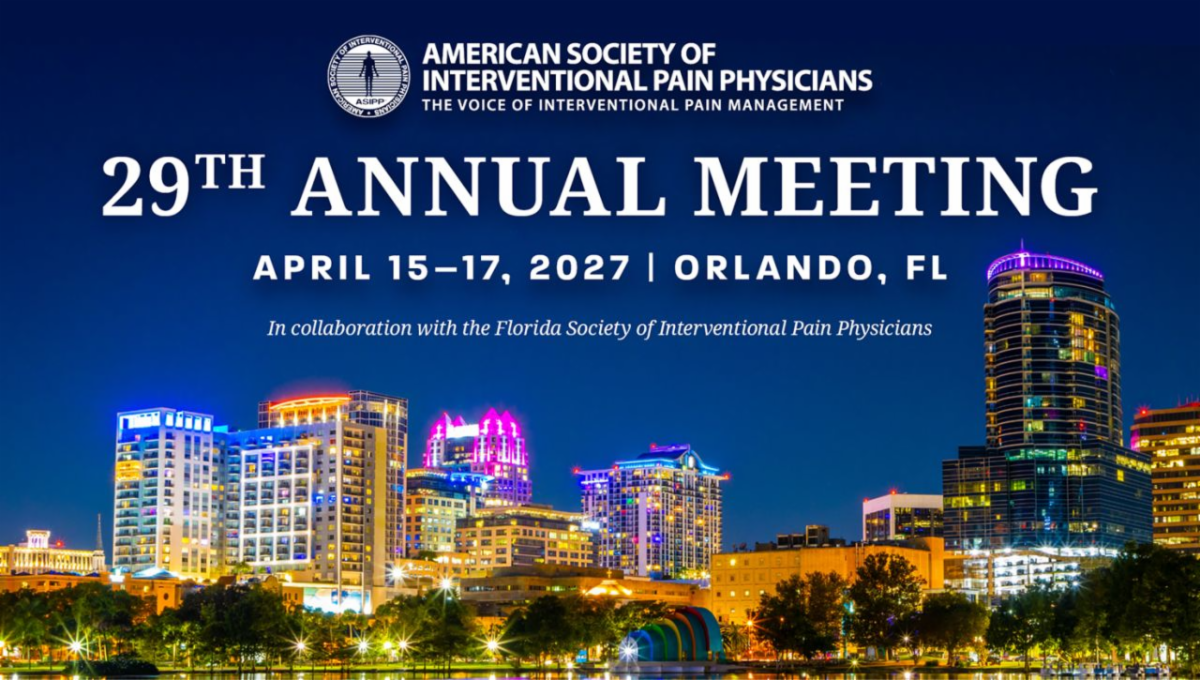
| | | SAVE THE DATE - APRIL 15-17, 2027 | | |
Save the date for the American Society of Interventional Pain Physicians' 29th Annual Meeting, April 15 - 17, 2027, in Orlando, Florida.
This flagship educational event will bring together physicians, researchers, and healthcare professionals from across the country for three days of cutting-edge education, collaboration, and professional networking.
Attendees can look forward to our most comprehensive Annual Meeting yet, featuring new educational topics, expanded faculty participation, and innovative program enhancements designed to keep you at the forefront of interventional pain management.
Mark your calendar now and plan to join us in Orlando as we continue advancing excellence in interventional pain management. Additional program details and faculty announcements will be released soon.
Register by October 1, 2026, to receive a 10% Early Bird Discount.
| | |
ASIPP is expanding opportunities for Residents and Fellows at the 2027 Annual Meeting, with more ways to present, participate, connect, and represent fellowship programs.
Present Your Research | Connect with Program Directors
Represent Your Program | Programming for Residents & Fellows
Ready to Take Your Place?
Residents and Fellows can submit an abstract to share their research at ASIPP 2027 or apply for a scholarship to help make attending the Annual Meeting possible.
| | |
ASIPP is proud to launch our Resident and Fellow Mentorship Program. This initiative is designed to connect trainees with experienced pain physicians to foster professional growth, provide guidance, and strengthen the future of our specialty.
Each mentor would be paired with one to two trainees, but can take more if interested. Trainees will be responsible for initiating introductions and arranging at least one to two video calls per year. These sessions will provide opportunities for mentees to seek advice on clinical decision-making, career planning, research opportunities, and professional development.
We believe that your experience, expertise, and insight can have a lasting impact on the next generation of pain physicians. By volunteering as a mentor, you will play a critical role in shaping the future of our field and ensuring that ASIPP continues to cultivate excellence in interventional pain medicine.
If you are interested in serving as a mentor, please confirm your participation by filling out the appropriate form below.
| |
ASIPP is pleased to announce the launch of the Regenerative and Longevity Medicine Section!
This section reflects the growing importance of regenerative and longevity medicine—fields dedicated to restoring health, enhancing vitality, and extending the healthy years of life. From stem cell therapies and tissue engineering to gene therapy and orthobiologics, these disciplines are transforming the way we approach pain management and age-related decline.
Section membership offers:
- Access to ASIPP’s physician database and future data registry
- Opportunities for certification and continuing education
- Section-exclusive resources and updates
No additional cost for ASIPP members!
| | |
Apply now for one of the following 2026 dates:
September 26, October 24, November 14,
& December 12
Four (4) hour virtual exam
- ABIPP Path – Combined CCPM/ CSM Exam
For those with subspecialty in Pain Medicine
Two (2) hour virtual exam
- ABIPP Competency Exam in IPM
For those without primary board certification
Two (2) hour virtual exam
- ABIPP Competency Exam in Regenerative Medicine
Two (2) hour virtual exam
- Controlled Substance Management Competency Exam
Two (2) hour virtual exam
- Documentation, Coding, Compliance, Practice Management Competency Exam
Two (2) hour virtual exam
| | |
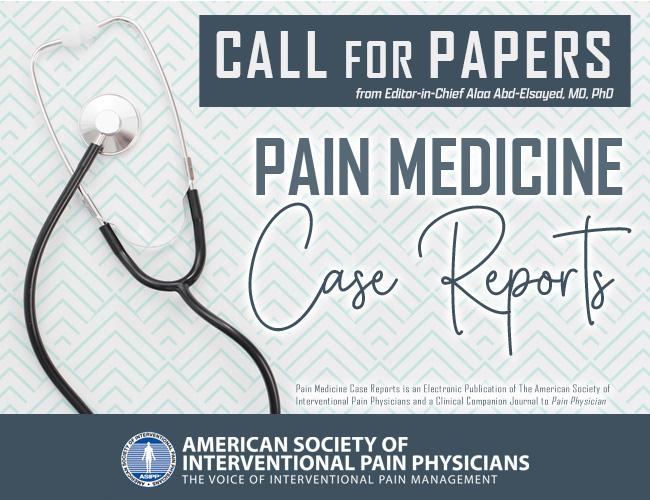
Pain Medicine Case Reports (PMCR) and Editor-in-Chief Alaa Abd-Elsayed, MD, PhD would like to invite you to submit case reports and case series to the PMCR journal. Your article will be published free of charge.
Open access journals are freely available online for immediate worldwide open access to the full text of published articles. There is no subscription fee for open access journals. Open access journals are no different from traditional subscription-based journals: they undergo the same peer review and quality control as any other scholarly journal.
Interested in becoming a member of the PMCR Editorial Board?
Editorial board members are asked to review 2-6 manuscripts per year. Please submit your most up-to-date CV to sgold@asipp.org for consideration.
For more information or to submit your articles, click here.
| | |
We are excited to announce that Pain Medicine Case Reports (PMCR) journal (eISSN 2768-5152) has been accepted for inclusion in MEDLINE and PubMed, the prestigious bibliographic database of the U.S. National Library of Medicine. PMCR, a companion publication to the prestigious Pain Physician journal by ASIPP, joins its counterpart in achieving indexing in both MEDLINE and PubMed, marking ASIPP’s dual presence in these renowned databases.
The inclusion of PMCR journal in MEDLINE signifies a higher level of selectivity, as MEDLINE consists of the top 5,200 biomedical journals. This indexing also means that articles from PMCR will be searchable using NLM Medical Subject Headings (MeSH terms) and other metadata.
The selection for MEDLINE follows a rigorous evaluation process by reviewers from the Literature Selection Technical Review Committee (LSTRC). According to their criteria, the scientific quality of a journal’s content is the primary factor considered for indexing.
We extend our congratulations to the Pain Medicine Case Reports Editor-in-Chief, Deputy Editor-in-Chief, Journal Team, and Editorial Board for this achievement, which underscores the significance and excellence of this esteemed journal.
| | | | |