Time to Submit Comment
Letters to CMS and Congress!
CMS has issued two proposed rules that will set 2027 Medicare payment for interventional pain management: the CY 2027 Physician Fee Schedule and the CY 2027 OPPS/ASC Payment System. ASIPP is commenting on both. We ask that every State Society also file its own separate comment letter. Letters from societies across the country show CMS the nationwide impact on physicians, independent practices, ASCs, and Medicare patients.
Here is the link to our sample letter:
| | Comment Deadline is Monday, September 14, 2026 | |
INSTRUCTIONS FOR OPENING LETTER
When you click on the sample letter link, the letter will automatically download to your Downloads folder.
Please use the letter as a starting point, not as a form.
Identical letters carry little weight with CMS. We ask you to rewrite using your own letterhead, change the wording and order, add state-specific examples, and keep ASIPP’s key issues and requests.
Please also write to Congress. Send letters to both of your U.S. Senators and to one member of your U.S. House delegation, asking for an annual inflation update to Medicare physician payment and relief from budget neutrality.
Click here for Senator contact information.
Click here for Representative contact information.
The Physician Fee Schedule comment deadline is less than one week away. Please act now.
Thank you for your continued support and advocacy on behalf of ASIPP and Medicare beneficiaries.
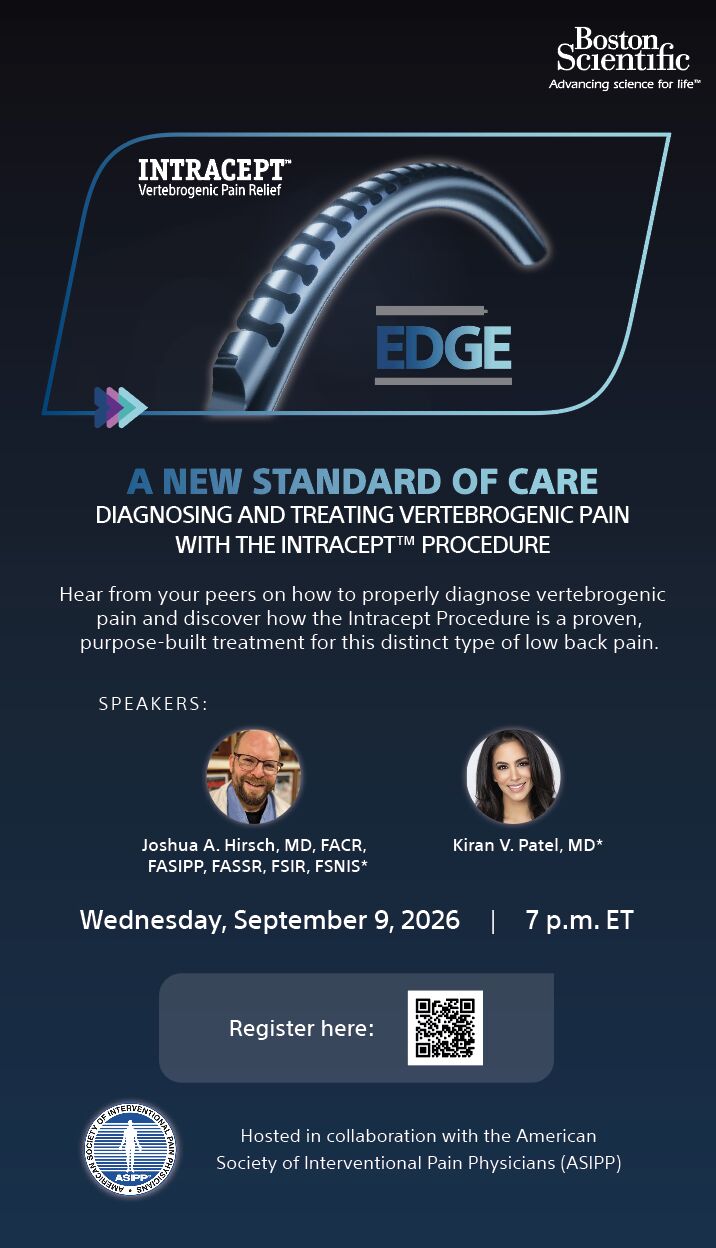
| | Discover how the Intracept™ Procedure is delivering a new standard of care for vertebrogenic pain | | Join our webinar on Wednesday, September 9, at 7 pm ET, hosted in collaboration with the American Society of Interventional Pain Physicians (ASIPP), to discover how to diagnose this distinct condition and why the Intracept Procedure is a proven, purpose-built treatment option. | |
A woman in Washington state discovered that unlike mammograms, breast MRIs aren’t universally covered as zero-cost preventive care.
Last year, Stephanie Halver’s primary care doctor consulted a risk assessment tool to calculate her chances of one day developing breast cancer. Halver, now 43, remembered the likelihood “popped up really high.”
That’s partly because Halver’s mother and aunt have had breast cancer. Her age and dense breast tissue also put her at higher risk.
Halver, who lives in Vancouver, Washington, said her doctor recommended she get an annual breast MRI, six months after her yearly mammogram. The scan would serve as an additional safeguard, since breast MRIs can detect abnormalities that mammograms miss.
Case in point, actress Olivia Munn had a breast MRI in 2023 that detected an aggressive form of cancer in both breasts, even though a recent mammogram had been clear, she told People magazine. Like Halver, Munn said her doctor recommended the MRI after a risk assessment score showed she faced a greater-than-normal chance of developing breast cancer.
Click here to read the full article.
| | |
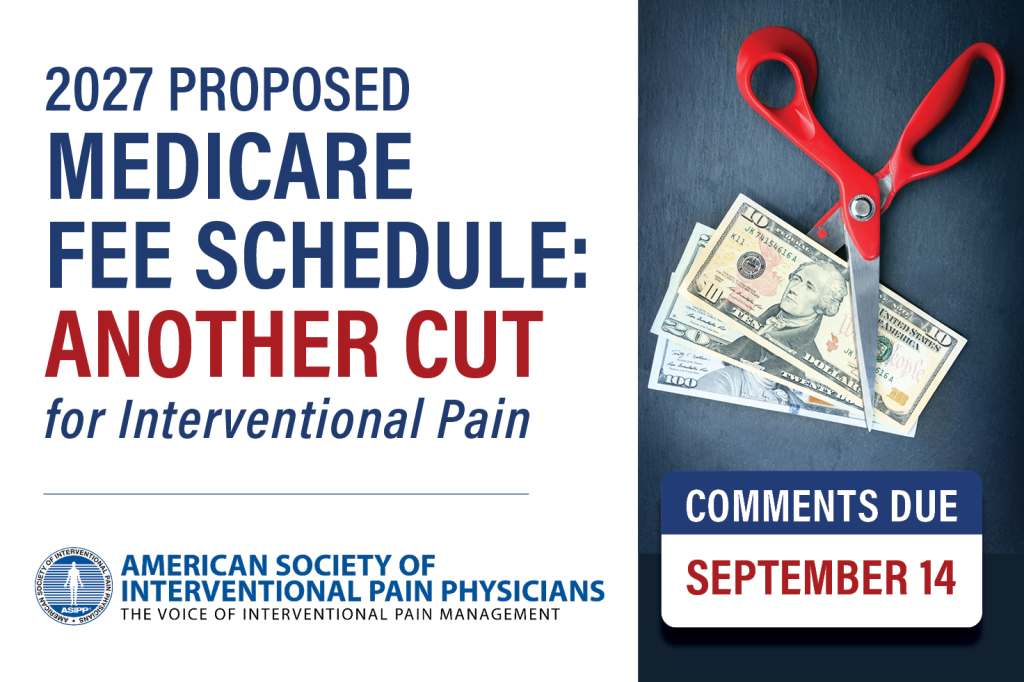
CMS has released the CY 2027 Medicare Physician Fee Schedule Proposed Rule (CMS-1848-P). The overall picture is unfavorable: CMS estimates a combined -2% impact on interventional pain management, with additional proposals affecting E/M billing, MIPS, and imaging/laboratory payment. Two documents are attached — the proposed rule and ASIPP’s code-by-code payment comparison for 2027 vs. 2026. Key points below.
Conversion Factor: Proposed Cut
With the one-year 2.5% statutory increase for 2026 expiring, CMS proposes:
-
Qualifying APM participants: $33.17, down from $33.57 (-1.19%)
-
All other clinicians (non-QP): $32.84, down from $33.40 (-1.68%)
These figures reflect a +0.53% budget-neutrality adjustment and statutory updates of +0.75% (QP) and +0.25% (non-QP). They do not include the 2% sequester or potential 4% PAYGO cuts.
IPM Codes: Widespread Reductions vs. 2026
Most interventional pain codes are cut 1–6% in the office setting and 1-4% in Facility:
| |
- Trigeminal nerve injection (64400): -19.9%; greater occipital nerve (64405): -16.6%
- Percutaneous SI joint fusion (27279, facility): -14.9%
- Kyphoplasty (22513–22515): -6.0% to -6.1%
- Spinal cord stimulator trial (63650): -5.9%; percutaneous
- PNS (64555): -6.3%
A handful of codes see small increases (e.g., blood patch 62273, several peripheral nerve blocks). The attached table shows every IPM code.
E/M Services: Major Change to Modifier -25
CMS proposes that when a separately identifiable office E/M visit is billed with modifier -25 on the same day as a 0-, 10-, or 90-day global procedure, only the highest-paid service is paid at 100% — all others, including the E/M visit, are cut 50%. This directly targets the common office-based scenario of a same-day evaluation and injection. CMS also proposes replacing add-on code G2211 with modifier MOD1, valued at 16% of the base E/M code (32% for ACO participants via MOD2). E/M payment rates themselves decline modestly (see attached table).
MIPS / Quality Payment Program
- Traditional MIPS would sunset with the CY 2029 performance period (2031 payment year), making MIPS Value Pathways (MVPs) the sole reporting option; three new MVPs are proposed.
- The quality measure inventory would be set at 180 measures (20 removals, 10 additions), with a new MIPS core measure reporting requirement replacing the outcome/high-priority measure requirement (small practices exempt).
- The performance threshold remains 75 points. Separately, the rule proposes refinements to the Ambulatory Specialty Model (ASM), the mandatory model whose low back pain cohort includes interventional pain physicians.
RFI: Duplicate Laboratory Testing, Imaging, and Interoperability
CMS is seeking input on mechanisms to address duplicate laboratory and imaging tests, including MAC edits resulting in non-payment or reduced payment, recoupment of payments, frequency limitations, and revised billing instructions, along with improved result sharing and interoperability. These policies could significantly affect pain practices that rely on imaging and drug testing. ASIPP will submit detailed comments — please send us your input.
Act Now
Comments are due September 14, 2026 (file code CMS-1848-P). Please review the attached documents and send your feedback to asipp@asipp.org so we can represent you forcefully. ASIPP will fight these cuts, as we always have — but your voice makes the difference.
View the CY 2027 PFS Proposed Rule Fact Sheet
View the ASIPP 2027 vs. 2026 Proposed Payment Rate Comparison for IPM Codes
| | SAVE THE DATE - APRIL 15-17, 2027 | | |
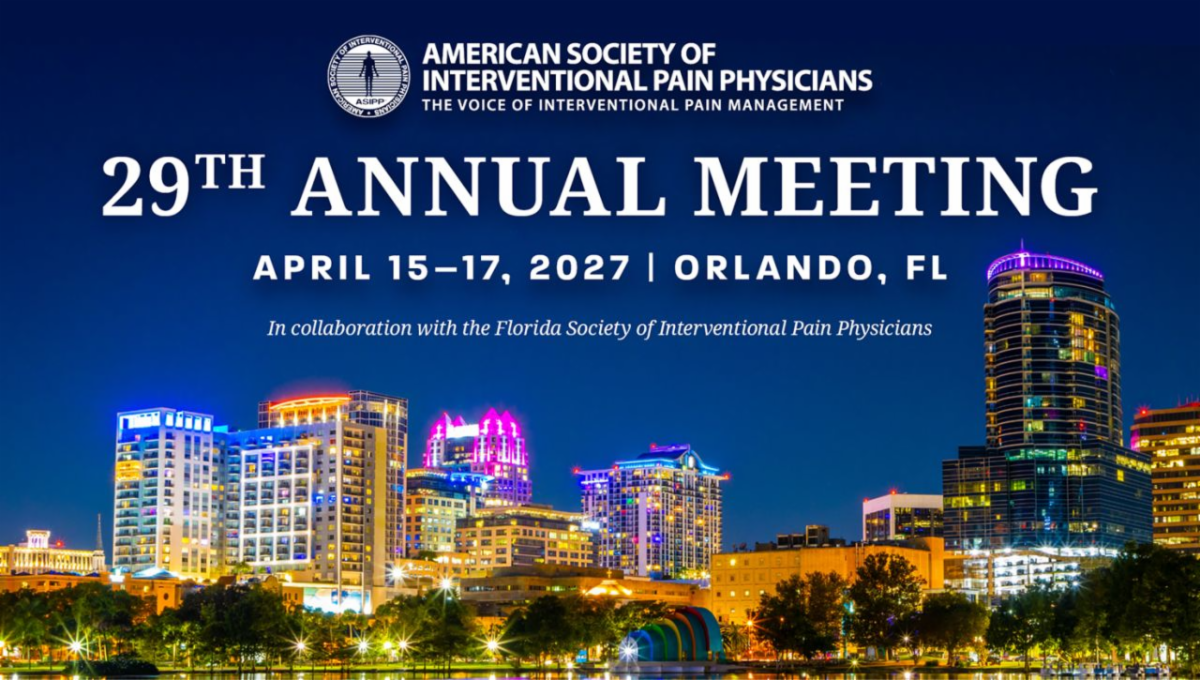
Save the date for the American Society of Interventional Pain Physicians' 29th Annual Meeting, April 15 - 17, 2027, in Orlando, Florida.
This flagship educational event will bring together physicians, researchers, and healthcare professionals from across the country for three days of cutting-edge education, collaboration, and professional networking.
Attendees can look forward to our most comprehensive Annual Meeting yet, featuring new educational topics, expanded faculty participation, and innovative program enhancements designed to keep you at the forefront of interventional pain management.
Mark your calendar now and plan to join us in Orlando as we continue advancing excellence in interventional pain management. Additional program details and faculty announcements will be released soon.
Register by October 1, 2026, to receive a 10% Early Bird Discount.
| | |
ASIPP is expanding opportunities for Residents and Fellows at the 2027 Annual Meeting, with more ways to present, participate, connect, and represent fellowship programs.
Present Your Research | Connect with Program Directors
Represent Your Program | Programming for Residents & Fellows
Ready to Take Your Place?
Residents and Fellows can submit an abstract to share their research at ASIPP 2027 or apply for a scholarship to help make attending the Annual Meeting possible.
| |
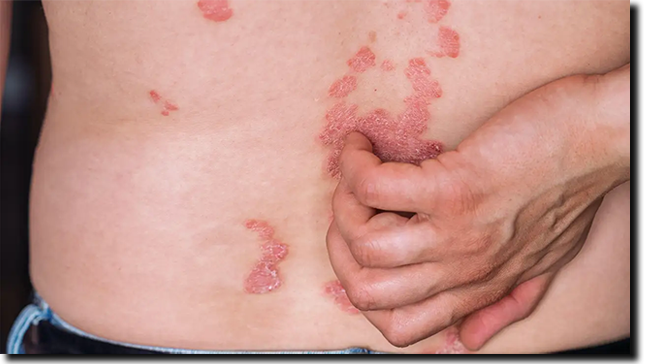
Prevalence is rising, and better imaging isn't the whole reason
| | |
ASIPP is proud to launch our Resident and Fellow Mentorship Program. This initiative is designed to connect trainees with experienced pain physicians to foster professional growth, provide guidance, and strengthen the future of our specialty.
Each mentor would be paired with one to two trainees, but can take more if interested. Trainees will be responsible for initiating introductions and arranging at least one to two video calls per year. These sessions will provide opportunities for mentees to seek advice on clinical decision-making, career planning, research opportunities, and professional development.
We believe that your experience, expertise, and insight can have a lasting impact on the next generation of pain physicians. By volunteering as a mentor, you will play a critical role in shaping the future of our field and ensuring that ASIPP continues to cultivate excellence in interventional pain medicine.
If you are interested in serving as a mentor, please confirm your participation by filling out the appropriate form below.
| |
She built a career not only on talent, but on humility, authenticity, resilience, and generosity
Dolly Parton died last month at age 80. Her death has prompted extensive coverage of her humanitarian and healthcare legacy. My big takeaway from learning more about her: Parton is a wonderful role model for physicians because many of the qualities that made her successful are exactly the qualities medicine needs.
She Was Humble While Becoming Exceptional
Parton achieved extraordinary success without abandoning her down-to-earth personality. Although patients and society may place physicians on a pedestal because of their knowledge and stature, it is important to emulate Parton and avoid becoming unapproachable. Although no one will be asking for our autographs, our egos can swell, but we must remain kind, compassionate, and empathetic.
She Never Forgot Where She Came From
Parton's Appalachian roots remain central to her identity. She was born in the woods in a two-room cabin with no running water and no electricity, with her 11 siblings. Parton never forgot where she came from and credited the hardscrabble life of her early years with motivating her to be outstanding in everything she did.
Doctors should never forget their years of training and the challenges of deferred gratification. Remember that medicine is ultimately about patients -- not credentials, technology, or status.
Click here to read the full article.
| |
ASIPP is pleased to announce the launch of the Regenerative and Longevity Medicine Section!
This section reflects the growing importance of regenerative and longevity medicine—fields dedicated to restoring health, enhancing vitality, and extending the healthy years of life. From stem cell therapies and tissue engineering to gene therapy and orthobiologics, these disciplines are transforming the way we approach pain management and age-related decline.
Section membership offers:
- Access to ASIPP’s physician database and future data registry
- Opportunities for certification and continuing education
- Section-exclusive resources and updates
No additional cost for ASIPP members!
| |
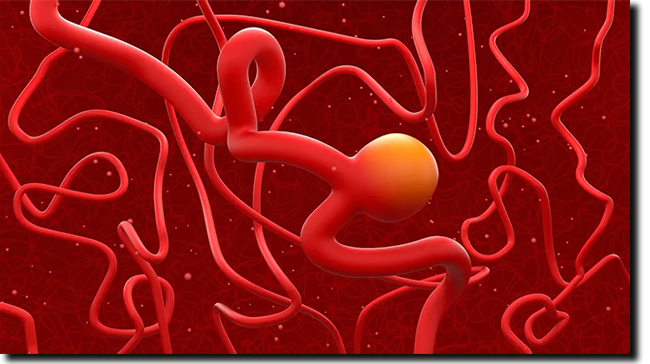
So Do the Medicolegal Implications
Off-label indications, use of compounded
products could increase liability exposure
| | |
Apply now for one of the following 2026 dates:
October 24, November 14,
& December 12
Four (4) hour virtual exam
- ABIPP Path – Combined CCPM/ CSM Exam
For those with subspecialty in Pain Medicine
Two (2) hour virtual exam
- ABIPP Competency Exam in IPM
For those without primary board certification
Two (2) hour virtual exam
- ABIPP Competency Exam in Regenerative Medicine
Two (2) hour virtual exam
- Controlled Substance Management Competency Exam
Two (2) hour virtual exam
- Documentation, Coding, Compliance, Practice Management Competency Exam
Two (2) hour virtual exam
| | |
Pain Medicine Case Reports (PMCR) and Editor-in-Chief Alaa Abd-Elsayed, MD, PhD would like to invite you to submit case reports and case series to the PMCR journal. Your article will be published free of charge.
Open access journals are freely available online for immediate worldwide open access to the full text of published articles. There is no subscription fee for open access journals. Open access journals are no different from traditional subscription-based journals: they undergo the same peer review and quality control as any other scholarly journal.
Interested in becoming a member of the PMCR Editorial Board?
Editorial board members are asked to review 2-6 manuscripts per year. Please submit your most up-to-date CV to sgold@asipp.org for consideration.
For more information or to submit your articles, click here.
| | |
We are excited to announce that Pain Medicine Case Reports (PMCR) journal (eISSN 2768-5152) has been accepted for inclusion in MEDLINE and PubMed, the prestigious bibliographic database of the U.S. National Library of Medicine. PMCR, a companion publication to the prestigious Pain Physician journal by ASIPP, joins its counterpart in achieving indexing in both MEDLINE and PubMed, marking ASIPP’s dual presence in these renowned databases.
The inclusion of PMCR journal in MEDLINE signifies a higher level of selectivity, as MEDLINE consists of the top 5,200 biomedical journals. This indexing also means that articles from PMCR will be searchable using NLM Medical Subject Headings (MeSH terms) and other metadata.
The selection for MEDLINE follows a rigorous evaluation process by reviewers from the Literature Selection Technical Review Committee (LSTRC). According to their criteria, the scientific quality of a journal’s content is the primary factor considered for indexing.
We extend our congratulations to the Pain Medicine Case Reports Editor-in-Chief, Deputy Editor-in-Chief, Journal Team, and Editorial Board for this achievement, which underscores the significance and excellence of this esteemed journal.
| | | | |