ASIPP continues its advocacy efforts to oppose the Centers for Medicare & Medicaid Services (CMS) Ambulatory Specialty Model (ASM), raising concerns about the model’s scientific validity, fairness, and potential impact on interventional pain physicians and patient access to care. The organization has engaged CMS leadership and congressional committees, submitted formal letters, and continues to push for withdrawal of the model.
ASIPP argues that CMS should demonstrate that ASM meets the principles outlined in Executive Order 14303, “Restoring Gold Standard Science”, including transparency, reproducibility, and rigorous validation. The organization is seeking answers regarding risk adjustment, physician attribution, patient protections, and whether the model can accurately distinguish appropriate from unnecessary care.
With ASM currently scheduled to begin on January 1, 2027, ASIPP will continue monitoring developments and advocating for scientifically sound policies that support fair physician evaluation and preserve patient access to interventional pain care.
Click the links below to read ASIPP’s recent correspondence:
• Letter to CMS Administrator Dr. Mehmet Oz
• Letter to House Oversight Committee Chairman James Comer
• Letter to House Energy and Commerce Committee Chairman Brett Guthrie
| | | |
One of the most frustrating experiences for clinicians is when a patient comes in with their mind made up based on an unsupported claim.
Maybe they think vaccines are harmful. They swear by an unproven supplement. Or they refuse a prescribed medication because the internet told them it’s a Big Pharma money-making scheme. You try to correct them with facts and data — only to find that no amount of evidence or years of medical training can compete with a 30-second TikTok.
It’s enough to make any data-driven clinician throw up their hands and ask: “Why?”
“There is a view among clinicians that is fundamentally false, which is that people make rational decisions, and that if you give people information — that smoking is dangerous, that seatbelts save lives — they’ll make changes,” said David Asch, MD, professor of medical ethics and health policy at the University of Pennsylvania in Philadelphia.
Click here to read the full article.
| |
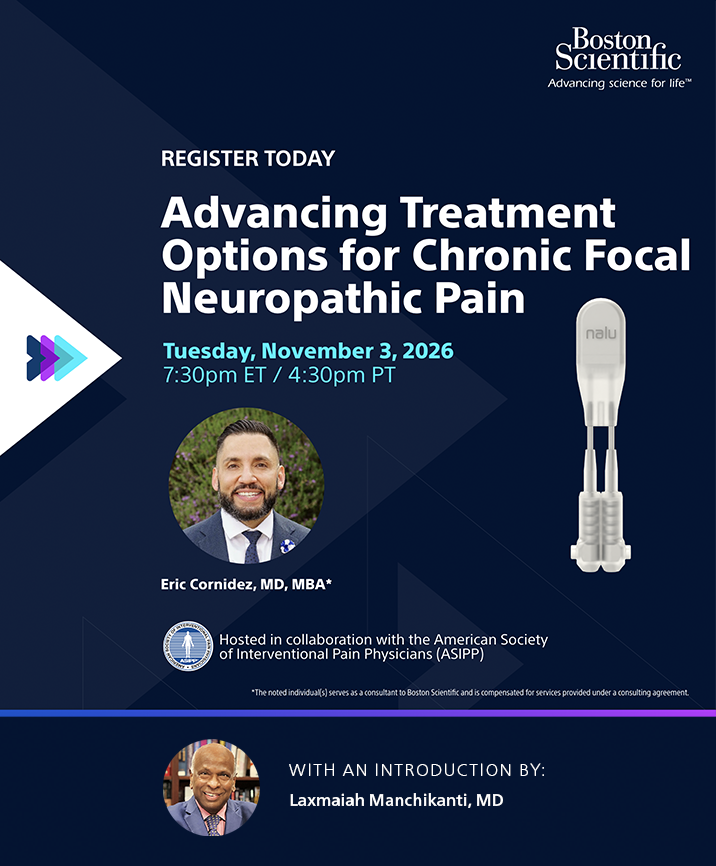
Complimentary ASIPP Webinar:
Advancing Treatment Options for Chronic Focal Neuropathic Pain
| Learn how the Nalu™ System for Peripheral Nerve Stimulation (PNS) delivers long-term, personalized pain relief and functional improvements with its unique design and advanced programming capabilities. | | |
Coming Soon!
Updated ASIPP Guidelines:
Sedation and Fasting in Interventional
Pain Management Procedures
| |
Evidence-based, consensus-validated, and built for everyday practice
How much sedation does your patient need? Practice varies widely across specialties, settings, and regions, and the stakes run both ways. Too much sedation can hide neural injury during needle placement, add cost, and draw regulatory scrutiny. Too little attention to sedation and monitoring can put appropriately selected patients at risk.
The American Society of Interventional Pain Physicians (ASIPP) will be releasing an evidence-based guideline on sedation practices in interventional pain management. Its aim is to bring clarity and consistency to the field.
Developed by experts
- 40 multidisciplinary authors
- 15 statements and recommendations
-
100% consensus after a three-round Delphi process
- Built on National Academy of Medicine criteria for trustworthy guidelines, a structured scoping review reported in line with PRISMA 2020, and a modified GRADE/AHRQ evidence-grading framework
What the guideline covers
- Preprocedural patient assessment and fasting status
- Appropriate sedation levels by procedure type
- Choosing and dosing sedative-analgesic agents
- Minimum monitoring standards
- Personnel and equipment requirements
- Managing sedation-related adverse events
Aligned with Medicare coverage policy
The guideline places the clinical evidence within the Medicare Local Coverage Determination (LCD) framework for facet joint, sacroiliac joint, and epidural interventions. It also comments on sedation for spinal cord stimulation, peripheral nerve stimulation, vertebral augmentation, basivertebral nerve ablation, and minimally invasive spine surgery. For these procedures, coverage policy and clinical practice differ the most.
Key takeaways
✔ Less is often more. For most interventional pain procedures, local anesthesia alone or minimal sedation is enough and is preferred.
✔ Use deeper sedation selectively. Reserve moderate sedation or monitored anesthesia care for selected patients and procedures with documented medical necessity, and keep in mind the risk of masking neural injury.
✔ Standardize monitoring. Patients receiving sedation should have continuous pulse oximetry, blood pressure, and cardiac rhythm monitoring.
✔ Use capnography where it counts. Quantitative capnography should be used for deep sedation, monitored anesthesia care, and general anesthesia, and may be considered for moderate sedation. It is not required for local anesthesia alone or minimal sedation.
Standardize your practice, protect your patients, and stay aligned with current coverage policy.
Follow us on our social media pages for the most up-to-date ASIPP news and guidelines.
| |
Nominations Are Now Open for
ASIPP’s 2027 Awards for Excellence
ASIPP is proud to recognize the programs, educators, and fellows shaping the future of pain medicine through excellence, leadership, scholarship, and patient-centered care.
Nominations are now being accepted for three awards honoring outstanding achievement in pain medicine education and training:
- Comprehensive Excellence in Pain Medicine Training Program Award
- Educational Stewardship & Leadership in Pain Medicine Program Director / Educator Award
- ASIPP Rising Leader in Pain Medicine Fellow Award
Program directors, faculty, fellows, and institutional leaders may submit nominations. Self-nominations are welcome. One recipient will be selected in each award category.
Award recipients will be recognized during General Session at ASIPP’s 29th Annual Meeting, April 15–17, 2027 in Orlando, Florida.
Submission Deadline: January 31, 2027
Click here to learn more and submit a nomination.
| | |
The dispute resolution system "is currently broken," one analyst says
Although most observers agree that the No Surprises Act did fix one problem -- nixing unexpected bills for out-of-network care -- lawmakers are still trying to fix other problems caused by the law.
The act, passed at the end of 2020, was designed to protect patients who received bills for out-of-network care -- often emergency care -- even though the care was delivered at an in-network facility. This can happen, for example, if the in-network hospital contracts with out-of-network providers for emergency or specialty care. The insurer must then negotiate with the out-of-network provider to agree on a pay rate for them. If the two parties cannot agree, the matter then goes to arbitration.
That arbitration process, known as independent dispute resolution (IDR), is where problems have arisen, Jack Hoadley, PhD, professor emeritus at the Center on Health Insurance Reforms at Georgetown University in Washington, told MedPage Today.
Click here to read the full article.
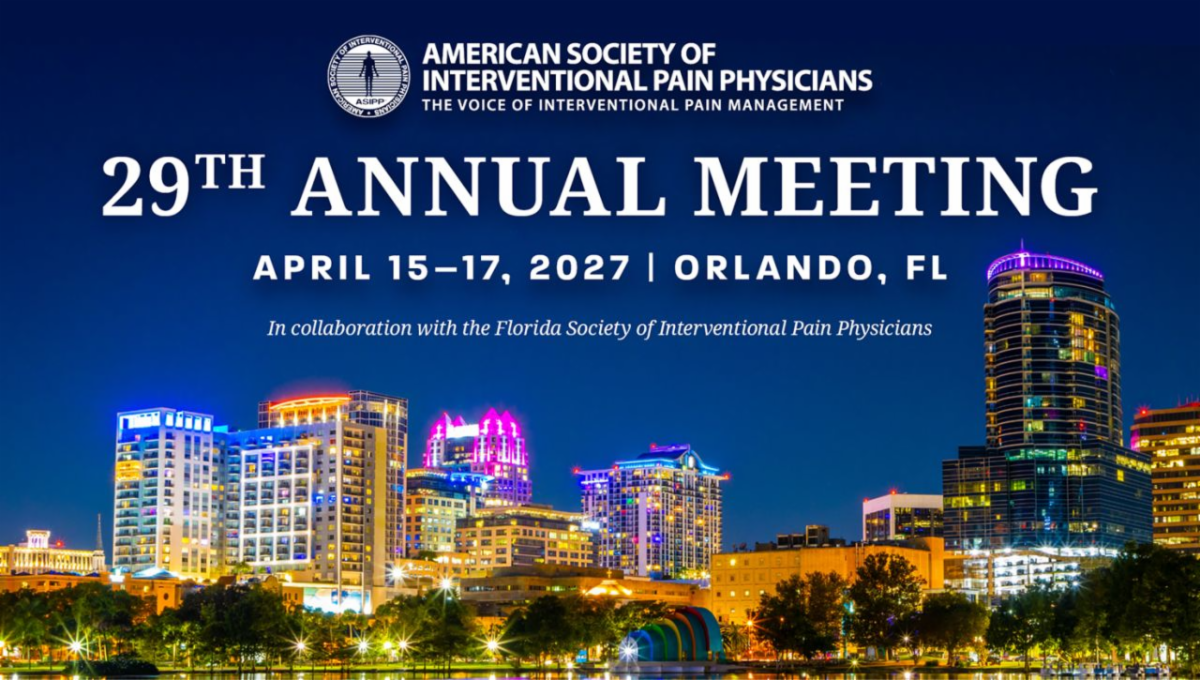
| | SAVE THE DATE - APRIL 15-17, 2027 | | |
Save the date for the American Society of Interventional Pain Physicians' 29th Annual Meeting, April 15 - 17, 2027, in Orlando, Florida.
This flagship educational event will bring together physicians, researchers, and healthcare professionals from across the country for three days of cutting-edge education, collaboration, and professional networking.
Attendees can look forward to our most comprehensive Annual Meeting yet, featuring new educational topics, expanded faculty participation, and innovative program enhancements designed to keep you at the forefront of interventional pain management.
Mark your calendar now and plan to join us in Orlando as we continue advancing excellence in interventional pain management. Additional program details and faculty announcements will be released soon.
Register and book your room today!
| | |
Nearly half of Germans consult artificial intelligence (AI) before seeking care from a primary care physician, reflecting a broader global shift in how people access health information and engage with clinicians.
According to a survey by the German digital association Bitkom, 45% of respondents said they consulted AI chatbots, such as ChatGPT, Gemini, or Copilot, instead of first seeking medical advice when health concerns arose. About 71% viewed AI in medicine positively, and 27% viewed it very positively. More than half (55%) reported that they understood chatbot responses better than the results from a conventional Internet search.
Christina Raab, vice president of Bitkom, emphasized in a statement that the majority of Germans are open to the use of AI in healthcare and actively use AI.
Click here to read the full article.
| | |
ASIPP is expanding opportunities for Residents and Fellows at the 2027 Annual Meeting, with more ways to present, participate, connect, and represent fellowship programs.
Present Your Research | Connect with Program Directors
Represent Your Program | Programming for Residents & Fellows
Ready to Take Your Place?
Residents and Fellows can submit an abstract to share their research at ASIPP 2027 or apply for a scholarship to help make attending the Annual Meeting possible.
| | |
ASIPP is proud to launch our Resident and Fellow Mentorship Program. This initiative is designed to connect trainees with experienced pain physicians to foster professional growth, provide guidance, and strengthen the future of our specialty.
Each mentor would be paired with one to two trainees, but can take more if interested. Trainees will be responsible for initiating introductions and arranging at least one to two video calls per year. These sessions will provide opportunities for mentees to seek advice on clinical decision-making, career planning, research opportunities, and professional development.
We believe that your experience, expertise, and insight can have a lasting impact on the next generation of pain physicians. By volunteering as a mentor, you will play a critical role in shaping the future of our field and ensuring that ASIPP continues to cultivate excellence in interventional pain medicine.
If you are interested in serving as a mentor, please confirm your participation by filling out the appropriate form below.
| | |
A neuroradiologist grades an AI’s interpretation of a brain scan. An emergency room (ER) doctor writes test questions about a cancer patient’s hot flashes. An occupational medicine physician teaches a chatbot how to calculate disability ratings. Working everywhere from a campus in Cambridge, Massachusetts, to a military base in Germany, these physicians all share a side job that didn’t exist 5 years ago: training AI systems.
Over the past 2 years, a growing number of doctors from across specialties have taken on work training AI in medical skills — writing and grading clinical prompts, assessing AI’s image reads, and teaching large language models to reason like doctors.
According to Medscape’s Physician Side Gigs Report 2023, about 40% of physicians report having a side gig, and 53% say their main motivation is simply extra income. Training AI is just another way to earn some cash — at first.
Click here to read the full article.
| |
ASIPP is pleased to announce the launch of the Regenerative and Longevity Medicine Section!
This section reflects the growing importance of regenerative and longevity medicine—fields dedicated to restoring health, enhancing vitality, and extending the healthy years of life. From stem cell therapies and tissue engineering to gene therapy and orthobiologics, these disciplines are transforming the way we approach pain management and age-related decline.
Section membership offers:
- Access to ASIPP’s physician database and future data registry
- Opportunities for certification and continuing education
- Section-exclusive resources and updates
No additional cost for ASIPP members!
| | |
Apply now for one of the remaining 2026 dates:
November 14,
& December 12
Four (4) hour virtual exam
- ABIPP Path – Combined CCPM/ CSM Exam
For those with subspecialty in Pain Medicine
Two (2) hour virtual exam
- ABIPP Competency Exam in IPM
For those without primary board certification
Two (2) hour virtual exam
- ABIPP Competency Exam in Regenerative Medicine
Two (2) hour virtual exam
- Controlled Substance Management Competency Exam
Two (2) hour virtual exam
- Documentation, Coding, Compliance, Practice Management Competency Exam
Two (2) hour virtual exam
Questions?
Contact Nik Boulton at nboulton@asipp.org or (270) 554-9412 ext 4208
| | |
Pain Medicine Case Reports (PMCR) and Editor-in-Chief Alaa Abd-Elsayed, MD, PhD would like to invite you to submit case reports and case series to the PMCR journal. Your article will be published free of charge.
Open access journals are freely available online for immediate worldwide open access to the full text of published articles. There is no subscription fee for open access journals. Open access journals are no different from traditional subscription-based journals: they undergo the same peer review and quality control as any other scholarly journal.
Interested in becoming a member of the PMCR Editorial Board?
Editorial board members are asked to review 2-6 manuscripts per year. Please submit your most up-to-date CV to sgold@asipp.org for consideration.
For more information or to submit your articles, click here.
| | |
We are excited to announce that Pain Medicine Case Reports (PMCR) journal (eISSN 2768-5152) has been accepted for inclusion in MEDLINE and PubMed, the prestigious bibliographic database of the U.S. National Library of Medicine. PMCR, a companion publication to the prestigious Pain Physician journal by ASIPP, joins its counterpart in achieving indexing in both MEDLINE and PubMed, marking ASIPP’s dual presence in these renowned databases.
The inclusion of PMCR journal in MEDLINE signifies a higher level of selectivity, as MEDLINE consists of the top 5,200 biomedical journals. This indexing also means that articles from PMCR will be searchable using NLM Medical Subject Headings (MeSH terms) and other metadata.
The selection for MEDLINE follows a rigorous evaluation process by reviewers from the Literature Selection Technical Review Committee (LSTRC). According to their criteria, the scientific quality of a journal’s content is the primary factor considered for indexing.
We extend our congratulations to the Pain Medicine Case Reports Editor-in-Chief, Deputy Editor-in-Chief, Journal Team, and Editorial Board for this achievement, which underscores the significance and excellence of this esteemed journal.
| | | | |