|
On October 31, 2025, the CMS issued a Final Rule that announces final policy changes for Medicare payments under the Physician Fee Schedule and other Medicare Part B issues effective on or after January 1, 2026.
Even though we have submitted numerous comments (ASIPP’s detailed comment letter), letters, and congressional requests, CMS has not made any changes in the Final Rule compared to the proposed rule. There are numerous misinterpretations, consequently resulting in errors to the payments.
PHYSICIAN PAYMENTS
Conversion Factor
- Beginning in January 2026, there will be two separate conversion factors (CF): one for qualifying alternative payment model (APM) participants (QPs) and one for physicians and practitioners who are not QPs.
- In 2026, the CF will be $33.57 for QPs and $33.40 for non-QPs. These amounts represent increases of 3.8% and 3.3%, respectively, compared to the 2025 CF of $32.35.
- The CF update is primarily based on three factors:
- A statutory update in the Medicare Access and CHIP Reauthorization Act that provides a 0.25% CF increase for non-QPs and 0.75% increase for QPs
- A 0.49% budget neutrality adjustment increase
- A one-time 2.5% increase due to the budget reconciliation legislation
Efficiency Adjustment
CMS finalized its proposal to apply an efficiency adjustment to non-time-based codes and services. As such, the agency will apply a negative 2.5% reduction to the work relative value unit (RVU) and the corresponding intraservice portion of physician time for non-time-based services. The efficiency adjustment will not apply to evaluation and management, care management, behavioral health, new codes, and any services on the Medicare Telehealth Services List.
Modifications to Indirect Practice Expense Methodology
CMS finalized its proposal to revise the methodology for allocating indirect practice expense (PE) costs for facility-based services by reducing the portion of facility PE RVUs by half the amount allocated to non-facility-based services. Previously, allocation was equal in both settings.
Indirect practice costs include expenses such as rent, administrative staff, scheduling, and billing and coding. CMS cites stakeholder concerns that paying both the physician and the facility for the same indirect costs may result in duplicative payment.
This shift in resources from facility to non-facility practices shifts reimbursement from one to the other. Non-facility practices will experience an increase in reimbursement while hospital-based practices will see a decrease in reimbursement.
Specialty Impact
As a result of these sweeping methodology reforms, on average, the interventional pain management specialty will experience a payment differential based on the physician’s practice setting.
- Physicians that practice in a facility setting (hospitals and ASCs) will see a reimbursement decrease of approximately 11%.
- Physicians in independent practices and office settings will see a reimbursement increase of approximately 7% to 10% for services provided in office settings, including procedures and E/M services.
- Unfortunately, for independent physicians providing services in ASCs, which is mistakenly considered as a facility as ASCs do not provide any benefits for practice expenses, there will be reimbursement decreases of 8% to 11% for any services provided in ASCs.
Telehealth
CMS finalized most telehealth policies as proposed:
- Streamlined Telehealth Services List: CMS will simplify the process for adding services to the list by removing the “provisional” and “permanent” distinction and focusing the review solely on whether the service can be effectively delivered via two-way audio-video.
- Removal of Frequency Limitations: Frequency limits for subsequent inpatient, subsequent nursing facility, and critical care consultation telehealth services will no longer be in place.
- Permanent Virtual Direct Supervision: For services requiring direct supervision, CMS will permanently allow this supervision to occur through real-time audio and visual interactive telecommunications (not audio-only).
The agency did revise the provision on the teaching physician policy and will allow teaching physicians to have a virtual presence in all teaching settings, in clinical instances when the service was furnished virtually, on a permanent basis.
Quality Payment Program (QPP)
CMS’ proposed rule limited changes to QPP in an attempt to provide stability to the program. As such, CMS finalized its proposal to keep the Merit-Based Incentive Payment System (MIPS) performance threshold at 75 points through the 2028 performance period/2030 MIPS payment year.
Ambulatory Specialty Model (ASM)
CMS has proposed the Ambulatory Specialty Model (ASM) to hold specialists financially accountable for managing chronic conditions in Original Medicare, focusing on low back pain and congestive heart failure. The model begins January 1, 2027, and runs through 2031, with payment adjustments starting in 2029.
Specialists—including anesthesiology, pain management, neurosurgery, orthopedics, and PM&R—would face payment adjustments from –9% to +9%, based on performance in disease management, adherence to clinical guidelines, and care coordination. However, CMS plans to use a “redistribution percentage” of 85%, ensuring Medicare savings by reducing total physician payments, unlike MIPS or the Hospital VBP program.
CMS refused to make any changes to Ambulatory Service Model for low back pain management as we have requested.
Summary of CMS Payment Rules
This summary highlights the good, bad and the ugly.
Good:
- Conversion factor increase of 3.6% to 3.8%.
- Payment increases of approximately 10% for office procedures and 7%–10% for evaluation and management (E/M) services.
- 2.6% payment increase for Ambulatory Surgery Center (ASC) services.
Bad:
- No permanent extension of telehealth services, despite multiple established rules. However, our sources indicate telehealth is included.
- A 2.5% efficiency adjustment applied to work RVUs for non-time-based services.
Ugly:
- 8%–10% reductions in physician payments for services provided in hospitals or ASCs. Our sources indicate telehealth is included.
In addition, physicians continue to face increasing administrative burdens, including preauthorizations, expanding Medicare regulations through LCDs (which are adopted by Medicare Advantage Plans, Medicaid, and incorporated into private medical policies), and frequent audits. At any given time, approximately 30% of interventional pain physicians are under audit. This has resulted in significant time spent on documentation, preauthorizations, and adherence to the appropriateness criteria set by LCDs and medical policies.
This is not a realistic assessment, given that physician payments have already decreased by 33% since 2001. The situation is further compounded by an ever-growing number of rules, regulations, and administrative burdens associated with EMRs—and now AI. Physician workload continues to rise, not fall. Remember the concept of “pajama time,” as many physicians work late into the evening to complete their documentation.
- The proposed conversion factor increase is only a temporary measure and may be clawed back, similar to the post-COVID cuts that followed payment increases under the Trump Administration.
- ASCs are being grouped with hospitals, despite being overwhelmingly owned and operated by independent physicians.
- ASCs essentially function as extensions of office practices.
- Independent physicians providing services at hospitals and ASCs are inaccurately classified as hospital-based physicians.
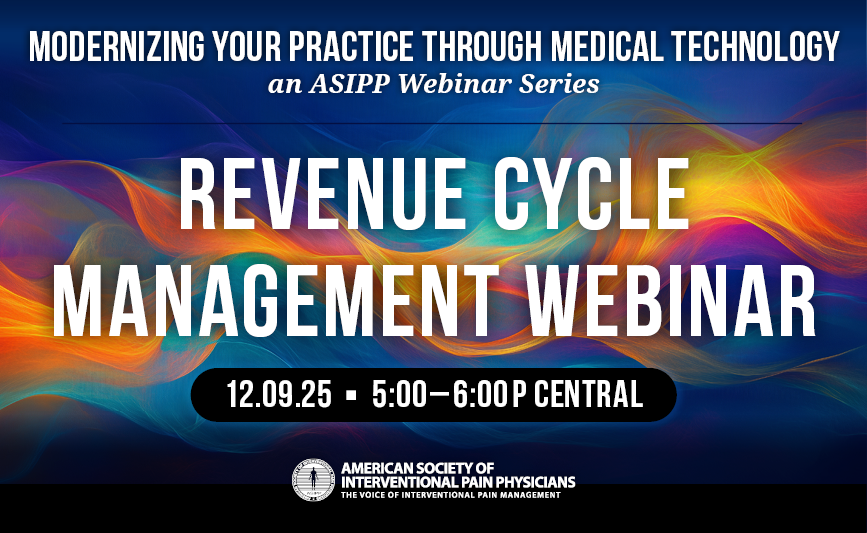
ASIPP will be providing you with additional analysis and is considering providing a webinar to highlight the key changes in 2026 Physician Fee Schedule for interventional pain management community.
2026 Fee Schedules
| | |
A recent publication in the Journal of Physical Medicine and Rehabilitation Sciences titled "Epidural Steroid Injection: A Bibliometric Analysis of the 100 Most Cited Articles" examined the top 100 most cited articles on ESI. The analysis found that the majority of high-impact articles in this area appeared in Pain Physician, with Dr. Laxmaiah Manchikanti authoring the most frequently cited articles and the Pain Management Center of Paducah emerging as the most represented institution. The study provides a comprehensive list of the most important articles on ESI from a historical perspective.
Click here to read the full article.
| | |
Does 'Sleepmaxxing' Really Improve Sleep?
Physician weighs in on social media trend promising the perfect night of sleep
Physicians agree that proper sleep is important for cognitive functioning, mood, and overall health. Enter "sleepmaxxing," the latest wellness trend that promises to maximize and optimize sleep.
Currently circulating on social media, sleepmaxxing appears to promote strategies like keeping one's mouth closed while sleeping, not drinking anything for a few hours before bed, showering at bedtime, eating a kiwi shortly before bed, setting a cold room temperature, ensuring a dark and quiet environment, using a white noise machine, and taking supplements, Laxminarayan Prabhakar, MD, a sleep medicine fellow at Long Island Jewish Medical Center, told MedPage Today.
"A lot of that can be very helpful," Prabhakar said. "But some of the supplements they talk about, such as melatonin, [are] usually not directed to help improve sleep efficiency. It's usually to help people with sleep disorders and sometimes people who are traveling to take it to help their circadian rhythm align, such as when they're traveling internationally."
Click here to read the full article.
| |
ASIPP is pleased to announce the launch of the Regenerative and Longevity Medicine Section!
This section reflects the growing importance of regenerative and longevity medicine—fields dedicated to restoring health, enhancing vitality, and extending the healthy years of life. From stem cell therapies and tissue engineering to gene therapy and orthobiologics, these disciplines are transforming the way we approach pain management and age-related decline.
Section membership offers:
- Access to ASIPP’s physician database and future data registry
- Opportunities for certification and continuing education
- Section-exclusive resources and updates
No additional cost for ASIPP members!
| |
Upcoming ASIPP Webinars
Register today!
| | |
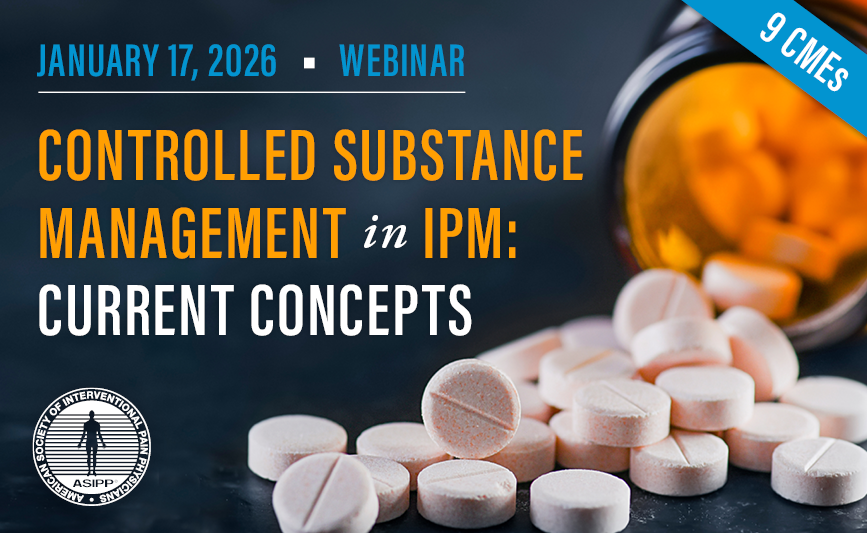
Join ASIPP on January 17, 2026, for an important webinar: Unveiling the Complexities of Controlled Substance Management in Interventional Pain Management (IPM).
Controlled substance management continues to present challenges for pain physicians, from evolving regulations and compliance requirements to balancing patient care with risk mitigation. This webinar will provide expert guidance to help you navigate these complexities and strengthen your practice.
| | |
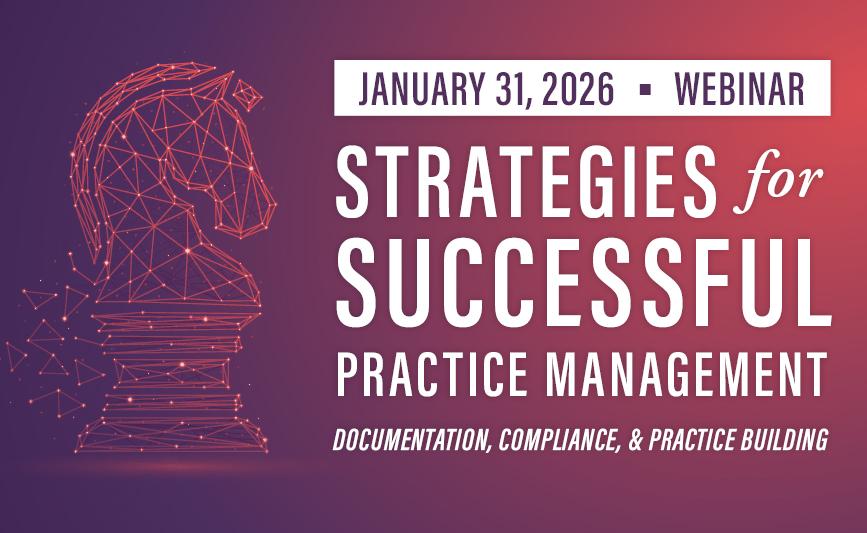
Join ASIPP on January 31, 2026, for our webinar Strategies for Successful Practice Management. This program will focus on practical approaches to strengthen your practice through improved documentation, compliance strategies, and effective practice-building techniques.
Whether you are looking to optimize workflows, ensure regulatory readiness, or position your practice for long-term growth, this webinar will provide valuable insights to support your success.
| | |
Almost half of US states have passed comprehensive consumer data privacy protections that go beyond federal health privacy rules, known as Health Insurance Portability and Accountability Act (HIPAA).
The legislative push aims to close a widening security gap as more care, communication, and personal data move online — and beyond HIPAA’s limited scope.
While the laws are designed to protect consumers, they’re also reshaping expectations around how healthcare organizations should handle non-HIPAA-protected data in an increasingly digital landscape.
Click here to read the full article.
| | |
ASIPP is proud to launch our Resident and Fellow Mentorship Program. This initiative is designed to connect trainees with experienced pain physicians to foster professional growth, provide guidance, and strengthen the future of our specialty.
Each mentor would be paired with one to two trainees, but can take more if interested. Trainees will be responsible for initiating introductions and arranging at least one to two video calls per year. These sessions will provide opportunities for mentees to seek advice on clinical decision-making, career planning, research opportunities, and professional development.
We believe that your experience, expertise, and insight can have a lasting impact on the next generation of pain physicians. By volunteering as a mentor, you will play a critical role in shaping the future of our field and ensuring that ASIPP continues to cultivate excellence in interventional pain medicine.
If you are interested in serving as a mentor, please confirm your participation by filling out the appropriate form below.
| | |
The American Academy of Family Physicians is aiming to improve the matching process
The residency match has long been a source of stress for newly minted doctors and medical schools alike, but the American Academy of Family Physicians (AAFP) is launching a new initiative that its leaders hope will change all that.
"What we really aim to do is increase the primary care workforce to improve the health of the U.S.," Karen Mitchell, MD, vice president of national residency and academic partnerships at AAFP, said in a phone interview at which a public relations person was present. The initiative, known as the Residency Selection Improvement Initiative, "is a piece of a much broader effort to increase the number of students [choosing] family medicine," she noted.
But the initiative will apply to more specialties than just family medicine, she continued. "We're closely working with NRMP [the National Resident Matching Program], and for the NRMP, whatever is done for family medicine has to be done for all specialties," she explained. "It will be things that are applicable to multiple specialties, [as well as] making sure it will meet family medicine's needs."
Click here to read the full article.
| | |
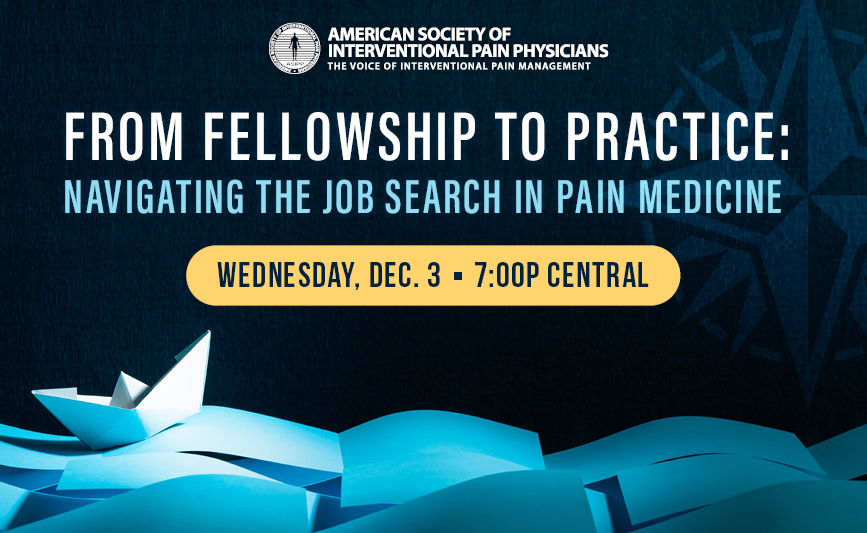
Finding and accepting their first job after medical school and residency is a major transition for new physicians. It’s also often a temporary one. In less than 3 years, nearly 6 in 10 doctors will have left their first positions for proverbial greener pastures, according to a survey conducted by Jackson Physician Search and the Medical Group Management Association.
What drives that trend, and what are new physicians looking for in a first job? Doctors share the factors they weigh when deciding whether to take a job or leave one.
Surprising (or not?) Statistics
The Jackson survey found that 13% of new physicians left their first job within 12 months, and more than a quarter considered leaving that job during that year. By 2 years, nearly 40% of physicians had considered leaving. Yet 7 in 10 administrators expect newly hired physicians to stay 6 years or more, so there’s a disconnect between administrators’ expectations and reality.
Click here to read the full article.
| |
Join Us in New Orleans for ASIPP 2026
Earn CMEs, Expand Networks, and Explore the Future of Pain Management
| | |
It is our pleasure to invite you to the American Society of Interventional Pain Physicians’ 2026 Annual Meeting, where we will continue to shape the future of Interventional Pain Management.
This 28th Annual Meeting will take place Thursday, March 19 through Saturday, March 21, 2026, at the Hilton New Orleans Riverside in New Orleans, Louisiana.
The 2026 Annual Meeting will provide the tools, knowledge, and connections you need to thrive in the evolving field of interventional pain management.
| | JOIN or RENEW your ASIPP Membership for the best registration rates. | |
By
Dr. Shravani Durbhakula
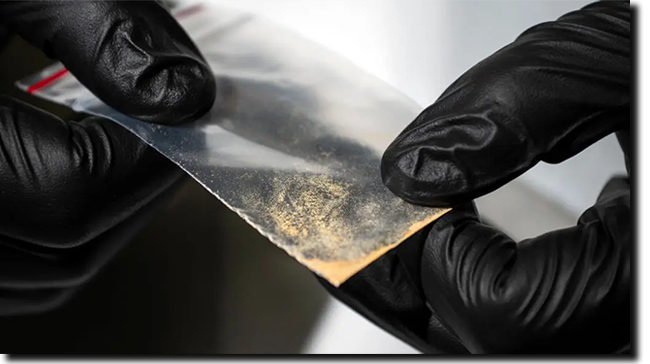
In Tennessee, data pins Knox County as the hotspot for emerging synthetic opioids known as nitazenes—compounds estimated to be 10 to 40 times stronger than fentanyl, now appearing in the illicit drug supply across the United States.
Yet, according to Chris Thomas, Chief Administrative Officer at the Knox County Regional Forensic Center, Tennessee’s overdose map is more reflective of where testing is happening, not necessarily where people are dying. “It’s not that Knox County is definitely the hardest-hit spot of the epidemic,” he explains. “Other counties simply don’t have the resources to test for drugs like nitazenes or other novel synthetics. They only have the funding to run basic panels.”
That chilling insight exposes a national blind spot. Across the country, medical examiner and coroner offices—our first line of defense in understanding what’s killing Americans—are unable to detect many of the compounds fueling the next phase of the overdose crisis. But simple changes could be transformational.
Click here to read the full article.
| | |
Patients with inflammatory bowel disease (IBD) who filled an opioid prescription within 7 days of discharge from an emergency department (ED) or hospital had higher odds for ED revisits, rehospitalization, and medication escalation than patients who did not fill such prescriptions.
METHODOLOGY:
- Opioids are often prescribed to manage pain in patients with IBD, but there is limited evidence of their analgesic benefit and concern that their use may worsen outcomes in this patient population.
- Researchers retrospectively analyzed private health insurance claims of 35,890 adults with IBD (mean age, 42.4 years; 54.9% female) who had an ED visit, hospitalization, or both between 2017 and 2021 and who had not received an opioid prescription in the prior 6 months.
- Patients (17,108, Crohn’s disease; 18,782, ulcerative colitis) were grouped into those who received an opioid prescription within 7 days of discharge and those who did not. Common opioids included hydrocodone, oxycodone, and tramadol. Overall, 7892 (22%) patients filled an opioid prescription within 7 days of discharge.
Click here to read the full article.
| | |
Apply now!
December 13, 2025
January 24 & February 7, 2026
Four (4) hour virtual exam
- ABIPP Path – Combined CCPM/ CSM Exam
For those with subspecialty in Pain Medicine
Two (2) hour virtual exam
- ABIPP Competency Exam in IPM
For those without primary board certification
Two (2) hour virtual exam
- ABIPP Competency Exam in Regenerative Medicine
Two (2) hour virtual exam
- Controlled Substance Management Competency Exam
Two (2) hour virtual exam
- Documentation, Coding, Compliance, Practice Management Competency Exam
Two (2) hour virtual exam
| | |
Over-the-counter (OTC) pain medications were as, or more effective, than prescription opioids at relieving dental pain after wisdom tooth extraction, new research showed.
The pain relief was consistent across both sexes, which is notable because women report more postsurgical pain.
In a large trial of more than 1800 patients, investigators found that patients who took a combination of ibuprofen and acetaminophen experienced less pain and had fewer adverse events than their counterparts who took a combination of hydrocodone with acetaminophen.
Click here to read the full article.
| | | |
We're excited to let you know that the new ASIPP Community, hosted by DocMatter, is now live!
The ASIPP Community on DocMatter will serve as a place for members to collaborate around clinical and research topics to advance the care of their interventional pain patients.
Click here to be a part of the conversation!
| | |
Pain Medicine Case Reports (PMCR) and Editor-in-Chief Alaa Abd-Elsayed, MD, PhD would like to invite you to submit case reports and case series to the PMCR journal. Your article will be published free of charge.
Open access journals are freely available online for immediate worldwide open access to the full text of published articles. There is no subscription fee for open access journals. Open access journals are no different from traditional subscription-based journals: they undergo the same peer review and quality control as any other scholarly journal.
Interested in becoming a member of the PMCR Editorial Board?
Editorial board members are asked to review 2-6 manuscripts per year. Please submit your most up-to-date CV to sgold@asipp.org for consideration.
For more information or to submit your articles, click here.
| | |
We are excited to announce that Pain Medicine Case Reports (PMCR) journal (eISSN 2768-5152) has been accepted for inclusion in MEDLINE and PubMed, the prestigious bibliographic database of the U.S. National Library of Medicine. PMCR, a companion publication to the prestigious Pain Physician journal by ASIPP, joins its counterpart in achieving indexing in both MEDLINE and PubMed, marking ASIPP’s dual presence in these renowned databases.
The inclusion of PMCR journal in MEDLINE signifies a higher level of selectivity, as MEDLINE consists of the top 5,200 biomedical journals. This indexing also means that articles from PMCR will be searchable using NLM Medical Subject Headings (MeSH terms) and other metadata.
The selection for MEDLINE follows a rigorous evaluation process by reviewers from the Literature Selection Technical Review Committee (LSTRC). According to their criteria, the scientific quality of a journal’s content is the primary factor considered for indexing.
We extend our congratulations to the Pain Medicine Case Reports Editor-in-Chief, Deputy Editor-in-Chief, Journal Team, and Editorial Board for this achievement, which underscores the significance and excellence of this esteemed journal.
| | | | |