|
The Great Easter Egg Hunt
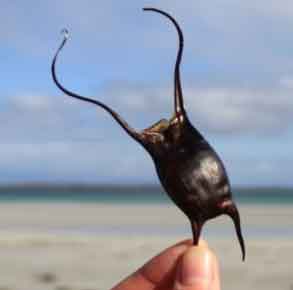
The Shark Research Institute in New Jersey, the Living Sharks Museum in Rhode Island, and Australia's National Science Agency are asking beach walkers to pick up Mermaid's Purses, the egg cases of sharks, skates and rays, and record when and where you found them. Mermaid's Purses are the leathery egg cases of oviparous sharks and skates. They come in various colors, may range in length from 1.5 to to almost 10 inches and can be smooth, ridged or corkscrew-shaped depending on the species. Mermaids' Purses are important to conservation; they let marine scientists know where different species live, the size of the population in a certain area, and where their nurseries are located.
| |
|
Abuse on Marine Stewardship Council Vessels
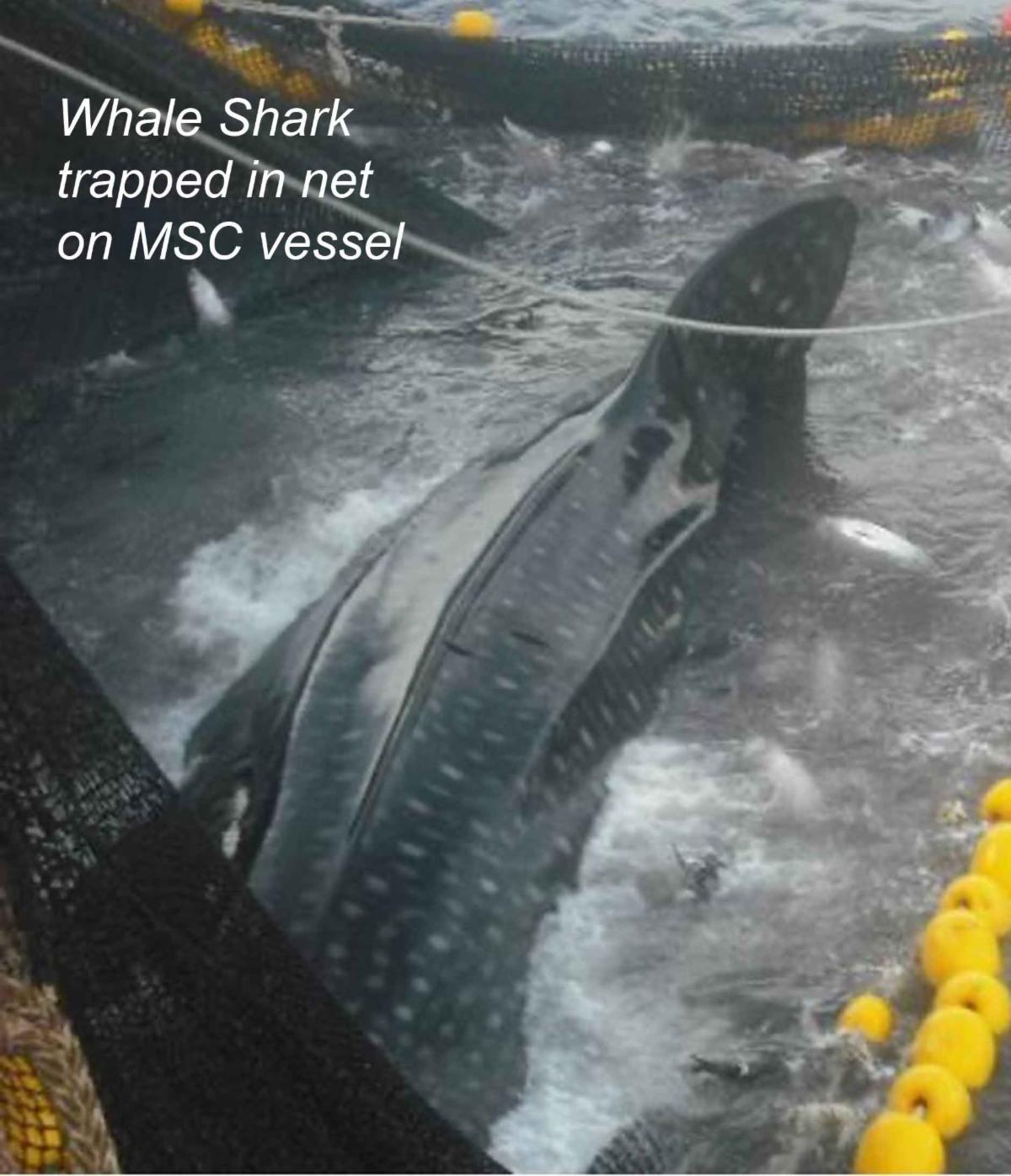
Fishery observer reports of shark, ray, dolphin, and whale abuse on Marine Stewardship Council (MSC)-certified vessels in the Western and Central Pacific Ocean are still routinely ignored according to a new report: ‘Behind the MSC Blue Tick’. The report is the result of an investigation into unreleased fishery observer data (2017-2021) obtained from whistleblowers. The report identifies 330 incidents of shark, ray, whale and dolphin interactions that took place on MSC-certified vessels. In most of these cases, species of special interest were mistreated. The report alleges MSC-certified vessels deliberately set their nets around whales and protected species such as whale sharks, silky sharks, oceanic whitetip sharks, giant manta rays a nd devil rays. It also alleges MSC-certified vessels conducted illegal, unlicenced and unregulated, unreported fishing, and actively fished around floating Fish Aggregating Devices during closure periods. It also cites discrepancies in reporting target and non-target bycatch species and high grading of catch, in addition to interference in observer duty and mistreatment of vessel crew on MSC-certified vessels.
| |
|
Gujarat Government rescued 91 whale sharks
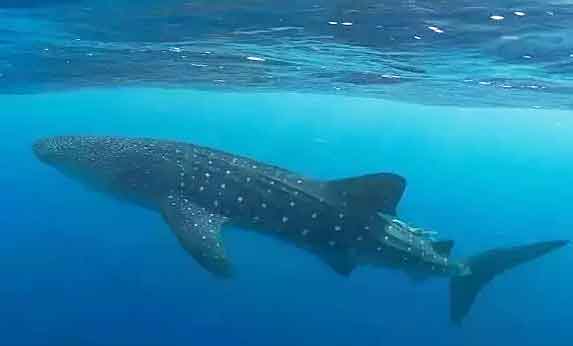
In 1972, the whale shark was the first shark species to be listed under Schedule-1 of India's Wildlife Protect Act. Since 2012, whenever a whale shark is trapped in a fisherman's nets the government rescues the shark and pays compensation to the fishermen. In 2021, 50 whale sharks were released and Rs500 lakh paid to fishermen as compensation, and in 2022, 41 more whale sharks were released with Rs 4.22 lakh paid as compensation.
Read more
While this is good news, India still remains the second largest shark catching nation in the world. With no domestic market for shark fins, almost all the fins from India end up in the international market. There are also huge discrepancies in the amounts of shark fins in the trade; according to data reported by Indian exporters, 167 tonnes of shark fins were exported, while import data from 10 countries shows that 403 tonnes of shark fins were imported from India between 2015 and 2020.
| |
|
Biodiversity of Coral Reefs Changes with Depth
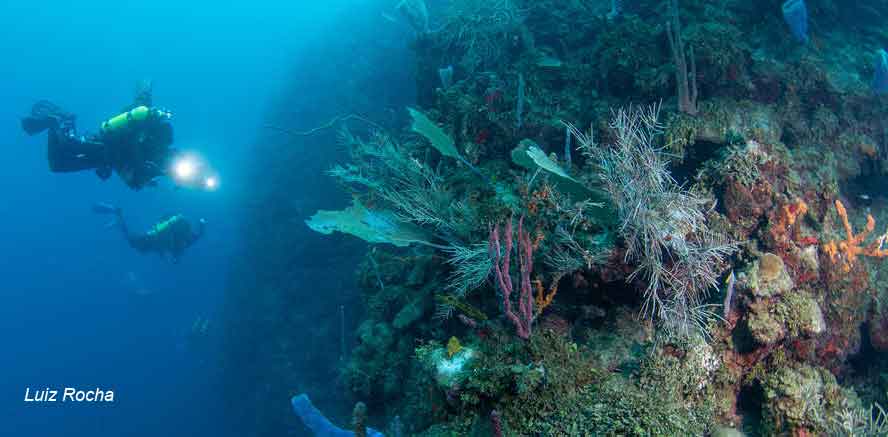
There are dramatic differences in biodiversity between shallow tropical and subtropical coral reefs and low light reefs found at depths from 100 feet to 500 feet (30 to 150 meters) reports the California Academy of Sciences. The study is based on hundreds of dives totaling more than a thousand hours underwater at sites across the Pacific and the Atlantic. While the deeper reefs have a larger geographic range than shallow reefs, they are unlikely to offer a refuge for shallow water fishes trying to escape climate-change driven warming on the ocean's surface. Niches in deeper reefs where newly arrived species might survive are already filled by species that evolved under the distinct environmental conditions found at depth. These deeper reef habitats are vulnerable, essential for climate change resilience, and ocean health, but are largely unprotected. "We need to be incorporating deep reefs in the myriad coral reef conservation initiatives around the world,” says Hudson Pinheiro, PhD. lead author of the study published in Current Biology.
| |
|
UN Taking Deep-Sea Mining Applications
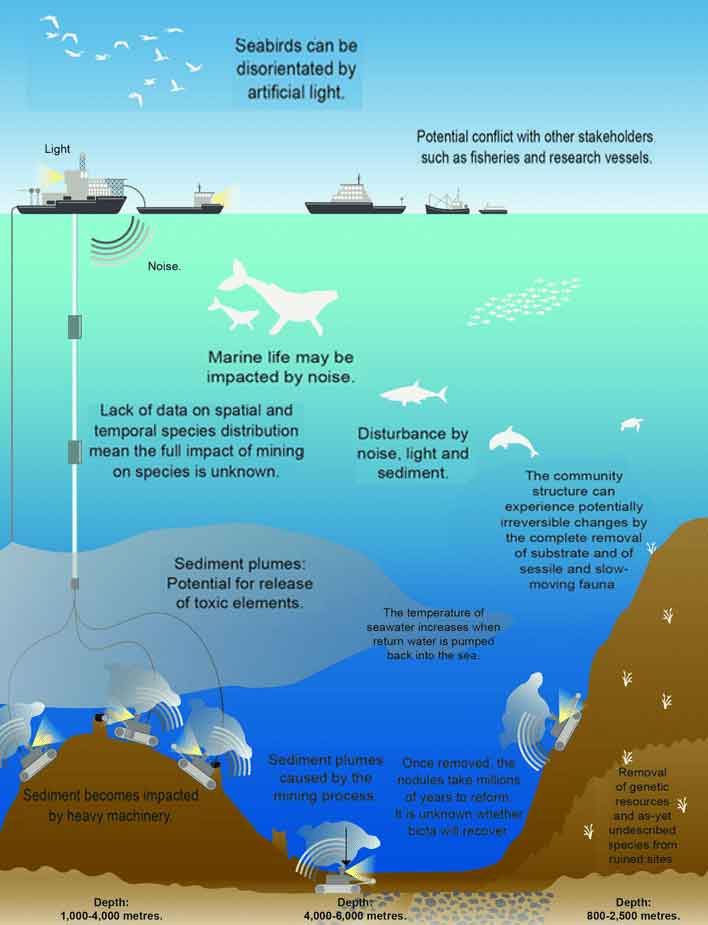
The International Seabed Authority will start accepting applications on July 9, 2023, from companies that want to extract materials from the ocean floor at depths of 2.5 to 4 miles. The ISA's governing council formulated a draft decision that allows companies to file permit applications starting this July. The ISA's staff would then have three business days to inform the council. To date, 21 countries or companies hold permits to mine roughly almost 600,000 square miles of seafloor.
The most direct impact of deep sea mining is eradication of many species found nowhere else (they could be lost or take centuries to recover, if ever). Impacts of deep sea mining also include noise pollution, damage to the sea floor, contamination by mining waste, sediment plumes that could smother vital habitats and discharge of harmful concentrations of toxic metals.
Chile, France, Palau, Fiji and many other nations are calling for a global moratorium on deep sea mining due to environmental concerns and a lack of sufficient scientific data. More than 700 ocean scientists and 12 countries agree the risks of deep sea mining are still largely unknown and the risks range far beyond the benefits.
| |
|
Child of the Wild Coast
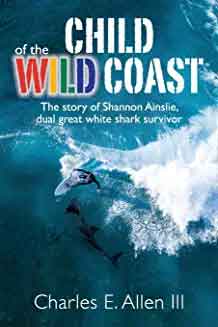
This fascinating and superbly researched book by Charles E. Allen, III, tracks the life of Shannon Ainslie, a South African surfer who experienced simultaneous incidents with two white sharks. The incident dominated international news for months. The tale weaves around Shannon's encounter, the sharks of South Africa, the risks of surfing, and how teen boys mature. The book truly deserves to be in every library and on the NY Times Best seller list.
$15.99 from Amazon.com
| |
|
Stan Waterman
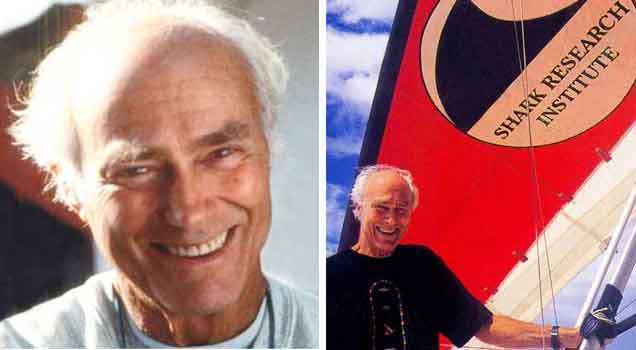
April 5th was a special day for Stan Waterman, as SRI, the Women Divers Hall of Fame and thousands of Stan's friends around the world celebrated his 100th Birthday! We are extending the celebration so please keeping those cards and warm wishes coming. Cards can be sent to him at:
Stan Waterman
c/o Shark Research Institute
70 Heather Lane
Princeton, NJ 08540
USA
| |
|
NOAA Online Panel Discussion
"Building a climate-ready nation by 2030"
DATE: Wednesday, April 12, 2023
TIME: 1:00 – 2:30 pm
One of NOAA's strategic priorities include building a Climate Ready Nation by 2030 (CRN). A live virtual panel of NOAA senior leaders will discuss NOAA's unique role, capabilities, and challenges in building a CRN. The panel will have an opportunity to interact and address overarching questions as well as answer questions from the online audience. Note: There is a limit of 1,000 online seats on a first come first served basis. The webinar will be recorded for later viewing.
Remote Access
| |
|
The 20th Annual
International Ocean Film Festival
DATES: April 13-16, 2023
LOCATION: Cowell Theater for Arts & Culture in Fort Mason, 2 Marina Blvd, San Francisco, CA 94123
This acclaimed festival presents ocean-themed films from all over the world that are largely unavailable to the general public. Themes range from marine science and industry to sports and adventure. The festival presents films that entertain, educate, and encourage active participation in ocean conservation.
Read more
| |
|
The Great Blue Wall Initiative
The Western Indian Ocean (WIO) is home to 38% of the world’s coral reef species, but only about 7% of the region’s coastal and marine environment has some form of protection with all coral reefs in the region at risk of total collapse within the next 50 years. Led by Western Indian Ocean countries, and supported by the International Union for Conservation of Nature and a coalition of partners, the Great Blue Wall Initiative is calling innovators to help restore the WIO while creating economic opportunities for the 70 million people currently dependent on it. The Initiative aims to protect 30% of the WIO by 2030, develop a regenerative blue economy and create millions of jobs by supporting local communities through funding, training and technical assistance.
Start-ups and social enterprises are being asked to help by submitting solutions that are beyond an idea or prototype phase in the following five areas: 1. Sustainable and equitable use of ocean resources; 2. Supporting activities; 3. Pollution (excluding plastic); 4. Seascape conservation and restoration; and 5. Protecting and restoring blue carbon ecosystems.
Submissions for the Great Blue Wall Initiative may be made to the World Economic Forum's Uplink Innovation Network Programme. The deadline for submissions is April 24, 2023. Winners will be announced on World Ocean Day on June 8, 2023, and will be featured in the African Climate Action Summit and the 2023 UN Climate Change Conference (COP28). They will also be recognized as “top innovators” to advance the Initiative.
| |
|
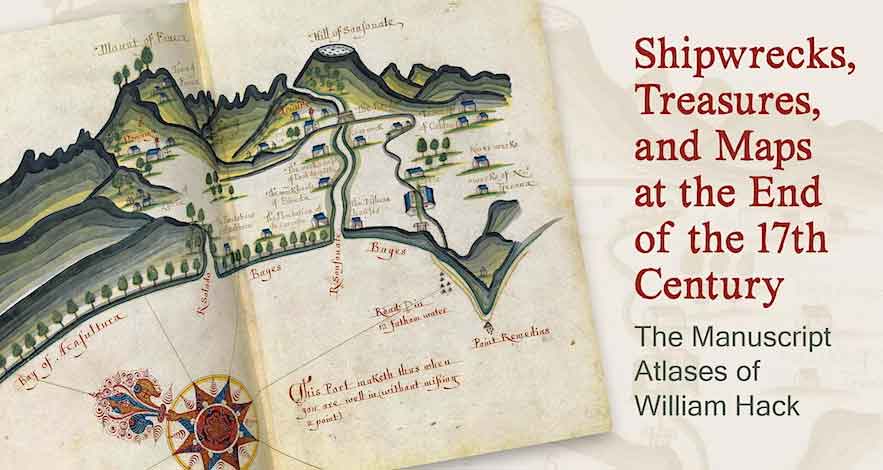
Shipwrecks, Treasures, and Maps at the End of the 17th Century: The manuscript atlases of William Hack
DATE: Thursday, April 13, 2023
TIME: 1 p.m. (EDT)
Join Chet Van Duzer, author, historian, and cartographer, in conversation with Arthur Dunkelman, curator of the Jay I. Kislak Collection at the University of Miami Libraries in Coral Gables Florida, as they look at the kinds of equipment available for recovering materials from shipwrecks in the late 17th century and discuss the manuscript atlases made by the English cartographer William Hack.
William Hack's beautiful maps, copied from a "derrotero" (sailing directions with maps) captured from a Spanish ship in 1680, show the locations of several shipwrecks, unusual in 17th-century maps. His later atlases also include indications of the amount of treasure on those ships. Van Duzer argues that this change was inspired by William Phips' spectacular recovery of treasure from a Spanish wreck in 1687. Phips' recovery increased appreciation of shipwrecks as a potential economic resource and the addition of information about sunken treasure to his atlases created an extra source of value in his works, as guides for the discovery of treasure. This Special Collections event is free and open to the public and will be hosted using Zoom software. It will be followed by an audience question and answer session. All events in this series will be recorded for on-demand access following the broadcasts.
Reserve a space
| |
|
No Support Ship Needed For This Robot
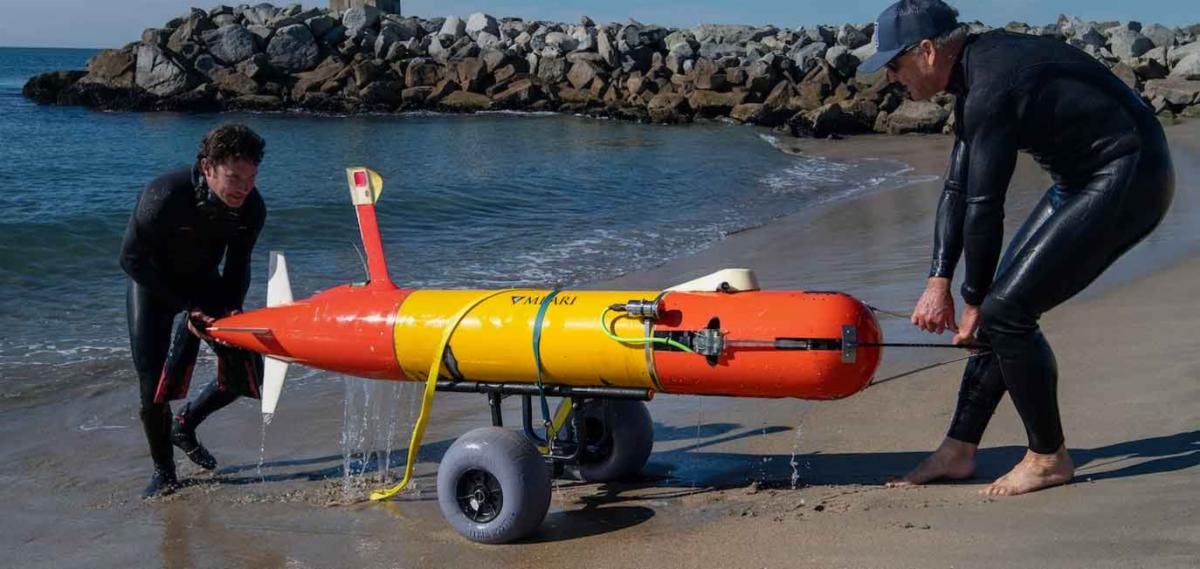
Autonomous robots are essential to the future of ocean science and exploration. Engineers at Monterey Bay Aquarium Research Institute (MBARI) have been developing ocean science robots that work independently of ships. Their long-range autonomous vehicle (LRAUV) is a nimble robot that travels through the water and can be deployed from beaches, piers, and small boats to run complex missions on its own for weeks to months collecting information about the physical, chemical, and biological characteristics of its surroundings. MBARI has a fleet of eight LRAUVs. Each carries a unique payload for water sampling, microbial analysis, acoustics, or imaging.
| |
|
Notes
Free to Library or School: National Geographic Magazines. We have Hundreds of issues of NGM from the 1920’s to present, including many bound volumes. Must pick up at SRI Headquarters.
Amazon.com is offering an opportunity to generate donations to the Shark Research Institute at no extra cost to you. Simply start your shopping at smile.amazon.com/ch/22-3110087, confirm "Shark Research Institute, Inc." as your charity of choice, and Amazon will make a donation to our organization.
Consider a tax-deductible year-end gift to the Shark Research Institute. Just mail a check to SRI at 70 Heather Lane, Princeton, NJ 08540, USA, or go to the link on our website.
You may join or renew your membership in the Shark Research Institute, or make a donation of any size at https://www.sharks.org/donate
Note: All donations are tax-deductible from U.S. federal income taxes as
charitable donations and help fund our field research, advocacy and education programs.
| |
Please share this free weekly newsletter with your friends and family to help grow our audience. All they need to do to receive the newsletter is simply sign up on our website’s home page (https:www.sharks.org)
We all have a lot of work ahead to protect sharks and the ocean,
and combat climate change while there is still time.
| | | | |