|
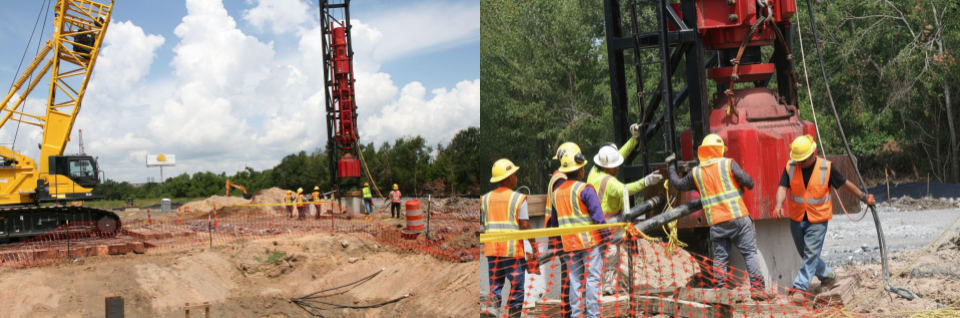
After years of meticulous planning and the celebratory momentum of our official groundbreaking this past spring, the I-10 Calcasieu River Bridge Replacement Project has reached a monumental phase with the driving of the first piles.
For those traveling through the I-10 corridor, the recent sights and sounds of heavy machinery signal a major turning point. This milestone is much more than just another box checked on the project schedule. It is the new bridge’s foundation taking root in Southwest Louisiana.
To fully appreciate the significance of this step, it helps to understand what pile driving actually entails. A "pile" is a long, incredibly durable structural element, typically made of heavy steel or reinforced concrete, that is driven deep into the ground to provide a stable base for massive structures.
Because the soil composition near the Calcasieu River requires deep support to bear the weight of a modern interstate bridge, these piles must be anchored down into a solid, load-bearing layer of earth. The rhythmic thuds echoing near the site are the sounds of specialized hammers securing the literal bedrock of our region's new infrastructure.
The importance of these first piles being driven cannot be overstated, as it marks the definitive transition from site preparation to active, structural construction. While extensive engineering, utility relocation, and earthwork have been progressing for months, pile driving offers the first highly visible proof that the bridge is officially rising.
Every pile driven into the earth represents a permanent anchor for the substructure. These are the piers and columns that will hold up the road deck and safely carry tens of thousands of vehicles across the river each day.
|