Volume 24 Number 20, November 19, 2026

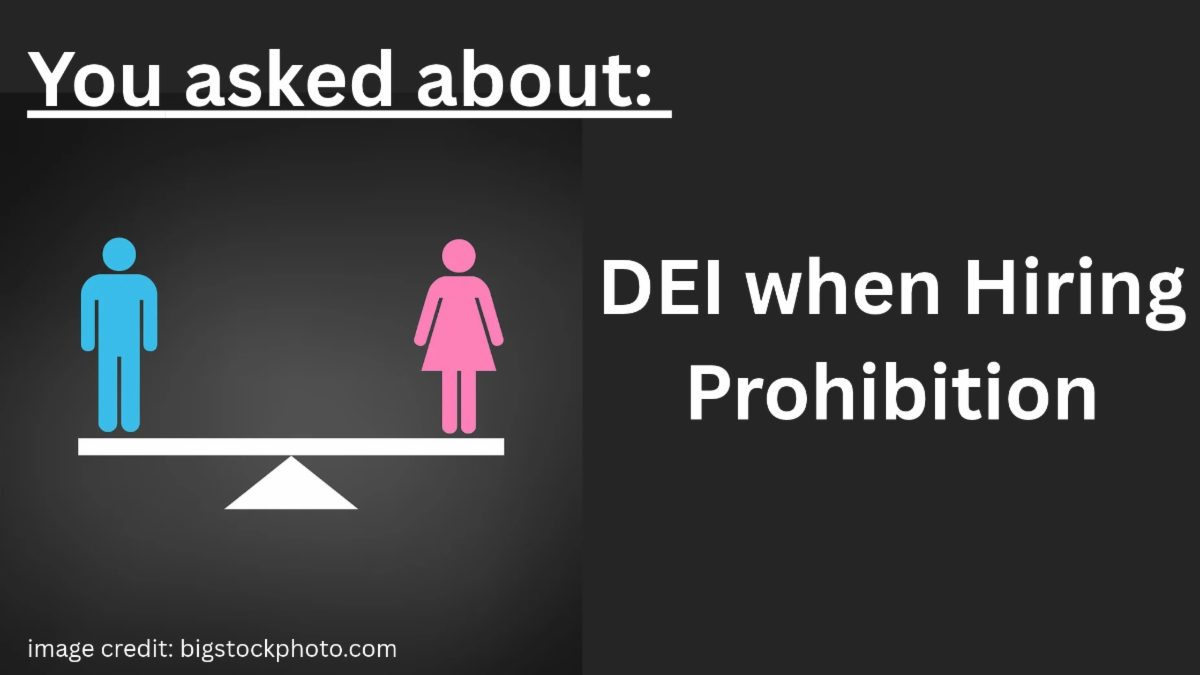
Legislation recently introduced by Alberta’s United Conservative Party government will prohibit provincially funded organizations from using Diversity Equity and Inclusion policies to make hiring decisions and from making DEI training mandatory.


Of this, a Briefly Noted reader wrote, “This is a very good thing, in my estimation, and I look forward to it extending itself to private business hiring practices, as well.” While she didn’t ask, her message implied that she wonders how I feel about the proposed restrictions. 


“Confused,” might be the best answer. I don’t understand what problem the proposed legislation seeks to solve or how it’s going to make a difference. 


Global News quoted Premier Danielle Smith saying that the changes “will ensure fairness” in hiring.


“Albertans expect public institutions to hire and promote the best qualified people and ensure that everyone has fair opportunity to succeed, based on their skills, experience and qualifications,” said the premier.


What is there to argue with? All hiring decisions should be based on merit. The rationale for DEI policies is also fairness in hiring and promotion. Wikipedia explains that DEI frameworks “seek to promote the fair treatment and full participation of all people, particularly groups who have historically been underrepresented, marginalized or subject to discrimination.”


The goal when hiring should always be to hire the right person for the job. 


Continue reading for more on ensuring biases don't derail hiring decisions >>>

I begin today with offer to Briefly Noted readers who are members of book clubs. If your club selects either Thanks! GREAT Job! Or Thanks, Again! as a book to read and discuss, I could be available to join the conversation. You need only ask. Email your invitation and something can be arranged. It is always a pleasure to talk with others who understand the power of staff recognition to demonstrate that staff members are valued for who they are and appreciated for what they achieve and how they contribute.


There’s just one caveat. Don’t ask me to pay for the “privilege” of meeting with you group. If you do, expect your email to be labelled as a “SCAM.”


I say this because about a month ago I almost stepped into a trap set by an innocent sounding email from the “San Diego Walking 20s-30 Rotaract.”


“A discussion came up from our reading session…through your book, which we found meaningful. We have a group conversation coming up and would like to include your perspective.” Would I be open to a conversation?


Continue reading: how I discovered this was a scam >>>

Describe a time when you were asked to implement a decision with which you disagreed.


Why Ask this Question: Once a decision is made—even one which they don’t understand or with which they disagree—top performers will do what is now expected of them. To understand why, they may ask questions about the background of the decision. They may offer input on how the change is working and suggest ways to improve its implementation.


Suggested Followup Questions:

  • What was the decision?
  • Who made this decision and why?
  • Why did you disagree with the decision?
  • What did you say or do?
  • Who did you share your thoughts with?
  • What was the long-term outcome of the decision?


How candidates may respond and how to score those responses:


Unsatisfactory response (worth a score of 1) – These candidates ignored the decision and kept doing what they had always done. “No one seemed to care.”


Acceptable response (score as 3) – These candidates may not have felt it was the right decision but they went along with it. “You have to trust the bosses. They likely had more information than I did.”


Outstanding "top-performer" response (worth a 5) – These candidates wanted to know why the decision was made. They asked questions. “It’s easier to change when you know why the change is being made.” Even if they still disagreed they went along with it, but they may have suggested ways to tweak what was happening to make it work better.


Reference Check Question: Describe a time when [candidate’s name] disagreed with a decision made within the organization.


Caution: Each workplace and every manager is unique. Workplace cultures and values are different. There is no such thing as a perfect interview question. Questions that work for one manager may not work for another. Before choosing to use this, or any question, consider whether it fits your unique set of circumstances. Is the question right for you and your work environment? The same is true for the suggested rating scale, which may or may not reflect the culture of your organization or your observations of how your top performers respond to circumstances similar to those described. You should adapt both the question and rating guide to fit your circumstances and leadership style.


During my Interview Right to Hire Right workshops, participants learn to write behaviour description interview (BDI) questions based on their understanding of what makes top performers successful.

Tips to Create Inclusive Workplaces where Everyone Feels They Belong:


Respect and treat all staff members with dignity, without regard to their role within the organization. Everyone matters. Everyone contributes. Everyone has thoughts worth hearing. 


*****

Strive to understand the culture of others. Don’t assume. Verify the truth about cultural stereotypes, which may introduce unconscious biases into your recognition practices. Ask questions to understand. “I want to learn more about you and your culture.”


*****

Fear of offending others can prevent us from learning more about the values and culture of those with whom we work. What will they think? Will I be showing my ignorance? Will I be asking questions to which I should already know the answers? Don’t allow fear and discomfort to stop you from asking people what you can do to ensure they feel they belong. If you don’t engage with people, how will you increase your understanding?


*****

Involve a diverse group of staff members in planning for recognition. Seek their input on how to celebrate success. Be prepared to change practices that may unintentionally exclude people (Family responsibilities may be a barrier to attending evening celebrations, events involving alcohol may deter the participation of others, etc.) 


*****


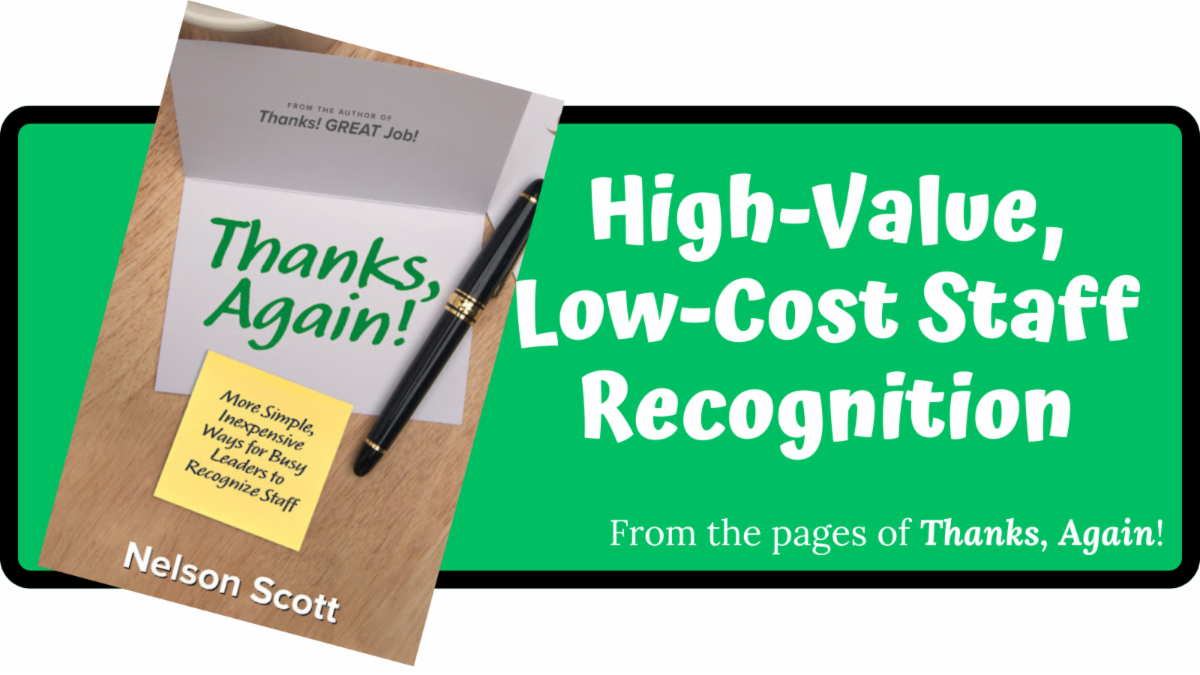
Thanks, Again! More Simple, Inexpensive Ways for Busy Leaders to Recognize Staff is available at Audreys Books, 10702 Jasper Ave., Edmonton (and on its website) and online from Amazon, Indigo, FriesenPress Bookstore, Barnes & Noble and on the Apple Books app.

CONTACT NELSON SCOTT:
Telephone: 780-232-3828 • Email: nelson@GREATstaffrecognition.com