Deer offer opportunities to teach about forests | | |
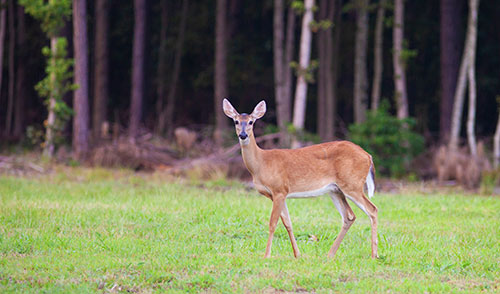
The iconic white-tailed deer stirs many emotions among Wisconsinites. Hikers love to see the beautiful animals in parks or along trails, and hunters hope to encounter them near their stands throughout the fall. But there are also situations where we would rather not see deer - near the road, of course, or munching on our gardens and orchard trees.
Likewise, too many deer in one place can make forest regeneration more difficult. A great deal of research and science-based decisions go into managing deer and the forests where deer live to try to find a happy balance. You can bring these management issues into the classroom and help students learn why some areas of the state wish they had more deer, while other areas sometimes feel a little too crowded.
Students may be curious about what makes a good habitat for white-tailed deer or want to know how to make the forests around their school more welcoming for deer. In Habitat Assessment, LEAF’s high school field enhancement lesson, students research the specific habitat requirements of an animal, then develop a list of habitat components that would meet that animal’s needs. Students then develop a habitat assessment protocol and conduct the assessment in the school forest or other nearby woodland. Finally, students analyze their data to decide whether that location would serve as a good habitat for the animal or not.
For a lesson that explores the interplay between deer and forest management, take a look at Forest Management Issues. Students discuss factors that can affect management decisions and examine forest management techniques to determine their effect on society, the economy and the environment. In addition to getting into the scientific side of forest management, this lesson also provides a great opportunity to introduce how our diverse beliefs, values and knowledge affect how we view controversial issues.
| |
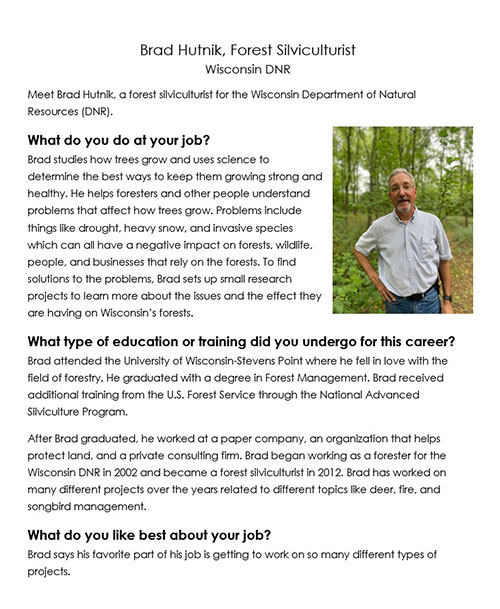
The topic of deer and forest management may also be an opportunity to spark students’ career interests. After all, these management techniques that students are learning about in the lessons above are practiced by real people in the real world! For resources to support careers education, go to LEAF’s new Forestry Careers Hub. Here you can find Forestry Career Profiles and Biographies for jobs like Forest Silviculturist or Wildlife Biologist, which explain what these careers do and how people with these jobs got there. Keep an eye on this Careers Hub page, as it will continue to be developed over the next year.
No matter which part of the state you live in, we hope you will use this high-interest topic to help students connect to the forests and wildlife in their communities.
| | Welcome Alex to the LEAF Team! | | |
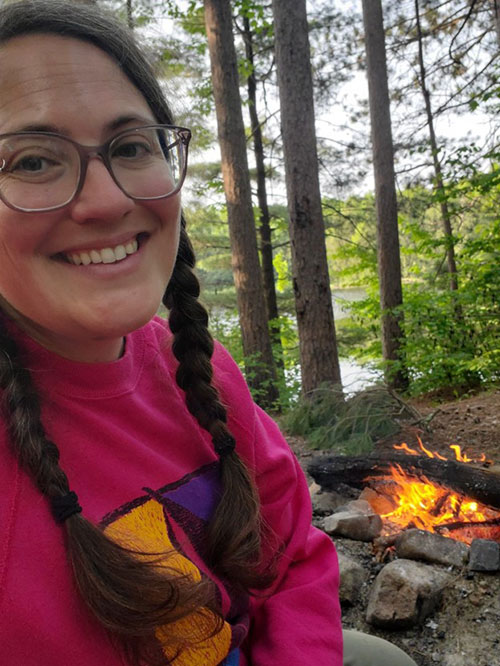
Alex Mentele has joined the LEAF team as its Urban Forestry Education Specialist. In that role, she partners with educators to unlock the potential of school grounds as spaces for rich learning and engagement with the natural world.
"Some of my most meaningful experiences as an educator happened outdoors," said Alex. "Educators do incredible work engaging students in hands-on learning, and I'm excited to support those efforts and help schools make the most of their outdoor spaces."
| | Climate Science, Stories, and Solutions: Energy and Forestry | |
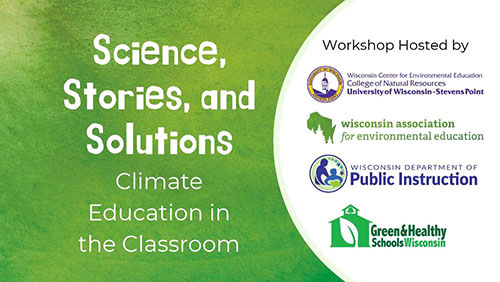
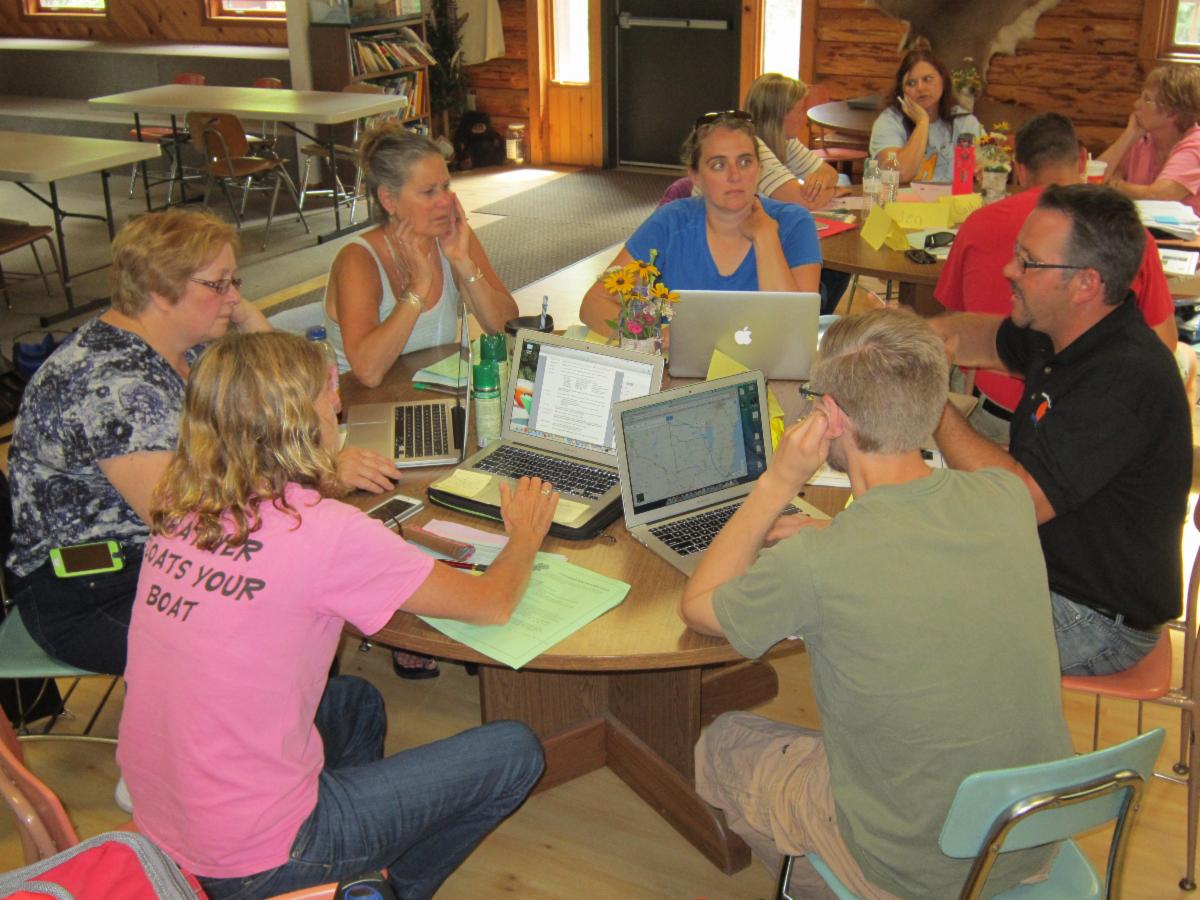
LEAF is offering a Climate Science, Stories, and Solutions: Energy and Forestry session as part of the Science, Stories, and Solutions: Climate Education in the Classroom three-part workshop series with its Teach Wisconsin Climate Network partners.
Join us from 9 a.m. - 3 p.m. Friday, March 5, at the Food and Farm Exploration Center in Plover to explore carbon cycling and climate science through forestry, energy, water and wildlife topics.
Lunch is included with registration. K-12 classroom educators are eligible for a $50 stipend.
| | |
Are you a Wisconsin-licensed teacher?
Take this 10-minute survey to share your thoughts on outdoor and environmental education and help shape a statewide approach to climate education.
Survey closes Nov. 25.
| | | Self-paced, Online Trainings | |  | School Forest Foundational Planning | |
Bring a team and join fellow educators for a day of foundational planning focused on integrating your school forest into curriculum, identifying resources, engaging staff and building a program that lasts.
Date and time: 9:30 a.m. – 2:30 p.m. Tuesday, February 9, 2027
Location: Schmeeckle Reserve Visitor Center | Stevens Point, WI
| | School Forest seedling order form is open | | |
One benefit of being a registered school forest is access to free seedlings from the DNR Nursery to plant in the school forest. Popular species of trees go fast. If you desire to plant a certain type of tree, get your order in early. Once they are gone, they are gone! Follow these steps to place your school forest seedling order:
| | |
Attention 4th grade teachers!
The DNR is also now accepting Arbor Day free tree seedling orders.
| | |
-
Do your research first.
Landscapes for planting are very diverse. Consult your school forest management plan and DNR forester to find out which tree species are most suitable for your property. Available seedling types and descriptions can be found in the Nursery Seedling Catalog and DNR's tree and shrub inventory. The catalog explains the growing requirements and provides pictures and a distribution map of each species.
-
Once you have decided which species to plant,
Fill out the paper form. In the "Free Order" section, choose "Registered School Forest or Community Forest". Note: school forests do not need to order the bulk number of trees. You may order less than the minimum requirements listed; however, there is a maximum of 5,000 trees and 3,000 shrubs school forests can receive.
If you have questions, contact Carey Skerven at Carey.Skerven@wisconsin.gov or 715-424-3700, or contact your local DNR forester.
| | School Forest Award Nominations are open! | |
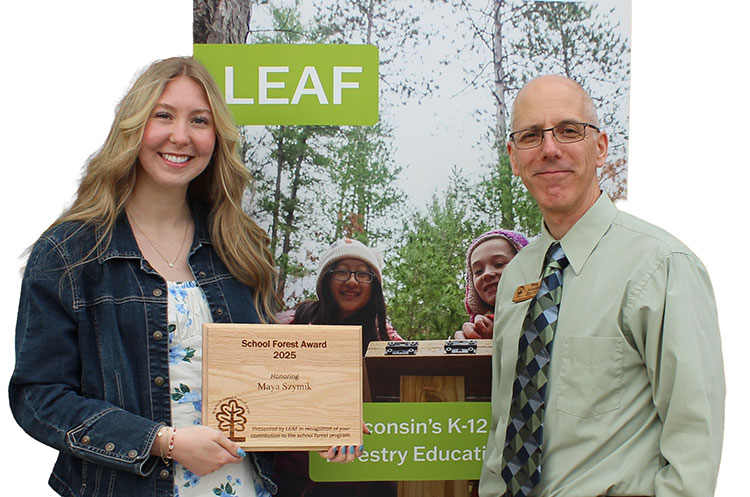
Each year, LEAF recognizes individuals and organizations that have made significant contributions to school forest programs.
Nominations are now being accepted for the 2026 School Forest Awards. These awards recognize individuals and organizations that have provided leadership and made significant contributions over a period of years to a local school forest registered through Wisconsin’s School Forest Program.
| | | WAEE Awards Nominations are open! | |
Know an outstanding educator, administrator, student, student group, eco-justice advocate, Wisconsin Association of Environmental Education (WAEE) member or leader in environmental education?
Nominate them for a WAEE Award! Nominations will be accepted until January 10th, 2027.
| | Check out the new Stewards of Sustainability video! | |
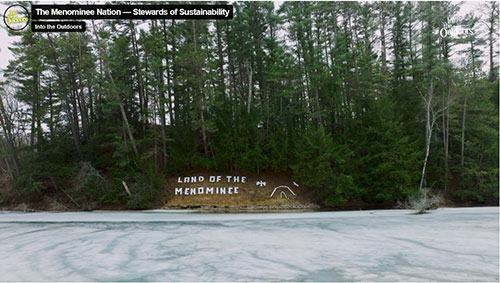
Perfect for this Native American Heritage Month and any time of the year, "The Menominee Nation — Stewards of Sustainability" is an episode of the educational TV series Into the Outdoors, created in partnership with the Society of American Foresters (SAF).
The episode explores the Menominee Nation's deep-rooted connection to the land and their traditions of sustainability. Consider using LEAF's American Indians and the Forest and Sustaining our Forests lessons from the 4th Grade Forestry Lesson Guide to enhance learning.
| | Have questions or need additional resources? Contact us at leaf@uwsp.edu. We are here to support educators and students with forestry opportunities. | | Published for November 2026 | | | | |