|
More Mandates, Higher Taxes:
The Hidden Bill Coming Due
What's Happening in Broomfield
June 1, 2026
Follow us on facebook
| | |
In This Edition:
- Broomfield’s Costly Housing Mandates
- Gas Station Reverse Setbacks
- Broomfield and Green House Gas Inventory
- Broomfield Council pushing for longer terms for the Mayor....again
- New TABOR Ballot Initiatives: Another Grab from Your Wallet
| | |
Politicians declare everything affordable while costs rise. That is, for anyone who can still afford it.
| | |
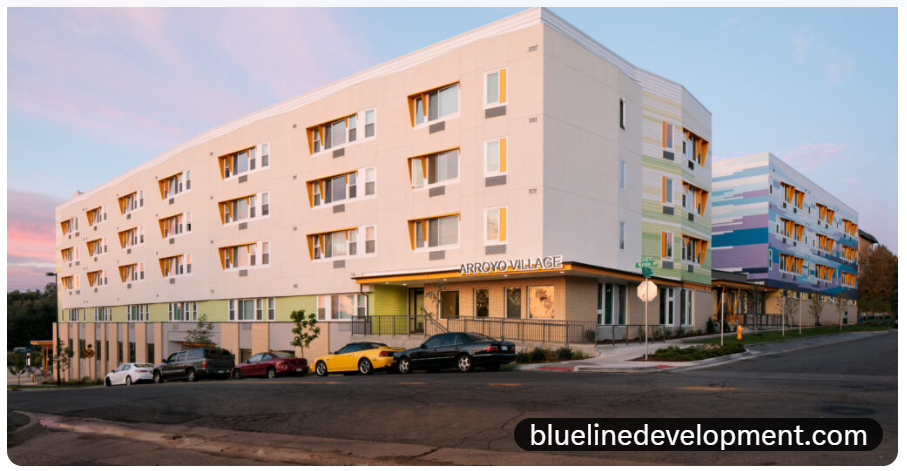
Broomfield's Expansive Housing Mandates
The City and County of Broomfield has released its 2026 Annual Action Plan as part of the 2025–2029 Consolidated Plan. Public comment was opened on April 26, 2026. The report was discussed at the May 26, 2026 meeting and forwarded to the state. Full documents are available at the City’s Housing Division: https://www.broomfield.org/270/Housing-Division
The plan directs federal Community Development Block Grant (CDBG) funds and other resources toward housing, economic development, and community services for low- and moderate-income residents.
Key priorities include:
- Safety and accessibility repairs for 16 low-to-moderate income homes.
- Tenant-based rental assistance, prioritizing seniors with a planned shift toward families.
-
Completion of The Grove at Cottonwood, a 40-unit permanently affordable, neuro-inclusive supportive housing project (all units income-restricted and heavily subsidized via LIHTC tax credits, state grants, and Section 811 vouchers).
- Anti-displacement efforts for mobile home residents.
- Small business microgrants, workforce programs, food pantry upgrades, and energy-efficient repairs.
- Launch of “Income-Aligned Housing Month” for public education.
The 2025 CAPER reports that the city completed 18 homeowner rehab projects and leveraged its $284,341 CDBG allocation with over $7.8 million in additional taxpayer funds for affordable housing and recovery efforts. From the CAPER report, 4.95% of residents (about 4,000) live below the poverty line. The most common racial or ethnic groups living in poverty are White, followed by Hispanic. This population is primarily comprised of females aged 25-34, followed by females aged 18-24, and males aged 25-34.
On taxpayer oversight and efficiency
Hard-working Broomfield families are right to ask: Where is our money really going? These programs rely on extremely complex, multi-layered funding structures involving tax credits, grants, and vouchers that most citizens simply don’t have the time to untangle.
Across the country, we have seen massive fraud schemes involving taxpayer-funded housing programs — from inflated construction costs in LIHTC projects to millions of dollars misused or stolen through false claims. No one wants Colorado or Broomfield to end up on that list. Yet the sheer complexity of these layered subsidies makes meaningful oversight nearly impossible for the average resident.
While the stated goals appear to be compassionate, frustration is building as we watch tax dollars fund heavily subsidized projects while Broomfield has become dramatically less affordable since 2017. Before the surge in housing mandates and regulations, private developers built what people actually wanted and could afford. Today, families struggle with high costs while the city layers on more bureaucracy and more expensive subsidized developments.
Taxpayers deserve real accountability, affordability and common-sense solutions — not just more complicated programs that few people can fully understand or oversee.
|
Reverse Setbacks Revisited
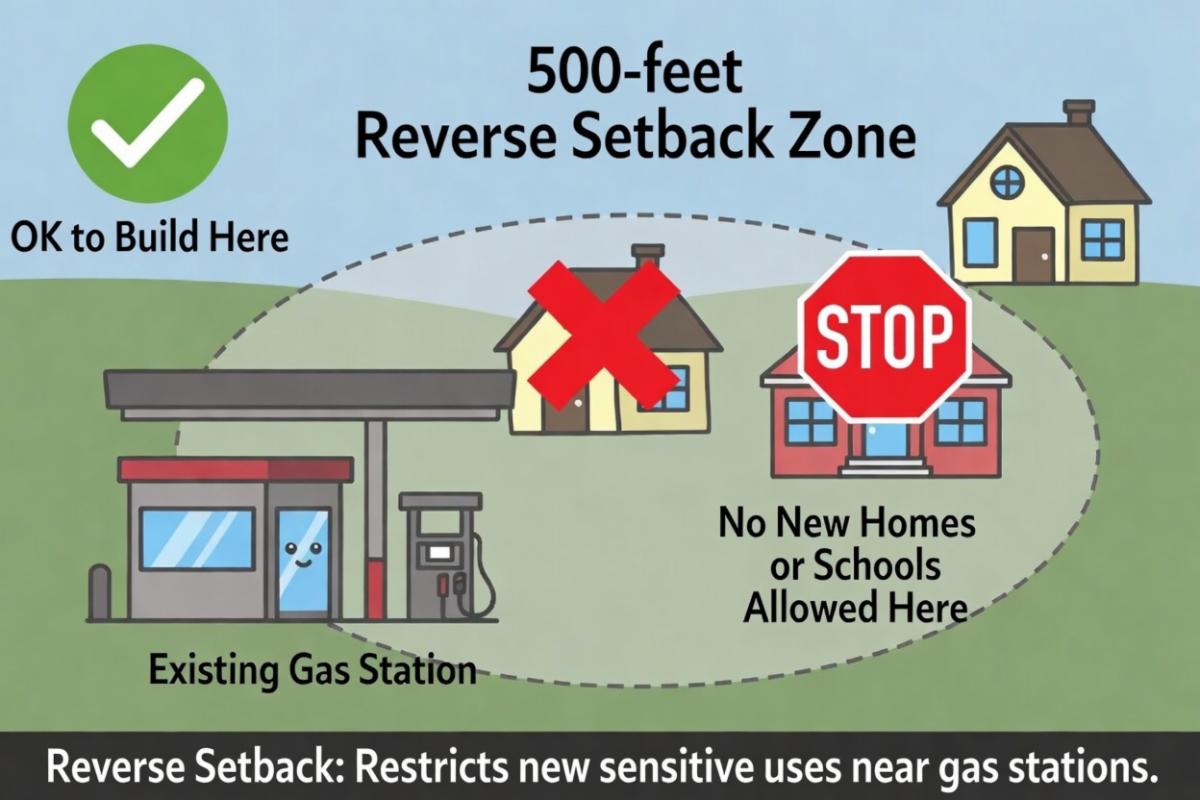
Also at the May 19 2026 Broomfield Council Study Session, Reverse setbacks for gas stations are being revisted by the Broomfield Council. The setbacks would restrict new sensitive land uses (residences, schools, daycares, playgrounds, and certain medical facilities) from being built within 300–500 feet of existing gas stations.
Council Discussion
The City Council is inclined to adopt a 500-foot setback for new gas stations from sensitive uses, plus reverse setbacks. Existing stations are grandfathered. Staff will complete mapping before final approval.
A Better Solution
This ordinance lets the council decide what you can build on land you own — implying your hard-earned private property isn’t really yours if someone else controls it.
Imagine pouring your savings into a parcel, only to have bureaucrats draw a line on a map that slashes its potential value and tells you “sorry, you can’t build that school, home, or clinic here because of a gas station down the road.”
Property owners aren’t out to intentionally harm their neighbors — most already take reasonable safety precautions. This isn’t a fair solution, but an emotional gut punch that assumes the worst about honest business owners.
A better approach would respect your ownership through civil lawsuits for actual, proven harm, voluntary agreements, and market-driven decisions — without unfairly assuming every owner wants to cause damage.
| |
Broomfield's Greenhouse Gas Inventory
At the May 19 2026 Broomfield Council Study Session, Broomfield's Greenhouse Gas Inventory was discussed. Per the memo for the study session, Broomfield has a community wide target to reduce greenhouse gas emissions by 50% by 2030 and 90% by 2050.
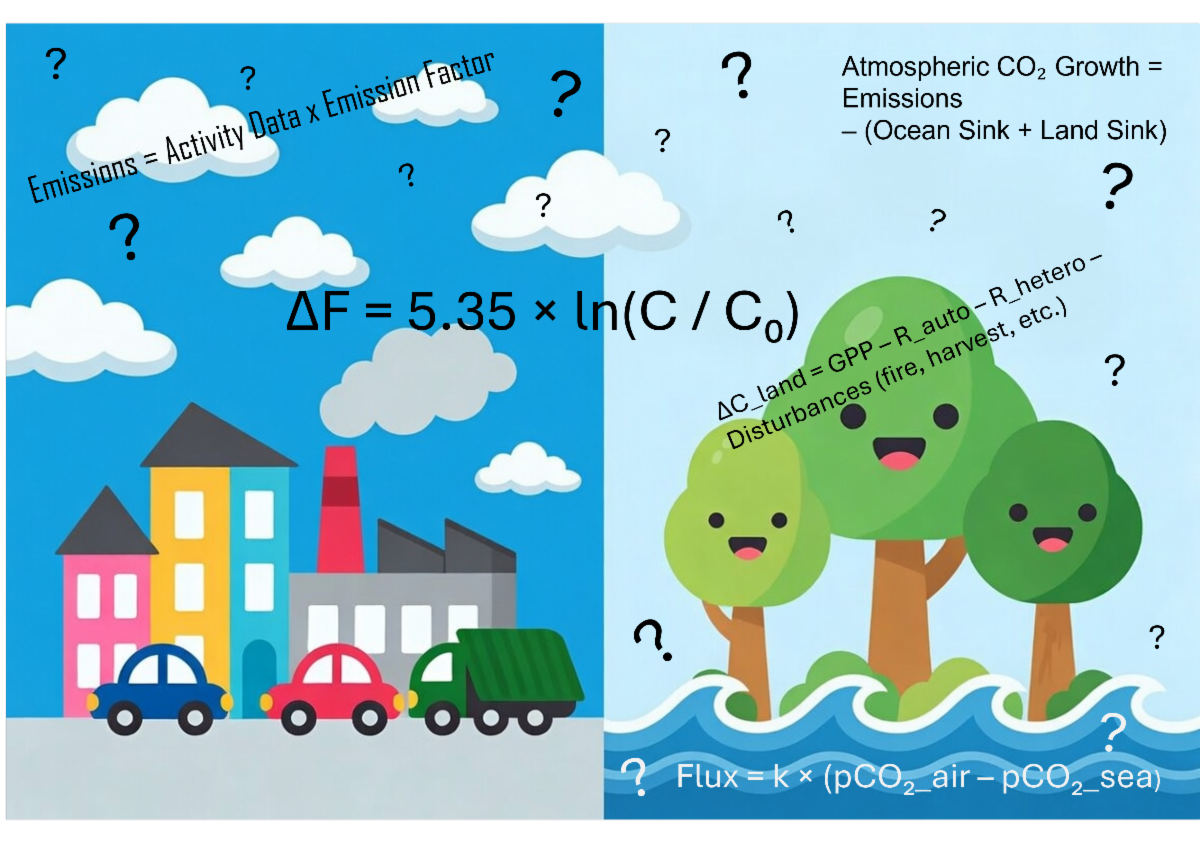
The GHG Inventory uses IPCC guidelines and a computer tool called ClearPath 2.0 to add up pollution from cars, buildings, waste, and energy use. Most numbers come from estimates and math formulas rather than constant real-world measurements.
Colorado oil and gas companies do have to report their emissions, including methane, but there are still big uncertainties — often 20% to 50% — especially with leaking gases. The report doesn't mention outside checks or air measurements to prove the numbers are exact. This makes people wonder how well a smaller city like Broomfield can really understand the full picture of their greenhouse gases.
From 2017 to 2024, the city says they reduced emissions from 850,410 tons to 725,855 tons — about a 15% drop. But because of the large uncertainty in methane and other gases, this change could just be due to guesswork in the math rather than real improvement.
Nature has important "sinks" like forests, soil, and oceans that soak up a lot of these gases so they don't all build up in the air. National reports try to count these removals, but local reports like Broomfield's mostly focus on the pollution going out. But many smaller jurisdictions like Broomfield emphasize gross emissions for policy action. This makes it simpler to set goals, but it might miss part of the real story.
With all the guesswork, missing sinks, and computer models, it's fair to ask: How accurate is the full greenhouse gas picture? Is the high cost of net-zero rules worth it, especially when one city's changes are tiny compared to the whole world? And could pushing too hard for net zero cause other problems that hurt people more than they help? These are big questions that need clear facts.
These inventories DO NOT provide the full picture of actual greenhouse gas levels in the atmosphere. Given the uncertainties and limitations, taxpaying citizens have every right to question them — particularly when the push for net-zero policies makes life less affordable.
| |
Broomfield Council pushing for longer terms for the Mayor....again
On the Broomfield Council Agenda on June 2nd is the first reading of an ordinance that would put a charter ballot measure to increase the length of Broomfield Mayor term to 4 years.
The Council is again revisiting changes to the mayor’s term structure, including proposals that would extend the mayor’s term length beyond the current two-year cycle. This comes despite the fact that voters recently rejected a measure to lengthen the term to four years.
If pursued, the proposal would effectively ask residents to reconsider a decision already made at the ballot box just two years ago. This begs many questions:
-
Why is this being pursued again? What has materially changed since voters last rejected extending the mayor’s term?
- Why is the Council bringing back a measure so soon after a clear public decision?
-
Does extending the term improve governance, or does it reduce regular voter accountability and oversight?
-
What are the direct and indirect costs of placing a similar measure back on the ballot?
-
Voters said no last time—but Broomfield’s mayor appears to refuse to take ‘no’ for an answer. Should she be forcing another ballot measure to extend her term limits to four years?
Extending the mayor’s term would reduce how frequently voters can directly evaluate and respond to leadership performance. Reintroducing a previously rejected proposal so soon raises questions about responsiveness to voter intent and the balance between administrative continuity and democratic accountability.
| | |
How's Waste Diversion Going?
At Tuesday’s Broomfield City Council meeting on June 2, 2026, the council will consider changes to opt-out fees and ease restrictions for certain homeowners (e.g., large-lot, agricultural, and some multi-unit properties).
SB19-192 (2019) created the Front Range Waste Diversion Enterprise, now part of the statewide Colorado Circular Communities (C3) program. It funds grants and projects for recycling, composting, and waste reduction through a landfill user fee (currently ~60¢ per cubic yard). The bill set ambitious Front Range goals that have not been met.
Statewide diversion remains low at ~15.7% (2024), flat for years. Broomfield has done better historically (~20-22%), but the new single-hauler program’s early recycling rate by tonnage is 14.11% after one year, with 87% eligible-household enrollment (8,307 residents). The city expects modest future gains in pricing.
These programs shift costs that ultimately reach residents. Landfill fees and producer responsibility dues (HB22-1355) raise hauler and business expenses, which get passed on through higher service rates and product prices. In Broomfield, Waste Connections announced a 4.68% rate increase effective April 1, 2026 (with the next adjustment July 1), partly reflecting program and regulatory costs. The local opt-out fee (~$10.50–$10.72/month) directly funds the city’s system.
New York’s commercial waste zone program has faced well-documented implementation struggles — delays, hauler consolidation issues, contamination, and resident complaints about new bin requirements — showing how similar top-down efforts can become messy and costly without strong results. Many Broomfield residents worry the same pattern could play out locally: higher costs and reduced choice with limited proven environmental gains.
| | |
The Next Attack on TABOR - Taxpayer's Bill Of Rights
The fight to preserve taxpayer's rights continue at the legislature. SB26-135 requires the secretary of state to refer a ballot issue at the November 2026 general election to seek voter approval to keep more tax revenue over the next 10 years. Broomfield Taxpayer Matters provided written testimony which stood in OPPOSITION to SB26-135.
Colorado voters adopted TABOR, in 1992, for a very simple reason: to ensure that when government collects more money than it is allowed to spend, that surplus is returned to the taxpayers who earned it. Over the past several years, this legislative body has worked hard to completely dismantle the taxpayers’ voice.
The legislature who put forward the referred measure say it will funds K-12 education up to 2% annually for 10 years “without raising taxes.” But from a taxpayer’s perspective, keeping money that should have been refunded functions very much like a tax increase.
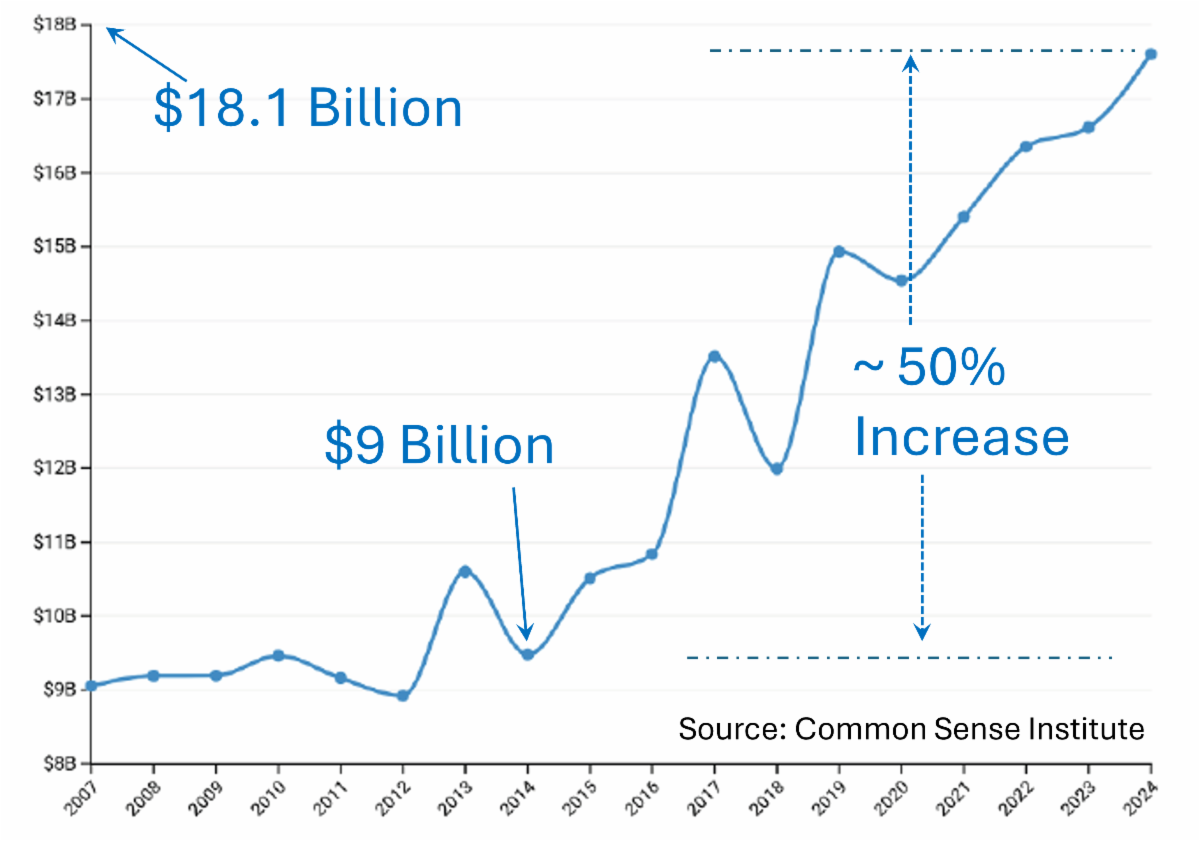
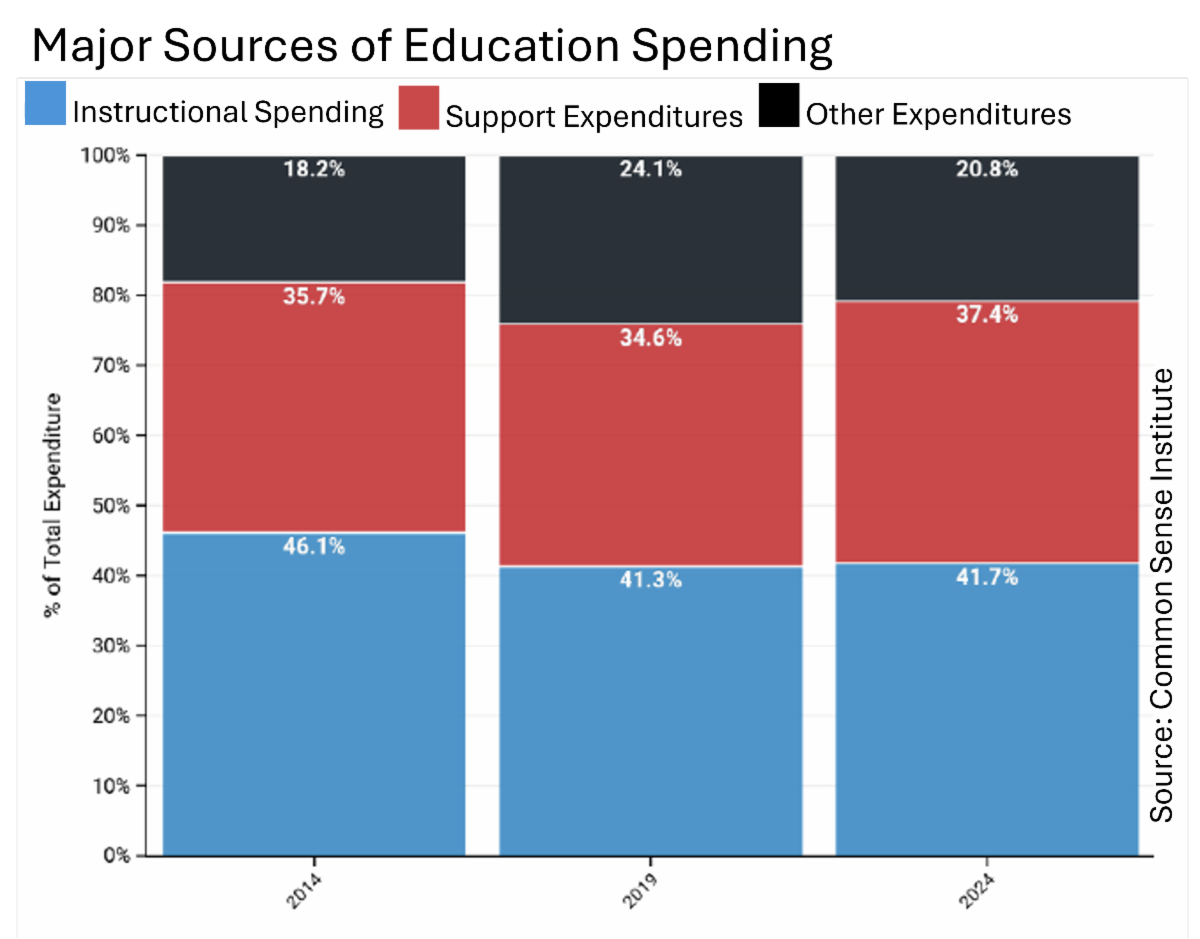
While education spending in Colorado has increased dramatically — with per-pupil funding rising approximately 70% and teacher salaries up 59% since the late 2000s — student outcomes have not kept pace, as evidenced by stagnant or declining third-grade proficiency rates. This suggests the core challenge is not insufficient funding, but rather a lack of accountability for how resources are allocated and what is being taught in the classroom.
| | |
TABOR refunds belong to taxpayers. They help working families pay for groceries, rent, childcare, and utilities. For many Coloradans, those refunds are not trivial—they are meaningful relief in a high-cost state.
Another citizen-led ballot initiative #195, the Graduate Income Tax, would establish a graduated income tax with tiers. Rather than simplifying the tax code, Initiative #195 introduces another complex government program featuring multiple progressive tax rates and earmarked spending streams that will be challenging for ordinary taxpayers to understand, monitor, or hold accountable.
| | |
Upcoming City Council Meetings
Please let us know if you plan to attend by registering here.
++++++++++++++++++++++++++++++++++++
📅 June 2, 2026
Broomfield Council
Regular Meeting
6:00 p.m.
Agenda
Presentations
Correspondence
1. Meeting Commencement
1A. Pledge of Allegiance
1B. Review and Approval of Agenda
2. Petitions and Communications
2A. Proclamation - Declaring June, 2026 as LGBTQIA+ Pride Month
2B. Proclamation - Declaring June 5, 2026 as National Gun Violence Awareness Day
2C. Presentation - 2026 Broomfield Trail Adventure and Kickoff for the Broomfield 100
2D. Proclamation - Declaring June as Open Space and Trails Month
3. Councilmember Reports
4. Public Comment
5. Reports
5A. 2026 Legislative Session Wrap-Up
6. Consent Items
6A. Adopting Colorado Communities for Climate Action (CC4CA) Policy Statement Updates
— Resolution No. 2026-81
7. Action Items
7A. Public Hearing - Residential Waste Services - Code Updates
— Ordinance No. 2310 - 2nd Reading
7B. Xcel Energy Franchise Agreement and Ballot Question
— Ordinance No. 2307 - 1st Reading
7C. Length of a Future Mayor's term of office - Ballot Question
— Ordinance No. 2309 - 1st Reading
7D. Adding Fiscal Impact Review Criteria for Land Use Applications for Rezoning, PUD Plans, and PUD Plan Amendments
— Ordinance No. 2306 - 1st Reading
7E. Establishing a Temporary Moratorium on Data Centers
— Ordinance No. 2313 - First Reading
8. Mayor and Councilmember Requests for Future Action
9. Adjournment
| |
|
Contact the City and County of Broomfield
Contact your City Council or City Staff about one of these stories:
| | | |
Contact Information for Governor and State Legislature | | | | | |
Broomfield Taxpayer Matters is Accepting Donations!
Your generous donation helps us help to hold our local city officials, elected representatives, and politicians accountable!
| | | | |