What's Happening in Broomfield

Special Edition - The November Ballot Measures

June 29, 2026

Follow us on facebook

Ballotpedia - List of State Initiatives


Colorado Secretary of State - List of Initiatives

SB26-135: The Legislature's Latest Attempted Raid on TABOR

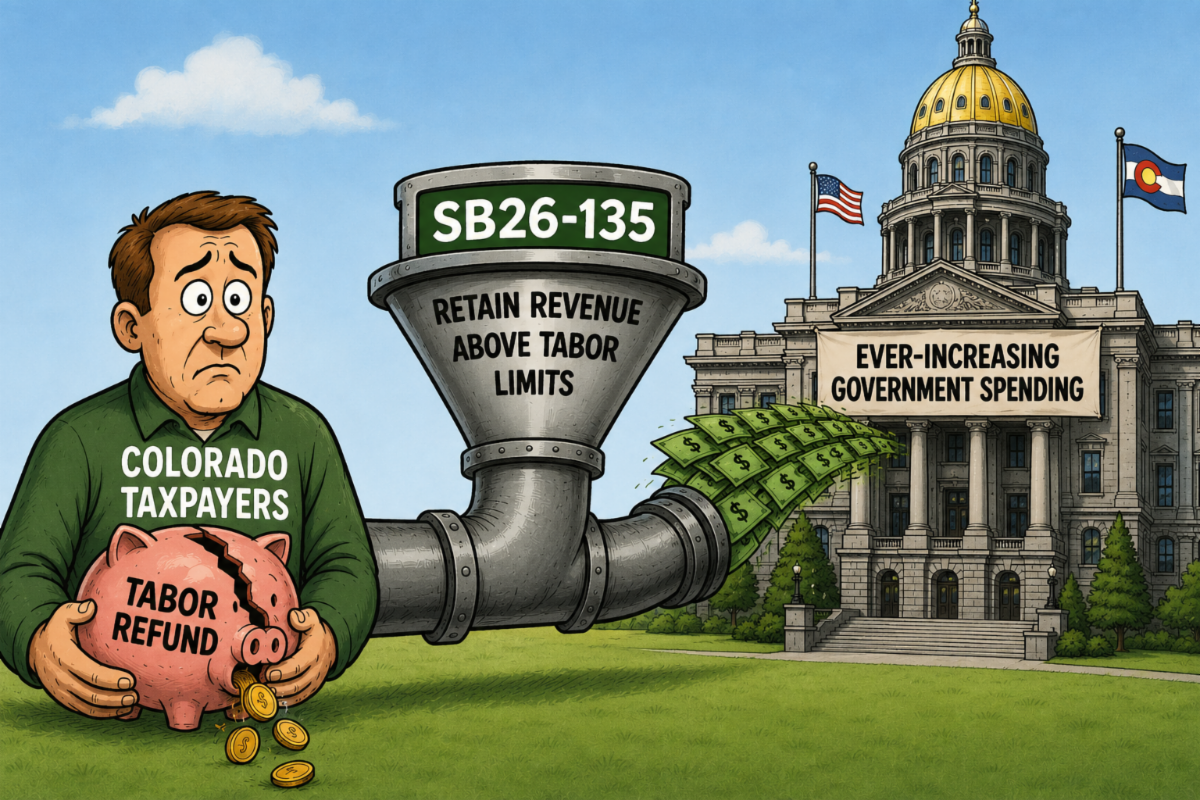
In the last legislative session, the Colorado Legislature passed SB26-135, which refers a ballot measure to the November 2026 ballot It will ask you the Colorado voters for your permission to keep and spend tax revenue that would otherwise be refunded to you. This is required under the Colorado Taxpayer's Bill of Rights (TABOR).


If Colorado voters approve the measure. it will raise the state’s TABOR revenue limit and allow the Colorado government to retain ~$1.1 billion in additional revenue that would otherwise be required to refund to taxpayers, and dedicate it "primarily" to K-12 education; but odds are that the tax revenue would be redirected elsewhere by the legislature to fund other programs.

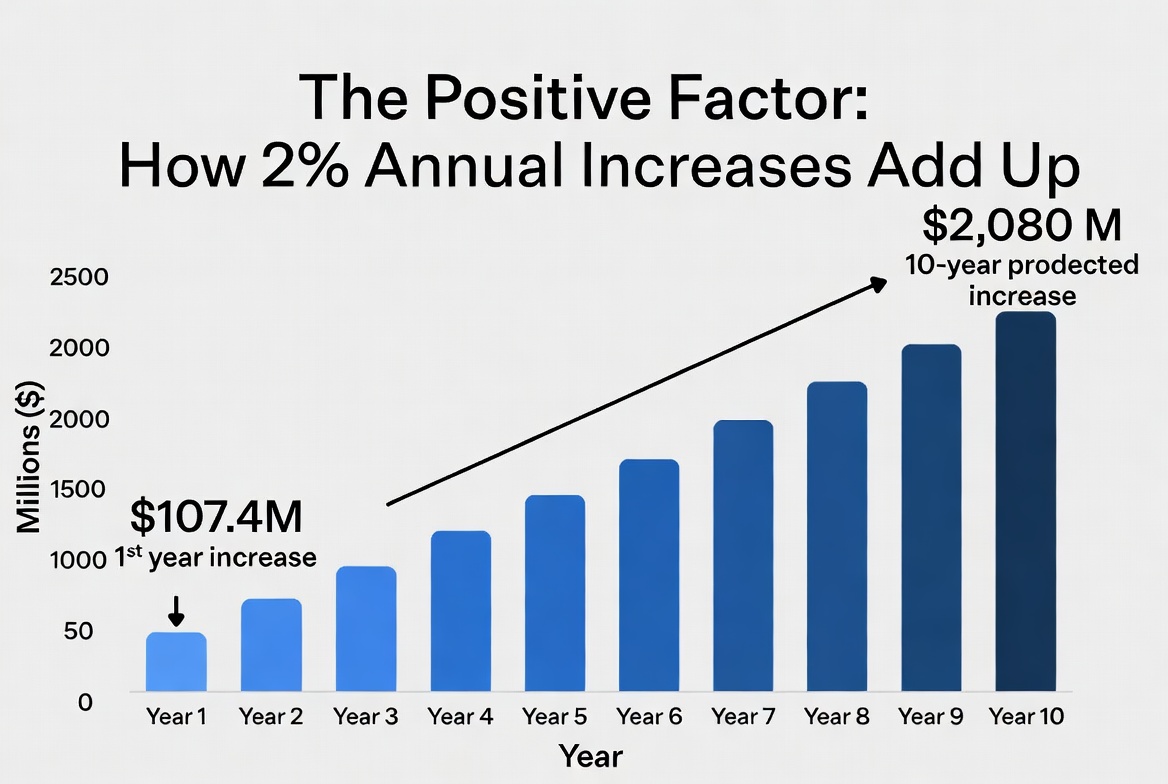
If passed by Colorado voters, SB26-135 will create a new “Positive Factor” that automatically increases education funding by 2% per year for the next ten years. This "Positive Factor” can compound every year.


What could really happen here? The state is not placing money into an account that earns interest.


Instead, each year they simply raise the spending baseline by 2%, requiring even more revenue — whether from TABOR surplus or other sources.


Further, SB26-135 does not explain how this escalating amount will be funded long-term if surpluses shrink.

Why is the Colorado Legislature asking - again - to keep more of your tax revenue?

While passing SB26-135 and referring it to Colorado voters, the Colorado Legislature argued that this is a responsible way to provide stable funding for schools "without raising taxes". This slight of hand argument downplays that they want to keep more of your hard earned money that the state takes from you in excess of what is legally allowed under TABOR.


This is in fact - a tax increase, which the Colorado Legislature is required to ask taxpayers to vote on under TABOR.


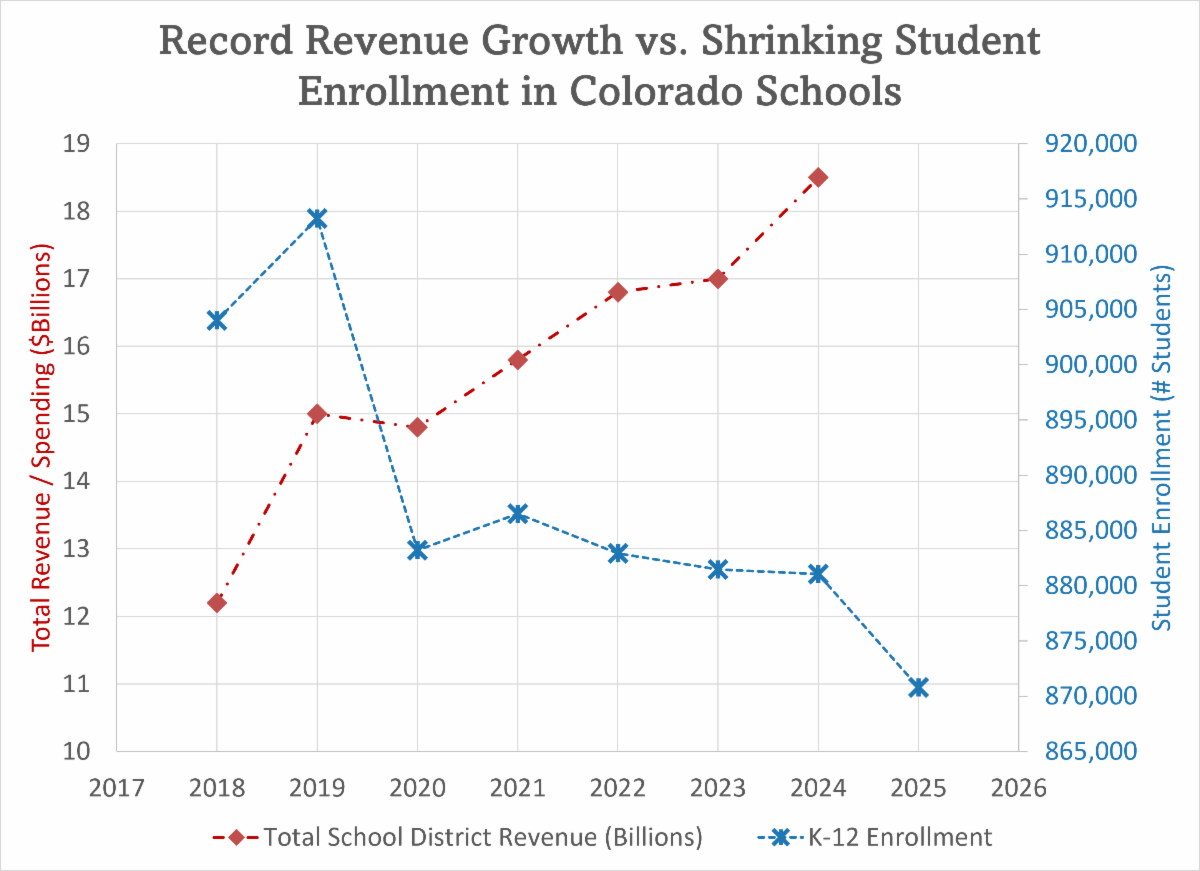
They highlight needs like teacher pay, smaller class sizes, and career & technical education. The same line we've been fed for years. Colorado spends a record $18.1 billion annually on K-12 education — an increase of more than 30% since 2019 — with total per-pupil funding approaching $20,000, even as enrollment has declined in many districts and statewide performance has gotten worse, not better.

What it means to Colorado Taxpayers

If passed by Colorado Taxpayers in November, SB26-135 would further weaken Colorado’s Taxpayer’s Bill of Rights (TABOR) by permanently raising the TABOR limit. This takes away the taxpayers' direct say over how their money is spent, gives that power to the Colorado legislature, and locks in higher baseline spending. This action will make it more and more difficult to responsibly manage government spending, especially when there is an need to reduce spending during economic downturns.


Much of the retained surplus would first go toward growing obligations like homestead property tax reimbursements rather than directly into classrooms. Lawmakers have even repealed some transparency (“sunshine”) requirements in recent years. This continues a familiar pattern: politicians create expensive programs and exemptions, then return to voters asking for more money to cover them.


Our Position: VOTE NO on Proposition NN or SB26-136.

Citizen's Initiative 195 - The Progressive Tax Initiative

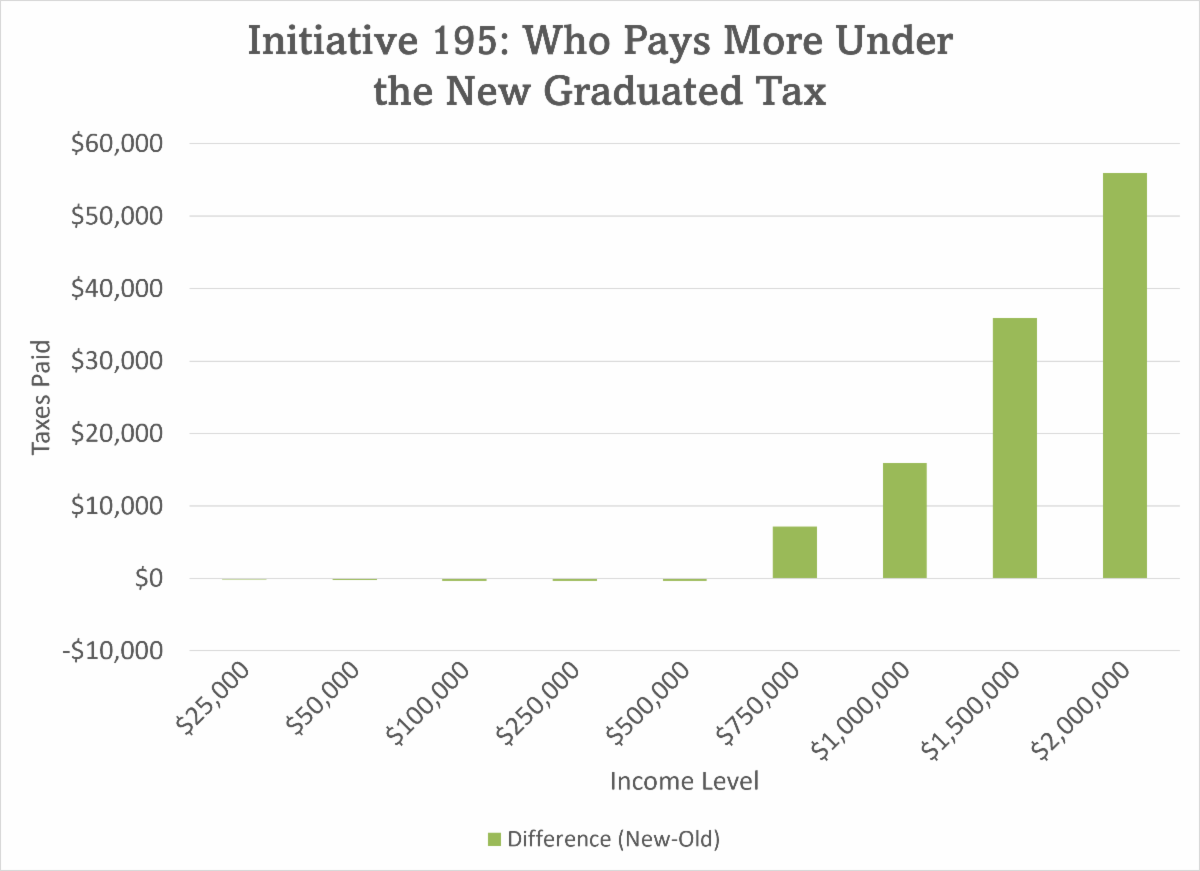
Initiative 195 is a proposed citizen-initiated ballot measure for constitutional amendment that will appear on the November 2026 ballot to replace the Colorado flat 4.4% income tax with a graduated (progressive) tax structure.

NOTE: As of the writing of this article, the initiative has not gathered the required number of signatures to be placed on the November 2026 ballot.


The measure is projected to generate approximately $2.7 billion in new revenue each year, primarily from higher-income earners and corporations. 

Supporters of this progressive initiative argue the flat tax is unfair and that wealthier Coloradans should pay more to help address education, healthcare, and child care needs. They claim 97% of taxpayers (those earning under $500,000) would see a tax cut or pay the same, while only the top earners would pay higher rates.


What it means to Colorado Taxpayers 

Many taxpaying citizens contend that Initiative 195 would replace Colorado’s long-standing flat tax system — which treats all income equally regardless of how much a person earns — with a graduated structure that significantly raises rates on higher earners.


While lower brackets would receive modest reductions, the new top marginal rates (up to 8.4%) would disproportionately affect those who create jobs, start businesses, innovate, and generate substantial economic value for the state.


Bundling healthcare and child care into the measure also raises fairness concerns — forcing working families, single individuals, and retirees to subsidize others’ choices through higher taxes.


Most importantly, it further weakens TABOR by permanently removing voter oversight on this new revenue stream.


Our Position: VOTE NO on Citizen Initiative 195.

Citizen Initiative 175 - Fund the Darned Roads

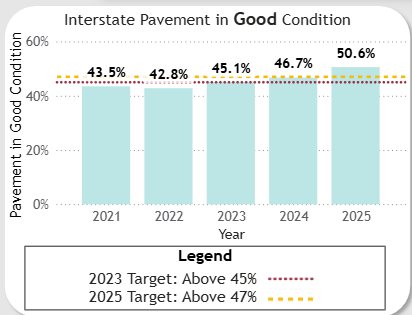
Colorado voters will decide this November on Citizen Initiative 175, a constitutional amendment that aims to dedicate existing vehicle- and fuel-related taxes and fees exclusively to building, repairing, and maintaining roads, bridges, and related safety programs—including funding for the Colorado State Patrol. The CDOT’s National Performance Measures dashboard shows a little over 50% of Interstate Highway System (IHS) pavements in good condition.

Backed by the Restore Our Roads coalition, the measure would channel 100% of taxes on vehicle sales and fuel, plus two-thirds of sales taxes on auto parts and accessories, into the Highway Users Trust Fund (HUTF). Proponents estimate it would inject more than $1 billion annually into transportation infrastructure without raising taxes, using the longstanding distribution formula (60% state, 22% counties, 18% cities). This revives the intent of the 1979 Noble Bill, which was later repealed, which allowed funds to flow into the general budget for other priorities.


Supporters highlight Colorado’s road maintenance shortfall (estimated at hundreds of millions annually) and argue that “road money should go to roads” to address deteriorating infrastructure and safety needs.

Critics, including some local governments and multimodal advocates, contend it would reduce flexibility for transit, biking, or other programs and “handcuff” the state budget.


In response, lawmakers passed HB 26-1430 to temporarily lower certain gas taxes and fees, aiming to offset the shift if the measure passes. The amendment requires a 55% supermajority to pass and would take effect in 2027.


What it means to Colorado Taxpayers

As a Colorado taxpayer, you already pay vehicle sales taxes, gas taxes, registration fees, and taxes on auto parts — money many assume goes straight to fixing roads. Initiative 175 would constitutionally require these existing revenues to be dedicated exclusively to roads, bridges, safety, and the State Patrol (roughly $1 billion+ more per year), following the old “user pays” principle of the 1979 Noble Bill.


This could mean smoother roads and lower long-term vehicle repair costs for you, without a tax increase. However, it would shift hundreds of millions from the general budget (affecting other services you also fund), prompting lawmakers to temporarily cut some fees if it passes.

On November 3, you’ll decide whether locking in road funding is worth reduced flexibility elsewhere.


So where has the money gone? We will be providing more graphs and breakdowns of this initiative moving forward.


Our Position: VOTE YES on Citizen Initiative 195.

Upcoming City Council Meetings

Please let us know if you plan to attend by registering here.


As of the date of this newsletter, there are no council meeting agendas posted.


Contact the City and County of Broomfield

Contact your City Council or City Staff about one of these stories:


Mayor - Guyleen Castriotta

gcastriotta@broomfieldcitycouncil.org

720-607-1527


Ward 1 - 

Julie Twiss

jtwiss@broomfieldcitycouncil.org

303-438-6300


Katie Peterson

kpeterson@broomfieldcitycouncil.org

303-438-6300


Ward 2 - 

Paloma Delgadillo

pdelgadillo@broomfieldcitycouncil.org

720-916-6406


Austin Ward

award@broomfieldcitycouncil.org

303-817-0991


Ward 3 - 

Jean Lim (Mayor Pro-Tem)

jlim@broomfieldcitycouncil.org

303-349-2745


Ward 3 - 

Sarah Braun

sbraun@broomfieldcitycouncil.org

303-438-6300


Ward 4 - 

Laurie Anderson

landerson@broomfieldcitycouncil.org

920-378-9654


Sean McKenzie

smckenzie@broomfieldcitycouncil.org

210-324-5750


Ward 5 -

Todd Cohen

tcohen@broomfieldcitycouncil.org 

720-900-5452


Heidi Henkel

hhenkel@broomfieldcitycouncil.org

303-349-0978

Contact Information for Governor and State Legislature


Governor - Jared Polis

Phone: (303) 866-2471

Email: gov.jared.polis@state.co.us

Website: https://www.colorado.gov/governor


Lieutenant Governor - Dianne Primavera

Phone: (303) 866-4075

Email: ltgov.dianne.primavera@state.co.us

Website: https://www.colorado.gov/cs/Satellite/LtGovGarcia/CBON/1249674703146


Colorado State Senator - William Linstedt

Phone: (303) 866-4863

Email: william.linstedt.senate@coleg.gov

Website: https://leg.colorado.gov/legislators/william-lindstedt


Colorado State House - Kenny Nguyen

Phone: (303) 866-xxxx

Email: kenny.nguyen.house@coleg.gov

Website: --


Broomfield Taxpayer Matters is Accepting Donations!


Your generous donation helps us help to hold our local city officials, elected representatives, and politicians accountable!

Facebook  Twitter  Web  Email