|
JUNE 2026
Dear Colleagues,
Across the country, the need is clear: children, families, and adult adoptees impacted by adoption, foster, and kinship care continue to face significant barriers to accessing the mental health support they need. We hear it from parents navigating complex systems. From adult adoptees seeking care that reflects their lived experience. From professionals working to respond to increasingly complex needs. From leaders striving to strengthen services within their communities.
At the center of this work is the workforce. Across child welfare, behavioral health, education, and related systems, dedicated professionals are asked to meet these needs without consistent access to specialized training, aligned systems, or sustained support. Even highly skilled practitioners often enter the field without preparation specific to adoption, foster, and kinship experiences.
At the same time, we see what’s working.
| |
|
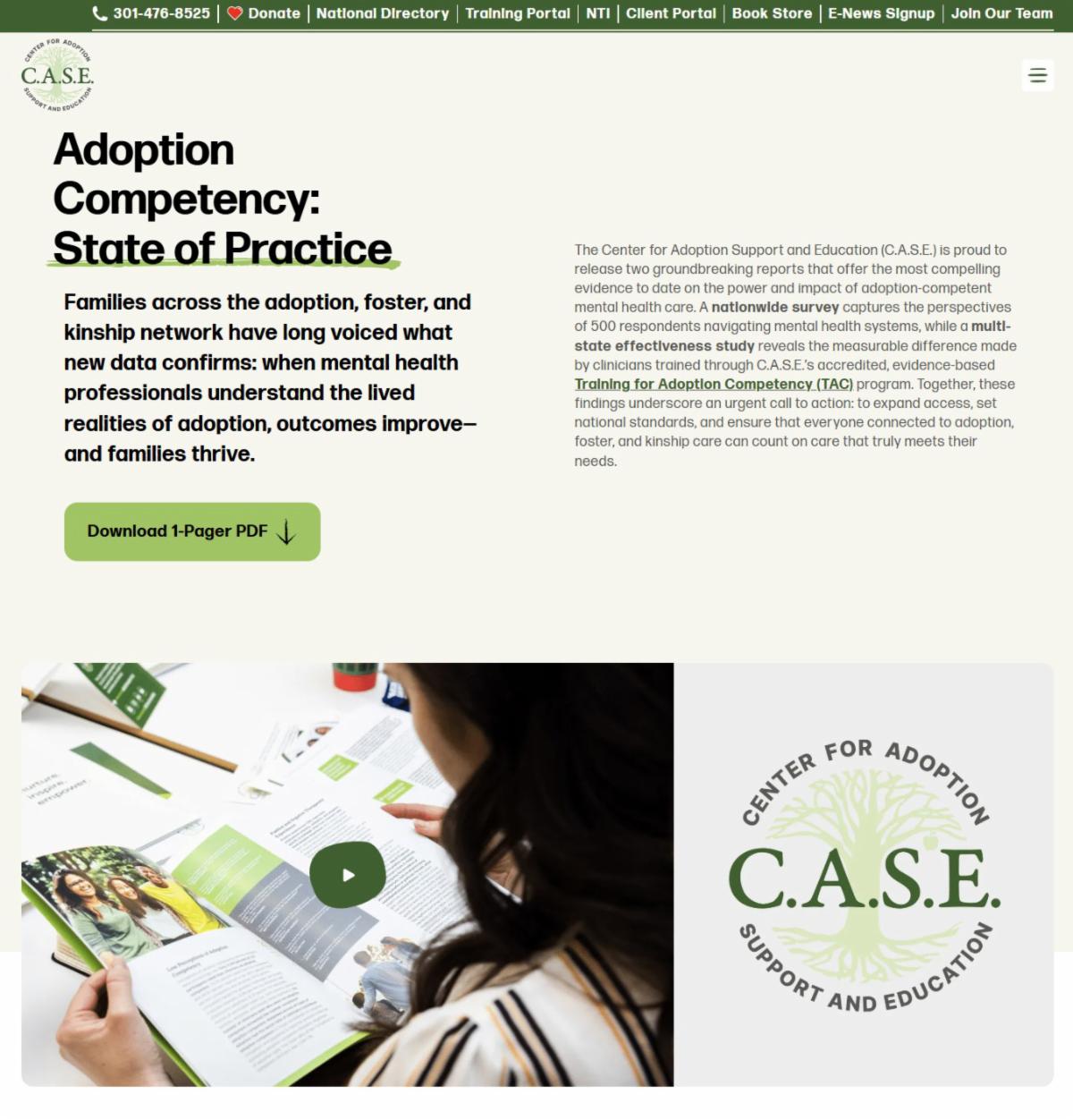
For more than two decades, C.A.S.E. has helped build the evidence base for adoption-competent mental health care, and translate that evidence into practice. The data shows that when children, families, and individuals have access to adoption-competent care, systems are better equipped to respond, families experience greater stability, and individuals experience improved well-being.
We are not starting from scratch. We have a solution, and we are scaling it.
At C.A.S.E., we advance adoption competence by strengthening both the workforce and the systems that support it through training, coaching, clinical expertise, and targeted technical assistance. This approach helps states, tribes, territories, and organizations move knowledge into practice, building capacity that is sustainable, aligned, and responsive to real-world needs.
Across the country, we are seeing measurable progress as systems invest in strengthening an adoption-competent workforce:
-
In Illinois, post-adoption service contracts now require providers to be trained in NTI, ensuring a shared foundation of adoption competence across the workforce.
-
In Michigan, partners are advancing a unified, cross-system approach—aligning child welfare, behavioral health, and community-based supports to better serve youth with complex needs.
-
In Virginia, efforts are underway to expand access to adoption-competent training and strengthen workforce capacity through NTI implementation.
In collaboration with states and national partners, we are strengthening coordination across child welfare, behavioral health, juvenile justice, and education systems—ensuring that individuals and families encounter adoption-competent care no matter where they enter.
This work is also informed by and grounded in the lived experience of youth, families, and adult adoptees, ensuring that solutions reflect real-world needs and realities.
| |
|
You are part of this effort.
Whether you are a mental health practitioner, a child welfare professional, an educator, or a system leader, your role matters. Each of you contributes to building a workforce—and a system—that is better equipped to support children, families, and adult adoptees.
And there is more we can do together.
| |
|
If you are a mental health practitioner:
-
Deepen your clinical practice through training and education that translates adoption competence into everyday care.
If you are a supervisor or organizational leader in child welfare, mental health, or education:
-
Equip your workforce with the tools, supervision, and structures needed to consistently deliver adoption-competent care.
If you are a system or state leader:
-
Partner with us to strengthen workforce capacity, align systems, and scale access to adoption-competent mental health services.
| |
|
This is how change happens—not in isolation, but through a shared commitment to building systems that work better for individuals, children, and families.
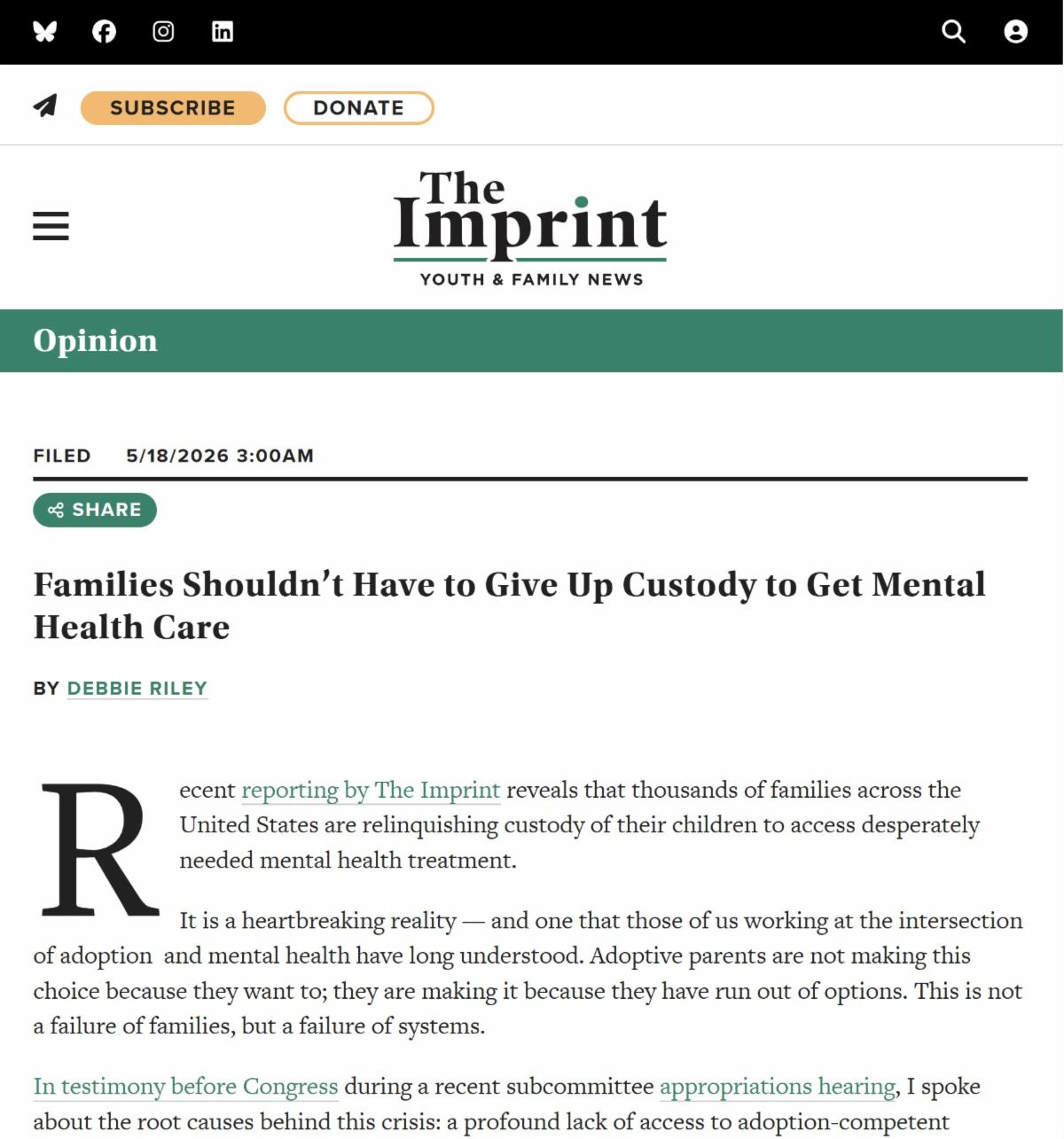
In my recent op-ed for The Imprint, “Families Shouldn’t Have to Give Up Custody to Get Mental Health Care,” I wrote about the unacceptable reality that some families still face. But I also believe this: we have the knowledge, the tools, and the partnerships to build something better.
And we are already doing it.
Each quarter, we will continue to share what is working and where we are seeing progress, because the more we elevate these solutions, the faster we can scale their impact.
Children, families, and individuals impacted by adoption, foster, and kinship care deserve access to care that understands their experiences, meets their needs, and supports their well-being.
Thank you for the role you play in making that possible.
| |
|
With appreciation,
Debbie Riley, LCMFT
CEO, C.A.S.E.
| |
|
|
Share This Resource With Your Network
Know someone who would benefit from the information and resources in this newsletter? Help us extend our reach by forwarding this email to friends, colleagues, and professionals in your network. Click the button below to easily share this newsletter via email.
| |
The Center for Adoption Support and Education (C.A.S.E.) is a national leader in mental health, ensuring the well-being and permanence of children, families, and individuals connected to adoption, foster, and kinship care. We work across every level of the permanence ecosystem—delivering direct services, training professionals, and driving systems change—to ensure families stay together and thrive. Our approach is rooted in Adoption Competence: a deep understanding of the unique experiences shaped by loss, identity, trauma, belonging, and more.
Founded by families in this community, C.A.S.E. has been advancing this mission since 1998. We believe every child deserves lasting connection, and every family deserves the support to make it possible.
Learn more: adoptionsupport.org.
Did a friend forward you this email? Sign up for our emails today!
| |
| | | | | |