Bulletin 2 – Preparing for the Introduction of Prescribing within the CPCF

Preparing for NHS Community Pharmacy Prescribing in West Yorkshire – Service Understanding & Organisational Governance


Independent prescribing within the Community Pharmacy Contractual Framework (CPCF) is an important development for community pharmacy and it’s essential that we get it right.


National guidance and supporting documentation have now been published, and the legal directions have been amended to enable implementation. You should have also received a letter from the ICB detailing the onboarding process and next steps.

KEY MESSAGE - Readiness comes before declaration. There is no need to declare immediately: the process remains open so each pharmacy can proceed when they are ready.

CPWY is putting together a practical, easy-to-follow manual designed to help pharmacy owners and community pharmacist prescribers navigate the steps needed before prescribing can begin. From understanding what's required to knowing who's responsible for what, the manual will help you get everything in place with confidence. To make things even easier, this bulletin series will take you through each module of the manual, breaking down the key information into bite-sized, manageable chunks, with practical guidance along the way.


So, where better to start than at the beginning? Let's kick things off with service understanding and organisational governance, the foundations for getting prescribing services off to a safe and successful start.

Understanding What Approval Means


NHS community pharmacy prescribing has been introduced as an extension of existing national clinical services within the CPCF. The introduction of prescribing does not automatically authorise every community pharmacist prescriber to undertake NHS prescribing activity. Three distinct requirements must be met: the pharmacist must be professionally qualified and service-ready; the pharmacy must meet the service and assurance requirements; and the ICB must approve the site through NHS onboarding.


Do not start prescribing until:


1. The pharmacy receives ICB approval.

2. The pharmacy has a prescribing cost centre established.

3. The relevant community pharmacist prescriber is linked to that cost centre.

Establishing Robust Governance


Before declaring readiness to deliver NHS prescribing services, the pharmacy owner must be able to demonstrate compliance with the NHS Community Pharmacy Prescribing Specification and the Professional Assurance Framework for Delivering NHS Community Pharmacy Clinical Services. These documents describe the governance and professional requirements which must be in place before prescribing activity can commence. Key requirements include:


  • Prescribing risk assessment: a pharmacy-specific risk assessment must be completed, including consideration of the risks associated with prescribing and dispensing, particularly where both activities are undertaken by the same pharmacist. Appropriate controls and mitigation measures must be implemented to manage identified risks.


  • Standard Operating Procedures (SOPs): SOPs must be reviewed and updated to incorporate prescribing activities. They must address potential conflicts of interest arising from prescribing and dispensing arrangements, commercial pressures or other factors that could influence clinical decision-making. Appropriate safeguards must be established to protect patient choice and maintain clinical independence.


  • Prescriber registration and competence: each community pharmacist prescriber (CPP) must have the appropriate annotation on the GPhC register and must not be subject to any sanctions or restrictions that would prevent them from delivering the service. Processes must be in place to ensure that CPPs practise within their individual competence and scope of practice. This includes confirming that they have read and agreed to comply with relevant SOPs, service specifications and service level agreements.


  • Disclosure and Barring Service (DBS) checks: each CPP must have an enhanced DBS certificate issued within the preceding three years.


  • Professional indemnity: each CPP must have appropriate professional indemnity arrangements in place to cover their prescribing activities.


  • Clinical supervision and prescribing appraisal: each CPP must have regular access to a named clinical supervisor or prescribing mentor. Protected time must also be allocated for regular reviews of prescribing practice (prescribing appraisals) between the prescriber and their clinical supervisor.


The pharmacy owner should ensure that all required governance arrangements, supporting documentation and assurance processes are in place before confirming readiness to deliver the service.

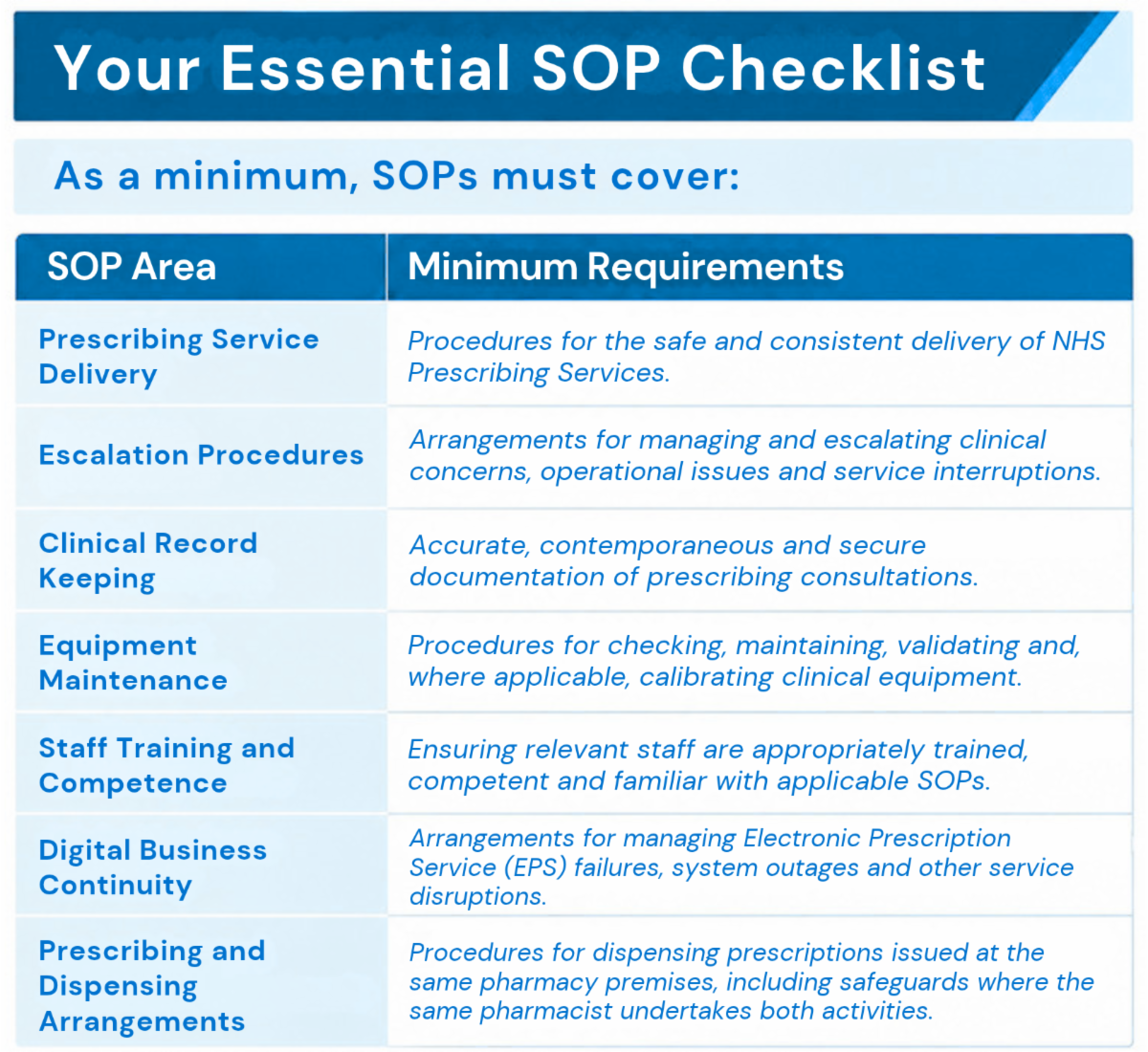
Your Essential SOP Checklist


SOPs must be reviewed and updated to clearly define the processes, responsibilities and safeguards required to ensure the safe and consistent delivery of prescribing services. They must incorporate the findings of the pharmacy’s prescribing risk assessment and specify the control measures implemented to mitigate identified risks. 

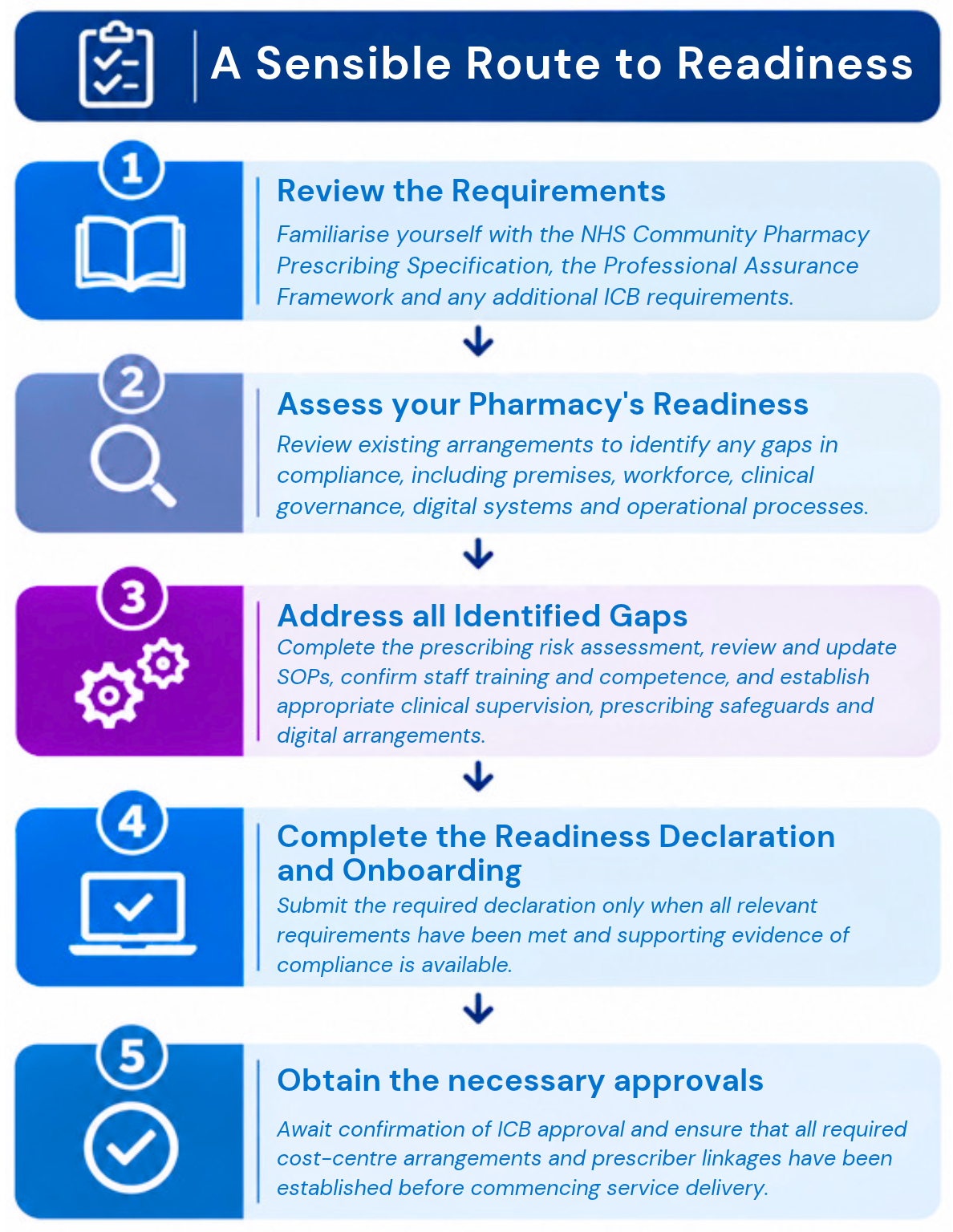
A Sensible Route to Readiness


Pharmacy owners are encouraged to adopt a structured approach to preparing for the delivery of NHS community pharmacy prescribing services, ensuring that all contractual, clinical, operational and governance requirements are fully met before service commencement. A declaration of readiness must only be submitted once the pharmacy can demonstrate compliance with all applicable clinical, governance, workforce, digital and operational requirements.


If you missed the previous bulletin, check it out here.


Look out for our next bulletin coming soon!


Kind regards

Community Pharmacy West Yorkshire


www.cpwy.org

info@cpwy.org

0113 272 7560


Contact Us

Visit our Website

Follow us on Twitter

Follow us on LinkedIn