Warm greetings from Bangkok and Happy New Year! We hope you had relaxing end-of-year holidays.
The world spent another year in the shadow of the COVID-19 pandemic. We mourned the loss of friends who succumbed to the virus. We watched in horror as governments, yet again, failed to protect people’s lives and livelihoods. We became used to new words and phrases that entered our everyday vocabulary – Covid passports, vaccine nationalism, mask mandates, sandbox schemes, boosters… We learnt new letters of the Greek alphabet.
However, at the start of a new year, it is worth being hopeful and looking ahead rather than back. We have exciting plans for advancing the rights of women migrant and local low-wage workers and survivors of trafficking this year.
Some of our work will be under the themes of social and economic inclusion and return and reintegration of migrant and trafficked women. It is an issue many GAATW members work on and has become even more important during the pandemic when migrants and trafficked persons struggled to support themselves in destination countries, or return home after losing their jobs, or survive upon return with little, if any, government assistance. Since 2020, in collaboration with members and partners, we have been documenting these and other challenges as women themselves describe them, in different countries in South and Southeast Asia, Latin America, North America, and Europe. In the coming months we will publish the research reports and support our members and partners to engage in national-level advocacy and other actions for change. At the international level, we will highlight the topic at the Commission on the Status of Women in March and the International Migration Review Forum in May.
We will organise regular regional and thematic knowledge exchange sessions with our members as cross-regional mutual learning was identified by them as a high-priority need for this year. These sessions will be online initially, but we hope to return to in-person gatherings soon.
We will continue supporting grassroots organisations and self-organised low-wage women workers, both migrant and local, to engage in self-directed learning initiatives. We made some initial steps in 2020-2021 and are encouraged by the results. Coordinating on-the-ground work has many challenges, such as those related to access (especially in the pandemic) and language skills, but it is essential.
Relatedly, we will begin unpacking what ‘participation of affected communities’ means in designing, implementing, and funding anti-trafficking and migrant rights work. While in the past several years, many international organisations have established advisory councils or similar structures comprising survivors of trafficking, to us this does not equal ‘participation’. In 2021, we shared some reflections on this issue and this year we will begin testing them in practice.
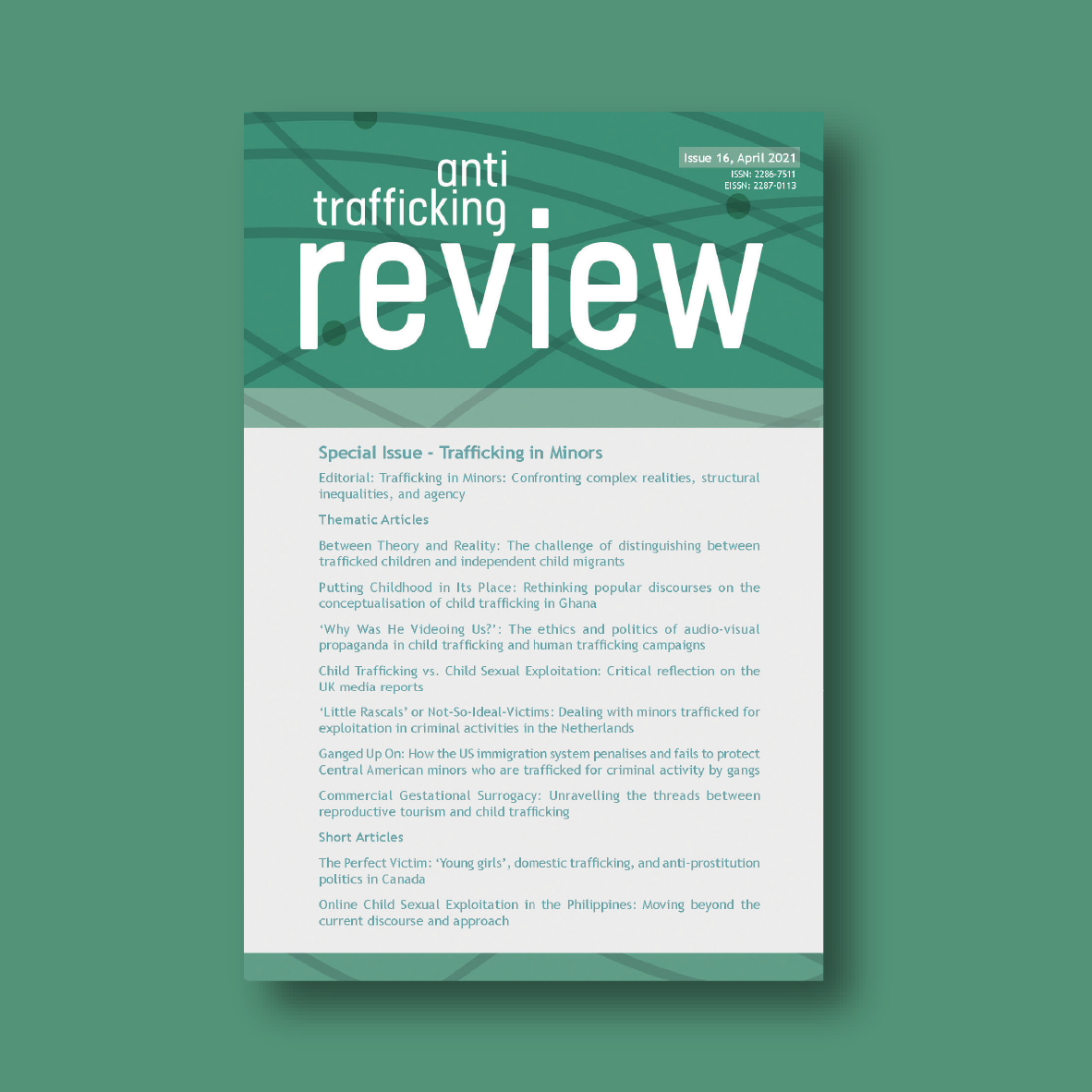
The April issue of Anti-Trafficking Review will be under the theme ‘Traffickers’. We have a diverse selection of articles, which show that many of the people convicted of trafficking are not members of organised crime syndicates but, like their victims, come from low socio-economic background and/or ethnic minority communities, have low education and limited job prospects. It seems that addressing discrimination and ensuring access to education and jobs that pay living wages can prevent not only people from becoming victims of trafficking but also from becoming traffickers. The September issue of Anti-Trafficking Review will be under the theme ‘Migration, Sexuality, and Gender Identity’ and will explore how the experiences of LGBTI migrants are shaped by discrimination, rejection by the family, and homophobia.
We will continue publishing our new monthly e-magazine Our Work, Our Lives (see more in the news section below) where women workers and NGO colleagues supporting them speak about various issues related to their everyday realities and the struggles and successes they deal with. We will also continue publishing regular information about our and our members’ work as well as interviews and analyses in blogs, articles, op-eds, and video and audio format.
We look forward to working with you all throughout the year and advancing the rights of women migrants, workers, and survivors of trafficking.
As always, we welcome your feedback and input for this e-Bulletin at borislav@gaatw.org
|
|
News from the GAATW International Secretariat |
|
Amplifying women (migrant) workers’ voices
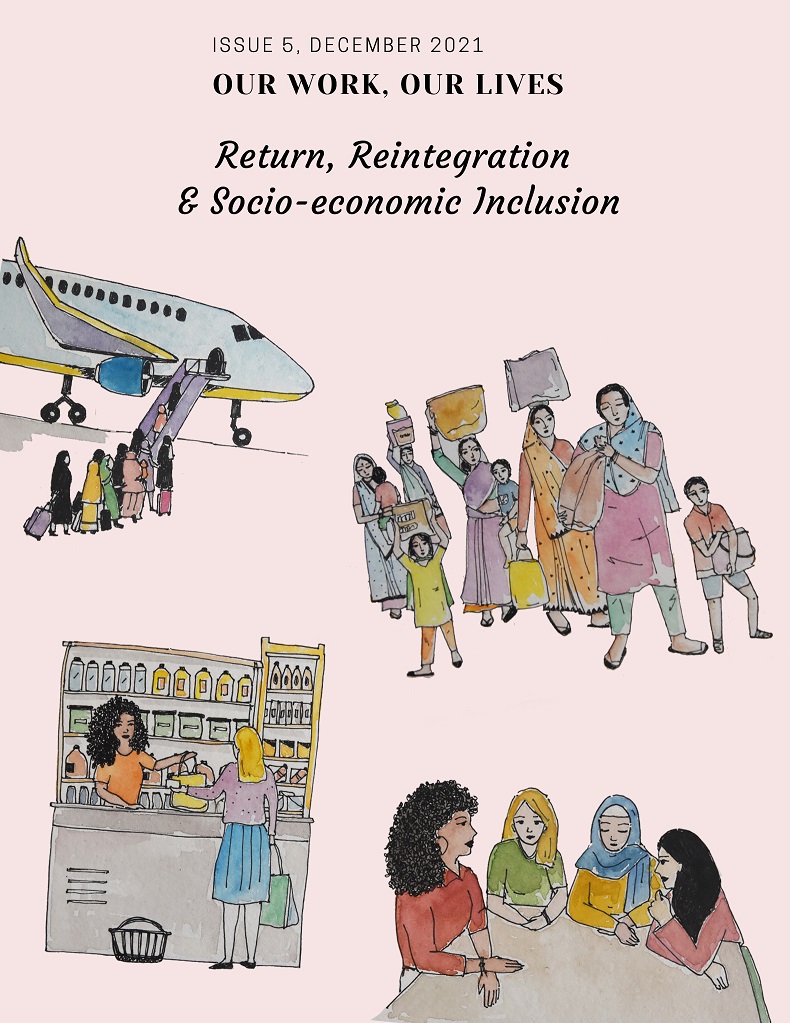
In August, we started publishing a new monthly e-magazine, titled Our Work, Our Lives. Each issue focuses on a simple theme that resonates with the everyday lives of low-wage women (migrant) workers, their joys, sorrows, struggles and, most importantly, their agendas for change. Most of the women are domestic workers, weavers, garment workers, sex workers, porters, farmers, entertainment workers, and daily-wage labourers.
We have now published five issues, each containing between 16 and 35 materials – stories told by the women, interviews and reflections by civil society colleagues who work with them. Although most stories are from countries in Asia and Africa, we have also featured some from Europe, Latin America, and North America. Continue reading
|
|
Call for Papers: ‘Home and Homelessness’
Anti-Trafficking Review calls for papers for a Special Issue themed 'Home and Homelessness', which will aim to examine the link between migration, exploitation, and trafficking, on the one hand, and housing or homelessness, on the other.
The journal invites practitioners and scholars from a range of disciplines to consider how home and homelessness impact vulnerability to and experiences of trafficking and exploitation. Authors may engage with topics such as violence within the home as a vulnerability factor for migration and trafficking; employer-provided accommodation as a feature of labour migration programmes; exploitation and trafficking among people experiencing homelessness; institutions (including prisons, immigration detention centres, or shelter homes for victims of trafficking) as sites of exploitation; the role of labour exploitation and trafficking within the housing and real estate construction sector; and more.
Ultimately, the Special Issue hopes to contribute to existing movements for affordable housing, reform of labour migration policies, and elimination of family and intimate partner violence, among others. The deadline for submissions is 1 July 2022. See the full call for papers and how to contribute here. |
|
GAATW goes audio with the ‘Migrant Rights, Migrant Realities’ podcast
In October, we launched a new podcast titled Migrant Rights, Migrant Realities, which gives listeners undivided access to experts and human rights advocates working on labour migration issues. The podcast covers a number of topics related to socioeconomic aspects of women’s paid and unpaid labour in Bangladesh, India, Nepal, and Sri Lanka and migration to the Middle East. Continue reading
|
|
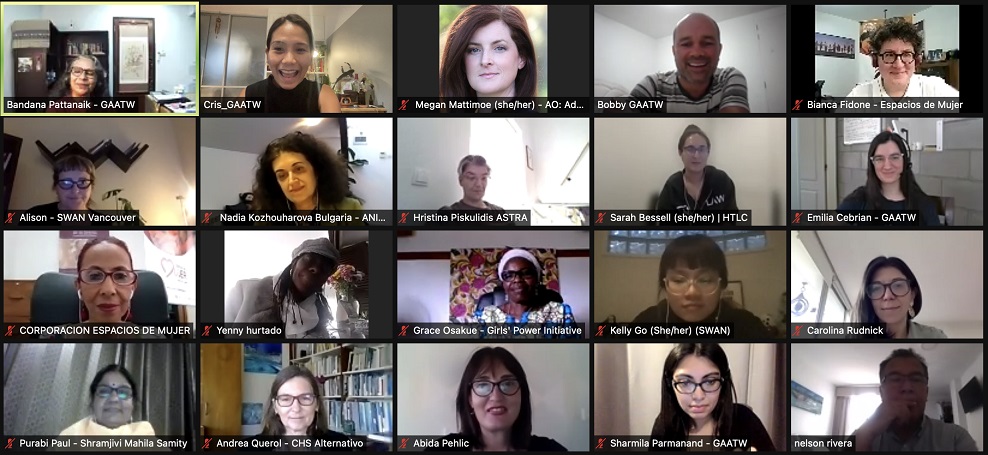
GAATW Members Consultation
In November, we held an online consultation with GAATW member organisations. The purpose was to discuss possible themes for joint research and priorities for international advocacy of the Alliance for 2022 and beyond, as well as provide a space for members to meet and learn more about each other. Many members expressed a desire to connect more regularly via regional and/or thematic meetings with other members and this is something that we will take up in 2022 – initially as online meetings and, hopefully, also in-person gatherings when this becomes possible. One area where many members wish to deepen their knowledge, through joint research or other activities, was climate change and its impacts on migration, trafficking, and exploitation. Other topics discussed were care work, structural causes of migration, gender-based violence at the workplace and more. In the area of advocacy, we discussed the Review Mechanism of the UN Transnational Organized Crime Convention, the International Migration Review Forum, and CEDAW.
|
|
Strengthening the rights of domestic workers in Latin America and the Caribbean
On 23-24 October, our colleague Emilia Cebrián participated in the Seventh Regional Congress of Domestic Workers, which was organised by Gran Alianza Latinoamericana y del Caribe de las Trabajadoras del Hogar (the Great Latin American and Caribbean Alliance of Domestic Workers) – a coalition of domestic workers, trade unions, grassroots organisations and private individuals committed to advancing the rights of domestic workers in Latin America. Continue reading
|
|
Anti-trafficking education
In September, we published the latest issue of Anti-Trafficking Review themed ‘Anti-Trafficking Education’ and guest edited by Annie Isabel Fukushima, Annie Hill, and Jennifer Suchland. To promote the issue, we organised an online event to discuss ways in which education can lead to empowerment of low-wage workers, migrants, and marginalised groups. Continue reading
|
|
News from GAATW Member Organisations |
|
New GAATW members in Africa
In the final months of 2021, we welcomed two new members to our Alliance. The Forum for Development and Human Rights Dialogue (FDHRD), Egypt works to ensure that development is community-led and respects, protects, and fulfils human rights. It aims for communities and individuals to have the information, power, and resources to determine their own development paths and priorities and to hold institutions, governments, and other actors accountable for their impacts on people. FDHRD connects with people from all social and cultural backgrounds with the goal of educating and developing broader understandings about human rights, civil rights, and social cohesion.
Platform for Labour Action (PLA), Uganda, works with vulnerable and marginalised workers, the majority of whom are women, youth, and children. It aims on ensure the protection and enjoyment of human and workers’ rights as well as decent work; promoting human rights and accountability among communities and duty bearers on the rights of vulnerable and marginalised workers; strengthening social protection initiatives for the target groups through education, skilling, livelihood support; and research and knowledge management.
|
|
La Strada International NGO Platform
On 16 and 17 September, La Strada International (LSI) organised its annual meeting in Amsterdam, the Netherlands. LSI members discussed LSI’s new strategic plan and focus areas, the network’s due diligence strategy, and European advocacy and developments in the anti-trafficking field, including the evaluation of the EU Trafficking directive and the proposal for a new EU directive on violence against women. Separate workshops were organised to discuss joint data collection, outreach work and NGO cooperation on referral of trafficked persons; amplifying the voices of trafficked persons; strategic litigation and third-party intervention as well as ‘the basis for reasonable grounds’. Continue reading
|
|
New reports on rights of trafficked persons and data collection in Germany
In September, KOK, the German NGO network against human trafficking, published a new study titled Rights of Trafficked Persons during Criminal Proceedings - A Study of the Implementation of EU Anti-trafficking Directive 2011/36 in Germany. It analyses the implementation of Directive 2011/36/EU in Germany from a human rights perspective and provides insights into systematic gaps. Based on interviews with staff of specialised counselling centres, lawyers, and prosecutors, it shows that the implementation of the rights of trafficked persons in criminal proceedings in Germany remains weak. Continue reading
|
|
TWC2 celebrates International Migrants Day
TWC2 in Singapore uses International Migrants Day to celebrate their longstanding relationships with three affiliates they support: Filipino Family Network (FFN), a self-organised ground-up group of Filipino domestic workers; Indonesian Family Network (IFN), a self-organised ground-up group of Indonesian domestic workers; and Overseas Foreign Workers in Singapore (OFWS), a mixed-gender, but mostly male, group of migrant workers. Continue reading
|
|
GAATW Members in Latin America mark the 16 days of activism against gender-based violence
On 22 November, ASBRAD, Brazil, launched a new project called Porta de Saída (Exit Door), a partnership between Asbrad, the Sao Paulo Ministry of Labour, and Sodexo, which distributed 400,000 Brazilian reals in food coupons. The initiative will also grant partial and full scholarships to 400 women victims of domestic violence to pursue higher education courses.
Porta de Saida aims to support adult, adolescent, elderly, and trans women survivors of abuse, domestic violence, human trafficking or slavery-like labour who are unemployed or can’t secure a minimum of three daily meals for themselves and their families. It also seeks to promote their autonomy and a life free of violence through access to education. Continue reading
|
|
Participatory research with couriers in the UK app-based delivery sector
FLEX’s new report, “The gig is up”: Participatory research with couriers in the UK app-based delivery sector, investigates what issues app-based couriers are facing at work, what change they would like to see, and the factors which may create risk of labour abuse and exploitation in the platform economy. It uses a feminist participatory action research (FPAR) approach where workers from the sector were involved as paid peer researchers throughout, enabling them to shape the research findings and recommendations.
The research found several concerning issues experienced by app-based couriers, such as inability to access employment protections, low and unpredictable earnings, and work-related violence. Given the exponential growth of platform-based work, the report makes a number of recommendations for improving workers’ situation, as they themselves articulate them.
|
|
GAATW members awarded for their work
In January, our Nepali member Shakti Samuha was awarded the “Human Rights Award 2078” by the Ministry of Justice, Law, and Parliamentary Affairs in Nepal, and in October, ASTRA, Serbia and Novi Put, Bosnia and Herzegovina, received the Child10 award for their work against child trafficking and exploitation. Continue reading
|
|
AFRO launches a new health information website
AFRO Hong Kong launched a new health information website where they share with sex workers and members of the public information on HIV/AIDS, sexual health, women’s health, and other topics. AFRO also prepared an interactive game for sexual behaviour risk assessment, which aims to enhance viewers’ understanding on risky behaviours and related coping strategies. |
|
Black Friday: Think Twice, Buy Wise
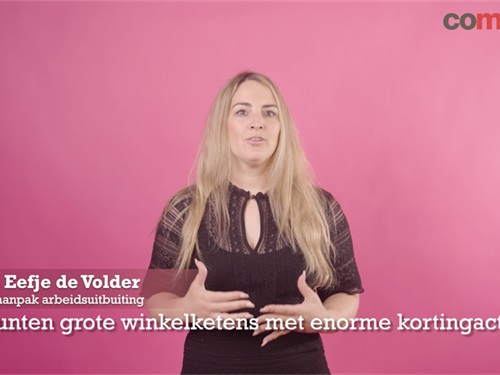
In November, CoMensha, the Dutch Coordination Centre on Human Trafficking, published a short video, which reminds the public that the huge discounts that many companies offer at the end of the year are only possible because products may be made with labour exploitation or other abuses of workers. CoMensha emphasises that it does not wish to make consumers feel guilty but to inform them what they can do to ensure that their favourite brands engage in business practices that are sustainable and respect the rights of workers. |
|
Frontline Defenders
This report reveals that sex worker activists are among the most at-risk human defenders in the world, and face multiple threats and violent attacks. The four-year investigation is the first to document attacks on sex worker activists that are perpetrated in retaliation for their human rights work. This includes arrest, sexual assault in detention, physical attacks, police surveillance, extreme financial burden, raids on homes and offices, threats from managers and clients, public defamation campaigns, and exclusion from policy making in areas in which they have clear and demonstrable expertise. Sex worker rights defenders report a tension between the desire to be visible as activists in order to serve their communities, and the protection of their privacy and safety. As a result, many report that they are frequently forced to make security choices in which the two identities are at odds with one another.
Bond Benton and Daniela Peterka-Benton
The QAnon conspiracy threatens anti-trafficking education because of its broad dissemination and focus on a range of myths about trafficking. These myths are rooted in historic and ongoing misinformation about abductions, exploitation, and community threats. This article examines the extent of QAnon’s co-optation of human trafficking discourses and evaluates its connection to trafficking myths, particularly related to gender, race, class, and agency. From this perspective, the article considers how anti-trafficking education can respond to these myths and build a pedagogy in the age of Q.
In the report, the Special Rapporteur analyses current challenges in the implementation of the principle of non-punishment. The principle of non-punishment constitutes the cornerstone of an effective protection of the rights of victims of trafficking, however, there remain many gaps in its implementation in practice. In the report, the Special Rapporteur takes stock of previous research conducted under the mandate, as well as submissions of examples of good practices by states and the expertise of practitioners. She offers an ample overview of the recognition of the principle in various legal instruments and jurisprudence. She underlines the link between the principle of non-punishment and States’ obligation of due diligence and studies the challenges in its application, as well as other forms of punishment outside of criminal proceedings, such as deprivation of nationality, administrative sanctions, and detention in closed shelters. The Special Rapporteur offers States a set of recommendations aimed at supporting them in the adoption of a model of application of the non-punishment principle that is fully compliant with States’ obligation to protect victims of trafficking.
|
|
|
|
|
|
|