Warm greetings from Jakarta, Bangkok, Sofia, Geneva, and Bahía Blanca!
Since our last e-bulletin, we have welcomed several new colleagues to our team – Milena and Nadia who are working remotely, and Sumati, Srishty, Su Mon, Maya, Charlotte, and Jennifer who joined us in Bangkok. We are excited to have an office full of energetic and committed feminists again!
In the last few months, we have become increasingly concerned about the ramifications of the ‘cost of living crisis’ for women migrant and low-wage workers. Just as the world is beginning to recover from the COVID-19 pandemic, we are now seeing dramatic increases in the cost of food, fuel, and other goods, and the accompanying shortages of basic necessities. The reasons for these are well-known – Russia’s invasion of Ukraine, increased government debt and reduced economic activity due to COVID-19, rising interest rates, and the climate crisis, among others. But it also seems like there is something inherently wrong with the way our economies are organised if we are moving from one crisis straight into another.
With the world’s richest man having a ‘super bad feeling’ about the economy, and with ‘stagflation’ (economic stagnation combined with high inflation) becoming a buzzword, we can expect more economic hardship in the months ahead. As always, it will be poor countries and poor people who will bear the brunt of these crises. Just last month, following months of food, fuel, and medicine shortages, Sri Lanka officially defaulted on its debts and may be just ‘the first domino to fall’.
We expect to hear pronouncements about how stagflation and the cost-of-living crisis are increasing people's vulnerability to trafficking. They undoubtedly will, but we remain convinced that, as with vulnerability caused by COVID-19, anti-trafficking measures such as awareness-raising, psychosocial assistance, and prosecutions alone cannot prevent trafficking. As we reflected in our statement for International Women’s Day, any meaningful and sustainable anti-trafficking measures need to focus on addressing broader issues of socioeconomic exclusion, discrimination, and migration restrictions. Importantly, providing economic opportunities and combating gender, racial, and ethnic discrimination will also prevent some people from becoming traffickers, as the latest issue of Anti-Trafficking Review showed.
This is why socioeconomic inclusion has been one of the main themes of our work for the last several months. In February, we published a new research report on the reintegration of South Asian migrant women who returned from working in West Asia. Then in March, at the Commission on the Status of Women, we hosted three parallel events to share our research findings on the socioeconomic inclusion of migrant and trafficked women in Latin America, Europe and Southeast Asia and South Asia. We then also highlighted the importance of re/integration and socioeconomic inclusion at a hybrid in-person and online event organised as part of the International Migration Review Forum in May. This event shared our research findings across all three regions and was co-sponsored by the Government of Bangladesh, the Office of the UN High Commissioner for Human Rights, Women in Migration Network, and our members OKUP and BNSK in Bangladesh, Espacios de Mujer in Colombia, and FairWork in The Netherlands.
In the coming months, we’ll continue to work with our members and partners to advocate for national, regional, and international policies that support migrant and trafficked women’s socioeconomic inclusion. We have also started a new initiative to understand and document the strategies that different civil society organisations employ to incorporate the voices and inputs of women migrants, workers, and victims of trafficking that they work with. We hope that this research will help all of us to better advocate for socioeconomic inclusion for those who need it most with their meaningful participation and leadership.
You can read more about our work and that of our members in the next sections of this e-bulletin. As always, we welcome your feedback and inputs for future issues at borislav@gaatw.org
|
|
International Advocacy Update
Our International Advocacy Officer prepared an update on three international processes: 1) the Mechanism to review the implementation of the UN Convention against Transnational Organized Crime (UNTOC) and its protocols; 2) the International Convention on Countering the Use of Information and Communications Technologies for Criminal Purposes (Cybercrime Convention) that's being negotiated at the UN at the moment; and 3) The International Migration Review Forum.
Read the update here. If you're interested in knowing more, or sharing your experiences with these processes, you can get in touch with Maya Linstrum-Newman at maya@gaatw.org
|
|
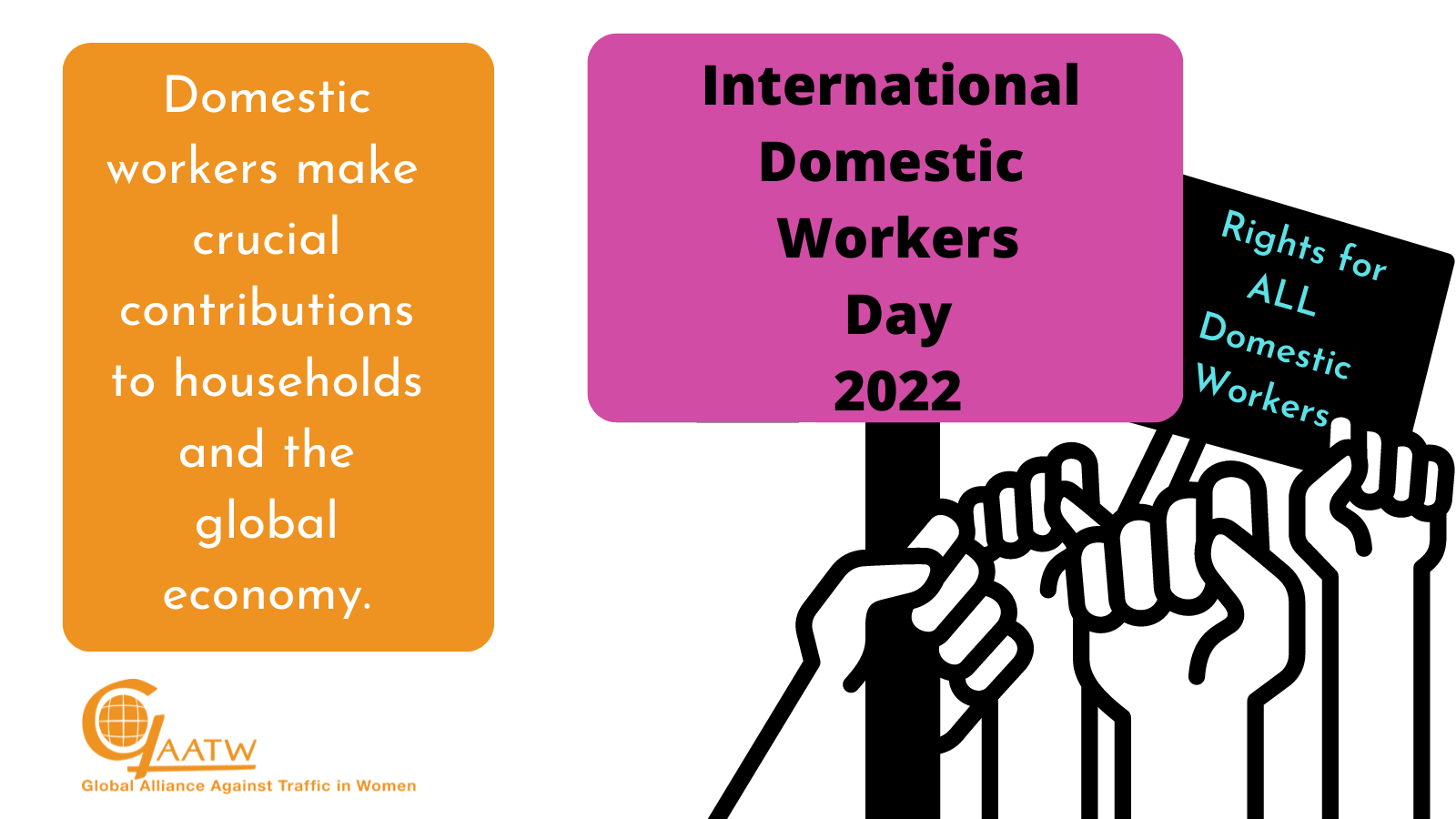
Essential but excluded: Rights protections for domestic workers are long overdue
Statement by Global Alliance Against Traffic in Women on International Domestic Workers Day
Domestic workers make crucial contributions to households and the global economy, yet continue to suffer from multiple vulnerabilities caused by the lack of recognition and respect for their work, inhumane labour migration regimes, rogue recruitment practices, and gender-based discrimination and violence.
On this International Domestic Workers Day, we highlight the effects of the COVID-19 pandemic on migrant domestic workers in the past two years and their exclusion from much-needed social protections. We call for measures to improve their working and living conditions as well as access to labour rights and government support.
|
|
News from the GAATW International Secretariat |
|
New colleagues join GAATW Secretariat
Since the beginning of the year, the GAATW Secretariat welcomed seven new colleagues to our team. Milena Stateva joined us in February in the role of Senior Research Associate. She’s based in Bulgaria and will be responsible for our action research project on socioeconomic inclusion of migrant and trafficked women along the Southeast Asia – Europe corridor. Nadia Afrin, working part-time from Geneva, had been supporting our engagement with Bangladeshi migrant women in the Middle East and elsewhere for a long time and will now lead our work on women’s migration from South Asia to West Asia. Maya Linstrum-Newman, Srishty Anand, and Sumati Pannikar joined our team in Bangkok in the beginning of May. Maya is responsible for GAATW s international advocacy work, Srishty will lead a new initiative to explore how civil society organisations incorporate the voices and views of migrant and trafficked women into their work, and Sumati will be responsible for GAATW’s engagement with different groups of women workers. In June, we started hosting three interns in our Bangkok office: Jennifer Janssen and Charlotte Carr are from Canada and will be supporting our work in the areas of communications, research, and engagement with women workers, and Su Mon Htet Naing is from Myanmar and will help us build connections with migrant workers’ groups in Thailand. From July, we’ll also be hosting a Thai human rights volunteer.
We are excited to have a full office again and we hope you will all get to meet our team soon.
|
|
New issue of Anti-Trafficking Review sheds light on human traffickers
In April, we published the new issue of Anti-Trafficking Review on the theme of ‘Traffickers’ and guest edited by Marika McAdam. We chose this theme because of the lack of knowledge of who the perpetrators of human trafficking are, why they engage in trafficking, and how they operate. The fourteen articles and one interview published in the issue – from Australia, Hong Kong, Vietnam, Malaysia, Greece, Italy, the Caribbean, and the United States – examine the characteristics, motivations, and modus operandi of traffickers, their relationships with victims, and their treatment in the criminal justice system. Importantly, they point to measures that can prevent people from offending and ensure that justice is served for both victims and perpetrators. Continue reading
|
|
New issues of the magazine Our Work, Our Lives
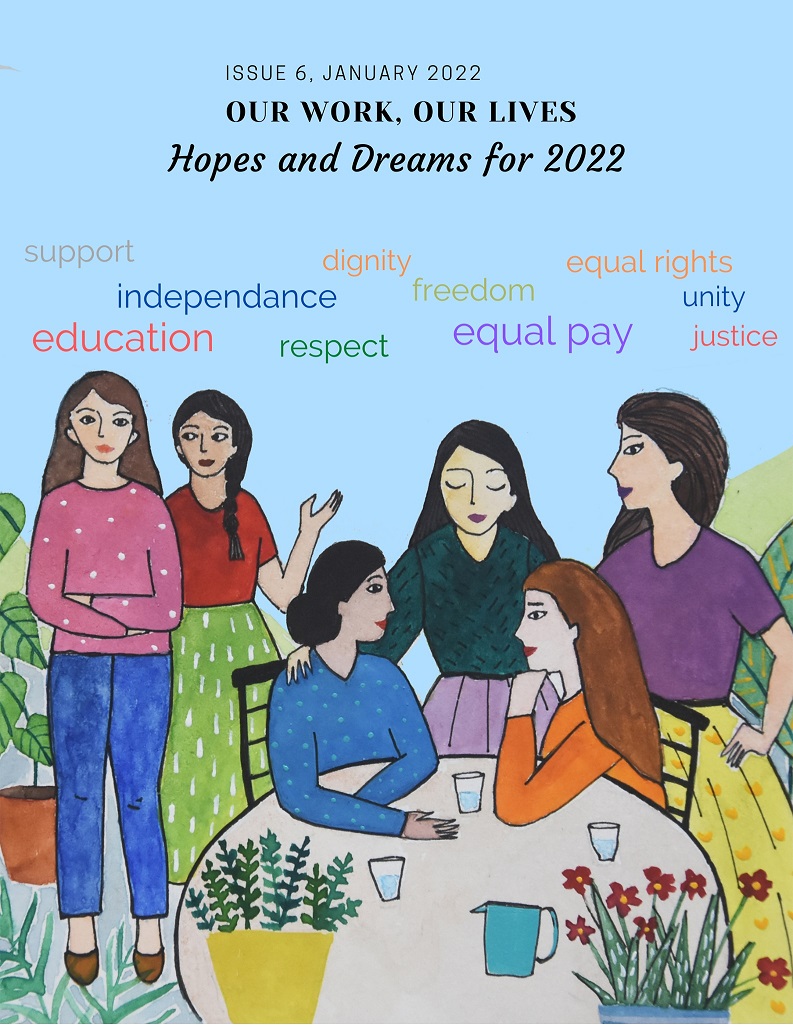
In the first half of 2022, we continued publishing our monthly e-magazine Our Work, Our Lives, an initiative that focuses on women workers’ joys, struggles, and agendas for change.
We welcomed the New Year with the sixth issue themed ‘Hopes and Dreams for 2022’, where seventeen groups of women workers and CSOs from Bangladesh, Ethiopia, India, Indonesia, Jordan, Kuwait, Nepal, and Sierra Leone shared their collective dreams and hopes through stories, drawings, visual art, and poems. Continue reading
|
|
Socioeconomic inclusion of migrant and trafficked women in Southeast Asia and Europe
There is limited information about why Southeast Asian women migrate to Europe, how they live there, if and how they return home, and how governments and NGOs support their socioeconomic inclusion in the destination and origin countries. This is why in 2021, we began a new Feminist Participatory Action Research project, with ten NGOs in Southeast Asia and Europe, whose aim is to bring about a positive change in migrant women’s lives through promoting their agendas for change at the local, national, and international levels. Continue reading
|
|
Reintegration of women migrant workers in South Asia
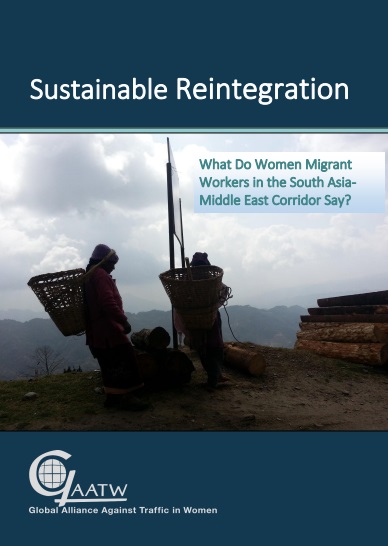
In February, we published our new research report ‘Sustainable Reintegration – What Do Women Migrant Workers in the South Asia-Middle East Corridor Say?’. This comprehensive publication presents the main findings from a Feminist Participatory Action Research (FPAR) conducted by GAATW in collaboration with member and partner organisations in Bangladesh, India, Nepal, and Sri Lanka. Between July 2020 and March 2021, the research teams spoke with 486 returnee migrant women from the four countries about their experiences with return, work and income upon return, access to government programmes, and relationships within the family and community. Most of the women had been employed as domestic workers in Kuwait, UAE, Oman, Bahrain, Qatar, Saudi Arabia, and Lebanon for periods between several months and several decades.
The report highlights the challenges that women faced when resuming their lives upon return, including during the COVID-19 pandemic. It identifies gaps in the implementation of policies and programmes for sustainable reintegration, as well as opportunities for improvement based on migrant women’s own interests and needs and the work of civil society organisations that support them. Finally, it lists a number of actions for change that our partners are engaging in after the completion of the research processes.
|
|
GAATW parallel events during the 66th Commission on the Status of Women
The 66th session of the Commission on the Status of Women (CSW66) took place in March in a hybrid format and all the side events and parallel events were held virtually. The priority theme for this year’s session was ‘Achieving gender equality and the empowerment of all women and girls in the context of climate change, environmental and disaster risk reduction policies and programmes’. GAATW co-organised three virtual parallel events with our member and partners on re/integration and socioeconomic inclusion of migrant and trafficked women. Continue reading
|
|
Gender, migration, and work: Launch of five research reports on social and economic inclusion of migrant and trafficked women in South America
On 29 March, we organised an online event to present the findings of a Feminist Participatory Action Research (FPAR) project conducted jointly with five members and partners in Argentina, Brazil, Uruguay, Peru, and Colombia on the topic of social and economic inclusion of migrant and trafficked women.
The event was moderated by Emilia Cebrián from GAATW-IS and included opening remarks by the UN Special Rapporteur on the human rights of migrants, Mr Felipe González Morales. Continue reading
|
|
News from GAATW Member Organisations |
|
New GAATW member in Spain
In March, we welcomed a new member organisation to our Alliance. Fundación Serra-Schönthal, Spain, is a non-profit whose purpose is to stand in solidarity with women who engage in sex work and/or are victims of trafficking for the purpose of sexual exploitation, as well as the rejection of structures that do not respect human rights, especially in situations of injustice and violation of women’s rights. The Foundation provides social assistance to women victims of sexual exploitation, development cooperation, the defence of human rights and the promotion of volunteerism.
|
|
Emergency fund for Ukraine and new report on trafficking risks for Ukrainian refugees
In February, La Strada International established an emergency fund to support Ukrainian colleagues to remain safe, flee the country and access shelter, or receive emergency support when needed. Donations to the emergency fund can be made via their website or via bank transfer.
In March, LSI organised a webinar with representatives of civil society in Ukraine. The aim was to direct attention towards the situation in the country, prompted by Russia’s invasion, paying particular attention to the support provided by civil society organisations to people in vulnerable conditions. Continue reading
|
|
US Congress reintroduces historic legislation that centres the health and safety of sex workers
On 3 March, International Sex Workers Rights Day, Rep. Ro Khanna, Sen. Elizabeth Warren, Rep. Barbara Lee and Sen. Ron Wyden made history by re-introducing the SAFE SEX Workers Study Act (SSWSA) with the support of 70 different organisations from anti-violence, public health, technology, and civil and human rights. The SSWSA makes a seemingly straightforward ask of the US government: to study and report on the health and safety consequences of the Stop Enabling Sex Traffickers Act (SESTA) and the Allow States and Victims to Fight Online Sex Trafficking Act (FOSTA) on people who trade sex. But the outcomes will be much deeper; if passed, this bill will create a monumental shift in how we understand digital oversight and regulation, anti-trafficking efforts, and sex workers’ rights. Continue reading
|
|
Rights of victims of trafficking in Serbia
|
|
Guide for police and labour inspectors working with migrants in the UK
This publication highlights the negative impact of data sharing between the police/labour inspectors and immigration enforcement on migrant victims of crime, in particular domestic abuse and labour exploitation, and shows how the introduction of safe reporting mechanisms can help prevent and address abuse and exploitation. Building on international good practice, it outlines practical strategies to increase trust between these agencies and migrant communities to enable migrants to securely report abuse and exploitation and agencies to access valuable intelligence to prevent and address these crimes. Continue reading
|
|
Progress on sex workers’ rights in India
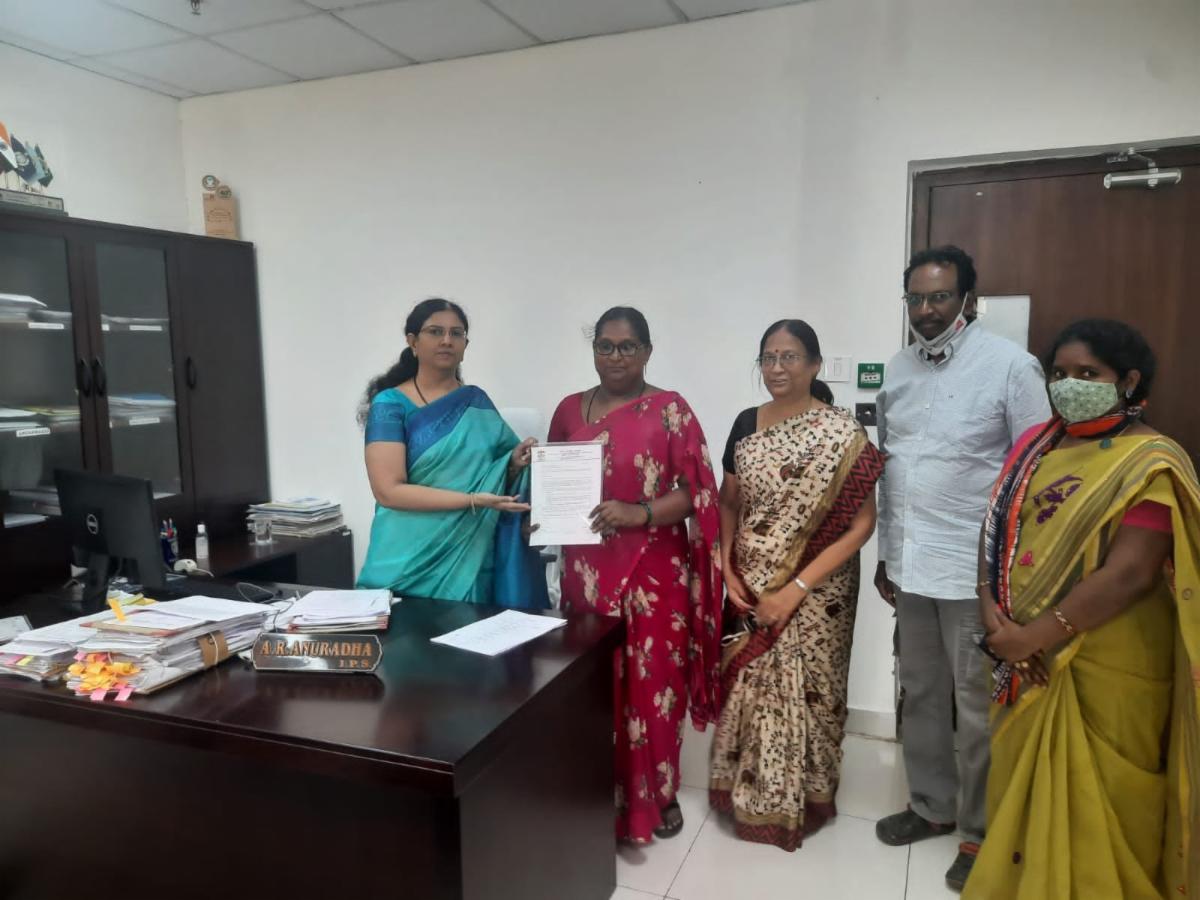
In June, our member Women’s Initiatives (WINS), Me and My World, and the National Network of Sex Workers met with Ms AV Anuradha IPS, Principal Secretary of the Ministry of Women and Child Development in the state of Andhra Pradesh, and Ms KGV Saritha of the Andhra Pradesh police. The purpose of the meeting was to discuss further action on the implementation of the recent Supreme Court interim orders of 19 May that uphold the rights of sex workers and make community-centric efforts for sustainable and effective results. AP state officials were fully supportive of the Supreme Court order! They stressed that adult women detained in shelter homes against their will should be released and they would like to be engaged in the survey.
|
|
New analyses on the exploitation of human trafficking victims abroad
Switzerland likes to be the exception. Unfortunately, this is also the case when it comes to the direct application of the Council of Europe Anti-Trafficking Convention. Whereas the Convention states clearly that the access to support services must be guaranteed independently of the place of exploitation, the Swiss Victim Aid Act denies access to victim aid to anyone who did not possess a residency in Switzerland at the time of the exploitation and has been exploited abroad. For foreign victims of trafficking, this means that technically they only have access to support if their exploitation took place in Switzerland, thus excluding a large number of victims currently living in Switzerland or going through the asylum process in the country. Continue reading
|
|
Novi put receives the Stop Slavery Hero Award
The Stop Slavery Award of the Thomson Reuters Foundation recognises companies, non-profit organisations and individuals making essential contributions in the fight against modern slavery. Launched in 2015, this award was originally aimed at recognising businesses for their gold standards to eradicate forced labour from their supply chains. Later on, it was expanded to reflect and recognise the contributions of a wide range of actors who are working to combat modern slavery beyond the business sector.
We extend our warmest congratulations to Novi Put, our member in Bosnia and Herzegovina and the first non-governmental organisation in the country to receive this prestigious award in recognition of their anti-trafficking efforts. Novi put was also the only NGO from Europe that was shortlisted and selected from more than 150 entries from more than 30 countries.
|
|
‘It’s not bad to be single’: A new video by AFRO
In April, AFRO released a video titled It’s not bad to be single, in which Sum, a sex worker in Hong Kong, shares her story about working in the industry, her experiences with clients, and her struggles after she decided to get a divorce.
In the sex work industry, the term ‘docking’ refers to being able to quit when you find someone to marry. Like many other sex workers, Sum shared this aspiration. However, her husband disappeared after she lost her apartment and her savings to help pay his gambling debt, and she decided to file for divorce. Continue reading
|
|
Sexual harassment in low-paid and insecure work
On the occasion of International Women’s Day, FLEX launched a new report titled Tackling sexual harassment in low-paid and insecure work. It focuses on the need for better enforcement of sexual harassment protections in low-paid and insecure work, and it includes primary research and case studies collected by FLEX in the cleaning, hospitality, and app-based delivery sectors, with input from other key organisations in this space. Continue reading
|
|
Marika McAdam and Borislav Gerasimov
This article introduces a Special Issue of Anti-Trafficking Review themed ‘Traffickers’. It describes how most of the knowledge about human trafficking is generated from the accounts of victims of trafficking and people working with them, while knowledge of perpetrators of human trafficking remains limited. It further summarises the articles contained in this special issue. These articles describe one or more aspects of traffickers’ characteristics, motivations, modus operandi, relationships with victims, and treatment in the criminal justice system. Overall, the issue shows that in many cases, traffickers’ profiles are similar to those of their victims. It suggests that measures to reduce racial, ethnic and other discrimination and improve socioeconomic and educational opportunities for all would help reduce people’s vulnerability to becoming victims of trafficking as well as perpetrators.
Sam Okyere
For more than two decades, governments, industry organisations, and NGOs have intervened in Ghana with the explicit aim of eliminating child labour. Some of their actions have been brutal. Parents and caregivers have been arrested, property has been damaged, and children have been taken from their families at gunpoint. Those causing this turmoil justify their actions by alleging that the villagers are trafficking and enslaving their own youth. Ghanaians in rural and impoverished areas don’t dispute that large numbers of young people work in agricultural labour, fishing, construction, hawking, and other precarious jobs. But their understanding of what is happening and why is different to that of the abolitionists. This new series on Beyond Trafficking and Slavery gives them space to tell their story in their own words. It includes a variety of voices, but above all it presents children’s perspectives on their work and their suggestions for an effective response to it.
Siobhán Mullally, UN Special Rapporteur on trafficking in persons
In her report to the Human Rights Council, the Special Rapporteur highlights that the agriculture sector is characterised by high levels of informality, lack of oversight and protection, with specific examples from Brazil and Greece. She pays particular attention to gender inequality in land ownership and security of tenure over land, and the harmful impact of discriminatory gender stereotypes and practices towards migrant women agricultural workers, indigenous women, persons with disabilities, male victims of trafficking, and LGBTIQ+ people. She also highlights that the sector continues to rely on temporary, seasonal and circular migrant workers, as market needs are prioritised over workers’ rights. Existing visa schemes lack oversight, and continue to push agricultural migrant workers and their families into precarious situations. Due to the heavy reliance on their employers and the fear of detention or deportation, migrant agricultural workers are less likely to report violations. The SR expresses concerns regarding child labour in the agriculture sector, where exemptions or exceptions applied may allow for child labour on farms, and child victims face many obstacles to secure access to justice. She highlights the limited enforcement and application of labour law in agricultural work, as well as the limited impact of existing measures to combat trafficking in supply chains. Finally, the SR critically analyses the proposed European directive on corporate sustainability due diligence, and also refers to the climate change–trafficking nexus in agribusiness and the potential contributions of combating trafficking to reverse environmental degradation and the climate crisis.
Felipe González Morales, UN Special Rapporteur on the human rights of migrants
In his report to the Human Rights Council, the Special Rapoorteur examines recent developments in migration and border governance affecting the human rights of migrants. He analyses the trend of the legitimisation of pushback practices through the introduction of legislation and government executive orders and discusses the application of safe third country concepts and readmission agreements at land borders and at sea. The report also takes note of recent positive developments with regard to ensuring accountability for pushbacks. The Special Rapporteur concludes that pushbacks remain the de facto general policy in many States and continue to seriously impede the enjoyment of the human rights of migrants who cross international borders.
|
|
|
|
|
|
|