|
Intercity Buses On and Off the Beaten Track
Intercity Bus E-News, January 2026
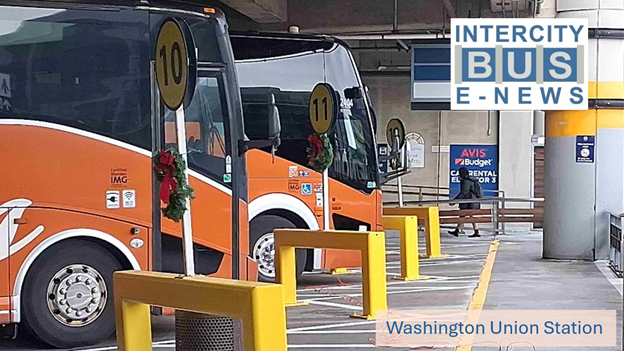
January 27, 2026 | Above: A pair of DC Trails coaches used for BestBus service to New York are
at Washington Union Station on January 13, 2026
| |
Editor’s Perspective
This Intercity Bus E-News edition takes you off the beaten track to small communities, like Orangeburg, SC, Oxford, OH, and Pendleton, OH, where the only scheduled intercity transportation you’ll find is an intercity bus. The journey may test your geographic knowledge (as it did mine), but you’ll see that private bus lines and public agencies are working hard to fill gaps in the intercity bus map.
If you are a regular E-News reader, you’ll notice some big changes over the next few months. Instead of sending you a lengthy (20+ page) Outlook for the Intercity Bus Industry report, we’ll create several shorter and more action-oriented reports. In mid-February, we’ll showcase the industry's biggest trends and make a forecast of traffic growth that will draw on interviews and data. We’ll also step up our regional coverage in E-News.
| |
A year ago, we predicted U.S. intercity bus traffic would grow by 4% in 2025. How accurate was our projection? The year started sluggishly—and that was before worrisome reports emerged about the effects of higher tariffs and immigration-related tensions in urban areas. By the summer, demand was sagging in some regions, particularly in rural areas, accentuated by low fuel prices that made driving cheaper. Yet 2025 finished strong. Testimonials we’ve received from industry leaders and these late-in-the-year announcements indicate that growth over the calendar year was well above 4%:
|
-
Wanderu.com, the booking site, reported favorable trends in reservation activity, with most regions up more than 15%, as we noted in our last issue.
-
Trailways’ Christmas/New Year's holiday travel was up about 10% on most routes. Alec Berardi pointed to “a significant increase over last year, especially on longer city pairs.” Other bus lines reported that traffic was up 10% to 20%.
-
FlixBus stepped up service on many routes, including additions that positioned it to handle heavy traffic during the federal shutdown, which created severe air-travel disruptions.
-
State-government-run systems have reported significant overall gains, although the results vary widely by region. Colorado’s Bustang posted favorable results last summer.
| |
In addition, our Intercity Bus Frequency Report showed that the sizable expansions over the past two years were not only sustained but also followed by more expansion on several major Northeast Corridor and Pacific Northwest routes as was as the Southeast. The outcomes appear less favorable in the heartland, California, and rural areas.
What do we expect for the rest of 2026? Watch for next month’s 2026 Outlook report. Before then, be sure to sign up for the free webinar on February 5, 2026, about the effort to prevent the loss of the Chicago Intercity Bus (“Greyhound”) Station, which I summarize below.
| |
Joseph Schwieterman, PhD
Intercity Bus E-News Editor | Professor and Director, Chaddick Institute at DePaul University
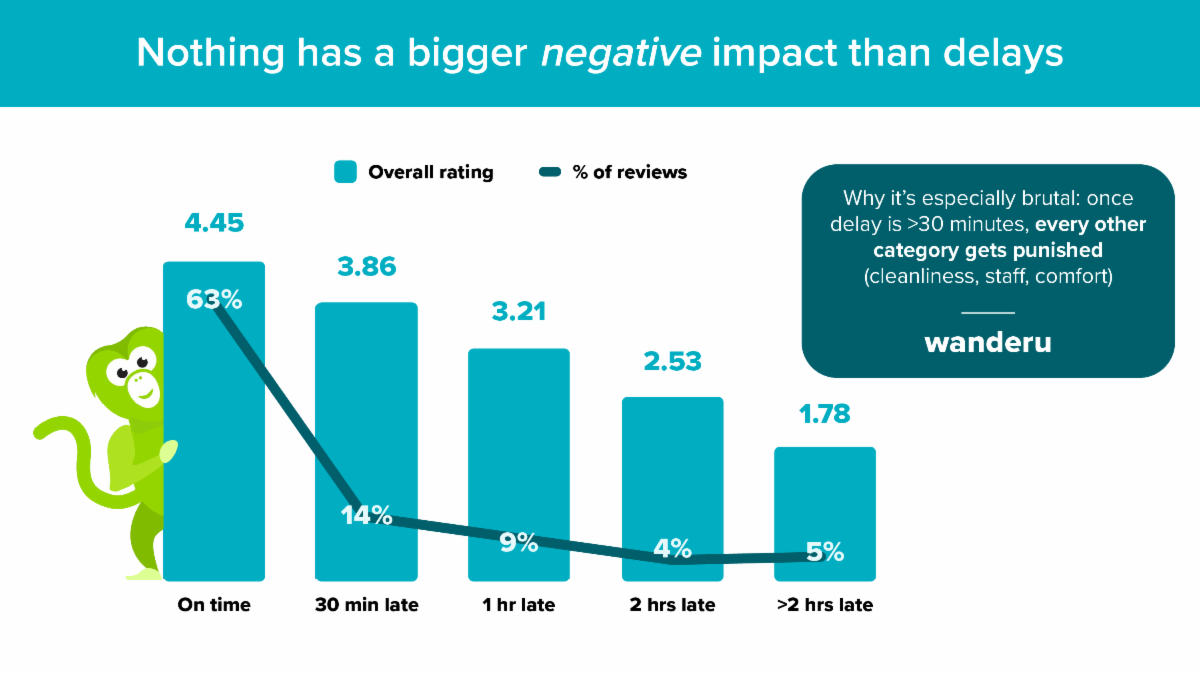
| The Premium that Riders Place on Punctuality | A colleague quipped, “It’s so simple it's brilliant,” when I described Wanderu.com’s new analysis, which showed the link between bus-traveler satisfaction and on-time performance. But the results are significant. Ratings on a scale of 1 to 5 (with 5 being the most favorable) by riders who made reservations on the meta-search booking platform were an impressive 4.45 when buses were on time, 3.21 when buses were about an hour late, and even lower at 1.78 when buses were more than two hours behind. Simply put, the ratings plummet fast as buses get later. The analysis was based on 6,500 responses from travelers booking on Wanderu, whose platform is used by 100+ bus lines. | |
I've found that riders tend to give bus lines a break when they see traffic jams through their buses’ windows. Wanderu shows that helpful and courteous staff can make a big difference when delays occur. Running late, however, boosts labor costs, puts stress on station personnel and drivers, and spoils relationships with retailers who offer their facilities as stops. The people behind the counters often feel the heat even when they have nothing to do with the problem.
| |
This is why bus lines putting greater emphasis on punctuality is a welcome trend. Greyhound has made punctuality a major goal for its regional managers with promising results. “On-time performance has improved dramatically, supported by predictive scheduling, advanced traffic control, and proactive communication with passengers,” the company notes.
Intercity bus personnel now feel some of the same pressure to run "on time" as airline staff.
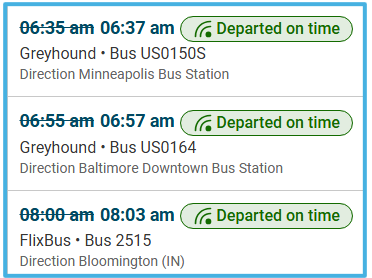
How punctual are intercity buses? We don’t know with any certainty because official statistics are not available. Still, our reviews indicate that trends are encouraging. More than 90% of services from Atlanta and Chicago arrived within 20 minutes of their schedule on recent (non-snowy) days we sampled, although data was not reported for some buses.
| |
Greyhound has taken delivery of close to 200 new coaches since early 2024. This reflects Flix SE's stepped-up modernization efforts for the legacy line, which it acquired in 2021. The company notes that the new buses, operational improvements, and other enhancements have given it a markedly higher Net Promoter Score (a widely used customer loyalty and satisfaction metric) compared with just a year ago. C&J Bus Lines, Jefferson Lines, Peter Pan, and Trailways operators and many other carriers have also recently rolled out new equipment—a bright spot for the industry.
| |
The State of Oregon and federal financial support have helped fill one of the country’s most vexing ground transportation gaps: the Boise, ID–Portland, OR, route, which has lacked a direct bus service for about a year and Amtrak service since the demise of the Chicago–Seattle Pioneer in 1997. Northwestern Stages, a Greyhound and Trailways partner, operates the new service, which runs daily via Baker City and Pendleton, OR. This gives passengers traveling from Denver, Salt Lake City, and other Mountain State points to the Pacific Northwest well-timed transfers at Boise. They no longer have to endure roundabout trips via Northern California or Spokane, WA, which used to add many hours to their journeys. This service also offers much-needed connections to Oregon’s and Washington’s state-supported intercity bus lines. Funds will be provided for 12 months in the hope that the service will become financially self-sufficient.
| |
Coach USA's continuation of a service between Dubuque, IA, and Madison, WI, via Platteville, WI, formerly operated by Lamers Bus, is welcome news for the Dubuque area, which has faced a bevy of passenger transportation setbacks. The city lost a key intercity bus link with the shutdown of Burlington Trailways in the autumn and hasn’t seen an intercity passenger train since 1981. Its commercial air service ended this month, when its last Denver Air Connection plane took off from its local airport. On top of this, Dubuque is some distance from the nearest interstate highway. Users of the Coach USA service, which is provided with State of Wisconsin support, can book on megabus.com and make transfers to other routes to reach Chicago and Milwaukee.
| |
The Virginia Department of Rail and Public Transportation has selected Academy Bus, one of the country’s largest motorcoach operators, to operate Virginia Breeze’s new Tidewater Current route, which will start in spring 2026. The Tidewater Current will link Virginia Beach and Norfolk with Richmond, Charlottesville, and Harrisonburg, making it Virginia Breeze’s first route that does not serve Washington, DC. Separately, a new Amtrak Thruway service linking Hampton Roads (Norfolk and Newport News) to Washington has been launched in response to the temporary reduction in Amtrak train service due to bridge construction in northern Virginia. This region has also drawn attention due to the closing of Richmond’s aging Greyhound Station and the relocation to a bus plaza next to the Main Street Amtrak Station.
| |
Greyhound has launched Chicago–Milwaukee–Green Bay–Minneapolis service over lengthy rural stretches through northern Wisconsin and eastern Minnesota. This provides Wittenburg, Wausau, and Chippewa Falls, WI, and other communities with a link to the national bus network. The schedule west of Milwaukee is similar to that of a now-discontinued Coach USA service operated with state financial support, but that was not set up for through-ticketing to points around the U.S. to the same extent as the new service. A stop is made at Chicago’s Cumberland CTA rail station, which had recently disappeared from the carrier’s route map.
| |
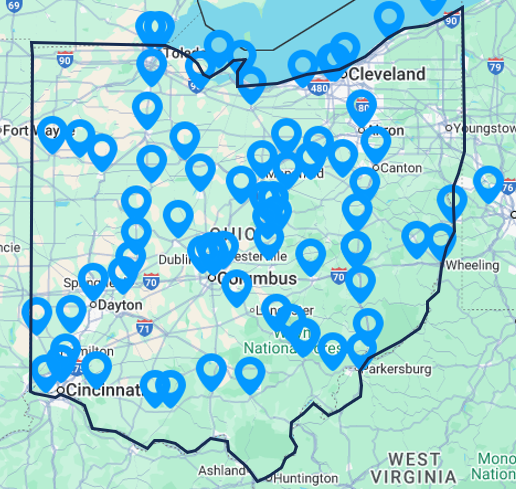
This map shows the impressive number of points that Ohio’s GoBus system serves following its late 2025 expansion. (We added the Ohio outline.) GoBus, which the state government supports, is operated primarily by Barons Bus. Among its newest stops are Oxford, OH, which is home to Miami University and the westernmost stop depicted on the map, and Urbana, which is near Columbus. Oxford is a new stop for Baron’s Cincinnati–Indianapolis–Detroit service, indicative of GoBus’s willingness to experiment to assess customer demand. The network is integrated into the Greyhound.com and Trailways.com reservation systems, allowing for through-ticketing to many U.S. points.
| |
Peter Pan Bus Lines has announced the addition of fourth-generation leadership. Lauryn Picknelly-DuBois was appointed Vice President, Finance, and Peter B. Picknelly was appointed Vice President. “The Picknelly family leadership team continues a nearly 100-year legacy of family-owned transportation at Peter Pan Bus Lines,” the Massachusetts-based company notes. Chairman and CEO Peter A. Picknelly was a keynote presenter at an Intercity Bus E-News webinar last year. Congratulations!
| Schedule Shifts On The Pacific Coast | |
The West Coast has been a hotbed of activity in recent months, according to our Intercity Bus Frequency Analysis. This shows that FlixBus-Greyhound is prioritizing major Pacific Northwest routes with a January schedule that includes six FlixBus Seattle–Vancouver, BC, trips in each direction on peak days, two more than generally offered at the same time last year. Greyhound continues to have a single trip in each direction. FlixBus-Greyhound’s Portland–Seattle service has grown to five trips (six during summer) due to the return of a Greyhound trip, which our review indicates was absent last year. Amtrak still has a frequency edge, however, with seven daily trains. End-to-end trips tend to be around 20 minutes faster on the train, while bus tickets tend to be less expensive. Equipment shortages on Amtrak could help explain the service expansions.
| |
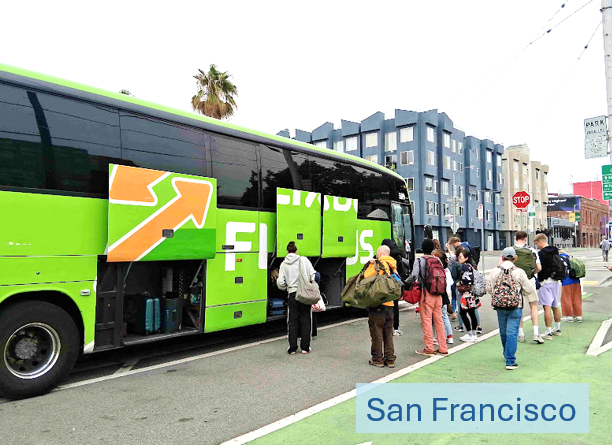
The heavily traveled Los Angeles–San Francisco/Oakland corridor has shifted in a less favorable direction. CA Shuttle and Megabus exited several years ago. Currently, FlixBus-Greyhound generally has two in each direction, several fewer trips than a year ago, our review indicates. This is despite direct bus service generally being more than an hour faster than the Coast Starlight and Amtrak Thruway connections. What caused the drop? It is unclear, but San Francisco’s challenging bus terminal arrangements (described here) may be a factor. Moreover, traffic seems to fluctuate more widely between peak and off-peak periods than it did a few years ago, which is creating many schedule surprises. By spring, we expect more Los Angeles–San Francisco service buses to be on the road.
The modest Los Angeles–San Francisco service levels suggest that other factors are also at play. Several other California bus routes are trending positively. Both American Star Tours (an Amtrak Thruway and Greyhound interline provider) and Tufesa (which caters to Spanish-speaking travelers) continue to each have a daily San Jose–Los Angeles trip. Services from Los Angeles to both Las Vegas and San Diego remain extensive, despite the absence of a high-quality station facility in San Diego. Watch for additional analysis in the months ahead.
| |
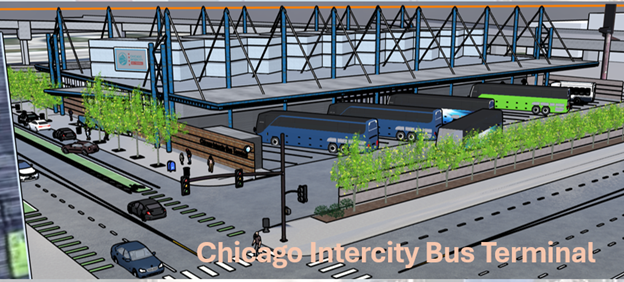
Make plans to attend next week’s webinar, which will explore the plan to bring the Chicago Intercity Bus (Greyhound) station under public ownership. The movement has significant momentum, but local agencies and city departments urgently need additional actions. Joseph Schwieterman and architect Nathale Nicoletti will unveil a new 3D SketchUp model showing how the station could be upgraded at a modest cost. The free event, hosted by the Environmental Law & Policy Center, features several speakers. It will take place on Thursday, February 5, 2026, from 12:00 p.m. to 12:50 p.m., CT
| |
Greyhound has relocated from its traditional downtown Dallas terminal at 205 Lamar Street to a new station at 9755 Harry Hines Boulevard near Dallas Love Field. The new facility, much smaller than its predecessor, has a climate-controlled waiting room and an off-street passenger drop-off area. While eight miles from downtown Dallas, it is within easy walking distance of the DART Bachman light rail stop. “This new Dallas terminal is designed to give travelers a smoother and more convenient experience,” Kai Boysan, CEO of Flix North America, noted in a press release. Our analysis shows that the new station sees around 70 bus movements by Greyhound, FlixBus, and Valley Transit daily. Flix also serves other Dallas locations, including Market Center. Boysan also penned this timely op-ed on the need for public policies that allow intercity buses to thrive without being "burdened by an outdated stigma".
| |
Philadelphia’s long-standing intercity bus station woes appear to be about to end. The City of Philadelphia has formalized a plan, publicized in a press conference with the city’s mayor, to return to the former Greyhound Station at 10th Street and Filbert Street on May 1. After this station was shuttered in 2023 and problems arose at other downtown locations, Greyhound, FlixBus, and Peter Pan all moved to curbside spots near the Spring Garden transit stop, which was outside the downtown area (Peter Pan also has a curbside stop near 30th Street Station). The Philadelphia Parking Authority will renovate and manage the facility as part of a 10-year lease. Fullington Trailways is also expected to use the terminal.
| Flix-Greyhound Makes Moves in the Southeast | |
The FlixBus–Greyhound network continues to grow in the Southeastern states. Greyhound has added a new Atlanta, GA–Charleston, SC, trip via Myrtle Beach and an Atlanta–Raleigh, NC, trip via Athens and Augusta, GA, and Fayetteville, NC. The latter route supplements Greyhound’s and Flix’s faster and more heavily used Atlanta–Raleigh route via Charlotte, NC. Fayetteville’s stop, at the city’s FAST Transit Center, is a good example of the successful integration of an intercity bus service into a downtown transit hub.
Meanwhile, FlixBus is adding a Raleigh–Orlando, FL, route via Charlotte, increasing its three trips in each direction on busy days. The autumn shutdown of Southeastern Stages, a mainstay in this region for more than 90 years, may have spurred some of these developments. For example, Flix recently restored service to Orangeburg, SC, a former Stages stop, on its Charlotte–Orlando route.
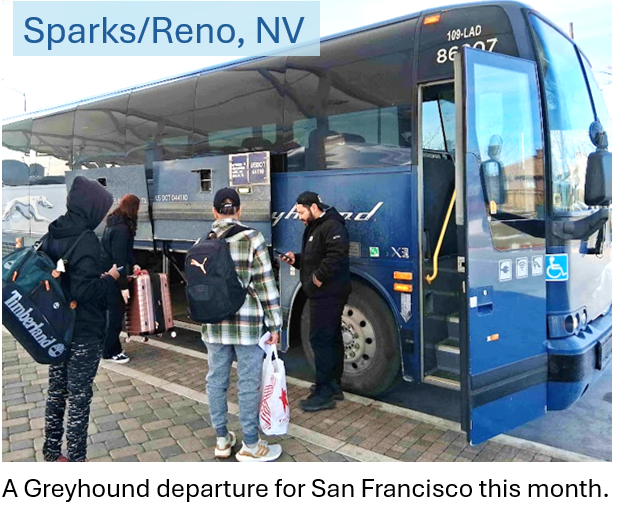
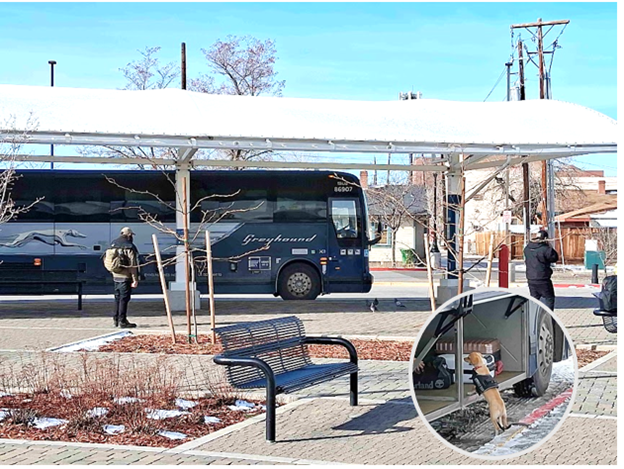
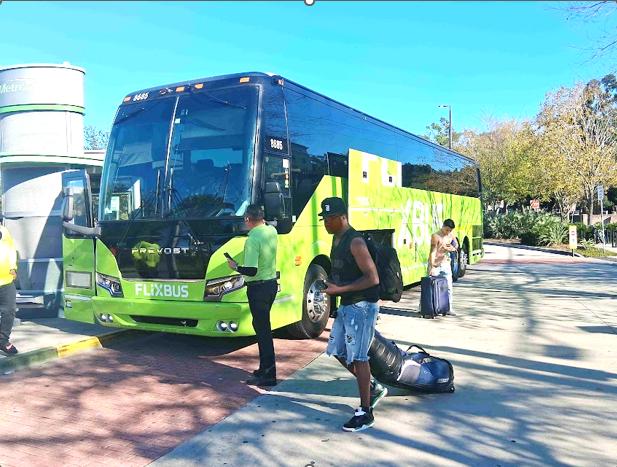
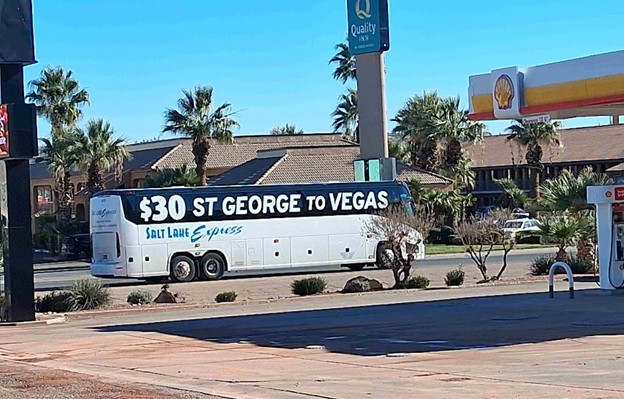
| Images from Around the U.S. | A Greyhound departure for San Francisco is imminent at the Sparks Transit Center. The bus’s first stop is in downtown Reno, only a few miles away, next to Reno's Amtrak station and near several casinos. Passengers arriving here from points to the east often transfer in Sparks, which has a well-maintained intercity bus waiting room and ticket counter. Many transfers were made possible by Greyhound’s launch of a publicly supported Denver–Reno/Sparks route last year. The Reno area, however, still lacks a direct bus service to Las Vegas, which was last provided several years ago. (Inset: a four-legged companion peers into the baggage hold at the downtown Reno stop). | A FlixBus bound for Miami will soon depart from Tampa’s Marion Transit Center, an attractive downtown facility that FlixBus shares with Greyhound and local transit buses. FlixBus previously used a curbside spot a short distance away. Our frequency analysis showed that FlixBus had eight Miami–Tampa trips in each direction on busy days in mid-January. | | A Salt Lake Express coach assigned to its popular St. George - Las Vegas airport service has just left the company's St. George, UT station on December 29, 2025. This service has grown to 10 trips in each direction on most peak days. The advertising on the bus brings to mind Megabus's heavy promotion of $1 fares years ago. | | |
Invite others to join Intercity Bus Listserv
For a link to this newsletter, our past newsletters, and reports, click here
Invite your colleagues to join our Intercity Bus Listserv. To become part of our Intercity Bus ListServ and receive 8 – 10 emails per year, email Zaria by replying to this email. No spam. Free. Also, check out our recent studies, briefs, and podcasts below. The Intercity Bus E-News team is Zaria Bonds, Samantha Rouzan, and Joe Schwieterman.
-
Look for our Schedule Frequency analysis of 69 routes. Look for an update with January 2026 data in early February.
This independently produced e-newsletter brief has been shared with our Intercity Bus (IB) and Transportation listservs. The Chaddick Institute does not receive funds from transportation companies or related industries.
| | | | |