| | |
In This Issue
----------------------------------------------------------
2025 Vector-borne Disease Surveillance
- Skeeter Surveillance: Keeping You Informed.
- World Mosquito Day.
- Ticked Off: Lyme Disease Updates.
Rabies
- Train Like a Pro with the Rabies Roadshow.
- It’s a Bird. It’s a Plane. No, it’s the Fall Oral Rabies Vaccine Campaign.
- World Rabies Day.
Backyard Flock Survey
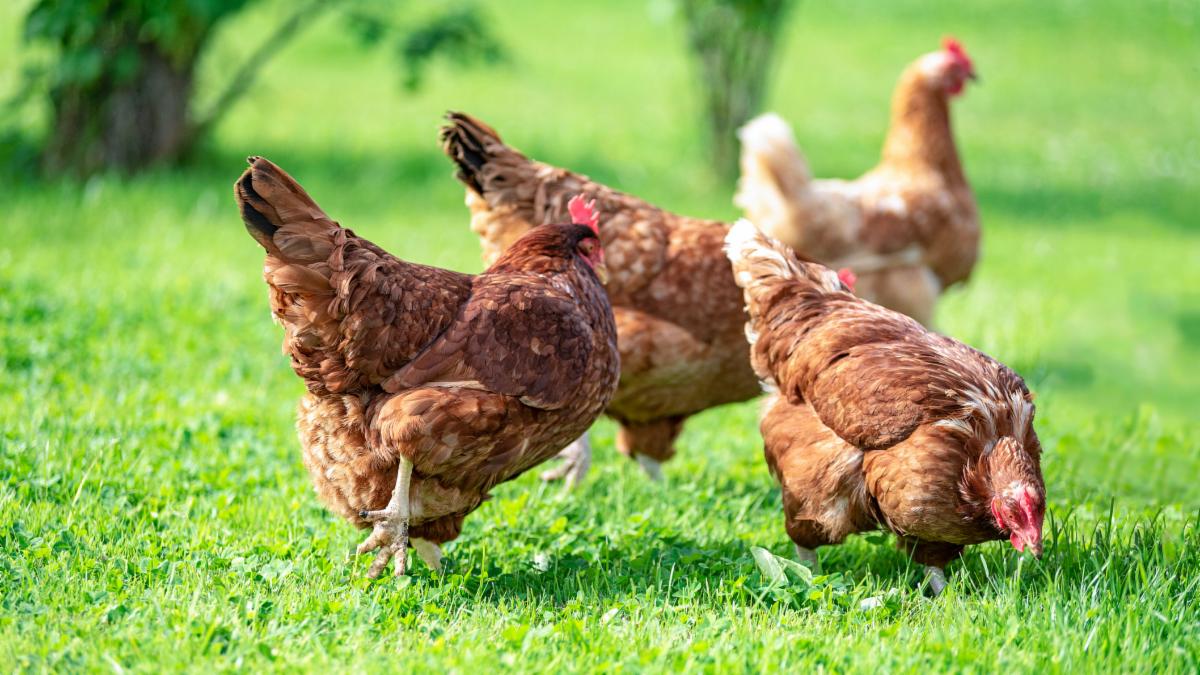
- Birds of a Feather, (Backyard) Flock Together.
| | Bite-Sized News: Vector-borne Disease Updates. | |
Skeeter Surveillance: Keeping You Informed.
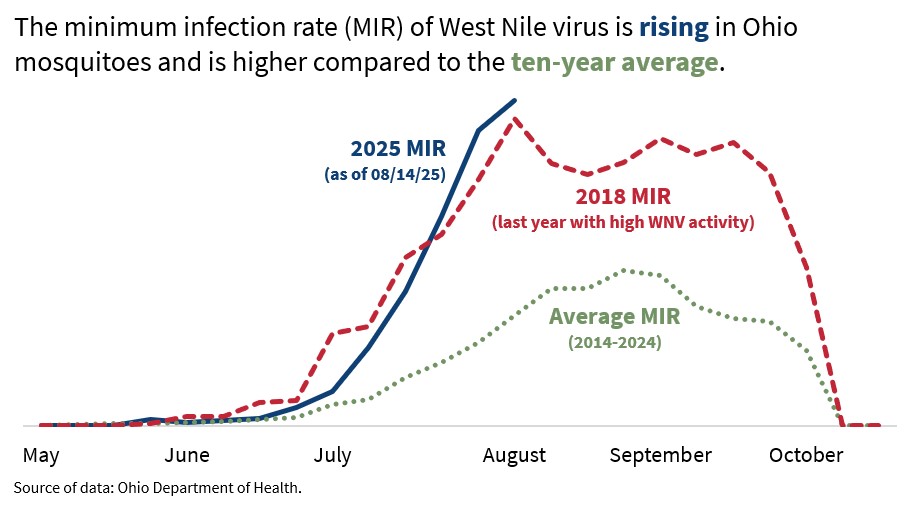
Mosquito season is in full swing, and Ohio’s surveillance teams are working hard to track mosquito-borne diseases across the state. As of Aug. 19, the Ohio Department of Health (ODH) has collected and tested over 365,489 mosquitoes from 55 local agencies in 47 counties.
So far this year:
-
1,803 mosquito pooled samples have tested positive for West Nile virus (WNV).
-
Three pooled mosquito samples have tested positive for La Crosse virus (LACv).
-
Ohio has reported five human case of WNV and five human cases of La Crosse virus.
Infection rates in mosquitoes are rising as the summer progresses. The percentage of mosquito samples testing positive this year is higher than Ohio’s 10-year average and similar to what we saw in 2018, when Ohio reported 65 human cases statewide.
| | |
As mosquito infection rates rise, the risk of diseases spreading to humans also increases. Local health agencies are encouraged to remind their communities to:
- Eliminate standing water where mosquitoes can breed.
- Use mosquito repellent.
- Wear protective clothing when outdoors.
For weekly updates on mosquito activity and disease reports in Ohio, please visit our vector-borne surveillance website.
| | |
For more information on ways to turn awareness into action, please visit our Mosquito-borne Disease in Ohio webpage.
| | |
World Mosquito Day
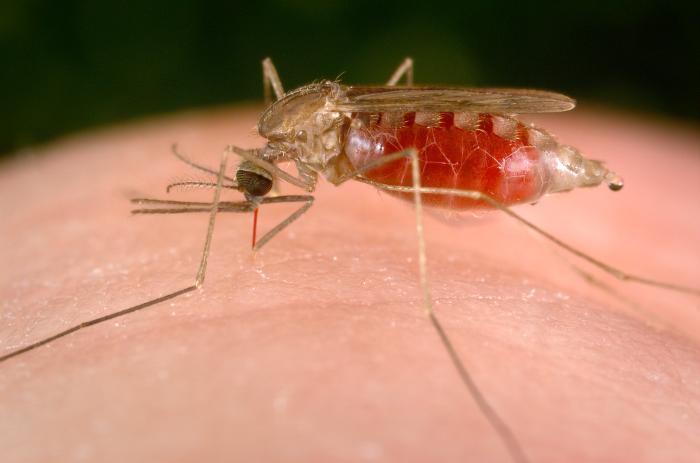
On August 20, 1897, British Doctor Ronald Ross discovered the malaria parasite in the stomach of a female Anopheles mosquito. His groundbreaking work provided the first evidence that mosquitoes transmit malaria between humans. Dr. Ross demonstrated how the parasite develops within the mosquito’s gut, then migrates to its salivary glands—enabling transmission to people through mosquito bites.
Now, August 20th is recognized as World Mosquito Day, a reminder of the significant global public health impact mosquitoes continue to have. Mosquitoes are the deadliest animals on earth, responsible for spreading diseases such as malaria, dengue, WNV, yellow fever, Zika, and chikungunya.
| | |
Ticked Off: Lyme Disease Updates.
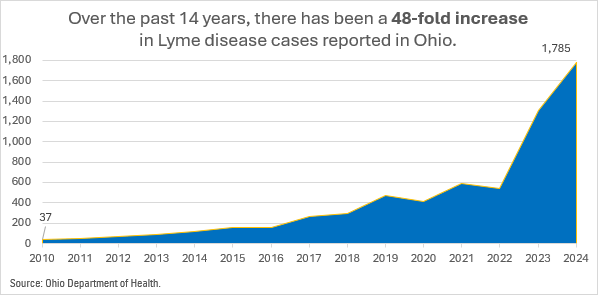
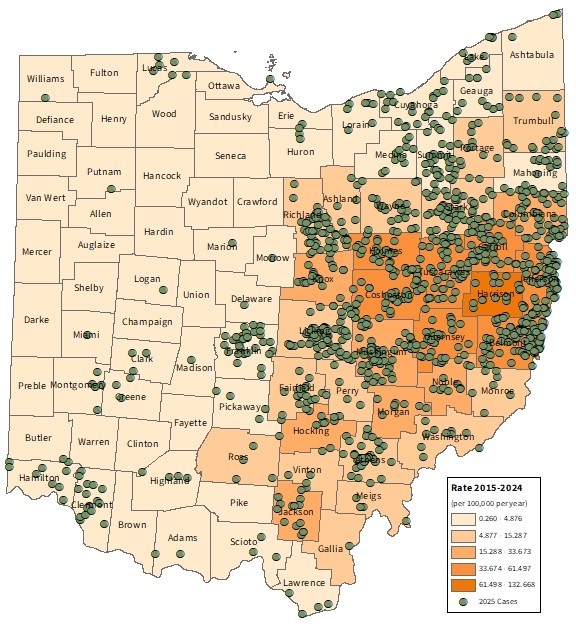
Lyme disease is the most common vector-borne disease in Ohio, and its impact has grown significantly over the past decade. Reported human cases have surged from just 37 in 2010 to 1,785 in 2024 (see figure below). This sharp increase parallels the expanding range of the blacklegged tick (Ixodes scapularis), the primary vector of Lyme disease. Prior to 2010, blacklegged ticks were not considered established in Ohio. Today, they have been reported in all but one county (Putnam County), with established populations in at least 75 of Ohio's 88 counties.
| | |
As of Aug. 19, Ohio has reported 1,308 Lyme disease cases for 2025, putting us on track to surpass last year’s total.
Protect Yourself from Tick Bites.
The following simple precautions can reduce the risk of Lyme disease:
-
Dress smart. Wear light-colored, long-sleeved shirts tucked into pants, and tuck pants into socks to keep ticks on the outside of your clothes.
-
Use tick repellents. Apply EPA-registered repellents like DEET or picaridin to exposed skin. Treat clothing and gear with permethrin, or buy pre-treated items.
-
Check for ticks. After being outdoors, thoroughly check yourself, children, and pets for ticks.
-
Remove ticks promptly. The sooner you remove a tick, the lower your risk of infection.
-
Stay alert for symptoms. Watch for signs of illness, such as fever, rash, or joint pain, and contact your healthcare provider if symptoms develop.
Personal protection remains the most effective way to prevent tick bites and reduce your risk of Lyme disease.
| | |
Lyme Disease in Ohio.
2025 Cases Compared to Incidence 2015 – 2024.
For more information on Lyme disease, visit ODH’s Lyme disease webpage.
Additional information on disease statistics and maps of tick distribution and Lyme disease cases can be found on the “Statistics and Maps” webpage under “Tick and Tickborne Disease Statistics and Maps”.
| | | Rabies Ramblings: News You Can Sink Your Teeth Into. | | |
Train Like a Pro with the Rabies Roadshow.
ODH will be providing regional rabies training throughout the month of October. The training is intended for local epidemiologists, sanitarians, and public health nurses and will focus on rabies exposure and risk assessments in Ohio. Both registered sanitarian and nursing continuing education units/credits will be offered for participation.
Dates, locations, and time information are as follows:
Sept. 29, 2025
Wood County Education
Service Center
1867 N Research Drive
Bowling Green, OH 43402
8:30 a.m. - 3:30 p.m.
Sept. 30, 2025
Summit County Public Health
1867 West Market Street
Akron, OH 44313
8:30 a.m. - 3:30 p.m.
Oct. 7, 2025
OhioHealth O'Bleness Memorial Hospital
55 Hospital Drive, Athens, OH 45701
8:30 a.m. - 3:30 p.m.
Oct. 15, 2025
Madison Lakes Conference Center
581 Olive Road, Dayton, OH 45417
8:30 a.m. - 3:30 p.m.
Oct. 24, 2025
Delaware Public Health District
470 S Sandusky Street,
Delaware, OH 43015
8:30 a.m. - 3:30 p.m.
If you are interested in attending, please register HERE.
Registration is open through Sept. 1, 2025.
| ------------------------------------------------------ | |
World Rabies Day.
Did you know… despite being nearly 100% preventable, rabies kills around 70,000 people worldwide every year? More than 99% of human rabies deaths outside the U.S. are related to dog bites or scratches, however, other animals transmit rabies to people as well.
In certain parts of the world, wildlife like bats, foxes, jackals, mongooses, skunks, and others transmit rabies, too.
| |
Each year, on September 28, World Rabies Day is celebrated to raise global awareness about rabies prevention and honor Louis Pasteur, developer of the rabies vaccine.
Animal and human vaccines are among the most important tools that exist to prevent rabies transmission while awareness is the key driver for success in rabies prevention and control.
| |  | |
It’s a Bird. It’s a Plane. No, it’s the Fall Oral Rabies Vaccine Campaign.
On Aug. 17, 2025, the U.S. Department of Agriculture (USDA) Animal and Plant Health Inspection Service (APHIS) Wildlife Services Program in cooperation with ODH and several local health departments, began distributing an oral rabies vaccine by ground, helicopter, and fix-winged aircraft to vaccinate raccoons, skunks, foxes, and coyotes in Eastern Ohio. Baiting will occur in Ashtabula, Belmont, Carroll, Columbiana, Geauga, Harrison, Jefferson, Lake, Mahoning, Portage, and Trumbull Counties as well as the cities of Ashtabula, Belle Vista, Boardman, Conneaut, Edgewood, Geneva, Hubbard, Lisbon, Niles, Poland, Struthers, Warren, and Youngstown. Contingent on good weather, the operation should be completed by Sept. 16, 2025.
| |
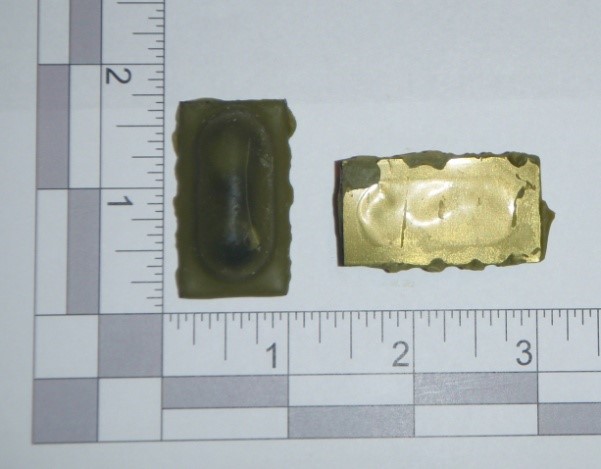
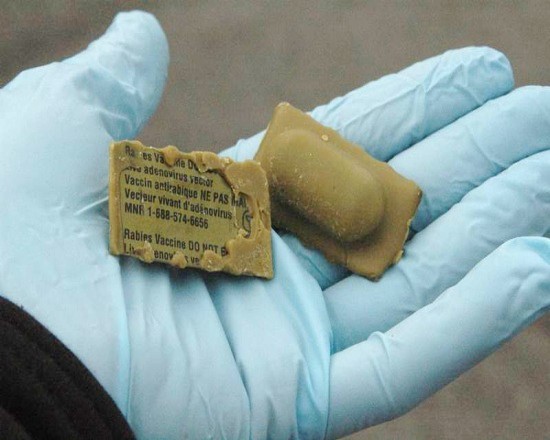
The ONRAB® (Artemis Technologies) vaccine is enclosed in a 1" x 2" blister pack filled with the vaccine and covered with a sweet-smelling dark green waxy coating, making it more attractive to wildlife. The baits contain a rabies vaccine that if consumed by wildlife should vaccinate the animal against the rabies virus. ONRAB® does not contain rabies virus but contains a gene from the rabies virus that causes raccoons and skunks that encounter the vaccine to produce antibodies that protect them against rabies infection. When an animal bites into the bait, it punctures the blister pack and the vaccine bathes the oral cavity and tonsils, resulting in an oral vaccination against rabies.
Ohio is one of seven states using ONRAB® for baiting operations in the U.S.
If individuals report any exposure to the vaccine, including their animals, they should contact the ODH at 1-888-574-6656, which is also printed on the baits.
For further information on raccoon rabies and the vaccine bait, see the websites below:
| | | Birds of a Feather, (Backyard) Flock Together. | | |
Are you raising a backyard flock? This survey is for you!
Since March 2024, 70 confirmed cases of avian influenza A(H5) (bird flu) have occurred in humans in the United States, mostly among workers exposed to infected dairy cows and commercial poultry farms. However, cases have also occurred among people exposed to birds kept in non-commercial, backyard flocks.
The Centers for Disease Control and Prevention (CDC) and ODH are interested in learning more about backyard flock owners and their flocks to improve bird flu prevention messaging. The anonymous survey asks about:
- Characteristics of backyard flock owners, their families, and their flocks.
- Knowledge of bird flu and signs and symptoms of bird flu in birds and humans.
- Perceived risk of and concern about bird flu to their backyard flock and themselves/families.
- Attitudes towards reporting sick or dead birds and protective measures like vaccination of their flock.
- Practices they use to protect their flock and themselves from bird flu.
CDC will use the survey results to help make sure that backyard flock owners have the information they need to protect themselves from bird flu. Questions about this survey can be sent to h5flustudy@cdc.gov.
For questions about steps backyard flock owners can take to protect themselves from bird flu, please visit odh.ohio.gov/hpai or contact your local health department.
For questions about protecting your flock, please visit the Ohio Department of Agriculture (ODA)’s HPAI Poultry webpage or the USDA’s Defend the Flock webpage or contact ODA at 614-728-6220.
| | |
Access the survey using the following QR code:
| | | |
Contact Us
--------------------------------------------------
Ohio Department of Health
Zoonotic Disease Program
246 North High Street
Columbus, Ohio 43215
614-752-1029
Zoonoses@odh.ohio.gov
Visit the Zoonotic Disease Program Website
odh.ohio.gov/zdp
| | | | | |