|
Behind the Buzz: Ohio's Mosquito Surveillance & Control
The Latest in Arbovirus Surveillance
Cross Border Buzz: Imported Vector-borne Diseases
That's a Wrap! ORV Summary
Newcomers on the Move: Ohio's Invasive Tick Threats
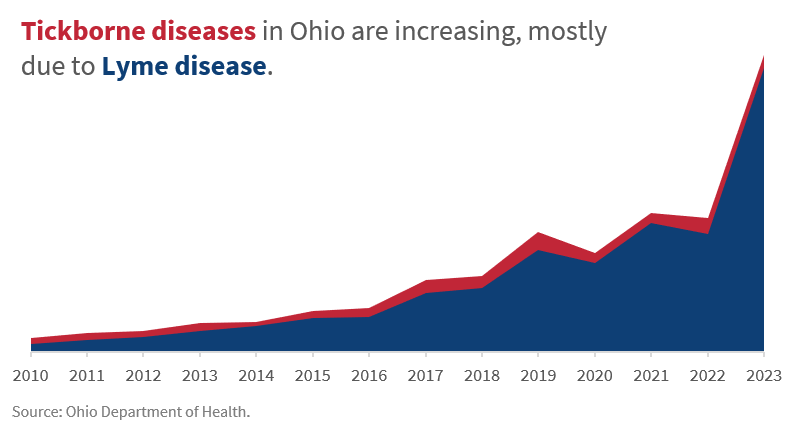
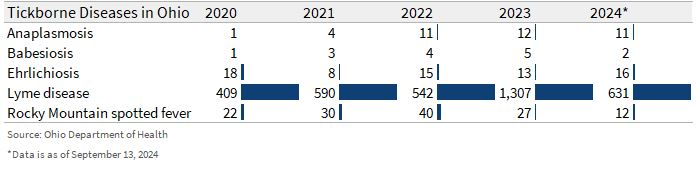
Tickborne Disease Trends
|
|
World Rabies Day
September 28, 2024
Ohio Mosquito and Vector Control Association (OMVCA) Annual Conference
October 21 - 22, 2024
| |
Ohio Department of Health
Zoonotic Disease Program
|
|
246 N. High Street
Columbus, OH 43215
614-752-1029
Zoonoses@odh.ohio.gov
Visit the Zoonotic Disease Program Website
odh.ohio.gov/zdp
| |
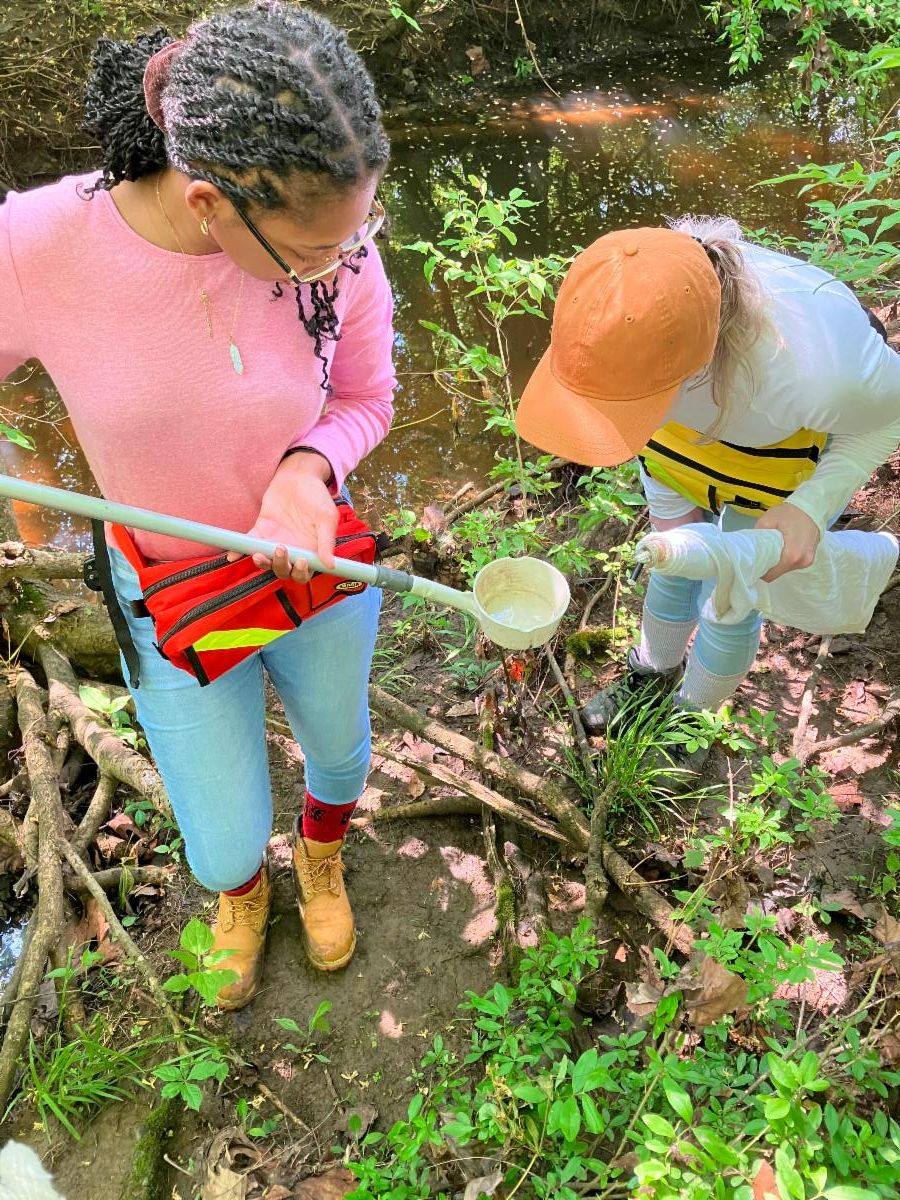
Behind the Buzz: Ohio's Mosquito Surveillance & Control | Each year, the Ohio Department of Health’s (ODH) Zoonotic Disease Program (ZDP) collaborates with local health departments, sanitary districts, municipalities, universities, and other local partners to conduct statewide mosquito surveillance, prevention, and control activities for mosquito-borne diseases. While some local health departments conduct in-house mosquito testing, most mosquitoes collected by local partners, about a half million annually, are sent to ODH, where ZDP staff identify and process mosquito samples for testing at the Ohio Department of Health Laboratory. Test results are used by local public health authorities to carry out public health actions, including public health alerts, mosquito source reduction, and control. | Vector program staff at Franklin County Public Health looking for mosquito larvae. | |
Besides ODH, other state agencies are critical in supporting this work. For example, the Ohio Environmental Protection Agency (OEPA) has the Mosquito Control Grant (MCG) program that was developed in 2016 to support local vector control programs. Activities funded under the MCG program help reduce the potential for an outbreak of a mosquito-borne virus.
The Ohio Department of Agriculture (ODA) monitors diseases in livestock and other animals, including those transmitted by mosquitoes. If animal cases are detected, ODA alerts ODH, who will notify local public health authorities so that public health actions, such as increased prevention messaging and spraying, can be initiated.
While these prevention actions are underway, ODH epidemiologists are also working with local partners and health care providers to conduct timely investigations of suspected human cases to inform further public health actions.
Collaboration with key stakeholders has been instrumental to the success of statewide surveillance and control efforts. Partnerships with local health departments, mosquito abatement districts, other state agencies including OEPA, ODA and the Ohio Department of Natural Resources (ODNR), and Ohio’s academic institutions, have facilitated information sharing, resource allocation, and coordinated responses to vector-borne disease epidemics.
| 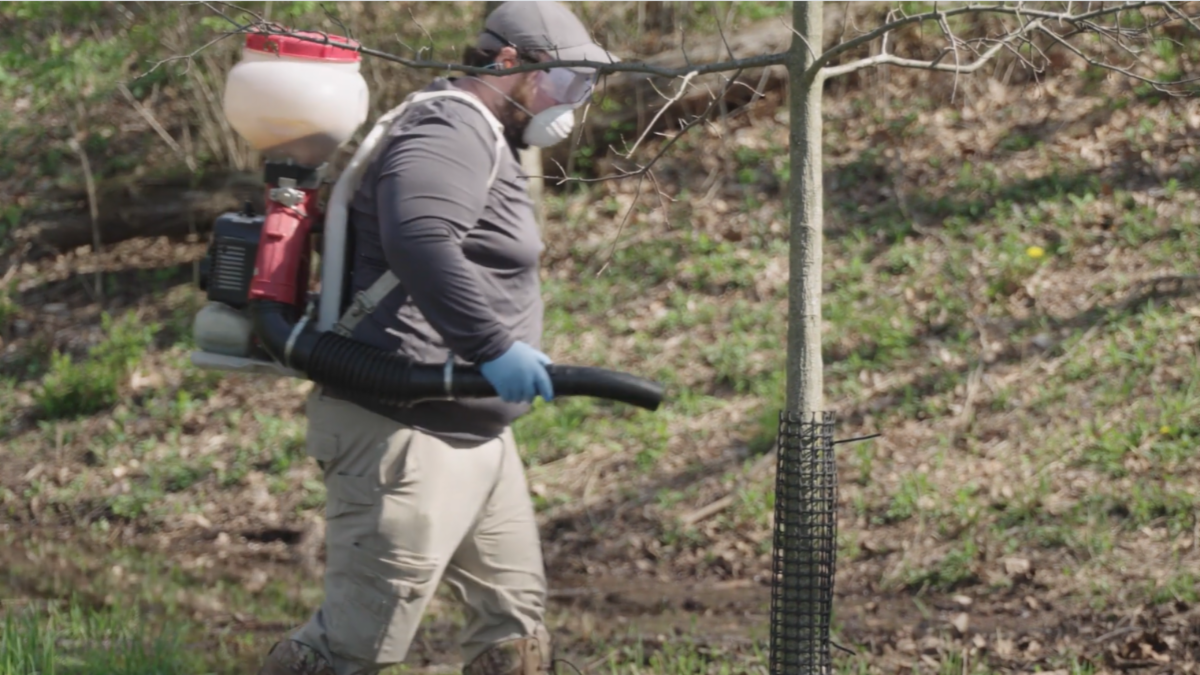 | Franklin County Public Health staff applying mosquito larvicide. | | |
The Latest in Arbovirus Surveillance
| |
|
Mosquito Surveillance
Since 2009, ODH has only been able to test for West Nile virus (WNV) in submitted mosquitoes. Testing for other pathogens, such as La Crosse virus (LACV), has required sending samples to the Centers for Disease Control and Prevention (CDC). We are pleased to share that ODH Lab is now testing mosquitoes using a multiplex assay, which can detect multiple pathogens in a mosquito sample, including St. Louis encephalitis virus, Eastern equine encephalitis virus, WNV, Jamestown Canyon virus, and LACV. The use of this multiplex assay will increase capacity to rapidly detect and respond to the other arboviral threats in Ohio.
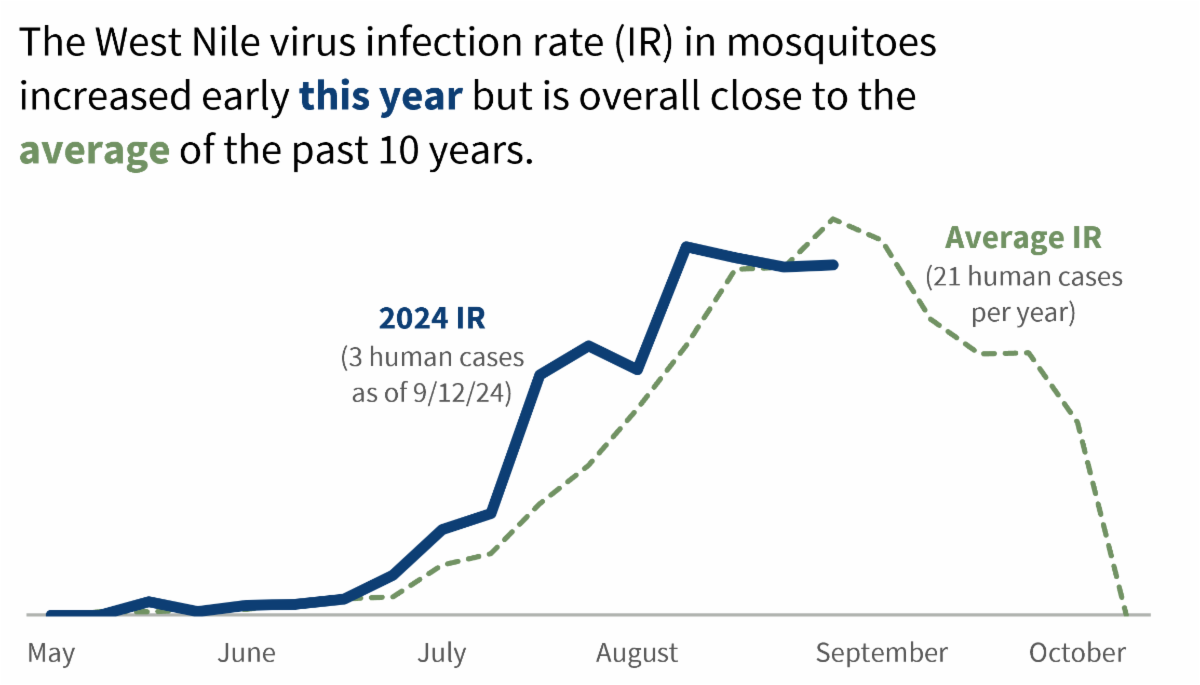
As of September 12, 2024, ODH has received 508,298 mosquitos from 67 local agencies in 55 counties for identification and testing. LACV has been detected in two pooled samples of Aedes triseriatus, one each from Hancock and Morgan counties. WNV has been detected in 1,084 pooled samples of Culex spp. from jurisdictions in 41 counties: Athens, Brown, Carroll, Clark, Clermont, Crawford, Cuyahoga, Darke, Delaware, Fairfield, Franklin, Geauga, Greene, Hamilton, Hancock, Harrison, Henry, Knox, Lake, Licking, Lorain, Medina, Meigs, Montgomery, Ottawa, Pickaway, Pike, Portage, Richland, Sandusky, Scioto, Seneca, Shelby, Stark, Summit, Tuscarawas, Union, Vinton, Warren, Wood, and Wyandot.
|  | |
|
Human Surveillance
To date, three cases of WNV disease have been reported, one each from Hancock, Lorain, and Wyandot counties, and one case of LACV disease in a Wayne County resident has been reported this year. As the season progresses the risk of human transmission will continue. ODH encourages local public health and vector control partners to continue community mosquito control efforts as well as public health messaging and education efforts about breeding source reduction and mosquito bite prevention.
For weekly updates on mosquito identifications and test results:
| |
Cross-Border Buzz: Imported Vector-borne Diseases | |
|
ZDP not only monitors vector-borne diseases that can be acquired in Ohio but also those that can be acquired overseas.
The most common mosquito-borne disease reported each year in Ohioans returning from abroad is malaria. So far this year, 62 malaria cases have been reported, most acquired in African countries (89%). The rest were acquired in the Americas.
Next, 18 travel-associated cases of dengue have been reported this year in Ohioans, 16 acquired in the Americas and two acquired in Asia.
To date, two cases of chikungunya have been reported in Ohio travelers, one acquired in Asia, the other in South America.
No cases of Zika virus disease have been reported in Ohio travelers since 2017.
On August 16, CDC issued a health advisory regarding an increase in Oropouche virus disease in the Americas. This vector-borne virus is spread to people by the bite of infected biting midges; some mosquitoes may also spread the virus. Oropouche virus is endemic in the Amazon basin but has recently spread to new areas in Brazil, Bolivia, Peru, Colombia, and Cuba. There is no evidence that Oropouche virus has been spreading in the United States. However, travel-associated cases have been reported in the United States and Europe in people returning from affected areas.
Pack your insect repellent! Ohioans traveling abroad should be aware of vector-borne disease risks and make every effort to avoid mosquito, tick, midge, and other insect bites. Additional information can be found from the Centers for Disease Control and Prevention (CDC)'s Travelers' Health and Pan-American Health Organization websites.
| |
That's a Wrap! Oral Rabies Vaccination (ORV) Summary | |
|
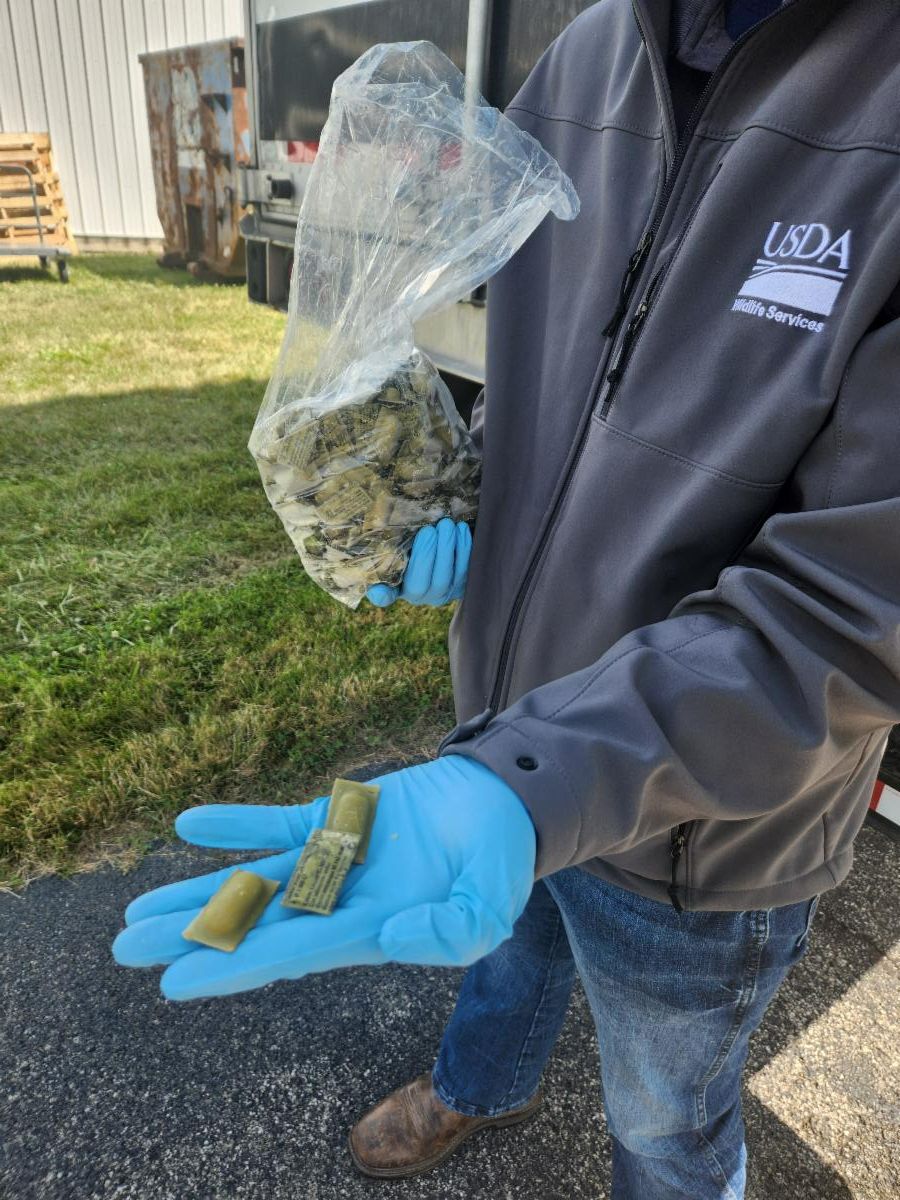
The ORV operation was completed Saturday, August 24. During the course of the campaign 475,000 baits were distributed (350,000 via fixed wing, 110,000 via helicopter, and 15,000 via ground baiting).
ODH staff monitored bait contacts and has received a total of only 16 reports. Thirty-two baits were found: six people and two dogs came into contact with intact bait while three people and two dogs came into contact with perforated bait. No adverse events attributed to bait contact were reported.
The U.S. Department of Agriculture Wildlife Services (USDA-WS) will be conducting a trap-vaccinate-release (TVR) operation in the upcoming months to measure the immunity of raccoons following the ORV operation. Live-trapped raccoons will be tested for rabies antibodies. While the raccoon is trapped, it will be given a dose of vaccine as an added precaution.
While the Fall ORV has concluded in Ohio, local public health authorities will continue to participate in enhanced rabies surveillance by submitting raccoon specimens to USDA-WS for rabies testing. This enhanced rabies surveillance is a critical tool for monitoring any spread of raccoon rabies variant in eastern Ohio. ODH extends thanks to all partners who participate in this effort.
| |
|
Over a half million rabies vaccine laden baits were distributed this year in
northeastern Ohio to immunize wild raccoons for rabies.
| |
Newcomers on the Move: Ohio's Invasive Tick Threats | |
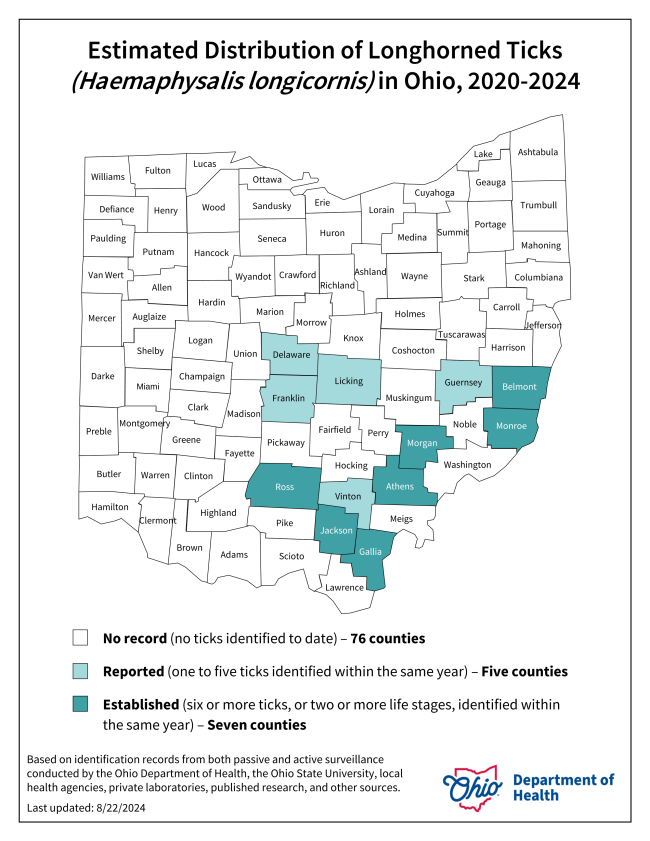
In addition to recent range expansions of blacklegged ticks and gulf coast ticks, Ohio is experiencing the spread of the Asian longhorned tick, Haemaphysalis longicornis, an invasive species that was first reported in the United States in 2017. This tiny, light brown tick has been reported in 20 different states. As of August 22, 2024, they have been found in 12 Ohio counties: Athens, Belmont, Delaware, Franklin, Gallia, Guernsey, Jackson, Licking, Monroe, Morgan, Ross, and Vinton. | |
|
Asian longhorned ticks feed on a wide variety of hosts including humans, pets, livestock, and deer. A single female can produce 1,000 to 2,000 eggs at a time without mating, which means one animal could be carrying hundreds to thousands of ticks. This can cause great stress on heavily infested livestock and result in reduced growth and production.
If you spot any unusual looking ticks, or a large number of very small ticks, contact the Ohio State University’s Parasite and Pathogen Ecology Lab or the Ohio Department of Agriculture.
For more information about Asian longhorned ticks, visit the United States Department of Agriculture’s website.
| |
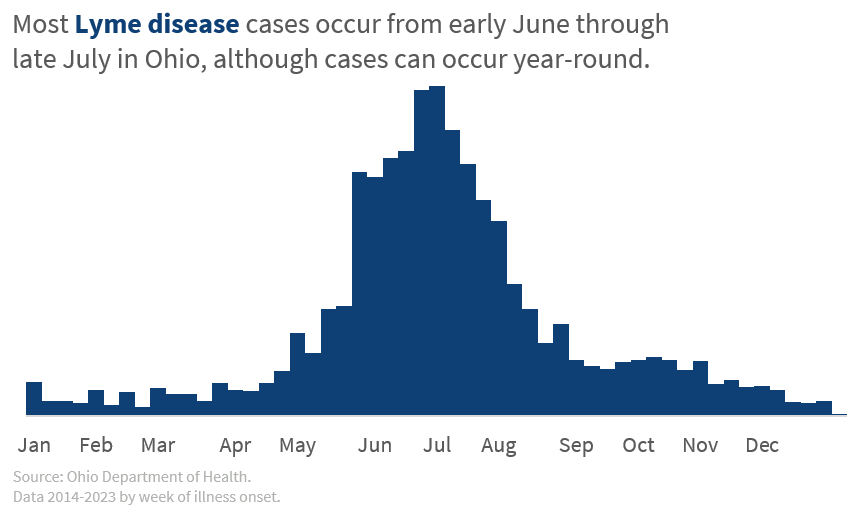
In the United States, Lyme disease is caused by the bacteria Borrelia burgdorferi and Borrelia mayonii. In Ohio, it is spread to people thru the bite of an infected blacklegged tick. Typical symptoms include fever, headache, fatigue and a characteristic skin rash called erythema migrans and appear three to 30 days after the bite. Risk of transmission increases the longer the tick is attached. Late spring thru mid-summer is the time of year when Ohioans are most at risk for contracting Lyme disease. | |
|
Rocky Mountain spotted fever (RMSF) is caused by an infection with a bacterium called Rickettsia rickettsii. In Ohio, R. rickettsii is transmitted through the bite of the infected American dog tick, Dermacentor variabilis. The American dog tick is the tick most commonly encountered in Ohio. Symptoms of RMSF appear three to 12 days after the bite of an infected tick and normally include fever, headache and rash.
Ehrlichiosis is a general name used to describe diseases caused by the bacteria Ehrlichia chaffeensis, E. ewingii, or E. muris eauclairensis in the United States. The majority of cases in Ohio are caused by E. chaffeensis, which is spread by the lone star tick, Amblyomma americanum. Symptoms of ehrlichiosis appear one to two weeks after the bite of an infected tick with a combination of unspecific clinical symptoms, such as fever, chills, headache and muscle aches. When looking at 2023 canine data for Ohio from the Companion Animal Parasite Council, over 9,000 dogs, one in 50 dogs tested, were positive for ehrlichiosis. Though there may be several reasons why there is such a stark difference between our human cases and reports in our canine companions, it's important to remember that animals may serve as sentinels and low awareness of ehrlichiosis among healthcare providers could lead to underreporting of this disease.
Anaplasmosis is a disease caused by the bacteria Anaplasma phagocytophilum. It is primarily spread to people by the bite of an infected blacklegged tick, Ixodes scapularis. Symptoms typically begin one to two weeks after the bite and include symptoms of fever, chills, severe headache, and muscle aches. Like ehrlichiosis, the low awareness of anaplasmosis among healthcare providers could lead to underreporting of this disease.
Babesiosis is a disease caused by microscopic parasites that infect red blood cells. The most common species to infect people in the United States is Babesia microti. B. microti is spread through the bite of an infected blacklegged tick, Ixodes scapularis. Many people with babesiosis do not feel sick and do not have symptoms. However, if symptoms are present, they can include fever, chills, headaches, body aches, fatigue, and nausea. B. microti, although less common, can be spread through blood transfusion or passed from mother to child during pregnancy.
| | |
|
World Rabies Day
Every year on September 28, communities worldwide observe World Rabies Day to raise awareness about rabies prevention, highlight progress in defeating this deadly disease, and honor the memory of Louis Pasteur, who developed the first rabies vaccine. This day is an important reminder that rabies remains a significant public health concern.
This year, the theme "Breaking Rabies Boundaries" emphasizes the importance of overcoming barriers and highlighting the significance of collaboration across sectors. By working together—across disciplines and borders—we can eliminate rabies and save countless lives.
For more information about World Rabies Day please visit WOAH's World Rabies Day webpage.
| | | | | |