|
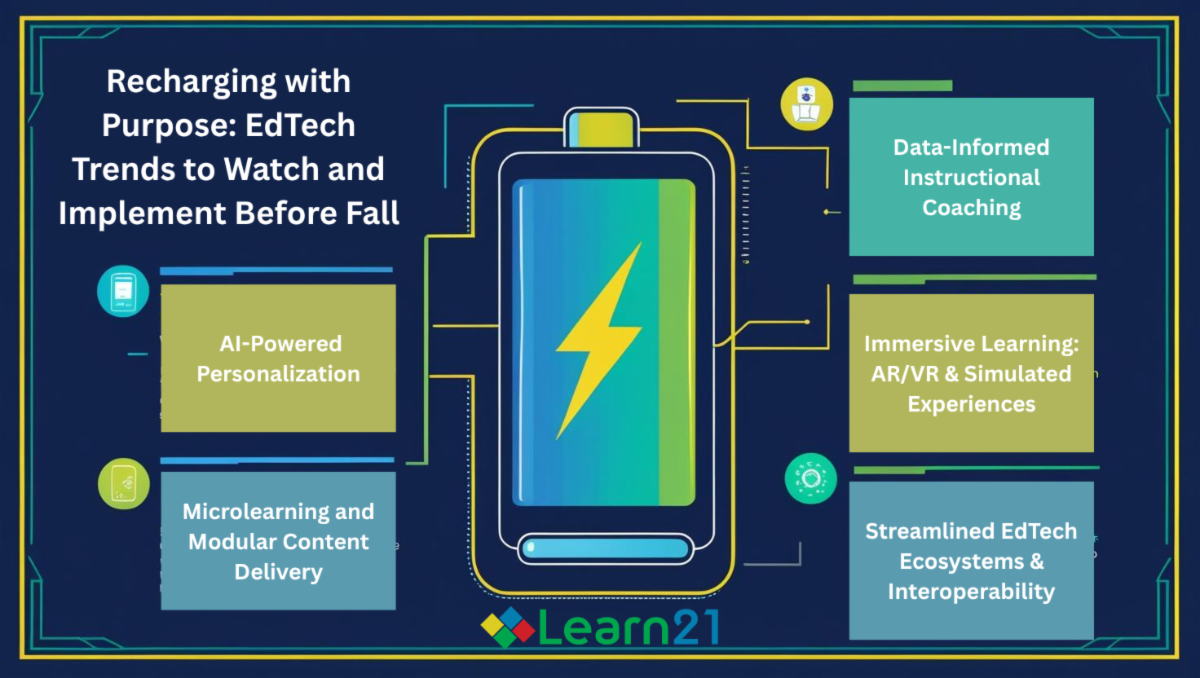
As schools prepare to reopen for a new academic year, the summer months offer a golden opportunity not just to rest, but to recharge with intention. The rapidly evolving educational landscape demands that educators and administrators stay proactive, leveraging emerging technologies and instructional models that meet the moment. Here’s a forward-looking lens on five key EdTech trends to integrate now, so you're not just ready for fall, but leading it.
1. AI-Powered Personalization: From Buzzword to Backbone
What’s emerging:
Artificial Intelligence is rapidly becoming the backbone of personalized learning. Adaptive Learning Platforms (ALPs) dynamically adjust content and pacing based on real-time learner data. This method is shown to enhance both engagement and academic outcomes. A 2024 study published in Computers and Education: Artificial Intelligence confirms that AI-driven tutoring and adaptive systems significantly improve learning performance by tailoring instruction to individual needs. Tools like BrainFreeze, Khanmigo, and MagicSchool AI, are leading the way, offering personalized feedback and differentiated instruction at scale.
Implementation tip:
Pilot an adaptive tool that offers formative feedback loops. Pair this with professional development focused on ethical use, equity, and data literacy to build both trust and fluency among educators.
2. Microlearning and Modular Content Delivery
What’s emerging:
Microlearning—delivering content in short, focused bursts—is becoming a cornerstone of modern instruction. With attention spans under siege, bite-sized learning modules are proving effective for both students and professional development. Think “TikTok meets curriculum” but with rigor and structure. This microlearning approach aligns well with current cognitive science, too. A 2022 scoping review in Educational Technology Research & Development highlights that microlearning reduces cognitive load and improves retention, especially when grounded in strong instructional design. Tools like Edpuzzle, Wakelet, and Nearpod support this model, enabling educators to build engaging, digestible learning playlists that work across devices.
Implementation tip:
Design weekly microlearning “nuggets” for students and professional development. Think video snippets, interactive polls, or infographic-driven summaries. Bonus points if students co-create them!
3. Data-Informed Instructional Coaching
What’s emerging:
Instructional coaching is evolving from intuition-based support to data-informed collaboration. Real-time classroom analytics enable coaches to provide actionable, evidence-based feedback. Studies have shown that coaching models incorporating real-time data significantly increased instructional quality and student outcomes, especially when cycles of feedback were structured and regular. Using tools like Swivl or Edthena can help to facilitate coaching and encourage reflective practices among educators.
Implementation tip:
Establish a biweekly “data touchpoint” rhythm. Coaches should bring classroom or student learning data to discussions, helping teachers target their instructional shifts with confidence.
4. Immersive Learning: AR/VR & Simulated Experiences
What’s emerging:
Augmented and virtual reality are gaining traction beyond novelty and into impact. From virtual chemistry labs to simulated civil rights experiences, immersive learning environments have proven benefits. A number of studies have been conducted to measure the effects of AR and VR technology on educational outcomes, showing improvements in motivation, retention, and even empathy among students. Google Arts & Culture Expeditions is an easy way to begin the immersive learning experience in classrooms with little implementation cost.
Implementation tip:
Pilot one immersive tool in a subject area where traditional approaches face limitations, like science labs or social-emotional learning. Involve students in evaluating the experience for feedback and iteration.
5. Streamlined EdTech Ecosystems & Interoperability
What’s emerging:
As EdTech ecosystems expand, districts are shifting focus from tool quantity to tool quality—and interoperability is key. Platforms that integrate via Single Sign-On (SSO), shared dashboards, and standardized APIs reduce friction and improve usability. According to the OECD Digital Education Outlook 2023, systems that support interoperability are more effective at scaling innovation and data-informed decision-making.
Implementation tip:
Conduct an EdTech ecosystem audit. Keep what integrates well with your SIS, LMS, and assessment systems; sunset tools that don’t “talk” to each other. Ask vendors about their roadmap for interoperability.
Final Thoughts: Lead the Shift, Don’t Chase It
Fall shouldn’t feel like a scramble. By investing time this summer to explore emerging trends, pilot new tools, and simplify your tech stack, you can step into the school year with clarity and momentum. But the biggest trend to follow? Purpose. Thoughtful, intentional adoption always outpaces trend-chasing. Let’s recharge not just to recover—but to reimagine.
|