Bytes and Insights Logo

Learn21's Weekly EdTech Update

November 27, 2025

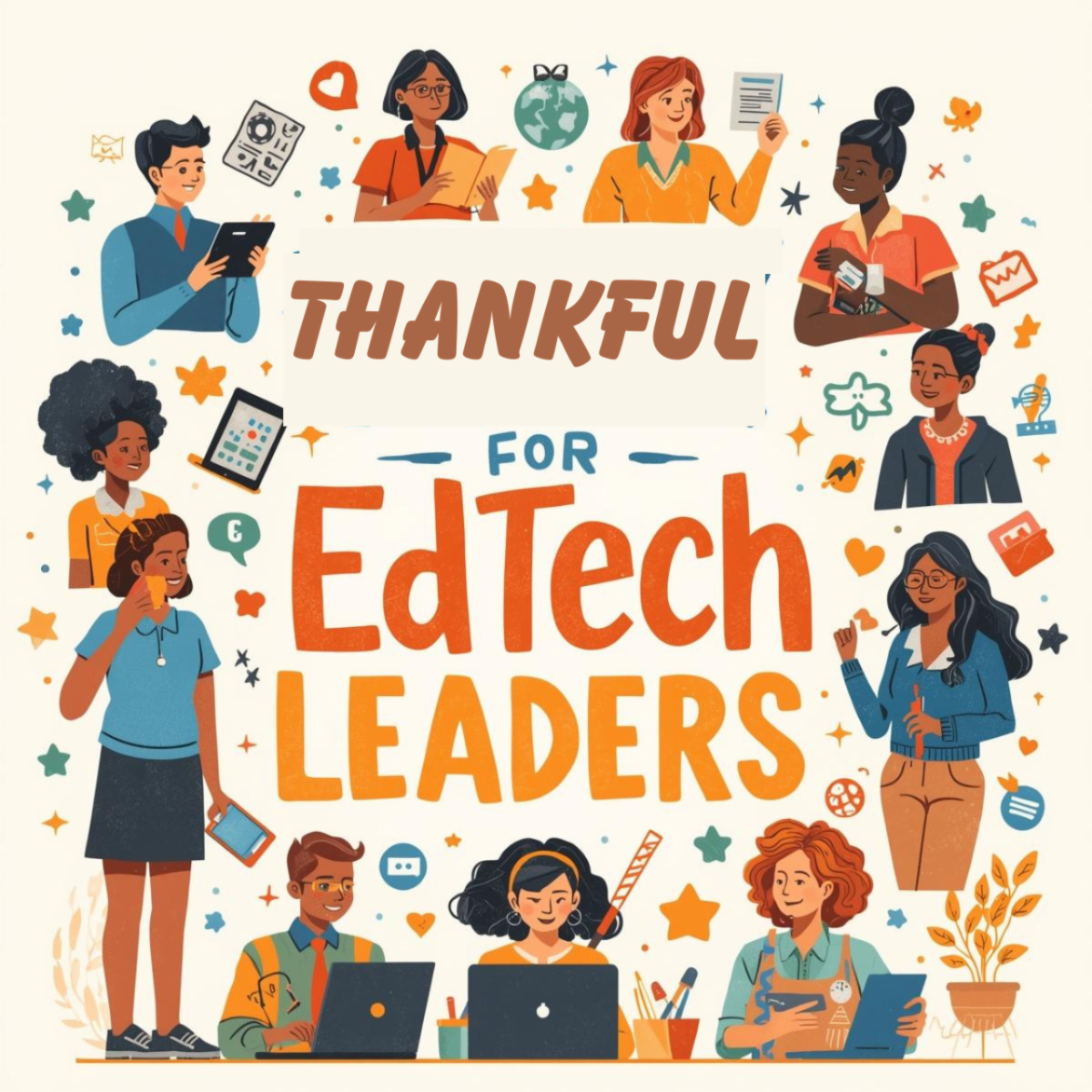
We’re Grateful for  EdTech Leaders: A Thanksgiving Reflection

By Erica Shumaker

As Thanksgiving arrives, it brings with it a moment of reflection — an invitation to pause amid the noise of debates, headlines, and shifting trends to acknowledge what (and who) we are thankful for. In the world of education, few conversations have been as charged lately as the question of how technology should or shouldn’t be used in schools. With so many perspectives and concerns circulating, it can be easy to lose sight of the extraordinary educators who continue to bring purpose, optimism, and innovation into their classrooms.


This season, we have been spotlighting the EdTech leaders who remind us why educational technology matters and why we are deeply grateful for them.


Gratitude for Leaders Who See Beyond the Device

There is a common misconception that “using technology in school” simply means typing on a Chromebook or submitting assignments online. But EdTech leaders know better.


They understand that technology is a tool, not an end point. It’s a doorway to creativity, exploration, and skill-building that prepares students for a world where digital fluency is inseparable from opportunity. These educators champion technology not for technology’s sake, but because they recognize its power to expand what learning can be.


They are the ones who:

  • Design lessons that spark curiosity, using EdTech tools to bring concepts to life.
  • Empower students to create, not just consume.
  • Foster connection and collaboration, enabling students to share ideas across classrooms, communities, and even continents.
  • Cultivate future-ready skills like digital citizenship, problem-solving, communication, and ethical tech use.
  • Model adaptability and courage, embracing emerging tools — from AI literacy activities to interactive simulations — even when the path forward isn’t always clear.


The Heart of EdTech Leadership

While the tools are powerful, the true magic comes from the leaders who wield them with intention. We are grateful for educators who stay curious, who experiment with new ideas, who iterate and refine their practice, and who continuously ask, “How can this help my students learn more deeply?”


These leaders understand balance. They know when technology elevates a lesson or when a pencil, conversation, or hands-on moment is more meaningful. They center students’ humanity first.


Their classrooms are places where students feel empowered to:

  • Ask bold questions
  • Try new things
  • Explore their passions
  • Connect learning to the world beyond the school day


In a year filled with complex discussions about AI, devices, and the future of learning, these leaders provide a grounded truth: technology’s value comes from the educators who bring heart, insight, and creativity to its use.


Why We’re Especially Thankful This Year

We are grateful for EdTech leaders because they:

  • Bring optimism into conversations that can lean toward fear.
  • Keep students at the center of every decision.
  • Show that innovation doesn’t require abandoning tradition, it requires reimagining it.
  • Equip students with skills they will carry for a lifetime. Skills that help them navigate digital tools and shape the world around them.
  • Demonstrate daily that great teaching, supported by meaningful technology use, has the power to transform learning.


At a time when the role of technology in education feels both more important and more debated than ever, EdTech leaders light the path forward. Their work reminds us that education is not just about preparing students for the future, it is about inspiring them to build it.


A Thanksgiving Thank You

To all the educators who champion thoughtful, creative, student-centered technology use:


Thank you.


Thank you for your courage, your imagination, and your relentless commitment to helping every learner discover what they are capable of. Thank you for showing that learning can be joyful, connected, and relevant. And thank you for leading the way in defining what great education looks like in the digital age.


This Thanksgiving, we are grateful for you.

Media Literacy Minute

Media Literacy Minute

Digital Violence and the Global Protection Gap

According to UN Women’s press release, “Digital violence is intensifying, yet nearly half of the world’s women and girls lack legal protection from digital abuse,” online harassment and abuse targeting women and girls is increasing worldwide, but nearly half the global population still has no legal safeguards. The article stresses that existing laws have not kept pace with technology and calls for urgent international action to strengthen digital rights and protections.


Building Youth Resilience to Digital Misinformation

A new study summarized in “Young People Can Build Resilience Against Digital Misinformation” finds that young people can learn to resist misleading content when supported with explicit media-literacy instruction and opportunities to practice critical thinking online. The research shows that structured guidance from educators, caregivers, and fact-checking tools helps teens better identify false information and navigate digital spaces more confidently.


Why Analytical Literacy Matters for Modern Learners

In the Federation of American Scientists’ brief, “Analytical Literacy First,” the authors argue that students need strong analytical literacy skills—such as evaluating evidence, interpreting data, and reasoning through complex information—to thrive in today’s information-rich environment. The report recommends integrating these skills across all subject areas to better prepare students for informed citizenship and to strengthen their ability to detect misinformation.

Using Data Responsibly: Revisiting the Student Data Principles

By Mike Porter

This article continues a series exploring data use, misuse, and governance in K–12 education. The Student Data Principles—originally developed by CoSN and the Data Quality Campaign in 2014 is still a critical set of tenets to help guide educational decision-makers. Each installment will present the principles, offer current insights, pose key questions for leaders, and suggest practical steps districts can take to strengthen their data governance practices.


Why Revisit the Student Data Principles?

The Student Data Principles, despite being over a decade old, are still highly relevant in today’s rapidly evolving EdTech landscape. New technologies like generative AI, cloud-based learning platforms, and advanced analytics are ultimately just new methods of collecting and using data. As such, strong data governance remains essential. The updated Principles provide a durable, student-centered framework grounded in transparency, trust, intentional data use, and respect for student dignity—values that should guide practice regardless of changing tools or trends.


The Student Data Principles began with two foundational declarations:

  • Student data should be used to further and support student learning and success.
  • Student data is most powerful when used for continuous improvement and personalizing student learning. 


The Principles expand on this foundation with three important commitments designed for today’s learning environment:

  • Student data should be used as a tool for informing, engaging, and empowering students, families, teachers, and school system leaders.
  • Students, families, and educators should have timely access to information collected about the student.
  • Student data should be used to inform—and not replace—the professional judgment of educators.


Together, these tenets ground us in a broader vision of responsible data use: one that values transparency, authentic partnership, and the vital role of educators in making meaning from data.


Key Questions for Reflection

The three additional principles reflect a shift from data about students to data with and for students. They highlight several critical ideas:

  • Does your community, including parents and students, know how to access your data systems? Are there segments of your community that are not simply logging in? What can be done about that?
  • Is data arriving in time to make changes? Is your data a post-mortem analysis or “just in time” to inform changes?
  • How are humans kept in the loop on all decision making processes? What efforts are being made to involve those who know the students the best–parents and teachers?


These additions remind us that effective data governance is not solely about protection; it is equally about empowerment and shared responsibility.


Action Steps for Leaders

To align your district’s work with the Principles, consider the following:

  • Survey and audit logins to your SIS by parents and students. Find the gaps and create an outreach plan. 
  • Survey your teachers on their data needs–what elements, how frequently, and in what format. Hint, it’s not a pivot table. 
  • Create a data action team and involve members from schools and community as appropriate. Connect the data conversations to the district’s strategic plan.


Closing Thought

The Student Data Principles remind us that responsible data use begins with honoring the students behind every data point and ensuring that data empowers, informs, and strengthens the human relationships at the heart of learning. These questions and action steps help leaders move beyond compliance toward a deeper, more relational approach to data use.

Big Ideas

Big ideas image

Good takeaways here

Are you new in your role? Did you move over to a new district? Thinking about a change? This article, while not specific to K-12, has some good advice for those in new leadership positions, especially in IT.  


Is it about a dog, a truck, and lost love?

We’re witnessing a new breakthrough for AI-generated content, this time in the field of music, specifically country music.  For the first time, a song produced by the AI artist “Breaking Rust” has topped the music charts.  Everything you wanted to know about Breaking Rust, including their social media presence, here.


ChatGPT Free for Teachers

For your consideration, OpenAI has issued a new iteration of ChatGPT specifically for educators. They state that data used in this environment is not used to train its models by default. Note that this is being promoted for adults in your system–it’s not being marketed toward use by your students. As always, read the details (it’s not free forever), have discussions with your teams, and proceed as makes best sense for your community. 

X Share on X
LinkedIn Share on LinkedIn

www.learn21.org

LinkedIn        X        YouTube        Instagram