Welcome to this issue of the C-DIAS newsletter! Please share with colleagues, friends, and anyone else you know who might be interested in our work and encourage them to subscribe to our newsletter. | | |
There’s been a lot of talk recently about taking things to scale.
Terms like “scalability” and “sustainability” are being bandied about. But what do these terms really mean? Can they be better defined so they are not merely platitudinous or marketing ploys?
Because these words would seem to fall into the wheelhouse of those engaged in implementation research, we recently mustered a C-DIAS RASC workgroup tasked to lend understanding to these constructs. (RASC is the Research Adoption Support Center, C-DIAS’ sister center, also funded by the National Institute on Drug Abuse.)
Workgroup experts on these topics, Hendricks Brown, Larry Palinkas and J.D. Smith, coordinated by Thuy Hanley, scoured the scientific literature and generated draft definitions for sustainability and scalability. Workgroup members, including C-DIAS’ Sara Becker, discussed and debated and ultimately iteratively generated workable versions.
During this exciting group process, the need to clarify the distinction between scalability and sustainability with “implementability” was raised. C-DIAS RASC teams recently published an article in the Journal of Clinical and Translational Science describing a standardized measure to evaluate a research project’s capability to evaluate the potential implementability of the intervention (e.g., medication, program or service) being studied.* A successful evaluation for implementability would mean this intervention was found to have favorable evidence for reaching the people for whom it was designed, to be delivered by the people who were in a position to deliver it, and to do so with adequate adherence. In addition, through the research project’s execution, with optimum implementability, there were effective strategies to deal with barriers (or facilitators) to the intervention’s installation in a routine practice setting.
Here are the current definitions developed by the workgroup:
| |
|
Implementability: The capability of a new intervention, guideline, program or service to be integrated into routine practice in a specific setting, typically in the early to effectiveness stages of the innovation’s development and within a single study.
Scalability: The potential future-state capability of an intervention, guideline, program or service to extend beyond a single study or studies to reach a larger population, a greater number of settings or a wider range of settings.
Sustainability: The potential future-state capability of an intervention, guideline, program or service to be maintained and persist over time within the setting or settings where it was studied.
| | | | |
The following premises about the relationship among these constructs are:
- If an intervention, program or service is found to be implementable, it has the potential to be sustainable or scalable.
- If an intervention, program or service is not found to be implementable, it has neither the clear potential for sustainability nor for scalability.
- If an intervention, program or service is implementable and sustainable, it is positioned for scalability.
- If it is implementable but not sustainable beyond the life of a specific research project, without significant alterations, it is not well positioned for scalability.
In other words, scalability is contingent upon sustainability, and sustainability is contingent upon implementability.
The workgroups have developed complementary 10-item checklists for sustainability and scalability that have been successfully field-tested with 10 NIDA-funded research projects. And two teams are developing manuscripts on these constructs.
I am proud of the work these C-DIAS RASC teams have been doing and super excited about the potential usefulness of these efforts. As we know, so much of research ends up being insular — with a final yield of publications, conference presentations, more grants, and more incremental research — with zero to minimal public health impact.
If we can do anything to move the field forward by advancing measures of implementability, sustainability and scalability, then we’ve done some good.
Gotham, H. J., Patrick, B. M., Olatunde, P. F., Kim, J. P., Chokron Garneau, H., Becker, S. J., Brown, C. H., Becker, W. C., & McGovern, M. P. (2026). A tool to evaluate the integration of implementation science methods in a research project: The Dissemination and Implementation Research Capability Self Survey (DIRC-SS). Journal of Clinical and Translational Science, 10, e55, 1–7. https://doi.org/10.1017/cts.2026.10711
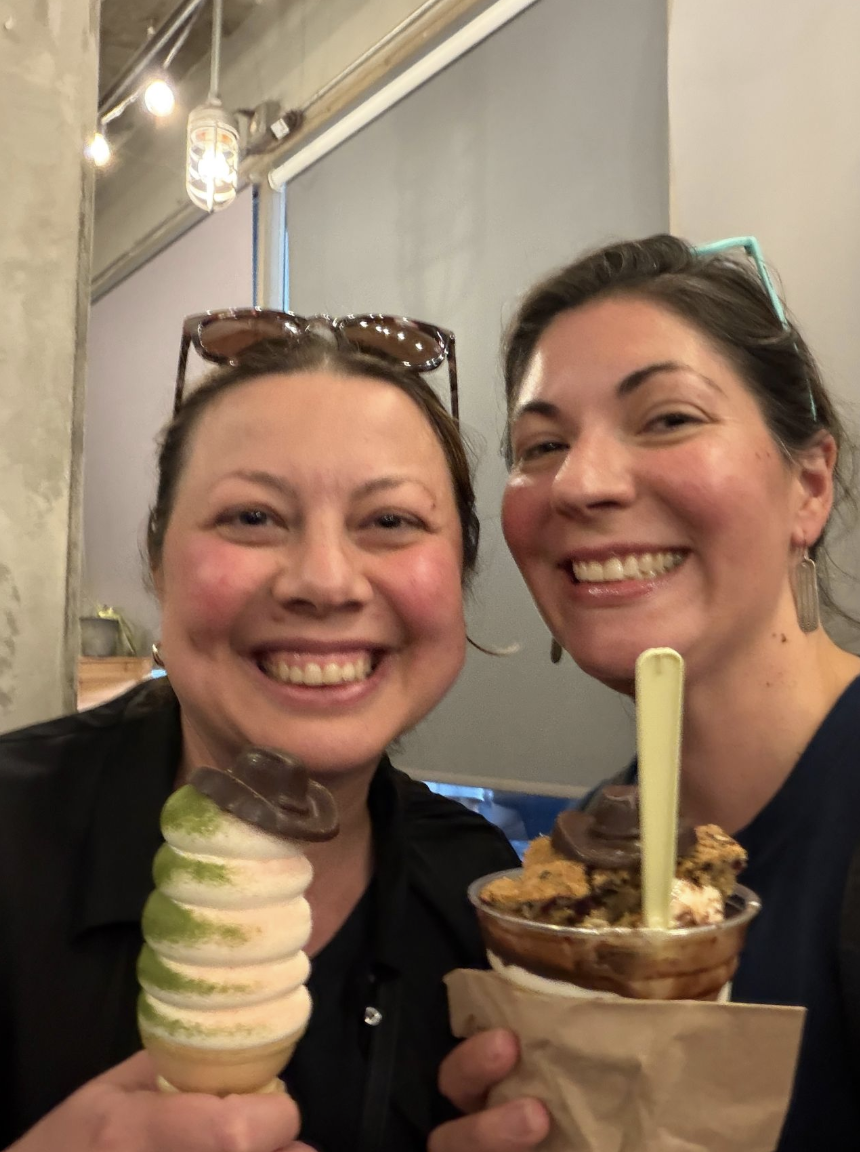
| | C-DIAS Fellows Shine in Portland at the College on Drug Dependence 88th Annual Scientific Meeting | | Ekaterina Burduli and Ximena Levander enjoying a sweet treat at the meeting | | |
Several C-DIAS researchers joined addiction scientists, clinicians, and federal partners in Portland for the College on Problems of Drug Dependence (CPDD) 88th Annual Scientific Meeting. The conference brought together leading voices in addiction science, including NIDA program officers and researchers from across the field, for presentations and discussions on emerging issues in substance use, treatment, and recovery.
Noa Krawczyk, PhD, received the Joseph Cochin Young Investigator Award as part of the CPDD Awards for Excellence, recognizing early-career investigators demonstrating exceptional promise, productivity, and scientific rigor in addiction science.
Tessa Matson, PhD, received travel funds to support her attendance at the CPDD 88th Annual Scientific Meeting. The award supports early-career participation in the annual meeting and reflects engagement in addiction science and implementation research.
Ximena Levander, MD, MCR, presented during the “Broadening Perspectives in Addiction Science” special oral abstract session, sharing research on psychedelic use and mental health symptoms among pregnant and reproductive-age women in the United States. Her presentation highlighted work conducted in collaboration with Oregon Health & Science University and Rocky Mountain Poison & Drug Safety at Denver Health, and pointed to growing research interest in peripartum substance use, including psychedelic use. The session closed out the conference with thoughtful questions, strong discussion and a clear sense of momentum for future work in this area.
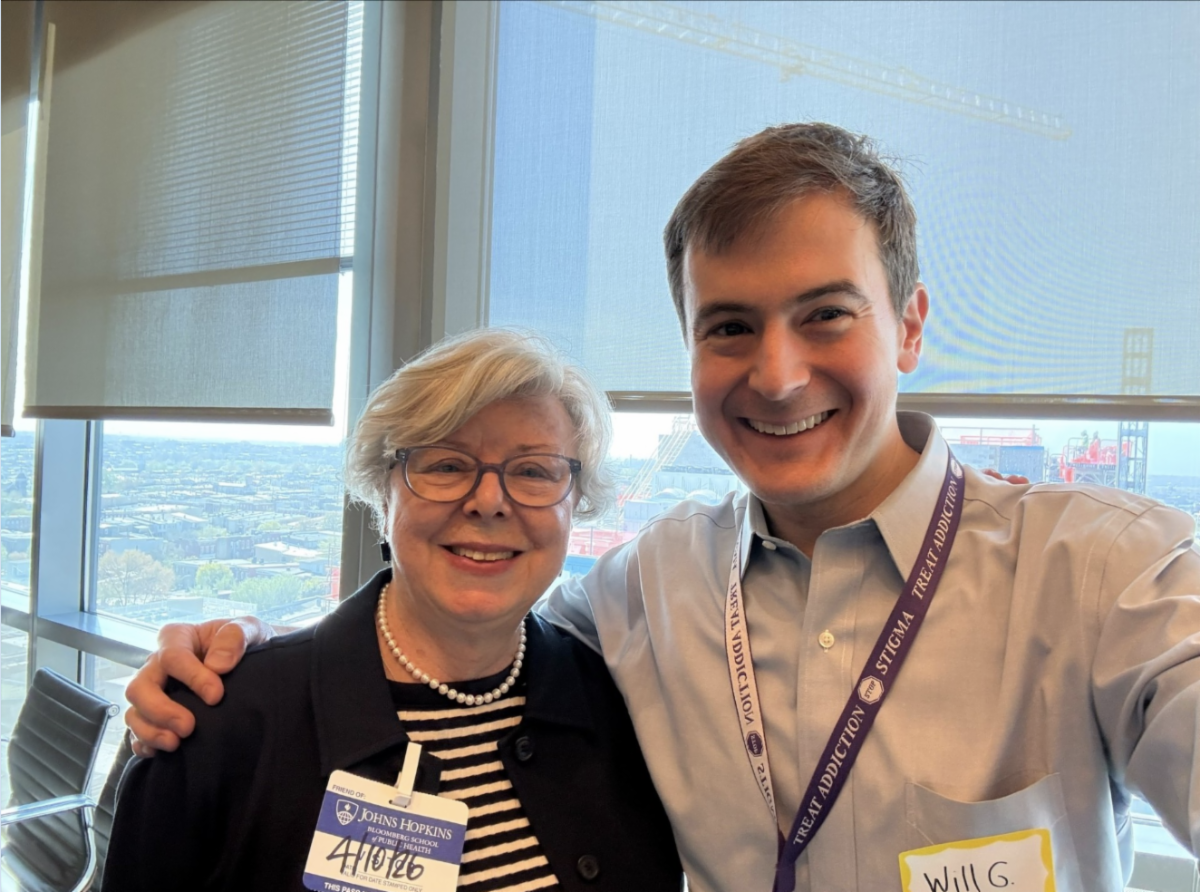
| | C-DIAS fellow Will Garneau, MD, MPH, whose work is focused on improving care for hospitalized patients with substance use disorders, with C-DIAS advisory board member Enola Proctor, PhD, at Johns Hopkins’ Implementation Science Day — a student-led convening that brought the field’s next generation into direct conversation with one of the most influential leaders in implementation science. | | |
Visual Tools to Disseminate Your Work
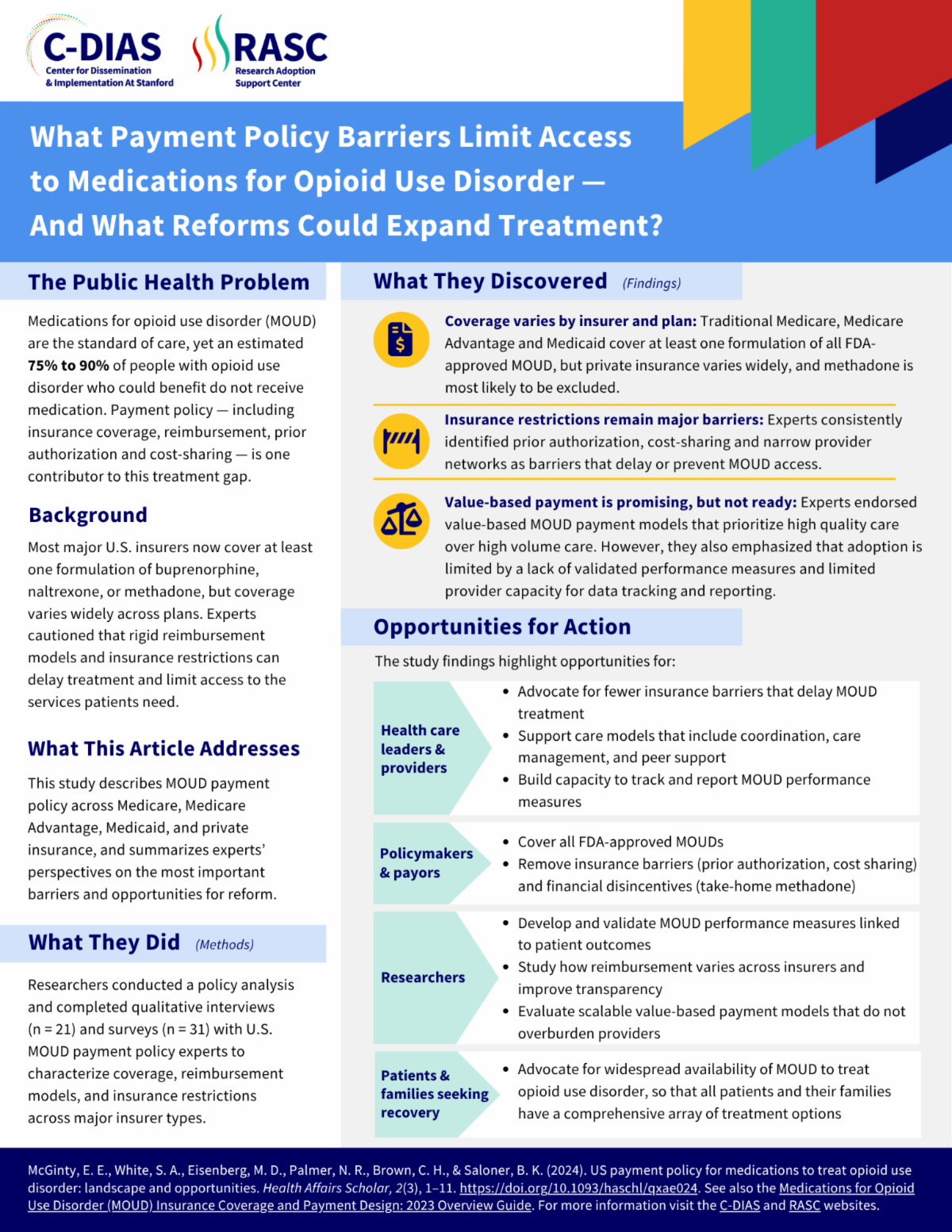
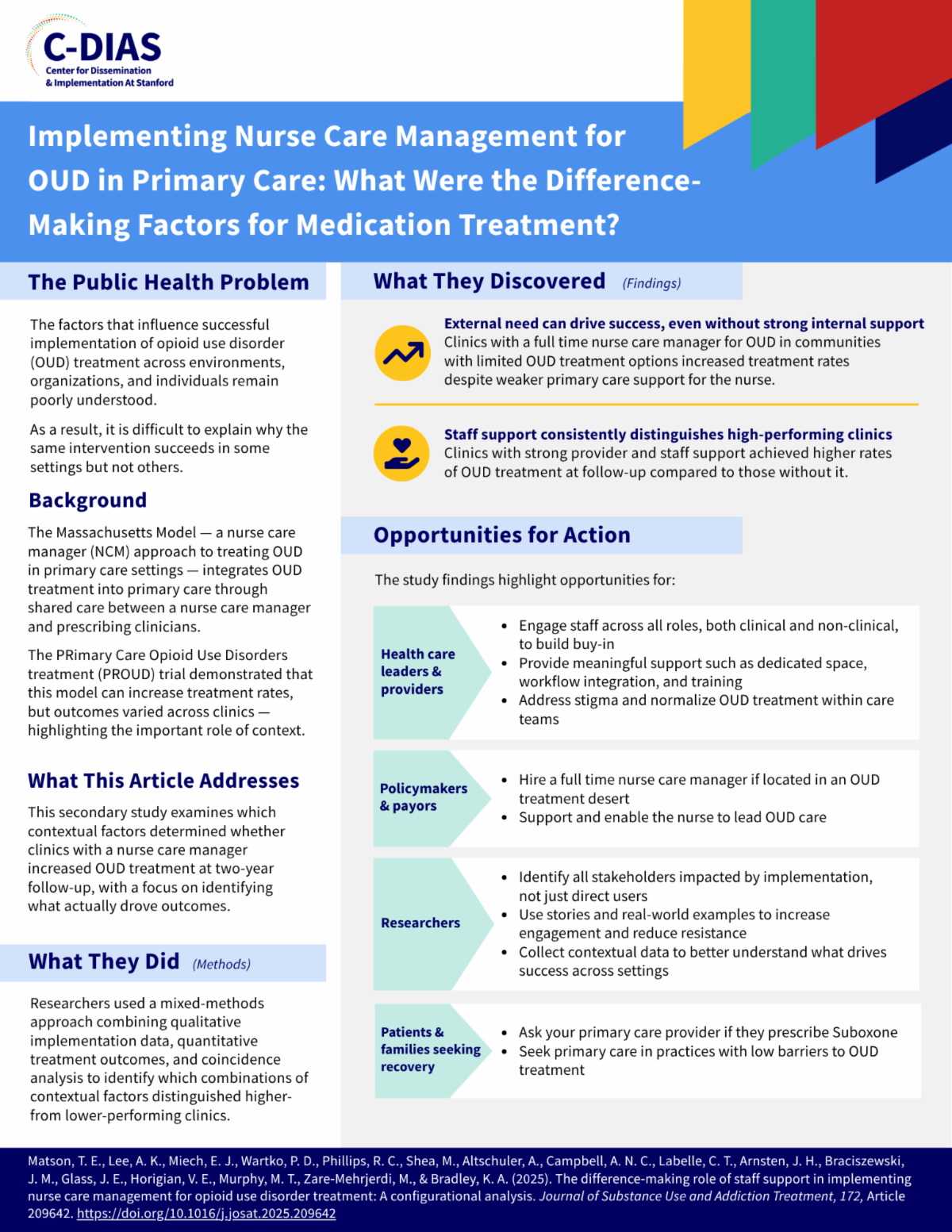
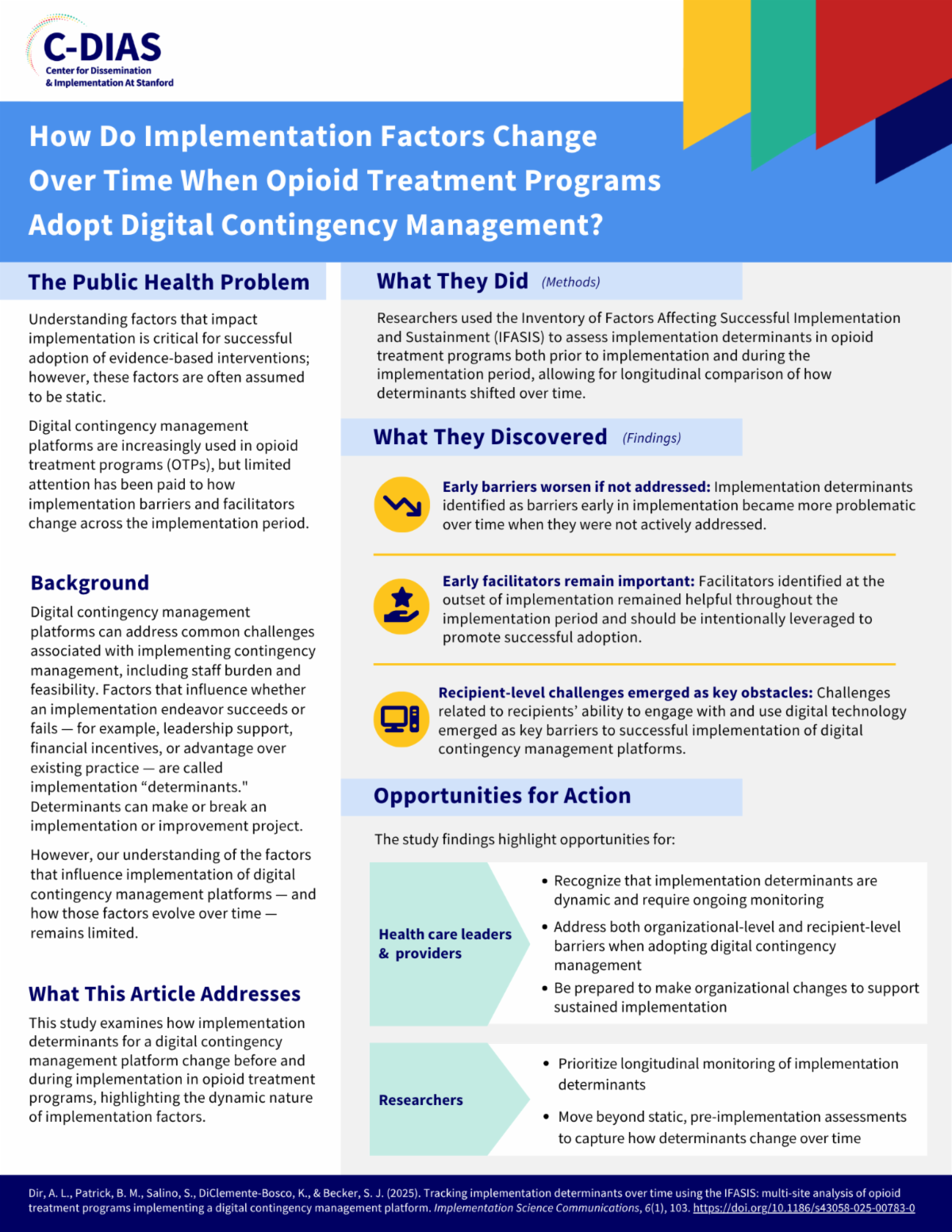
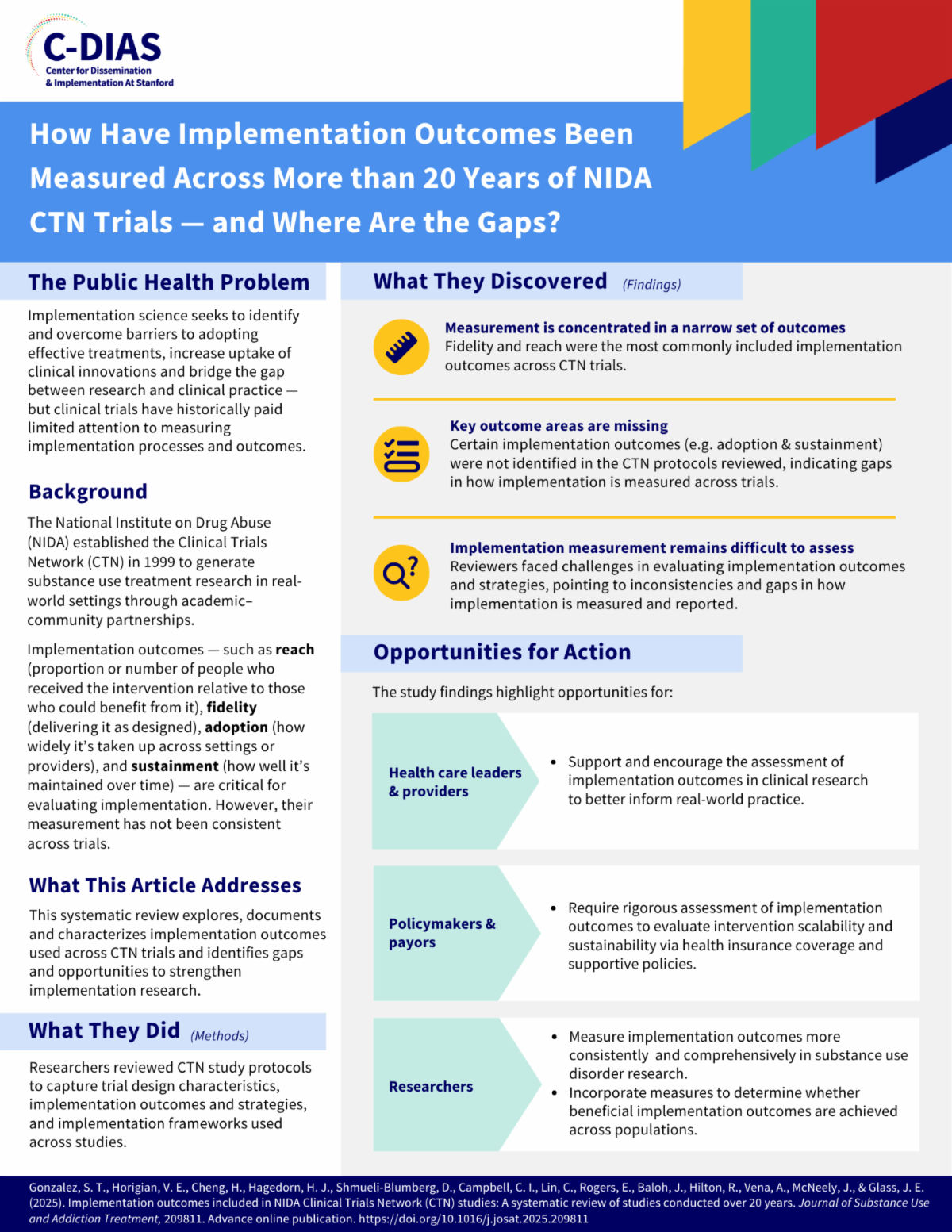
C-DIAS infographics are clear, visual tools designed to distill key research findings and promote access to the best treatments for all. These infographics serve as practical resources to help promote actionable steps across stakeholders in health systems.
Infographics translate implementation science into action by offering concrete recommendations to guide treatment adoption, shape policy, and engage partners.
Check out our newest infographics on the C-DIAS website.
| | |
Current titles include:
Let us know if you have any feedback as we continue to optimize our communications — we’d love to hear from you.
| | |
Our Fellow Spotlight Series continues to profile the people driving implementation science forward — highlighting how fellows are translating evidence into practice across addiction treatment, mental health, policy, and health systems.
The most recent spotlights include Alice Zhang, MD, MPH, Noa Krawczyk, PhD, and Orrin D. Ware, PhD, MPH, MSW. Together, these stories offer a closer look at the lived experiences, research paths, and real-world challenges shaping the field today.
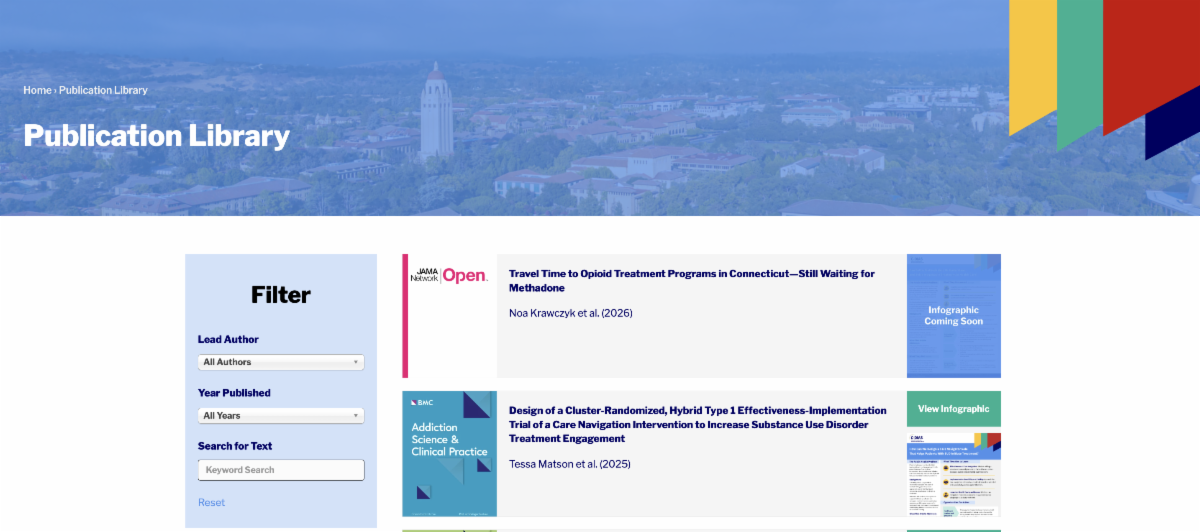
| | Explore the C-DIAS Publication Library | | |
The C-DIAS Publication Library serves as a central hub for the center’s published research and visual resources on implementation science. It brings together peer-reviewed articles and infographics developed by C-DIAS faculty, fellows, and collaborators, making it easier to explore and share work focused on implementing evidence-based practices in addiction care.
If you’re looking for clear, accessible visuals that translate research findings into practice, the Publication Library offers a one-stop resource for learning, teaching, and dissemination.
Recently published
-
Adapting substance use treatment for black adolescents in the US legal system: protocol for a mixed-method, exploratory, feasibility and acceptability study using the eight-step ADAPT-ITT framework. BMJ Open, 16(3), e115193. https://doi.org/10.1136/bmjopen-2025-115193
| | What We're Reading and Listening To | | |
Shannon Wiltsey Stirman, PhD, a member of the C-DIAS Research Core (Methods and Measures), discusses her work using large language models (LLMs) to expand access to evidence-based PTSD treatments — an approach that reflects broader implementation challenges across behavioral health, including addiction treatment.
In a recent episode of What Makes Up Your Mind, she explores how LLMs can support clinicians in delivering high-quality care, particularly in settings where workforce constraints limit access and training.
While her current focus is PTSD, the implications extend to co-occurring conditions and the broader effort to scale effective care. Her work positions AI as a tool to support — not replace — clinicians, while also acknowledging the limitations of current technologies.
| |
We Want to Hear Your Voice!
Did you learn something new or hear something inspiring during a recent talk, presentation, or event that you recently attended? We want to hear from you! Please submit your thoughts, musings, or quotes to info@c-dias.org.
| |
Let's Stay in Touch
You are receiving this email because you either subscribed to receive updates from us or someone you know thinks you'd be interested in our work. If this email was forwarded to you, please subscribe to our newsletter so you can continue to stay connected.
Also follow us on LinkedIn for more frequent updates.
| | | | |