|
Cushman & Wakefield report reveals how AI adoption will reshape real estate fundamentals across all major property types
Artificial intelligence (AI) is projected to generate approximately 330 million square feet of additional commercial real estate (CRE) demand in the U.S. over the next decade, according to new analysis from global commercial real estate services firm Cushman & Wakefield. The study, AI Impact on Commercial Real Estate: The Next 10 Years, is reportedly the first global, multi-sector, scenario-based assessment of how AI adoption will reshape real estate fundamentals across all major property types.
Rather than attempting to forecast how AI itself evolves, the framework focuses on how firms respond to AI under different adoption, productivity, and monetization scenarios, and how those responses translate into macroeconomic outcomes, space demand, and capital markets dynamics. Importantly, these scenarios are not analyzed in isolation; they are fully integrated into Cushman & Wakefield’s standard “House View” forecasting process, reflecting the firm’s broader macroeconomic outlook, including monetary policy, trade dynamics, and geopolitical risks.
|
| |
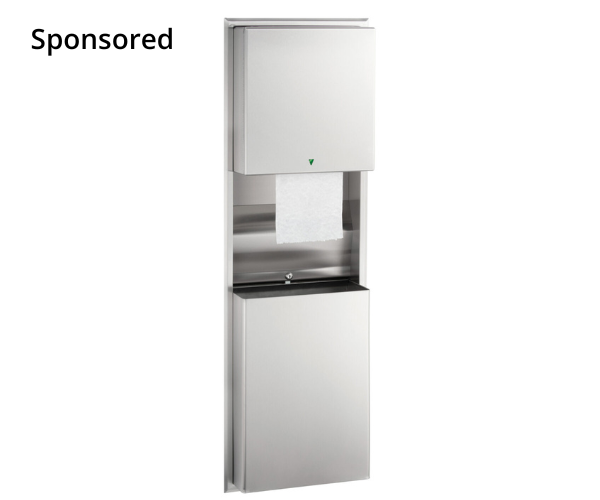
Modular versatility meets intuitive design: The new standard in roll towel dispensing units
In high-traffic commercial environments, a facility’s reputation is often won or lost in the washroom. Patrons judge an entire building by the cleanliness and functionality of its washrooms, and nothing disrupts that perception faster than hand-waving frustration at a malfunctioning dispenser. Bobrick’s refreshed Automatic, Universal Roll Towel Dispenser addresses these challenges head-on, blending robust engineering with an elegant, streamlined aesthetic.
For facility managers, the primary advantage lies in the dispenser’s interchangeable and modular design. This flexibility allows for effortless change-overs between folded towel modules, touchless pull-towel modules, and automatic modules as facility needs evolve. The system accommodates nonproprietary, universal roll paper towels, significantly reducing supply costs while virtually eliminating paper jams with 99.99% reliability.
Visit Bobrick at NeoCon, space 7-5034.
| | |
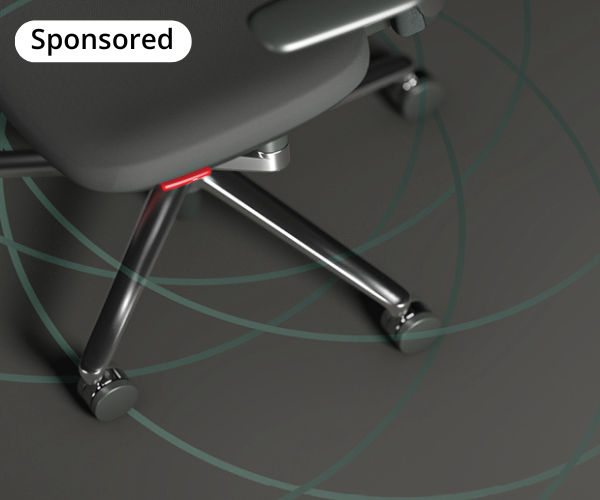
Experience a new way of sitting, guided by Cognetic Technology™ from KI
Cognetic Technology™ from KI introduces a patented design centered on balance, focus and human performance. For decades, chairs have asked the body to adapt. Cognetic Technology, invented by Aaron DeJule, does the opposite — responding to subtle micromovements to keep the body in continuous, natural motion. Instead of relying on adjustments to manage discomfort, it works in harmony with how the body is meant to move.
The result is something you don’t just see, but feel: less friction, more alignment and a new state of flow. This is not another ergonomic feature. It’s a fundamentally different experience — one that challenges how we sit, work and focus. Available exclusively on the Kiaura Collection™ designed by Aaron DeJule, coming soon.
Experience it for yourself at Design Days 2026 in KI’s new Chicago Inspiration Center, located at 1045 on Fulton. Visit KI in the Mart, Collab space 7-7070. Stay connected at ki.com/cognetic.
| | |
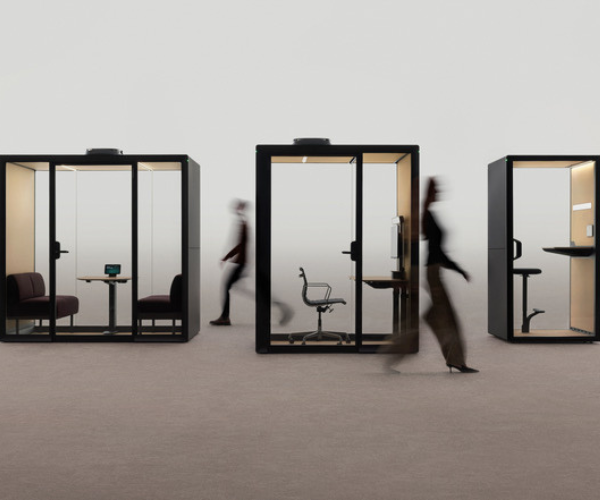
Framery unveils Gradus: Customizable smart office pods designed for creative freedom, form and function
Sixteen years after inventing the office pod, Framery has unveiled Gradus. Named after the Latin word for step, it is an adaptive line of smart pods designed to align with the architecture of any space and the needs of its user. The three new models are made for the U.S. and Canada and assembled in the USA.
Characterized by clean lines and a minimalist silhouette, the new Gradus line can either blend into the room or stand out as the focal point. Users can just step inside and start, with no setup required:
-
Gradus Focus: A smart, soundproof phone booth for one person, designed for calls and focus work.
-
Gradus Work: A smart and soundproof workstation for one person, featuring a full-size adjustable desk and a spacious interior designed for uninterrupted flow.
-
Gradus Huddle: A smart and soundproof meeting pod for 1–4 people, optimally sized for spontaneous collaboration and confidential discussions.
Visit Framery at NeoCon showroom 3-124.
| | |
Momentum’s portfolio grows into acoustics, benching, and Michael Ford’s Hip Hop textiles and wallcoverings
Entering seven products in the Best of NeoCon 2026, Momentum Textiles & Wallcoverings displays its broader brand reach beyond upholstery textiles and wallcoverings, into acoustic solutions, architectural products, and a benching/display system.
• Lanes is a battened-style acoustic wall system and interior solution from Momentum + Autex Acoustics.
• Mirage panels with SpinFix mounting system: from Momentum and Autex Acoustics represent a sustainable advancement in acoustic efficiency.
• Muro is a modular display system by B+N.
• Frontier Acoustic Fins is a modular ceiling system.
• Michael Ford x Momentum Textile Collection consists of five woven upholstery fabrics.
• Michael Ford x Momentum Wallcovering Collection includes two biobased, carbon-neutral Circon Type II vinyl wallcoverings
• Wellness Suite is a collection of high-performance healthcare textiles
All of the Momentum brands’ Best of NeoCon entries will be showcased in NeoCon showroom 323 June 8-10.
| | |
Bank of America, Frederick National Lab for Cancer Research, NYU, Sandia Labs are posting key FM roles
Not a lot of hires, but not a lot of fires, either, will likely be revealed when the May 2026 Employment Situation Report is released on Friday, June 5, by the Bureau of Labor Statistics (BLS). Wall Street and economic forecasters are expecting a continued gradual decrease in hiring. Remember that April defied the odds by adding 115,000 jobs. For May, 85,000 to 96,000 jobs are estimated to have been added. Regardless of the reports, the FMLink Job Board is averaging 1,200 positions daily related to all sectors of facility and building management, along with roles for environmental health and safety, security, and construction project management. Here’s a look at career options available now:
-
Regional Engineering Manager – Critical Facilities, Bank of America, Richardson, TX
-
Senior Vice President for Global Real Estate, Facilities and Campus Development, New York University, New York, NY
-
Director of Facilities Operation, Maintenance, and Engineering, Frederick National Laboratory for Cancer Research, Frederick, MD
-
Facility Project Manager, Genscript, Pennington, NJ
-
Manager, Operations Excellence – Facilities Services, Velociti Services Co., Houston, TX
-
Director of Facilities, Bronx Museum of the Arts, Bronx, NY
-
Critical Facilities Manager, ATN International, St. Croix, U.S.
| | |
Advance your commercial real estate career — on your schedule
Commercial real estate (CRE) professionals are expected to do more than ever before: manage operations efficiently, improve building performance, support tenants, and adapt to evolving industry demands. BOMI’s Online Self-Paced (OSP) courses are designed to help you build the knowledge and credentials needed to succeed, all with the flexibility to learn on your own schedule.
Whether you’re working toward a respected BOMI designation like the FMA, RPA, or SMA, or simply looking to expand your expertise, Online Self-Paced courses provide practical, industry-relevant education that fits into your busy life. Access course materials anytime, anywhere, and progress at a pace that works for you.
BOMI’s curriculum is developed specifically for professionals in commercial real estate, including property managers, facilities managers, systems maintenance professionals, building engineers, and administrators. Courses focus on real-world skills and operational knowledge you can apply immediately to improve performance, increase efficiency, and support long-term career growth.
| | |
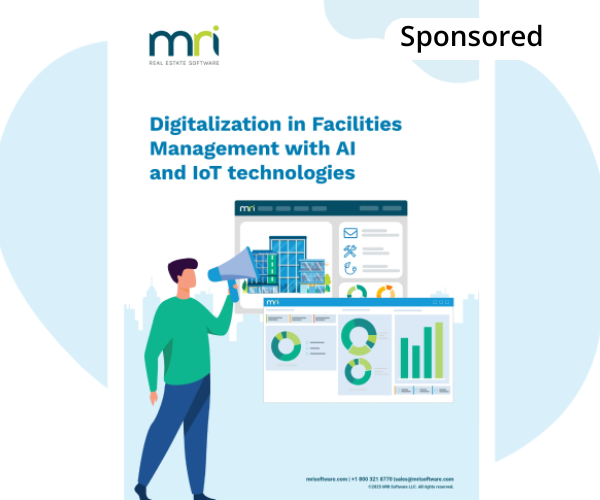
What if your facility could predict its own problems?
Facilities are no longer just spaces to maintain, they are becoming sources of insight. As Artificial Intelligence (AI) and the Internet of Things (IoT) continue to evolve, facilities teams are gaining access to tools that reveal what is happening inside their buildings in real time and what is likely to happen next.
The Digitalization in Facilities Management with AI and IoT Technologies eBook explores how connected devices, intelligent analytics and real-time data are changing daily operations across modern facilities. From reducing unexpected downtime to aligning energy usage with actual occupancy patterns, digital technologies are helping teams operate with greater clarity and confidence. Instead of reacting to problems after they occur, facilities leaders can make informed decisions based on live conditions, historical trends and predictive signals.
But adopting new technology is only part of the story. The real opportunity lies in understanding where these tools deliver measurable value and how to implement them securely and effectively.
| | |
|
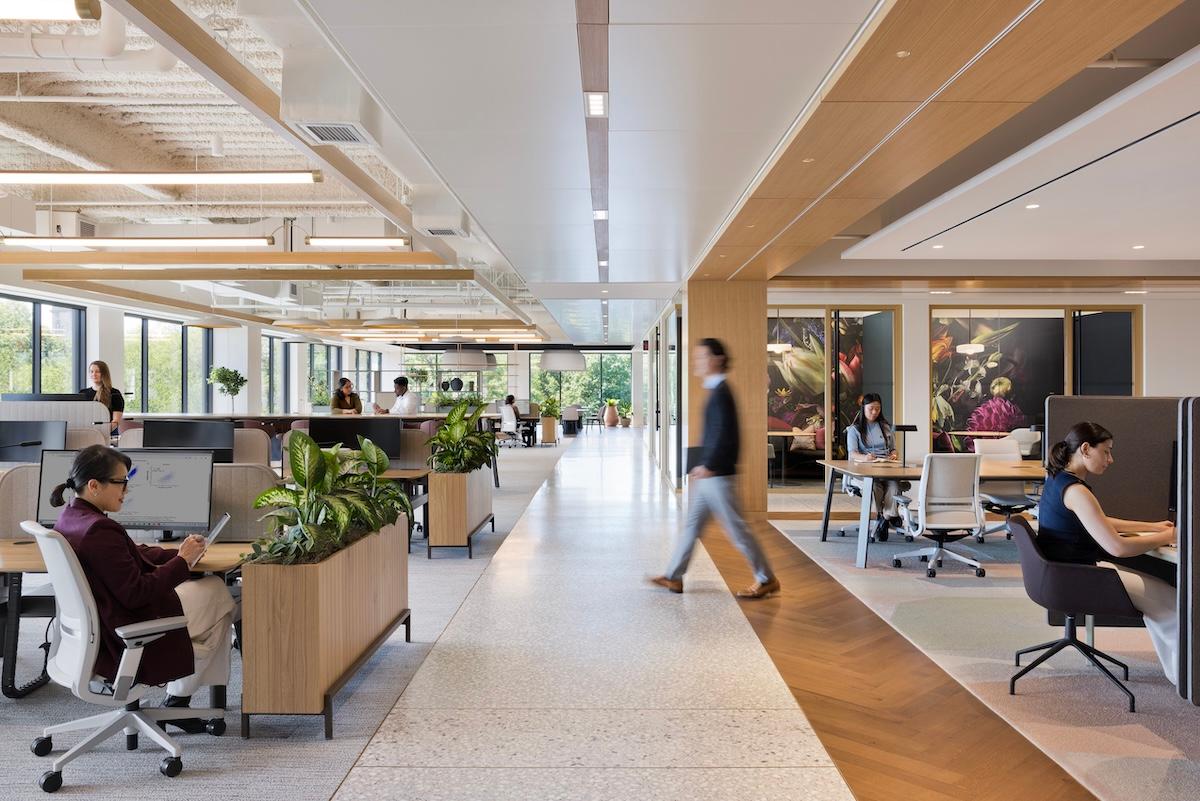
Sanofi’s workplace designed with Gensler embraces every employee — and welcomes the Morristown, NJ, community
Creating a workplace that elevates daily experiences, supports hybrid work, and strengthens connection and purpose will naturally draw employees. The opportunity to design a signature experience within a company’s global real estate portfolio may only happen once a decade, translating its workplace strategy into a highly human-centered environment. Global healthcare manufacturer Sanofi engaged architecture and design firm Gensler for its Sanofi M Station Office in Morristown, New Jersey.
Wellness and functionality are integrated at every scale. The interconnecting stairs and active design cues encourage movement and visibility throughout the day. An on-site health clinic with personalized primary care supports the health and well-being of employees, aligning with Sanofi’s broader mission in healthcare. The fitness center has a concierge, a gym with weights and cardio machines, a yoga/barre zone, and offers showers and lockers.
| | |
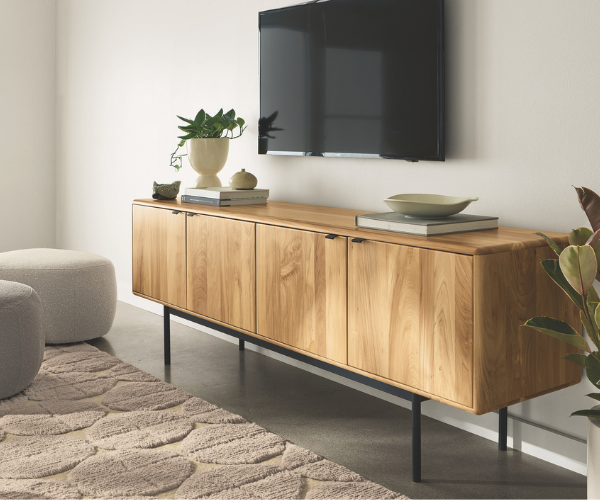
Reclaimed American elm adds distinctive beauty to Hensley solid-wood furniture by Room & Board for Business
Room & Board for Business is expanding its Urban Wood Project with the introduction of reclaimed American elm into its Hensley collection — bringing a historically unavailable species into one of its most established product lines and advancing its use of sustainable materials at scale. The Hensley elm collection will be featured at NeoCon 2026 in the Sustainability Lab, showroom 1112.
Hensley has served as a foundational collection for more than a decade. The collection includes armoires, dressers, nightstands, storage cabinets, and media consoles. Defined by clean lines and balanced proportions, Hensley pairs a streamlined silhouette with solid wood construction, allowing the material itself to remain the focal point. Shaped by shifting light and surrounding structures, city-grown elm trees often display distinctive characteristics including pronounced grain variation and contrast between heartwood and sapwood.
| | |
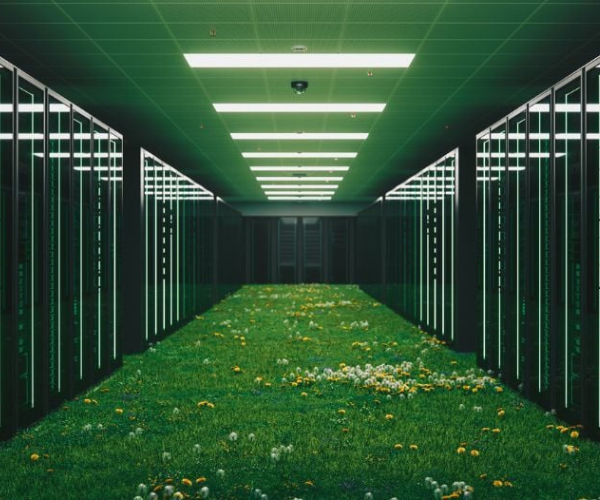
Green Leasing 2.0: Bridging the owner-occupier divide in data centers to deliver shared ESG value
The global built environment faces a definitive deadline: halving greenhouse gas (GHG) emissions by 2030. Within this sector, the data center industry occupies a unique and critical position. As the digital backbone of the global economy, data centers are among the fastest-growing consumers of energy. While strides have been made in procuring renewable energy, a significant structural barrier remains in optimizing the efficiency of the physical assets themselves: the adversarial nature of the traditional commercial lease.
To meet 2030 targets, the industry requires a paradigm shift from Green Leasing 1.0 — often characterized by vague aspirations and nonbinding clauses — to Green Leasing 2.0. This advanced framework bridges the split incentive gap between owners and occupiers, leveraging data transparency, shared financial models and a holistic focus on environmental, social and governance (ESG) criteria.
| | FMLink, powered by The McMorrow Reports | | | | |