CAPES Quarterly Newsletter | | |
Word from Our Director
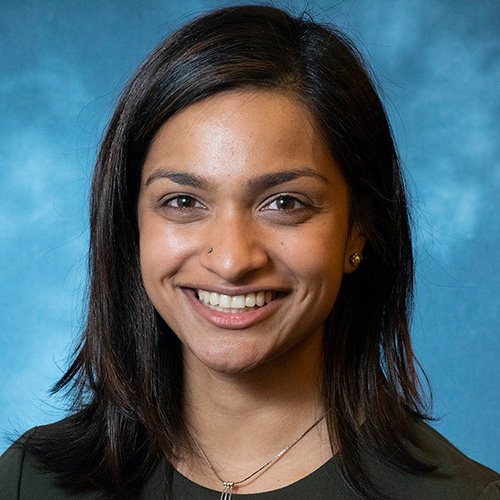
We are thrilled to announce our third cohort of CAPES scholars: Hoa L. Nguyen, MD, MS, PhD (Established Scholar) and four Emerging Scholars: Alan Ardelean, MS, Daniel Coppersmith, PhD, Candice Kaidi Huang, MS, and Ramya Ramadurai, MA. Welcome Scholars! We look forward to learning more about you at the next CAPES Showcases in June and August.
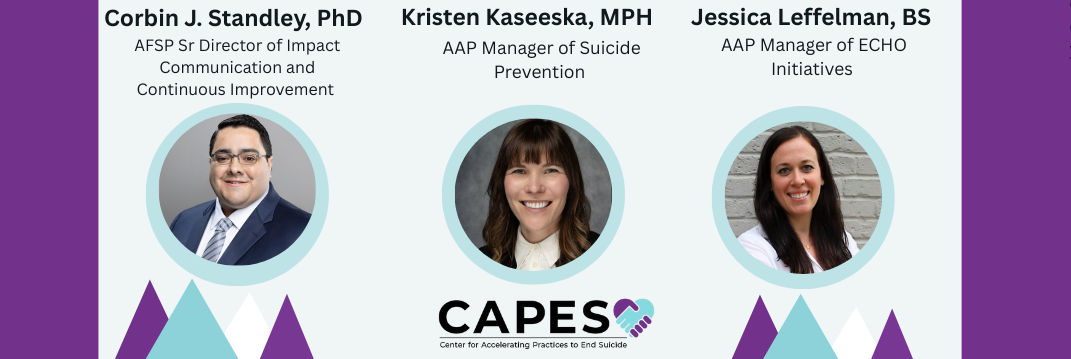
Recordings are now available from our recent event focused on implementing the ECHO Model in diverse pediatric healthcare settings. Thank you to our speakers, Kristen Kaseeska and Jessica Leffelman from the American Academy of Pediatrics and Dr. Corbin J. Standley from the American Foundation for Suicide Prevention for sharing your learning and insights into implementing the ECHO model with us.
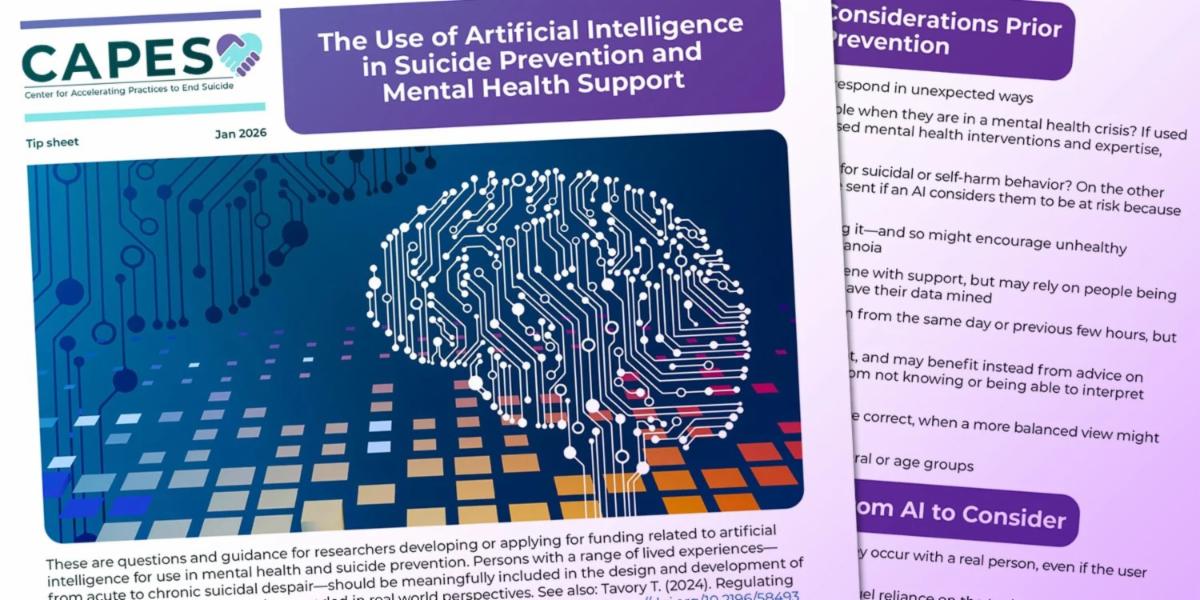
We are sharing a new tip sheet from the CAPES Lived Experience Advisory Board, focused on AI, mental health and suicide prevention. We hope you find this tool useful when developing or applying for funding related to AI tools for mental health or as adjunctive to suicide care. You can find this new tip sheet and learn more about the CAPES Lived Experience Advisory Board on the CLEAB webpage. Want to help amplify the work of our Advisory Board? Share their new tipsheet with your colleagues or on Facebook, Instagram, LinkedIn, X, and Bluesky.
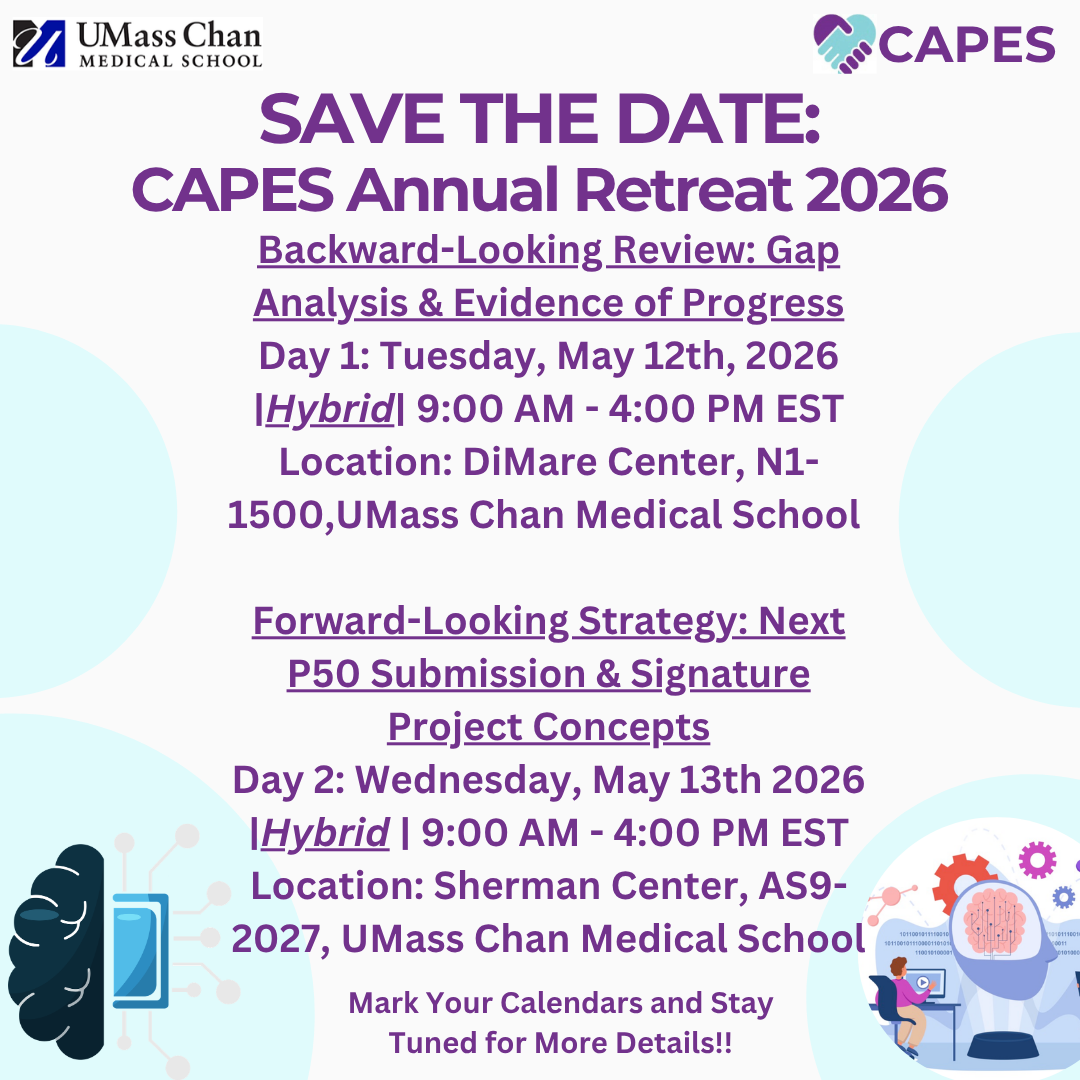
A friendly reminder to our faculty, staff, scholars, and consultants to check your email and calendar for details about our annual retreat on May 12-13, 2026. We hope to see you in person if you can; retreats are hybrid. Our retreats are a time to reflect on all our amazing progress and plan the next steps for CAPES together as a Center.
If you miss an event, be sure to check the CAPES Events page for recordings. All resources, tip sheets, and publications can be found in our Digital Health and Tech, For Clinicians, or For Researchers pages.
Sincerely,
Dr. Boudreaux
|
| Welcome New CAPES Scholars! | | Congratulations to our Year 3 Scholars! The goal of the CAPES Scholar program is to strengthen the suicide prevention workforce and foster the next generation of research-driven suicide prevention experts. This is accomplished through mentorship, training, collaboration, and networking opportunities. The Scholars program is led by the Education and Scientific Development Unit of CAPES led by Kate Pivovarova, PhD. | |
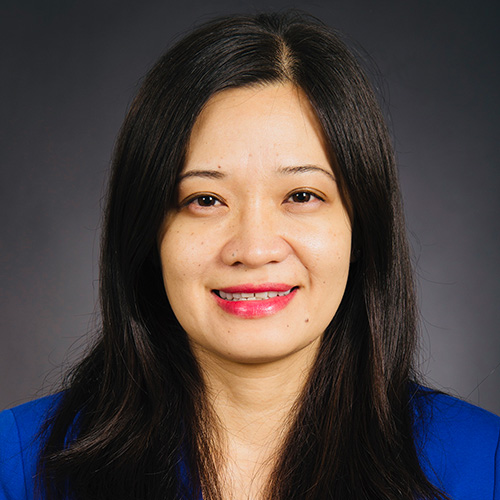
| |  | Hoa L. Nguyen, MD, MS, PhD is a professor in the Department of Population and Quantitative Health Sciences, Division of Epidemiology. She is also an honorary professor at the Hanoi Medical University in Vietnam. She is a physician by training and epidemiologist with more than 20 years of experience in chronic disease epidemiology, behavioral intervention development, and implementation for improving non-communicable diseases and related risk factors in the U.S. and in low- and middle-income countries. Dr. Nguyen has been principal investigator (PI) and co-investigator for several NIH-funded studies conducted in Vietnam, aiming to improve the management and control of hypertension (R21, U01, R61/R33), coronary heart disease (R21), smoking cessation among the general population and people living with HIV (R01 and U01), and Alzheimer's (funded by the American Alzheimer's Association). She is also a multi-PI for an NIH/Fogarty-funded Program for Strengthening Research and Training in Non-Communicable Diseases in Vietnam (1D43) and the renewal program—Strengthening Training and Research Initiatives for Vietnam to Effectively Managing Non-Communicable Diseases (STRIVE-NCD) (2D43). She currently serves as a co-investigator for an MH-funded R34 study entitled “Optimizing mobile interventions to promote HIV prevention among Thai vulnerable emerging adults.” Currently, Dr. Nguyen is exploring opportunities to expand her research to other areas, such as mental health, particularly in suicide prevention, in which she will adapt her effective storytelling and mHealth interventions in hypertension control and smoking cessation to improve population mental health.
| | |
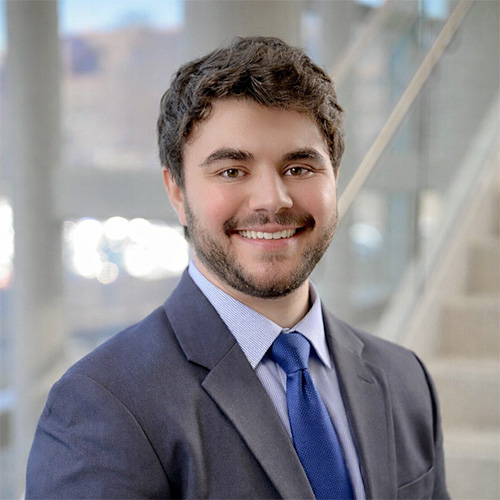
Alan Ardelean, MS, is a doctoral student in the Population Health Sciences PhD program in the Morningside Graduate School of Biomedical Sciences at UMass Chan. He is mentored by and works with Kate L. Lapane, PhD, MS, focusing his dissertation on the association between psychoactive drug use and suicide-related outcomes among U.S. nursing home residents. As a CAPES Emerging Scholar, he is mentored by Edwin D. Boudreaux, PhD and has co-authored secondary analyses of the ED-SAFE data examining profiles of patients with incidental suicide risk who present to the emergency department. Through this program, Alan aims to strengthen the conceptual framing, methodological rigor, and translational relevance of his dissertation research and to integrate his doctoral training in pharmacoepidemiologic methods into suicide prevention research more broadly.
| |
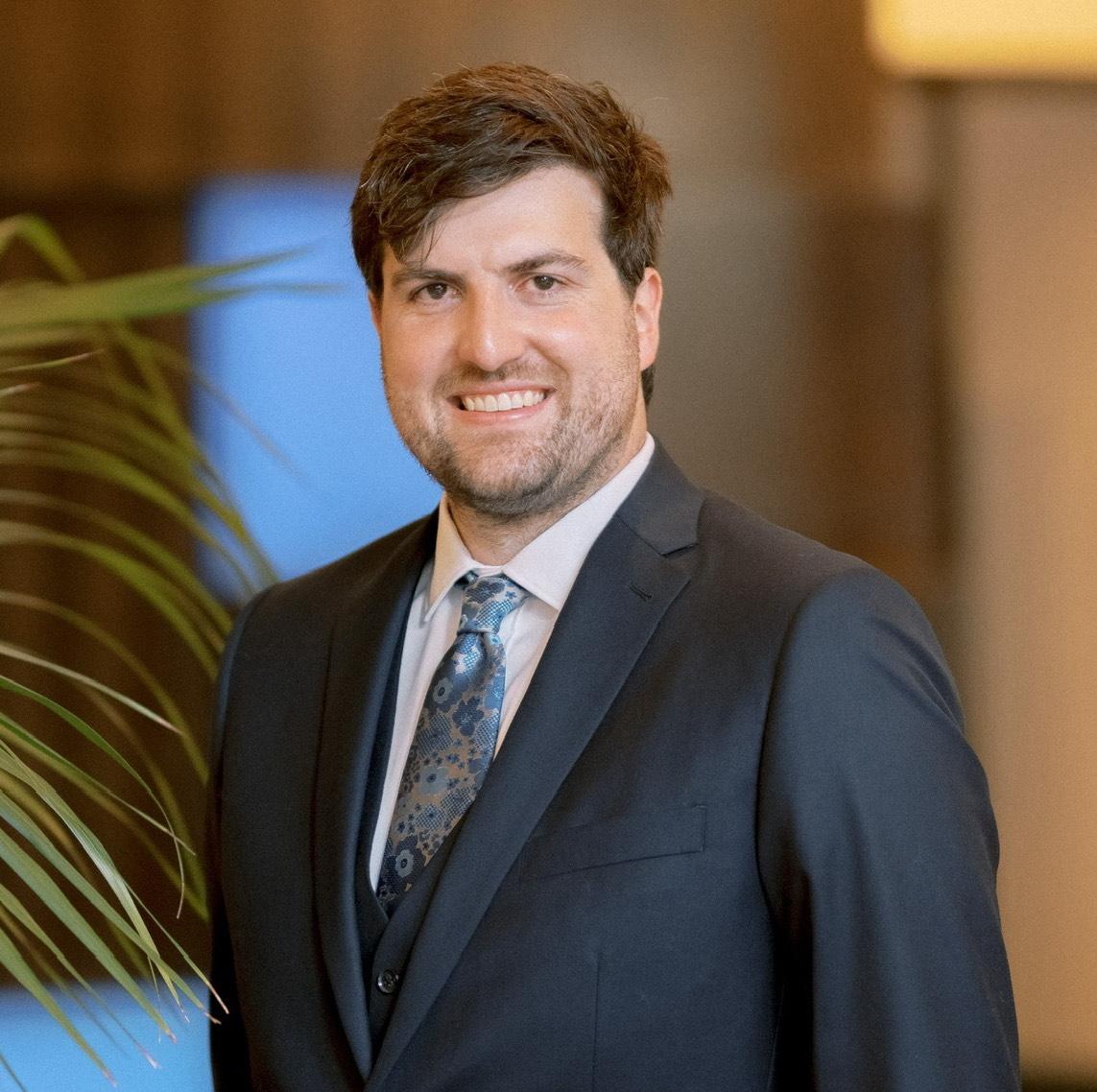
Daniel Coppersmith, PhD, is an assistant professor in the Department of Psychological and Brain Sciences at the University of Massachusetts Amherst and the director of the Suicide Prevention Research Laboratory. His research program aims to advance the understanding, prediction, and prevention of suicide. His research is grounded in the theoretical orientation that suicidal thoughts and behaviors are dynamic, complex, and heterogeneous and the use new technologies, such as smartphones and wearable biosensors, to capture and model these factors. The goal of his program of research is to improve the lives of individuals with suicidal thoughts and behaviors. He earned his PhD in clinical psychology from Harvard University and completed clinical training at McLean Hospital, Massachusetts General Hospital, and the VA Boston Healthcare System. His research has been funded by the National Institute of Mental Health, National Science Foundation, and the American Psychological Foundation.
|
| | | Candice Kaidi Huang, MS, is a PhD student in Information Systems at Worcester Polytechnic Institute. Her research is driven by an interest in improving suicide prevention through better alignment between evidence-based screening and the realities of clinical care. She studies how clinicians interact with the electronic health record (EHR) and embedded clinical decision support during patient care, and how workflow, timing, and usability shape whether risk information is noticed and acted upon. Using qualitative methods, workflow analysis, and eye-tracking techniques, she aims to generate practical, workflow-sensitive insights that can improve the design and implementation of suicide screening and digital mental health tools in primary care and other healthcare settings. As a CAPES Emerging Scholar, she looks forward to learning from the community and contributing to research that supports timely, meaningful, and sustainable suicide prevention practices in real-world clinical environments.
| |
Ramya Ramadurai, MA, is a 6th year clinical psychology doctoral candidate at American University and a current predoctoral intern at Harvard Medical School/McLean Hospital. Her translational research program focuses on two interconnected lines of work: 1) identifying affective and interpersonal predictors of suicidality; and 2) developing, evaluating, and implementing digital and brief psychotherapy interventions to reduce suicidality and promote living. She takes a person-centered approach, incorporating social identity and related stress to both lines of work, to promote the cultural responsivity of suicide care. Clinically she is passionate about supporting transdiagnostic adults navigate significant emotional challenges and suicidality and has particular experience delivering Dialectical Behavioral Therapy.
| | |
Recordings now available! This webinar focused on key learnings from a 3-year Suicide Prevention ECHO program developed by the American Foundation for Suicide Prevention (AFSP) and American Academy of Pediatrics (AAP) which aimed to support the implementation of suicide prevention strategies in pediatric healthcare and community settings. Watch to learn about the Blueprint for Youth Suicide Prevention and methodology and results from the Suicide Prevention ECHO program, development of the curricula, adaptations to different pediatric health care settings, role of community ambassadors, quality assurance, evaluating the ECHO model effectiveness, and implications for future youth suicide prevention efforts in clinical and community settings. Thank you to our speakers and all who attended!
Speakers:
Corbin J. Standley, PhD, AFSP Senior Director of Impact Communication and Continuous Improvement
Kristen Kaseeska, MPH, AAP Manager of Suicide Prevention
Jessica Leffelman, BS, AAP Manager of ECHO Initiatives
| | New Tipsheet from the CAPES Lived Experience Advisory Board | | |
We are excited to share a new tip sheet with guidance around AI, mental health and suicide care, created by the CAPES Lived Experience Advisory Board (CLEAB), which includes Leah Harris, Erin Goodman, DeQuincy Lezine, T'Leah McQuade, Jennifer Glynn, and Sara Do, and is co-facilitated by Rick Strait and Lourah Kelly. We hope you use this guidance to inform and guide any research or tools being developed using AI or chatbots in ways that are aligned with the needs and values of people with lived experience.
Guidance includes:
- Questions to Ask Prior to and During AI Development
- What are the ethics of offering AI if the alternative is for someone to receive no support?
- Potential Risks to Mitigate and Considerations Prior to Implementing AI for Suicide Prevention
- AI is going to reflect the perspectives of the person using it—and so might encourage unhealthy behaviors or thinking patterns, including reinforcing paranoia
- Potential Safeguards against Harm from AI to Consider
-
Program AI to offer support and resources for persons who ask questions about suicide methods or share suicidal thoughts, and program safeguards to prevent the AI from reinforcing these thoughts and plans
Share this tool widely with any colleagues in research and technology and software development! Help us share on Facebook, Instagram, LinkedIn, X, and Bluesky.
CAPES faculty and scholars are all encouraged to bring research questions or projects to the CLEAB for feedback. To schedule a consultation with the CLEAB, contact Lourah Kelly, PhD, lead of the Dissemination and Community Engagement (DanCE) Unit. Meetings are every first or second Friday of the month from 2:30–4 p.m. by Zoom.
| | Reminder for CAPES Faculty, Staff, Scholars Only | | |
Save the date for the Annual Retreat, which will include reviewing progress on all projects and units, and planning the next steps for grant applications. This is an internal event for faculty, staff, scholars, and consultants including our Lived Experience Advisory Board. Check your email and calendar for details.
CHECK YOUR CALENDARS FOR AGENDA AND MEETING INFORMATION
| | Congratulations to Dr. Agu | | |
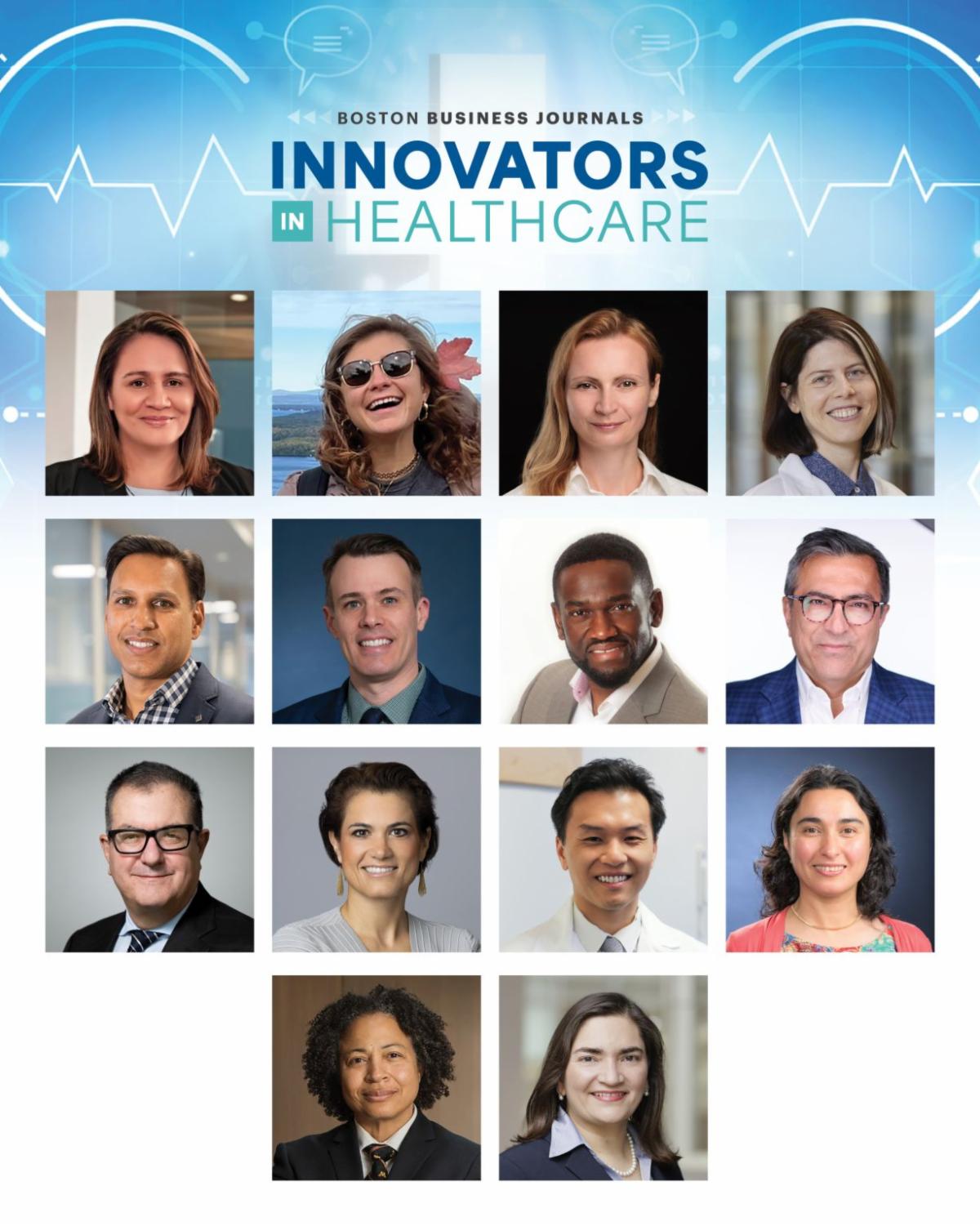
We are proud to celebrate CAPES faculty member Emmanuel Agu, PhD, on being recognized as a 2026 Boston Business Journal Innovator in Healthcare in the Research category.
Dr. Agu, a professor at Worcester Polytechnic Institute, Lead of the CAPES Machine Learning Unit and Co-Lead of the Methods Core, conducts pioneering research at the intersection of artificial intelligence, mobile health, and digital biomarkers.
His work explores how smartphone sensing and machine learning can help detect and monitor conditions such as depression and suicide risk, helping expand the possibilities for earlier intervention and more accessible care.
Congratulations to Dr. Agu on this well-deserved recognition!
| | Upcoming Webinar from the National Teleheath Center of Excellence (COE) | | |
This webinar will explore how decentralized pragmatic studies and learning health systems can work together to accelerate the evaluation, implementation, and refinement of digital health technologies. Drawing on real world examples, including Element E at UMass, the session will highlight strategies for embedding evidence generation into care delivery to support faster, more meaningful innovation that become part of standard of care through existing healthcare reimbursement models.
Presented by: Jennifer Dahne, Apurv Soni, Larry Hawk, and Martin Mahoney
Date & Time: Thursday, Apr. 16, 2026, 1–2 p.m.
| | |
Recent Publications by CAPES Faculty
Alrefaei, D., Huang, K., Sukumar, A., Djamasbi, S., Tulu, B., & Martin, R. D. (2026). Clinicians' visual attention during suicide screening encounters: an exploratory eye-tracking study. medRxiv, 2026.02.14.26346315. https://doi.org/10.64898/2026.02.14.26346315
| |
Khanna, A., Larkin, C., Davis-Martin, R., Micklus, I. K., Sefair, A. V., Roy, A., Klaucke, C. G., Reznek, M. A., & Boudreaux, E. D. (2025). Patient and health care provider experiences with suicide-related tele-mental health evaluations in the emergency department: multiphase qualitative study. JMIR mental health, 12, e72541. https://doi.org/10.2196/72541
| |
McInnis, B. J., Pindus, R., Kareem, D. H., Cakici, J., Vital, D. G., Hekler, E., & Nebeker, C. (2025). Using dataflow diagrams to support research informed consent data management communications: participant perspectives. Journal of the American Medical Informatics Association: JAMIA, 32(4), 712–723. https://doi.org/10.1093/jamia/ocaf004
|
| | |
Please remember that all CAPES manuscripts and presentations must include the following acknowledgment statement:
“This work was supported, all or in part, by the National Institute of Mental Health through the University of Massachusetts Chan Medical School’s Center for Accelerating Practices to End Suicide (CAPES) [P50MH129701]. The content is solely the responsibility of the authors and does not necessarily represent the official views of the National Institute of Mental Health or the National Institutes of Health.”
| Thank you for taking the time to review our 12th quarterly newsletter! Stay tuned for more Center-wide announcements and opportunities! | | Share and follow us on social media! | | | | |