|
Extended Foster Care:
A Program to Support Youth Ages 18-21 Transition to Adulthood
By Judge Margaret Pickard
For many young adults, turning 18 means newfound freedom, the start of college or a job, and the comfort of knowing there's a safety net if things don’t go as planned. However, for youth in foster care, turning 18 can feel more like a cliff than a milestone. Without family to fall back on, the challenges of housing, employment, and education can quickly become overwhelming.
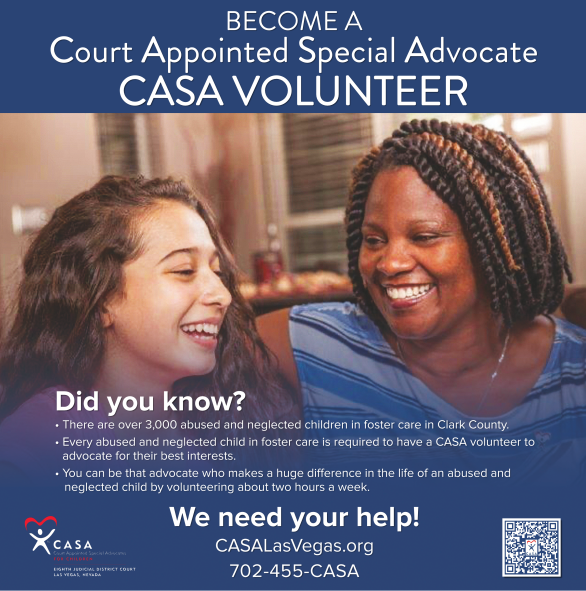
Recognizing this, Clark County, Nevada has developed a strong network of extended foster care and independent living programs designed to give former foster youth a solid foundation during this critical transition to adulthood. These programs, offered to young people ages 18 to 21, aim to provide the support and structure necessary to help them succeed. CASA volunteers will be crucial in helping youth choose whether or not to make the election to enter into the extended foster care program as they turn 18.
Staying in Care Past 18
Effective July 1, 2025, in Nevada, youth who are in foster care at age 18 can elect to voluntarily remain under the jurisdiction of the court until they turn 21. This extended jurisdiction, established under Nevada Revised Statute (NRS) 432B.594, is not automatic—it must be requested by the youth and approved by the court. The youth must also agree to participate in a personalized Transitional Living Plan that outlines their goals for education, employment, housing, and health.
This legal extension is a game changer. It means a young person doesn’t have to face adulthood completely alone. Instead, they can continue receiving housing support, case management, monthly financial stipends, and other essential services, all while working toward long-term independence.
The Independent Living Program: Life Skills for the Future
Starting at age 14, youth in Nevada’s foster care system are introduced to the Independent Living (IL) Program. This statewide initiative helps prepare teens for adulthood by teaching life skills such as budgeting, job readiness, and how to find and maintain housing. It also offers support in applying for college, training programs, or entering the workforce.
Once they turn 18, eligible youth can continue to receive these supports through Independent Living programming until they are 21. Even youth who were adopted after age 16 or who aged out of care at 18 may still qualify. Funded by both federal Chafee funds and state resources, this program is a cornerstone of Clark County’s approach to helping youth become self-sufficient adults.
Step-Up Program: Housing and More
For many youth aging out of foster care, housing is one of the biggest obstacles. That’s where the Clark County’s Step-Up Program steps in. Step-Up is a specialized initiative offered through Clark County Social Services that supports young adults who aged out of the foster system at 18. The program provides transitional housing, education assistance, employment support, transportation, move-in assistance, and case management. Youth are matched with a dedicated case manager who helps them navigate the adult world—everything from signing a lease to applying for health insurance or getting a driver’s license.
Participation in the Step-Up Program is voluntary and must be elected by the youth. Youth can remain in the program until they turn 21, provided they stay engaged by going to school and/or working and continue working toward the goals in their plan.
Other Support Programs: Project HOME and FAFFY
In addition to court jurisdiction and Step-Up services, Clark County offers other targeted support programs. One such example is Project HOME, which provides wraparound services to youth ages 16 to 25 who are HIV positive, focusing on medical adherence, housing stability, and wellness.
Another key initiative is FAFFY (Foster and Adoptive Family Focused Youth), a funding stream that offers monthly stipends to help former foster youth pay for rent, education, mental health counseling, utilities, and other essentials. Like the extended court jurisdiction option, FAFFY is available to youth who aged out of care at 18 and choose to engage in services.
One Final Step: Education & Training Vouchers
Education is one of the strongest predictors of future success, and Clark County makes sure that former foster youth have access to it. The Education and Training Voucher (ETV) Program offers financial aid to help cover the cost of college, trade school, or vocational training.
Eligible youth can receive up to $5,000 per year for expenses like tuition, books, housing, transportation, and even childcare. Support can continue until the youth turns 26, as long as they maintain satisfactory academic progress and remain enrolled in a qualifying program. This federal program is administered locally and plays a vital role in helping young adults stay on the path to self-sufficiency.
How Youth Get Involved
For young people nearing 18 while in care, planning begins early. At age 17, social workers and Independent Living staff begin working with each youth to create a Transitional Living Plan. At 18, the youth can choose whether to continue under court jurisdiction or enter a voluntary program like Step-Up or FAFFY.
Whichever option they choose, they are not alone. They are connected to a team that includes case managers, mentors, and sometimes peer support advocates—all committed to helping them achieve their personal goals.
The Impact: Real Outcomes, Real Lives
Clark County’s investment in extended foster care is more than policy—it’s changing lives. Studies show that young people who stay in care past 18 are less likely to experience homelessness, more likely to finish school, and less likely to be incarcerated.
Since launching these initiatives in 2016, the county has seen strong engagement from youth. Nearly all eligible young adults choose to stay connected to services past age 18, a testament to how critical and effective these programs have become.
CASA volunteers are crucial in ensuring that eligible youth connect to the array of programs offered to youth preparing to age into adulthood. Please speak to the youth that you work with to ensure that they fully understand the benefits of the available programs and take the next step toward independence with a support system that’s designed to stand with them -- every step of the way.
|