|
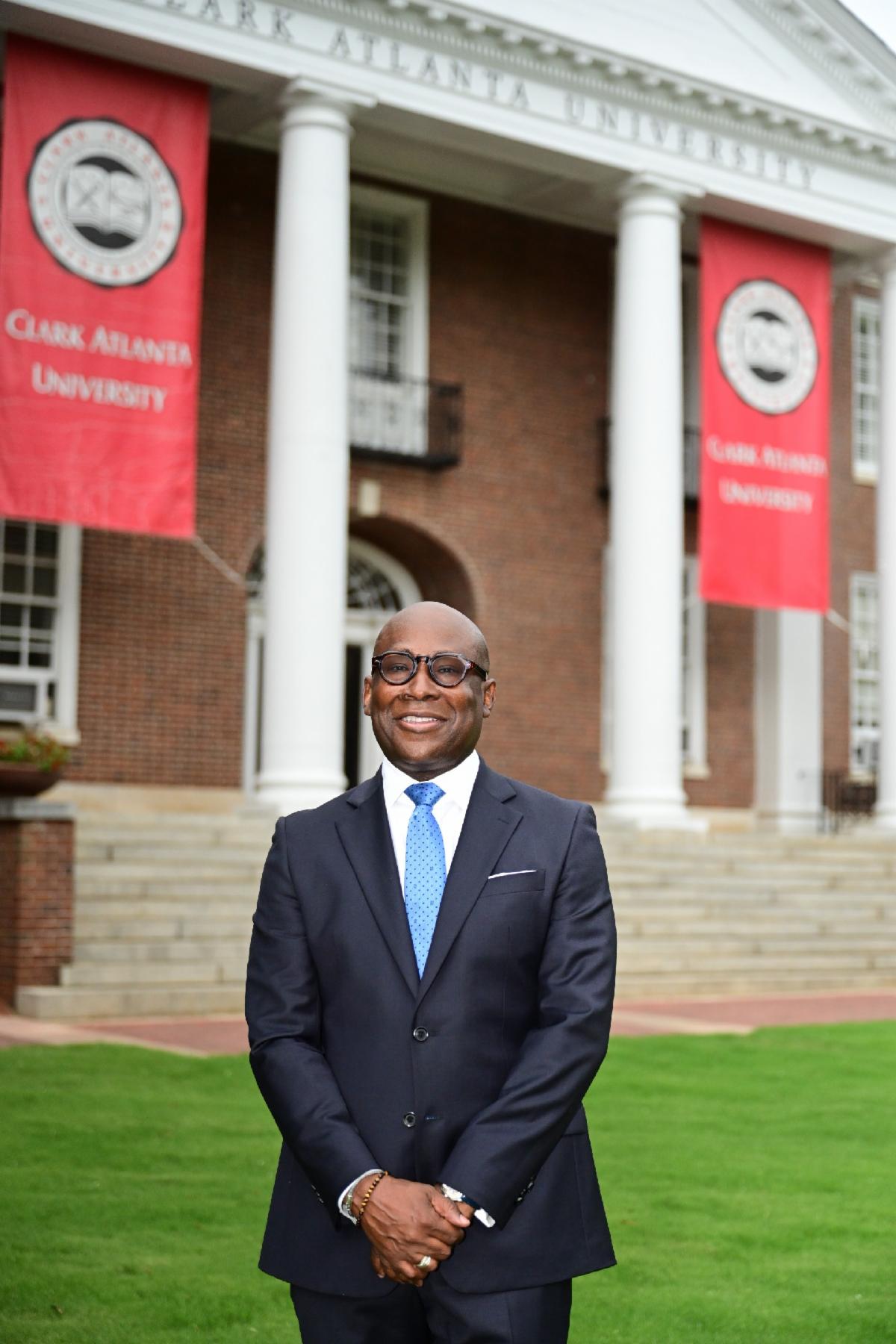
James Stotts: Passion, Purpose, and Impact Drive His Service to CAU
When James Stotts graduated from Alcorn State University with a degree in political science, he had no idea what Clark Atlanta University would come to mean to him—but when a respected professor recommended Clark Atlanta University (then Atlanta University) for graduate study, it was the beginning of an experience that would change Stotts’ life.
As he worked toward a master’s degree in public administration with a concentration in human resources management, Stotts was a graduate assistant in the institution’s Office of Human Resources, a position he kept until graduation. He made such an impression that the administration wanted to keep him. Unfortunately, they did not have a role for him, so they sent him to the Office of Financial Aid to work for a year until they could offer a permanent position in HR.
Exactly one year later, he got the call he had been waiting for and returned to HR. He also was offered the opportunity to continue his work with the Office of Financial Aid in the evening. Stotts readily agreed and began a five-year stint of working from 9-to-5 in HR and 5-to-9 in financial aid.
Reflecting, Stotts says, “That whole process gave me a sense of belonging, but also it put me on a career path.” Despite having a degree in human resources management, he recalls that it was helping students assemble a financial package that would allow them to complete their degrees that gave him purpose. “I really felt like my impact was in financial aid.”
In 1997, as Stotts was figuring out his passion, Sterling Hudson, then dean of Admissions and Records at Morehouse College, called and offered him the role of assistant director in the Office of Financial Aid and Scholarships. He accepted, and within a year he was promoted to director.
He remained there for 15 years, ultimately becoming the associate vice president of the office before leaving to do financial aid consulting.
After a year of consulting, CAU asked Stotts to consider coming home. He says, “It was a yes right away. I just felt like it was time for me to return to my alma mater to help the Clark Atlanta University students. I felt like I had come full circle, and I felt grateful to come back and be a part of the future of CAU.”
“I felt like I had come full circle, and I felt grateful to come
back and be a part of the future of CAU.”
When asked to share his expert thoughts on what students need to do to prepare financially for college, Stotts was quick to respond with four recommendations. “Find out the FAFSA priority deadlines for your institution; only borrow the amount of money you actually need; aggressively seek internal and external grants and scholarships; and come out the gate with a strong GPA, which makes it easier for Financial Aid to help you locate funds.”
Emphasizing the importance of minimizing borrowing, he explains, "By the time some students realize how debt affects their ability to buy homes, purchase cars, and support their families, it’s often too late."
That said, providing financial literacy is another one of Stott’s passions when it comes to supporting students. He notes that about 40 percent of students make use of the services provided by the Office of Financial Literacy and encourages others to make use of their expertise. “We have a coordinator,” he says. “Students can call to make an appointment or just drop in.”
Stotts recalls that when he arrived at CAU, he knew no one, but so many helped him along the way. He says, “People I didn’t know put me in a position to enjoy the work I do and be successful at it. That’s impact.”
Impact is one of Stotts’ personal values, and he is serious about rallying other alumni to make an impact where they can. “As alum, we have the opportunity to give back and pour into students. More than 70 percent of undergrad students are PELL-eligible, so we need to step up and stand in the gap. Contribute to the University scholarship fund so we can continue to graduate our students. All donations count—it could be $5, $10—just give. All of it adds up. It can buy books or meet miscellaneous needs.”
And while financial gifts are important, Stotts reminds us that service matters just as much. “If you can’t give in dollars,” he says, “you can always give in service.”
|