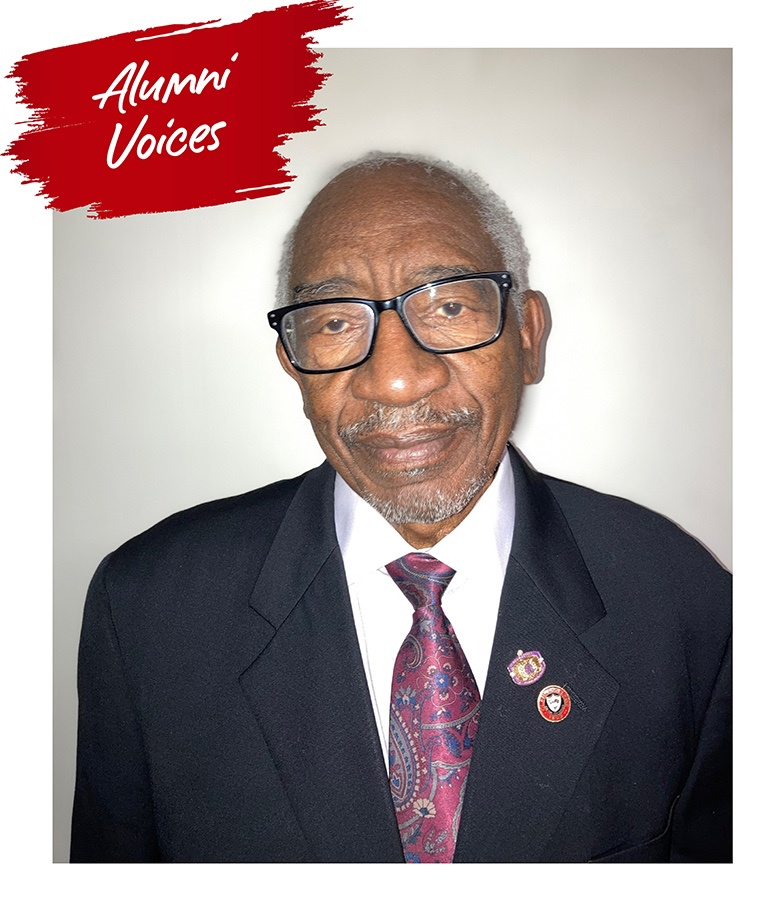
William Appling,
Clark College 1963
Retired Engineer,
Lockhead Martin
Bachelor of Science, Mathematics
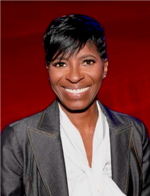
William Appling, a proud 1963 graduate of Clark College, earned his Bachelor of Science degree in Mathematics with a minor in Chemistry. In 1966, he made history as the first Black engineer at the Lockheed Corporation now Lockheed Martin. Now 83, Mr. Appling reflects on the experiences, values, and achievements that have shaped his extraordinary career.
Which historical figure inspires you the most?
My homeroom teacher in high school, Mr. John Henry James. He looked you straight in your eye and talked to you like an adult which didn’t occur a lot back in the day. And one Clark man, Ralph Long, Sr. When I was in school, he was president of the alumni association. He was a man among men. He spoke with authority and when he told you something it was like you have to go out and do it, or try. "Son, you can do this." You knew he had your best interest in mind when he was talking to you.
What did you love most about your occupation?
I was free to do my thing, to be creative. I must admit that the first job at Western Electric was a system, there was a directive. At Lockheed, as a structural design engineer, I was free to be creative, research, and study to solve a problem and come up with a solution designing or fixing an airplane. You weren’t restricted. When you felt the world was closing in, you could move around and do your own investigation.
What personal trait are you most proud of?
When I’m presented with a problem I become possessed with it. I stick with it until it’s resolved. You sit up half the night and into the next morning, and when you solve it you feel like you just conquered the world. You have to have a dogmatic personality. That’s what’s required to stick with it.
What do you value most in your friendships?
Loyalty, truthfulness, and honesty. I grew up as an only child, so I like good friends. But you have to be straightforward with me.
What has been your greatest career achievement so far?
To get a contract from the government to use computers to design aircraft using Computer Aided Design and Manufacture (CADAM). I was given that assignment in 1973. Everyone thought that was a recipe for failure. But I got the contract and proved it. That was the beginning of CADAM, and was done in conjunction with IBM. We used their equipment. This innovation laid the groundwork for modern aircraft design. I also contributed to designing major components on the L1011 Aircraft.
What does happiness look like for you?
Happiness to me is seeing my granddaughter get married, good friendship, and seeing the family structure established. She was the only girl born in the family. She reminds me, ‘I am your only granddaughter.’ She’s a chemical engineer. Her father and mother are both mechanical engineers.
What advice would you give to current Clark Atlanta University students?
You’re getting one of the best educations in the world. Don't ever doubt yourself. Put your mind and your heart in it and you can do anything.
If you could live anywhere in the world, where would it be?
Atlanta, Georgia and France. France is the dream that I've read about. Hopefully, I’ll be there later this year. It’s an interesting society. A lot of European countries have interesting societies. I always wondered why our Black entertainers end of up France. Why are they over there?
What legacy have you left behind?
I spent many days teaching middle and high school students. I spent 37 years judging science fairs for the Atlanta Public School System. Many students would call me once they learned I was a judge. Clark always had one of the top science judges because the people from Clark were multi-talented. They could judge physics or chemistry. You will be surprised how many students ended up getting free rides to Ivy League schools and got their PhD’s. A lot of good feelings go through you.
How has your time at Clark Atlanta University shaped who you are today?
Second to none. That’s what we used to say. We lived by that on campus. I never felt anyone was better than me or smarter than me. There was always competitions, and there was no way you were going to let someone come over from another school and make the A. Morehouse would come over and we could compete to see who would make the highest grade, all the math and physics guys.
|