|
YOUR SOURCE FOR CAWG AND INDUSTRY NEWS
FOR CAWG MEMBERS ONLY
| |
|
This Week's eNews Includes:
CAWG News:
- CAWG Member Update: Proposed 200% Tariffs on EU Wine
- Last Chance - Register for CAWG's 2025 Advocacy Day
- Friday, March 14 Midnight Deadline to Keep the Government Open
- Bipartisan Bill Expands Access to Disaster Relief for U.S. Growers
- Coastal Ag Worker Housing
- SprayDays is Coming
- California Agricultural Coalition Press Conference
- Regional Association Leadership Forum
- eAlert: 2024 Final Grape Crush Report
Industry News:
- No Slowing Down: Employers’ Recap of the Trump Administration’s First 50 Days
- Webinar: Resources for California Agricultural Employers
- The Messy World of Defining "Regenerative"
- AI Powered Tractors and Tech Transforming Vineyard Management
- Napa and Sonoma Vintners Test Autonomous Wildfire Suppression System
- Silicon Valley Bank: Direct-to-Consumer Wine Report
- Ciatti California Report - March 2025
Upcoming Events:
- UC Davis Viticulture & Enology - On the Road Programs
- Field to Future | Cultivated Conversations on Smoke Exposure in Winegrapes
- Sustainable Winegrowing & Certification Overview Webinar
- Ag Leadership Memorial Luncheon Honoring John Franzia
| |
|
CAWG Member Update: Proposed 200% Tariffs on EU Wine
CAWG has received numerous media inquiries regarding President Trump’s announcement of potential 200% tariffs on EU wine imports. We are in the process of formalizing a statement and will share it with our members once finalized.
Our focus remains on ensuring that policymakers understand the broader challenges facing California winegrowers, including market access (both domestic and international), the impact of bulk wine imports and the duty drawback system, and the need for long-term solutions that create a fair and competitive market for American growers.
We will keep you updated as this issue develops.
| |
|
Last Chance - Register for CAWG's 2025 Advocacy Day
March 25 | 9:00 AM Sacramento
The rain this week reminds us of the importance of saving water when Mother Nature gives it to us. AB 717 is sponsored by CAWG and streamlines the process for diversion of water from streams during heavy flows from storms. This is a priority for CAWG on Advocacy Day during our legislative visits.
CAWG’s Advocacy Day is your chance to make your voice heard in Sacramento! As a CAWG member, you have a unique opportunity to speak directly with lawmakers about the critical challenges facing the wine industry and to be part of the solution.
Growers attending Advocacy Day will play a vital role in advancing this bill by meeting with elected officials and sharing their firsthand experiences. After a productive day of advocacy, CAWG invites you to a legislative reception at our office to continue the conversation.
There is no cost to attend, and the more voices we have, the stronger our impact.
Last chance - please register by Tuesday, March 18.
Register Here.
| |
|
Friday, March 14 Midnight Deadline to Keep the Government Open
The U.S. government faces a potential shutdown due to funding disagreements in Congress. The current continuing resolution, which has kept the government operational since December 2024, is set to expire at midnight on March 14.
On Tuesday, the House of Representatives passed a six-month stopgap bill to extend funding through September 30, 2025. However, Senate Democrats have indicated they will not support this measure, citing concerns over its partisan nature and the inclusion of certain policy riders.
House Democrats are advocating for a shorter, four-week funding extension to allow more time for negotiation. This proposal aims to pressure Senate Democrats to reject the Republican bill, forcing Republicans to the negotiating table.
If an agreement is not reached and signed by President Trump by March 14, a partial government shutdown will begin at 12:01 a.m. Eastern Time on Saturday, March 15. This shutdown could impact various federal services and programs, including those affecting agriculture.
| |
|
Bipartisan Bill Expands Access to Disaster Relief for U.S. Growers
This week, Senators Alex Padilla (D-Calif.) and Thom Tillis (R-N.C.), along with Representatives Jimmy Panetta (D-Calif.-19), Kat Cammack (R-Fla.-03), Zoe Lofgren (D-Calif.-18), and Austin Scott (R-Ga.-08), announced bipartisan legislation to improve access to federal agriculture disaster programs.
The Fair Access to Agriculture Disaster Programs Act would waive the USDA’s $900,000 adjusted gross income (AGI) restriction for producers earning at least 75% of their income from farming, ensuring specialty crop growers can access critical disaster relief.
CAWG has long advocated for changes to AGI restrictions on disaster and conservation programs. The current AGI limits fail to account for the high input costs associated with high-value commodities, such as winegrapes. These restrictions have excluded many specialty crop growers from accessing critical disaster relief and conservation assistance, hindering their ability to recover from natural disasters and continue their operations.
“California and other states are facing the effects of climate change, and our farmers need access to the resources they depend on to recover,” said Senator Padilla. “This bipartisan legislation will level the playing field and support the future of specialty crop farming.”
One-pager on the bill
Full text of the bill
| |
|
Coastal Ag Worker Housing
This week, Senate Leader Mike McGuire (D-Healdsburg) appointed Healdsburg City Councilmember Ariel Kelley to the California Coastal Commission. Kelley is a land use attorney and nonprofit leader.
Councilmember Kelley said, “I’m excited to get to work and truly grateful to Pro Tem McGuire for placing his faith in me to improve coastal economies, support sensible workforce housing, and safeguard our precious shoreline.”
The issue of ag worker housing will likely be front and center for the California Coastal Commission as cities like Half Moon Bay have attempted to block affordable housing claiming requirements to build housing do not “supersede the Coastal Act.”
As policymakers and regulators strive to make California more affordable, the California Coastal Commission will be crucial in setting balanced policies. Presumably, with this in mind, Kelley said, “We must balance growth with conservation to ensure California’s coastline remains a natural treasure for future generations to enjoy.”
We can all hope that this includes making sure humans living in the coastal zone today and in future generations have safe and affordable housing.
| |
|
SprayDays is Coming
This week, the Department of Pesticide Regulation posted a preview of “SprayDays California”, the statewide pesticide application notification system.
DPR states that the online system is set to launch March 24 and will provide the public with information on specific pesticides used on farms before they happen.
Click these links to learn about how SprayDays will work:
SprayDays website
Preview Video – English
Preview Video – Spanish
| |
|
California Agricultural Coalition Press Conference
CAWG, along with other members of the California Agricultural Coalition, is hosting a press conference on Wednesday, March 19, at 12:15 PM on the west side of the Capitol (10th and N Streets).
Key priorities for the upcoming legislative year will be discussed, including:
- Agricultural Overtime Tax Credit Proposal (SB 628)
- Greenhouse Gas Reduction Funds (GGRF) to accelerate the transition to a net-zero food system
- Allocation of GGRF resources to the food and agriculture sector for leveraging external investment and market signals
The press conference will take place during California Ag Day, which is open to legislators and staff from 10:30-11:30 AM and then to the public from 11:30 AM to 1:30 PM.
| |
|
Regional Association Leadership Forum
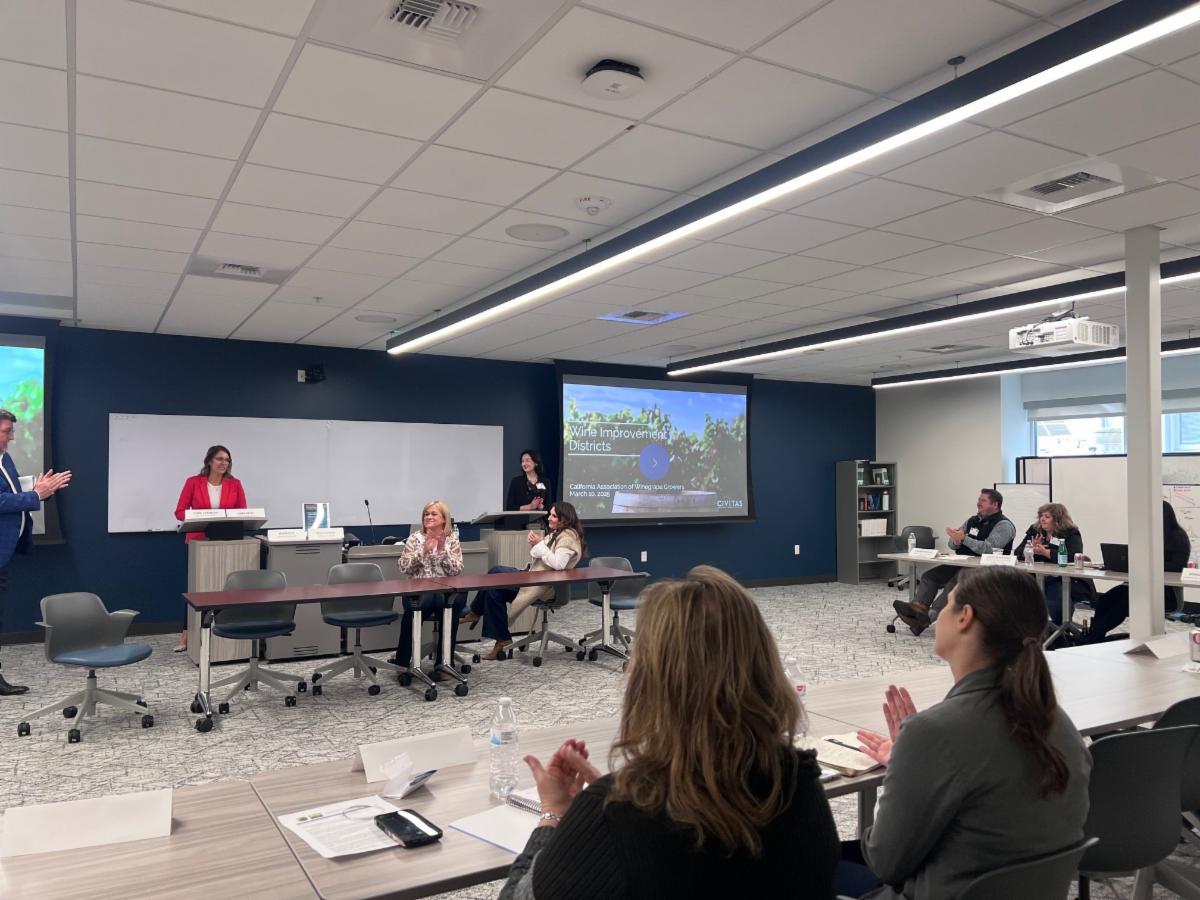
This week, CAWG partnered with the Wine Institute to host a Regional Leadership Forum, bringing together leaders from 11 regional wine associations across California—from Mendocino to Temecula. The forum featured discussions on grant funding opportunities to support education and promotion, an overview of Wine Institute’s new marketing campaign to enhance wine culture, and an in-depth presentation on wine improvement districts.
The event fostered collaboration among industry leaders, providing a platform to address challenges, explore opportunities, and showcase successful initiatives across the state.
| |
|
eAlert: 2024 Final Grape Crush Report
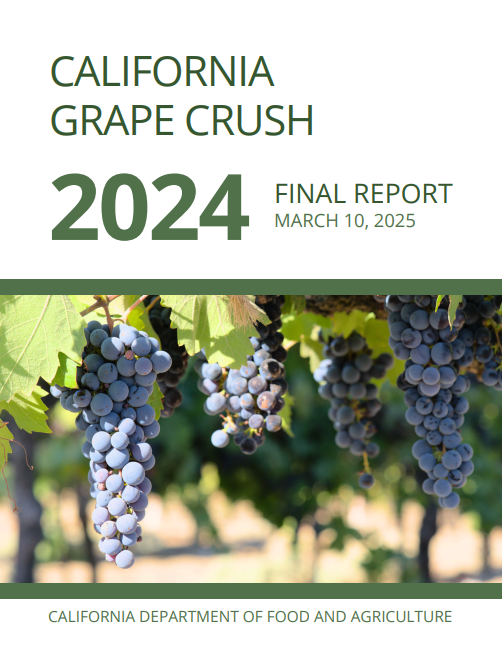
Earlier this week, CAWG issued an eAlert sharing the California Grape Crush Final Report 2024.
The 2024 crush (winegrapes only) totaled 2,884,339 tons, down from the 2024 crush of 3,684,832 tons. This is 40,693 tons higher than reported in the 2024 preliminary report in February.
Read the full eAlert here.
| |
|
No Slowing Down: Employers’ Recap of the Trump Administration’s First 50 Days
For new presidents, their first 100 days in office is typically a good checkpoint. However, the current Trump administration has moved at such a rapid speed, CAWG Associate Member Fisher Phillips has put together a cheat sheet for employers recapping President Trump's first 50 days in office.
The recap includes information on Immigration, DEI and Equal Opportunity Compliance, Affirmative Action and Federal Contract Compliance, Labor Relations, Workplace Safety, Employee Defection and Trade Secrets, Artificial Intelligence, and Education.
Read the full article here.
| |
|
Webinar: Resources for California Agricultural Employers
The California Department of Food and Agriculture, in partnership with the California Labor Commissioner’s Office and the American Business Immigration Coalition, is hosting an informative webinar on March 17 at 1:00 PM designed to help agricultural employers navigate key federal and state regulations.
The webinar will include the latest updates on I-9 audits, worksite enforcement, and worker protections to ensure compliance and support your workforce.
Webinar Registration - Zoom
| |
Quote of the Week
“I think Gavin Newsom has spent too much time running for president and not enough time really being governor of California.”
Former Defense Secretary Leon Panetta (D-Monterey).
| | |
The Messy World of Defining "Regenerative"
After two years of debate, the California Department of Food and Agriculture (CDFA) has proposed its final definition of “regenerative agriculture” for use in state grant programs. The current version states, “Regenerative agriculture,” as defined for use by State of California policies and programs, is an integrated approach to farming and ranching rooted in principles of soil health, biodiversity and ecosystem resiliency leading to improved targeted outcomes.
The definition, which prioritizes soil health, biodiversity, and ecosystem resilience, does not require organic certification—an exclusion that sparked criticism from organic advocates. The process included seven public listening sessions, 500+ comments, and input from key agricultural groups, including the California Sustainable Winegrowing Alliance.
While USDA lacks a formal standard, the term is gaining traction in marketing, with companies like Walmart and General Mills promoting regenerative practices.CDFA’s definition awaits final approval from Secretary Karen Ross.
Read more.
| |
|
AI Powered Tractors and Tech Transforming Vineyard Management
Growers throughout California are embracing artificial intelligence (AI) from tractors to irrigation to improve efficiency, sustainability, and decision-making in their operations. By using AI sensors to map vineyards, the autonomous tractor will soon operate independently, optimizing fuel use and reducing emissions. Experts see AI as a way to enhance—not replace—labor, providing farmers with better data on water use, fertilizer application, and crop health.
Major agricultural companies are integrating AI for precision farming, while irrigation automation helps growers detect leaks and conserve water. Despite challenges, AI is proving valuable in tracking vineyard health, predicting yields, and detecting plant diseases early, allowing farmers to make timely decisions and improve productivity.
“Our job, viticulture, is to adjust our operations to the climatic conditions we’re dealt,” Klick said. “I can see AI helping us with finite conditions,” said Tyler Klick, a CAWG Member and partner at Redwood Empire Vineyard Management.
Read more.
| |
|
Napa and Sonoma Vintners Test Autonomous Wildfire Suppression System
Napa Valley and Sonoma County vintners are collaborating with Israeli company FireDome to develop an autonomous fire defense system designed to protect vineyards from wildfires. The system, inspired by Israel’s missile defense technology, will use AI and cameras to detect flames and airborne embers, launching environmentally friendly fire-retardant capsules to suppress fires.
Set to roll out next year, the system is being designed with input from vintners to ensure it fits vineyard operations. The company has secured $3 million in funding following an initial $1.5 million R&D grant from the Israeli Innovation Authority.
Read more.
| |
|
Silicon Valley Bank: Direct-to-Consumer Wine Report
Silicon Valley Bank’s annual direct-to-consumer wine survey is now open. This survey is used each year to gather and provide metrics, insights, and trends for the wine industry. All respondents who fully complete the survey will receive gratis survey results, including anonymized detailed responses, summary analysis, and more than 50 charts, which can be used to benchmark performance.
Complete the survey here.
| |
|
Ciatti California Report - March 2025
Ciatti Company Wine Brokers released their March Report detailing California's 2024 Grape Crush Report, along with their assessment of bulk wine and grape markets.
"Bulk wine and grape activity levels since the turn of the year have been noticeably improved versus the final months of 2024, although much of the activity has consisted of inquiries rather than transactions. Publication in February of the CDFA’s preliminary 2024 harvest figure of 2.84 million tons - upped slightly to 2.88 million tons in the final report published March 10, but still the smallest in 20 years – failed to generate additional market momentum."
Read more for details of what wines and grapes are in demand, where, and at what pricing.
| |
Upcoming Events and Trainings | |
UC Davis Viticulture & Enology - On the Road Programs
The UC Davis Viticulture & Enology Department is hosting On The Road programs in Stanislaus, San Joaquin, and Sonoma Counties. The On The Road programs provide an opportunity for UC Davis to communicate and present relevant topics with the California grape and wine industries by bringing faculty to different regions of California.
When and Where:
| |
|
Field to Future | Cultivated Conversations on Smoke Exposure in Winegrapes
The Center for Land-Based Learning is hosting a virtual session on March 24 at 1:00pm focused on smoke exposure in wine grapes and its impact on vineyards and wine quality. CAWG President Natalie Collins will participate in the presentation, alongside researcher Elizabeth Tomasino of Oregon State University.
When and Where:
- March 24, 2025 at 1:00 PM | Zoom
Learn more and register here.
| |
|
Sustainable Winegrowing & Certification Overview Webinar
Participate in this free webinar to learn about the California Sustainable Winegrowing Program (SWP), how to complete a Self-Assessment using the online portal, and the steps required to become Certified California Sustainable Winegrowing (CCSW). Other helpful tools and resources will also be covered.
| |
|
Ag Leadership Memorial Luncheon Honoring John Franzia
The California Ag Leadership Program, the Franzia family, and Zinc House Farm are hosting the inaugural Ag Leadership Region 4 Memorial Luncheon in honor of the esteemed late alum John Franzia (Class 10). This special celebration of life and legacy promises to be an afternoon of meaningful connection, shared purpose, and lasting impact.
- April 3, 2025 at 11:00 AM | Zinc House Farm, Escalon
Learn more and purchase tickets here.
| | | | |