|
YOUR SOURCE FOR CAWG AND INDUSTRY NEWS
FOR CAWG MEMBERS ONLY
| |
|
This Week's eNews Includes:
CAWG News:
- Remembering Dr. Anita Oberholster
- Opportunities During Unified - Early Registration Ends on January 21
- Resources for Employers in the Wake of Threatened Immigration Raids
- What the LA Fires Mean Statewide
- State Budget Update
- California Representation on the House Agriculture Committee for the 119th Congress
- Air Board Eases Rules
- Webinar Recording: Get a Fast ROI with the Right Palletizing Deployment Method
Industry News:
- Fresno-Area Farm Groups Question Recent Immigration Raids
- New Scholarship Resource for Wine Industry Students and Professionals
- Grower Survey: How Can We Better Meet Your Needs?
- USDA Secretary Nominee Brooke Rollins' Confirmation Hearing Delayed
- Employer FAQs for the California Wildfires: Your Role in Protecting Workers’ Health, Safety, and Workplace Rights
- Webinar Recording: The Importance of Clean Financials for Winegrape Growers and Wineries Webinar
- Ciatti California Market Report, January 2025
Upcoming Events:
- Orchard & Vineyard Redevelopment Consideration: Avoiding Costly Mistakes
- 2025 and Onward Annual Employment Law Briefing
- CAWG Awards of Excellence Reception
- Exploring Different Aspects of Vine Health Seminar
REMINDER: CAWG Membership Renewals - RENEW TODAY!
Don't forget to renew your CAWG membership. All first invoices were sent in November, with second invoices going out this week!
Need a copy of your invoice? Please contact Mindy DeRohan.
| |
|
Remembering Dr. Anita Oberholster
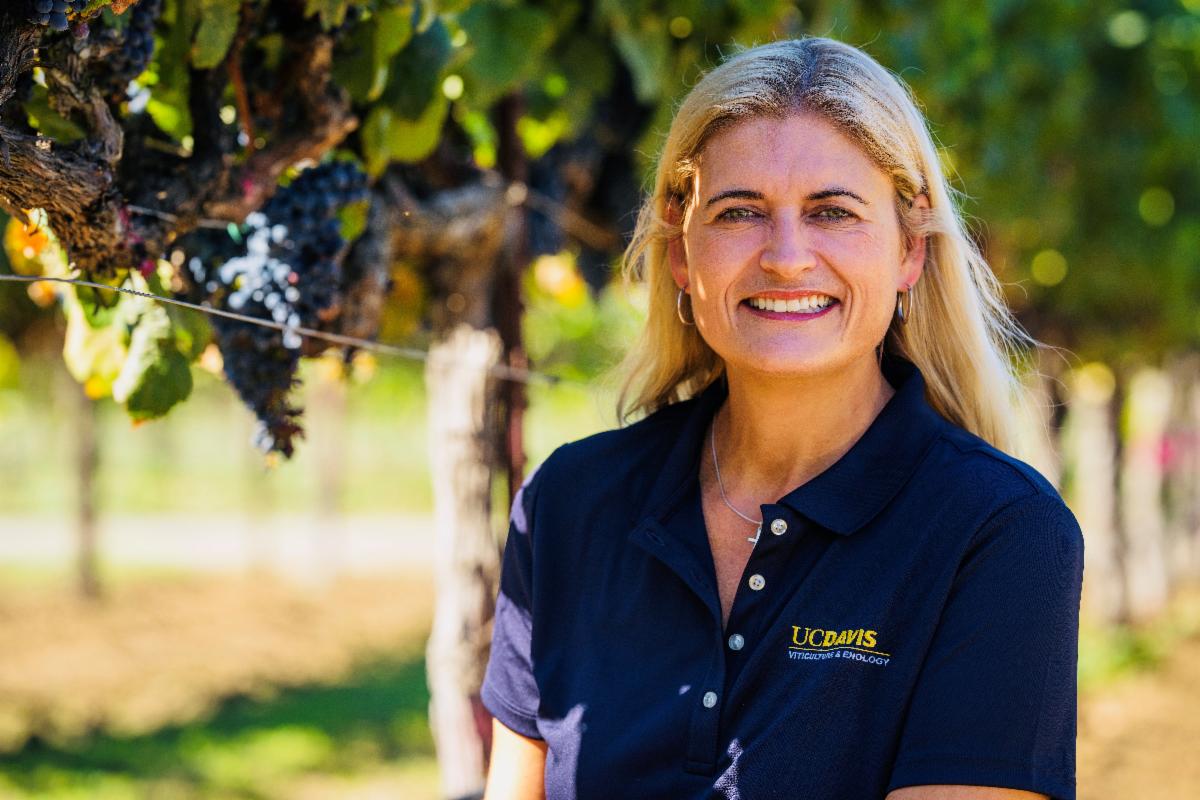
CAWG joins the many who are mourning the loss of Dr. Anita Oberholster, Professor of Cooperative Extension in Enology in the UC Davis Department of Viticulture and Enology, after a long and courageous battle with cancer.
Anita was no stranger to CAWG and was named our 2022 Leader of the Year for her groundbreaking research on smoke exposure and her tireless efforts to support winegrape growers. She was a dedicated member of the Unified Wine and Grape Symposium LLC Managing Committee and was involved in the West Coast Smoke Exposure Task Force.
In addition to CAWG's award, Anita was recognized by many organizations throughout her remarkable career including Wine Business Monthly listed her as one of the top 50 most influential people in the US wine industry twice.
Anita's passing leaves an immeasurable void in the entire wine industry. Above all, our thoughts are with Anita’s husband, Connie, their two children, and the UC Davis Community during this difficult time.
The UC Davis Viticulture Department is planning a Celebration of Life for Anita on May 12th from 2 – 5 PM and will announce further details as they are available. If you have memories, stories, photos, or words of condolences to share, you are invited to do so via this website. Your words and photos will be collected and shared with Anita’s family and colleagues within the UC Davis and ANR communities.
View Anita's Obituary.
| |
|
Opportunities During Unified - Early Registration Ends on January 21
Early registration for the Unified Wine and Grape Symposium closes this coming Tuesday, January 21 - Register here!
CAWG members receive up to a $200 discount on registration as a benefit of their membership. Codes have been emailed to all CAWG members. If you didn't receive your membership code, please contact the CAWG office at 916-379-8995 or email Mindy@cawg.org.
We hope you will join CAWG for the following events during Unified:
-
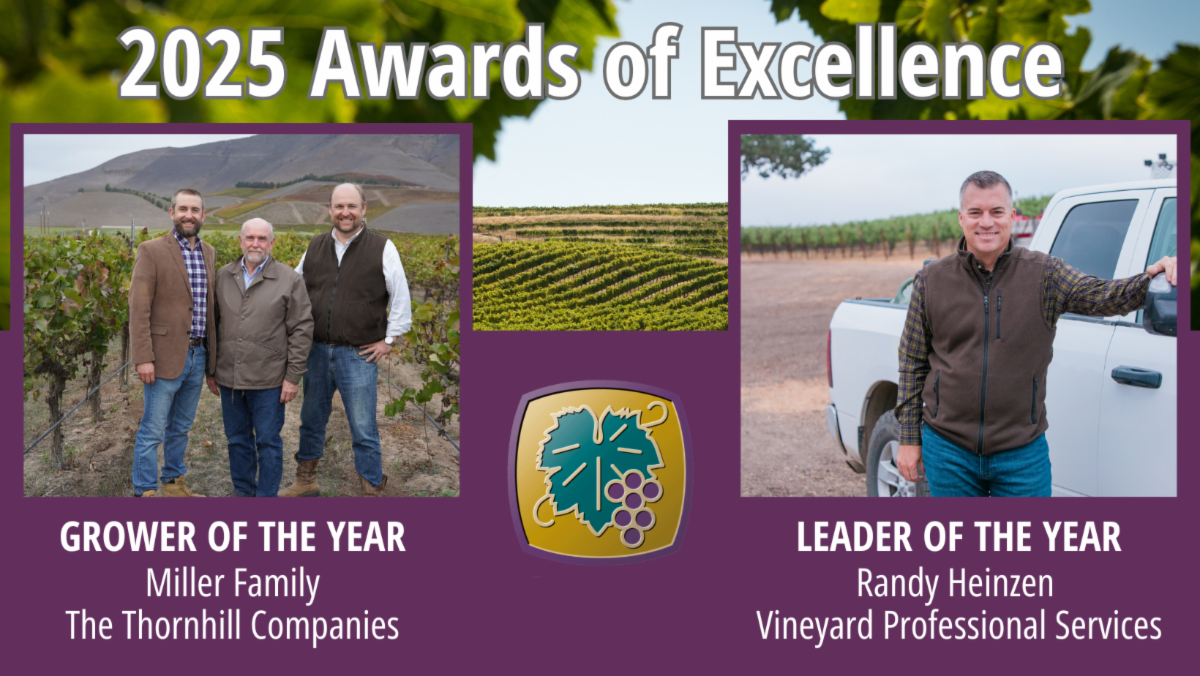
CAWG Awards of Excellence at the Sheraton - January 28 at 6:00 PM: CAWG announced the selection of the Miller Family of The Thornhill Companies as the 2025 Grower of the Year and Randy Heinzen as the 2025 Leader of the Year. To honor both, CAWG will be hosting an Awards of Excellence Reception immediately following the Unified Wine and Grape Symposium's Welcome Reception at the Sheraton Grand Hotel in Sacramento. There is no cost associated with this event, we invite all CAWG members to join. Sponsorship opportunities are available.
-
CAWG PAC Live Music at the Torch Club - January 29 at 8:00 p.m: Join the CAWG PAC for a rockin' good time. Live music will be on tap by Remedy 7, featuring our very own Michael Miiller (CAWG's Director of Government Relations) on the drums. Learn more here or contact Michael Miiller.
-
A full list of CAWG Opportunities during Unified is available here.
Don't miss the coveted State of Industry on Wednesday, January 29. The Unified Program Development Committee has put together an impressive lineup of wine industry experts including:
- Jeff Bitter, Allied Grape Growers
- Glenn Proctor, The Ciatti Company
- Stephen Rannekleiv, Rabobank
- Danny Brager, Brager Beverage Alcohol Consulting
Read more about what is to come in this article by Mike Veseth, the moderator of the State of the Industry session.
| |
|
What the LA Fires Mean Statewide
The catastrophic fires in Los Angeles have created unbelievable and tragic loss of life and property. The financial loss is estimated to be more than $150 billion. And that cost will be borne by residents all over California. This is in large part because insurance costs around the state are almost certain to rise and federal funding for rebuilding infrastructure is uncertain at best – meaning, the state government (aka taxpayers) could need to pick up costs that are normally covered by the federal government.
Insurance:
For decades, the FAIR Plan was intended to be the insurer of last resort. But in recent years, the Fair Plan is the only option available, and the Plan’s total exposure is currently at $458 billion, reflecting a 61.3% increase since September 2023. If the FAIR Plan runs out of money, as predicted to cover the costs of claims, the Plan will need to turn to every insurance company offering property insurance in California.
This includes companies that have walked away but still have even a handful of covered properties in California. All insurance companies offering any coverage whatsoever in California would need to pass on those costs (in the billions) by increasing property insurance premiums all over California, regardless of risks for that property. If that happens, we should expect more and more insurance companies to leave California as soon as possible.
Federal Funding:
President-Elect Trump and several members of Congress have indicated that any federal funding for California will have strings attached, or California will receive no funding at all. Keep in mind that whenever there is a disaster, federal funding often covers as much as 75% of the costs of rebuilding the infrastructure. This would be in the billions if federal funding is pulled from responding to this disaster.
Finger Pointing:
President-Elect Trump, several members of Congress, and the former candidate for Mayor of Los Angeles have all claimed that a lack of forestry management was in large part responsible for the fires. This was easily proven false.
Governor Newsom said he would not engage in a political back and forth with Trump while the fires were still burning, but he quickly said those accusations were false. He then diverted attention by demanding an investigation as to why the fire hydrants ran dry. Which was pretty much dismissed as a distraction by civil engineers who easily explained what happened through a basic discussion of gravity and the movement of water.
The Newsom campaign is using a campaign website to post “California Fire Facts.” Which is basically what he describes as lies and facts about the fire. But, if members of the public fill in the blanks to receive updates from Newsom, they are asked to “donate to Governor Newsom’s ballot measure committee.”
Conclusion:
As with any crisis, most politicos agree that Democrats and Republicans need to put aside differences and come together in response to the disaster as that disaster affects the entire state regardless of politics.
| |
|
State Budget Update
Reporting on the State Budget this early is a bit like writing a movie review after watching only the first 10 minutes. This is true this year more than ever due to the LA fires and all the unknown (but substantial) cost issues around that. With that said, below are some budget highlights that may be of interest to growers:
- CDFA has identified and allocated reductions of $20.1 million. Those savings were in part from the elimination of 70 vacant positions.
- With the approval of Proposition 4 by the voters in November, the budget includes the following moneys from that $10 billion Climate Bond.
- $231.5 million for the Dam Safety & Climate Resilience Local Assistance Program
- $200 million for the Regional Farm Equipment Sharing Program
- $173.5 million for groundwater recharge and storage
- $37.6 million for the State Water Efficiency and Enhancement Program (SWEEP)
- $35.9 million for the Healthy Soils Program
- $19.9 million for fighting invasive species
The governor and legislature are also looking to extend the cap‑and‑trade program beyond 2030 to achieve carbon neutrality. As part of that discussion, CAWG and other ag groups are asking that expenditures from the Greenhouse Gas Reduction Fund include funding for alternatives to open ag burn in the Central Valley.
Budget Timeline:
The proposed budget was released last Friday. Legislative hearings will be held over the next few months with the legislature expected to approve a “final budget” by June 15 for it to take effect July 1. From July through September, the governor and legislature will continue working with the budget and will likely make substantial changes along the way. Additionally, there will likely be several budget trailer bills that will propose substantial changes in public policy that arguably are not related to the budget.
Broadly Speaking:
Dan Walters wrote a piece for CalMatters explaining budget miscues over the last three years.
The total proposed budget is at $322 billion, which is projected to be the second-largest state spending plan ever. This includes a plan to pull $7.1 billion from the state’s main reserve account — even though revenues are up by $16.5 billion more than planned across a three-year budget window.
Senator Roger Niello, the top Republican on the Senate Budget Committee said, “We’re talking about increased revenues and a relatively strong economy, and yet we have to pull from reserves, which doesn’t make sense to a lot of people. And it also kind of doesn’t make sense that you’re talking about actually having a surplus when you had to pull from the reserves to create that surplus.”
| |
|
California Representation on the House Agriculture Committee for the 119th Congress
This week, the House Democratic Caucus has officially approved the Democratic Members who will serve on the House Agriculture Committee for the 119th Congress. Among them, two California Representatives have been named: Congressman Jim Costa and Congressman Adam Gray.
Ranking Member Angie Craig, the top Democrat on the Committee, expressed her enthusiasm for the team's collective agricultural expertise, stating, “The agricultural experience of our Members ensures the House Agriculture Committee will remain focused on improving the lives of American farmers and the families they feed.”
Congressman Jim Costa, a seasoned voice for California agriculture, has a longstanding record of championing issues critical to farmers and ranchers. Congressman Adam Gray, serving his first term on the Committee, represents California’s 13th District, home to a significant portion of the Central Valley’s agricultural heartland. Both will play vital roles in shaping policies that directly impact California’s winegrape growers and the broader agricultural industry.
Two open seats remain on the Committee for Democrats, and additional appointments are expected in the coming weeks.
| |
Quote of the Week
“We all speak so strongly about sustainability and regenerative farming, and one of the strongest caveats to it is the people, and it’s not just the people that own it … it’s the employees,” explains Karin Wärnelius-Miller, co-owner of Garden Creek Ranch Vineyards Winery in Sonoma, California. “It doesn’t matter where you are, whether you’re in the office or in the winery or out in the field, … you have to take care of your employees.”
Why worker welfare is critical to truly “sustainable” wine production | Salon.com
| | |
|
Air Board Eases Rules
Diesel Truck Ban Repealed
The California Air Resources Board decided this week to abandon its regulations phasing out diesel trucks. California’s Advanced Clean Fleet Rule, passed in 2022, was one of the most far-reaching and controversial rules California has ever enacted.
The rule would have ended the sale of new diesel trucks by 2036 and required large trucking companies to convert their fleets of medium- and heavy-duty vehicles to electric or hydrogen models by 2042. Trucking companies had already sued the state to stop the rule, saying it is not feasible to require zero-emission trucks and that the rule would destroy the state’s economy.
Restrictions on Generators Suspended
In other Air Board news, the board also announced this week that it was easing the requirements for portable generators to help meet the surge in demand from the Southern California wildfires.
Through June 30, 2025, generators that meet U.S. EPA standards can be sold in California, temporarily suspending the need to meet California emissions standards.
| |
|
Webinar Recording: Get a Fast ROI with the Right Palletizing Deployment Method
Today, CAWG and Robotiq partnered to host a webinar focused on exploring how Robotiq’s solutions can help wineries of all sizes tackle production challenges and improve operational efficiency.
Key topics included:
- Common Pitfalls to Avoid in Winery Automation: Learn about the frequent mistakes wineries make when choosing and implementing a palletizing system, and how to sidestep them.
- ROI and Cost Considerations for Wineries: Discover how to compare initial investments, operating costs, and scalability of palletizing systems tailored to your winery's needs.
- Step-by-Step Guide to Successful Deployment: Get practical tools to help you design, integrate, and operate a palletizing system that improves efficiency and profitability in your winery.
The full webinar recording is available here.
| |
|
Fresno-Area Farm Groups Question Recent Immigration Raids
Recent immigration enforcement actions by U.S. Customs and Border Protection in California's Central Valley have caused significant disruptions, especially among agricultural workers. Reports of mass detainments in Kern County led to widespread workforce absences, with some farms losing up to 85% of their crews, according to Casey Creamer, president of California Citrus Mutual.
The operation, officially targeting individuals with criminal charges, has drawn criticism from farmers and immigrant advocates who say its impact extended beyond its stated scope. Reports indicate farmworkers were detained at gas stations and supermarkets, creating fear and uncertainty across the region.
The incident highlights broader concerns about immigration enforcement and its impact on farm labor. Farmers worry about the lack of clarity from the Border Patrol and the potential for future disruptions. While workforce attendance has improved this week, fears remain high among farmworkers and their families. Advocates stress the importance of balancing enforcement with policies that protect human rights and address the agricultural sector's labor needs.
Read more here.
| |
|
New Scholarship Resource for Wine Industry Students and Professionals
Wine industry workers and their families now have an easier way to explore scholarship opportunities, thanks to a new webpage launched by WineBusiness’ winejobs.com.
The dedicated webpage features over 15 scholarships with direct links to applications, helping individuals achieve their educational and professional goals. Scholarships are organized by categories, allowing users to easily find opportunities tailored for high school seniors, college students, or seasonal harvest and wine industry workers.
The page will be regularly updated to include additional scholarships as they become available.
| |
The California winegrape crop insurance deadline is fast approaching. You must sign-up for coverage by January 31 for this crop year. | |
|
Grower Survey: How Can We Better Meet Your Needs?
The Pierce's Disease Control Program (PDCP) wants to hear directly from winegrape growers about the impact of pests and diseases, so we can better meet your needs. Take the survey at https://www.research.net/r/CAgrapegrowers.
For 25 years, the Pierce's Disease Control Program has helped protect vineyards through its statewide survey and detection programs, rapid response efforts, outreach, and research on nine winegrape pests and diseases. Help shape the future of the program by sharing your perspectives. The survey findings will provide a data-driven foundation for more informed decision-making and strategic planning for the PDCP and your grower-led PD/GWSS Board.
| |
|
USDA Secretary Nominee Brooke Rollins' Confirmation Hearing Delayed
The confirmation hearing for USDA Secretary nominee Brooke Rollins, initially scheduled for January 15, faces delays due to pending FBI background checks and ethics paperwork. Rollins is among several nominees experiencing similar setbacks. Senate Agriculture Committee Chairman John Boozman (R-AR) confirmed that his team is working to finalize the hearing notice in accordance with panel rules. Despite the delay, Rollins is anticipated to receive strong bipartisan support and a swift confirmation once the hearing proceeds.
Read more.
| |
|
Employer FAQs for the California Wildfires: Your Role in Protecting Workers’ Health, Safety, and Workplace Rights
CAWG Associate Member Fisher Phillips LLP released a detailed set of Frequently Asked Questions addressing the workplace-related issues facing employers in the wake of the California fires. In addition to legal obligations you need to consider, this Insight also addresses the practical questions that will most often arise during and in the aftermath of the natural disaster.
Read more.
| |
|
The Importance of Clean Financials for Winegrape Growers and Wineries Webinar
Earlier this week, the Lodi District Grape Growers Association and MGO CPA hosted a webinar on the importance of clean financials for winegrape growers and wineries.
Topics included:
- The Importance of Clean Financials: Discover how regular reconciliations and strong financial hygiene practices enhance transparency, reduce errors, and position wineries for growth and audits.
- Financial Best Practices: Learn how monthly inventory checks, cash flow reviews, and approval workflows support operational health and compliance.
- Financial Statement Readiness: Understand how professional and organized financial statements build investor trust, uncover potential issues early, and prepare businesses for expansion.
- Mastering Inventory Management: Explore best practices for inventory tracking, valuation methods, and leveraging automation to reduce losses and improve accuracy.
- Tax Compliance and Implications: Gain insights on how clean financial records simplify tax filings, minimize liabilities, and ensure compliance with excise, property, and sales tax regulations.
Watch the webinar recording here.
| |
|
Ciatti California Market Report, January 2025
Ciatti Company Wine Brokers released their January Report detailing their assessment of California's bulk wine and grape markets.
"For California’s wine industry, the year 2024 was defined by a painful but necessary right-sizing as the industry evolves into one better suited to delivering to the US market something like 350 million 9-liter cases of wine per year instead of the 400 million cases of the past. Rationalization of businesses and vineyard area took greater hold – there was a marked rise in wine-related property on the real-estate market and a shortage of vineyard removal services – while the bulk wine and grape markets were filled with opportunities for buyers seeking high qualities at pricing lower than in previous years."
| |
Upcoming Events and Trainings | |
|
Orchard & Vineyard Redevelopment Consideration: Avoiding Costly Mistakes
Hosted by the San Joaquin County Resource Conservation District, this seminar will cover the following topics:
- Regulations & Funds: San Joaquin Valley Air Pollution Control District
- Abandoned Orchard & Vineyard Pest Concerns and Burn Letters for Diseased Material
- “Whole orchard & vineyard recycling in the San Joaquin Valley, rebalancing the C:N ratio, fertility management and disease considerations in next generation orchards after replanting.”
- Incorporating Soil Building Conservation Practices: Using Cover Crops as Tools
- Orchard/Vineyard Removal and Air Curtain Burning Vendors
- Funding: Inflation Reduction Act – Natural Resources Conservation Service
- Funding: Healthy Soils Program - California Department of Food and Agriculture
- Farmer Panel
When and Where:
- Friday, January 17, 12:00 PM Robert Cabral Agricultural Center, 2101 E. Earhart Avenue, Stockton
Download the event flyer for additional details and registration information.
| |
|
2025 and Onward Annual Employment Law Briefing
Join CAWG Associate Member Downey Brand for their Annual Employment Law Luncheon. Attorneys from their employment law group will provide a briefing on significant legal developments in California and federal employment law.
Topics discussed will include:
- The mid-2024 PAGA “reform,” including changes to the penalty structure and curing violations
- Modifications to leave related to victims of crime
- Changes impacting discrimination and harassment laws, including intersectionality of protected classes, local government enforcement, and Supreme Court analysis of discriminatory job transfers
- Wage and hour updates, including cases defining “hours worked” and “knowing and intentional” wage statement violations
When and Where:
-
Sacramento Seminar: January 22, 11:30 AM - 1:00 PM, The Sequoia at the Cannery, 1601 Alhambra Blvd, Sacramento, CA 95816
-
Stockton Seminar: January 23, 11:30 AM - 1:00 PM, University Plaza Waterfront Hotel, 110 West Fremont Street, Stockton, CA 95202
Register Here
| |
|
CAWG Awards of Excellence Reception
Join CAWG for the Awards of Excellence celebration following the Welcome Reception at the Unified Wine and Grape Symposium.
CAWG will honor the Miller Family, The Thornhill Companies as the 2025 Grower of the Year, and Randy Heinzen, Vineyard Professional Services as the 2025 Leader of the Year.
When and Where:
- Tuesday, January 28, 2025, 6:00 PM, Sheraton Grand Sacramento
Registration for the Unified Wine and Grape Symposium is not required and the Awards of Excellence Reception is free to attend with no RSVP needed. Sponsorship opportunities are available (please contact Jenny Devine for more information)!
| |
|
Exploring Different Aspects of Vine Health Seminar
The Department of Viticulture and Enology at UC Davis is hosting the Exploring Different Aspects of Vine Health seminar at the UC Davis Conference Center.
Topics include:
- Advancing the development of powdery mildew and Pierce’s Disease-resistant cultivars
- Studying wild grapes to envision the next generation of grapevine cultivars
- Interactive effects of trunk disease and water stress on grapevine physiology
- Spotted Lanternfly: The need to remain vigilant
- Achieving sustainability and quality in a warming world
- How to protect pruning wounds from grapevine trunk diseases
When and Where:
- February 19, 9 AM - 3:30 PM, UC Davis Conference Center, 550 Alumni Lane, Davis, CA 95616
The cost is $175 until January 21.
Learn more and register here.
| | | | |