|
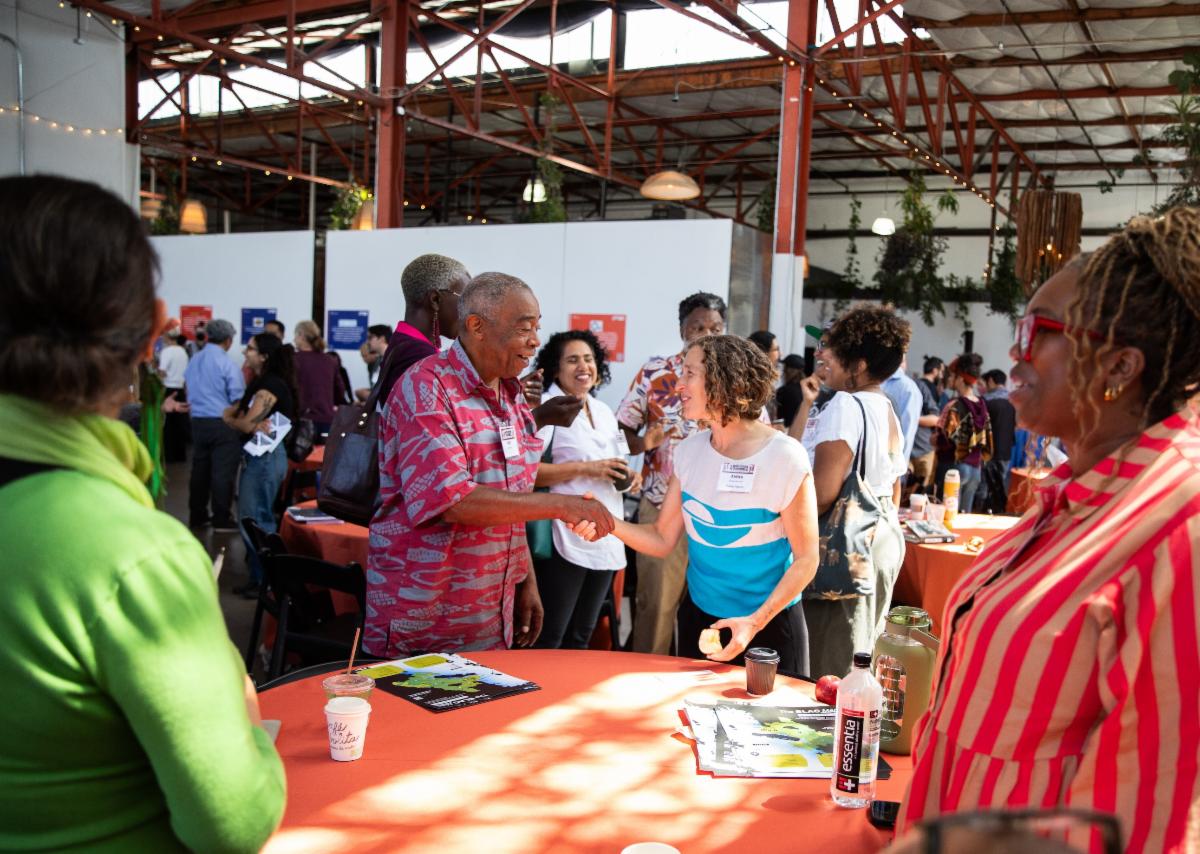
When people walked into A Better Future Is Possible on July 30, they didn't enter a typical conference.
There were no panels. There were no speakers delivering polished presentations from a stage. Instead, there was an invitation: to be curious, to connect, to share ideas, and to imagine what might become possible if artists, organizers, field-builders, students, funders, and community leaders stopped working in parallel and started building together. Expertise was everywhere.
The room felt electric.
The day began with a powerful challenge from CCI President and CEO Angie Kim, who invited participants to see themselves as world-builders. She encouraged attendees to make new connections, reaffirm old ones, and seek out the people whose work complemented their own. Her message was both simple and profound: a better future isn't something we wait for. It's something we actively create.
That invitation shaped the day.
Conversations spilled beyond formal sessions and into meals, hallways, and the interactive Solidarity Fair, which featured over 40 presenters implementing world-building models across the United States. Old friendships were renewed. New collaborations began. Participants moved between discussions about housing, healthcare, labor, education, ownership, agriculture, finance, and energy, discovering that many of the challenges they were trying to solve were deeply interconnected.
Throughout the Convening, participants weren't simply exchanging information. They were testing ideas, sharing models, exploring possibilities, and building relationships across disciplines and geographies.
The feedback we received confirmed what many of us felt throughout the day: the most meaningful outcome of the Convening was connection.
Participants described the gathering as inspiring, intentional, expansive, and genuinely generative. They spoke about discovering organizations they hadn't known existed, finding people who understood their work, and recognizing that they weren't carrying these challenges alone.
One participant reflected, "Treating the audience as collaborators rather than participants builds better conversations."
Participants left with plans to share what they learned, pursue new collaborations, seek additional resources, and continue building relationships beyond the event itself.
Perhaps the strongest indication of the day's success was the most common suggestion for future convenings: more time.
More time to connect.
More time to collaborate.
More time to continue conversations that had only just begun.
A Better Future Is Possible was designed to create space for imagination, experimentation, and relationship-building. But it also served as a reminder that alternative futures are already being built in communities across the country.
The Convening may have ended on July 30, but the work—and the relationships that will sustain it—are just beginning.
As Angie reminded us, believing in a better future isn't enough.
We are the ones who have to make it real.
|