CCPHC Quarterly Newsletter - Issue 8 | |
Community Assessment for Public Health Emergency Response (CASPER) Trainings
| | In partnership with CDPH’s CASPER team, CCPHC successfully hosted two trainings in Stockton and Tulare counties for local health department staff and regional partners to learn about the CASPER method and identify opportunities within their counties to deploy a CASPER. Did you miss the trainings, and want to learn more about CASPER? Reach out to ccphc@mail.fresnostate.edu. |
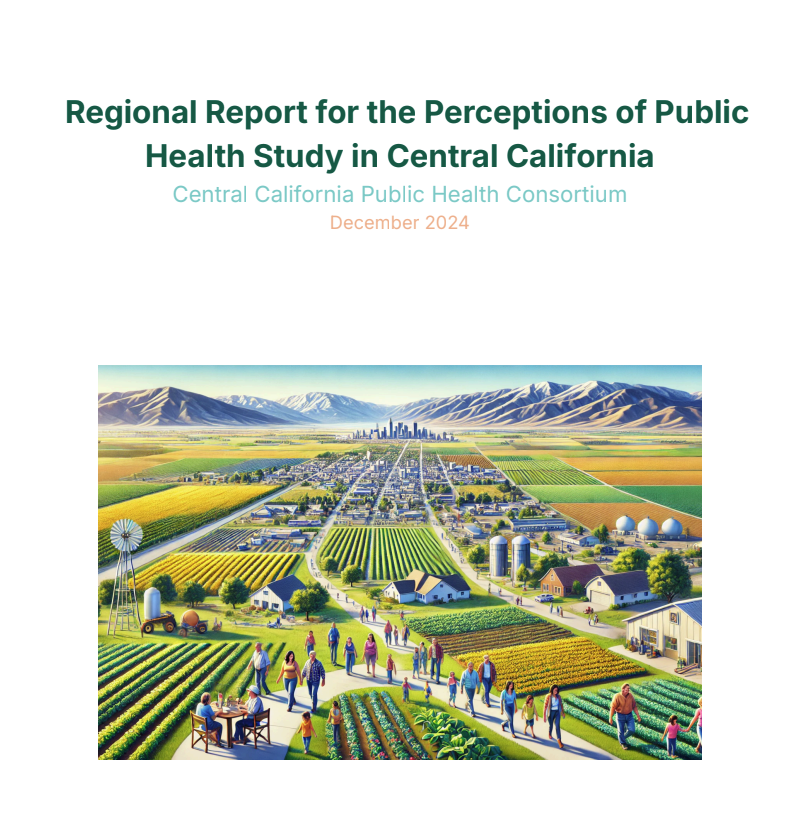
| Perceptions of Public Health Research Project | | Our Perceptions of Public Health Research Project has been completed! This research was conducted in order to ascertain community members’ levels of familiarity and attitudes towards local health departments throughout our region. | |
-
Please review our Perceptions of Public Health Regional Report for an overview of this research project as a whole, including methodology, regional findings, implications, and next steps.
-
This toolkit provides further information on how the study was conducted, finding implementation recommendations, and best practices for replication and dissemination.
-
To hear more about the study’s process, findings, and future opportunities for research in this topic, please review the recording of our webinar, hosted on January 29th.
-
Questions? Reach out to Amber.
|
| CCPHC’s LHD 101 Curriculum explores careers in public health, pathways for pursuing public health careers, and interviews with current public health staff to introduce college and high school level students to opportunities in public health. Please view a trailer for the curriculum here. We are excited to announce that we are planning to pilot this curriculum in early-mid March. Feedback from pilot groups will be integrated to improve the curriculum. We have plans for a broader-scale dissemination in the fall semester. Please reach out to ccphc@mail.fresnostate.edu with any questions. |
| Regional Health Equity Analysis Version 2 | Our second Regional Health Equity Analysis is underway with the launch of our Advisory Board Committee and the identification of data sources and indicators. We look forward to sharing more information about this report soon. Please reach out to Amber with any questions. | | Maternal Morbidity One Pager & Literature Review | | | | |
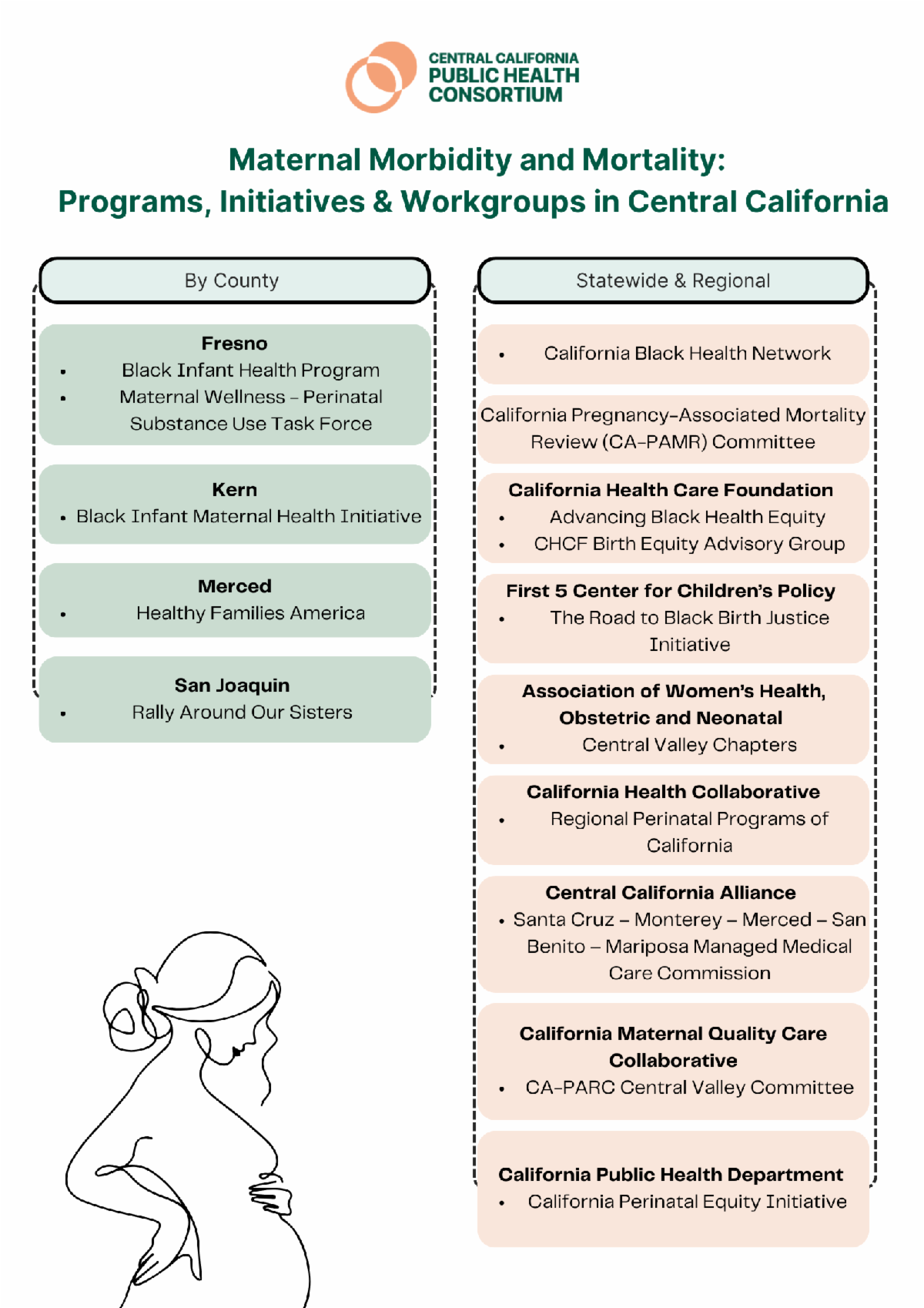
CCPHC is compiling available data for Maternal Morbidity in our region and creating a landscape of current efforts that are being uplifted in our region. Find out what we have learned so far in our Lit Review and One-Pager. If you are involved in this work and do not see your organization listed and/or are interested in partnering with us in this research, please contact Yesenia.
| | We are thrilled to have Noemi Franco joining our team as a California Consortium for Public Health Informatics Technology (CCPHIT) intern. She will be working on analyzing traffic fatality data and developing a report and recommendations from the findings. In addition, she will be helping our research team gather and analyze data for the RHEA. | |
Quarterly Central California CBOs & LHDs Regional Collaboration Call
| We hosted the first CBO/LHD Quarterly Call of 2025 on March 7th. We heard from the California Department of Pesticide Regulation about resources and local collaboration opportunities and the School of Medicine at Stanford University about the project “Communities addressing Upstream Cancer Risks and Equity” (CC-CURE). We also hosted our first virtual networking activity. You can register now and join us on June 6th for our next call. Reach out to Yesenia with any questions. | |
CCPHC Policy, Systems, & Environmental Change (PSE) Learning Series
| CCPHC hosts a monthly learning series on Policy, Systems, and Environmental Change (PSE) that has recently been designated for Certified Health Education Specialists (CHES®) and/or Master Certified Health Education Specialists (MCHES®) to receive up to 1 total Category I Continuing Education Contact Hours (CECH). Please join us to discuss best practices in PSE programming, identify common barriers and celebrate the success of PSE Programming in Central CA. Register here! | | Healthcare Sustainability Working Group | Our Healthcare Sustainability Working Group has been convening monthly to brainstorm strategies that aim to address solutions to our identified priority areas: 1) Reimbursement rates, 2) Reimagining the healthcare system, & 3) Promoting medical education in the region. Our next meeting will be held on March 19th. Please email us at ccphc@mail.fresnostate.edu if you are interested in joining the working group. | | |
Partner Announcements & Events:
-
Merced County Department of Public Health Job Opening Announcement: The position of Assistant Public Health Director is available in Merced. Please see details on the job posting here.
-
The Sexual Health Educator (SHE) Training Program is recruiting seasoned sexual health educators to apply for the volunteer SHE Adjunct Trainer team. Adjunct Trainers provide in-person and regional virtual trainings across the state. Individuals in California’s Central Valley and Inland Empire who want to improve the sexual health and wellness of their region are encouraged to apply. If interested, view the application here and apply today. Those accepted into the SHE Adjunct Trainer team will be invited to attend a free two-day training in Fresno, CA on July 15 – 16th, 2025. Please direct any questions about the SHE Training Program or the Adjunct Trainer application to STDHealthEd@cdph.ca.gov
-
United Way Stanislaus County and the Stanislaus County DEI Community of Practice are hosting an upcoming conference, “Stronger Together: Building a Better Central Valley” to be held on May 21, 2025. We will focus on fostering impactful change and creating thriving communities. The conference will be held in Stanislaus County. Please see the attached document for additional conference information.
-
NCPC’s “data dashboard” or “Data Hub” for the San Joaquin Valley and local Sierra Foothills webinar: Development of this dashboard with the help of GreenInfo Network, directly responds to SJV-based collaborators and tobacco control advocates for a central hub that delivers local data reflective of the region’s unique barriers to tobacco control. This initiative will utilize locally sourced data from community coalitions, county public health departments, and local leading agencies engaged in tobacco prevention and control. This ensures that the dashboard's insights are directly applicable to our region and can help all our community partners, public health leaders, health advocates, and educators and researchers. A webinar/discussion on Tuesday, March 18th from 11:00-12:30 will provide the opportunity for you to share your thoughts and preferences on how this resource can be tailored to meet your needs. Register here.
- San Joaquin Valley Air Pollution Control District Programs:
-
AB 836 Clean Air Centers Pilot Program and applications are currently being accepted for the following counties: San Joaquin, Stanislaus, Merced, Madera, Tulare and Kern. Funding is available for public and private entities to receive commercial Portable Air Cleaners & Replacement Filters to last up to 5 years, at no-cost.
-
A Google map of Clean Air Centers in the San Joaquin Valley is available on the Valley Air District website. The Valley Air District is encouraging public and private entities to apply to increase the number of centers in the Valley.
-
For additional information, please contact program staff by email grants@valleyair.org or phone (559) 230-5800
- Clean Alternatives to Fireworks Pilot Incentive Program:
-
The Valley Air District has opened up applications for the Clean Alternatives to Fireworks Pilot Incentive Program. This program provides incentives to fund -firework alternatives, such as drone or laser shows, in lieu of a portion or all of large-scale fireworks displays celebrating the 4th of July or New Year’s Eve, or other celebratory public gatherings. Guidelines and Applications are available on our website. If you need more information, please email grants@valleyair.org or call 559-230-5800.
-
Low-Dust Nut Harvesters: The Valley Air District is asking operators to voluntarily upgrade to cleaner equipment to minimize the impacts of nut harvesting. Funding is available Valley-wide for the Low-Dust Nut Harvester Replacement Grant Program. This grant program provides incentives to replace existing nut harvesters with new, low-dust nut harvesting equipment. Incentive amounts have been established at 75% of eligible equipment costs, up to a maximum incentive of $250,000 per unit.
- Old Equipment Requirements
- Must be operating within the San Joaquin Valley District boundaries
- Must be owned by the agricultural entity for longer than two years and must be currently in-use and in operable condition
- Engine must be 25 horsepower or greater
- Must be destroyed or rendered permanently in-operable after the new equipment is placed into operation.
-
California Department of Pesticide Regulation Announcement: SprayDays California Launch Event is happening in Shafter on March 24th. Please find more information here.
-
Interested in connecting? We would be honored to connect with you at regional events or share the important work you are doing in our region. If you are hosting a community event or would like to share a collaboration opportunity, please reach out via this form or directly to ccphc@mail.fresnostate.edu. Our staff would love to help spread the word!
|
| | | |