Summer 2022
What's Happening at CDLRN?
What is CDLRN?

The Canadian Dementia Learning and Resource Network (CDLRN) is a knowledge hub that facilitates collaboration between community-based projects across Canada and amplifies their successes.

Led by the Schlegel-UW Research Institute for Aging (RIA), CDLRN and the community-based projects are funded by the Public Health Agency of Canada. These projects focus on the development of innovative tools, resources and approaches that enhance the wellbeing of people living with dementia and care partners by increasing awareness, support, knowledge and understanding of dementia.

These innovations are shared broadly to support dementia policy and practice across Canada.

To learn more about CDLRN, click here.
Welcome to our Director and Community Advisory Committee Members!

We are pleased to welcome Christine Pellegrino, the new Director of Dementia Programs at the RIA, to the CDLRN team! Christine is passionate about supporting individuals to live well with dementia and brings a wealth of experience in planning, implementation, evaluating and sustaining dementia-related programs across Ontario.

We are also happy to welcome two new members to our Community Advisory Committee, Nouha Ben Gaied and Odette Gould, who will inform and advise on the development and work of the CDLRN.

To learn more about the CDLRN team and our Community Advisory Committee, click here.
We'd Like Your Input!
We appreciate you taking the time to read our newsletter. To better understand what type of content our readers would like to see, we’d like to ask you a few quick questions. Please take a moment to fill out a short survey - it is anonymous and will only take a few minutes!
Project Spotlight: Minds in Motion
Minds in Motion is an evidence-based program that includes physical exercise and social mind stimulating activities for people living with dementia and their care partners. The Alzheimer Society of Ontario (ASO) is currently recruiting participants to join a pilot project to learn about the impacts of Minds in Motion, offered virtually over the Zoom platform.

Offered in both French and English, this is a great environment to establish new friendships with others who are living with similar experiences, increasing physical activity through group exercise, and engaging in fun, social activities. Combining physical, mental, and social stimulation improves brain health and may slow the disease progression. By being a participant within the project, it will help ASO to understand the impacts and provide feedback that will assist the Society in offering the best virtual Minds in Motion program possible. 

This project is open to residents of Ontario only. If you live outside Ontario and are interested, please contact your local Alzheimer Society to inquire about availability where you live.

For more information on the study or to register to participate, please contact Vanessa Barnes at 519-332-4444 ext. 135 or at mimproject@alzon.ca
Featured Resource
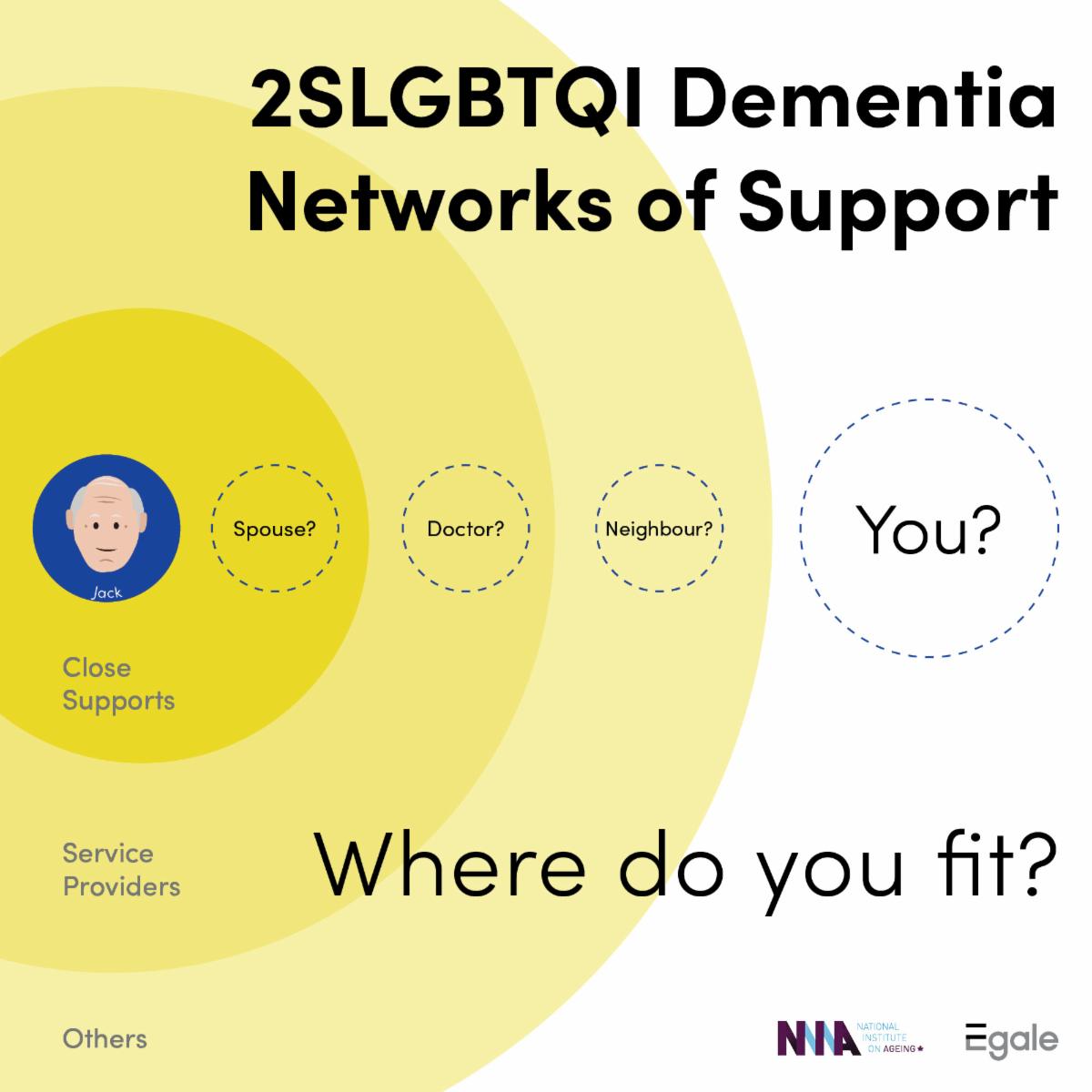
2SLGBTQI Dementia Networks of Support – Where do you fit?
Led by Egale, the Coming Together to Support 2SLGBTQI People Living with Dementia and their Unpaid Primary Carers project is one of the Dementia Community Investment projects that make up CDLRN. The Egale team recently published an in-depth report into their research findings, which includes action-oriented recommendations that will build and enhance supports and services for 2SLGBTQI people living with dementia and primary unpaid carers. Two e-learning modules were created to help paid and unpaid carers put this new learning into practice.

Learn more about the project by clicking here.
We encourage you to visit the CDLRN website to explore many other resources on various topics from all the DCI projects.
Voices of Dementia
In this section, we highlight stories and contributions from people living with dementia.

This edition features Debbie Keay, who was diagnosed with Young Onset Alzheimer’s at the age of 58 and is a dementia advocate and speaker. Among her many roles and committees, Debbie is a member of the Empowering Dementia Friendly Communities Haldimand, Hamilton project. Debbie is known for her fantastic sense of humour and her daily jokes. Debbie reflects on how humour has impacted her life: 

My father taught me how to be funny and make others laugh. “Quirky”, that's how my family, friends and co-workers identify my inherited humour.

How little did I know the benefits of laughter would play a role on any given day, despite some very dire circumstances. Some days are more challenging than others. The benefits of really trying hard to find something funny and positive (which is not always easy) can truly make life's journey so much easier. 

Every morning, I look up kids' jokes on the computer. The jokes keep my health in balance. Laughter releases endorphins in the brain - the chemicals that help us feel good. Laughter draws people together and is contagious. A joke told will guarantee it will be told many times over that day and put a smile on at least one person’s face.

My advice, science aside: be "quirky" - it may put a smile on someone's face, even if they groan!

Two goldfish are in a tank. The first one says to the other, “Hey, do you know how to drive this thing?”
-
What do you call a fake noodle? An Impasta.
Stay Connected
To learn more about CDLRN, including projects, resources, news and events, visit our website: https://cdlrn.the-ria.ca
We'd love your feedback! Let us know what you think of this e-newsletter and what you'd like to hear more about in upcoming editions of CDLRN Spotlight: cdlrn@the-ria.ca
CDLRN is hosted by the Schlegel-UW Research Institute for Aging (RIA). Production of this project has been made possible through a financial contribution from the Public Health Agency of Canada. The views expressed herein do not necessarily represent the views of the Public Health Agency of Canada.