Center for the Developing Mind November 2022 Newsletter

Center for the Developing Mind

As families around the globe are cautiously returning to normal, we here in the United States are preparing for the upcoming Thanksgiving holidays. This month's newsletter article is an update of a Q & A session that I had with a Mom as she was trying to navigate between the needs of her special needs child and the expectations of her extended family for the holidays. Included are tips that both support the child with needs while offering language that parents can use to alert family members to their own specific needs to assure to a minimally stressful holiday experience. With that in mind, our second article compliments the feelings of the first article with advice as to how parents of special needs children need to make every effort to take care of their own needs to assure that they have both the physical and emotional stamina to best support the complex issues of their children.


Sending best wishes for your health and safety,


Esther Hess, Ph.D. and the staff at Center for the Developing Mind

How to Navigate the Thanksgiving Holiday with my Special Needs Child
Happy Thanksgiving  - text in vintage letterpress wood type blocks against rustic wood background with a pumpkin and dry leaves

By: Esther B. Hess, Ph.D.


Dear Developmental Doc:


Our 9 year old daughter was diagnosed with Autism Spectrum Disorder last year. Thank G-d, she’s extremely bright when it comes to school, but basically clueless in social situations. Can you suggest ideas to help prepare her for my in-law’s annual Thanksgiving weekend? My husband feels we are obligated to go, but because our daughter is so socially inept, she typically ends up embarrassing herself and I feel like a failure as a parent! Diane R. Santa Barbara, CA. 


Dear Diane,


I’m actually taking in several concerns in your letter; it sounds like you would like holiday hints to help you daughter navigate the upcoming  Thanksgiving weekend at her grandparents, but I am also hearing that if your child is not on her  ‘best behavior’, her actions suggest that you are a bad parent.  Nothing could be further from the truth! As you suggest, characteristic of this syndrome are children and adults who often have splintered abilities; they are typically quite smart within areas of specific interest but have great difficulty understanding and acting on the complexities of social norms. 


In most cases, children with Autism Spectrum Disorder have wonderful parents who go to great lengths to instruct their sons and daughters on what is and is not appropriate socially. The challenges arise because society’s rules often change based on the circumstance of the moment and individuals impacted by ASD typically have poor motor planning skills that make it difficult for them to easily transition from one event to the next. With a bit of planning though, these obstacles can be dealt with very effectively. 


1) Create a social story with your child that anticipates the upcoming holiday. The story needs to be written but does not have to exceed 6-7 pages. Have your daughter help you draw and narrate the upcoming event with strategies that the two of you think of to help her calm herself in case she becomes agitated. 


2) Role- play Thanksgiving. Give multiple opportunities to play out ‘scripts’ for your daughter to use if and when she is confronted by confusing scenarios over the holiday. These role play activities can be done within your home, with a social skills group with like minded peers and/or in a therapeutic one on one setting.


3) Consider shortening your stay for the holiday. Typical Thanksgiving weekends are a four day affair. Talk with your husband about the possibility of attending this family event for only one day. If this is not logistically possible, create a place for your daughter to have multiple opportunities for ‘down time’ (hotel room, for example, or quiet areas in her grandparent’s home), where she can retreat  and reorganize if and when she feels over stimulated by the tumult of the holiday. 


4) Alert your extended family of your plans ahead of time. Send out a thoughtful e-mail to all parties involved explaining your daughter’s circumstance and what you may need to do to make sure that your daughter feels secure at this family event.

Navigating the holidays is no easy task. You need to know what a good parent you truly are, just for taking the time to figure out how to make Thanksgiving an event that your child will truly be thankful for. Wishing you the best of holidays, Esther B. Hess, Ph.D. a.k.a. The Developmental Doc.   


Esther B. Hess, Ph.D. is a developmental psychologist with more than 40 years of clinical experience. Dr. Hess specializes in the assessment, diagnosis and treatment of children, adolescents and young adults with developmental delays and/or regulatory disorders including autism spectrum disorder. Dr. Hess has just published her 2nd children’s book in the Alfie; the therapy dog series “Alfie Helps a Family Cope with the Premature Loss of a Parent” (Amazon, 2022). Dr. Hess is also the executive director of Center for the Developing Mind, a multidisciplinary treatment facility for children and adolescents with developmental and/or regulatory disorder in West Los Angeles. Dr. Hess can be reached through Center for the Developmental Mind’s website; www.centerforthedevelopingmind.com.

Why Self-Care is Essential for Parents of Special Needs Children
Young therapist woman speaking with child_ counselor and behaviour correction at the office showing happy and sad face

Caring for children with intense needs can take an emotional (and physical) toll on parents

By: Juliann Garey


Parenting can be stressful under the best of circumstances, but moms and dads of children with developmental and mental health challenges often have to deal with strain of a different magnitude. Caring for a child with special needs can become a full-time job — and an overwhelming one at that, if you don’t have adequate support. Without enough help, parents may be headed toward caregiver burnout, which negatively affects everyone.


The consequences of chronic stress related to raising kids who have intense needs are real. Studies show that parents of children with developmental, psychiatric or learning disorders are far more likely than others to experience:


According to one British study, chronic stress puts these parents at risk for medical issues as well. This study found that parents of children with either autism or ADHD had significantly higher levels of both cortisol, the stress hormone, and CRP, a biomarker linked to everything from colorectal cancer to diabetes to heart disease.


The risks, both emotional and physical, to caregivers of challenging children are important to address, for the children’s sake as well as the parents’. Below, we look at common contributors to caregiver stress and offer some suggestions to help parents stay healthy, balanced and committed to their kids.

Accepting limits to what you can do

Experts agree that part of avoiding or lessening burnout is to challenge the idea that you are the only one who can help and there is no limit to what you need to do.


Wendy Blumenthal, PhD, an Atlanta-basedpsychologist, says she sees mothers who reach a breaking point because they are driven to shoulder all the responsibility for their high-needs child. “These supermoms — they’re not sleeping, they’re constantly anxious, calling every doctor they can think of.”

“These parents feel like they should be able to do it all and the first thing to go is basic self-care,” says Elaine Taylor Klaus, the cofounder of ImpactADHD, which offers training for parents of kids with ADHD and other disorders. “There are long-term risks of caring for these kids,” she says. “And one of them is that parents burn out.” Taylor Klaus urges parents to take seriously their own basic self-care including:


  • Getting enough sleep every night
  • Staying hydrated
  • Getting regular exercise
  • Spending time away from children


Isolation and exhaustion


When you have a child whose behavior is difficult or whose needs are challenging, feeling cut off from support and empathy can contribute to the stress. Colleagues, neighbors, friends, family — even your spouse can seem to be on another planet. “People cannot understand what you’re going through,” says Patricia Kandel, who has raised two children with serious mental illness. “There’s so much alienation.”


By the time her family decided their youngest daughter needed to go into a group home, Kandel says, “I was barely functioning.” She, her husband and her 20-year-old daughter were all diagnosed with PTSD “from all the years of living the way we did,” and her marriage had become unrecognizable. “It’s not a typical marriage. It’s survival.”


Outside assistance was nowhere to be found. “You can’t get a babysitter,” Kandel continues. “Our own family wouldn’t even help us. We never had any money. I had to be here 24 hours a day.”


High-stress and time-intensive situations like this one are also where respite care could play a role, says Jill Kagan, director of Access to Respite Care and Help (ARCH). “Respite care is temporary relief for the parent or the primary caregiver of the child so they can take a break from the responsibilities of their continuous caregiving,” she explains.


Many parents aren’t aware of the existence of respite care, she says. “They’re so focused on getting services for their child that they may not even stop to think that there are services out there for them as well. It seems out of the realm of possibility.” But it isn’t. ARCH’s website includes an introduction to respite care and ways for parents to locate respite care by state as well as a list of funding sources. (ABCs of Respite: A Consumer’s Guide for Family Caregivers)


It takes a village, but you need to ask


Another obstacle to getting help is that you may be afraid to ask. But in truth, people who genuinely want to help may not know how.

Parents need to be fairly direct. “Could you watch the kids on Wednesday so that I can get a haircut?” “If I give you a list, could you pick up the groceries?” These specific requests make it easier for family and friends to pitch in while not feeling out of their depth.


“People are often willing to help you in small ways,” says Dr. Blumenthal. “Like watching your non-challenged child so you can take your special-needs child to therapy.” Proposing babysitting exchanges with another parent (or even network of parents) of another special needs child is another way to get some time away, and some needed perspective.

Getting out and about


Many parents of kids with psychiatric and developmental challenges find that they lose touch with friends and activities outside the home. “Fifty percent of my sessions are just parent sessions” to help navigate that reality, says Matthew Rouse, PhD, a clinical psychologist.


Taking care of your emotional and social health is just as important as practicing more routine self-care. Several experts, including Dr. Rouse, emphasized the importance of reclaiming an adult-only social life. Dr. Rouse asks questions like:


  • What are you doing for yourselves?
  • What are you as a couple doing to support each other?
  • When’s the last time you had a date night?
  • When did you last spend time with friends?


To mitigate feelings of isolation, Dr. Rouse recommends:


  • Finding a support network outside the immediate family. There are online and in-person support groups for just about everydiagnosis out there.
  • Spending time with friends who have no connection to your child. “Support groups are great,” Rouse says “but that’s still doing something for your child.”
  • Planning social activities that put you among people who care about you.
  • Time for activities that are purely pleasurable — reading, running, painting.


“The way I’ve framed it with parents who are resistant to this,” Dr. Rouse says, “is to tell them, ‘It’s like you’re depositing money into a bank and building up cash reserves. To have more to give your child, you have to build up those reserves.’”


Nurturing the marriage


Throughout, parents need to pay close attention to perhaps the most vulnerable relationship of all — the one between spouses. Experts suggest that parents make it a point of maintaining their relationship with small steps they can continue, and that they make it a point of letting the marriage exist outside of roles as caregivers.


“I encourage parents to take little breaks such as when their child is in a therapy session or in school,” says Cindy Ariel, PhD, a Philadelphia-based psychologist who specializes in working with families of special-needs children. Other small steps you can take might include an in-home break or “date.” Even if you don’t have help, there are still ways of finding time to devote to your relationship so that you and your partner don’t end up feeling like you’re merely tag teaming as caregivers.


Maintaining a healthy marriage and effective caregiving team is made much harder when parents disagree about treatment strategies and approaches. Andrea Weissman’s son Ethan, now 12, has learning, attention and social challenges. She and her husband often disagree on what is considered “normal” behavior.


“He thinks a lot of stuff is more normative than I do and tells me I’m ‘catastrophizing,’ ” she says. “We certainly don’t parent in a consistent manner — which is not good for Ethan.” Or for her—she feels she drinks too much as a result.


This is a common situation, according to Dr. Blumenthal. “There are information seekers and information deniers,” she says, “people who want to dismiss the diagnosis or write off their child’s symptoms as normal.” When one parent is a “seeker” and the other a “denier”— which she says is often, especially when a child is first being diagnosed — the conflict can put an enormous strain on the relationship.


“If you have differences around the child’s treatment, try to see things from the other person’s perspective,” Dr. Rouse suggests. “That will help you to reconnect.” And that’s easier if you’ve laid the groundwork with even something as simple as a “nightly check-in” that can help you and your partner stay close.


“Just making time before bed to tell each other about the highlight and lowlight of the day” is beneficial, he says. “So it’s focused more on the person’s emotional experience during these events, and less like a planning or logistics meeting. It can build intimacy and empathy just through sharing and listening.”


New Alfie Book!


Dr. Esther Hess and Center for the Developing Mind are pleased to announce the release Dr. Hess's 2nd Children's book; 'Alfie Helps a Family with the Premature Loss of a Parent: The Working Life of a Therapy Dog' (Amazon Press, 2022). Be sure to order your copy today!


Order Here!

Announcements

November 2022: Dr. Esther Hess has been asked to be one of the keynote speakers at this year's Expressive Therapies virtual conference in early November 2022. She will be presenting a lecture on "The Transitional Challenges and Solutions for Adults Impacted by Autism Spectrum Disorder" followed by a panel of neurodivergent adults who will be discussing their own personal struggles and successes as they entered into adulthood.


Please contact info@expressivetherapiessummit.com for more information and to register for the program.

January 6, 2023: Dr. Esther Hess will be presenting an in person 3-hour seminar on 'An Introduction to DIR/Floortime' at the 25th Annual Nefesh International Conference in Troy Hills, New Jersey. For more information and to register, please contact alicetusk@nefesh.org.


Early 2023: Dr. Hess and Allen Samson have been asked to visit Warsaw, Poland at the beginning to the New Year to work with Ukrainian refugees, specifically Mothers with special needs children. Stay tuned for details of this special mission of care!

Groups
 
Friends Hipster Teenager Buddies Concept
In-person Groups

Based on popular demand, Center for the Developing Mind, has expanded its second support group for neurotypical siblings! This group is a mixed gender group for younger siblings ages 7-9 years. There continues to be room for 1 additional participant. For more information and to register, please contact Dr. Hess directly at Drhess@centerforthedevelopingmind.com. 

Dr. Hess continues to offer a social support group for neurodivergent young women ages 25-40 years of age. The group meets in-person at the Center on Tuesday evenings. For more information and to register, please contact Dr. Hess directly at Drhess@centerforthedevelopingmind.com.

Dr. Esther Hess continues to facilitate a weekly online support group for caregivers of special needs adults impacted by the COVID-19 pandemic, sponsored by Ogden Manor Home Care. For more information about this resource, please contact Dr. Hess directly at Drhess@centerforthedevelopingmind.com

Movie Recommendation

A family movie to watch together over the holidays! Center the Developing Mind recommends 'The Boy Who Could Fly'. The film follows a young girl, Miley, a young girl who finds herself living next door to a non-verbal boy with autism, Eric. With a backdrop of family loss and heartache in both Eric and Miley's families, this film addresses challenges in a heartfelt, uplifting way. This is a classic movie about a little discussed topic-non-verbal autism. It is sure to spark conversations between yourself and your loved ones.


Write back to Dr. Hess at Drhess@centerforthedevelopingmind.com and let us know what your classic holiday movie picks are.

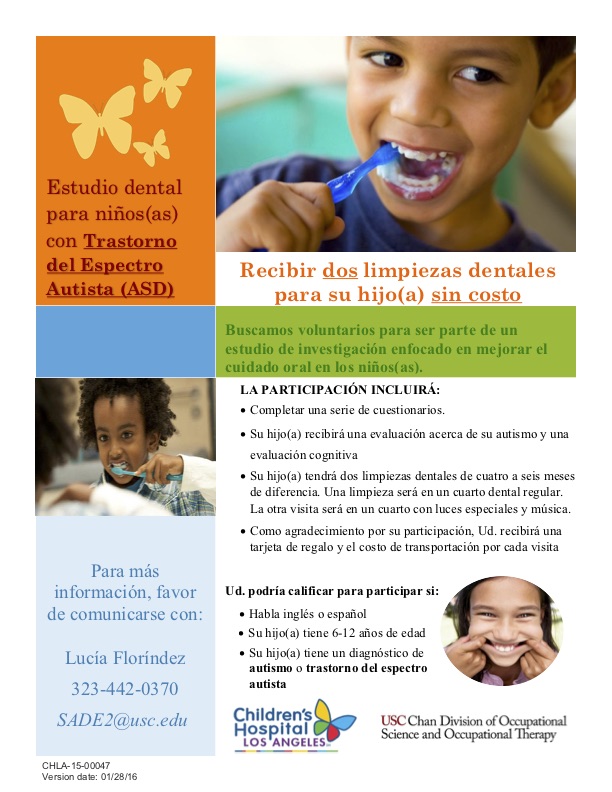
FREE Dental Cleanings for Children
Career Opportunities

Center for the Developing Mind is Seeking Occupational Therapists

There are immediate openings at Center for the Developing Mind for California licensed occupational/physical therapists. Ability to work weekends, a plus. Salary and benefits are compensatory to experience.


For more information, please contact Dr. Esther Hess at (310) 652-7581 and/or Drhess@centerforthedevelopingmind.com

Center for the Developing Mind is Seeking Speech and Language Therapists

Center for the Developing Mind is Expanding It's Speech and Language Services. We are looking for licensed SLPs to work in our state of the art facility. Treatment model based on DIR/Floor Time. Ability to work weekends, a plus. Salary and benefits are compensatory to experience.


For more information, please contact Dr. Esther Hess at (310) 652-7581 and/or Drhess@centerforthedevelopingmind.com.

Are You Looking To Expand Your Own Private Practice While Being Part of a State of the Art Team For Children?
Center for the Developing Mind is now licensing space within a multidisciplinary facility. Suites available for speech pathologists, occupational therapists, physical therapists, and educators. For more information please contact Dr. Esther Hess: (310) 652-7581
Support Center for the Developing Mind

Center for the Developing Mind Foundation is the non-profit arm of our clinic, servicing children, adolescents and young adults with developmental and/or regulatory delays who might otherwise not get the support they need. Your donation during these precarious times can make all the difference in the world.


Thank you, in advance.


To learn more or to make a donation please visit centerforthedevelopingmind.com/non-profit.