|
Dear CDOC Community,
May is skin cancer prevention and awareness month. According to the Centers for Disease Control and Prevention (CDC), skin cancer is the most common form of cancer in the United States (CDC, 2020). In California melanoma of the skin is the fifth most commonly diagnosed cancer, and we are particularly concerned about the increasing incidence of melanoma. This is why California’s current Comprehensive Cancer Control Plan 2021-2025 highlights the importance of primary prevention (including reducing occupational and recreational UV exposure, as well as indoor tanning use) and increasing skin checks. For more information on the latter, please see the American Academy of Dermatology Association’s skin self-exam information click here.
May is also Asian American, Native Hawaiian and Pacific Islanders Heritage month. This month, we celebrate the Asian American, Native Hawaiian, and Pacific Islander (AA and NHPI) communities. The ACS Inaugural Report Shows Mortality for Preventable Cancers Among Native Hawaiian and Other Pacific Islanders in U.S. is 2-3 times as High as White People: American Cancer Society researchers highlight the need for disaggregated data to facilitate targeted cancer prevention and early detection within this fast-growing population. Click here to read the facts and figures report. Visit the link to the press release here.
Please read more to learn about important updates to develop the 2025-2036 California Cancer Plan. Additionally, please register for our in-person CDOC Member Engagement Meeting on Wednesday, June 5th, 2024. We are looking forward to this opportunity to spend the day together and lay the groundwork for our collective efforts moving forward.
| |
|
Sincerely,
Sora Park Tanjasiri, DrPH, MPH
CDOC Chair
University of California, Irvine
Chao Family Comprehensive Cancer Center
Alison Herrmann, PhD
CDOC Co-Chair
UCLA Fielding School of Public Health Jonsson CCC, Kaiser Permanente Center for Health Equity
| |
|
|
Now on the CDOC Website!
CDOC Comprehensive Cancer Control Program (CCCP)
2022-2023 Program Evaluation Report
FINDINGS AT A GLANCE
The Findings at a Glance of the CCCP 2022-2023 Program Evaluation Report is now available! This evaluation snapshot includes evaluation questions, a summary of key findings, progress on some action plan objectives, and feedback from coalition members like yourself. To read more about the CCCP Evaluation Snapshot, visit the CDOC website.
| |
|
REGISTER NOW!
2024 CDOC Member Engagement Meeting
(In-Person)
Please join us on
Wednesday, June 5th, 2024 | 10:00 am - 4:00 pm
The California Endowment in Los Angeles.
We are excited to engage with you all!
The 2024 CDOC Member Engagement Meeting will be focused on the 2025-2036 State Cancer Plan. This meeting provides a great opportunity to learn, meet and engage with fellow CDOC members and other representatives from a variety of organizations, constituencies, and interest areas in cancer prevention and control.
Funding for travel is available. Lunch will be provided.
| |
|
Save the Dates!
Promoting Nutrition and Physical Activity in Cancer Survivorship Programs
Webinar 1 - June 18th @ 12pm: "Nutrition and Physical Activity (NuPA) for Cancer Survivors: Evidence and Resources" presented by Kristen Sullivan, MS, MPH (ACS Director of Cancer Wellness).
Webinar 2 - June 20th @ 12pm: Doctors Asher Arash, MD (Cedars-Sinai) and Rusha Bhandari, MD (City of Hope) will be presenting their research and strategies on NuPA for organizations.
Registration details are forthcoming
| |
Available Now:
Cervical Cancer Screening Fact Sheet
| |
|
Snapshot is a publication that demonstrates the uses of Behavioral Risk Factor Surveillance System (BRFSS) data to illustrate various health behaviors among adult Californians.
Cervical cancer is a cancer that starts in the cells of the cervix and usually develops slowly over time. The primary cause of cervical cancer is persistent infection with the human papilloma virus (HPV).
Cervical Cancer Screening among California Adult Women, 2016 - 2020
| |
|
Let Us Know How You Use
The State Cancer Plan!
| | |
|
|
State Cancer Plan Implementation Reporting Tool
Have you implemented a project, plan, or other relevant work that relates to content in the State Cancer Plan?
If so, we want to know about it! Please click here to fill out our 10 min reporting tool.
Your submission will provide insight on how the State Cancer Plan is being utilized.
| | |
UPCOMING
CDOC
MEETINGS
AND
EVENTS
(to read more click here)
| |
|
Survivorship Workgroup
Monday, June 3, 2024, 11am-12pm
Lung Cancer Screening Workgroup
Tuesday, June 4, 2024, 1-2pm
CDOC Stakeholder Engagement Meeting
Wednesday, June 5, 2024 10am-4pm
Executive Committee
Monday, June 17, 2024, 1-3pm
Promoting NuPA (Webinar 1)
Tuesday, June 18, 2024, 12-1pm
Promoting NuPA (Webinar 2)
Thursday, June 20, 2024, 12-1pm
Health Equity Workgroup
Thursday, July 11, 2024 2-3pm
HPV Vaccination Learning Collaborative
Wednesday, July 17, 2024, 12-12:45pm
Colorectal Cancer Workgroup
Tuesday, August 6, 2024, 12-1pm
| | |
2021-2025 State Cancer Plan Corner
May 2024 Cancer Plan Corner Highlight
Early Detection and Screening Highlight: Melanoma
Cancer Plan Reference: Chapter 8 Early Detection and Screening.
The number of lives lost from melanoma each year continues to rise. Five-year survival rates for people with melanoma depend upon the stage of the disease at the time of diagnosis, racial and ethnic differences, socioeconomic status, and access to state-of-the-art treatment options for advanced disease. When melanoma is found and treated early, the chances for long-time survival are excellent. Therefore, early detection and screening are key to improving patient outcomes. The public, and the health care community can play an important role in promoting early detection of melanoma by increasing awareness and early detection among highest-risk populations, including those of low socioeconomic and minority groups, promoting access to tele-dermatology and other screening technologies for those in need due to socioeconomic or geographic reasons, and by providing knowledge about treatment options in regions of California disproportionately impacted by late-stage diagnoses, in order to reduce mortality.
To read more on the cancer plan's Melanoma Early Detection goals and objectives, please visit our website. You may also access strategies here.
Contact info: cdocshare@gmail.com
| |
MEETINGS, CONFERENCES & EVENTS
| |
|
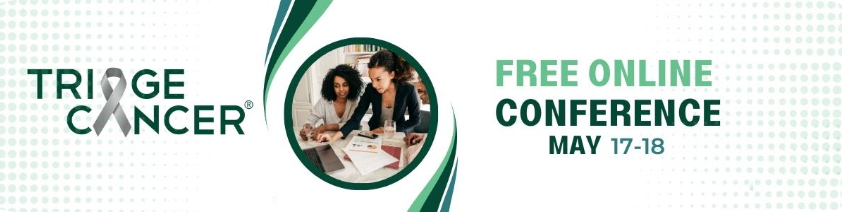
Register Now for the Triage Cancer Conference!
This FREE, two-day event covers practical topics such as navigating finances, health and disability insurance, employment rights, getting organized, planning ahead, and more.
You can attend one or both days, or just pick the sessions that are most relevant to you!
Get the information you need to help deal with the financial impact of a cancer diagnosis.
Register for the Conference by April 26 to receive free materials and a gift bag.
| |
|
Registration NOW OPEN!
The third “annual” Western CRC Consortium Conference (WC4) will be held as a hybrid event (in-person and virtual) hosted at the UC Davis Conference Center on September 26-27, 2024.
| |
OTHER RESOURCES & OPPORTUNITIES | |
TOGETHER, EQUITABLE, ACCESSIBLE, MEANINGFUL (TEAM) TRAINING | |
|
This on-demand free online training helps organizations implement quality improvements to advance equitable, accessible and patient-centered cancer care through improved patient-provider communication, cultural sensitivity, shared decision-making and attention to health literacy; approved by the National Association of Social Workers (NASW) for 4.5 continuing education contact hours.
| |
|
NEW! The President’s Cancer Panel’s Initial Assessment of the #NationalCancerPlan is now available! Informed by stakeholder activities happening across the cancer community, the report highlights recommendations in five priority areas to accelerate progress toward the National Cancer Plan goals. Learn more about the challenges and opportunities identified by the Panel to ensure that every person in the United States has access to the best possible resources and care for cancer risk reduction, detection, treatment, and survivorship, Read more here.
City of Hope – The California Cancer Care Equity Act (CCCEA) The California Cancer Care Equity Act (SB 987, Chapter #608, 2022), which took effect January 1, 2023, expands access to optimal cancer care for historically disadvantaged Californians by requiring Medi-Cal managed care plans (MCMCPs) to make a good faith effort to contract with National Cancer Institute-designated and other specified cancer centers so that patients with a complex cancer diagnosis may more easily access care at these centers. The law also authorizes Medi-Cal members diagnosed with a complex cancer to request a referral to any of those centers and requires MCMCP to notify all members of their right to do so. You may read more about it here.
Read about the National Cancer Plan! We know that our continued progress against cancer is the direct result of advances made possible by investment from federal, state, and local governments, along with private investment, and by the sustained efforts of researchers around the world and millions of people with cancer, their caregivers, and advocates. Read more about the National Cancer Plan here.
| |
HEALTH EQUITY, CANCER & HEALTH DISPARITIES | |
Dr. Mandi Pratt-Chapman Advances Work on Sexual Orientation and Gender Identity Data in Cancer Continuum Mandi Pratt-Chapman, PhD, Associate Director, Community Outreach & Engagement, has co-authored a paper in the American Society of Clinical Oncology Journal on the significance of SOGI data in cancer research. She also gave an interview with The American Journal of Managed Care, which highlights factors affecting adequate, accessible health care for transgender patients and what she sees as the most pressing need to address in this community, and explores the potential for policy-level changes to benefit transgender patient care and experiences in clinical settings. | |
|
NEW! ACS CAN is happy to announce that SB 310 (Rubio, Statutes 2021) is now ready for implementation. SB 310, which allows cancer patients to coordinate with their physicians to donate their unused oral medication. The purpose of Senate Bill 310 is to reduce waste of cancer medication, save money, and increase timely access to these needed medications for those patients who cannot afford their medication or whose health plans forces untimely approval times. ACS CAN has worked diligently with SIRUM, and organization that works to connect people with surplus medication, to finalize the process. We are now reaching out to find oncologists who would like to participate in this program. Please see the flyer for more information here.
NEW! ACS Inaugural Report Shows Mortality for Preventable Cancers Among Native Hawaiian and Other Pacific Islanders in U.S. is 2-3 times as High as White People: American Cancer Society researchers highlight the need for disaggregated data to facilitate targeted cancer prevention and early detection within this fast-growing population.
Cancer Support Community San Francisco Bay Area Announces new collaboration at UCSF-John Muir Health Jean and Ken Hofmann Cancer Center Location in Walnut Creek To read more click here.
"Communicating trustworthiness and fostering trust" by John C. Besley, PhD, Ellis N. Brandt Professor, Michigan State University. To read more click here.
The CRGC developed several strategies targeting the “point of entry” of a patient’s race; that is the source where the patient encounter would result in the capture of the patient’s race. The first of these approaches is the MD office follow back. The MD office directed follow back consists of identifying patients reported by MD offices with an unknown race. With assistance of the CRGC Business Analyst, who identifies the patients by performing a SQL query on a copy of the CRGC database and creates MD office packets in PDF format, the Data Collection staff fax out the packets to the MD offices. When the packets are returned, the results of the follow back are evaluated and when a known race is provided, the patient’s race is updated in the statewide database. To assist physician offices in understanding why we need this information, the CRGC created a letter that is included in the physician office packet describing the importance of a patient’s race. Click here to see letter.
| |
|
CDOC Newsletter and Announcement Content
Submission Process
| | |
|
CDOC is made up of a diverse group of stakeholders that engage in important and impactful work we'd like to showcase. We have a new process for submitting your trainings, events, articles, grant opportunities, and more.
We kindly ask you to email us any content by the 15th of each month to cdocshare@gmail.com. If there is time-sensitive information (e.g. upcoming training) that you would like to share, we will do our best to include, but cannot guarantee that it will make the newsletter or announcements.
Submission requirements:
- Include a title
- Include the exact verbiage you'd like for us to include. Please do not include an attachment and ask us to share, a title and verbiage must be included.
- Include a contact person for any inquiries
- Include any attachments in a pdf file if possible
We appreciate your patience and support at this time, and we look forward to your submissions.
| | | | |