|
|
Over the course of the past year, in fact just in the past few months, Akumal has seen its fair share of ups and downs--from the blockades, in December and again in February, to campaigns of misinformation and acts of vandalism-the ugliness emerged amongst the backdrop of such prolific beauty.
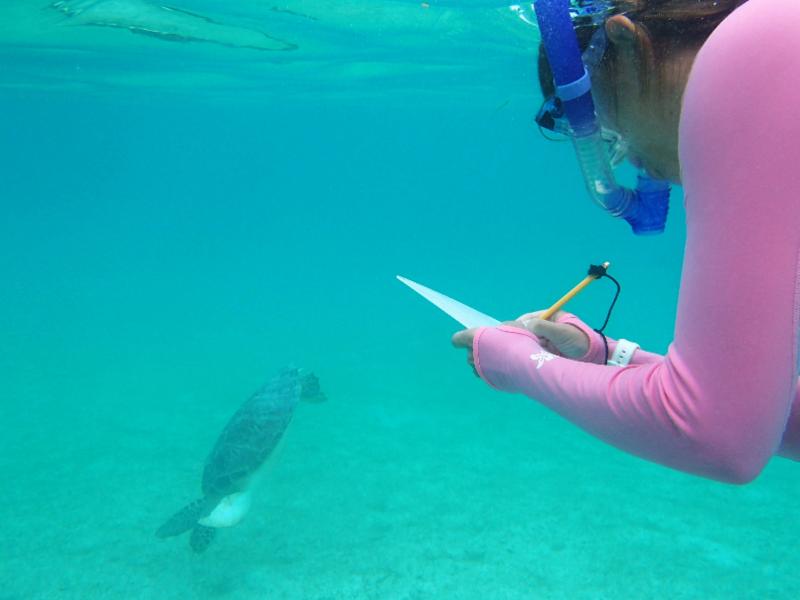
Akumal is a treasure that needs to be protected, that needs to be preserved. Where else in this world can you walk only a few meters from shore and see turtles freely grazing in the shallows? Where else in this world can you swim for less than 50 meters and have access to patch reefs? And that is part of the issue-the ease of accessibility alongside the increased numbers of tourists drawn to having a once-in-a-lifetime experience to swim with turtles.
Yet Akumal Bay can no longer withstand the current levels of use (and misuse) that we see today. It has reached a tipping point. If action isn't taken, we risk losing the biodiversity, the corals, the fish, the seagrass and the turtles. This is the reality.
And while other national treasures are put behind protective glass or placed in controlled environments, this obviously isn't an option for the bay. However, some form of measure, some form of control to the increased numbers, and some form of protection need to happen. Anyone with long-term vision would agree.
The federal decree of the Marine Refuge earlier this week was not only welcomed news, but was the right step to safeguard Akumal Bay for the future. For this, we acknowledge the tireless work and support of many.
However, this is just the beginning. A comprehensive management plan under the direction of CONANP will be designed and implemented.
But it can't stop there. We--all of us--the Akumal community, business owners, landowners, tourists, guests, CEA and other organizations all have a responsibility to ensure that this eventual plan is adhered to so that Akumal Bay is respected and protected for years to come. It is time to move forward and work from the same protection plan and shared goal. For this is what Akumal needs to be a thriving and vibrant ecologically sound place.
Hector A. Lizarraga-Cubedo
|
|
AKUMAL BAY DECREED A MARINE REFUGE
On
March 7, the official decree came. Akumal Bay was declared a Marine Refuge for Protected Species. The decree, published in the Diario Oficial de la Federacion in Spanish, covers the legal references as well as the specifications of the refuge area and species protected.
IN SUMMARY
The Secretariat of Environment and Natural Resources (SEMARNAT), through the National Commission of Natural Protected Areas (CONANP), in coordination with the agencies of the competent Federal Public Administration and with the participation of social sectors and private stakeholders, will formulate a protection program for the refuge area.
CONANP will be the legal authority to administer and oversee the protection program/management plan.
The protected area runs approximately 11 kilometers along the coast from Xcacel-Xcacelito to Akumal-Sirenis and consists of 1,600 hectares.
It overlaps with, but extends farther than, the current Fish Refuge Area.
The protected species include:
- three species of turtles: the green, the loggerhead and the hawksbill;
- four species of corals: elkhorn, staghorn, soft corals and sea fans;
- three species of mangrove: white, buttonwood and red; and
- three species of seagrass.
WHAT'S NEXT?
Looking at other protected or federally decreed areas as an example, we anticipate that the next step is that SEMARNAT, in coordination with CONANP, will call out to local actors to create a working group for the elaboration of a management plan, as well as a technical committee to aid in the operation and administration of the refuge.
As it stands, there is no official timeline as to when the management plan will be completed or put into effect.
We expect that the management plan will include such items as:
- load capacities/limits for snorkelling activities as well as other activities.
- details on scientific research, conservation, restoration, environmental education, oversight and enforcement.
- Additional maps with zoning.
It is our intention to be part of the working group/technical committee. We will share any updates and information that is relevant to the refuge.
|
|
REEF MONITORING: PHASE 1 UNDERWAY
Phase 1, or the first 3-month-long reef monitoring period for 2016 is currrently in progress. Phase 2 is scheduled for September 8 through to December 1 and we are still accepting volunteers. Information on volunteering for the Coastal Ecosystem Program's reef monitoring project can be found on our website and in the
Volunteer Overview document.
|
 |
WATER SAFETY REPORTS
Each month CEA is providing a monthly Water Safety Report. You will find these reports on our website's blog and Facebook page.
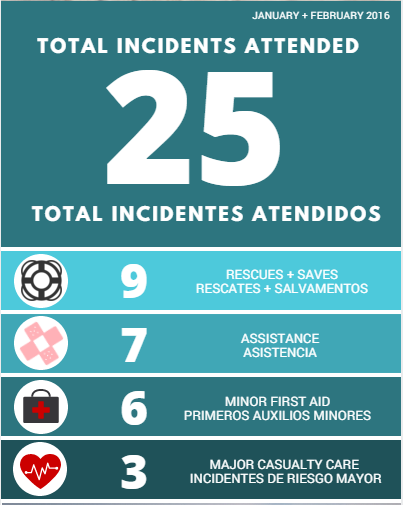
Here are the statistics for both January and February 2016 combined.
KEY TO INCIDENTS
RESCUE:
Lifeguard enters the water to provide assistance in a non-life-threatening situation. For example, helping an overturned kayak.
SAVE: Lifeguard enters the water to provide assistance in a life-threatening situation. For example, an unconscious snorkeler or panicked swimmer.
ASSISTANCE: Lifeguard provides assistance to individual who approaches lifeguard. For example, treatment of cuts or stings.
MINOR FIRST AID: Lifeguard is called away to attend a situation in which first aid is provided. For example, a person who has heat exhaustion or a broken limb.
MAJOR CASUALTY CARE: Lifeguard attends to an individual suffering from life-threatening symptoms.
|
THREE LIVES SAVED IN JANUARY
In January, Akumal lifeguards and Red Cross paramedics were instrumental in saving the lives of three individuals in the bay.
|
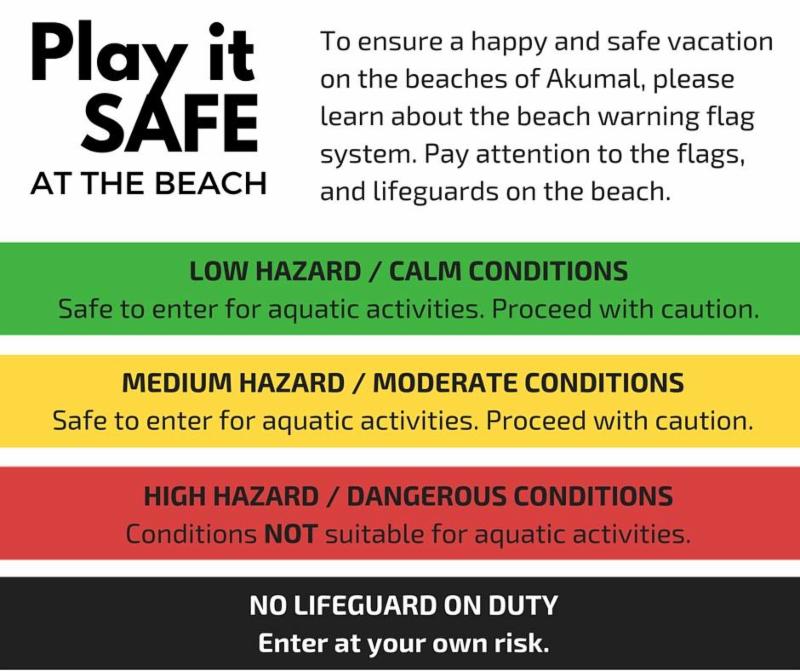
PLAY IT SAFE AT THE BEACH CAMPAIGN
Towards the end of December 2015, there were several days where the beach flags were set to red--meaning the conditions (current, winds, visibility, chop) were not ideal for snorkelling or any water activity. Even the port authority closed ports to all nautical traffic and activities along the coast, yet some tour operators and tourists still entered the bay at their own risk.
Seeing this and knowing that high season was upon us where there is a natural upward trend of water safety incidents, we launched a mini-campaign called Play it Safe at the Beach. The objective of the campaign is to educate people on the beach flag system, its meaning and various water safety tips.
If you follow our blog, Facebook page and/or subscribe to our weather update, you will have seen some of the parts to this campaign.
|
|
SEA TURTLE MURAL IN AKUMAL PUEBLO
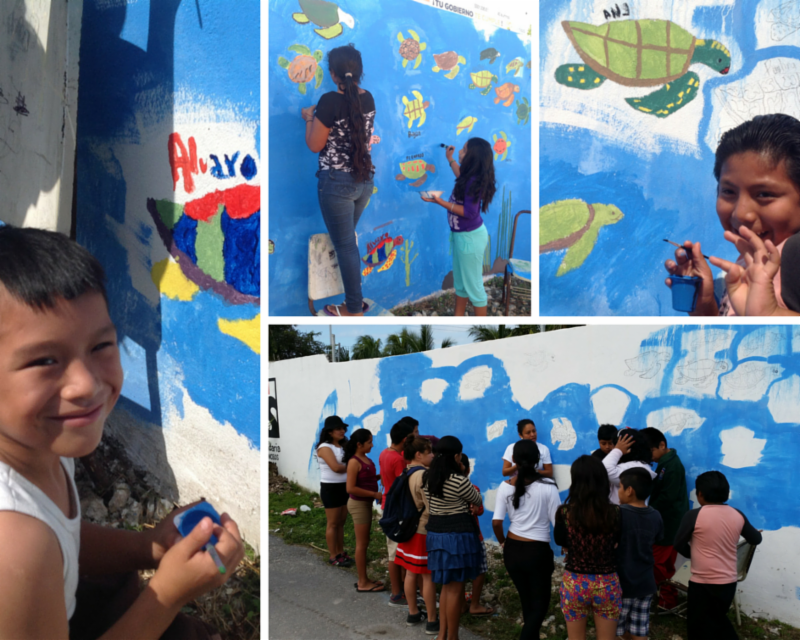
On Friday, February 26, students added the final touches to the mural started to mark the annual Sea Turtle Festival.
The students from schools in Akumal Pueblo, mostly from Telesecundaria Jose Vasconcelos took part, but other children from the elementary school and even students from the evening classes of Francisco Sarabia high school were happy to pick up a paint brush and join in the action.
Each participant painted their own turtle and helped paint the corals on the wall while being able to reflect on the importance of protecting the environment.
CEA is a member of the organizing committee of the annual Sea Turtle Festival and provides environmental education lessons in the schools in Akumal pueblo.
|
ADOPT A TURTLE FOR CHRISTMAS CAMPAIGN
Thank you to our Adopt a Turtle for Christmas Campaign supporters. During the holiday season we had the following adoptions:
- 6 baby turtles
- 9 turtle nests
- 3 turtle families
plus a separate donation, for a total of $1,080 raised.
We will be sending out adoption updates during the season. Stay tuned for this and more information on our Mother's Day Campaign.
|
ANNUAL TURTLE REPORT FOR 2015 SEASON
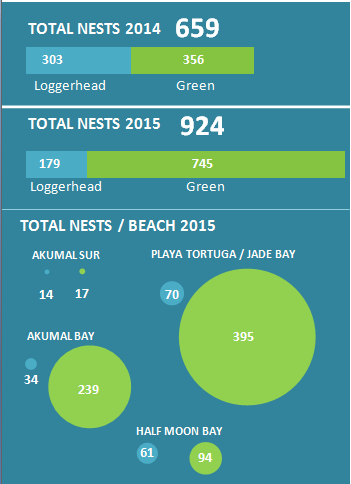
The final annual turtle report for 2015 has been completed and submitted to SEMARNAT--Secretaria de Medio Ambiente y Recursos Naturales (the government authority that oversees the environment and natural resources).
Each year, every turtle camp in Quintana Roo is required to complete a report on the nesting and hatching activities that are under their patrol. A condensed and English version will be coming soon. Until then, here
is
a sneak peek at our nesting statistics.
|
GETTING READY FOR THE 2016 SEASON
May is just around the corner and we are planning for the upcoming 2016 season. Stay tuned for our next newsletter to learn about some of the education and outreach activities we will be doing.
|
|
Volunteers are the heart and soul of CEA. Whether they are in the field monitoring and collecting data or inputting it for reports, their work plays a critical role in fulfilling our mission of conservation and protection through research, education and outreach.
|
Our latest volunteer, Samanta Zbinden, kept busy throughout the month January with field work for two of our in-water projects. She tells us about her daily activities, research, findings and thoughts on our blog.
|
|
SPECIAL GUESTS AT CEA: PROJECT WORLD SCHOOL
|
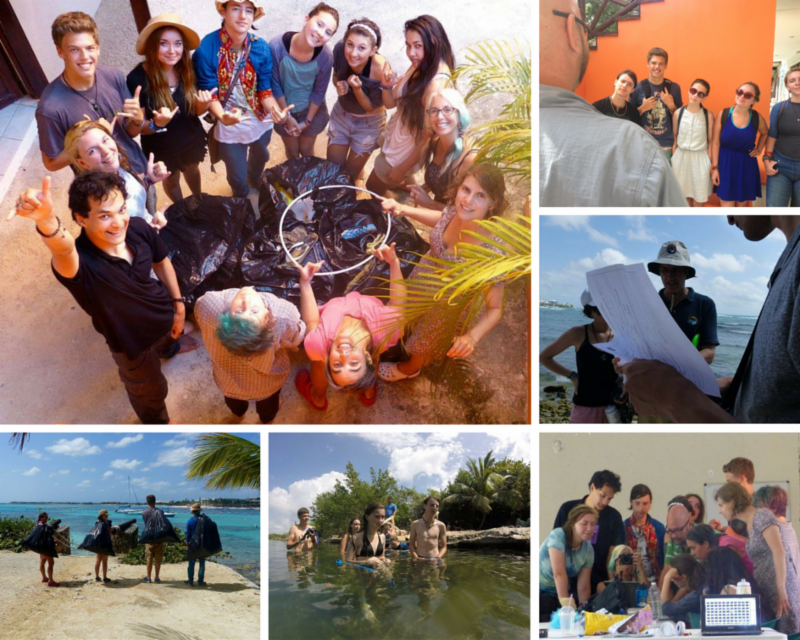
On February 23 and 25, ten teens (all amazing young adults!) from Project World School teamed up with CEA staff to learn and participate in some of our ongoing projects.
|
|
In the News
We have been translating some of the interesting newspaper articles and posting them on our website with links to our Facebook page. In case you missed them:
All of these articles and any more can be found on the Media Center page of our website.
|
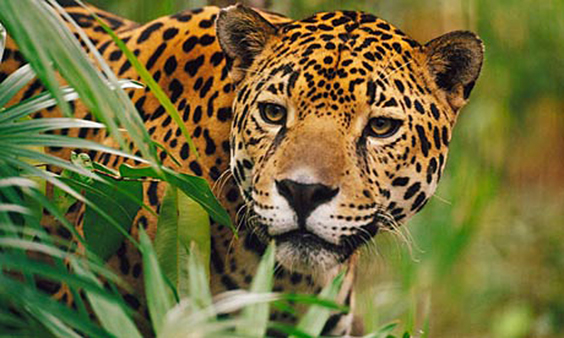
Jaguar Conservation in Quintana Roo
An agreement has been signed with the Ministry of Ecology and Environment (SEMA
), El Eden Ecological Reserve, Centro Ecológico Akumal (CEA) and Xel Ha Promotora SA de CV to foster collaborative efforts and in coordination with the National Alliance for the Conservation of Jaguar for the protection, monitoring, research and environmental education of the jaguar throughout Quintana Roo.
|
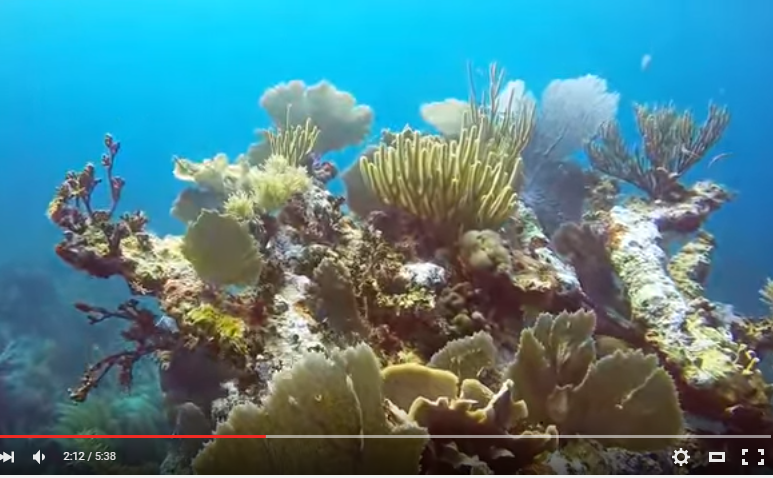
Underwater Shots
One of CEA's former Reef Monitoring volunteer, Brett Mello, took some beautiful footage on one of the local reefs in Akumal. Enjoy!
|
A Big Social Hit
This image was our top post on Facebook for 2015.
BY THE NUMBERS
- 12,737 people reached
- 687 Likes
- 52 Comments
- 73 Shares
|
|
Whether you are looking for an internship or ways to incorporate responsible tourism activities into your travel plans, drop us a line. We would love to hear from you and see how we can work together.
communications.ceakumal@gmail.com
|
If you wish to help support our efforts, donations can be made on our website: www.ceakumal.org
|
STAY CONNECTED


|
|
|
|
|