|
|
Summer is a very busy time for us. This is when we get the most collaboration from volunteers and university groups. It's an exciting time around the property with students and professors turning it into a Field Campus in the middle of a busy tourist destination. The dorms are full, the staff is engaged on a daily basis with their programs and a lot of extra help is coming from the volunteers.
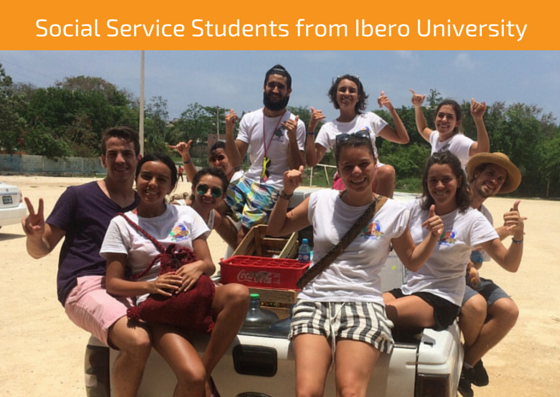
This summer we have Operation Wallacea students again, as well as from our partnership with IBERO, a Mexican university that sends students to carry out their social services. These eager students come with enthusiasm, skills, and energy to fulfill the work assigned to them.
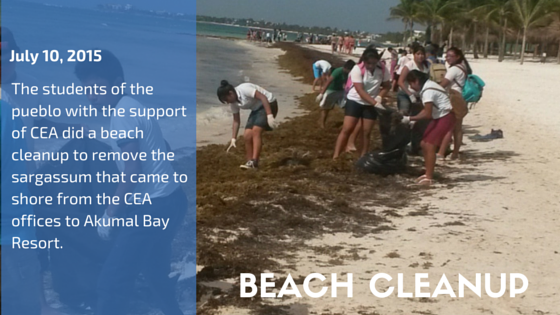
This year in particular we have had a different sort of challenge with the sargassum build up in the turtle nesting bays of Akumal. Our focus has been on community collaboration in order to effectively organize cleanups and we will continue with this outreach to the community for this and other issues that may arise. We thank everyone who has been a part of this important collaboration.
Hector A. Lizarraga-Cubedo
|
|
WHAT'S WITH ALL THE SARGASSUM?
|
|
|
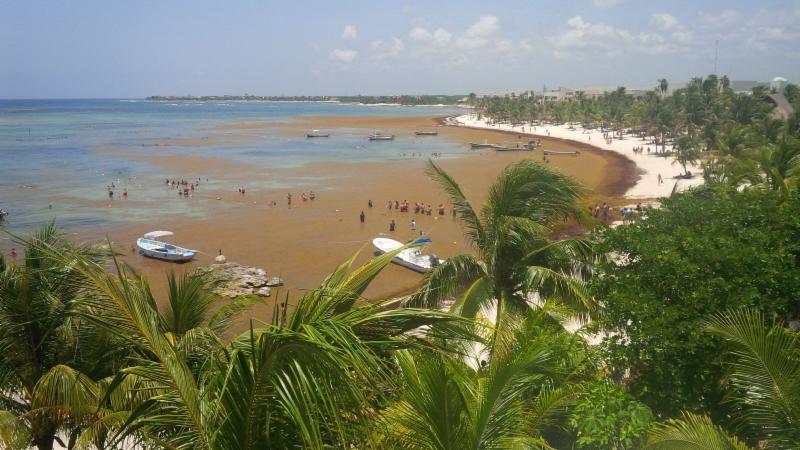
On July 27, 2015 a large mat of sargassum washed ashore in Akumal Bay (Photo: Myrna Bush)
|
Sargassum, as this particular seaweed is known as, is naturally occurring in temperate and tropical waters. It is commonly found along our shores; however, this year there is a significant increase along the coast of Quintana Roo and throughout the Caribbean.
Mats of sargassum floating in the sea provide habitat and food for a variety of marine species, including hatchling turtles. On shore it helps build and reinforce beaches, preventing erosion during storms. As well, sargassum supplies nutrients to the seagrass beds, mangroves and coral reefs. But in the large amounts we are seeing, and if left to accumulate, the sargassum can pose a threat to coastal marine life.
WHAT ARE THE CONCERNS?
Besides it being a smelly eyesore for visitors and locals, there are two main and immediate ecological concerns. First, in large amounts, it can be an obstacle for nesting turtles making their way onto the beaches and for hatchlings making their way back to the sea. Second, if the sargassum is left in the shallows of the shoreline, it will decompose. The decomposition process consumes oxygen and depletes the oxygen supply available to marine life along the shoreline.
WHAT IS CEA DOING?
Removing the sargassum is a priority, particularly on turtle nesting/hatching beaches. While hotel, restaurant or property owners take care of the beach in front of their respective properties, the sheer volume of sargassum makes cleaning the beach a monumental task with the usual resources.
Akumal Bay
On July 27 through to July 29, the first massive beach cleanup took place in Akumal Bay. It was co-organized by CEA and the Akumal Dive Center yet the entire community pitched in. Over the course of the three-day cleanup, 180 tons of sargassum was removed and relocated to private lots and unused land around Akumal. Part of the organization involved planning with the proper environmental authorities, who provided specific guidelines and recommendations to follow, including the use of machinery to aid in the removal.
Half Moon Bay
On Saturday, August 8, a cleanup for Half Moon Bay was organized in collaboration with Vecinos de Akumal Norte. On site to help out were various homeowners and guests from Half Moon Bay, CEA staff and volunteers including students from Operation Wallacea, and staff/guides from AllTourNative. ZOFEMAT oversaw the activities to ensure proper protocol was followed. At the end of the day over 50 tons of sargassum was hauled away.
Organizing this cleanup alongside the Vecinos de Akumal Norte has become a great opportunity to formalize a working group which will foster effective communication and planning, not just for sargassum, but for other ecological issues that impact the area.
Akumal Sur
Property owners and staff in Akumal Sur have been working to remove the sargassum from the shoreline on a daily basis and placing the sargassum into piles. What needed to be done was to remove these piles from the beach.
A plan was put in place and on Wednesday, August 19, almost 40 individuals (property owners and staff, alongside CEA and ZOFEMAT employees) were on site with a Bobcat and a dump truck to remove the piles. Unfortunately, due to the beach composition, the Bobcat was unable to function properly in the soft sand. Plan B was put into place and the piles were removed in an assembly line of wheelbarrows and brute strength. All in all about, about 30 tons of sargassum was removed.
WHAT'S NEXT?
- For Half Moon Bay, continue to work with the Vecinos de Akumal Norte to put strategies in place to continue cleanups on a regular basis.
- For Akumal Bay, continue to work with the various stakeholders in the area and implement plans when large-scale efforts are required.
- For Akumal Sur and Playa Tortuga, we continue to monitor and, if needed, will help put an action plan in place for these beaches.
- Continue to inform the authorities of cleanup plans, document all evidence of the actions taken, report the results (according to government guidelines), and participate in the technical and scientific committees led by SEMARNAT.
- Continue to monitor the bays to assess the impact the sargassum is having on water quality and reef health.
|
 |
|
NESTING SEASON IS IN FULL SWING
At least twice a month, we update our Facebook page with the current and most up-to-date nesting count. We give you the numbers, the beaches and the species.
TURTLE TEAM + BEACH PATROLS
Each night during nesting season, the CEA turtle team (staff and volunteers) is on the beaches of Akumal to patrol for nesting female turtles, turtle nests and recent hatchlings. Their duties include protecting and tagging females, collecting data and making sure the hatchlings make their way to sea.
An additional part of those duties seems to be crowd control on the beaches in the evenings. It is great to see people curious and interested, but it also important to know that:
- Turtles are protected by Mexican federal law. Accordingly, it is a crime to bother, touch or interfere in any way with the natural processes of the adults' ascents onto the beach or depositing of eggs, and/or to interfere with the hatchlings' development in the nest, emergence from their eggs or return to the sea.
- CEA's turtle team works under a federal permit and is required to alert authorities when infractions occur.
A FEW REMINDERS FOR NESTING/HATCHING SEASON
Avoid being on the beach from 9PM to 5AM
This is when the mama turtles are looking for a dark, quiet place to nest. Think about it. Would your mother/wife/sister want to give birth in front of a noisy crowd of people?
Never touch or interfere with
- nesting or hatching turtles
- turtle nests
- nest identification stakes or zone markers
- turtle tracks on the beach
If you encounter a turtle or hatchling
- do not approach or block its path
- never touch it
- alert your hotel security or CEA turtle team member
Keep the beach dark
- turn off all outside lighting at dusk
- draw curtains or turn off inside lighting in the evenings
- do not use flash photography
- do not use standard white-light flashlights
Follow instructions
from CEA staff or CEA-trained and
authorized personnel.
Sea turtles are endangered and it is all of our responsibility to ensure their protection and conservation for future generations. We can all do our part.
|
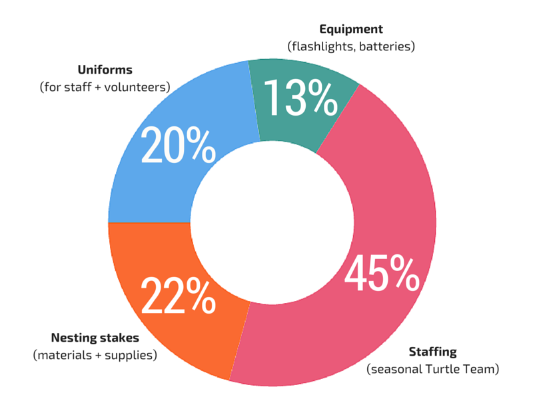
ADOPT-A-TURTLE CAMPAIGN
From our December/January Adopt-a-Turtle Campaign, we were able to raise $1700 US in funds that went directly back into the turtle program. Here is the breakdown on how the money was spent.
Many thanks to all those who adopted and helped support our Turtle Program. For those that adopted a turtle nest or a turtle family, personalized upates and photos are coming soon.
|
|
|
|
| Volunteers from Phase I (January 21 to April 24, 2015) |
DIVE IN TO VOLUNTEER
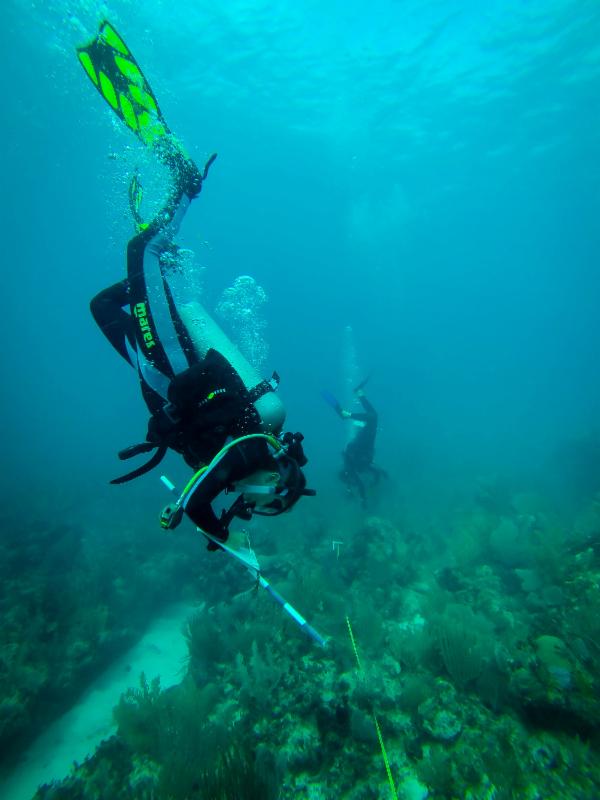
We are now accepting volunteers for the Coral Reef Monitoring Project.
This is a great opportunity for students looking for field experience in reef ecology and biodiversity conservation, or individuals interested in marine ecology and conservation.
A BIT ABOUT THE CORAL REEF MONITORING PROJECT
The main goal is to collect comprehensive data on the MAR (Mesoamerican Barrier Reef) in Akumal to assess the health of the reefs which helps CEA continue building a historical record of the anthropogenic impact on the bay as well as that of the MAR, and is used to identify what steps must be made to protect Akumal Bay and its reefs.
WHAT WILL YOU DO?
- learn theoretical background on the biology and ecology of coral reef ecosystems and the MAR
- receive training in benthic groups, fish and coral species as well as coral health identification (including identifying diseases, syndromes and competition following AGRRA and MBRS methodologies
- monitor Akumal's reefs by snorkel or scuba
- assist with the pre-analysis of the collected data
Participants may also get involved and assist with seagrass monitoring to determine the current coverage in Akumal Bay or contribute to other ongoing projects and programs.
WHO CAN APPLY?
To qualify for this program and project, we are looking for those who:
- have an open water diver certification by the time the program starts
- are 21 years old
- are keen on gaining field experience or are curious about marine ecology
- are able to commit for the duration of the project phase
START DATE: August 25, 2015
END DATE: November 20, 2015
FEE: 1,500 USD (This includes your accommodation in our furnished co-ed dormitories in the heart of Akumal and all project-related diving costs.)
INTERESTED?
|
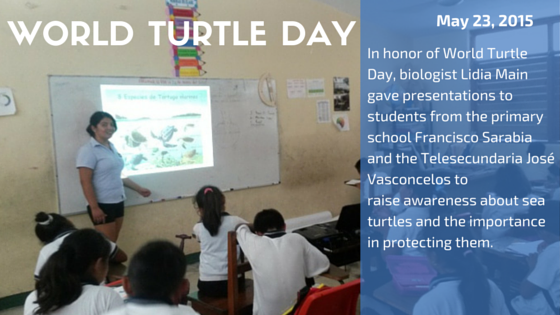
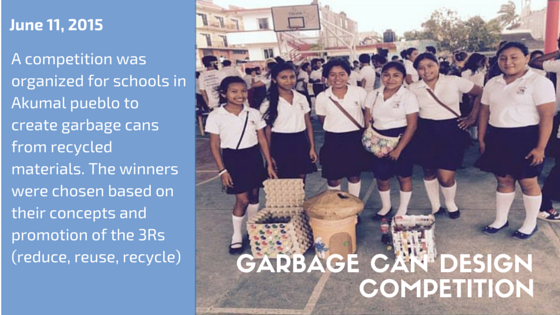
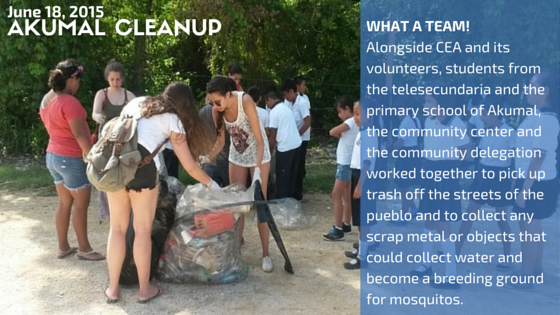
Education and awareness are the keys for change. This is our belief at CEA and the reason why we have dedicated programs and staff to provide environmental education to students of all ages, in and out of the classrooms.
|
A special thank-you to Akumal Bay Resort, Oasis Akumal and El Maharaja Riviera for sponsoring lunch for all the volunteers and to Lol-Ha Restaurant, Las Casitas Akumal, La Cueva del Pescador, El Pueblito supermarket and Turtle Bay Bakery for their participation.
|
|
VOLUNTEER SPOTLIGHT
Volunteers are the heart and soul of CEA. Whether they are in the field monitoring and collecting data or inputting it for reports, their work plays a critical role in fulfilling our mission of conservation and protection through research, education and policy.
RESEARCH TIME: DAMSELFISH + REEF HEALTH
BY MARIA JOSE GONZÁLEZ ALONSO
|
|
|
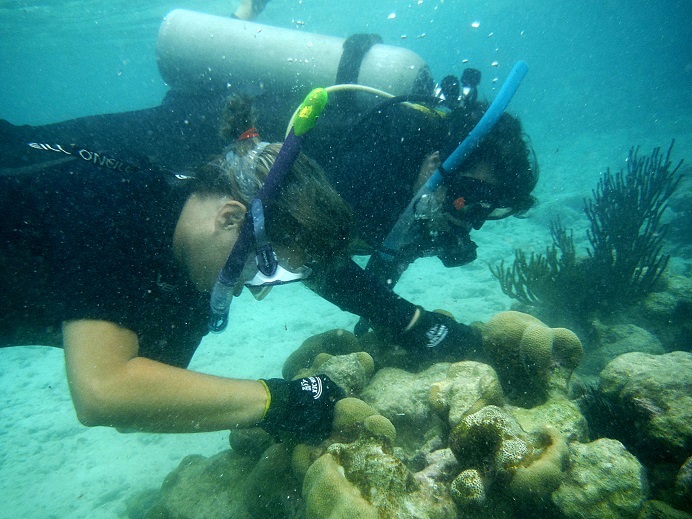
Elodie and Vanessa cleaning algae from coral .
|
NAMES:
Elodie Swampeol // Vanessa Favier
COUNTRY: France
PROGRAM: Coastal Ecosystem Program
WHY CEA
Elodie is currently studying for a Master's in Ecology and she needed to find a topic for her thesis. Her desire to go abroad into the research
field brought her to CEA. At first, she was interested in doing research on turtles but after she spoke with the coordinator of the Coastal Ecosystems Program, she decided to participate in a project about damselfish and reef monitoring.
Vanessa studied for a Master's in Biochemistry and was working in France but she wanted to quit and change the course of her professional life, so she decided to join her friend Elodie to help with the investigation. She had been to Akumal before and decided it was a perfect time to come back.
WHAT THEY DID
They researched damselfish to see if they were the cause of the excessive growth of algae, which damages the coral. They had two colonies for observation: one coral colony with no damselfish and another with damselfish.
They focused on the damselfish, the behavior of the herbivore fishes, and the growth of algae between the two colonies.
The results were that damselfish promoted the growth (FARM) of turf algae. Damselfish are very territorial and do not allow other herbivorous fishes to feed on it. In addition, their population keeps increasing because they have very few predators in the bay. All the while, the conditions for algae to survive are excellent (nutrients and pollution).
Excessive growth of algae kills reefs.
The possible solutions they proposed are:
- Control the pollution in the bay. A way of doing this is by treating waste water.
- Control the number of tourists who enter the beach.
- Increase the predators of damselfish to recreate the ocean´s population (snappers and groupers).
- Increase the population with big and adult herbivores because they feed from the algae.
THOUGHTS ON AKUMAL AND MEXICO
They enjoyed the field work in the bay. They feel satisfied with their work because this study was a baseline for more volunteers to come and continue the research. In the future the results will be used in reports outlining the effects of pollution so that the government can be informed and take the necessary measures. After five months of hard work, Elodie and Vanessa plan to travel to Costa Rica for vacation.
|
|
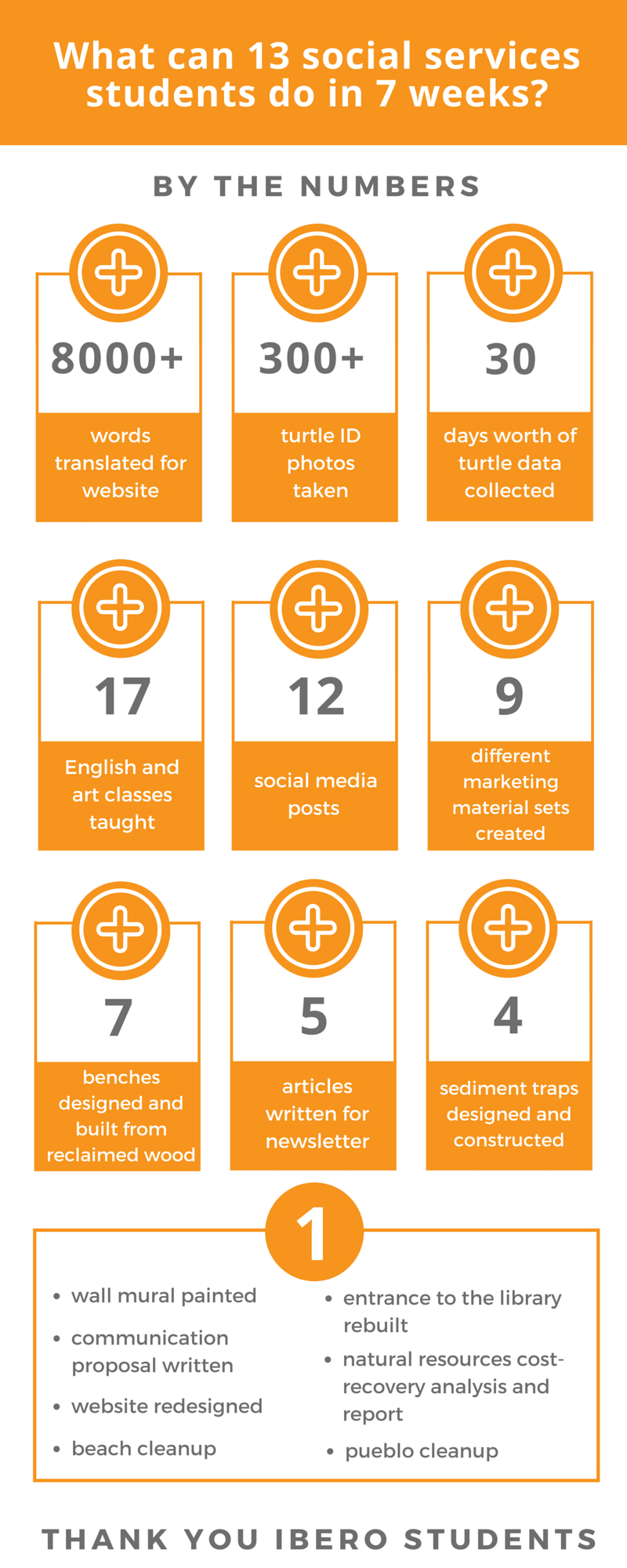
GIVING A HELPING HAND
BY MARIA JOSE GONZÁLEZ ALONSO
WHAT IS SERVICIO SOCIAL?
To graduate from university in Mexico all students are required to put in 480 hours of social service work. This type of service-learning blends traditional classroom knowledge with direct hands-on experience which give students the opportunity for professional and personal growth while giving back to a community.
CEA accepts students from all over Mexico to participate in this type of exchange program, where students can put their knowledge and skill to use for the service of CEA and for the community. Recently, a group of students from the Universidad Iberoamericana (Mexico City campus), including this author, came to Akumal to carry out our seven-week
servicio social program.
WHY CEA?
For me, CEA definitely offers an alternative not only to fully comply with this requirement but also to do it in a very responsible manner. Its in-house-developed program encourages personal and professional growth. We were the second generation to have participated in this exchange program between Universidad Iberoamericana, (Mexico City campus) and CEA.
WHAT DID WE DO?
From June 1 to July 17, thirteen of us were at CEA. We were divided into teams defined by our area of expertise and personal interest. And while we all had different backgrounds (Economy, Textile and Industrial Design, Graphic Design, Media and Communication, and Civil Engineering), we all were able to get involved and give back.
Most of us focused on projects based on our fields of studies but we also had opportunities to get involved in activities that matched our interests like researching and identifying turtles, giving English and art lessons, and participating in cleanups on the beach and in the town.
THOUGHTS ON THE EXPERIENCE
This summer was a whole new experience for me. I had visited Akumal before, unaware of the existence of CEA. Not knowing what to expect, I ended up working in a very well-structured organization that continuously works for the preservation of the environment, especially for the turtles in Akumal Bay. After six weeks of monitoring and collecting data on turtles and the in-water tourism activity, I realized I had an amazing time while helping CEA in the preservation of the green turtle. I would gladly do it again and strongly recommend CEA as an institution.
---Agustin Portal (Civil Engineering)
To change my lifestyle, go away from home and work with the community was very interesting. This experience widened my perspective regarding the preservation and protection of natural resources, and it also helped me realize how important it is for humankind.
---Gilberto Quintana (Industrial Design)
|
|
GETTING OUT OF THE CLASS AND INTO THE FIELD
BY MARIA JOSE GONZÁLEZ ALONSO
Akumal entices, not only those who want to spend their vacations enjoying the Caribbean sea, the resorts and the turtles, but young college students who want to further their studies during their school breaks.
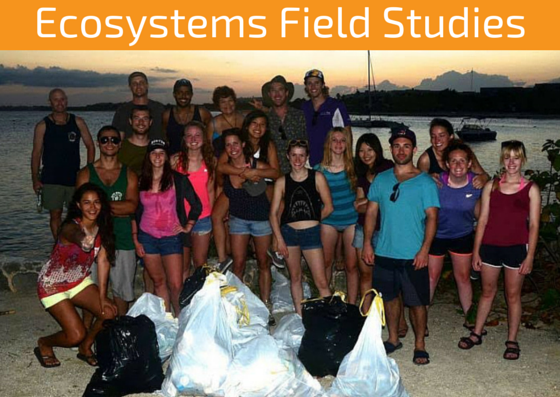
Steve Johnson is the director of the Ecosystem Field Studies Program, where he teaches the Caribbean Ecosystem Field Studies class in Akumal twice a year: December to January and May to June.
"The University of Montana provides the academic credits for this program, so I get students from the United States and Canada, from different universities to come here and take the class. They learn by doing and get credit," says Steve Johnson.
It is a multi-disciplinary course as it includes concepts from ecology, geography, geology, and focuses on teaching scientific research methods and basic science concepts to the students.
"Every day we are collecting data and learning how to use equipment. Then, during the last half of the course the students have to do their own research project. That is what we build up to while we are here," commented Steve regarding the course work.
This program certainly alters students' perspectives. It helps them figure out if research is what they want to do in the future. For many of them it is their very first time traveling to another country by themselves or learning how to scuba dive, which makes this experience personally and academically challenging.
"I started traveling to Akumal with my family eight years ago and I fell in love with it. It is a great location for the class because we have access to CEA´s dorms, we can get involved with people who work with the environment, and enjoy excellent diving," shared Steve.
|
|
New Website
We are working hard on our new website and hope to have it launched soon. If you want to stay in touch you can follow us on Facebook o
r drop us an email at our temporary email address
communications.ceakumal@gmail.com
|
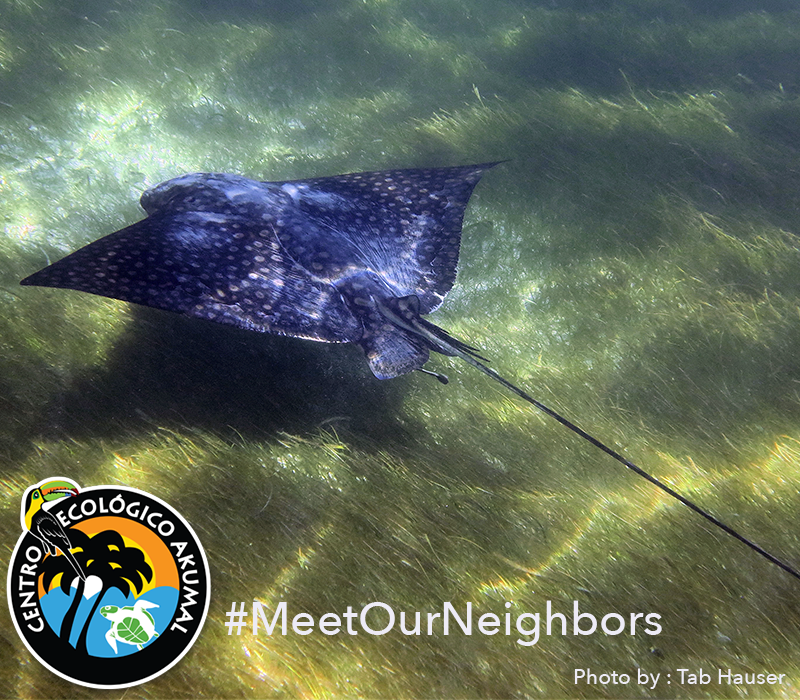
#MeetOurNeighbours
For those following our Facebook page, you may have already come across our #TurtleTuesday posts--a chance to see updates on nesting activity or to learn interesting facts about turtles.
#MeetOurNeighbours is a new addition to our page. The intention is highlight different species (both in water and on land) that live in and around Akumal.
If you have some images that you would like to be featured in our #TurtleTuesday or #MeetOurNeighbours posts, please send them to
communications.ceakumal@gmail.com with your complete name. Photo credit will be given.
|
|
Whether you are looking for an internship or ways to incorporate responsible tourism activities into your travel plans, drop us a line. We would love to hear from you and see how we can work together.
communications.ceakumal@gmail.com
|
STAY CONNECTED


|
|
|
|
|