As part of engaging in Black History Month, we must acknowledge there is still much work to do in terms of reducing disparities and disproportionalities facing children of color involved in the child welfare system.
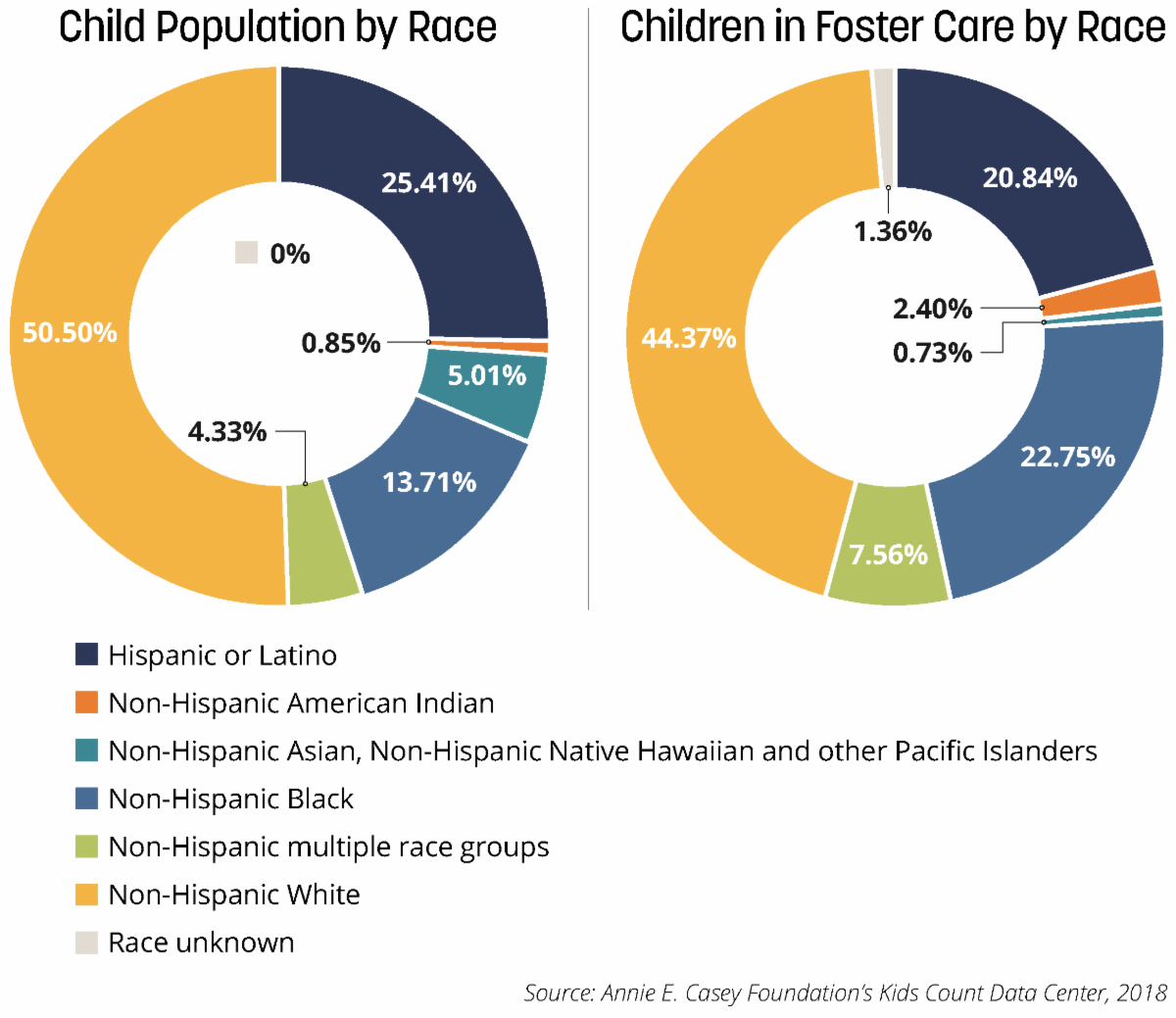
A ccording to 2018 national data from KIDS COUNT®, Black children comprised approximately 14% of the population, yet 23% of children in foster care were Black. Once in the system, Black children are more likely to languish in foster care, less likely to be reunified with their families, and age out in greater numbers. |
|
For extended learning, the National Museum of African American History & Culture has created a space dedicated to the 2022 theme: Black Health & Wellness. This space highlights Black contributions to Western medicine, addresses health disparities facing Black communities, and encourages healing through education. Click here to learn more. |
|
Check out the Latest Additions and Updates
to our Program Registry!
Recent Changes in Scientific Rating
The following program underwent a rereview and Scientific Rating change due to new published, peer-reviewed research in the topic area where it was already listed:
Existing Programs Added to Additional Topic Area
The following program submitted to be considered in an additional topic area during the Open Submission period in 2020:
Access the most recent updates to our Program Registry and Resources sections any time on the CEBC's What's New page!
|
|
Resource Center
The State of the Evidence for Intervention and Preventative Programs for Child Welfare-Involved Populations
As of February 2022, the CEBC has reviewed and rated more than 575 programs. These programs are organized across 55 unique topic areas and each topic area varies in the number of programs with published peer-reviewed research evidence.
We've compiled a resource guide, which lists topic areas with the smallest number of research-supported programs, in order to illustrate where gaps in effective services exist for child welfare-involved populations. For comparison's sake, this guide also includes the topic areas with the largest number of research-supported programs. Click here to view and download.
|
|
|
|
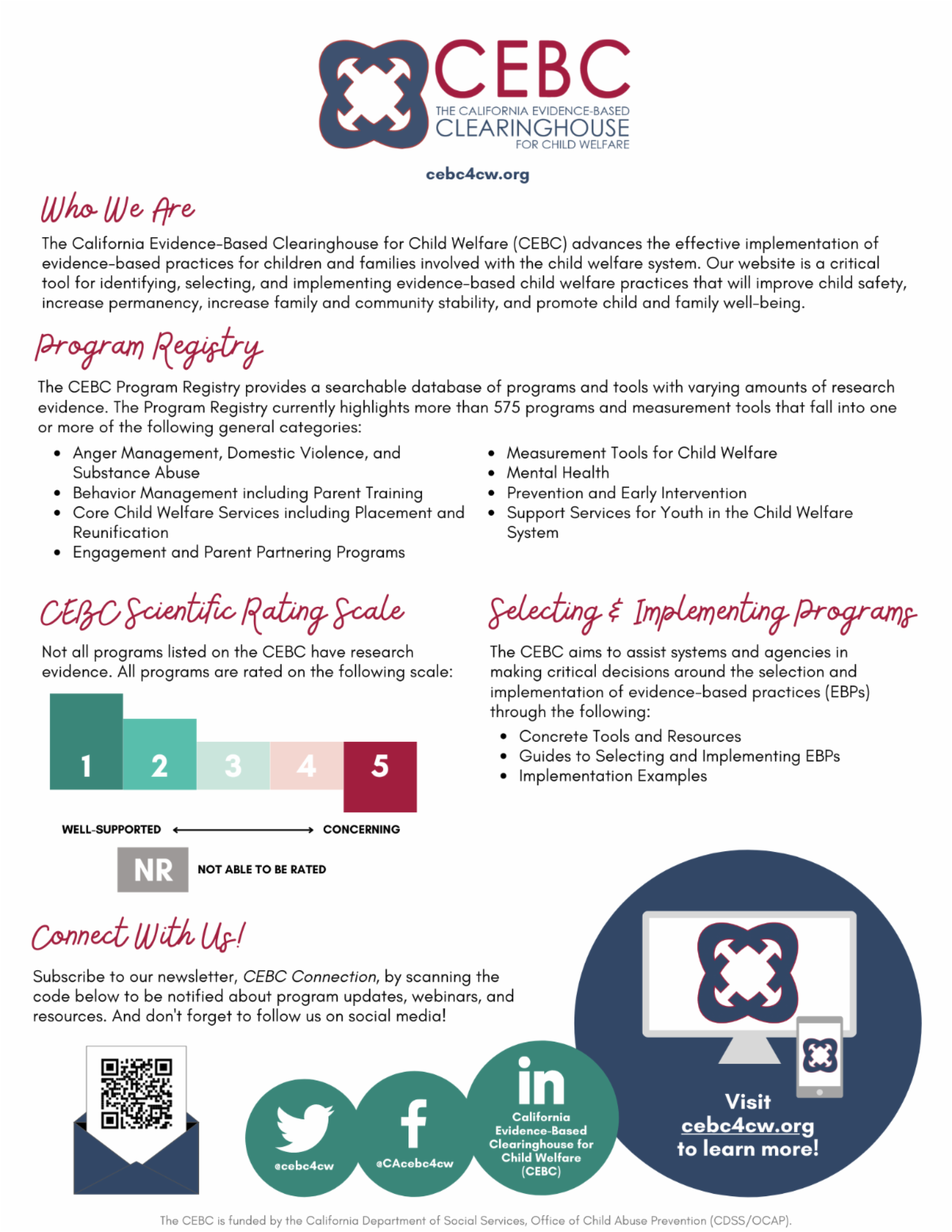
Who We Are: A One-Page Guide to the CEBC
The CEBC is excited to release our new one-page guide that highlights how we support the effective implementation of evidence-based practices for children and families involved with the child welfare system, including who we are, information about the Program Registry and CEBC Scientific Rating Scale, overview of selecting and implementing programs, and all the ways you can connect with us!
|
|
CEBC Resources for January Awareness Initiatives:
Last month, the CEBC highlighted partner resources related to two of January’s prominent awareness initiatives. Now, we are sharing CEBC-specific resources for use by child welfare professionals:
-
National Mentoring Month: For programs in which there is a structured relationship between a child or adolescent involved in the child welfare system and a mentor, the CEBC website includes the following topic area: Mentoring Programs (Child & Adolescent).
View the CEBC’s full list of topic areas here.
|
|
Upcoming CalTrin Webinars
Feb. 18, 2022 | 10 A.M. – Noon
This 2-hour overview of Motivational Interviewing will include a brief history of the method, a breakdown of the principles and skills, viewing and debriefing a demonstration video, and time for Q&A to explore application of the skills and moving forward.
|
Feb. 22, 2022 | 1:30 – 3 P.M.
This overview of the foundations of mental health in children 0-5 will cover the signs and symptoms of mental health concerns in infants, toddlers, and preschool age children.
|
|
Strengthening Families’ Protective Factors: Focus on Knowledge of Parenting & Child Development
March 1, 2022 | 2 – 3:30 P.M.
Learn about parenting practices that promote peace and lessons that explore the physical, emotional, and sexual development of children.
|
March 9, 2022 | 9:30 A.M. – 12:30 P.M.
This training will provide participants with a greater understanding of culturally responsive family engagement practices.
|
CalTrin's professional development events and programs are provided at no cost to participants and are currently offered online. All webinar times are Pacific Time, unless otherwise noted.
|
|
Thank you for your interest in the CEBC, !!
Also, don't forget to add us to your "Safe Sender" list!
Sincerely,
The CEBC Team
|
|
|
|
|
|
|
|