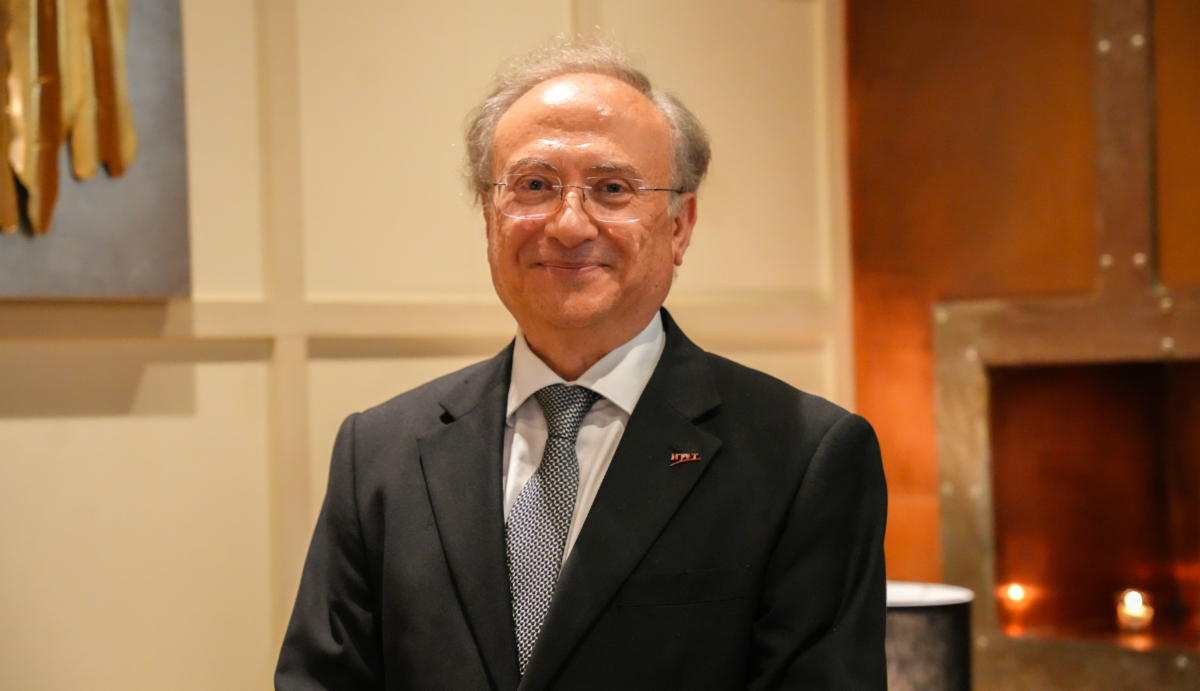
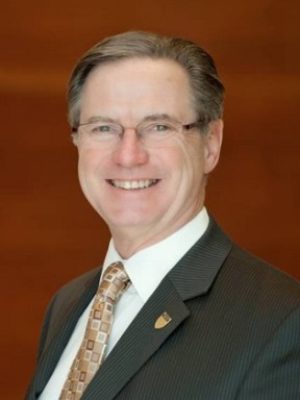
Dear Friends of Civil and Environmental Engineering, | | |
Reflecting on more than 30 years at NJIT, I am continually impressed by the achievements of our students, staff and faculty, whose contributions advance science and engineering while serving communities near and far. I am grateful to be part of this progress and proud of the energy and initiative that define our department.
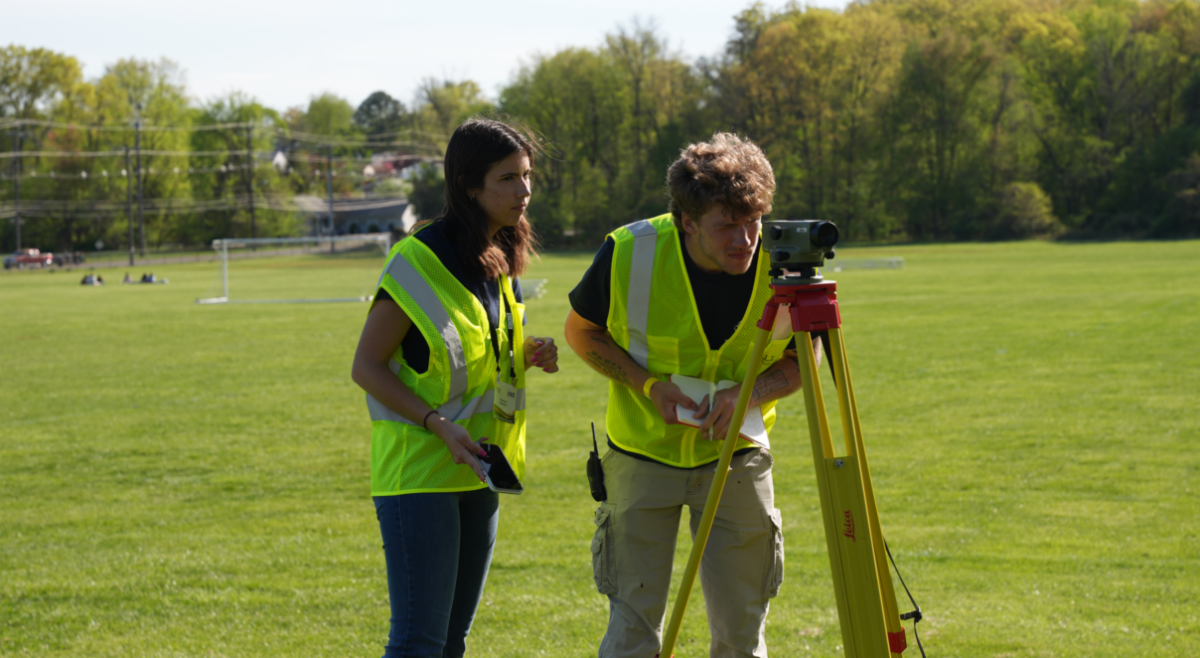
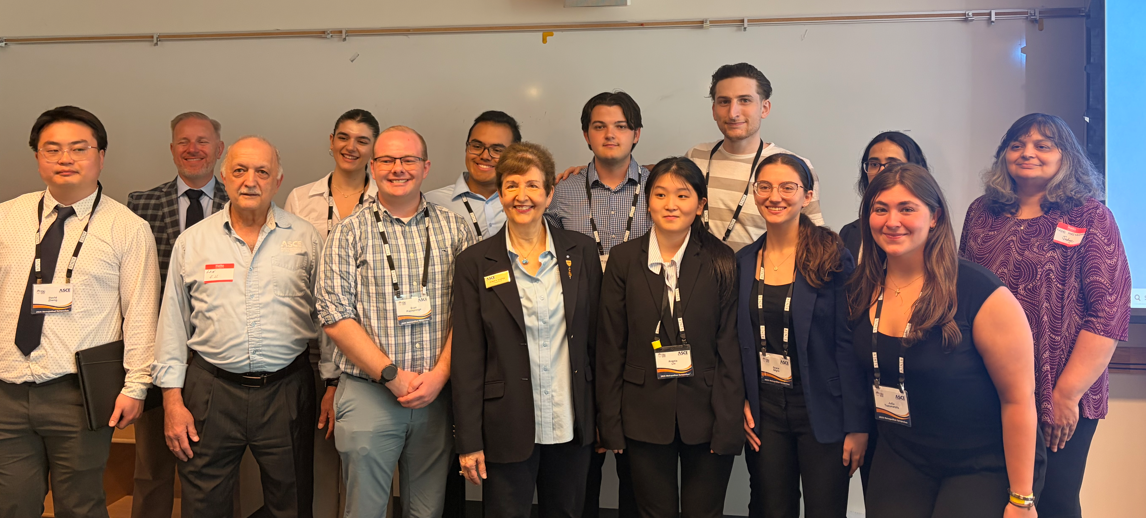
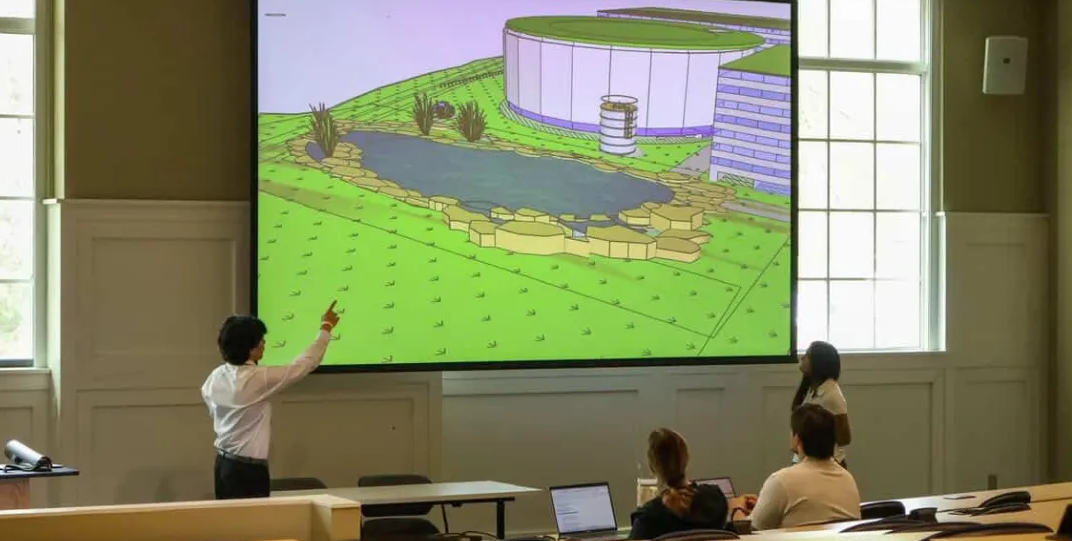
Our students continue to distinguish themselves on many fronts. The campus chapters of the American Water Works Association and the American Society of Civil Engineers have performed exceptionally well in community projects and collegiate competitions. Their engagement with industry mentors strengthens both their academic preparation and professional development. I invite you to read about their latest activities in this newsletter, alongside the awards and scholarships earned by students and faculty from leading industry organizations.
We are also pleased to announce that the Bachelor of Science in Environmental Engineering is returning to our curriculum this fall. The program provides rigorous grounding in water quality, waste management and ecological health through courses such as Remedial Systems Design and Environmental Impact Analysis, preparing graduates to develop sustainable and resilient engineering solutions to pressing environmental challenges.
Our faculty, staff and student researchers continue to advance knowledge and drive impact across a broad range of critical fields. From clean water access and emerging contaminants to infrastructure resilience, sustainable materials and intelligent transportation systems, our department addresses some of the most important engineering and environmental challenges of our time. Our researchers conduct internationally recognized work on oil spill remediation, PFAS, coastal resilience and the detection and treatment of unregulated chemicals in drinking water and the environment. In the built environment, our teams are developing sustainable and damage-tolerant construction materials deployed on projects ranging from major bridge rehabilitations to earthquake-resistant buildings. Our transportation researchers apply artificial intelligence, smart sensing and data analytics to improve safety and efficiency across highway, rail and maritime systems.
| | |
These efforts are supported by federal and state agencies, including the National Science Foundation, the Federal Highway Administration, the United States Department of Transportation, the New Jersey Department of Transportation and NJ Transit, and carried out in close collaboration with regional and industry partners to ensure our work translates into lasting real-world impact.
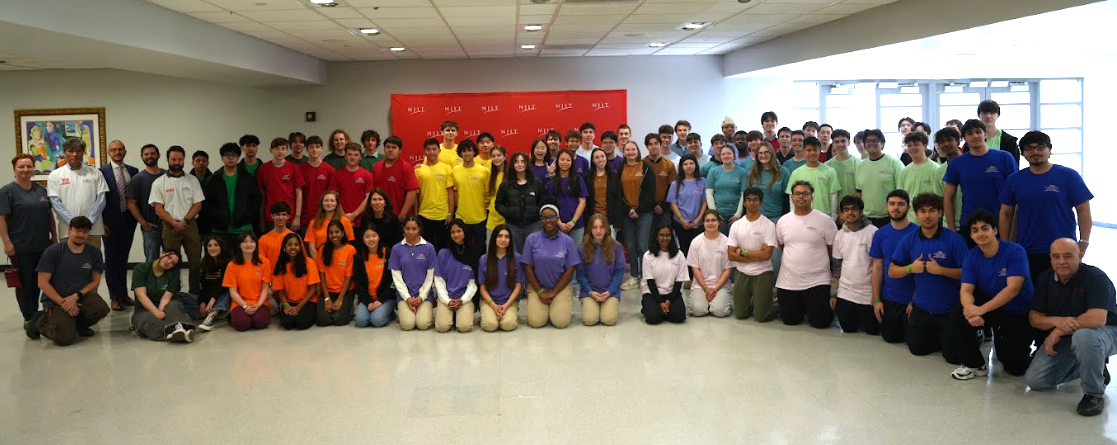
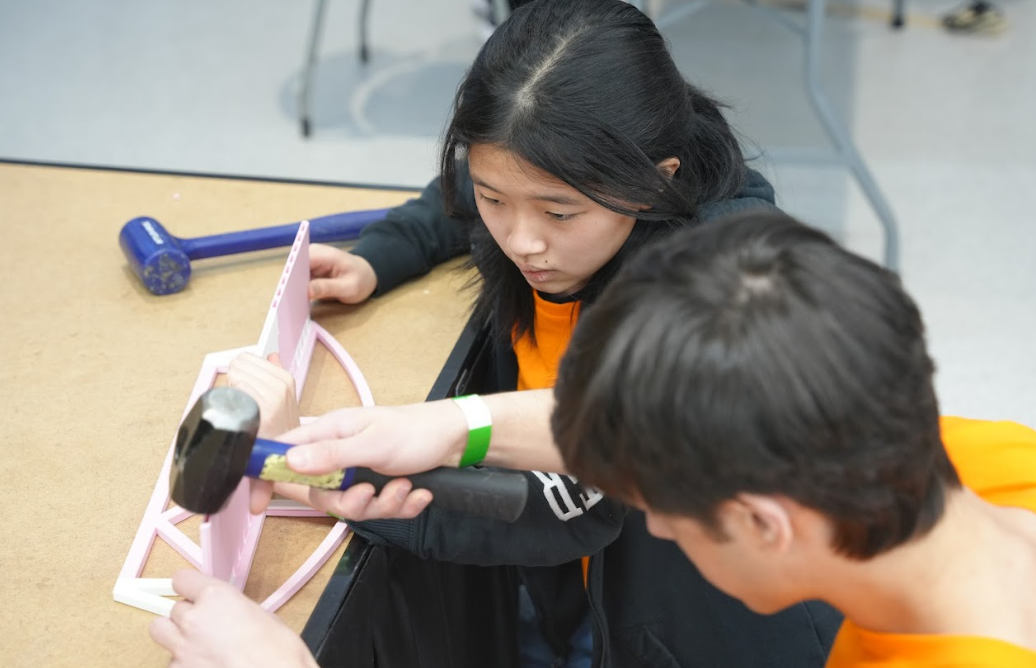
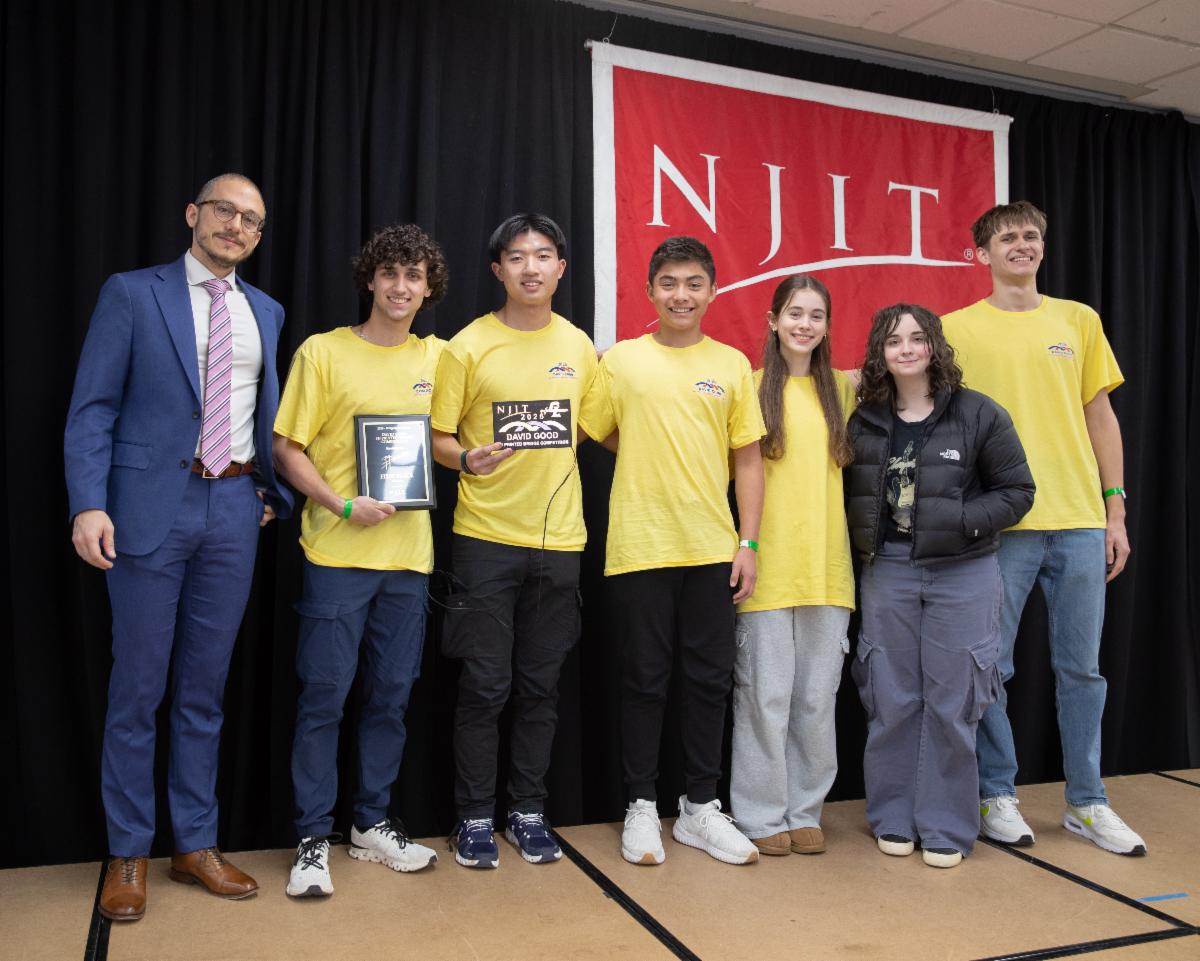
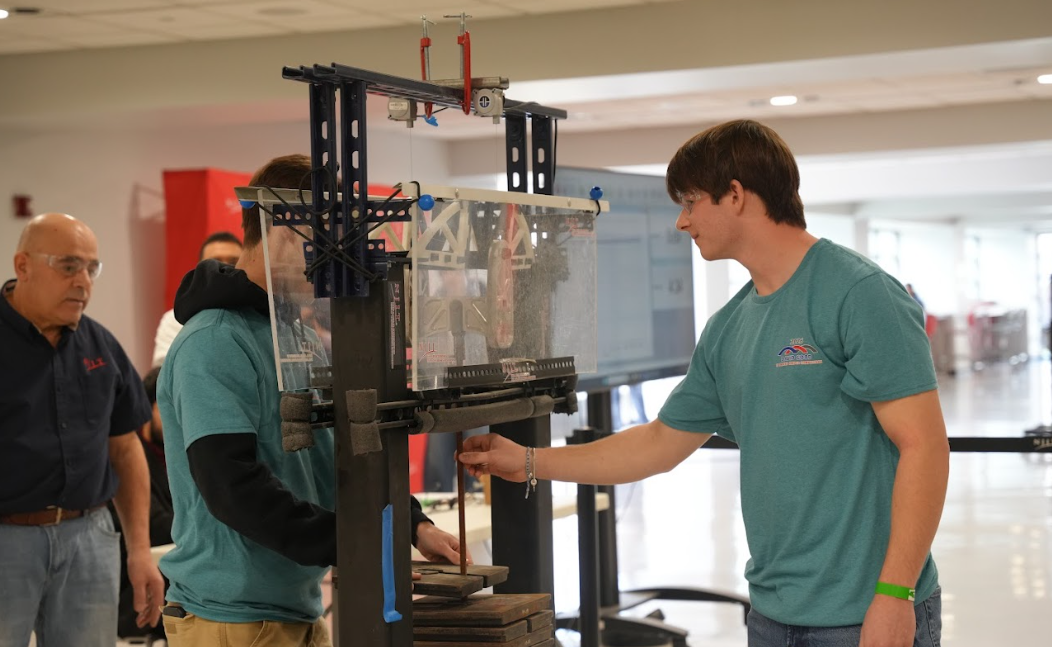
At the graduate level, our Corporate Partnership Program continues to support working professionals seeking to advance their expertise through master's degrees and graduate certificate programs at a discounted tuition rate. We welcome our current partners; T&M Associates, Colliers Engineering & Design, Langan, HNTB, Pennoni, ANS, Dewberry, SESI and PSEG; and look forward to expanding this network. Our Industrial Advisory Board has been instrumental in promoting this program as well as sustaining signature events such as the David Good 3D Printed Bridge Competition, which this year set a new record with 16 competing high school teams.
I extend my congratulations to this year's graduates across all of our programs. Your accomplishments at NJIT are a foundation for what lies ahead, and we look forward to hearing about the impact you make beyond our walls. Thank you for being part of our department.
Sincerely,
| | | |
Newsletter Contents
- In the News
- Department Highlights
- Department Research
- Student Spotlight
- Faculty Highlights
- Alumni Highlights
- Extracurriculars
- Events
- Our Advisory Board
- Recent Publications
- Recent Grant Awards
- Newsletter Credits
- Special Thanks
| |  | Follow us on Social Media! | |
Opportunities for Students
We collect information on various opportunities for students and alumni, such as internships, co-ops, scholarships and other job postings. Feel free to contact us at cee@njit.edu with any potential new openings!
| | |
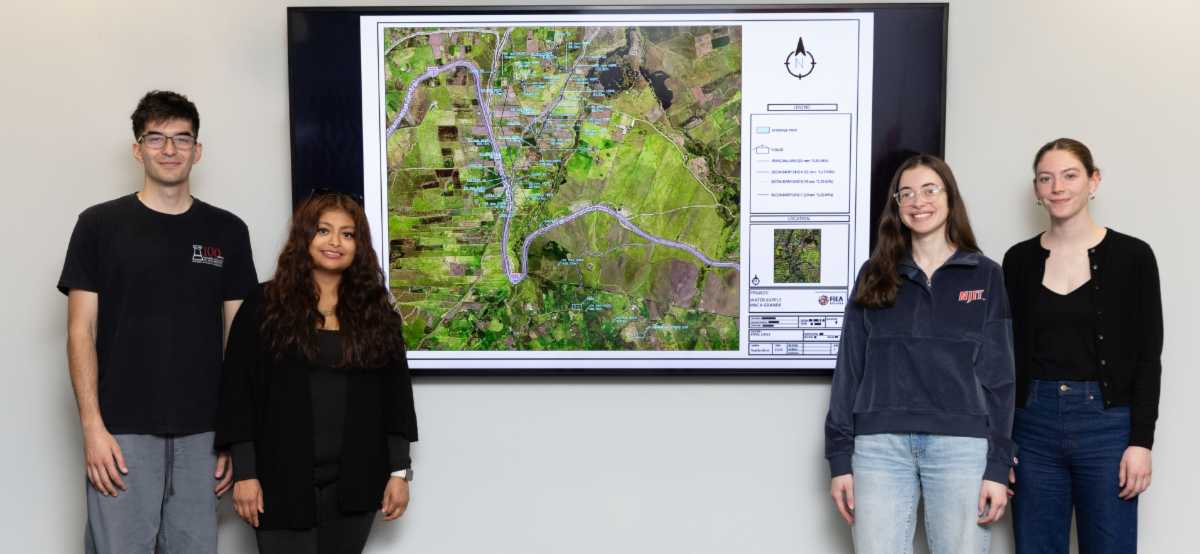
Bringing clean water to an Andean village 3,000 miles from Newark
A team of Engineers Without Borders students designed a gravity-driven piping system to bring clean water to houses in a remote village in Ecuador. The system they engineered on campus was built and installed earlier this year by community volunteers who were overseen by an Ecuadorian construction company. It now delivers filtered spring water to 15 families in Maca Grande, a small agricultural community in the Andes. The villagers had previously walked up and down a long, steep slope to collect water from a stream below them that was contaminated by agricultural runoff and often littered with trash. Read more.
| | |
Optimizing rain gardens in a flood-prone city
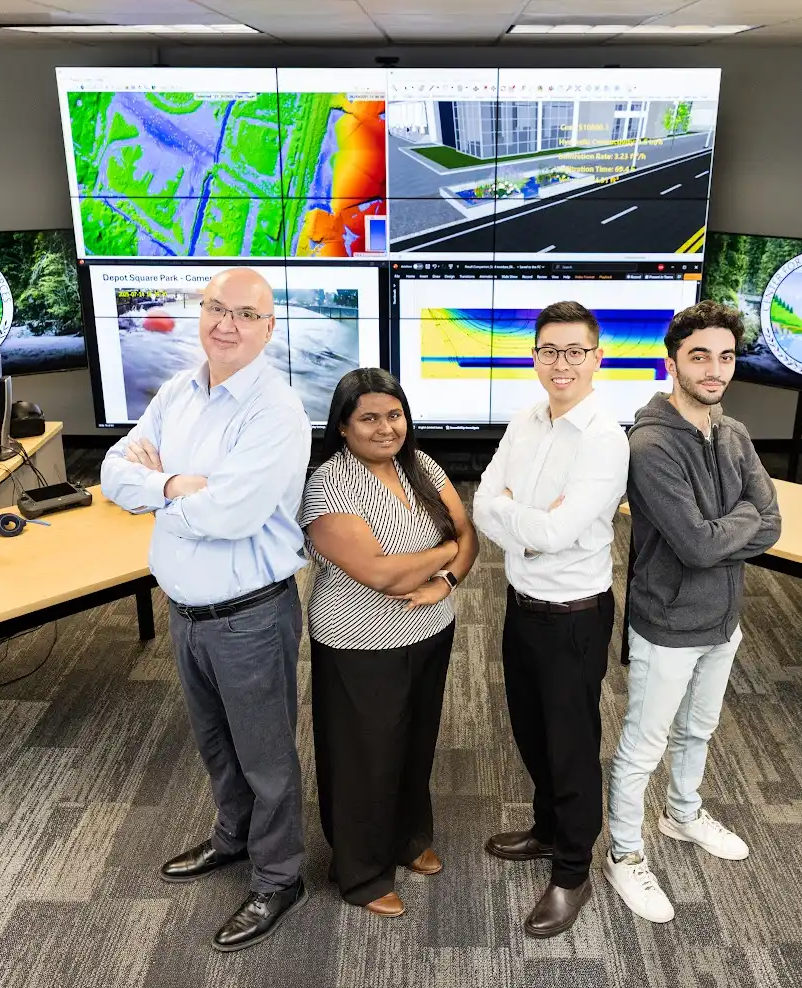
With nearly $1 million in state funding, NJIT’s Center for Natural Resources (CNR) is leading a team of engineers, modelers and construction designers who are developing rain gardens in public areas of flood-prone Paterson, N.J., such as parks, schools and community centers. The city’s many combined stormwater and sewage systems struggle to manage increasingly frequent, powerful rainstorms, as well as flooding from the Passaic River, which snakes through its commercial and residential neighborhoods. Contaminated water spills onto city streets and into the river when they overflow. Read more.
| | |
ASCE honors five remarkable leaders with OPAL Awards
Patrick Natale, P.E., NAC, Dist.M.ASCE was honored with an Outstanding Projects And Leadership Awards (OPAL) award for his management skills in leading ASCE’s development for 12 years in the process of the recognized Report Card for ASCE’s codes and standards. Natale was also a principal investigator on a National Science Foundation-funded project that helped increase the number of women in the engineering profession. Read more.
| | |
Engineers center sustainability at NJIT, launch new seminar series
Environmental and natural disasters challenge engineers to think about designs that not only withstand damage, but also protect the environment and communities. To that end, a new seminar series at the New Jersey Institute of Technology encourages students to consider sustainability-based solutions for civil infrastructure and environmental systems. At the inaugural seminar, Michel Boufadel, a distinguished professor of civil and environmental engineering and the director of NJIT's Center for Natural Resources, spoke about his scientific assessments for two major environmental disasters with far-reaching impacts: 1989's Exxon Valdez oil spill in Alaska's Prince William Sound and 2010's Deepwater Horizon accident in the Gulf of Mexico (renamed "Gulf of America" in 2025 in an executive order signed by President Donald Trump). Read more.
| | CEE 17th Annual Commencement and Awards Ceremony | |
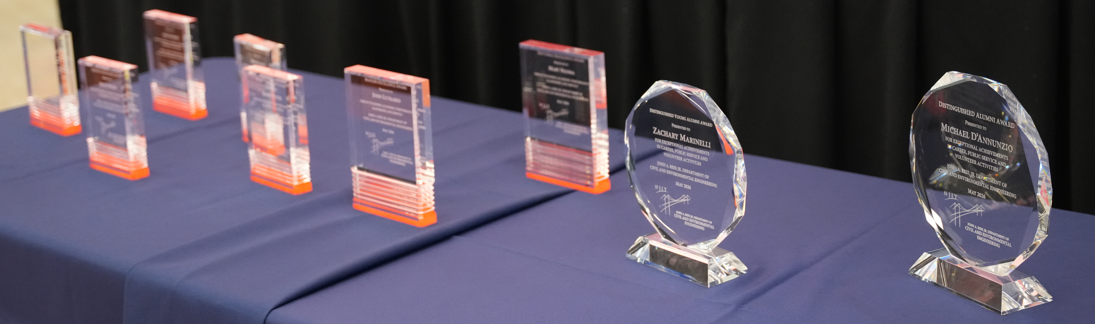
At the CEE Commencement and Awards Ceremony, the department honors those who go above and beyond for our community. These individuals exhibit outstanding academic performance, exceptional career achievements, leadership, public service and volunteer activities that bring distinction to the department. Please join us to celebrate these community members and their efforts.
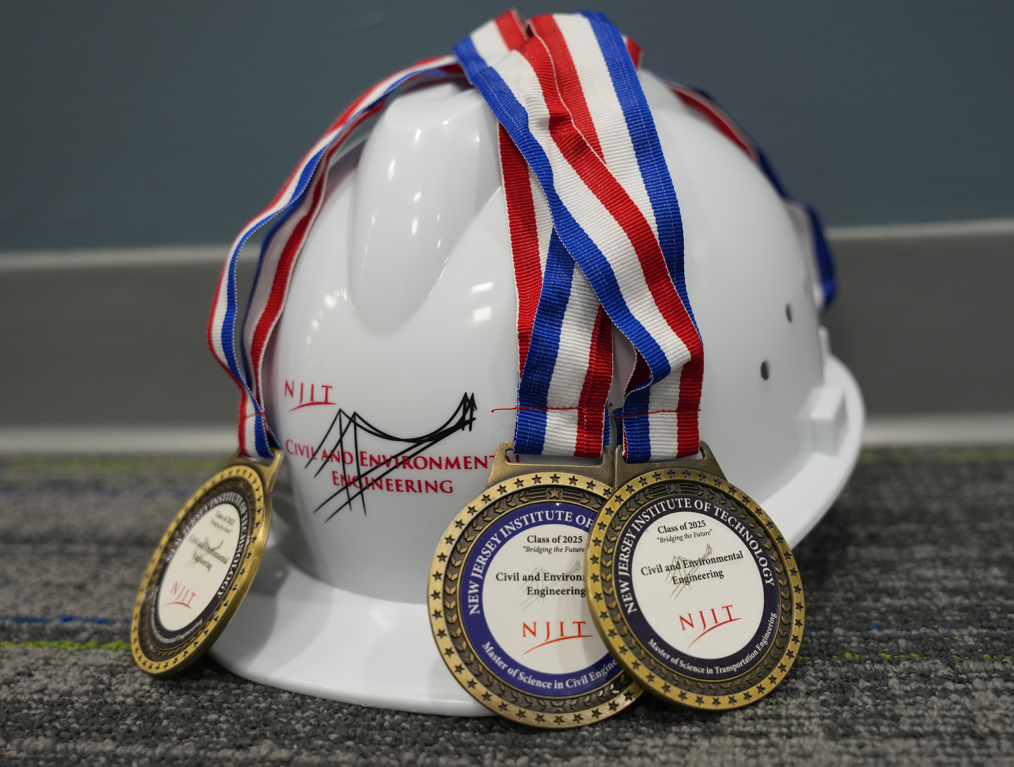
Additionally, to commemorate students’ hard work leading up to graduation, CEE is gifting medallions and personalized hard hats to all graduates.
| | |
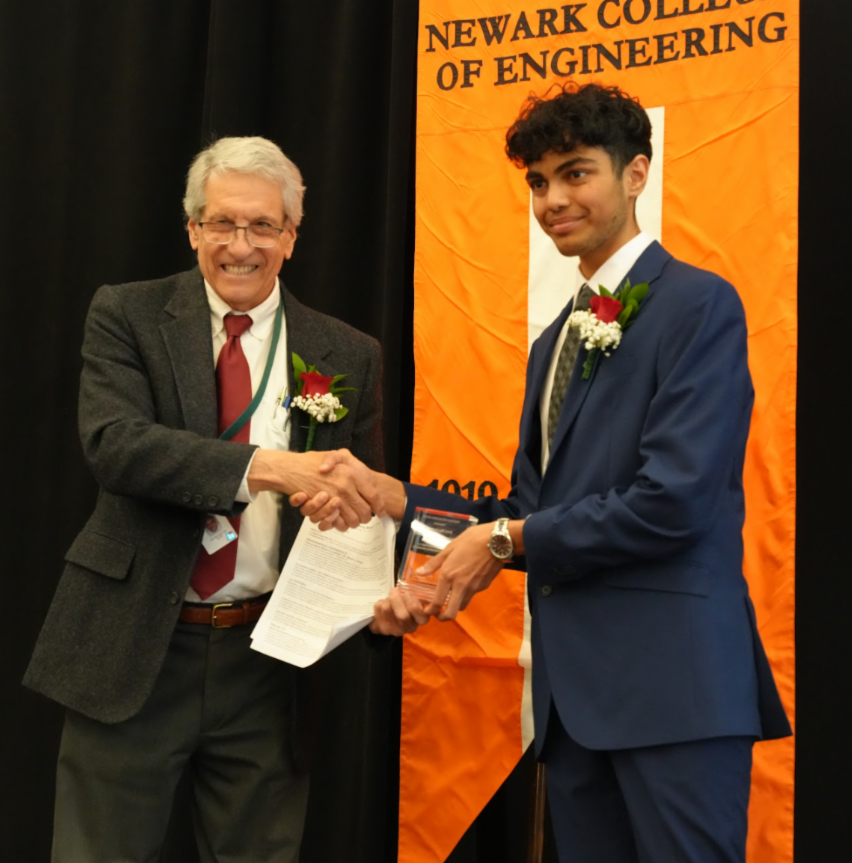
Dwij Brahmbhatt
First-Year Student Excellence Award
Presented by Frank Golon, Ph.D., P.E., professor of practice
| |
Dwij Brahmbhatt is a member of the American Society of Civil Engineers (ASCE), serving in leadership roles as secretary and community service chair for a chapter with more than 70 members. He is an undergraduate research assistant in the Materials & Structures Laboratory under Dr. Matthew Adams, a role Brahmbhatt will continue over the summer. His work focuses on experimental concrete testing and sustainable cement alternatives using recycled glass to improve environmental performance. He will also serve as an orientation leader for the New Student Orientation over the summer, guiding incoming students and supporting a welcoming campus experience. Outside of academics, he is involved in SANSKAR, an organization centered around Indian culture, and has contributed to ASCE Concrete Canoe and other engineering team projects. He has maintained a 3.9 GPA during his time at NJIT.
| | |
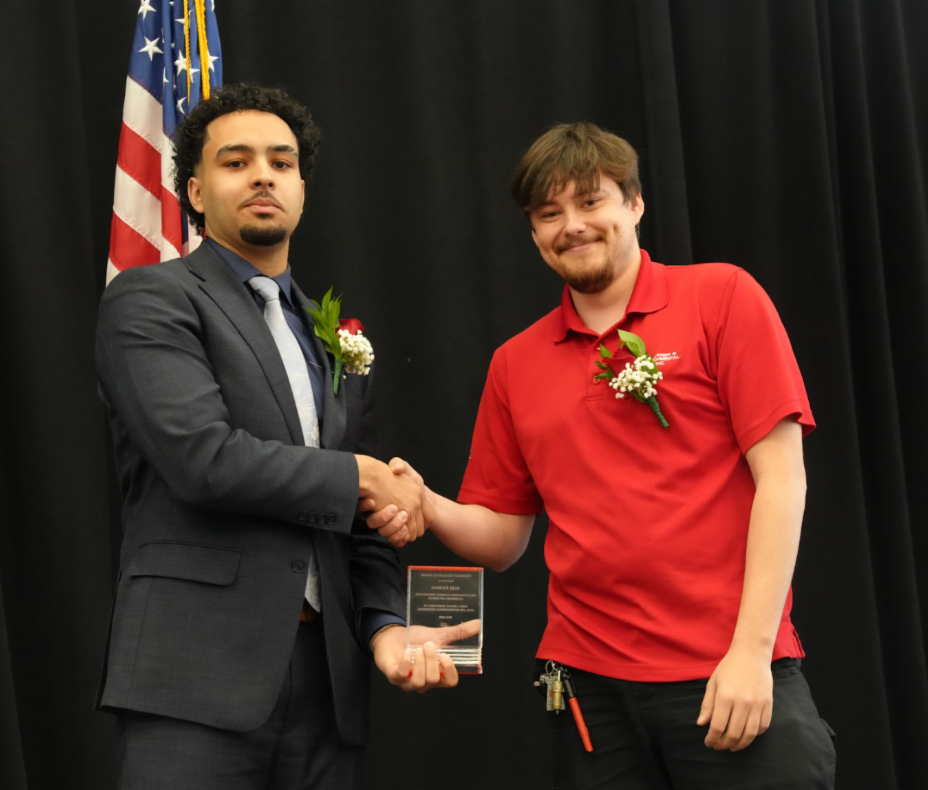
Alex Iglesias
Sophomore Excellence Award
Presented by Thomas Hickey, director of labs for education
| |
Alex Iglesias is a first-generation civil engineering student from the Dominican Republic who is actively involved on campus through undergraduate research and leadership in organizations such as the American Society of Civil Engineers (ASCE) and the Society of Hispanic Professional Engineers (SHPE). Notably, Iglesias has served as a captain for the ASCE 3D Printed Bridge team, which placed second overall in regionals this year, and is the incoming external vice president for SHPE. In these roles, he is committed to expanding opportunities for others and creating an impact on his community. This summer, he will be joining Gilbane Building as a construction project management intern in the Arlington, Va. office.
| | |
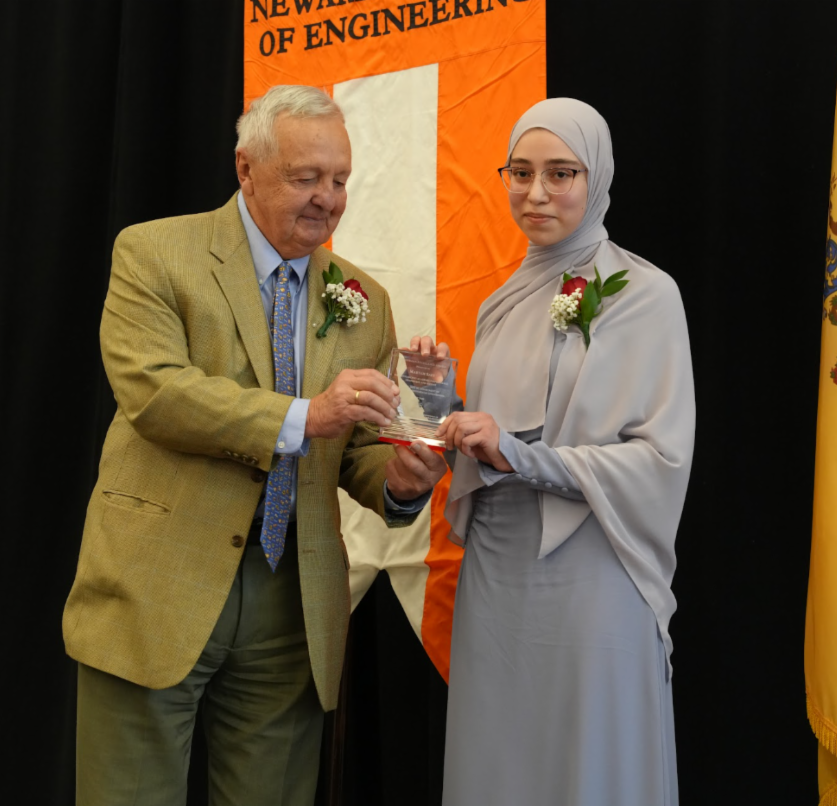
Maryam Safe
Junior Excellence Award
Presented by Walter Konon, P.E., professor
| |
Maryam Safe is an Albert Dorman Honors College scholar and an incoming member of honor societies Chi Epsilon and Tau Beta Pi. This year, she served as the civil engineering representative on the Student Senate, where she sat on the academic affairs and finance committees. During her term, she developed campus-wide surveys about course offerings and professional development opportunities, launched a civil engineering Discord server to strengthen student communication through a social platform and contributed to updates to the Senate’s finance bylaws. Safe is a member of NJIT’s chapter of the American Society of Civil Engineers and participates on the Concrete Canoe team, which placed third overall at regionals. This summer, she will continue her professional development as a structural engineering intern at Thornton Tomasetti.
| | |
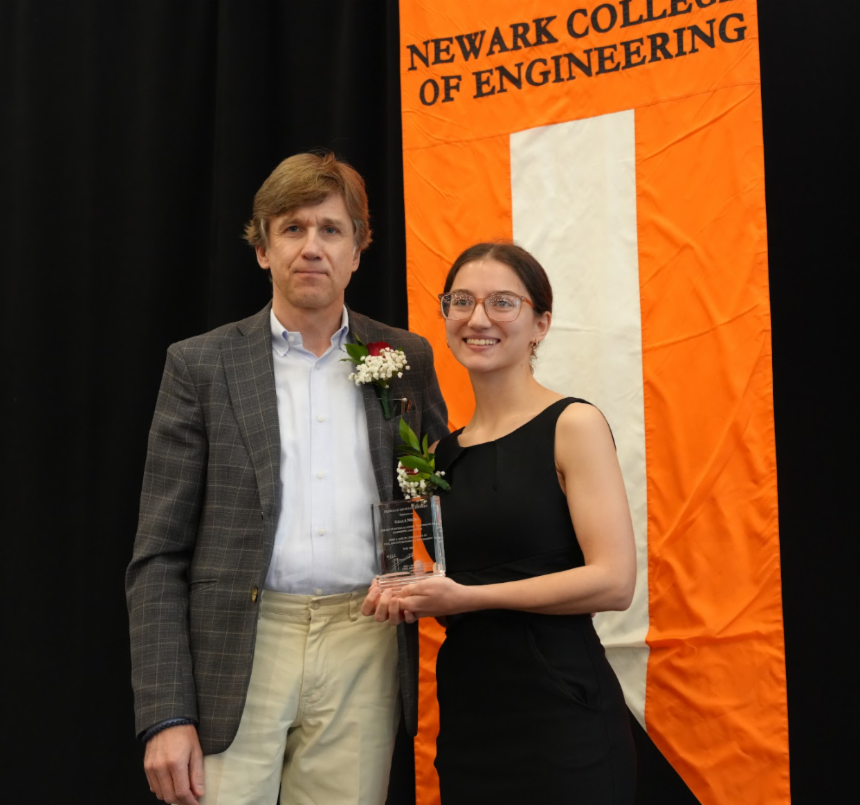
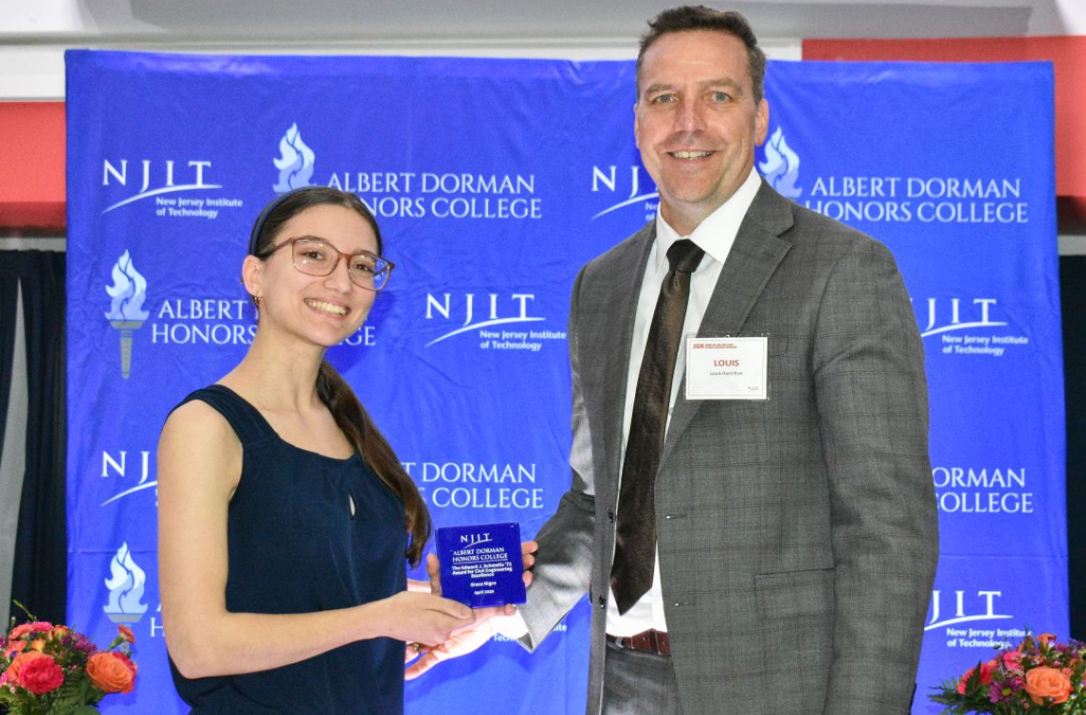
Grace Nigro
Senior Excellence Award
Presented by Branislav Dimitrijevic, Ph.D., associate professor
| |
Grace Nigro is an Albert Dorman Honors Scholar who majored in civil engineering and minored in philosophy and applied ethics. Throughout her time at NJIT, she has demonstrated a strong commitment to both academic excellence and campus engagement, serving as a peer mentor, teaching assistant and retreat leader within the Honors College. Nigro has been an active member of NJIT’s chapter of the American Society of Civil Engineers (ASCE), serving as secretary and representing the university at the regional conference in Tennessee. This year, she further distinguished herself by competing in and presenting at the Metropolitan ASCE Student Symposium's Mead Paper Competition. In addition to her academic and extracurricular achievements, Grace has interned at Mott MacDonald’s water department for the past year and will continue working there this summer.
| | |
Bruna Wuitik
Excellence in Leadership Award
Presented by Matthew Bandelt, Ph.D., P.E., associate professor
| |
Bruna Wuitik is a civil engineering major in the Educational Opportunity Program. She has received a Math Success Initiative scholarship, is a two-time captain of the Steel Bridge Team and formerly served on the executive board of the NJIT chapter of the American Society of Civil Engineers. Last summer, she worked with Skanska as a project engineer intern on the Pulaski Skyway, advancing her goal to become a project manager. Through her ability to lead projects, mentor teammates and represent her program with professionalism and determination, she has made a lasting impact both within her team and the civil engineering community.
| | |
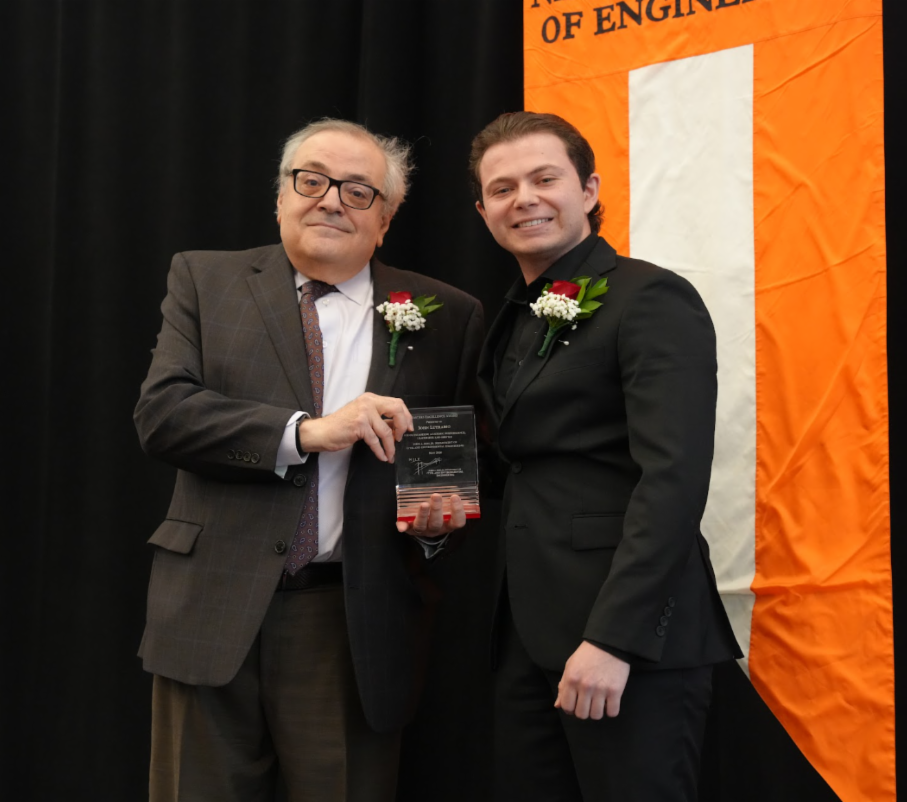
John Lutrario
Master's Excellence Award
Presented by Fadi Karaa, Ph.D., P.E., associate professor
| |
John Lutrario is a second-year master’s student who focuses on construction management. For the past year, he has interned at Schnell Contracting Limited LLC as an estimator, including visiting job sites. Prior to entering the civil engineering field, he earned a bachelor of science in biology, but pivoted upon graduation to pursue construction management. Throughout his coursework, he has excelled in researching digital twin models that enable predictive maintenance, performing risk analysis on infrastructure systems and developing plans for a hypothetical contract breach. He has maintained a 4.0 GPA. Outside of his academic and professional work, he is a guitarist, pianist and singer who writes and produces his own rock music.
| | |
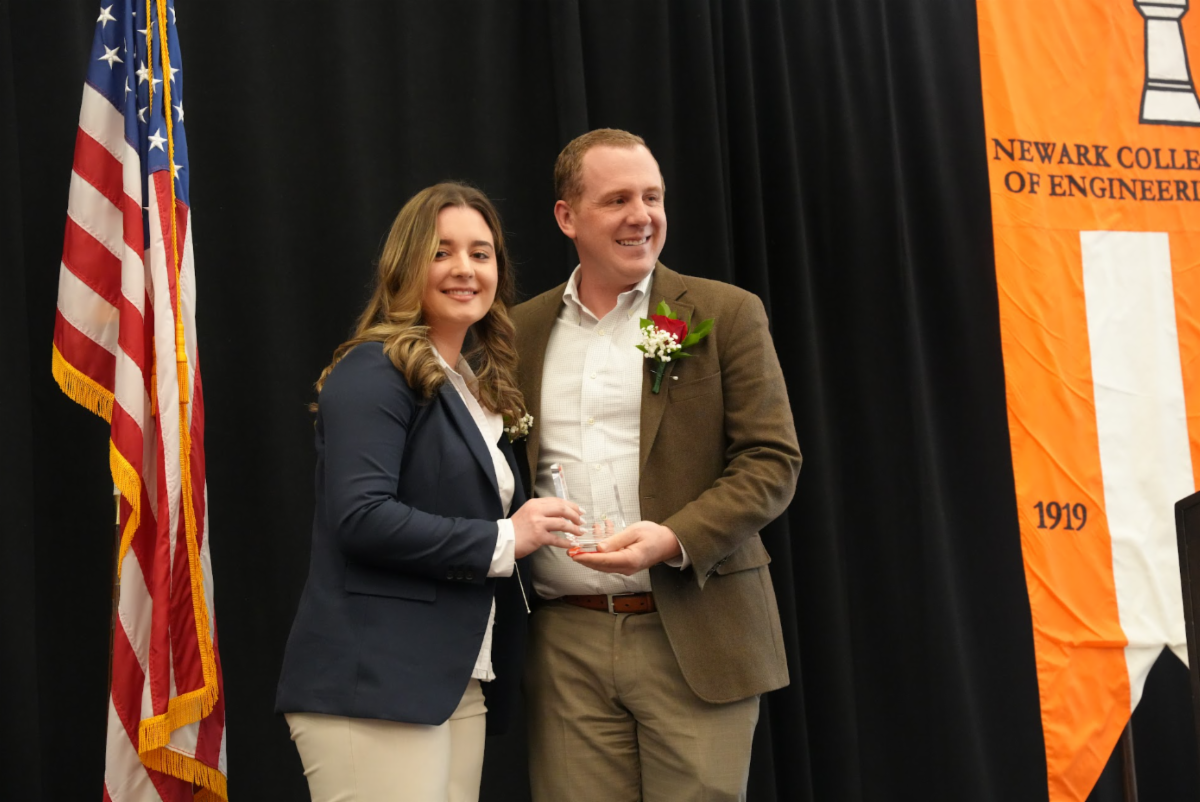
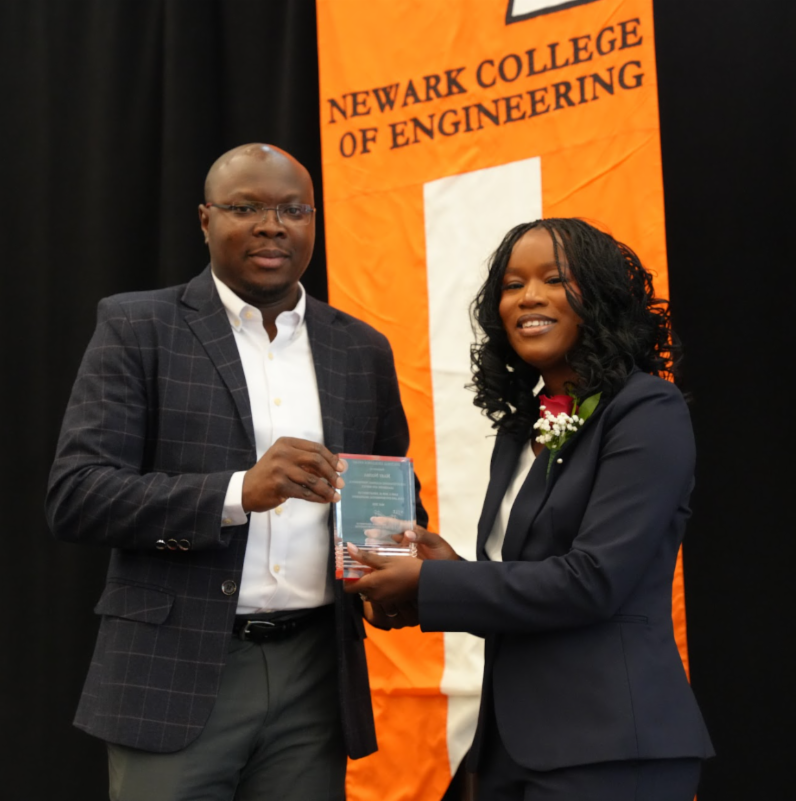
Mary C. Ngoma
Doctoral Excellence Award
Presented by Oladoyin Kolawole, Ph.D., assistant professor
| |
Mary Chikondi Ngoma concentrated on geotechnical engineering with a focus on nature-based engineering improvements. Her research integrates biotechnology and geomechanics to explore how enzymes, microbes, biopolymers and fungi can be used to enhance the mechanical properties and behavior of underground rocks. She won first place at NJIT’s Dana Knox Student Research Showcase for her work on environmentally friendly solutions for preventing infrastructure failures such as sinkholes. She has authored 26 peer-reviewed and scholarly publications, including two book chapters. She served as president of the NJIT student chapter of the American Rock Mechanics Association and is a member of the American Society of Civil Engineers and the NJIT Graduate Student Association. Following graduation, Ngoma will join WSP in New York City, where she previously interned, as a geotechnical engineer.
| | |
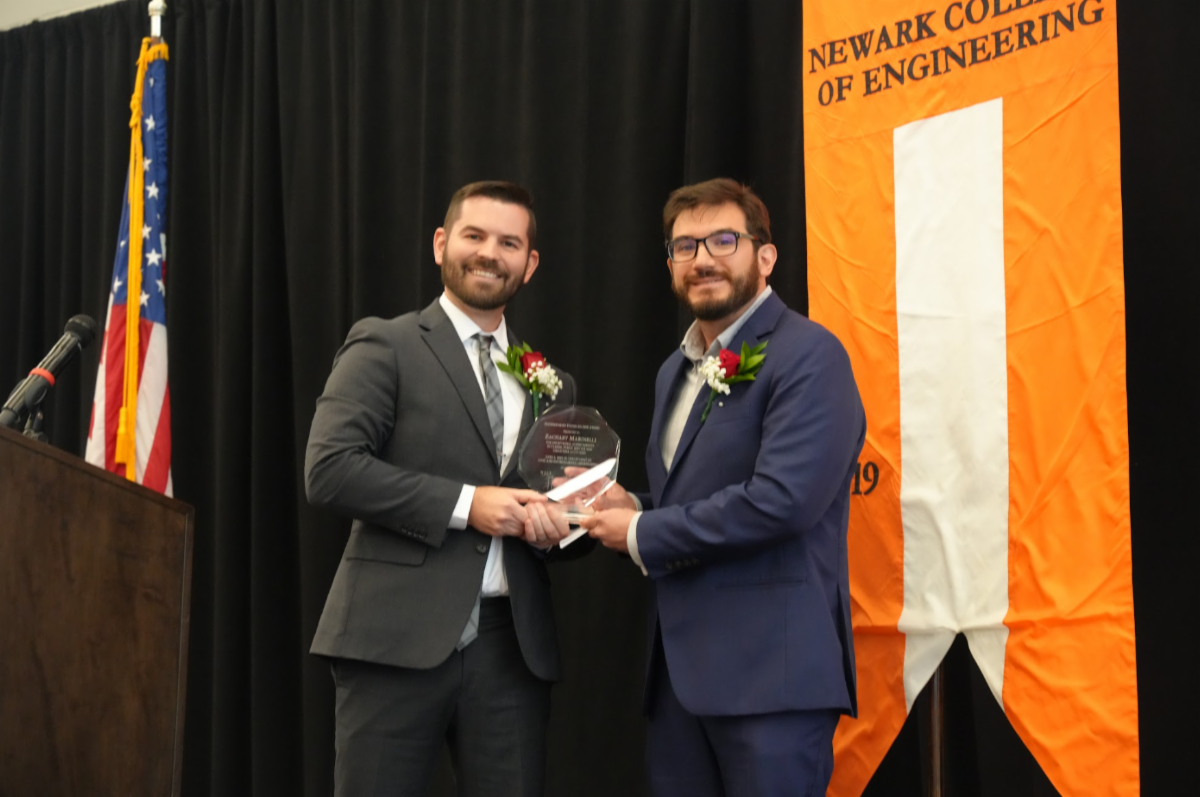
Zachary Marinelli
Distinguished Young Alumni Award
Presented by Stephen George, associate director of undergraduate programs and academic advisor
| |
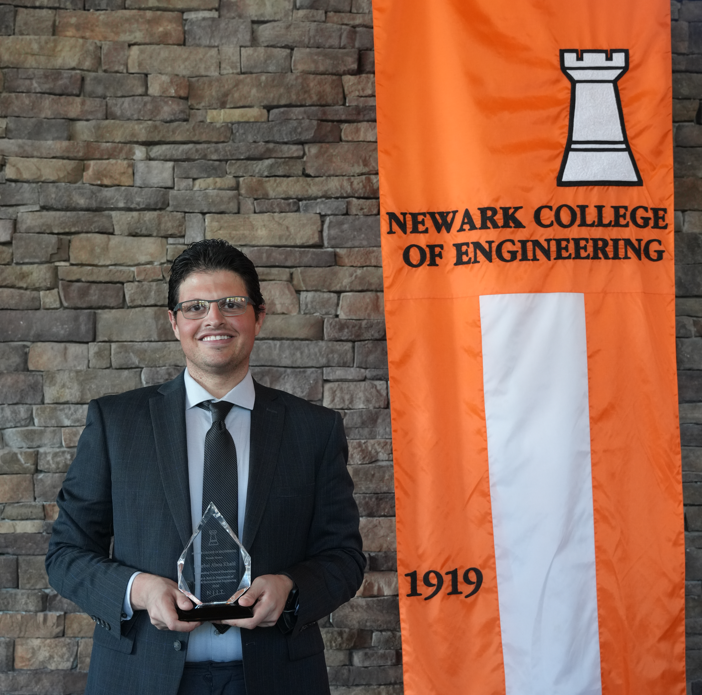
Zach Marinelli ’14 is a project manager in the highway department at Traffic Planning and Design, Inc. (TPD), where he works on concept development, project design and construction support. He has been involved in roadway reconstructions, highway safety improvements and intersection improvements. Key projects include improvements to Garden State Parkway Interchange 125 and an award-winning rehabilitation of a runway at Newark Liberty International Airport. Prior to his role at TBD, he worked with the Township of Parsippany-Troy Hills Engineering Department, Stantec Consulting and the Port Authority of New York & New Jersey. He is active in professional organizations such as the American Society of Civil Engineers (ASCE), the New Jersey Society of Professional Engineers (NJSPE) and the American Society of Highway Engineers. He holds executive board positions with both ASCE and NJSPE. Marinelli volunteers as ASCE’s Metropolitan concrete canoe judge.
| | |
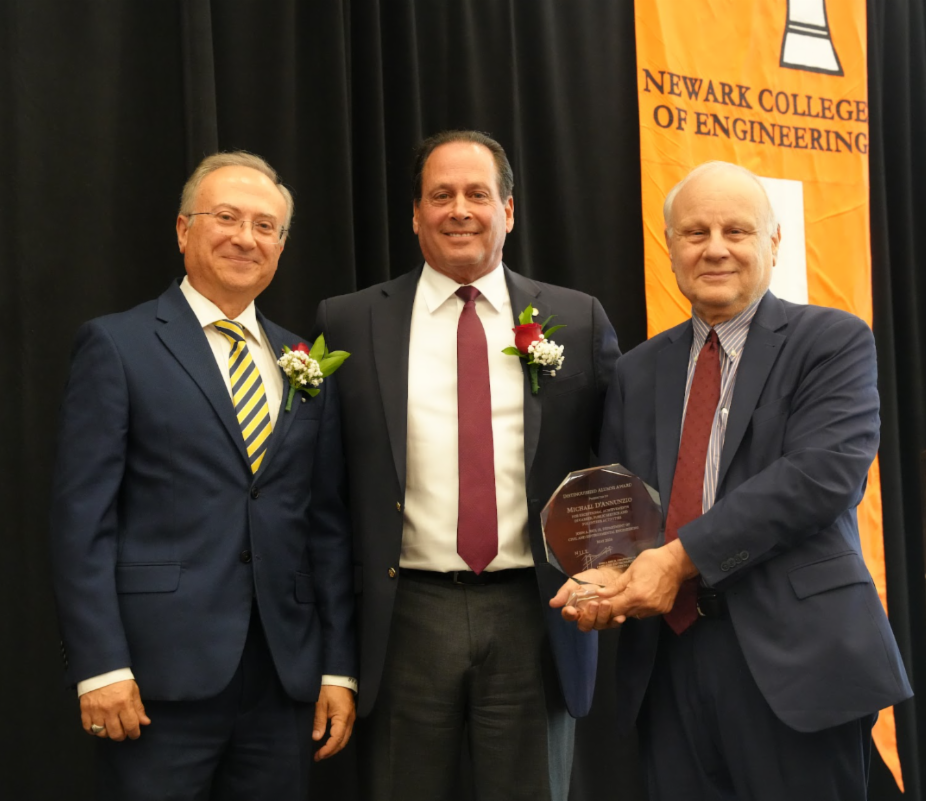
Michael A. D'Annunzio
Distinguished Alumni Award
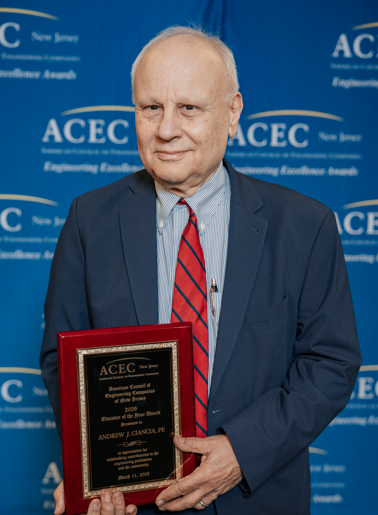
Presented by Andrew Ciancia, P.E., senior university lecturer
|
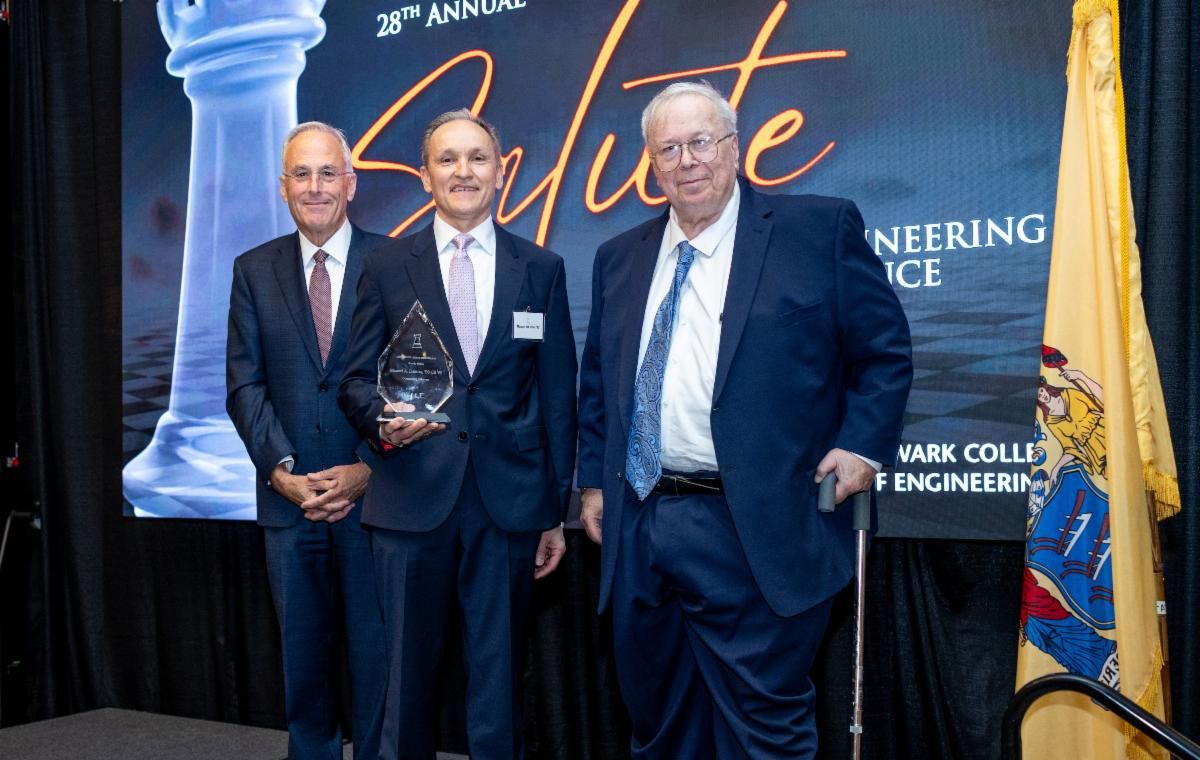
| |  | Michael A. D’Annunzio '81 is the president and CEO of engineering and construction firm D’Annunzio & Sons, Inc., which he co-founded with family members in 1981 and has led since he was 27 years old. Under his leadership, the company has grown from a small startup to a respected civil and heavy construction firm in New Jersey, the lower Hudson Valley and New York City metropolitan area. He has overseen a wide range of infrastructure projects, including bridge construction and rehabilitation, environmental remediation, excavation, utilities and deep foundation work, among others. Recently, his company completed a major NJ Turnpike Authority project involving the reconstruction of 16 bridges and 20 miles of roadway. He was appointed to the board of the Utility & Transportation Contractors Association of New Jersey when he was 27, serving since in many roles, including as president. He has been a member of The Moles since 2005, recently serving as the organization’s president. He was recently inducted into the New Jersey Construction Hall of Fame.
| | CEE students win top two spots in AWWA’s 2026 Water Filter Competition | | |
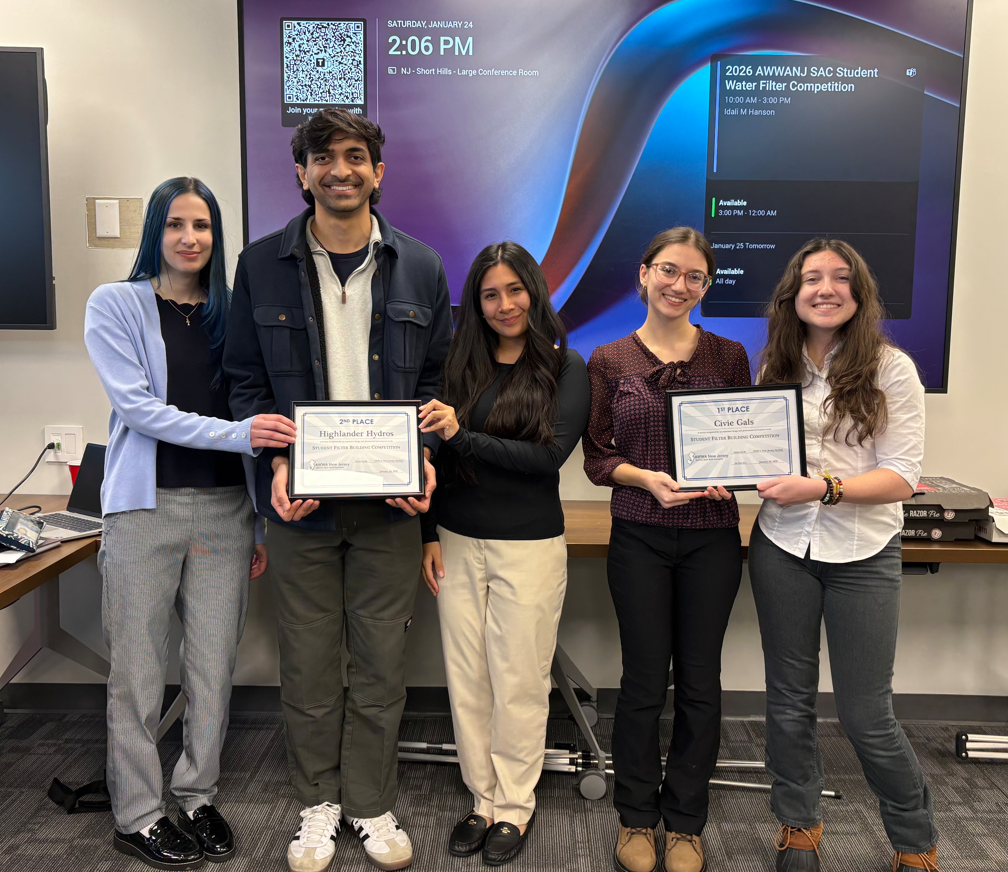
The 11th Annual Water Filter Competition hosted by the New Jersey section of the American Water Works Association (AWWA) brought together teams from across the state, and NJIT’s The Civie Gals and Highlander Hydros took home the first and second place prizes on January 24.
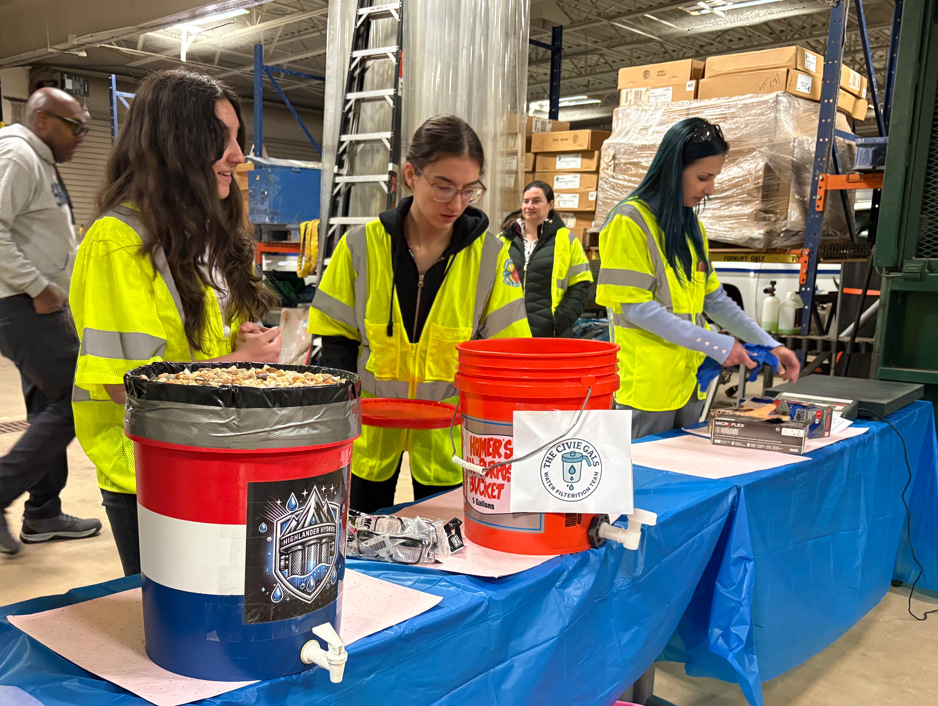
AWWA instructed the teams to imagine a scenario in which water treatment facilities were offline and to build a 5-gallon water filtration device to safely drink from nearby sources of standing water. The filters needed to purify soil-contaminated water, maintain a flow rate of more than 0.5 gallons per minute, weigh 35-65 pounds, ensure turbidity — water cloudiness — is lower than 10 NTU, all while considering the accessibility and cost of materials.
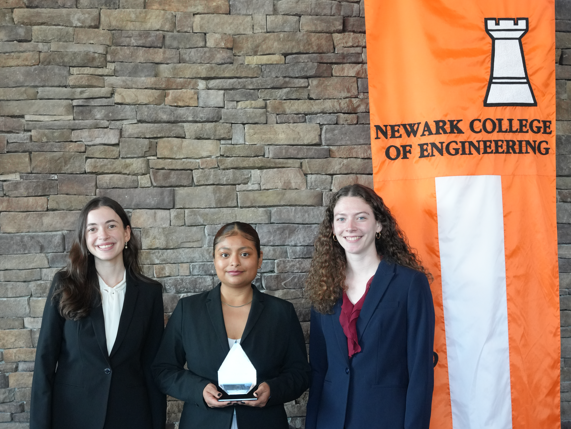
The Civie Gals, including CEE students Grace Nigro, Isabella Puluse and Maryam Safe, used coarse materials to optimize flow rate while also providing effective filtration. Their final 37-pound filter layered gravel, pebbles, charcoal, sand, cotton balls, steel wool and cheesecloth.
| |
All of the team members took the course CE 260: Civil Engineering Methods with CEE university lecturer Stephanie Santos the same semester, but in different sections. One of the class projects was creating a water filter design, which proved to be a useful experiment to excel in AWWA’s competition. “Being in different sections made it helpful because we pulled what worked best from what we each knew,” Nigro said. “We used steel wool, which I didn't use in my filter, but it worked pretty well in the final design.”
The Highlander Hydros, including CEE students Kahaan Kakadia, Faiza Fosso, Shania Villalobos and Olivia Maizys, designed a filter using polypropylene rope, gravel and pebbles, washed sand, cheesecloth and plastic drop cloth as a funnel. Their $40 project was tested with various gravel and sand diameters along with distinct layer thicknesses to balance turbidity, permeability and flow.
“Increasing the amount of rope — our main filter media — improved water clarity, but significantly reduced flow rate. Reducing the rope improved flow but increased turbidity,” Kakadia explained. “Because of this, we had to carefully evaluate tradeoffs and optimize the system.”
Santos, also the faculty advisor for NJIT’s AWWA chapter, is proud of the students’ dedication: “It was very exciting to see two great teams participate and win at this year's competition. I am very proud of the students and their continued efforts with the club.”
| | |
28th Annual Salute to Engineering Excellence Awards
This recognition celebrates Newark College of Engineering's continued commitment to engineering education advancement. The CEE department was honored with the following awards on April 16.
| | |
Enzo Suarez
CEE Outstanding Senior
| |
Enzo Suarez graduated last fall with a focus on railway transportation engineering. He has interned at LS Engineering Associates Corporation, Dynamic Engineering Consultants and Gannett Fleming, gaining valuable experience in structural inspection, site development and track design. On campus, he took on several leadership roles, serving as a peer mentor, vice president of the NJIT chapter of the American Society of Civil Engineers, captain of the NJIT Steel Bridge Team and founder of NJIT’s student chapter of the American Railway Engineering and Maintenance-of-Way Association. Last summer, Suarez interned at the Railroad Construction Company (RCC) on the Portal North Bridge project over the Hackensack River in New Jersey. He helped construct the track components that support the Gateway Development Program. He returned to RCC to work full-time after graduation.
| | |
NJIT Chapter of Engineers Without Borders
Outstanding Student Organization
| |
Students in the NJIT chapter of Engineers Without Borders designed a gravity-driven piping system to bring clean water to houses in a remote village in Ecuador. The system they engineered on campus was built and installed earlier this year by community volunteers who were overseen by an Ecuadorian construction company. Previously, the villagers had walked up and down a long, steep slope to collect water from a stream below them that is contaminated by agricultural runoff and often littered with trash. The new system now delivers filtered spring water to 15 families in Maca Grande, a small agricultural community in the Andes.
| | |
Charbel Abou-Khalil, Ph.D. '22
Outstanding Doctoral Dissertation
| |
Charbel Abou Khalil’s dissertation, titled “Bioremediation of Petroleum Hydrocarbons in Coastal Sediments,” represents a major contribution to the understanding of oil persistence and microbial degradation in hypersaline coastal environments. The depth of analysis, experimental design and environmental relevance of this work reflect exceptional doctoral-level scholarship. Since completing his Ph.D., Abou-Khalil has continued to build an exceptional professional record. As a postdoctoral research associate at the University of Notre Dame, he led nationally relevant work on PFAS thermal destruction, advanced fluorine analytics and low temperature mineralization processes. He currently serves as an environmental engineer at Langan Engineering and Environmental Services, where he supports complex PFAS investigations and remediation projects.
| | |
Manuel Da Silva '93
Outstanding Alumnus
| |
Manuel Da Silva has built a career at the intersection of engineering, construction and public service. Since his appointment to lead the New Jersey School Development Authority in 2019, he has overseen a multibillion-dollar effort to modernize educational infrastructure across New Jersey, with a focus on delivering safe, sustainable school facilities and improving project delivery for communities across the state. His recognition demonstrates how an education with the Newark College of Engineering can translate into large-scale civic impact.
| | |
CEE celebrates eight Service Award honorees
NJIT is proud to honor the milestones each faculty and staff member achieves. This year, the CEE department had eight members recognized for their service to the university.
| | |
55 Years of Service
Thomas Olenik, Associate Professor
40 Years of Service
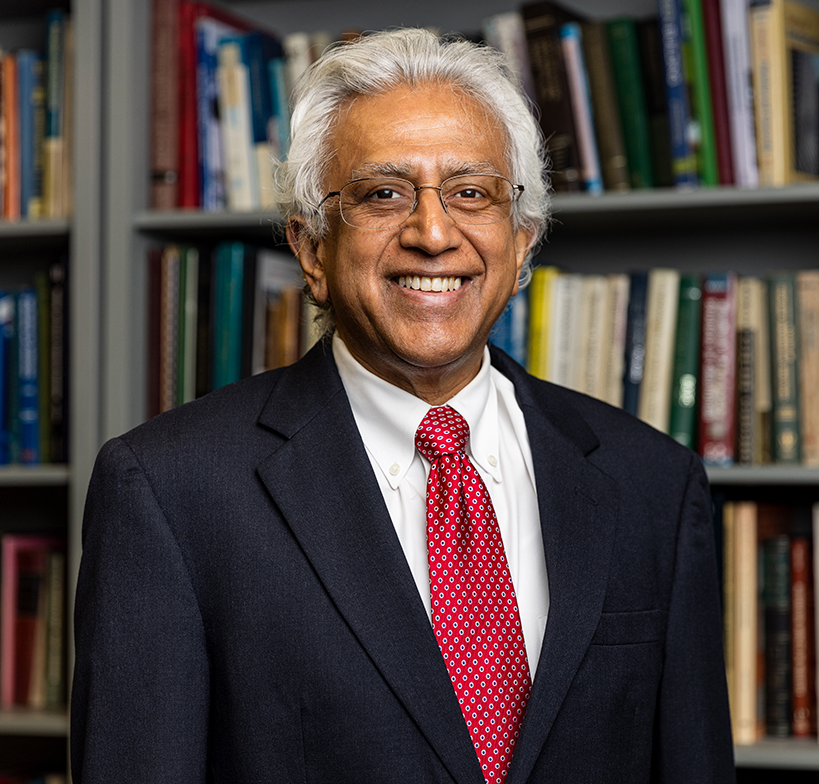
Jay Meegoda, Distinguished Professor
Geraldine Milano, Senior University Lecturer
| | |
35 Years of Service
Lazar Spasovic, Professor
30 Years of Service
Taha F. Marhaba, Chair and Distinguished Professor
| | |
10 Years of Service
Matthew Adams, Associate Professor
Matthew Bandelt, Associate Professor
5 Years of Service
William Pennock, Assistant Professor
| | From Ecuador to India, lowering the bar for clean water | | |
William Pennock’s first water treatment project took him as an undergraduate to the mountain village of Milot, Haiti. It was there that an NJIT Engineers Without Borders team he later captained built bio-sand filters to remove pathogens and debris from river water. He’s been improving gravity-driven systems across the globe ever since.
As director of the university’s Accessible Clean Water Infrastructure Lab, Pennock expands access to municipal drinking water treatment in low- and middle-income countries, particularly in regions where specialized equipment, such as sensors, available land, funds and electricity are in short supply.
He focuses on a process called coagulation, which removes impurities from water with chemicals that make particles sticky so they clump together, in a process called flocculation. These larger particles settle faster and are easier to remove as sediment at the bottom of a tank or in a filter. He uses analytical models to predict a treatment plant’s performance in order to optimize parameters, such as doses of coagulants, mixing times and intensities.
“There is a lot of trial and error in determining dosing levels and the main flocculation models do not account for the majority of variables, necessitating new tests for different water sources depending on their chemistry, the season of the year and particulate matter, among other factors,” he says. “We’re trying to make the process more generalizable, where you can just plug these variables into an equation to get the right amount.”
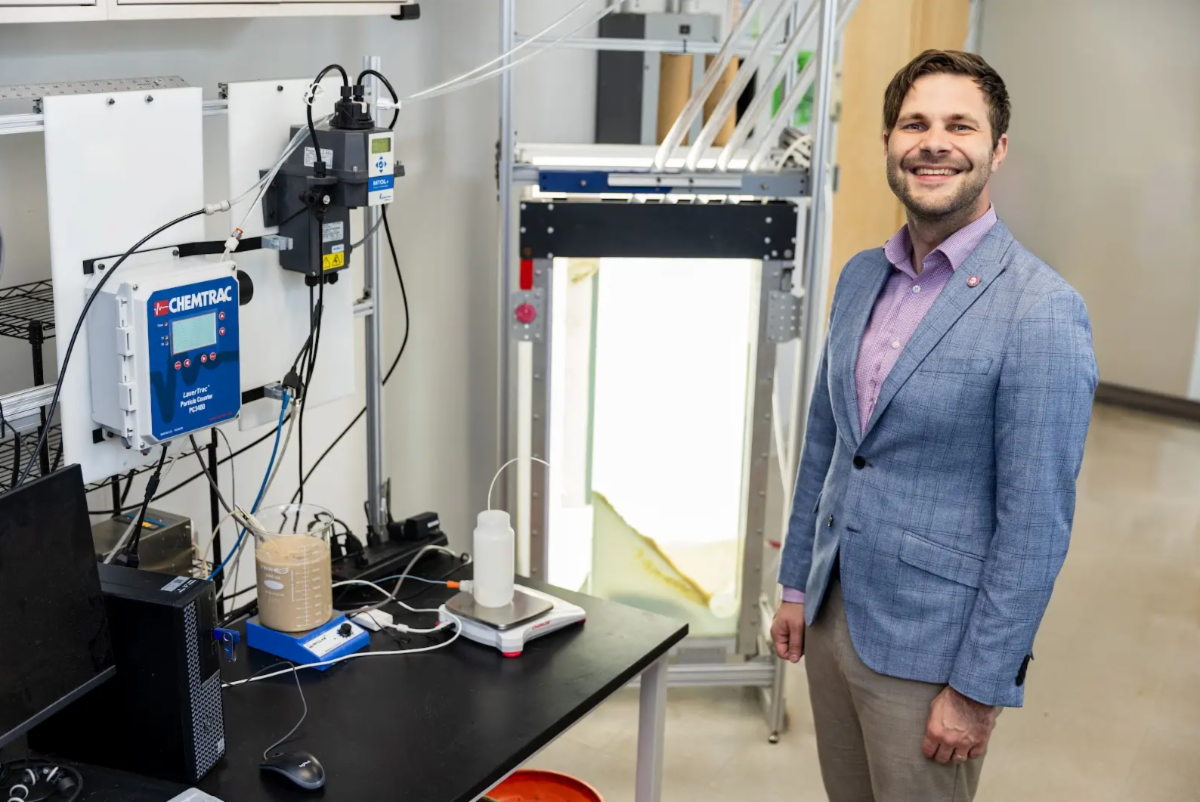
In a six-foot-tall, gravity-driven sedimentation tank that he and his graduate students built, he’s testing the effectiveness of varying amounts of poly aluminum chloride, the primary coagulant in Honduras, using bits of clay to simulate contaminants. In the real world, the clumps they form would be composed of dirt, microbes and organic matter, such as leaves and algae. Mesh-like and porous, they act like mini-filters, capturing tiny particles on their insides.
“We’re developing guidance for facilities in Central America on how much coagulant to use. In general, we tend to overdose out of caution, which is inefficient, because it wastes money, increases the amount of solid waste, and in the case of metal-based chemicals, leaves a residue that may be unhealthy.”
In a study with Ben Gurion University of the Negev, he and colleagues are exploring the effects of different ultrasound-generated velocity pulses on the sedimentation process. With collaborators in the U.K., he’s testing plant-based coagulants for use in Africa.
Pennock is part of AguaClara Reach, an organization launched at Cornell (where he earned his Ph.D.) that researches and designs affordable, sustainable systems working with low-cost materials at hand. He works with the group on treatment facilities in Central America, India and the Caribbean.
He is also still involved with the NJIT chapter of Engineers Without Borders, which is now in the final phase of a project that will bring filtered, piped water to residents of Maca Grande, a village in Ecuador.
“When we have treatment problems here, we can just add chemicals,” he says. “For places without these and other resources, we want to lower the bar to clean water. With simple systems, we’re enabling local operators with skills and access to basic tools to repair and improve them.”
| | |
On-the-job analytics that help construction crews avoid injuries
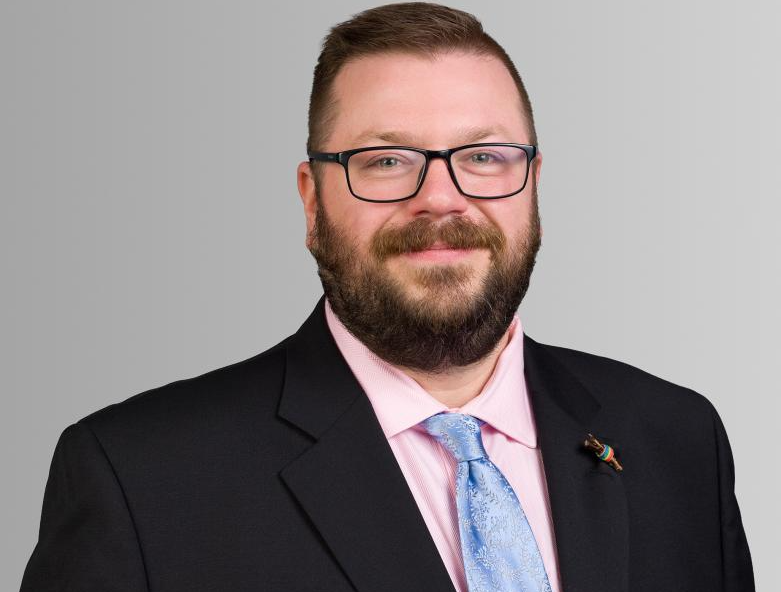
A Q&A with Mohammad Khalid, assistant professor of civil and environmental engineering
| | |
How would you summarize your research?
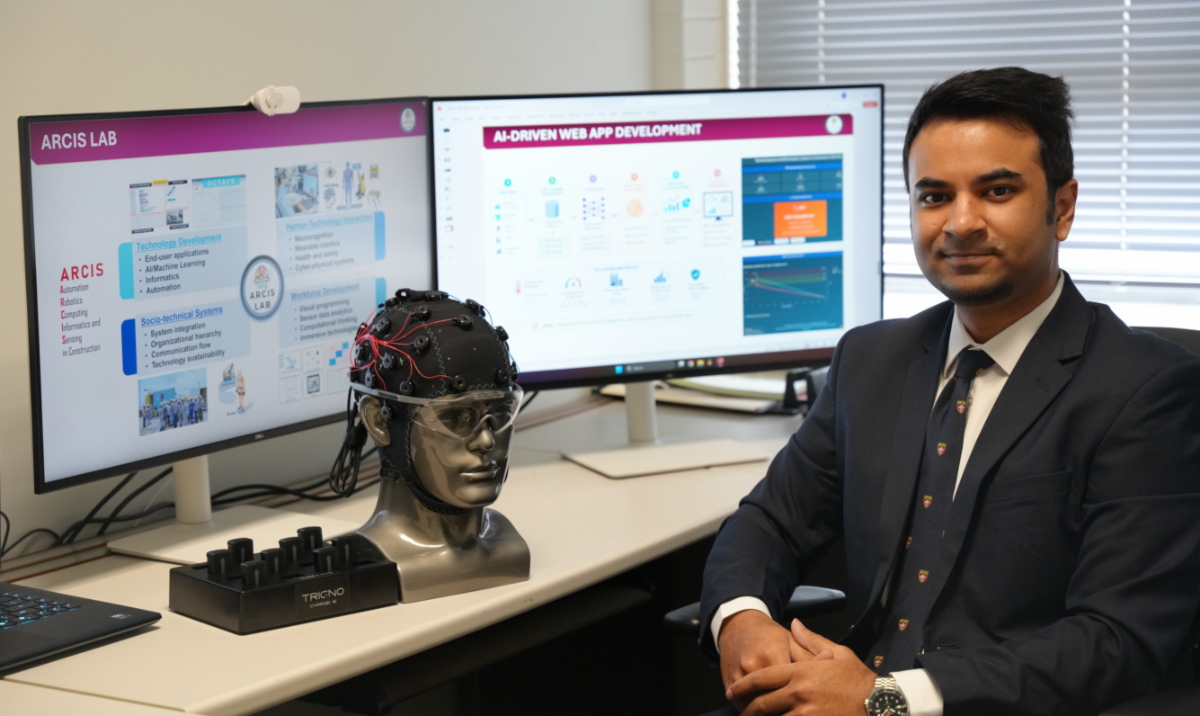
I focus on equipping the construction workforce with on-the-job data analytics and computational thinking. Designed for people without a background in computer science, my platforms would allow engineers to transform raw sensor data—such as readings from wearable devices, environmental monitors, equipment telematics and computer vision systems—into real-time safety and productivity insights that improve decision-making on construction sites. Additionally, I work on wearable robots to reduce physical strain and enhance mobility for construction workers; bio-behavioral sensors to track stress and fatigue to improve safety; and neurocognitive measures to help design training systems that adapt to workers’ mental workload in real time.
You say the construction industry is slow to adopt new technology. Why?
For one, construction is a complex and fragmented industry. Compared to manufacturing, where processes are controlled and repeatable, all construction projects differ. Each one has a new team, a new environment, new constraints and new resources, including equipment. One project might be on the ground level, but the next is 50 stories high. There is also a strong reliance on experience and traditional practices that the industry is hesitant to change. Cost and uncertainty play a big role; companies are cautious about integrating new technology that might disrupt the workflow and require training. They may not see an immediate return on investment. Another major factor is the gap between technology developers and end users. Often, this technology is designed without understanding how workers operate in the field. Software such as Autodesk is used by architects, designers and engineers and it’s one-size-fits-all. In construction, some workers are in the office, while others are out in the field.
How does the technology gap constrain the construction industry?
The challenges are quite significant – the industry continues to struggle with productivity, safety and workforce sustainability. Productivity growth in construction has lagged behind other sectors for decades, affecting project costs and timelines. Construction is also the most hazardous industry in part due to heat-related stress and fatigue. Workers are exposed to high temperatures and long shifts with extreme physical demands, and they experience reduced attention and longer reaction times as a result. This increases the likelihood of severe accidents, including fatalities. In 2024 more than 1000 construction workers died from work-related injuries in the U.S. alone. Because of the physical demands and the high stress, it makes it difficult to retain workers long-term.
How can data-analytics improve safety and productivity?
By leveraging real-time data, we can predict risks and prevent accidents by optimizing workflows and supporting workers, both physically and cognitively. There are several areas of technology that can have an immediate impact. Environmental monitoring can track heat, humidity and air quality to alert workers to heat stress and related occupational illnesses. Wearable sensors can help identify overexertion, and assistive robots can reduce the risk of injuries. Cognitive overload is another, very important issue that is often overlooked. Construction workers constantly process information and make decisions under pressure. They work with teams of workers to coordinate equipment, building materials and existing structures. All of these elements need to be orchestrated perfectly to make sure no one is hurt while they still deliver the project within the deadline. With the right sensing technology, we can measure their cognitive load.
How does your technology address these problems?
We’re using a cap with 32 electrodes that sense real-time brainwave signals from different parts of the brain that correspond with task-dependent behaviors in construction, from masonry, to roofing, to heavy lifting, to computer work. It can detect high stress, emotional instability, anxiety, frustration and distraction. We also have eye-tracking devices that can coordinate with brain signal sensors. They can detect eye-movement patterns and tell if someone is paying attention or not.
Another big opportunity is immersive environments. In them, we can assess cognitive workloads and visual attention that we don’t want to test in real life, where site workers are standing under a suspended payload, for example. We can simulate different kinds of construction work to see in each instance when and where the overload risk is getting high. Adaptive systems that process this data can alert a worker to take a five-minute break when they detect instances of distraction and cognitive overloads.
We can also train workers in immersive environments, including rookies managing their first payloads, for example, by allowing them to visualize crane movements. When they make mistakes, we can tell them how and what happened.
Exoskeletons reduce physical stress during demanding tasks, such as lifting and overhead work. We can make them more powerful by connecting them to other technologies. We can incorporate sensors with EEG and EMG capabilities and monitor environmental conditions such as heat and wind speed. Fed into a data analytics pipeline, this can provide real-time feedback. Instead of just assisting with movements, the exoskeleton can help us understand how a worker is performing, including how much physical strain they’re experiencing and how big a cognitive workload they’re facing, and let them know when an intervention is needed.
How will workers and supervisors act on this data?
The sensors give millions of numerical data, but the key is making the information actionable and easy for workers to understand. They don’t need numbers, but guidance. Instead of showing them complex metrics, our interface would provide simple feedback, such as alerts that the heat is rising, that that they are fatigued or putting excessive stress on their body and need to take a break. It might also prompt them to adjust their posture, to rotate tasks or to use assistive equipment. This data can also help with planning. Supervisors can adjust schedules, redistribute the workload and identify high-risk conditions before they lead to incidences.
Over time, this technology can support training by helping workers recognize patterns in their own performance so that they can make decisions independently. The goal is to integrate these insights seamlessly into the daily workforce, where acting on data becomes a natural part of how the work gets done.
| | Senior Gira Abdou is a project engineer for New Jersey’s newest state park | | |
NJIT alumni and students are assisting with construction of New Jersey’s newest state park, a nine-mile greenway that will convert a former Norfolk Southern rail line into a linear state park spanning from Montclair to Jersey City in Essex and Hudson Counties. AECOM Tishman is the construction manager for the first phase of the project, a nearly one-mile stretch in Newark.
Shortly after the park broke ground last July, Michael Kasian ’85, the company’s executive vice president, contacted Marjorie A. Perry ’05, president and CEO of MZM Construction & Management Company, for assistance in staffing. Gira Abdou ’26, a civil engineering major, received an intriguing message from Perry on Handshake, the NJIT career networking app. Would she be interested in working on a landmark project? Following interviews with Perry and Rosana Caputo ’99, a senior project manager for AECOM Tishman in charge of the Newark section, Abdou signed on. Below, she describes her experience as a project engineer working full-time on a one-of-a-kind green infrastructure project in her home state.
What compelled you to take on the job and the extraordinary time commitment it requires?
I hadn’t heard of the greenway project, but I was interested when I learned it was a park. I’d always thought of civil engineering in terms of bridges, roads and buildings. But a park brings so many experiences: building the site from scratch, installing the playground equipment and decorating the overall site with trees and greenery. This would be my first experience with construction, and I would be learning on the spot. I’m interested in construction management and so this project seemed perfect for me.
What are your duties?
I work full-time as a project engineer at the project’s site office, just a block away from active construction. Part of what I do is assist with daily and monthly reports, which include record-keeping of all site activities taking place and overall project updates. I keep up with contractors regarding their due dates, ensuring they are on time and submitting all of the required paperwork. I’ve started taking some of the construction progress photos. I also log and check submittals, which include information about materials being used onsite, including descriptions about how they will be manufactured, installed and used, such as the rope swing for the playground. I cross-reference this information with the specifications provided by the design team to ensure it meets their standards. I assist with requests for information from contractors. For example, there may be a problem with tree pit locations shown on drawings that interfere with light poles or pipes. The contractor will ask the design team for approval to move the pits. For the record, I submit this information to the app Procore, which keeps track of all of the paperwork and questions submitted.
How are you able to balance your job with classes?
I take classes online, at night and on campus one morning a week. Because I’d taken some courses over the summer, my load is not heavy. AECOM Tishman has been very flexible about my need to be on campus Tuesday mornings. I finish work between 3 p.m. and 4 p.m. and have several hours for homework and studying.
What do you enjoy most about the job?
My previous work with the engineering firm NV5 was focused on design. Here, I get to go on site, walk around and see it in progress. The project is so much fun. A park has so many elements and there’s so much new to see. Throughout the nearly one-mile corridor, there will be a multiuse walking and biking path, picnic areas, a sports court, stage, playground and water-play area. When I started last semester, they were still excavating and it looked so empty. Now it’s really coming to life. We have retaining walls, underground stormwater infrastructure, lighting components, benches and stairs. They’re preparing to bring in certified clean fill to place on top of the historic fill, with a highly visible demarcation barrier between the two. It’s very interesting to observe how it all gets put together. I like being part of something so important for the environment, which will really help Newark.
What are your career plans?
I plan to start with a general contractor as a project engineer. I want to be there for the entirety of a project, rather than coming in to do just a piece of it, like installing a playground in the case of a park, for example. I like to see a project start from a bunch of dirt and watch it grow. I want to stay in New Jersey. We need new buildings in cities with overcrowded sections that will help the flow. There are also so many cool places with a lot of potential for new infrastructure, including parks and greenways, because you can never have too much green!
| | Civil engineering student Ariana Martinez's project is recognized at NJIT's Honors Interdisciplinary Research Forum | | |
Albert Dorman Honors College students presented their semester's research during the Honors Interdisciplinary Research Forum. Ariana Martinez, a civil engineering major, won first place in the Introduction to Sustainability Studies group. Her project, “Would adopting 15-minute city designs worsen existing inequalities in cities?” explored ways to avoid that pitfall, while ensuring accessibility to critical resources.
The concept of 15-minute cities revolves around the idea that residents in the city have access to services such as jobs, education, health care and entertainment, all within a 15-minute walk or bike ride.
“It was interesting to see cities across the world and how they're dealing with increasing accessibility, but also balancing, not worsening, other inequalities,” she said. “Something that stood out to me in the U.S. was that Boston created a fair, free bus line that connects the historically minority and lower income community to the downtown area that has more job opportunities and more services. I think [fare-free public transit] is something that's not seen a lot in the U.S. and could be a big help in not alienating people from resources.”
| | Co-op Spotlight: Ian Patrick Perez at Stantec | | |
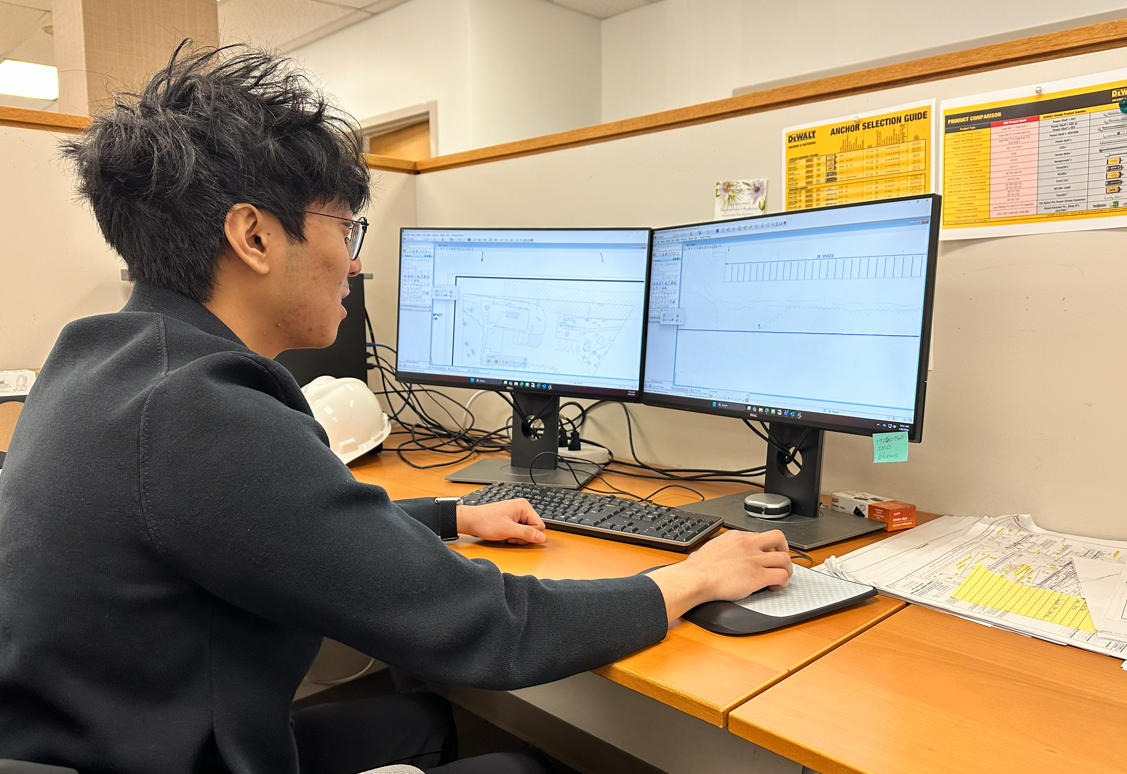
Ian Patrick Perez is a third-year civil engineering student interning at Stantec and working with the New Jersey Turnpike Authority (NJTA) on Milepost 80-83 operational improvements. This project includes adding new ramps, collector distributor roads, bridge replacements, drainage and traffic signal upgrades. Perez has covered a wide variety of tasks that include drainage plans, signing and striping plans, profiles, typical sections, construction sheets and cost estimation.
| | | |
American Concrete Institute elects Matthew Adams as Board Director
Professional accolades started arriving early in the career of Matthew P. Adams, an associate professor of civil engineering at NJIT and co-director of the Materials and Structures Laboratory (MatSLab). In 2015, Adams was still working toward his Ph.D. when he was recognized by the American Concrete Institute (ACI), earning their Young Member Award for Professional Achievement for his work supporting young professionals in the concrete industry. More than a decade later, Adams received a new honor from the ACI, a nonprofit technical society that oversees global concrete production standards and education programs related to concrete fabrication and use. The organization recently elected Adams to its Board of Direction for a three-year term. Read more.
| | |
Wen Zhang named fellow of the National Academy of Inventors
Wen Zhang, a professor at NJIT’s Newark College of Engineering, has been named a Fellow of the National Academy of Inventors. The program honors academic and institutional inventors, and the induction recognizes Zhang’s work using nanomaterials to break down environmental pollutants, recover nutrients from wastewater and support sustainable agriculture. Read more.
| | Q&A with Elizabeth A. DeCarlo, P.E. ‘14, M.S. ‘18 | | |
Elizabeth A. DeCarlo, P.E. is a project engineer for structures at Michael Baker International. She is a two-time NJIT graduate, with bachelor's degrees in civil engineering along with theatre arts and technology in 2014 and a master's degree in structural engineering in 2018 — the same year she earned the NJIT Rising Star Alumni Award from the College of Science and Liberal Arts. She served as the Young Alumni President at NJIT from 2022 to 2024. Having been a member of the American Society of Civil Engineers (ASCE) since DeCarlo was a student, she was awarded ASCE's Young Civil Engineer of the Year Award for the North Jersey Branch (2023) and New Jersey Section (2024). Most recently, she was elected as the president of ASCE's North Jersey Branch.
| | |
What led you to double major in your undergraduate years at NJIT, and how has that affected your career?
Growing up, I always had an interest in musical theater. In fact, it was my dream as a child to become a Broadway actress. But as I entered high school, I discovered more of my love for math and science and still kept up with the theater but more as a hobby. When I entered NJIT I had a theater minor and got involved on stage with my first production being "Sweeney Todd." NJIT announced their new major "Theatre Arts and Technology" in my sophomore year, so I ended up switching my minor to pick up a secondary major instead. Being on stage and taking improv classes have given me the communication skills you need to interact with not only colleagues, but with clients and the public.
What inspired you to continue with a master's degree at NJIT?
I found a home at NJIT during my undergraduate years, and I knew I would get the best education coming back for my master's. At that point, I was working full time, but NJIT offered me the flexibility I needed to complete my master's in 4 years while taking classes part time.
How have you stayed connected with NJIT since being a student?
I attended networking events held by the Young Alumni Association. That’s where I was asked to be a part of the Young Alumni Association board, on which I served as president for a couple of years. I have also created a connection with the ASCE Student Chapter with my involvement in the ASCE North Jersey Branch. I have visited campus to serve on panels for Career Fair preparation workshops or to see campus productions in the theater.
How has your involvement with ASCE evolved since you were a student?
I was not as involved as a student member since I had many different interests on campus, but it was through my connections being a student member that I eventually joined the Younger Member Group Board a few years after graduation, eventually assuming my role as president. Then, I transitioned to the North Jersey Branch board where I now serve as president.
| | |
What does receiving the ASCE awards in recent years mean to you?
I am proud of what I have achieved as a "young engineer" and being involved with ASCE throughout the years. It is my hope that with my involvement with ASCE, I have had a positive impact on the projects I’ve worked on, the people I’ve worked with, and others in my profession. It was an honor to be recognized by both the North Jersey Branch and New Jersey Section.
What’s it like being elected as the ASCE North Jersey Branch president?
Serving as president of the North Jersey Branch is a lot of hard work, but it’s rewarding with all the opportunity it has afforded me. I was honored and humbled to have the trust of the North Jersey Branch members to lead them for this year.
What have you carried with you from NJIT into your professional work and this presidency?
I feel I was able to gain a better sense of what it takes to lead by being involved in multiple activities on campus. Through my leadership as ASCE North Jersey Branch president, I have been given more responsibility at work towards becoming a project manager, which I think is in direct correlation of how I am seen as an up-and-coming leader not only in my company but in my profession as a whole.
What advice do you have for students?
Coming out of school, it is important to keep an open mind and have a willingness to learn. Searching for jobs with no experience may seem difficult, but hiring managers know you do not have experience. It is important to let your personality shine. Skills can be taught to anyone who has the right attitude.
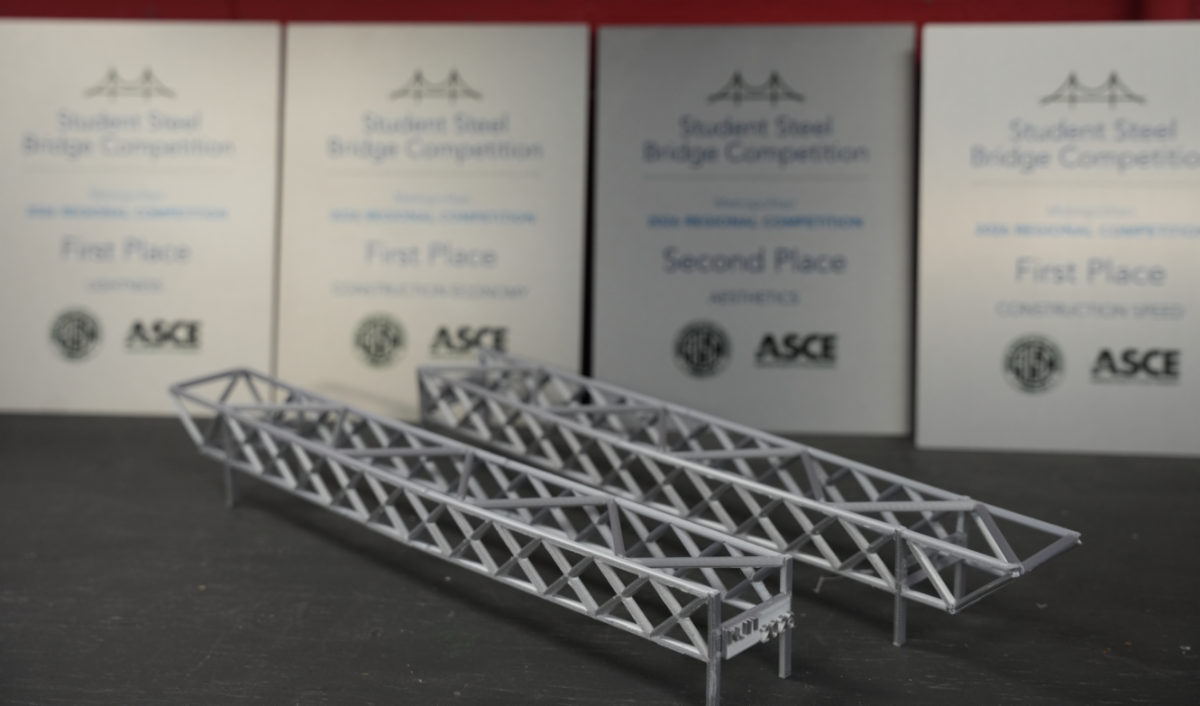
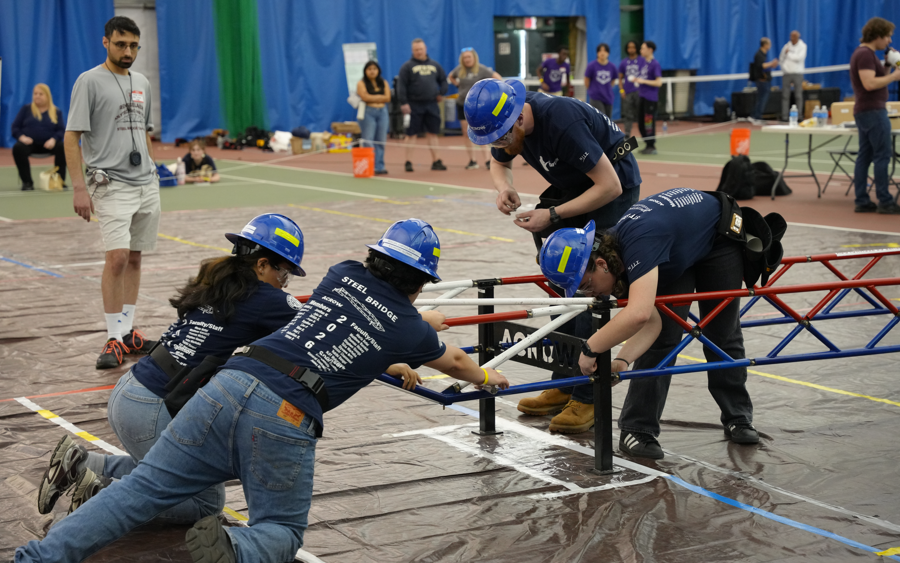
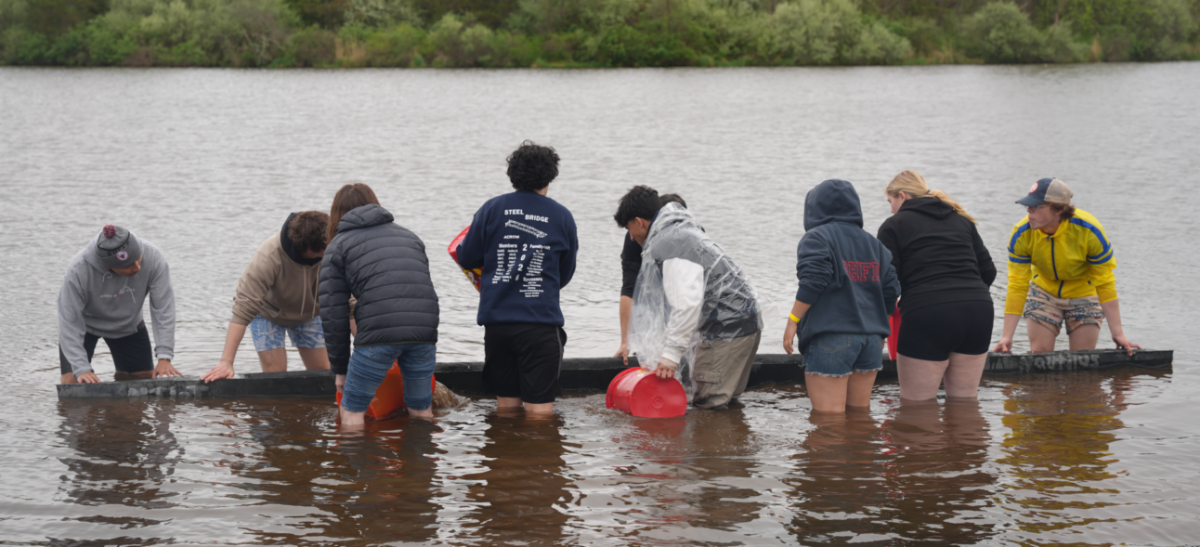
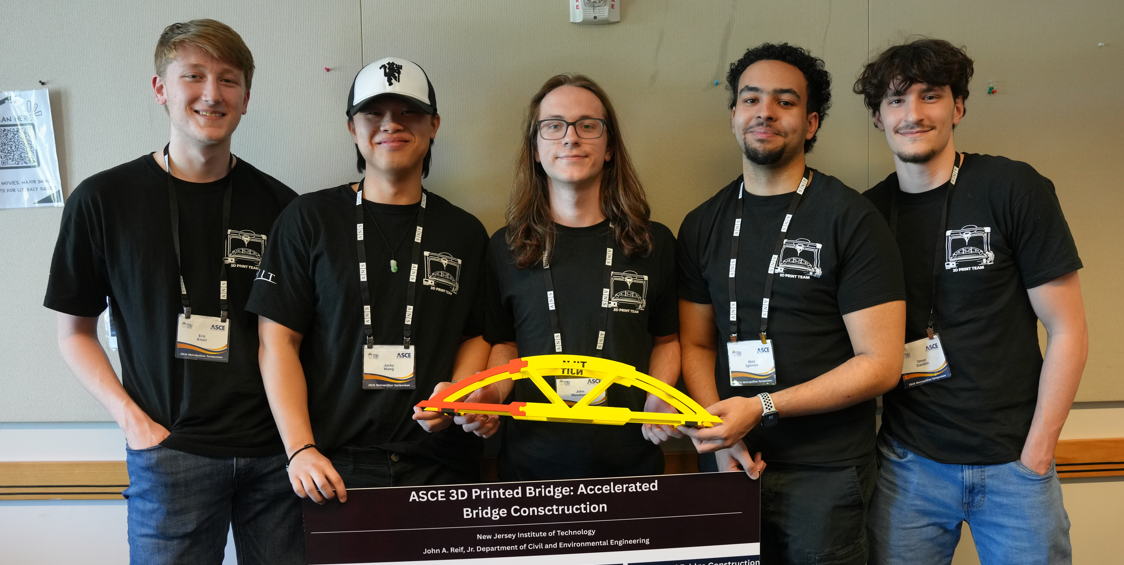
| | NJIT's chapter brings home many prizes from the 2026 Metropolitan ASCE Student Symposium | | From April 17-19, NJIT’s chapter attended the annual American Society of Civil Engineers (ASCE) Metropolitan Student Symposium hosted by The College of New Jersey at its campus, Green Lane Fields and Rosedale Lake. NJIT’s teams were awarded the following rankings in the various competitions: | | |
Steel Bridge
🥇 1st in Construction Speed
🥇 1st in Lightness
🥇 1st in Construction Economy
🥈 2nd in Aesthetics
Concrete Canoe
🥉 3rd Overall
| | |
3D-Printed Bridge
🥇 1st in Highest Structural Efficiency
🥈 2nd Overall
Sustainable Solutions
🥇 1st as Fan Favorite
🥉 3rd Overall
| | NJIT-ASCE engages with the K-12 community | | |
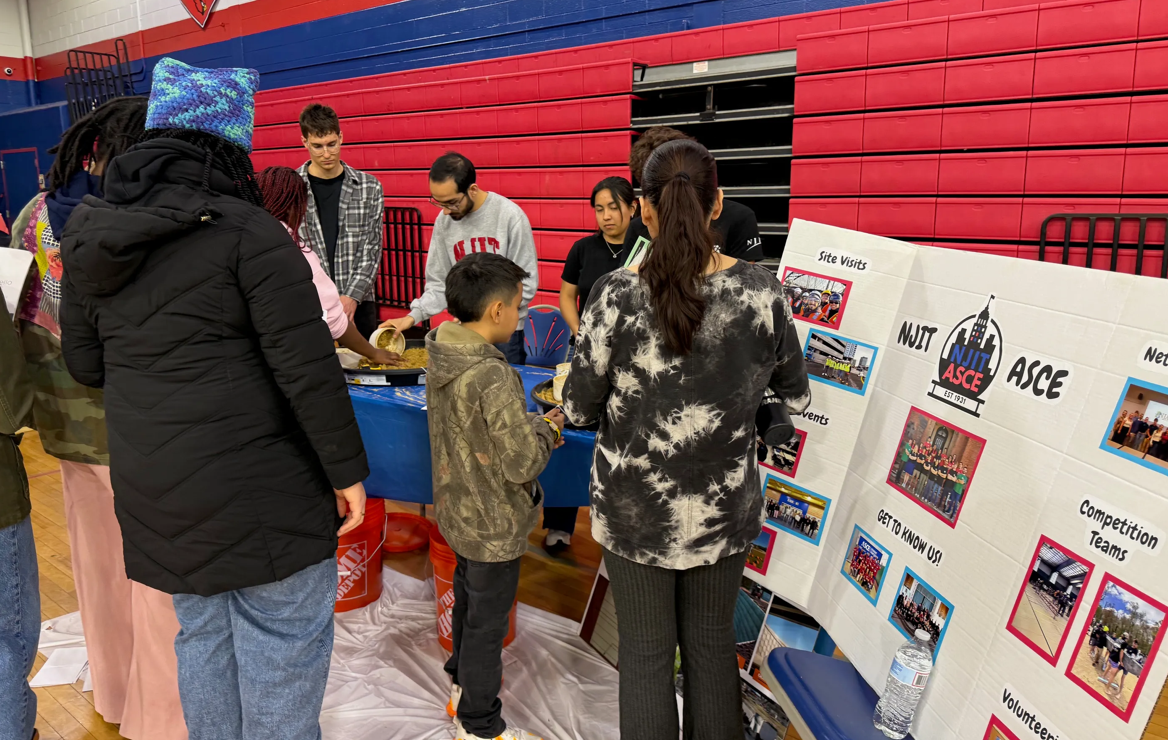
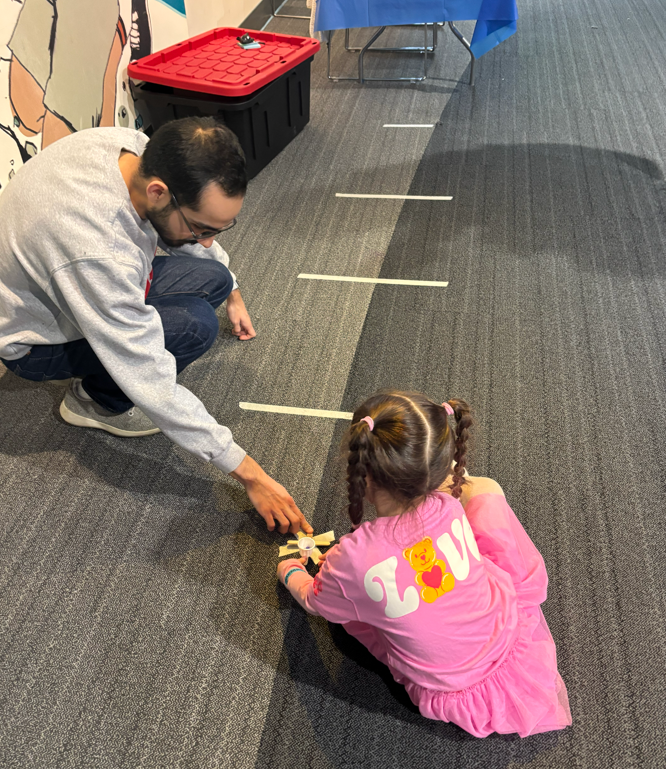
On February 21, the NJIT chapter of the American Society of Civil Engineers (ASCE) joined the Liberty Science Center for its annual engineers' week celebrations. The chapter leaders guided children through multiple engineering experiments, such as building catapults from popsicle sticks.
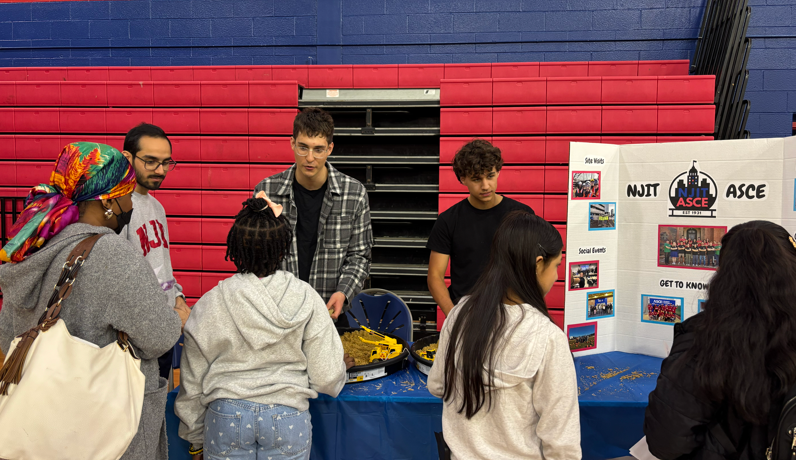
On April 11, NJIT-ASCE joined the Career Carnival 4 Kids — an event aimed to introduce children to various career paths. This career fair took place in Plainfield, N.J. for its district’s K-8 students. At NJIT-ASCE's booth, chapter leaders taught participants civil engineering concepts through a sand castle experiment, in which kids compared the strength of sand castles with and without reinforcement.
| | 2026 David Good 3D Printed Bridge Competition | | NJ Transit CEO Kris Kolluri visits the CEE Industrial Advisory Board | | |
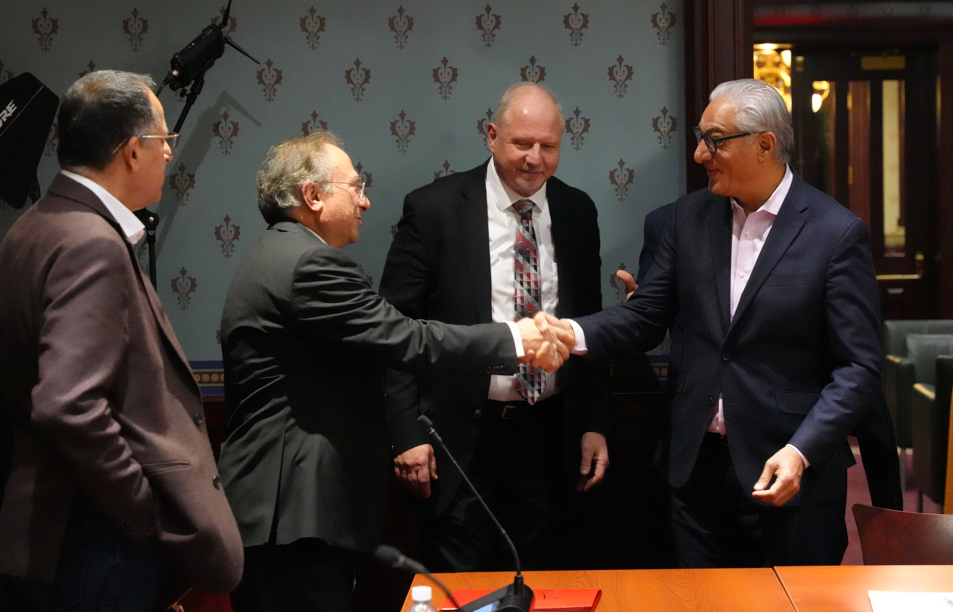
On December 10, the CEE Industrial Advisory Board (IAB) was honored to host Kris Kolluri, the first person to serve as NJ Transit President/CEO and NJ Turnpike Authority Executive Director at the same time, directing a $30 billion capital program.
Kolluri delivered an exceptionally thoughtful and inspirational presentation. He outlined his ambitious agenda to modernize NJ Transit’s infrastructure, emphasizing the agency’s commitment to a major slate of upgrades targeted for completion by 2031.
A significant part of his strategy centers on new ways to generate revenue, including the potential use of NJ Transit-owned land for development, environmental mitigation, or other value-producing purposes. He advocated for forward-looking, multi-year budgeting that operates independently of political cycles.
Regarding possible collaboration between NJ Transit and NJIT, he expressed strong interest in exploring partnership opportunities in education and workforce development.
Kris concluded his remarks by sharing his personal journey from emigrating from India, to pursuing a law degree, to ultimately becoming one of the most respected leaders in the transportation and infrastructure field. It was a powerful reminder of how individual determination, combined with public-service commitment, can shape entire regions.
Overall, the evening was rich in substance and energy. CEE and the IAB are grateful to Kolluri for joining the meeting and contributing so meaningfully to the dialogue on the future of infrastructure, transportation and education in New Jersey.
| | The CEE Industrial Advisory Board (IAB) represents a diverse cross section of civil and environmental engineering professionals including design consultants, construction managers, contractors and attorneys. | | To enhance connections among students, industry professionals and faculty, the IAB has established social media profiles, helping individuals learn more about its initiatives and actions. Find its pages on LinkedIn, Instagram, Threads and Facebook. | | |
Maurice Rached, P.E. (Chair)
Colliers Engineering & Design
Áine O’Dwyer, P.E., '07, M.S. '08 (Vice Chair)
Enovate Engineering
Anthony Castillo, P,E., '95, M.S. '02
SESI Consulting Engineers
Andrejs Delle, P.E.
Schiavone Construction Company LLC
Muhammad Elgammal, P.E., P.M.P., '12, M.S. '15
Stantec
James Giurintano, P.E., P.P., C.M.E., '94
Colliers Engineering & Design
| | | |
Andre Grebenstein, LEED AP, '95
HITT Contracting Inc.
Gareth C. Middleton, P.E, '93, M.S. '04
Mace
Dennis Motiani, M.S. '96
Retired
Chrissa D. Roessner, P.E., '02
NJ Transit
Joseph Stanley, P.E., '78, M.S. '85
Mott MacDonald
Wei Wang, Ph.D. '95
Urban Tech, Inc.
| | |
Mechanism of sonolytic PFAS degradation into inorganic products: A combined reactive molecular dynamics and density functional theory approaches
Bruno Bezerra de Souza, Duwage Charitha Perera, Targol Teymourian, Jay N. Meegoda
Journal of Colloid and Interface Science
Read the full article
| | | |
Silver single atoms and nanoparticles on floatable monolithic photocatalysts for synergistic solar water disinfection
Jian Wang, Jiahe Zhang, Yang Li, Xinghui Xia, Hengjing Yang, Jae-Hong Kim, Wen Zhang
Nature Communications
Read the full article
| | | |
Incidental iron oxide nanoclusters drive confined Fenton-like detoxification of solid wastes towards sustainable resource recovery
Zhichao Yang, Yuyang Yin, Mengyuan Liang, Wanyi Fu, Jiahe Zhang, Fangzhou Liu, Wen Zhang, Bingcai Pan
Nature Communications
Read the full article
| | |
Numerical and Experimental Analysis of the Impact of Cracking and Chloride Concentrations on Corrosion in Steel-Reinforced Concrete
Jin Fan, Aaron J. Strand, Matthew J. Bandelt, Matthew P. Adams
Journal of Materials in Civil Engineering
Read the full article
| | | |
Impact of coexisting nitrate and sulfate ions on per- and polyfluoroalkyl substances removal by anion exchange resins
Justice C. Woke, Amith S. Maroli, Yi Zhang, Arjun K. Venkatesan
Chemical Engineering Science
Read the full article
| | | |
Impact of rainfall, snowpack and storms on contaminant levels in groundwater beneath two U.S. Superfund sites in New York
Dimitrios E. Bakatsias, Jasmeen Kaur, Tanish Parlapall, Lissa F. Soares, Arjun K. Venkatesan, Roxanne Karimi, Kevin A. Reed, Jaymie R. Meliker
Journal of Environmental Exposure Assessment
Read the full article
| | |
Exploring spatiotemporal dynamic of metro ridership and the influence of built environment factors at the station level: A case study of Nanjing, China
Qvshun Wang, Zhuanglin Ma, Xing Yang, Steven I-Jy Chien, Shengrui Zhang, Yifan Yin
Journal of Transport Geography
Read the full article
| | | |
Reframing Induction-Heated Membrane Distillation: From Flux Enhancement to Durable, Energy-Efficient Design
Guangyu Zhu, Jiahui Hu, Wen Zhang
ACS ES&T Engineering
Read the full article
| | | |
Conundrum of Hydrologic Research: Insights from the Evolution of Flood Frequency Analysis
Fahmidah Ummul Ashraf, William H. Pennock, Ashish D. Borgaonkar
CivilEng
Read the full article
| | |
eFlight: RL Scheme for Autonomous Drones to Efficiently Fly through Obstacles
Yihan Xu, Chuanbi Lin, Cong Wang, Wen Zhang, Ziqian (Cecilia) Dong, Roberto Rojas-Cessa
Proceedings of the Tenth ACM/IEEE Symposium on Edge Computing
Read the full article
| | | |
Regenerable Graphene Nanoplatelet Adsorbents for Rapid and Trace-Level PFAS Removal from Water
Md. Nahid Pervez, Tao Jiang, Aswin Kumar Ilango, Yamini Kumaran, Yi Zhang, Weilan Zhang, Haralabos Efstathiadis, Jeremy I. Feldblyum, Mehmet V. Yigit, Arjun K. Venkatesan, Yanna Liang
ACS Omega
Read the full article
| | | |
Nanobubble-enabled foam fractionation to remove freshwater microalgae and microcystin
Yihan Zhang, Lili Li, Shan Xue, Tsung-Ta David Hsu, Anne C. Hurley, Meiyin Wu, Xuezhi Zhang, Wen Zhang
Bioresource Technology
Read the full article
| | |
Mechanistic insights into sulfidated nanoscale zero-valent iron enhanced methanogenesis: Electron redistribution and direct interspecies electron transfer-driven metabolic reconfiguration
Fangyuan Feng, Chunhui Zhao, Yinguang Chen, Yongfang Zhang, Xiaonong Hu, Hui Mu, Wen Zhang
Bioresource Technology
Read the full article
| | | |
Maximum Adsorption Capacity of Perfluorooctanoic Acid (PFOA) on Clays
Jay N. Meegoda, Ravisha N. Mudalige, Duwage C. Perera
Environments
Read the full article
| | | |
Proposing and Exploring Integrated Trade Delivery as a New Project Delivery Method: Assessing the Drivers and Barriers to Its Implementation in Construction Projects
Rayan H. Assaad, Yasser Jezzini, Ghiwa Assaf
Journal of Construction Engineering and Management
Read the full article
| | |
Combined Environmental Impacts and Toxicological Interactions of Per- and Polyfluoroalkyl Substances (PFAS) and Microplastics (MPs)
Christina M. Brenckman, Ashish D. Borgaonkar, William H. Pennock, Jay N. Meegoda
Environments
Read the full article
| | | |
Comparative study of CO₂ nanobubbles and macrobubbles: Effects on water chemistry, microalgal growth, and carbon utilization
Lili Li, Jingru Wei, Yi-Ying Lee, Yihan Zhang, Shan Xue, Sowmya Atukuri, Yantao Li, Taha Marhaba, Xuezhi Zhang, Wen Zhang
Water Research
Read the full article
| | | |
Developments, challenges, and perspectives of rail corrugation inspection: A review
Ruohui Zhang, Lei Han, Shaoguang Li, Yun Bai, Zhilu Lai, Guoqing Jing
Measurement
Read the full article
| | |
Reactivity and reaction kinetics of calcium aluminosilicate glasses
Subhashree Panda, Luis Ruiz Pestana, Prannoy Suraneni
Materials and Structures
Read the full article
| | | |
Oil droplet from blowouts: Role of gas and dispersant
Ruixue Liu, Subhamoy Gupta, Cosan Daskiran, Changyang Tan, Diego Muriel, Joseph Katz, Zhaonian Qu, Kenneth Lee, Michel Boufadel
International Journal of Multiphase Flow
Read the full article
| | | |
Fate and transport of per- and polyfluoroalkyl substances (PFAS) across the groundwater-to-estuary continuum in an aqueous film forming foam (AFFF)-impacted watershed
Kevin W. Shaffer, Cheng-Shiuan Lee, Xiayan Ye, Molly Graffam, Ronald J. Paulsen, Carrie A. McDonough, Arjun K. Venkatesan, Christopher J. Gobler
Environmental Pollution
Read the full article
| | |
Influence of environmental and climatic factors on AOD concentration: A model-based analysis
Md. Tushar Ali, Ashiqur Rahman, Muhammad Harunur Rashid, Quazi Hamidul Bari, Abu Reza Md. Towfiqul Islam
Urban Climate
Read the full article
| | | |
Perfluoroalkyl and Polyfluoroalkyl Substances Release from Biosolid-Derived Compost
Xiangui Huang, Gilboa Arye, Wen Zhang, Avner Ronen
ACS Omega
Read the full article
| | | |
Synergistic inactivation of Aspergillus niger spores by low-dose ClO2 and photocatalysis via interfacial electron transfer
Jian Wang, Runzi Cao, Junfeng Niu, Dahong Huang, Wen Zhang, Yang Li
Water Research
Read the full article
| | |
Rate of weathering of Cold Lake Blend diluted bitumen at different water temperatures taking into consideration uncontrolled environmental factors
Thomas King, Brian Robinson, Jennifer Mason, Michel Boufadel
Environmental Science: Advances
Read the full article
| | | |
Zero-energy, capillarity-gravity self-filtration system: A sustainable and ultra-low cost solution for high-efficiency microalgae removal
Haochuan Lin, Junjie Yang, Yuqin An, Mo Dong, Zupei Wang, Yiqi Tang, Huanhuan Tang, Hong Yao, Xinyang Li, Wen Zhang
Chemical Engineering Journal
Read the full article
| | | |
Timber-Support Risk Mitigation Framework (TRF) in underground mining: A mechanistic, cost-benefit and risk assessment approach for artisanal and small-scale mining of critical minerals
Carol Mgiba, Oladoyin Kolawole
Resources Policy
Read the full article
| | |
Insights into clay contributions to slope instability in coastal areas: Hydraulic and mechanical properties
Prabhakar Khadka, Oladoyin Kolawole
Progress in Engineering Science
Read the full article
| | | |
Electrokinetic mobilization of PFAS in soils: Linking head group and chain length to remediation efficiency
Anirban Dhulia, Charbel Abou-Khalil, Khalid Mustafa, Dibyendu Sarkar, Michel C. Boufadel
Chemosphere
Read the full article
| | | |
Multiscale characterization of shale softening induced by water-based fluids
Jianting Du, Andrew J. Whittle, Liming Hu, Thibaut Divoux, Jay N. Meegoda
Journal of Rock Mechanics and Geotechnical Engineering
Read the full article
| | |
Evaluating Harsh Braking Events as a Surrogate Measure of Crash Risk Using Connected-Vehicle Telematics
Md Tufajjal Hossain, Joyoung Lee, Dejan Besenski, Lazar Spasovic
Vehicles
Read the full article
| | | |
Stress-Induced Collapse and Reactivity of Nanobubbles in Water: Linking Pressure Dynamics to Interfacial Stability
Sowmya Atukuri, Lili Li, Jingru Wei, Shan Xue, Hui Wang, Feng Zhang, Yuning Yang, Zhihao Zhu, Taha Marhaba, Wen Zhang
ACS Omega
Read the full article
| | |
Multisource Data Fusion Approach for Predicting the Deterioration of Sign Structures along Highways
Xin Wang, Yun Bai
Journal of Infrastructure Systems
Read the full article
| | | |
Real-time robotic teleoperation for pavement pothole segmentation, quantification, and localization using multimodal sensing and efficient multi-scale attention-enhanced edge deep learning
Xi Hu, Rayan H. Assaad
Automation in Construction
Read the full article
| | |
Challenges and Opportunities in PFAS Waste Management for Semiconductor Manufacturing
Devashish Gokhale, Gabriel A. Cerrón-Calle, Mitchell L. Kim-Fu, Kenneth Flores, Anaira Román Santiago, Shao-Wei Tsai, Diana S. Aga, Nirupam Aich, Mamadou S. Diallo, Kyle Doudrick, David Hanigan, Raúl Hernández Sánchez, John Howarter, Jianbing “Jimmy” Jiang, Gerrad D. Jones, Linda S. Lee, Haizhou Liu, Katherine E. Manz, Erica R. McKenzie, Lokesh P. Padhye, R. Mohan Sankaran, Scott M. Shepard, Timothy J. Strathmann, Arjun K. Venkatesan, Michael S. Wong, Robert Leet, David Speed, Jennifer A. Field, Paul Westerhoff, Xiao Su
Environmental Science & Technology
Read the full article
| | |
N.J. Department of Transportation
Construction Projects Claims Analysis
Principal Investigator: Rayan Hassane Assaad
Department: Civil and Environmental Engineering
Duration: Tuesday, August 5, 2025 to Wednesday, August 4, 2027
| | | |
New Jersey Health Foundation
Triboelectric Self-Disinfecting Water Fixtures for Continuous Control of Legionella Pathogens
Principal Investigator: Wen Zhang
Department: Civil and Environmental Engineering
Duration: Monday, March 2, 2026 to Friday, February 26, 2027
| | |
Environmental Research & Education Foundation (EREF)
Investigation of Amendment-based Immobilization Technologies on PFAS Leaching from Biosolids in Solid Waste Management Facilities
Principal Investigator: Arjunkrishna Venkatesan
Department: Civil and Environmental Engineering
Duration: Monday, September 1, 2025 to Thursday, July 15, 2027
| | | |
U.S. Department of Interior
Integrated Electrified Membrane-free System for Synchronous Production of Chlorine Nitrate Removal and Ammonia using Diverse Brine Wastewater
Principal Investigator: Wen Zhang
Department: Civil and Environmental Engineering
Duration: Wednesday, October 1, 2025 to Thursday, September 30, 2027
| | |
N.J. Department of Transportation
Intelligent Transportation Systems Resource Center (ITSRC) 2025-2028 | Year 2
Principal Investigator: Lazar Spasovic
Department: Civil and Environmental Engineering
Duration: Thursday, January 1, 2026 to Thursday, December 31, 2026
| | | |
U.S. Department of Agriculture
Newark Tree Canopy Initiative: Growing & Proud of It
Principal Investigator: Michel Boufadel
Department: Center for Natural Resources
Duration: Monday, April 1, 2024 to Wednesday, April 25, 2029
| | |
U.S. Department of Commerce
Building a Climate-Ready New Jersey
Principal Investigator: Michel Boufadel
Co-Principal Investigator: Ashish Dhananjay Borgaonkar
Department: Center for Natural Resources
Duration: Tuesday, October 1, 2024 to Sunday, September 30, 2029
| | | |
Veolia WTS Services USA, Inc.
Veolia Water NJ - 2024 CCT Support
Principal Investigator: William H. Pennock
Department: Civil and Environmental Engineering
Duration: Sunday, March 17, 2024 to Thursday, December 31, 2026
| | |
N.J. Dept. Of Environmental Protection
New Jersey Consumer Battery Recycling Study: Analyzing and Improving Recycling Infrastructure and Legislation in the State
Principal Investigator: Rayan Hassane Assaad
Department: Civil and Environmental Engineering
Duration: Wednesday, July 1, 2026 to Wednesday, June 30, 2027
| | |
Editors & Contributors
Taha F. Marhaba
Tracey Regan
Sylvana Brito-Rodriguez
Yukthi Sangoi
| | | |
Special Thanks
NJIT Office of Strategic Communications
NJIT Office of Alumni Relations
Contributing Faculty, Staff, Students & Alumni
| | | | |