MaineHealth

Vocational Services

Community Employment Services project

IPS Fidelity Newsletter Vol. 16

Exciting news to share!

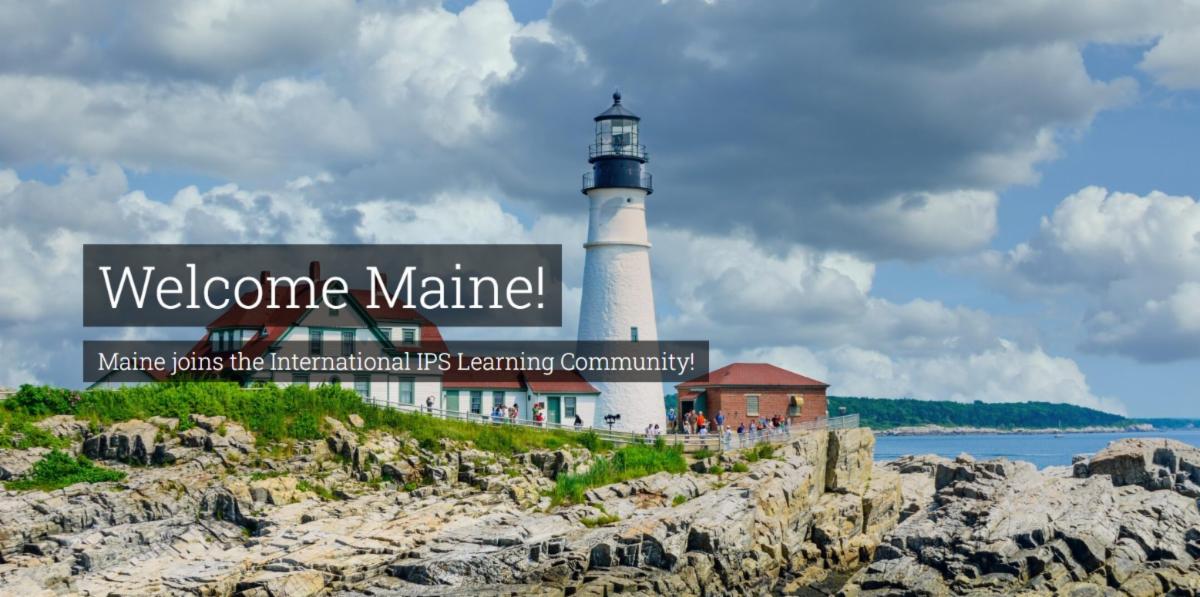
Now, when you visit IPSworks.org, Maine is the newest member of the IPS Learning Community. Congratulations to the Maine Office of Behavioral Health for their hard work and dedication to making evidence-based employment a reality for Mainers, and joining a world-wide community dedicated to best practice. Woot!! Woot!!


Everybody wins

with Individualized Placement and Support (IPS).

See our CES website for useful resources.

Click below:

CES landing page


How Individuals Win:

People with mental health and substance use disorders want to work — and employment has proven to play a pivotal role in their recovery. Beyond gaining independence and confidence, individuals in the IPS model have seen:


 Increased control of symptoms.

 Reduced hospitalization.

 Reduced substance use.

 Reduced use of mental health services. 


How Businesses Win:

IPS helps businesses find qualified and motivated employees. Businesses also benefit by:


 Hiring employees with valuable and diverse skills and supports.

 Increasing their customer base.

 Promoting increased diversity, which research shows results in a more creative, productive workforce with high morale.

 Saving on worker’s compensation or other insurance costs. 


How Mental Health Agencies Win:

Multiple research studies from around the world show IPS is more effective than other vocational approaches in helping job seekers find long-term competitive employment. IPS comes with a suite of tools, a learning community, and a clear roadmap toward successful implementation.


 Long-term reduction in outpatient treatment.

 Increased income and job satisfaction.

 Correlation between employment and a reduction in disability claims.

 Correlation between desire to work as a solution for worker shortages. 


How Communities Win:

IPS is evidence-based and has proven to be an excellent investment in communities by:

 Reducing negative health outcomes.

 Reducing the use of community-funded assistance programs and Social Security payments.

 Decreasing the costs of mental health and substance use treatment.

 Showing that people with meaningful employment are more invested in their communities.


Understanding IPS Fidelity:

Organization # 8:

Executive Support for Supported Employment


Rationale: The purpose of this item is to ensure that the IPS implementation is not delegated to the IPS (employment) team. Implementation research studies have demonstrated that agency leadership is critical for successful implementation of the evidence-based practice.   


When the supported employment program is not part of the mental health agency, some components of this item refer to both the agency where the IPS program is located (MaineHealth Vocational Services) and the mental health agency (CES host agencies), while other components refer only to the agency where the IPS supported employment program is located.


This indicator is scored 1-5 based on how many of the bulleted components (below) are in place at the time of an IPS Review. Below you will find each component of Organization #8, what IPS Reviewers look for (in red), and a helpful digital tool(s) to guide you toward success.


  • Executive Director and Clinical Director demonstrate knowledge regarding the principles of supported employment.

Executive directors at both agencies should demonstrate basic understanding of IPS in order for reviewers to give credit for this component.

IPS Practice and Principles


  • Agency QA process includes explicit review of the SE program, or components of the program, at least every 6 months through the use of the Fidelity Scale, or until achieving high fidelity and at least yearly thereafter. Agency QA process uses the results of the fidelity assessment to improve implementation and sustainability.

Reviewers learn about the quality assurance process at both agencies.

Fidelity Scale


  • At least one member of the executive team actively participates at leadership team meetings (IPS steering committee meetings) that occur at least every six months for high fidelity programs and at least quarterly for programs that have not yet achieved high fidelity. The committee develops written action plans aimed at developing or sustaining high fidelity services.

At least one administrator from each agency participates in the leadership meetings (IPS steering committee meetings) to receive credit for this component.

Steering Committee Description,

Sample Action Plan

and

2022 Fidelity Review Manual


  • The agency CEO/Executive Director communicates how IPS services support the mission of the agency and articulates clear and specific goals for IPS competitive employment to all agency staff during the first six months and at least annually. This item is not delegated to another administrator.

Both directors express their support for competitive employment and IPS employment services to receive credit.

Making the Case for IPS


  • IPS program leaders share information about evidence-based practice barriers and facilitators with the executive team (including the CEO) at least twice each year. The executive team helps the program leader identify and implement solutions to barriers.

This component applies to the agency that employs the IPS staff.

IPS Quarterly data collection  


IPS is an evidence-based practice. As such, IPS Reviewers assess implementation of this fidelity item through sources such as interviews with agency staff at all levels.


Reflection questions for executive leaders:

  • Have there been opportunities for you to speak with your agency staff about IPS supported employment? How often?
  • Is fidelity part of your quality assurance process? Are client outcomes reviewed?
  • Do executives ever speak directly with the IPS Supervisor about outcomes? Program barriers?
  • Do you know enough to explain the IPS program to others? How is it different than other employment programs?
  • Do you share your goals for competitive employment with your staff?
  • Do you think that employment is a critical component of services provided at your agency?


Click the buttons below for

extensive content and useful tools.

FMI: click links provided


MHRT-C Domain 8 Training

$300, virtual, begins 10/13/2026 (5-day training)


ABLE Accounts, Employment, and Financial Independence

Free, virtual, 7/1/2026, 3-4:30pm


IPS 101: Practice Principles

Free, 90-minute virtual webinars through 2026


IPS Mental Illness and Recovery

$100, 7-week course beginning 10/19/2026


IPS Non-Practitioners Course

$20/pp, 2-hour virtual course offered monthly


Motivational Interviewing:

What It Is and What It Isn't

$5, On-demand


My Living and Working with SMI...

Free, 1-hour virtual course


Five Stages in Recovery...

Free, 1-hour virtual course


Welcome to the MaineHealth Vocational Services, Community Employment Services newsletter. This newsletter is distributed quarterly and will provide resources and information pertaining to the Individual Placement and Support (IPS) model of supported employment for people living with psychiatric disability. The purpose is to educate stakeholders on how to adapt their agencies to reach and maintain high fidelity to the model. The secondary purpose of this newsletter is to inform stakeholders of valuable employment-related resources in order to enculturate vocational conversations within mental health agencies and with the people served by those agencies.


Disability Employment has been a focus of MaineHealth's Vocational Services for over 40 years. We serve both job seekers and businesses, while also offering vocational rehabilitation services through ACT teams and mental health agencies. The DVS mission is to bridge the gap between employment and people with disabilities.


The most recent iteration of the CES grant (2022) introduces the IPS Fidelity Scale, the role of IPS Trainer and Liaison, and technical assistance and training to agencies as they learn to implement the principles and evidence-based practices of IPS. DVS would like to recognize our partnership with DHHS Employment and Workforce Development, and DOL Vocational Rehabilitation for their work in making this grant possible.


To reach Nancy Litrocapes, IPS Trainer and Liaison, please email: nancy.litrocapes@mainehealth.org.