April 2026


Key Takeaways

The 12-month rolling strip for Brent was down 6% week-over-week to $84.09/barrel, and for WTI it was down 1.9% week-over-week to $80.15/barrel. Intermediaries are working with U.S, Israel, and Iran on a ceasefire proposal as the US deadline to Iran for an opening of the Strait of Hormuz draws nearer. The NYMEX prompt month dropped by $0.20/MMBtu week-over-week to $2.80/MMBtu while the NYMEX rolling 12-month strip decreased by $0.16/MMBtu week-over-week to $3.53/MMBtu. Storage levels saw a net increase of 36 Bcf for the week ending March 27th. The NEPOOL 12-month electricity strip fell 2.17% week-over-week to $78.59/MWh. The 2027, 2028, and 2029 strips saw mixed movement week-over-week. 


Read More

Inside the Perfect Storm Driving Today's High Energy Costs

By Joshua Barber, Managing Director of Pricing

In the last few years, we have seen energy prices not only rise in priority within the energy space, but breakthrough into the class of “kitchen table” issues that lead the news and become top issues in statewide elections. Across the United States, particularly in the Northeast region, 2025 brought a notable increase in interest around energy prices and the corresponding mechanics that drive them. We knew winter 2025-2026 was going to be more scrutinized than usual. Then a “perfect storm” of cost drivers resulted in....


Read more

SAVE THE DATE | CES Spring Online Seminar

Save the date for the CES online Spring Seminar on: Wednesday, June 3, from Noon to 1:00 p.m.


CES Energy experts will be on hand that day to cover top-of-mind energy issues, bringing insight, perspective, and practical takeaways you won't want to miss. More details on seminar topics and a formal registration invitation will be coming soon. Keep an eye on your inbox!


Registration opens in two weeks.

COFFEE & CLIMATE | Charlie Agnew Featured Speaker

Charlie Agnew, Vice President of Energy Services at Competitive Energy Services (CES), was the featured speaker in the City of Portland’s Coffee & Climate webinar series. The City of Portland is a long-valued CES client, and this session reflected the ongoing collaboration between the City and CES around energy planning and sustainability. Charlie’s presentation, titled "What's Up with Rising Energy Costs?," focused on energy markets, affordability, and reliability.


Coffee & Climate is a monthly event series (often virtual) hosted by the Portland and South Portland Sustainability Offices as part of the One Climate Future plan, which aims to reduce carbon emissions by 50% by 2030 and achieve net-zero by 2050. The series provides residents with opportunities to engage with city officials on topics such as solar energy, fisheries, and local sustainability initiatives.


Past Coffee & Climate conversations are available on the City of Portland YouTube playlist.

Ask an Expert | What are Ancillary Costs?

By Conor Larkin, Senior Energy Analyst


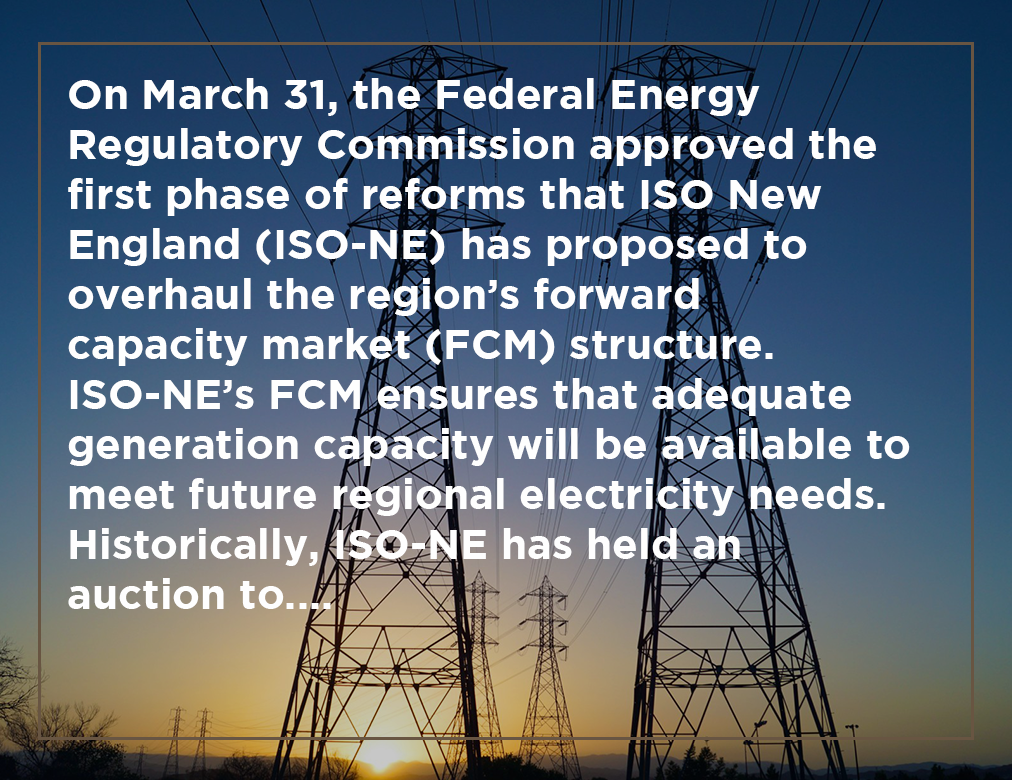
In March 2025, ISO New England rolled out the Day Ahead Ancillary Services (DAAS) market. DAAS was designed to strengthen electricity grid reliability by creating a competitive day-ahead market for on-demand generation and ancillary services. The costs of DAAS far exceeded ISO New England estimates and begs the question: what are ancillary services and why are they both so important and so expensive?


Ancillary services support the transmission of electricity from generation sites to customer loads, and they are integral to ensuring precise operation of the power grid. Two examples of ancillary services are regulation and voltage support. Regulation services refer to the capability of generators to balance load in response to rapid real time demand signals from the grid operator. Regulation helps to maintain interconnection frequency on the power grid. Voltage support is when resources absorb or produce reactive power to maintain voltage levels within acceptable limits in real time. A metaphor that can be helpful in framing the role of ancillary services is that they function like the tuning of an instrument. Without them, the grid would experience more blackouts and equipment failure.


If you are interested in learning more about what the shift in ancillary market structure means for your organization or additional ancillary services, please reach out to a CES Energy Services Advisor for personalized guidance.


STAFF PICK | Josh Barber

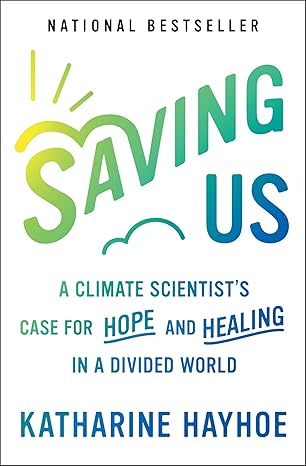
Saving Us: A Climate Scientist's Case for Hope and Healing in a Divided World 


By Katharine Hayhoe


Called “one of the nation’s most effective communicators on climate change” by The New York Times, Katharine Hayhoe knows how to navigate all sides of the conversation on our changing planet. A Canadian climate scientist living in Texas, she negotiates distrust of data, indifference to imminent threats, and resistance to proposed solutions with ease. Over the past fifteen years Hayhoe has found that the most important thing we can do to address climate change is talk about it – and she wants to teach you how.

In Saving Us, Hayhoe argues that when it comes to changing hearts and minds, facts are only one part of the equation. We need to find shared values in order to connect our unique identities to collective action. This is not another doomsday narrative about a planet on fire. It is a multilayered look at science, faith, and human psychology, from an icon in her field – recently named chief scientist at The Nature Conservancy.

Drawing on interdisciplinary research and personal stories, Hayhoe shows that small conversations can have astonishing results. Saving Us leaves us with the tools to open a dialogue with our loved ones about how we all can play a role in pushing forward for change. (An Amazon Book Review)


COMPETITIVE ENERGY SERVICES |

competitive-energy.com

 
Facebook  Twitter  Linkedin  Youtube