July 2026


Key Takeaways

The 12-month rolling strip for Brent was up 4% week-over-week to $74.71/barrel and for WTI by 3.5% to $70.39/barrel. Refreshed tensions in the Persian Gulf are causing upward pressure in crude oil markets. The NYMEX prompt month went down $0.18 week-over-week, landing at $3.01/MMBtu. The NYMEX rolling 12-month strip decreased by $0.10/MMBtu to $3.24/MMBtu. Storage levels saw a net increase of 61 Bcf for the week ending June 3rd. The NEPOOL 12-month electricity strip gained almost 5% week-over-week to $81.69/MWh. The 2027 and 2029 strips saw a rise over the past week while the 2028 strip held constant. 


Read More

Wyman Station is a Problem Maine Must Solve

By Eben Perkins, Chief Strategy Officer

Maine doesn’t have a plan to replace the aging facility’s on-demand power once it retires. It’s time to get to work. And our next governor needs to be ready. With its 421-foot stack, Wyman Station towers over Casco Bay from the tip of Cousins Island in Yarmouth. Wyman’s shadow similarly looms large over Maine’s energy future Wyman is Maine’s largest power plant and its contribution to winter grid reliability is well documented. On cold days, the facility burns residual fuel oil to generate electricity.....


Read more

CES A-Team Volunteer Day | Portland Trails

Portland Trails is all about connecting people with places -- a mission that resonates with Competitive Energy Services, where strong connections are at the heart of everything we do. One of our favorite ways to strengthen those connections is by getting out into the community together.


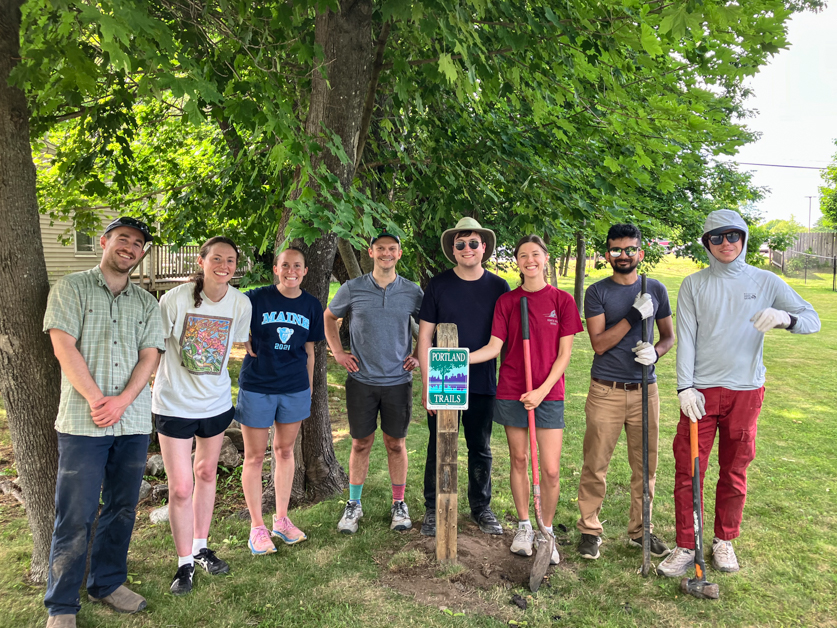
For the second year in a row, our Analytics Team (better known as the A-Team) traded spreadsheets for shovels and spent an afternoon volunteering with Portland Trails on June 25. Working in Portland's North Deering neighborhood along Gertrude Avenue, the team helped improve a section of trail that will one day connect Northgate Plaza to larger trail networks throughout the area.


By day's end, the A-Team had built a new bridge, installed trail signage, and rolled up their sleeves to rake, clear brush, and remove invasive species, all helping to make the trail more accessible and welcoming for future users.


"Many of us regularly enjoy Portland's trails and outdoor spaces, so it was rewarding to spend an afternoon helping care for something our community benefits from every day," said Simon Pritchard, Managing Director of Analytics."The project gave us a chance to work together in a different setting, enjoy some time outdoors, and contribute to an organization that plays an important role in making Portland such a vibrant and connected city. It was a meaningful way to give back while strengthening our team along the way."


After a productive afternoon of trail work, the A-Team celebrated their accomplishments the best way they knew how -- cooling off with a well-earned trip to Beal's Old Fashioned Ice Cream on Veranda Street.


CES Analytics’ Team (Left-to-Right): Conor Larkin, Catherine Nisbet, Katie Tims, Simon Pritchard, Will Dickerman, Thea Aslanian, Lakshya Bharadwaj, Emmett Burns.

Ask an Expert | How can my business reduce emissions?

By Thea Aslanian, Senior Energy Analyst


Step 1: Tracking 

Emissions are broken into three categories for accounting. Scope 1 emissions are generated onsite and include fuels used in stationary and mobile combustion. Scope 2 emissions are indirect emissions caused by the generation of purchased electricity. Scope 3 emissions are generated upstream or downstream, such as employee commuting or business travel. CES has a Carbon Tracker model to help clients view sources of emissions year-over-year. 


Step 2: Planning 

Once you have an emissions baseline, it's useful to set a reduction goal. It's possible to do this independently or through an established organization. Many of our higher education clients choose to join the Association for the Advancement of Sustainability in Higher Education (AASHE). For corporate entities, the Science Based Targets initiative (SBTi) is a global corporate climate action standard and validation body that can provide a useful planning framework. 


Step 3: Implementation 

There are two primary routes to reducing emissions: contractual measures and decarbonization. Contractual measures include purchasing energy attribute certificates such as renewable energy credits (RECs) and carbon offsets in order to claim carbon neutrality. Decarbonization involves on-the-ground operational changes, such as switching from a natural gas heating plant to geothermal heating, in an effort to achieve net-zero emissions. 

If you are interested in learning more about how to reduce emissions, reach out to a CES CES Energy Services Advisor.


COMPETITIVE ENERGY SERVICES |

competitive-energy.com

 
Facebook  Twitter  Linkedin  Youtube