|
CESSRST-II Quarterly Highlights |
|
|
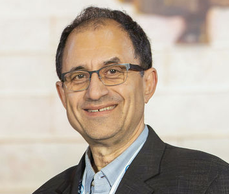
Dr. Fred Moshary
Director, NOAA Center for Earth System Sciences and Remote Sensing Technologies (CESSRST-II)
| | |
This past quarter has been an exceptionally active and productive period for CESSRST-II. The Center supported 19 graduate student fellows who participated in the NOAA Experiential Research and Training Opportunity (NERTO) internships as well as two undergraduate students who participated in the NOAA Undergraduate Research Internship (NURI) program during Summer 2026.
Our students have been engaged across multiple NOAA Line Offices and laboratories, including NESDIS, OAR, NWS, and NMFS, gaining valuable hands-on experience aligned with NOAA's mission. The Center was also actively involved in our Cohort V recruitment, resulting in the recruitment of 33 new fellows, including 5 Ph.D. students, 17 master's students, and 11 undergraduate students. Additional recruitment efforts are expected to continue through the summer.
The Center held its Fourth Annual Meeting and Advisory Board Meeting at the NOAA Science Center in Silver Spring, Maryland, from April 20-22, 2026. The Annual Meeting opened with remarks from NOAA leadership, emphasizing the importance of the Educational Partnership Program (EPP), mentorship, and workforce development. Presentations from NOAA Line Offices, including NESDIS, OAR, NWS, NOS, and NMFS, highlighted agency priorities in areas such as data science, artificial intelligence and machine learning (AI/ML), cloud computing, satellite calibration, weather and radar research, ocean observations, and fisheries survey technologies.
During the Advisory Board Meeting that immediately followed the Annual Meeting. board members provided valuable feedback and recommendations, emphasizing the need for fellows to develop strong foundations in artificial intelligence while also strengthening communication, leadership, and systems engineering skills to better prepare for future careers in the NOAA workforce and broader STEM enterprise.
From May 5-8, 2026, the Center underwent an on-site review conducted by an Independent External Review Team (IERT), of its years 1-3 activities. The IERT team members, along with NOAA's Grants Management and EPP teams, met with the CESSRST-II leadership team and representatives from The City College of New York (CCNY). Prior to the May visit, and as part of the review process, the Center delivered an overview presentation to the IERT in April. CESSRST-II currently awaits the final evaluation report.
During the spring and summer 2026 semesters of this period, 10 CESSRST-II fellows graduate. Among the graduates were Alessandra Zuniga (SDSU) and Wendy Prudencio (UMBC), who both earned their Ph.D. degrees.
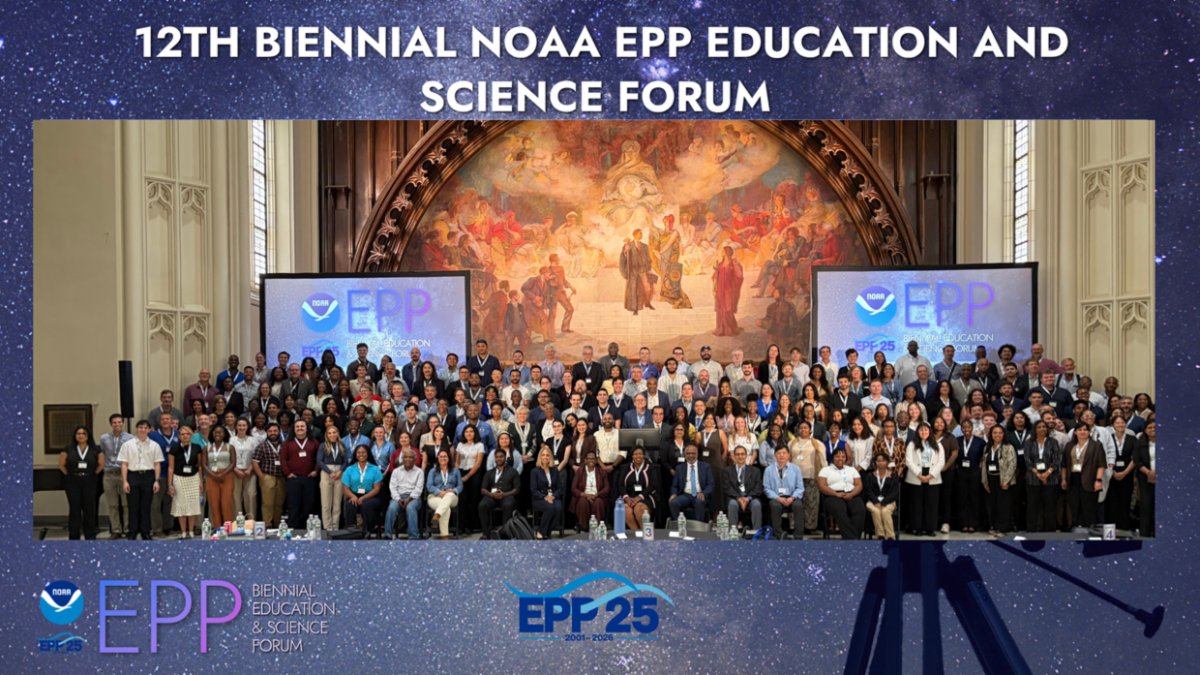
A major highlight of the quarter was the Center's hosting of the 12th Biennial Education and Science Forum at CCNY from July 20-23, 2026. The Forum also commemorated the 25th Anniversary of the NOAA Educational Partnership Program Cooperative Science Centers.
The Forum served as a premier venue for showcasing collaborative research and education initiatives conducted by students and faculty from NOAA EPP-funded academic institutions in partnership with NOAA scientists. It also created opportunities for new collaborations, professional networking, and career development for undergraduate and graduate students pursuing STEM disciplines.
The event featured a diverse array of technical sessions, hands-on workshops, professional development activities, and networking opportunities. More than 330 participants registered for the Forum. The program included 115 poster presentations, 43 oral technical presentations, and 24 student awards presented across four thematic areas.
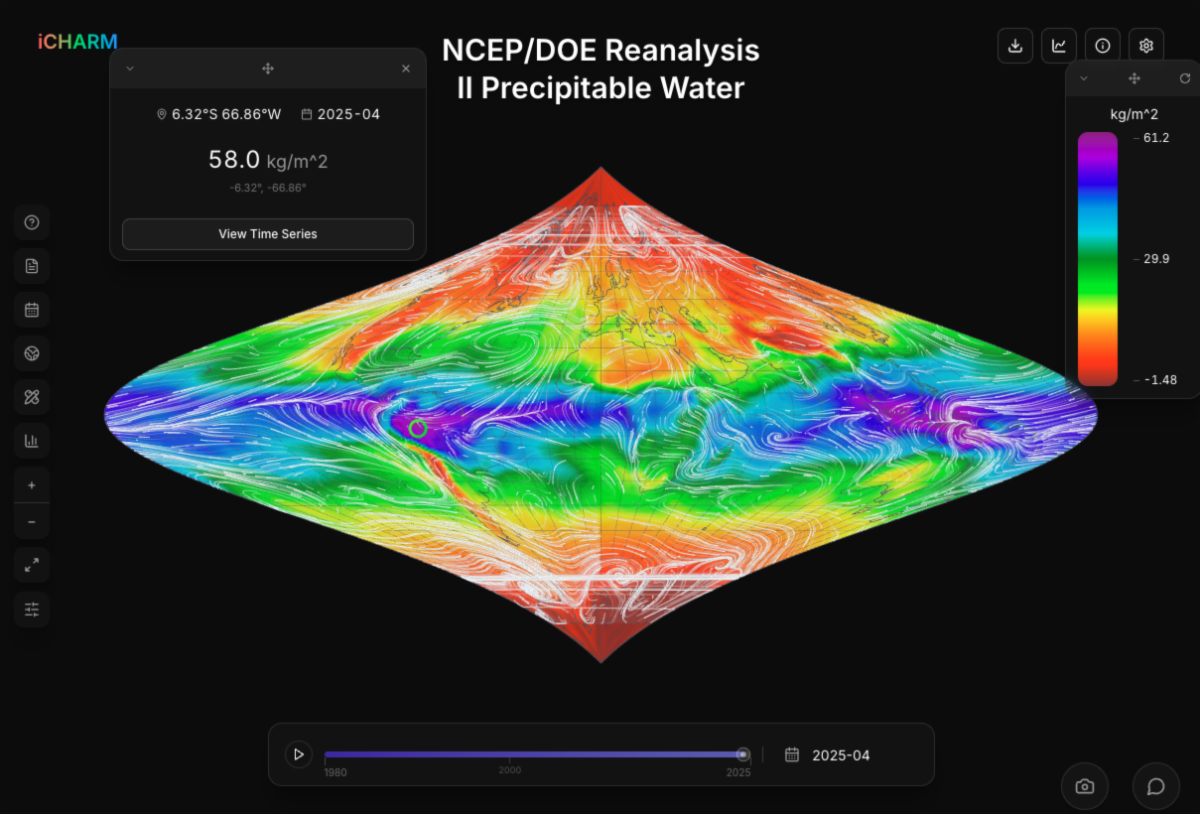
CESSRST-II also unveiled the iCHARM app. The app developed by Jonathan Seigel, a CESSRST-II M.S Fellow at SDSU allows users to explore and analyze environmental data without needing programming experience.
The Forum culminated with a Jubilee Banquet Dinner, during which nine distinguished guests were honored for their contributions to NOAA EPP and workforce development efforts. Keynote addresses were delivered by Dr. Latoya Myles, Director of NOAA's Air Resources Laboratory (ARL), and Dr. Equisha Glenn of the Metropolitan Transportation Authority (MTA).
CESSRST-II remains committed to its mission of educating, training, and graduating highly skilled postsecondary students while strengthening the readiness of fellows for careers supporting NOAA's mission and the nation's STEM workforce needs. The Center looks forward to a productive and successful Fall 2026 semester as it continues to advance research, education, and workforce development initiatives.
| | | | CESSRST-II Hosts 25th Anniversary of NOAA CSCs | | 12th NOAA Biennial Education & Science Forum | | |
The National Oceanic and Atmospheric Administration (NOAA) Educational Partnership Program (EPP) Biennial Education and Science Forum was jointly hosted by NOAA EPP and NOAA Center for Earth System Sciences and Remote Sensing Technologies (CESSRST-II) from July 20-23, 2026 at the City College of New York.
This forum marked the 25th Anniversary of the NOAA EPP Cooperative Science Centers and the 12th Biennial Education and Science Forum. The forum provided an opportunity for fellows, mentors and collaborators to showcase the results of collaborative research and education projects between students at NOAA EPP funded academic institutions and NOAA scientists; to generate new engagement opportunities; and, to promote professional development for (STEM) undergraduate and graduate students. This event brought together mentors, students, alumni and professionals to share insights and experiences.
| | | CESSRST-II Fellows Recognized at the Biennial Education & Science Forum | | | | |
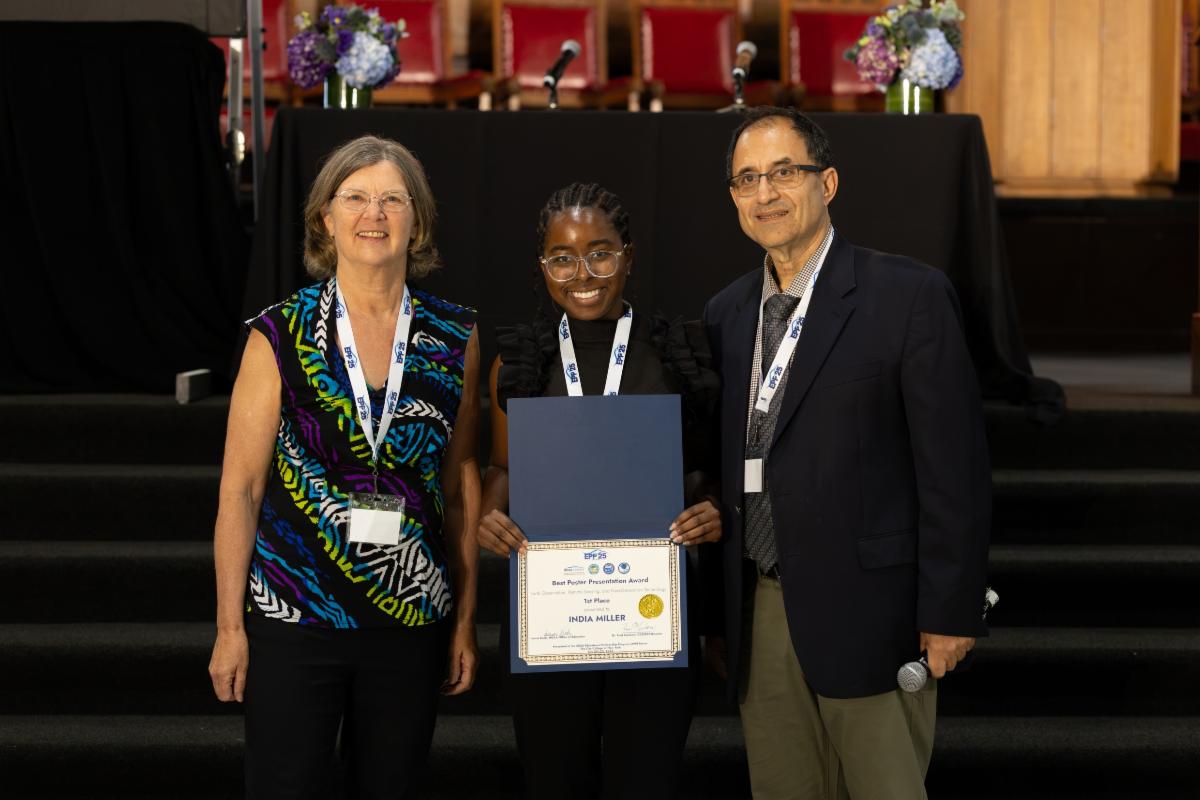
Twelve (12) fellows received top honors at the 12th NOAA Educational Partnership Program (EPP) Biennial Education and Science Forum, held July 20–23, 2026, at The City College of New York (CUNY). The four-day event brought together students, researchers, faculty, NOAA scientists, and education partners from across the country to showcase research, foster collaboration, and celebrate excellence in STEM.
The forum also marked the 25th anniversary of the NOAA EPP Cooperative Science Centers, highlighting the program’s continued commitment to research, education, and workforce development in NOAA mission areas.
| | | CESSRST-II Fellows Develops iCharm Web Platform for Accessing NOAA Data | |
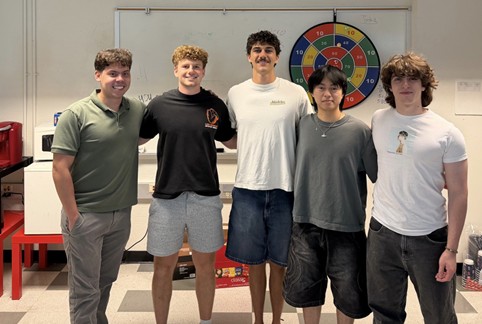
Jonathan Siegel (left), a CESSRST EPP Fellow, and his iCHARM computer coding team members: (L-R) Will Ruff, Elliot Gambale, William Phong, and Arthur Pasquinelli. Image credit: Christian Byars | |
|
Cohort 4 Master's Fellow, Jonathan Siegel and his team developed a new platform called the Cyber Hub for Analytics, Research and Monitoring (iCHARM) which allows NOAA’s weather and climate data easier to access and understand. iCHARM allows users to explore and analyze environmental data without needing programming experience.
iCHARM was unveiled at the 12th Biennial NOAA EPP Education and Science Forum. The web-based platform was developed at San Diego State University under the guidance of Dr. Sam Shen and Dr. Mitch Goldberg.
| | | | CESSRST-II SDSU Fellow Publishes a Paper in Environmental Research Ecology | |
Francia Tenorio, Cohort 2 Ph.D. Fellow at San Diego State University published an article in Environmental Research Ecology titled, “Detecting unvegetated permafrost-thaw features in Arctic tundra using imaging spectroscopy” – Read More
| | |
Jemma Przybocki, Cohort 3 Master’s Fellow at UMBC contributed to research examining the value of ingesting near-real-time NOAA satellite fire detections and emissions data into National Weather Service (NWS) air quality forecasting models. - Read More
| | CESSRST-II UPRM Fellow Publishes an Article in Journal of Water | |
Gerardo Trossi-Torres, Cohort 2 Ph.D. Fellow at University of Puerto Rico Mayaguez published a paper in the Journal of Water titled “Assessing National Water Model Soil Moisture Performance in Puerto Rico Using in-Situ and Satellite Observations” – Read More
| | NOAA Seminar Series Presentations | | CESSRST-II Fellow Shares NERTO Research on Renters and Climate Adaptation | | |
CESSRST-II Cohort 3 Ph.D. Fellow Enrique Valencia recently completed his NERTO experience with NOAA’s Climate Program Office (CPO/OAR).
His project, “Assessing Renters’ Climate Adaptation Challenges: A Systematic Review of the Literature at the Intersection of Housing and Climate Adaptation,” explored existing research on how renters experience and navigate climate-related risks and adaptation efforts. During his NERTO, Enrique was mentored by Dr. Ariela Zyerman (NOAA CPO). On August 8, he shared his experience and research findings through a presentation as part of the NOAA Seminar Series, highlighting insights from his work and the broader importance of considering renters in climate adaptation planning and policy.
| | | NOAA Experiential Research and Training Opportunities (NERTO) | | |
This past summer, several CESSRST-II fellows participated and completed their NERTOs across various NOAA Office.
- Assessing Renters’ Climate Adaptation Challenges: A Systematic Review of the Literature at the Intersection of Housing and Climate Adaptation - Enrique Valencia at NOAA CPO/OAR
- Revisiting Historic Airborne Radar Datasets - Aaliyah Perez at AOML/OAR
- Flight Forecasting and Data Analysis for AiRMAPS Airborne Field Campaign - India Miller at CSL/OAR
- Using AI/ML and Bayesian Modeling Techniques to Study Chemical Stressors and Their Impacts - Anais Ortega at NCCOS/NOS
- Predicting neighborhood-scale urban air quality using space-based remote sensing - Aya Nasri at STAR/NESDIS
- Integrating Remote Sensing and Environmental Reanalyses to Characterize and Potentially Predict Wildfire Risk and Socioeconomic Vulnerability - Aysha Akter at PSL/OAR
- Remote Sensing of Suspended Particulate Matter in Coastal Alaska with Satellite Ocean Color - Storm Heidinger at STAR/NESDIS
- Integrating Supervised Machine Learning and Pre-trained Models for Adaptive UAS Sampling - Dereck Guerra at NSSL
- Applied GIS and Remote Sensing Analysis of Local-Scale Climate Variability - Drake Valencia at NWS, San Diego
- From satellites to cells: a comparison of methods to measure phytoplankton and Harmful Algal Blooms in Charleston Harbor - Emilia Lepe at NCCOS/NOS
- National Water Model Assessment in Puerto Rico - Gerardo Trossi-torres at National Water Center
- Satellite-Based Mapping of Land Surface Temperature Across Ecosystems - Giselle Cabrera at ARL/OAR
- Leveraging Machine Learning and Artificial Intelligence approaches to improve Harmful Algal Bloom monitoring and forecasts - Haniel Cordero at NCCOS/NOS
- Assessing the Impact of NOAA Satellite Fire Products on Air Quality Alerts and Interventions to Prevent Wildfire Smoke Exposure - Jemma Przybocki at STAR/NESDIS
- Visualization and communication tools for NOAA cloud-based data and APIs - Jonathan Siegel at NCEI/NESDIS
- Creating a METAR Climatology Targeting Gradients and Trends Between METARS in the Southwestern U.S. to Examine Impacts on Southern California Weather - Jose Hurtado at NWS, San Diego
- Quantifying the accuracy of satellite-observed sea surface salinity against in situ observations by saildrones - Kolawole Owoeye at PMEL/OAR
- Testing artificial intelligence tools for understanding and predicting oceanographic changes and their effects on marine ecosystems - Lewis Luis at GFDL/OAR
- Retrieval Assessments for Different Microwave Sounder Configurations - Michelle Wagner at STAR/NESDIS
- Integrating technology and imagery into evaluations of coral reef condition - Neidibel Martinez at NCCOS/NOS
- Artificial Intelligence / Computer Vision for Detection in Benthic Imagery - Zoya Shafique at NCCOS/NOS
NERTOS starting in the Fall 2026.
- Evaluation of High Resolution Convective-Allowing Model Output for Extreme Precipitation Events in the Northeast - Richard Rivera at NWS, Upton NY
- Applied Hydrologic Analysis to Improve River Forecasting in Puerto Rico - Victoria Vega at NWS, San Juan PR
- Applied Evaluation of Multi-Hazard Risk Communication at the National Weather Service - Cherilyn Toro at NWS
| | Center & Research News Updates | | CESSRST-II Holds its Fourth Annual Meeting | |
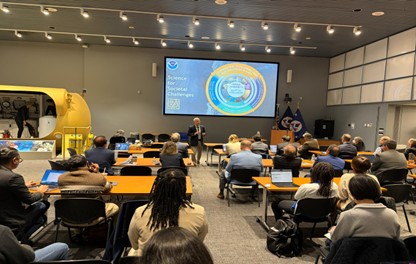
The fourth Annual Meeting of the Cooperative Science Center for Earth System Sciences and Remote Sensing Technologies (CESSRST-II) was held on April 20–21, 2026, at the NOAA Science Center in Silver Spring, Maryland. The meeting aimed to provide insight into NOAA’s current priorities and strategic objectives, highlight CESSRST II’s research accomplishments, emerging initiatives, and future plans, and strengthen collaboration between CESSRST-II scientists and NOAA subject matter experts (SMEs). A major highlight of the meeting was the CESSRST-II Student Showcase, which featured lightning talks and poster presentations by students. The program also included panel discussions on a range of topics, including artificial intelligence and machine learning (AI/ML), atmospheric observations, social science integration, student competency development, strategies for post-graduate careers, and NESDIS research and applications. These sessions fostered meaningful dialogue, knowledge exchange, and collaboration between CESSRST II participants and NOAA representatives.
The meeting produced several important outcomes. NOAA shared updates on research priorities across NESDIS, NESDIS STAR, OAR, NWS, and NCCOS, enabling CESSRST II to better align its research and educational activities with NOAA’s mission. In addition, discussions identified expanded workforce development opportunities for CESSRST-II students within the NOAA enterprise, further supporting the development of the next generation of Earth system science professionals.
| | | New Research Publications | |
Several CESSRST-II faculty members, fellows, and alumni recently published in peer-reviewed journals:
-
Leah Porras (Cohort 3, M.S Fellow) at University of Texas at El Paso together with her mentors Drs. Erin Moreland and Miguel Velez-Reyes published a new article in SPIE proceedings titled, “Machine learning-based detection of seals and polar bears using fused UV, RGB, and TIR aerial imagery” – Read More
-
Dr. Harold Gamarro published a paper on "Simulations of a High Ozone Episode and Heatwave Day Using a Coupled Multi-layer Urban Canopy and Chemistry Model" - Read More
-
Dr. Yonghua Wu at the City College of New York published a report on "Continental wildfire smoke transport and strong mixing into urban PBL in New York City, as observed by synergistic satellite, LiDAR, and other complementary measurements" in EPJ - Read More
-
Thomas Ely, Cohort 2 Ph.D Fellow at CCNY also published in EPJ on "Mobile Tropospheric Ozone Differential Absorption Lidar (DIAL) and Ozone Profiling in New York during Summer 2023" - Read More
-
Dr. Wu also published a paper on "Airborne and ground-based lidar observations of spatiotemporal variability of mixing-layer-height and ozone pollution in New York City area" - Read More
| | | | Congratulations to our 2026 Graduates! | | |
CESSRST-II Fellow, Alessandra Zuniga graduated from SDSU with a Ph.D.
Dr. Alessandra Zuniga graduated with a PhD in Ecology in May 2026. As the culmination of her doctoral studies, she delivered her exit presentation, titled “Leaf Gas Exchange: The Gateway to Understanding Plant-Atmosphere and Plant-Rhizosphere Relationships in Drought-Prone Agriculture,” on Thursday, May 28, 2026. Alessandra’s research has contributed valuable insights into the complex interactions between plants, soil, and the atmosphere, particularly in agricultural systems facing increasing drought stress. With the successful completion of her final presentation, Alessandra officially graduates from San Diego State University. This achievement reflects years of dedication, hard work, and scientific inquiry.
| | |
CESSRST- II Fellow, Wendy Prudencio completed a Ph.D. at UMBC
On April 20, Dr. Wendy Prudencio defended her thesis dissertation and received a Ph.D. from UMBC’s School of Public Policy. Her dissertation titled, ”Electricity, exits, and inequity: A compounded risk approach to disaster, housing and health” focused on the effects of energy supply on underprivileged areas and medically sensitive individuals during natural disasters, as well as the consequences of disaster policy on displacement in Puerto Rico. Drs. Yusuke Kuwuyama and Fernando Tormos-Aponte are Wendy’s advisors.
| |
Other Graduates
- Kevin Herrera (Cohort 1 Fellow) graduated with a Master of Science degree (M.S.) in Atmospheric Science from Hampton University
- Akarshna Iyer (Cohort 2 Fellow) graduated with a Master of Science degree (M.S.) in Atmospheric Science from Hampton University
- Andrew Dixon (Cohort 3 Fellow) graduated with a Master of Science degree (M.S.) in Earth System from the City College of New York
- Sebastian Makrides (Cohort 3 Fellow) completed his Master's degree in Earth System Sciences and Environmental Engineering at the City College of New York
- Biajani Gonzalez (Cohort 3 Fellow) graduated with a Master of Science degree (M.S) in Marine Science from University of Puerto Rico, Mayaguez
- Stephanie Hurtado-Gonzalez (Cohort 2 Fellow) graduated with a Master's degree in Geography at San Diego State University
- Drake Valencia (Cohort 3 Fellow) graduated with a Master's degree in Geography from San Diego State University
- Alejandro Medina (Cohort 3 Fellow) at University of Texas at El Paso graduated with a degree in Computer Engineering
| |
- IERT Virtual Presentation - April 17, 2026
-
CSC Education Experts’ Seminar Series: The New USA Jobs + The Federal Resume - April 18, 2026
-
Fourth Annual CESSRST-II Meeting- April 20-21, 2026
- CESSRST-II Advisory Board Meeting- April 21-22, 2026
-
Social Science Community of Practice - May 1, 2026
- Independent External Review Team Visit - May 5-8, 2026
-
Social Science Community of Practice - June 12, 2026
-
NOAA EPP Biennial Education & Science Forum - July 20 - 23, 2026
-
NOAA Seminar Series: Assessing Renters’ Climate Adaptation Challenges - August 26, 2026
- CESSRST-II Advisory Board Meeting - August 31, 2026
| | |
Upcoming Events
-
CESSRST Cohort 5 Orientation - September 5, 2026
- Social Science Community of Practise - September 25, 2026
-
Workshop by NWS on Weather Ready NYC: Forecasting, Warnings, and Urban Weather Challenges - September 30, 2026
-
American Geophysical Union (AGU) Annual Meeting - December 7, 2026
| | |
|
CESSRST-II program is funded by NOAA/EPP Cooperative Award # NA22SEC4810016
Connect with us!
|
| | | |