|
CESSRST-II Quarterly Highlights |
|
|
Dr. Fred Moshary
Director, NOAA Center for Earth System Sciences and Remote Sensing Technologies (CESSRST-II)
| | |
It was a busy period at CESSRST-II from the end of 2025 into the beginning of 2026. In December, fellows, faculty, and research scientists delivered 16 oral and poster presentations at the American Geophysical Union (AGU) Conference. This was followed in January by 12 presentations at the American Meteorological Society (AMS) Annual Meeting.
Several CESSRST-II fellows graduated at the beginning of January, including Charlotte Rhoads (M.S. in Earth & Atmospheric Science at CCNY), Nadia Samaroo (M.S. in Sustainability in Urban Environments at CCNY), and Lasbati Djiwa (M.E. in Electrical Engineering at CCNY).
Additionally, fellow Danielle Lafarga (Ph.D. in Computational Science at SDSU) successfully defended her thesis in November 2025 and will graduate at the end of Spring 2026.
Finally, the Center has been actively engaged in experiential planning and preparation for 23 CESSRST-II fellows this year. One fellow has just begun their NERTO at OAR/CPO in Silver Spring, MD, gaining hands-on experience in advanced research and operational tasks. The remaining fellows are expected to participate in their NERTOs over the summer, providing them with valuable opportunities to develop technical skills, collaborate with experienced scientists, and expand their professional networks. These experiences are designed to strengthen the fellows’ readiness for future careers in NOAA mission workforce ensuring that each participant gains meaningful, real-world exposure to the field.
| | | | CESSRST Cohort 2 Ph.D. Fellows Publish Papers on Urban Flooding | | Isabel Lopez, a Cohort 2 Ph.D. Fellow at University of Texas at El Paso(UTEP) published a paper with her mentor, Dr. Ivonne Santiago titled "Mitigating Urban Flooding Through Residential Rainwater Harvesting Using GIS and HEC-HMS". The paper, published in the Journal of Water, evaluates the potential on rainwater harvesting as a means to mitigate urban flooding in semi-arid environment - Read More | | Keneshia Hibbert, a Cohort 2 Ph.D. Fellow at the Graduate Center, CUNY and her mentor, Dr. Jorge Gonzalez-Cruz, published a research article titled "Future Projections of Sea Surface Temperature (SST) in MDR and Wider Caribbean Region: Utilising CMIP6 GCM Ensemble - View here | | NOAA Seminar Series Presentations | | This past fall, several CESSRST-II fellows participated in the NOAA Seminar Series Presentations, summarizing their NERTO experiences. | | |
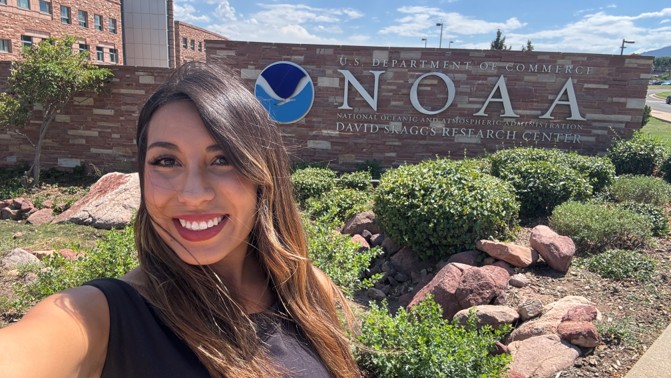
Stephanie Marquez, Ph.D. UTEP Fellow (Cohort 2)
Location: Global Systems Laboratory, Boulder, CO
Duration: August 11, 2025 – October 31, 2025
NERTO/NOAA Mentor(s): Dave Turner and Micheal Barlage
Faculty Mentor(s): Hernan Moreno
Activities:
Designed and trained LSTM networks to predict short-term soil moisture dry downs.
Worked closely with NOAA GSL scientists on methodology, validation, and integration into land surface models.
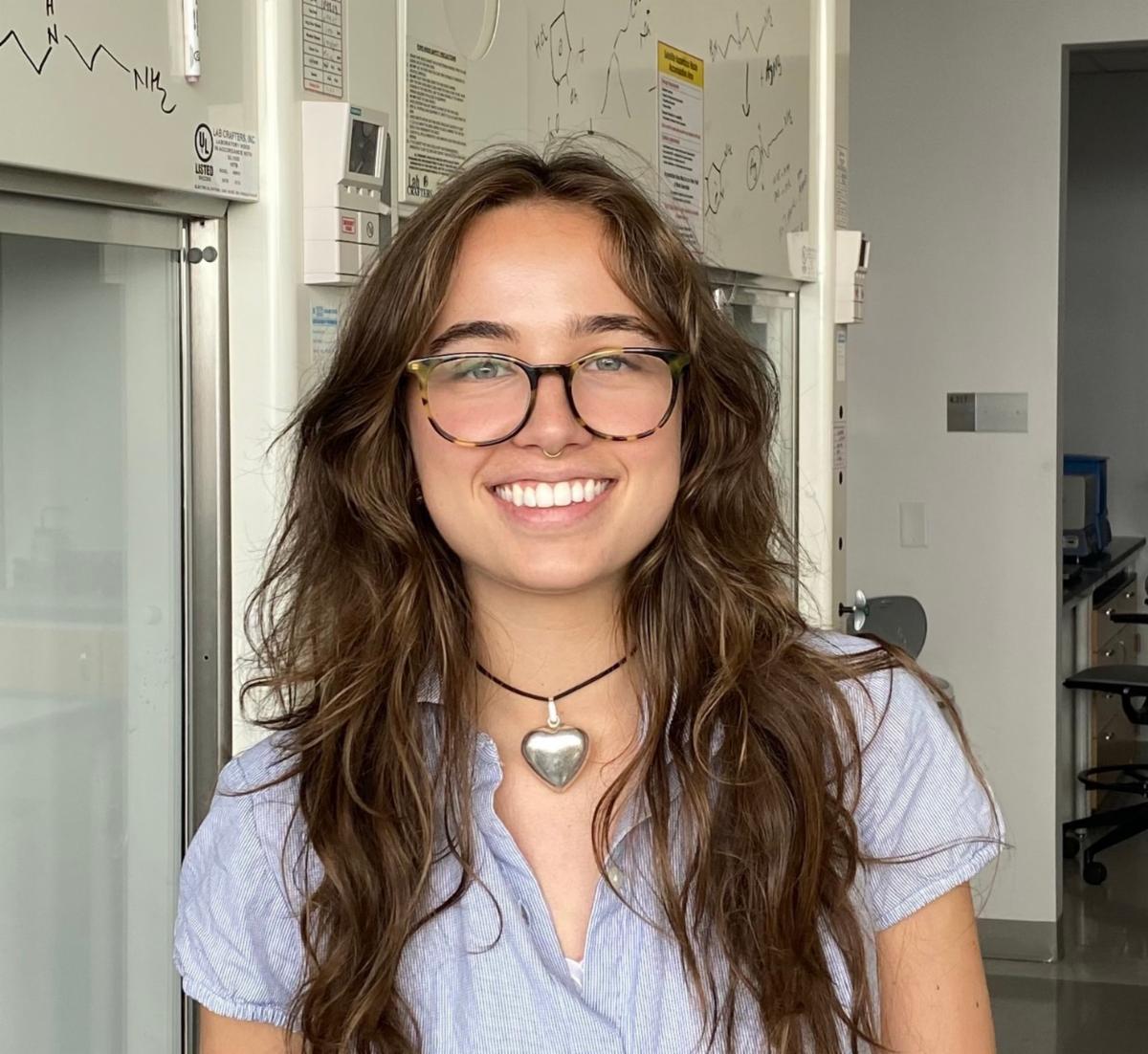
| | Courtesy: Stephanie Marquez at Global Systems Lab in Boulder, CO | | |
-
Species distribution models of deep-sea coral and sponge(DSCS)species of the northeast continental shelf (USA) by James Herlan (CUNY Cohort 2 Ph.D. Fellow) - Read More
-
Assessment of High-Resolution Rapid Refresh (HRRR) Precipitation Forecasts for Urban Coastal Areas: New York City Testbed by Sebastian Makrides (CCNY Cohort 3 M.S. Fellow) - Read More
-
Retrieving Humidity from Existing Wireless Transmissions by Lasbati Djiwa (CCNY Cohort 3 M.E. Fellow) - Read More
-
Detection of Seals and Polar Bears in Multispectral Aerial Imagery by Leah Porras (UTEP Cohort 3 M.S. Fellow) - Read More
-
Alaskan Arctic Patterns: Remote Sensing and Greenhouse Gas Emissions from Thermokarst Landscape by Francia Tenorio (SDSU Cohort 3 Ph.D. Fellow) - Read More
-
Leveraging Satellite Earth Observations to Understand Wetland Ecosystem Services for Coastal Resilience by Nadia Samaroo (CCNY Cohort 3 M.S. Fellow) - Read More
-
Exploring sampling approaches for NSSL’s UAS applications by Alejandro Medina (UTEP Cohort 3 M.S. Fellow) - Read More
-
Short-Term Soil Moisture Dry-Down Prediction Using LSTM to Enhance Land-Surface Model Initialization and Verification by Stephanie Marquez (UTEP Cohort 2 Ph.D. Fellow) -Read More
-
Machine Learning Techniques to Identify Solar Filaments by Ryan Goldberg (CCNY Cohort 3 PhD Fellow) - Read More
-
Evaluation of Wind Profile and Boundary Layer Height from an Airborne Doppler Lidar by Kevin Herrera (HU Cohort 1 M.S. Fellow) - Read More
| | Center & Research News Updates | | American Meterological Society 2026 | | At the American Meteorological Society (AMS) conference in Houston, Texas, Center fellows and faculty delivered 12 presentations. Presentations spanned a variety of topics including machine learning, satellites sounding retrievals, flood modeling and extreme weather events. These presentations reflected the Center’s ongoing commitment to advancing knowledge in NOAA mission aligned areas. Overall, the Center’s contributions reinforced its reputation as a hub of scientific excellence and underscored its dedication to education, mentorship, and impactful research. | | American Geophysical Union 2025 | |
The Center demonstrated a strong presence at the American Geophysical Union (AGU)
Conference in New Orleans, Louisiana, producing a total of 16 oral and poster
presentations. Center fellows' presentations included, "Assessment of the HighResolution Rapid Refresh (HRRR) Precipitation Forecasts for Urban Coastal Areas:
New York City Testbed," presenter by Sebastian Makrides, and "A Self-Trained
Deep-Learning Methodology for Automated Solar Filament Detection," presented by
Ryan Goldberg. These contributions highlighted the breadth and depth of research
conducted across the Center, showcasing innovative research and application
across multiple disciplines including remote sensing, artificial intelligence, machine
learning, hydrology and modeling.
| | | Building Coastal Research Partnerships with NOAA | |
|
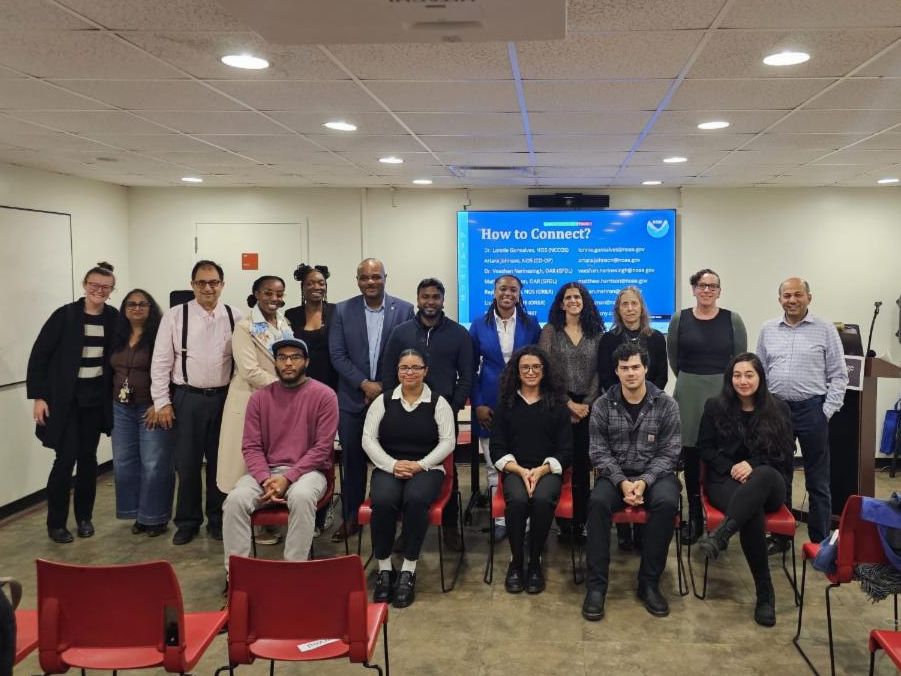
Line offices across NOAA engaged in a seminar and networking session aimed at strengthening collaboration and building coastal research partnerships across mission areas.
Dr. Lonnie Gonsalves, Division Chief within NOAA’s National Ocean Service (NOS), and Artara Johnson (F4 offices: NGS, CO-OPS, IOOS, OCS) addressed priority mission areas, key technical skill areas, and the communities served across NOS offices. Dr. Gonsalves focused predominantly on NCCOS, with connectivity to work in coastal states, national marine sanctuaries, disaster response, and forecasting. Artara Johnson (NOS) discussed environmental intelligence and prediction from the F4 offices perspective, with applications to economic services (ports and shipping), resilience, and disaster response. Additional perspectives were provided by Physical Scientists Dr. Veeshan Narinesingh and Matthew Harrison of NOAA’s Office of Oceanic and Atmospheric Research (OAR) and the Geophysical Fluid Dynamics Laboratory (GFDL), respectively. They highlighted research and operational integration across OAR and GFDL, with discussion of observing systems, modeling, remote sensing, engineering innovations, and applications relevant to environmental intelligence and Earth system science
- Read More
| | | | Congratulations to our Fall 2025 Graduates! | | |
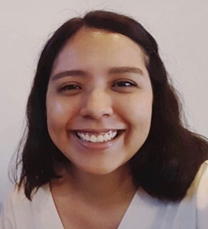
Danielle Lafarga
Ph.D. in Computational Science
San Diego State University
| | |
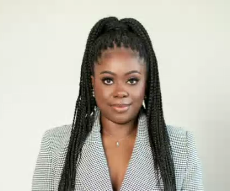
Charlotte Rhoads
M.S in Earth & Atmospheric Science
CCNY/CUNY
| | |
Congrats to the class of 2025. Several Fellows graduated this year, marking another successful milestone in the journey of our Center fellows.
At SDSU, Danielle Lafarga (Cohort 1, Ph.D. Fellow) defended her thesis in November 2025.
At CCNY, Charlotte Rhoads (Cohort 2 M.S. in Earth & Atmospheric Science), Lasbati Djiwa (Cohort 3, M.E in Electrical Engineering), Nadia Samaroo (Cohort 3, M.S in Sustainability in Urban Environments) graduated with their degrees at the beginning of January.
Their accomplishments represent countless hours of hard work, mentorship, and meaningful engagement both within and beyond the Center. As they move forward into the next chapter of their careers, we are confident they will continue to make a lasting impact in their respective fields and communities. CESSRST-II celebrates their success with pride and looks forward to further achievements these fellows will make in the years ahead.
| |
New Research Publications
Several CESSRST-II faculty members, fellows, and alumni recently published in peer-reviewed journals:
-
Mitigating Urban Flooding Through Residential Rainwater Harvesting Using GIS and HEC-HMS by Isabel Lopez & Ivonne Santiago - View here
-
Influences of the moss layer and environmental drivers on the active layer depth and soil temperature in a wet sedge Arctic tundra ecosystem by Kevin Gonzalez & Donatella Zona - View here
-
The Physical Mechanisms of Hurricane Ida’s Extreme Rainfall in NYC: Insights from the Warn-on-Forecast System by Tyler Janoski & Thomas Galarneau - View here
-
Future Projections of Sea Surface Temperature (SST) in the MDR and Wider Caribbean Region: Utilising CMIP6 GCM Ensembles by Keneshia Hibbert & Jorge Gonzelez - View here
| | | |
- Social Science Community of Practice - November 14, 2025
- Education Experts' Seminar Series - November 19, 2025
- NERTO/NURI Orientation - December 5, 2025
- American Geophysical Union (AGU) Annual Meeting - December 15, 2025
- 106th American Meteorological Society (AMS) Annual Meeting - January 25, 2026
- Social Science Community of Practice - February 6, 2026
- Spring Caucus- February 11, 2026
- Cohort Fellows Virtual Mixer- February 18, 2026
- Seminar on Building Coastal Research Partnerships with NOAA - March 6, 2026
| | |
Upcoming Events
- Culture of Innovation Series - March 17, 2026
- Education Expert Seminar Series - March 26, 2026
- NERTO/NURI Financial Orientation - March 27, 2026
- Social Science Community of Practice - April 3, 2026
- Fourth Annual CESSRST-II Meeting- April 20-21, 2026
- CESSRST-II Advisory Board Meeting- April 21-22, 2026
| | |
|
CESSRST-II program is funded by NOAA/EPP Cooperative Award # NA22SEC4810016
Connect with us!
|
| | | |