|
Cedric MacLeod
From the executive director's desk
| |
As we head into the 2026 growing season, I’m encouraged by the momentum building across Canada’s forage and grassland sector. Everywhere I go, I see producers, advisors, researchers and partners leaning into innovation, sharing knowledge and working together to strengthen the systems we all rely on. That spirit of collaboration is what continues to move this sector forward and it remains at the heart of the CFGA’s work.
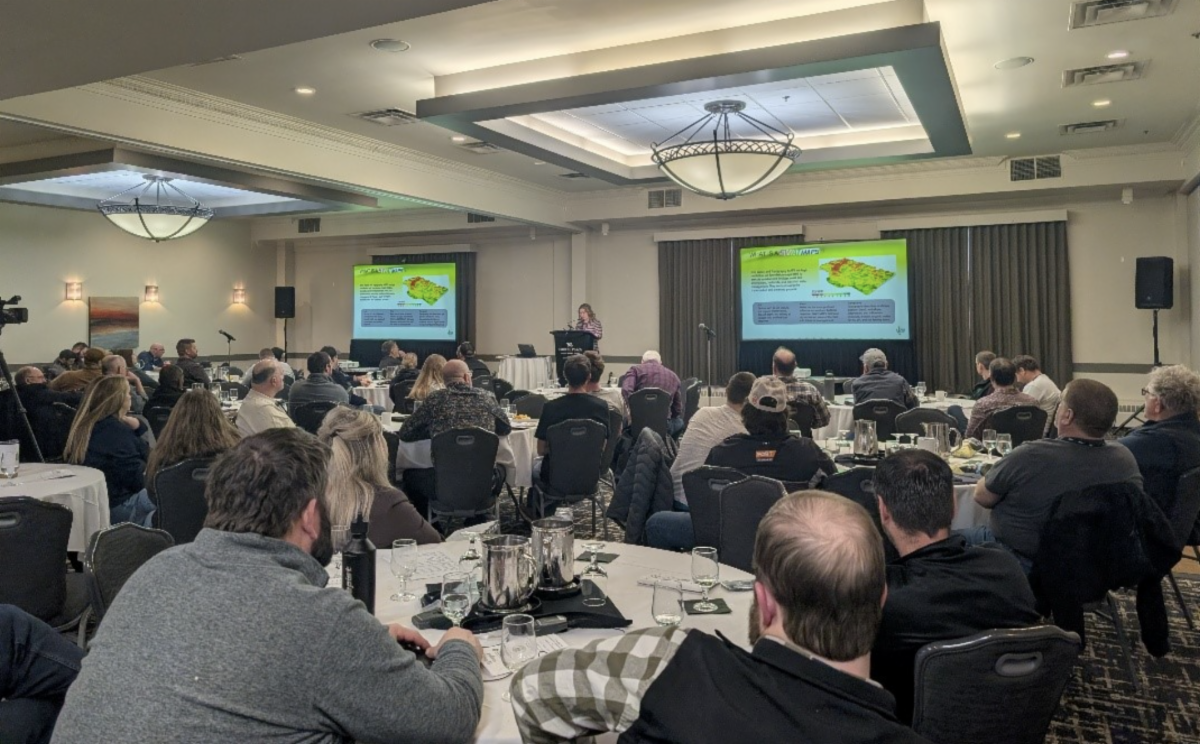
We saw that energy on full display at our 2026 Annual General Meeting. It was a strong gathering that brought together voices from across the country to reflect on the past year and set a clear direction for the one ahead. The discussions were thoughtful, the engagement was high and the commitment to advancing forage and grassland stewardship was unmistakable. It reinforced what I’ve always believed: when this sector comes together, we get things done.
Over the past year, we’ve made real progress in advancing climate‑smart forage practices, expanding producer support programs and strengthening partnerships with provincial associations, Indigenous communities, researchers and industry leaders. These relationships are essential. They ensure that the work we do is grounded in practical experience, informed by science and aligned with the needs of producers on the ground.
This spring, we’re excited to launch two major initiatives that reflect that commitment. The High Performance Forage Course will give producers and advisors access to practical, science‑based training they can apply directly on their farms. At the same time, our new podcast, Forage and Grasslands Unpacked, opens the door to deeper conversations about the future of grasslands, the people who steward them and the policies shaping their management.
We’re also excited to continue highlighting the importance of Canada’s grasslands; the ranchers, graziers and pastoralists who rely on them; and the role these landscapes play in climate resilience, biodiversity and food security as we celebrate the International Year of Rangelands and Pastoralists (IYRP). Watch the CFGA online calendar of events and social media platforms for events happening across the country.
Together, these efforts support a broader vision: a sector that is informed, connected and equipped to meet the challenges and opportunities ahead. Whether you’re a producer, advisor, researcher or partner, your leadership and engagement continue to drive this work. Thank you for your commitment to Canada’s forage and grassland landscapes. I’m looking forward to the season ahead and to the progress we’ll make together.
| | |
Recordings from the 2025 Conference are available
The 2025 CFGA Annual Conference, presented in partnership with the New Brunswick Soil and Crop Improvement Association (NBSCIA), took place in Fredericton, New Brunswick in November. For those who registered for the conference, recordings of the sessions are available as part of their registration fee.
Access the recordings
-
If you registered to access the online platform during the conference, you can login to access the recordings here.
- The recordings are available on each speaker's page.
Anyone who did not register for the conference who is interested in purchasing access can email info@canadianfga.ca for more information.
Check out the CFGA blog for conference summaries.
| | |
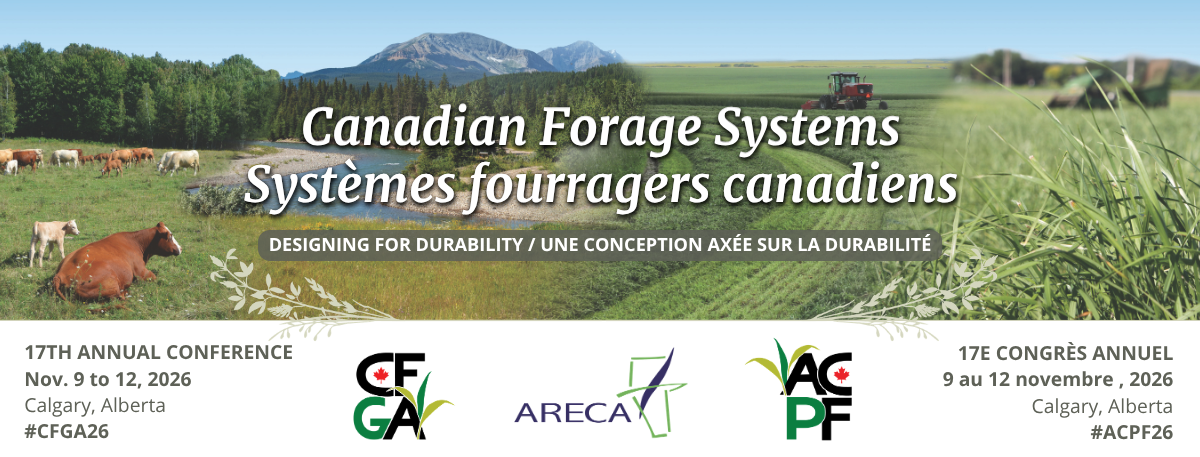
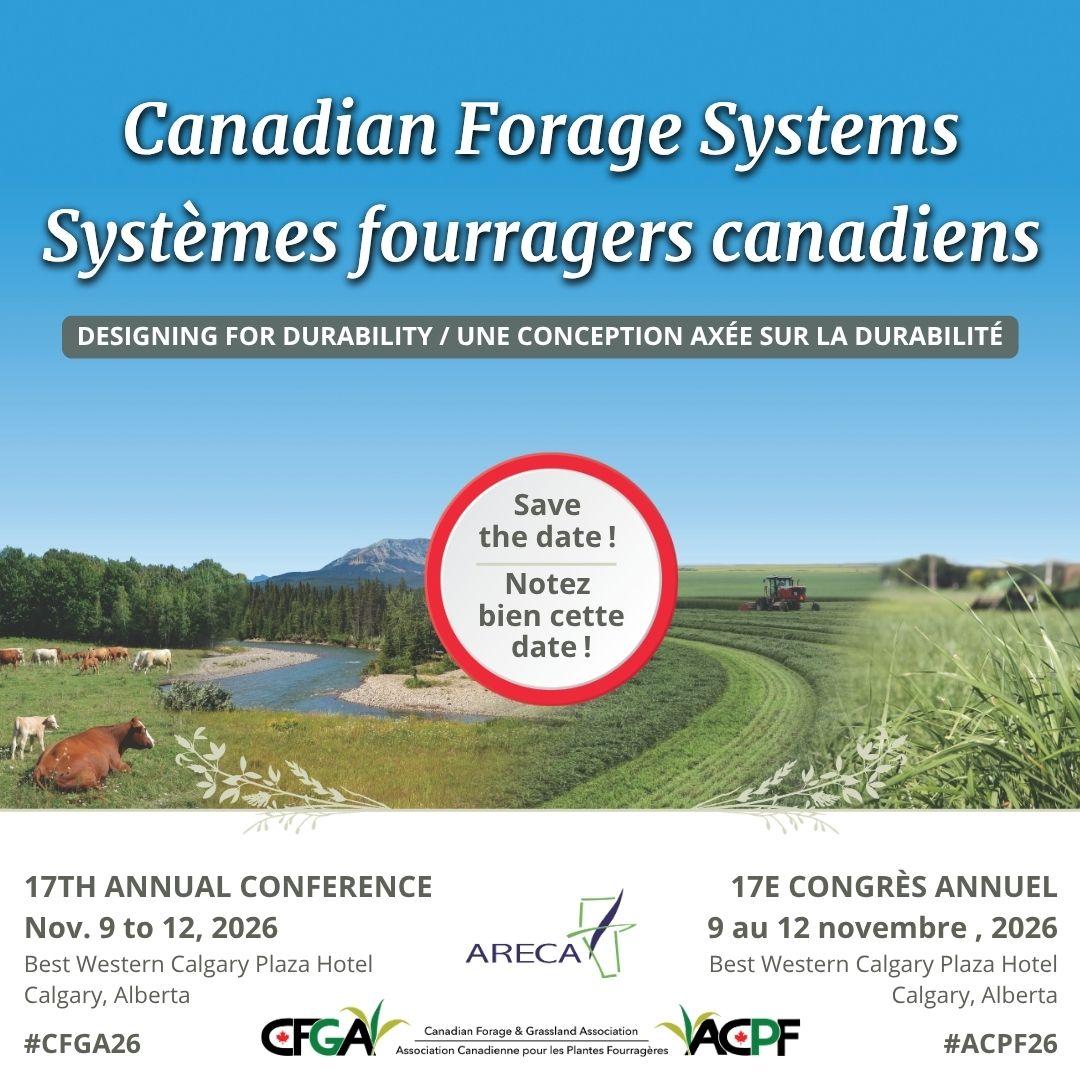
2026 Conference Save the date - Nov. 9 - 12
The CFGA is pleased to announce that its 2026 Annual Conference will take place Nov. 9–12 in Calgary, Alberta, in partnership with the Agricultural Research and Extension Council of Alberta (ARECA).
With the theme, Canadian Forage Systems: Designing for Durability, the 2026 conference will bring together forage growers, graziers and grassland stewards from across the western Prairies to showcase innovation and drive conversations forward for a resilient and durable sector.
Watch the CFGA website and social media platforms for more information.
| | |
The CFGA testifies in Ottawa
On April 21, Canadian Forage and Grassland Association (CFGA) executive director Cedric MacLeod addressed the House of Commons Standing Committee on Agriculture and Agri-Food to present the CFGA’s position on business risk management programs in Canada's agriculture sector.
You can listen to his remarks during the April 21 meeting recording here, starting at 12:27:00.
| |
Report from the CFGA’s annual general meeting
The CFGA held it’s 2026 annual general meeting on April 14, bringing together board members, contractors and partners from across the country. The virtual meeting, hosted via Zoom, provided an opportunity to reflect on the past year’s achievements, review organizational progress and look ahead to the work underway for 2026–2027. It also featured cross‑Canada updates from provincial forage associations and a review of the CFGA’s 2024–2025 audited financial statements.
Here are links to recordings of the AGM project updates and review and discussion of the 2024–2025 audited financial statements:
The CFGA extends its thanks to all members, partners and contributors who participated in this year’s AGM and continue to support the association’s mission to advance Canada’s forage and grassland sector.
| | |
Annual progress report
The CFGA has released its 2024-2025 Annual Progress Report in English and French.
| | |
CFGA launches national podcast: Forage and Grasslands Unpacked
The CFGA has launched the first season of its new podcast, Forage and Grasslands Unpacked, a series of conversations about forage, grasslands and grazing through a multi‑focal lens. Each episode brings together one host and a panel of guests for an engaging conversation that unpacks a single topic from multiple perspectives.
Season one features 10 episodes, beginning with a foundational question: What is a grassland? From there, the series moves into deeper discussions about the role of grasslands in climate solutions, their importance for biodiversity and how policy decisions shape the future of these ecosystems. Listeners will also hear conversations about the next generation of grassland stewards, including the perspectives of youth and Indigenous groups who are helping define what grassland conservation and management will look like in the years ahead.
The podcast showcases a wide range of voices from across the country, including academics, extension partners, producers, grazers, Indigenous knowledge holders, land stewards, women and youth leaders and policy makers. Together, they offer a rich, grounded understanding of the challenges and opportunities facing Canada’s forage and grassland sector.
Looking ahead, the CFGA plans to expand the conversation even further. Season two, arriving this fall, will dive into forage markets, emerging trends and other timely topics shaping the sector.
Join us on this journey and explore the full season by clicking one of the links below:
Spotify
Amazon Music
Apple Music
| | |
High Performance Forage Course launching soon
The CFGA is preparing to launch an important new learning resource this spring. The High Performance Forage Course is a self‑directed online program designed to strengthen forage management knowledge and capacity across Canada. Launching this spring, the course offers practical, science‑based training that helps producers and advisors improve forage yield, quality and overall system performance.
Developed as a sector‑wide resource, the course is intended for agrologists, forage specialists, producers, provincial and environmental staff and other professionals working across Canada’s forage and livestock systems. Its purpose is to highlight the value and measurable impact of high‑performance forage management while establishing a trusted, accessible training option for the agriculture sector.
What sets this course apart is its emphasis on performance rather than simple production. Participants are guided beyond the basics to explore system‑level outcomes such as yield stability, feed quality, stand longevity and long‑term productivity. The course also plays an important role in bridging research and practice by connecting the latest Canadian forage research with practical, on‑the‑ground decision‑making tools that can be applied directly on farm.
By improving knowledge and confidence among producers and advisors, the course strengthens the entire forage value chain. Better forage outcomes support livestock productivity, soil health and long‑term sector resilience. Because the program is delivered online and is self‑directed, it also expands access to consistent, high‑quality training for participants across all provinces and production systems.
The course was developed with guidance from Dr. Dan Undersander of the University of Wisconsin, along with senior subject matter experts from across the sector. Their combined expertise ensures that the content reflects the most current research, recommended practices and technical insights available today. In doing so, the program reinforces the CFGA’s role as a national leader in forage knowledge, training and professional development.
The High Performance Forage Course is organized into 12 comprehensive modules that cover the full forage system, from planning and seed selection to fertility, pest management, harvest systems, storage, feed out, performance tracking, cost of production and greenhouse gas management. Participants will explore topics such as rotation design, seeding strategies, nutrient management, baleage production, storage considerations and many others, gaining a complete foundation for improving forage system performance.
Development of the course was funded in part by Agriculture and Agri‑Food Canada through the Agricultural Climate Solutions – On‑Farm Climate Action Fund (OFCAF).
Email learning@canadianfga.ca for more information.
| | |
Getting started with rotational grazing
Rotational grazing is one of the most effective beneficial management practices (BMPs) available to Canadian livestock producers and it's the practice stream the CFGA supports through the federal On-Farm Climate Action Fund (OFCAF). By assessing pastures and selectively dividing them based on a number of productivity factors, matching them with livestock intake requirements and moving the cattle based on plant growth and timing producers can improve forage productivity, build soil health and reduce greenhouse gas emissions.
Step 1: Assess your land and forage base
Start with an inventory of your total available pasture acreage, existing forage species, water sources and current fencing infrastructure and materials. Using plant inventory and pasture productivity a producer can determine the amount of grazing available and the best time to utilize each pasture. Note areas of uneven grazing pressure, bare spots or weed encroachment as these areas can be targeted for improvement with a managed rotation.
Step 2: Design your paddock layout
Paddock size should reflect your herd size, nutritional requirements and target grazing days. Smaller paddocks with higher stock density encourage more uniform grazing and reduce selective feeding. Ensure each paddock has access to water, whether through permanent infrastructure or portable trough systems. Monitoring herds new to rotational grazing for adaptability, health and feed intake is of utmost importance.
Step 3: Set your grazing and rest schedule
Grazing and rest schedule depend on a number of factors. Producers should clearly evaluate their goals when determining this schedule. When focusing on plant health and productivity the producer should estimate the growth rate and graze time to keep the plants in the productive phase, prior to the reproductive phase, or seed set. Livestock should not return to a previously grazed paddock until plants have fully recovered to the leafy, vegetative growth stage, which is dependent on the season and moisture. Rotations will usually be fastest in spring when growth is most vigorous and slower through mid-summer and fall.
Step 4: Monitor and adapt
Walk your paddocks regularly. Observe plant recovery, species composition and soil condition. Adjust rest periods and stocking rates based on what the forage indicates. Remember, no two seasons are alike.
| | |
Grazing plan development
This is a high level overview of what you can expect when implementing a grazing plan on your operation. The Advanced Grazing Systems online course dives deeper into creating and customizing your grazing plan to work best for you.
A grazing plan can be used beyond the purposes of feeding your livestock and can be used to schedule vacation time, plan for extended grazing through stockpiled forage, identify areas of your operation where efficiencies can be increased or even begin the early phases of succession planning with the next generation. Most importantly a grazing plan can help the producer recognize improvements year over year for productivity, environmental incentives and drought planning.
You can find more background, the grazing plan template and grazing plan checklist here. The CFGA also encourages you to take in one of our many events across the country and talk to your provincial partner about designing a system that works for you and your operation.
Funding support
Agriculture and Agri-Food Canada (AAFC) announced the extension of the OFCAF program for three years in January 2025 with the CFGA administering up to $16.1 million. Through the CFGA's OFCAF program, eligible producers in Alberta, British Columbia, Saskatchewan and Quebec can access cost-share funding for grazing plan development with a mentor (up to 85 per cent cost-share) and implementation costs, including cross-fencing, water systems and forage seeding.
The CFGA ran its 2026 intake for OFCAF implementation projects from Feb. 1 to March 15, 2026. It received a total of 360 applications with project funding requests totalling over $15 million, much more than the funding available. The CFGA’s provincial and national reviewers have been very busy the last few weeks evaluating all applications and projects in projects in some provinces have begin receiving approvals. Approvals should be forthcoming in the next couple weeks for all provinces.
While the 2026 intake for OFCAF implementation projects is now closed, there are still funds available for grazing plan development for producers who want to develop grazing plans with a mentor in anticipation of applying for funding in 2027. Visit the CFGA website to learn more and apply.
Numerous rotational grazing activities and events are being held across British Columbia, Alberta, Saskatchewan and Quebec. Be sure to check the CFGA calendar, social media and newsletter to stay updated on upcoming opportunities.
| | |
Pasture and grazing resources
Did you know the CFGA has a pasture and grazing resource library, offering producers access to practical, research‑informed tools that support stronger grazing management and forage productivity?
The online library brings together recordings and materials from CFGA workshops, webinars and partner projects. Ontario producers will find resources on topics such as rotational grazing, perennial forage establishment, grazing planning and species‑specific management for sheep, goats and bison. The collection also includes young rancher sessions focused on succession planning, technology adoption and peer‑to‑peer learning.
Producers looking to refine their grazing systems can access demonstrations on tools like grazing sticks, rising plate metres and Normalized Difference Vegetation Index (NDVI)‑based pasture assessments – tools that can help improve monitoring and decision‑making throughout the grazing season.
| | Tomorrow’s Prairies update | | |
Advancing grassland knowledge for a changing climate
Nature United, a conservation organization based in Toronto and affiliated with the Nature Conservancy of Canada, is leading an ambitious national initiative known as the Tomorrow’s Prairies project. Funded through the Nature Smart Climate Solutions Fund under Environment and Climate Change Canada (ECCC), the three-year project brings together researchers, conservationists and partners to deepen the understanding of Canada’s grasslands and model their future under changing environmental and socioeconomic conditions.
The CFGA’s role
The CFGA is a core partner in this multi-organization effort, contributing both scientific expertise and national coordination. The project builds on the CFGA’s longstanding work in grassland stewardship, including the National Grassland Inventory and associated tools and data that have now been integrated into the Tomorrow’s Prairies framework.
CFGA-affiliated subject matter experts are supporting biodiversity and socioeconomic research, contributing to the development of indicators and outcomes. A CFGA-led technical team is expanding satellite imagery analysis, conducting additional ground truthing and updating the National Grassland Inventory to ensure it reflects the most current and accurate information. Additional CFGA-supported expertise is guiding the development of a Canadian grassland classification crosswalk and map, essential components of the project’s classification system.
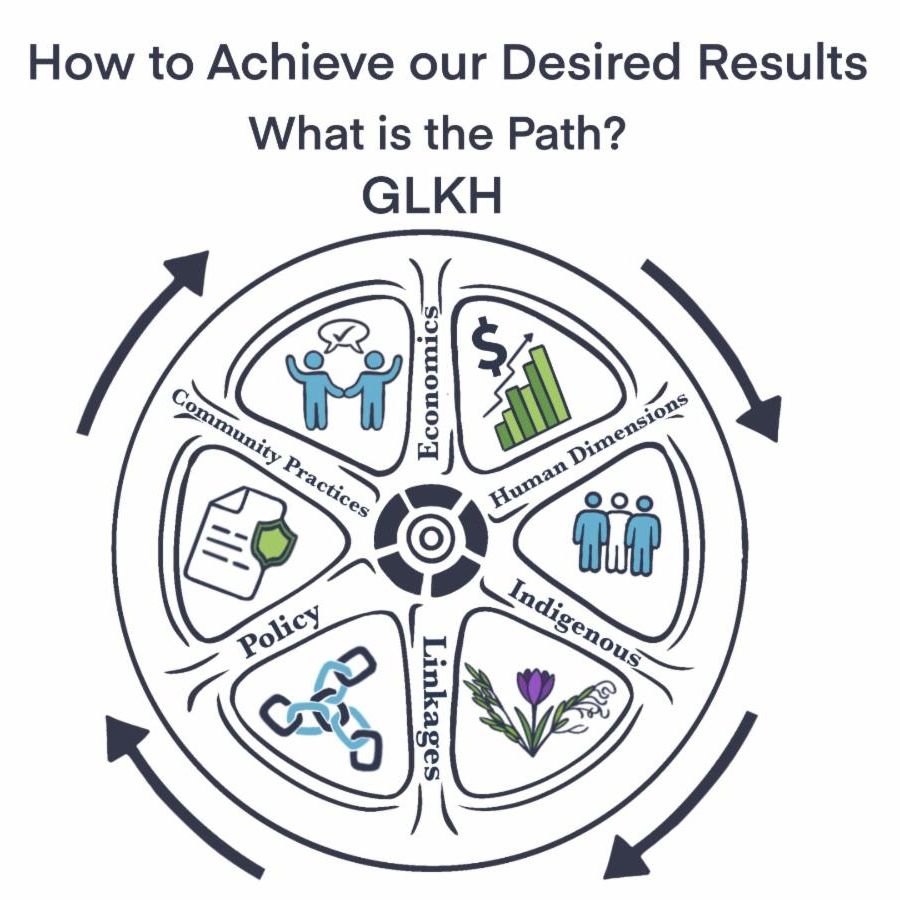
Beyond technical contributions, the CFGA’s communications and leadership team continues to engage with national and regional grassland and conservation organizations. This outreach fosters collaboration and dialogue around advancing grassland stewardship and aligns closely with the Grassland Learning and Knowledge Hub, a broad-spectrum initiative examining grassland knowledge and capacity for co-benefits to biodiversity and human wellbeing.
Project webinar
Partners and stakeholders had an opportunity to hear directly from the project team at an update session on March 26. The webinar will provided a brief overview of progress to date and outline the work planned for the project’s final year. The session highlighted upcoming priorities, including continued refinement of indicators and expanded modelling to 2050, and discussed how the project’s outputs will support national climate and biodiversity objectives and inform decision making across the grassland sector. Watch the recording in English here and in French here.
Looking ahead
As the Tomorrow’s Prairies project enters its third and final year, the project team is building a robust scientific foundation to support grassland conservation, restoration and sustainable management across Canada. With the CFGA’s technical, scientific and communications leadership woven throughout the project, the work is well positioned to support land managers, policy makers, researchers and community partners.
| | Grassland Learning and Knowledge Hub update | | Building Momentum for Canada’s Grasslands | | |
The Grassland Learning and Knowledge Hub (GLKH) has wrapped up its second year and the project is gaining real traction. What began as a collaborative idea has grown into a national effort to better understand, support and sustain Canada’s grassland ecosystems.
As a founding partner with the University of Alberta, Ducks Unlimited Canada and the Restore Assert Defend (RAD) Network, the CFGA is helping shape this work in ways that reflect both the complexity of grassland systems and the practical realities faced by producers. This five‑year project began in 2024 and is part of a national initiative supported through Environment and Climate Change Canada’s Nature Smart Climate Solutions Fund.
From the outset, the GLKH aligned naturally with the CFGA’s mandate. The CFGA’s work has long focused on developing tools, programs and communications that help grassland managers make informed decisions. Over the past several years, the CFGA has advanced major initiatives such as the Canada Grassland Protocol, the Habitat Biodiversity Assessment Tool (HBAT), the On Farm Climate Action Fund and new training programs in grazing and forage management. The Hub provides a space to connect these efforts with broader research, policy analysis and on-the-ground experience.
In March, the CFGA hosted an online GLKH project update (French version) that brought together project partners and stakeholders to connect, learn and advance their shared commitment to the long-term stewardship of Canada’s grasslands. The importance of the work is clear. Canada’s national grassland inventory shows our grasslands are still shrinking and grassland bird populations are also declining. These trends highlight the need for a coordinated, multidisciplinary approach – one that brings together ecological science, economics, policy, Indigenous knowledge and producer perspectives. The Hub was created to do exactly that.
A central theme of the gathering was collaboration. Many organizations across the Prairies and beyond are already working on grassland conservation, each from a different angle. The Hub is designed to open the gate rather than close it. It creates a shared space where knowledge can move freely, where partners can learn from one another and where the collective effort becomes stronger than the sum of its parts. Workshops held over the past year have helped ground the project in regional realities and diverse knowledge systems.
The first two years of the project focused on building a strong foundation that included hiring graduate students, launching research, establishing working groups and building relationships. The next phase will see deeper analysis, broader engagement and the emergence of practical recommendations that can inform future programs and policies.
Learn more about the GLKH here. Sign up for updates, including the GLKH quarterly newsletter, here.
| International Year of Rangelands and Pastoralists (IYRP) | Reflections from the North American Women Pastoralist Gathering | |
By Adrienne Hanson, CFGA national grazing coordinator
Representing the CFGA at the North American Women Pastoralist Gathering in Monteray, California, Feb. 7, I found myself among people who deeply understood the realities, both tough and rewarding, of life on the land. Women from across the grazing world – ranchers, shepherds, conservationists, educators and emerging producers – came together not just to share stories, but to build something bigger than any one operation or region. What I carried home were insights that will stay with me for a long time.
We opened with a nod to the International Year of Rangelands and Pastoralists (IYRP), grounding our conversations in a global movement that recognizes the essential role pastoralists play in food systems and ecosystem health. But the discussions quickly shifted to the realities we face here in North America: grazing lands under pressure, fire and woody encroachment reshaping landscapes, and watersheds stretched thin. These weren’t theoretical challenges—they were lived experiences echoed around the room.
One of the most powerful moments for me was hearing Sarah King share the story of the Altar Valley Conservation Group in Arizona. Her family stayed through drought when many others left, adapting and rebuilding with determination that felt familiar to anyone who’s ever tried to keep a grazing operation afloat in tough years. Their 55,000‑acre ranch spans State Trust land, BLM allotments, and rugged mountain country, bordered by the Tohono O’odham Nation and Pima County conservation lands.
What struck me most was how their success hinged on relationships—clear ground rules, respectful dialogue, and a commitment to working with agency partners rather than against them. That foundation helped them secure major investments, including a transformative partnership with Kinder Morgan. It was a reminder that when producers lead, conservation follows.
The panel on creating opportunity was equally inspiring. Rizpah Bellard, Nancy Calhoun Mueller, and Debbie Lyons‑Blyth each carved their own path into agriculture—some without land, some through succession, but all through sheer persistence. Their stories were different, but the themes were the same: build relationships, keep learning, and don’t be afraid to “fail forward.” Whether through long‑term leases, direct‑to‑consumer beef sales, conservation ranching, or family business planning, they showed how producers can create space in an industry that often feels closed to newcomers.
A roundtable on succession and labour brought home the urgency of planning early and engaging the next generation meaningfully. Mentorship came up again and again—not just receiving it, but offering it.
We closed with an advocacy session led by Brandi Buzzard, Kim Brackett, and Cole Bush, who reminded us that our stories matter. Their advice was simple and practical: pick one or two key messages, know your audience, and show up. Advocacy isn’t about being the loudest voice in the room; it’s about building trust and broadening the tent to include regenerative, conservation, and pastoral perspectives.
As I left, I felt energized by the collective strength in that room. These women weren’t just sharing experiences—they were shaping the future of pastoralism across North America. And I was grateful to be there, listening, learning, and carrying those insights back to the Canadian grazing community I’m proud to serve.
Join us
Are you or your organization involved in IYRP initiatives and events? The CFGA is hosting bi-weekly Zoom meetings to bring together people and organizations interested in doing activities to celebrate IYRP. If you would like to join the meetings, please email info@canadianfga.ca.
| | |
Know an ag producer who deserves some applause?
Nominations open for the 2026 Canadian Farmer-Rancher Pollinator Conservation Award
The CFGFA, Canadian Federation of Agriculture (CFA) and Pollinator Partnership (P2) are pleased to solicit nominees for the 2026 Canadian Farmer-Rancher Pollinator Conservation Award. This award recognizes an individual or family in the farm and ranch community in Canada who has contributed significantly to pollinator species protection and conservation.
Pollinator Conservation Award winners support pollinators on their lands, engage in research and experimentation to increase our understanding of pollinator management techniques, work with community and government groups and serve as advocates for these little, but hard-working, species that maintain our agricultural and natural landscapes.
Forage growers and pasture managers are natural candidates for this award. The grasslands, hayfields and managed pastures at the heart of their operations already serve as some of Canada's most important pollinator habitat. They provide nesting sites, foraging corridors and seasonal refuge for bees, butterflies and countless other species. Practices common across the forage sector like maintaining diverse grass-legume stands, delaying mowing to protect nesting cycles, establishing wildflower buffer strips and managing grazing rotations that allow flowering periods
are exactly the kinds of contributions this award was designed to celebrate.
If you or a fellow producer incorporates pollinator-friendly practices into your forage or pasture management, we encourage you to submit a nomination and help shine a light on the vital role our sector plays in pollinator conservation.
The recipient of the 2026 Canadian Farmer-Rancher Pollinator Conservation Award will be recognized during an award ceremony that opens the Annual North American Pollinator Protection Campaign (NAPPC) Conference in October 2026. To submit a nomination, please complete the form on this page by July 17, 2026.
| | Provincial Member News: British Columbia Forage Council (BCFC) | | |
BCFC launches The Forager Podcast
A long-awaited passion project that has been in the works is now available. The Forager Podcast is for producers, ranchers and foragers alike who want to learn more about the innovative practices and strategies being implemented across the province. This conversational podcast is hosted by Serena Black, General Manager of the B.C. Forage Council, with guests from diverse operations and expertise!
The first five episodes were produced by the very talented Nadia Mori from the Peace River Forage Association. The BCFC extends a huge thank you to Nadia and the producers who contributed to the making of these amazing podcast episodes. Listen on Spotify.
Podcast schedule
April 6: From BSE Bust to Family Business Success with Eugene Wittwer - W Diamond Ranch
This grazing series chat is with Eugene Wittwer from W Diamond Ranch near Talkwa in the Bulkley Nechako area. He describes his operation as a community building regenerative farm. Eugene shares how his operation evolved, how the BSE crisis forced him to re-invent his business, how his rotational grazing practice evolved and how they manage not just animals but also a meat processing and custom cutting operation.
April 20: Pivoting From Predation Issues to Intensive Rotational Grazing
This grazing series chat is with Joseph Moilliet from Aveley Sheep Ranch. Joseph’s runs a sheep and beef operation about two hours north of Kamloops in the upper north Thomson. He shares how wolf predation originally pushed him into more intensive rotational grazing, lessons learnt on where to actually place your fence, and electric fencing tips for sheep. For context, this chat was recorded in mid-summer of 2023.
May 4: Producing Pasture Based Products
This grazing series chat is with Dave Semmelink from Lentelus Farm. Originally from South Africa, Dave now calls the Comox valley home where he runs a mixed farm. Our discussion ranges from pasture raised livestock, grazing management progression, whether it is worth integrating hogs into a crop rotation, a new chicken mobile and business diversification into meat processing.
May 18: Fodder Galega - Non-Bloat Forage With Promise?
This grazing series chat is with Dr. Nitya Kanal, a forage researcher with Agriculture and Agri-Food Canada based out of the Beaverlodge research farm. We talk about the potential of fodder galega or goat’s rue as a forage legume. It fixes a lot of nitrogen, tolerates acidic soils, has good winter survival rates, and overall just sounds like it is one of those plants which sounds almost too good to be true.. so why do we not see it on the market yet. Listen in and find out.
June 1: Breaking The Trend: Intensive Rotational Grazing Before It Was Cool
This grazing series chat is with Norm Ward. Norm shares his passion for intensive rotational grazing and how it lead to the development of the original Range Ward products, he shares some of his early lessons learnt, why electric fencing does neither have to be intimidating nor frustrating and some of his key tips on how to make your transition to electric fencing more easeful. This episode was recorded a while back and Norm has since sold his Range Ward business but still has lots of valuable experiences to share when it comes to intensive rotational grazing.
| | Provincial member news: Conseil québécois des plantes fourragères (CQPF) | | |
Quand le Québec traverse l’Atlantique… pour parler prairies
Marie-Pier Beaulieu, chargée de projet
C’est à l’initiative du Conseil québécois des plantes fourragères qu’une délégation québécoise engagée et en quête de nouvelles perspectives s’est rendue en France pour explorer différentes approches des systèmes fourragers et de pâturage à travers le monde. Rassemblant des représentants du secteur, le groupe s’est donné un objectif clair : apprendre, comparer… et remettre en question ses propres perspectives.
Au cœur de la mission : la participation au Congrès de l’Association francophone pour les prairies et les fourrages. Pendant deux jours, les échanges ont permis de mettre en lumière des défis communs, mais aussi des approches différentes selon les territoires. Deux membres du groupe ont également présenté une conférence portant sur le contexte de la production laitière au Québec et au Canada, et son influence sur nos systèmes fourragers. Un moment particulièrement marquant fut la demi-journée d’échanges avec des participants de la francophonie, notamment de la Suisse et de la Belgique, autour des similitudes et des divergences entre les systèmes fourragers.
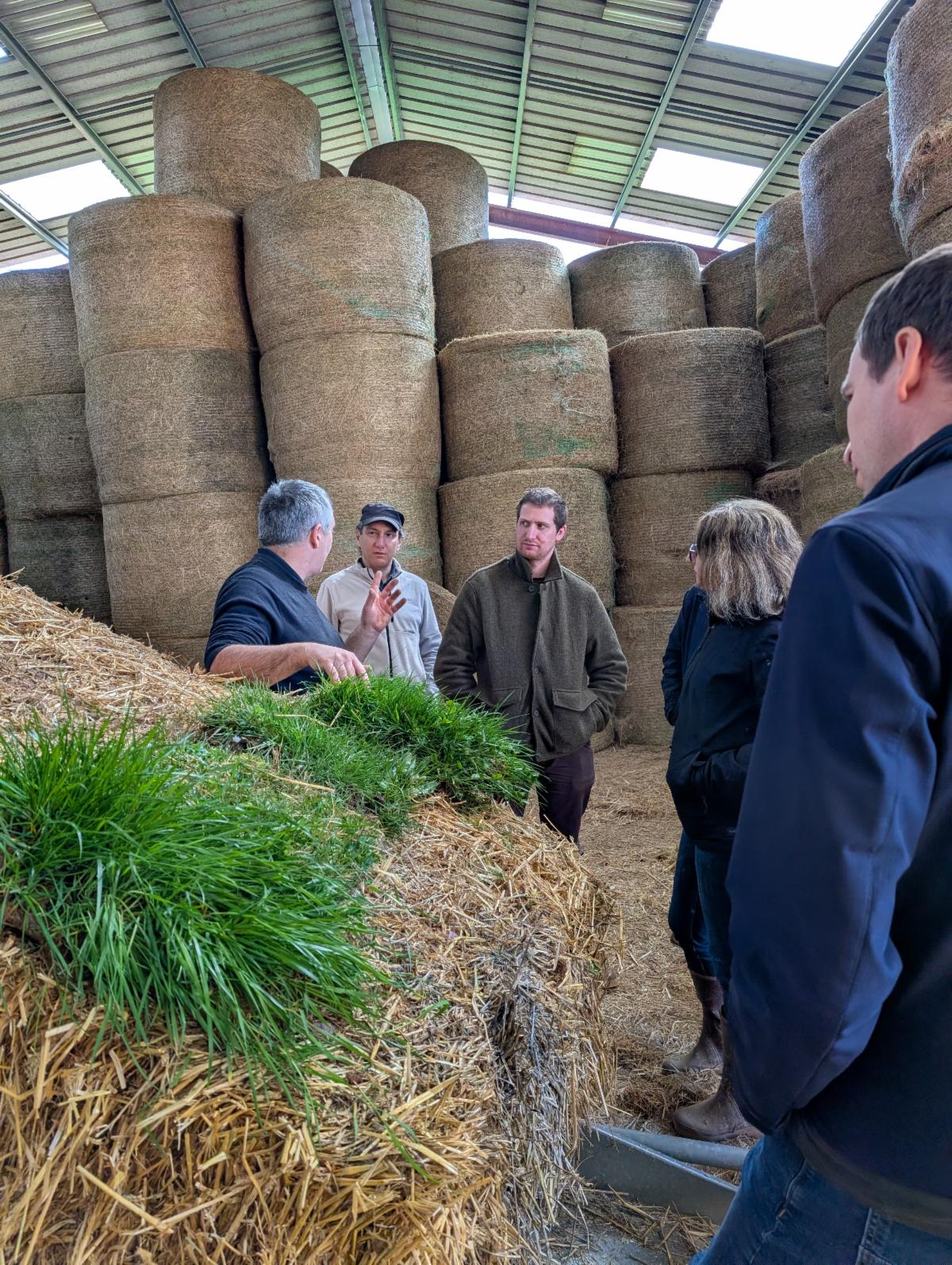
C’est sur le terrain que les apprentissages prennent tout leur sens. Dans le Charolais, la délégation a visité deux fermes de bovins de boucherie de race charolaise, ainsi qu’un site de mise en marché mettant en valeur la viande charolaise, incluant dégustation et valorisation des produits. Une immersion concrète dans un modèle où les appellations d’origine protégée (AOP) occupent une place importante. Si ces cadres permettent de structurer et valoriser les pratiques, ils soulèvent aussi une réflexion : peuvent-ils parfois freiner l’adoption de nouvelles approches en maintenant un cadre plus rigide?
Le parcours s’est poursuivi dans le Puy-de-Dôme, où deux fermes laitières ont démontré une intégration à grande échelle des pâturages dans leur système de production — une illustration concrète du rôle central que peut jouer l’herbe.
Tout au long du séjour, la qualité des échanges, l’ouverture des discussions et la diversité des modèles observés ont marqué les participants. Ces expériences rappellent à quel point il est essentiel de sortir de son cadre pour mieux comprendre, se questionner et faire évoluer ses pratiques. Dans ce contexte, le Québec fait entendre sa voix dans ces échanges internationaux et nous revenons avec des constats et des pistes de réflexion à partager à l’échelle du Canada.
| |
When Quebec Crosses the Atlantic… to Talk Grasslands
Marie-Pier Beaulieu, Project Manager
At the initiative of the Conseil québécois des plantes fourragères, a Quebec delegation engaged and seeking new perspectives travelled to France to explore how forage and pasture systems are approached in other parts of the world. Bringing together representatives from the sector, the group set out with a clear objective: to learn, compare and challenge their own perspectives.
At the heart of the mission was participation in the Francophone Grassland and Forage Conference. Over two days, discussions highlighted both common challenges and differing approaches across regions. Two members of the delegation also delivered a presentation on the context of dairy production in Quebec and Canada and its influence on our forage systems. A particularly valuable moment came during a half-day session with participants from across the Francophonie, including Switzerland and Belgium, where similarities and contrasts in forage systems were openly explored.
It is in the field that these learnings take on their full meaning. In the Charolais region, the delegation visited two Charolais beef farms, as well as a marketing site dedicated to Charolais beef, including product showcasing and tastings. This provided a concrete look at a system where Protected Designations of Origin (PDOs) play a central role. While these frameworks help structure and add value to production, they also raised an important question: can they, at times, limit the adoption of new practices by maintaining a more rigid system?
The journey continued in the Puy-de-Dôme region, where two dairy farms demonstrated the large-scale integration of pasture-based systems, offering a compelling example of the central role grass can play in production systems.
Throughout the visit, the quality of exchanges, the openness of discussions and the diversity of systems encountered stood out. Experiences like these highlight the importance of stepping outside our own context to better understand, question and refine our approaches. In this context, Quebec makes its voice heard in these international conversations and we return with observations and reflections to share across Canada.
| | |
Advancing Forage Mapping in Eastern Canada: Lessons from Quebec
Marie-Pier Beaulieu, Project Manager
The Conseil Québécois des Plantes Fourragères (CQPF) is pleased to share that the final report for the Caractérisation des superficies en plantes fourragères au Québec project was officially submitted on Dec. 1, 2025. This initiative marks an important step forward in improving how forage and grassland areas can be identified, quantified, and monitored using remote sensing tools.
Throughout the project, the CQPF and its partners worked to develop and test a methodological approach based on satellite image analysis, with the objective of better recognizing forage and grassland areas across diverse agricultural landscapes. Rather than relying solely on static land-use classifications, the project focused on developing a model capable of identifying forage crops by analyzing biomass variation over time. By tracking seasonal growth patterns and changes in vegetative vigor, the model allows for a more refined distinction between annual and perennial forage systems and other crop types.
This approach builds on a fundamental principle of forage production: forage systems are dynamic, and their signature is expressed through growth cycles, defoliation events, and regrowth capacity. Integrating biomass variation into image analysis makes it possible to move beyond a static snapshot of the landscape toward a more functional understanding of forage presence.
The CQPF views this project as a foundation for future collaboration, refinement, and scaling. By improving how forage areas are characterized, we strengthen our collective ability to support producers, inform policy, and better recognize the value of grasslands across Canada. In this context, the methodology developed in Quebec, based on the analysis of biomass variation over time, offers a complementary perspective to the National Grassland Inventory, particularly well suited to regions where forage areas are divided into smaller parcels and subject to frequent management-driven changes.
| | Provincial member news: New Brunswick Soil and Crop Improvement Association (NBSCIA) | | |
NBSCIA 47th Annual General Meeting and Technical Workshop
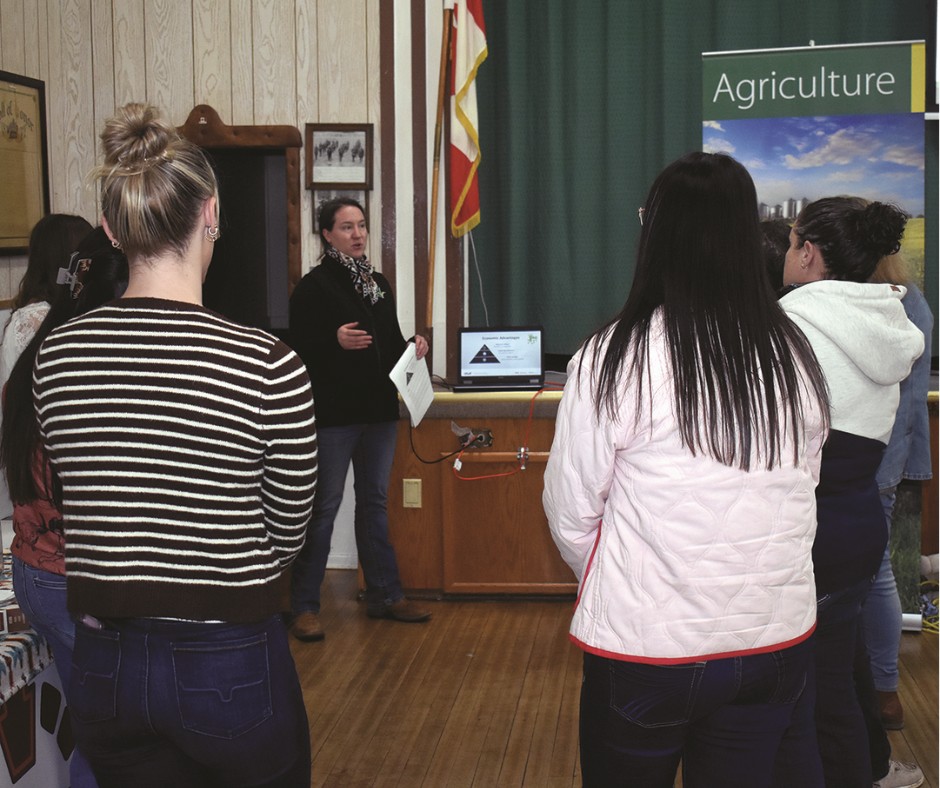
The New Brunswick Soil and crop Improvement Association’s (NBSCIA) 47th Annual General Meeting and Technical Workshop was well attended by its farmer members and industry representatives. The event took place in Moncton, New Brunswick, on March 12 and 13 and included two days of informative sessions.
This years theme was Envisioning New Brunswick's Agri-Food Sector in 2050 and the event featured presentations on climate change, alternative amendments like biochar and manure, SWOT mapping, agricultural AI platforms and more. The Farm of the Year Banquet celebrated five farms from around the province, selected by their local peers, that strive for excellence and innovation in soil and crop management. The 2025 Farm of the Year was Intervale Farms, owned by Ryan, Albert and Arlene Wesselius. Thank you Pioneer Corteva for their continued support of the Farm of the Year Award and to all sponsors and exhibitors this year!
| | |
NBSCIA 47th Annual General Meeting and Technical Workshop
The New Brunswick Soil and crop Improvement Association’s (NBSCIA) 47th Annual General Meeting and Technical Workshop was well attended by its farmer members and industry representatives. The event took place in Moncton, New Brunswick, on March 12 and 13 and included two days of informative sessions.
This years theme was Envisioning New Brunswick's Agri-Food Sector in 2050 and the event featured presentations on climate change, alternative amendments like biochar and manure, SWOT mapping, agricultural AI platforms and more. The Farm of the Year Banquet celebrated five farms from around the province, selected by their local peers, that strive for excellence and innovation in soil and crop management. The 2025 Farm of the Year was Intervale Farms, owned by Ryan, Albert and Arlene Wesselius. Thank you Pioneer Corteva for their continued support of the Farm of the Year Award and to all sponsors and exhibitors this year!
| |
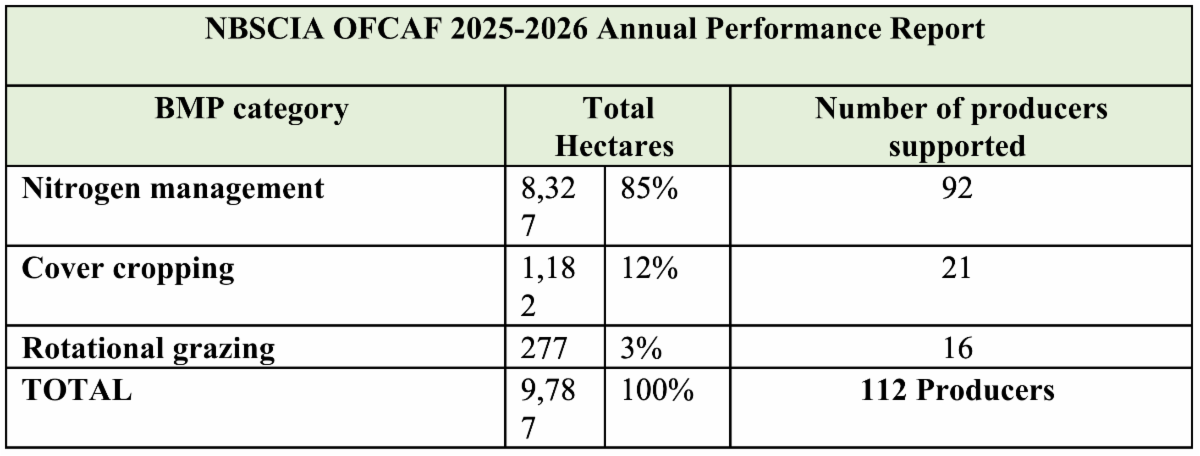
The NBSCIA is currently accepting applications for projects funded in the fiscal year ending March 31, 2027. This OFCAF funding supports New Brunswick producers in their ongoing progress adopting BMPs that reduce GHGs and store carbon, specifically for in-field nitrogen management, expanding cover cropping and implementing rotational grazing practices. Detailed program guidelines and the application process are available on the NBSCIA website.
For assistance with the application process contact a your local NBSCIA coordinator or the OFCAF Program Administration Team: Stephen London (506) 392-0408 ofcaf.facf@nbscia.ca; David Walker (506) 461-6046 research@nbscia.ca; David Good (506) 391-9424 drgood449@gmail.com; Ray Carmichael (506) 276-3311 ofcafadmin@nbscia.ca.
Support for these activities has been provided by Agriculture and Agri-Food Canada through the Agricultural Climate Solutions – On-Farm Climate Action Fund.
| | Provincial member news: Ontario Forage Council | | |
Be immersed in hay making at Forage Expo 2026
Get into the field and experience the latest in hay equipment and technology at Forage Expo. This is a day dedicated to hay and those who make it happen.
The event, hosted by Ontario Forage Council (OFC) and East Central Region Soil & Crop Improvement Association, will take place at 1810 County Rd 45, Norwood, Ontario, (30 minutes east of Peterborough) on July 9, 2026, from 10 a.m. to 3 p.m.
Forage Expo is the must-attend event for anyone serious about forage production. This year’s demonstrations will feature top-tier equipment from the industry’s leading manufacturers, giving attendees an exclusive look at the latest innovations hitting the market.
More than just a showcase, Forage Expo offers head-to-head field trials where you’ll see the newest forage tools in action. From mowers and conditioners to rakes, tedders, mergers, balers and more, every piece of equipment is geared toward one thing: helping producers harvest faster, smarter and with better results.
Ian McDonald and Christine O’Reilly from the Ontario Ministry of Agriculture, Food and Agribusiness (OMAFA), will once again work their magic, making sure you get the most of the demonstrations and answering your questions.
Don’t forget to stop by the trade show and visit the many vendors who play a big part in making the day happen. New this year is Producers Alley where large-scale hay buyers are present to connect with you, the hay producer.
This is a FREE event and no registration is required. Lunch will be available for purchase on-site.
Visit the OFC website for more information about Forage Expo.
| | Provincial news: Saskatchewan | | |
From winter learning to spring grazing in Saskatchewan
Cindy Green, CFGA – Saskatchewan grazing coordinator
With spring peeking its shy head out, we can shift from talking about grazing plans to actually turning livestock out on pasture. After a long winter, it is an exciting time of year across Saskatchewan and one that follows a season of great conferences and workshops held throughout the province.
Saskatchewan grazing coordinator Cindy Green attended the Celebrating Rural Ranching Women held in Maple Creek where she spoke on virtual collars. With demonstration sites across Canada, the Canadian Forage and Grassland Association (CFGA) is continuing to explore how this technology performs in real-world conditions. Producers are especially interested in practical insights – what works, what doesn’t and what to expect before investing in this technology.
If you are curious about virtual collars the CFGA resource library includes past webinars about virtual collars and we have more upcoming webinars planned. Keep an eye on the CFGA events page on the website to stay up to date. This technology is long awaited in the livestock sector of agriculture and is generating a lot of interest.
The following week brought the Sask Soil Health Conference held in Saskatoon. This year’s theme was Soil Health is a Puzzle: What’s Your Missing Piece? CFGA mentor Bluesette Campbell delivered the opening and closing presentations, sharing insights from her own operation and highlighting the benefits they have seen from prioritizing soil health. Her practical and approachable style made her presentations both engaging and informative. Kudos to Bluesette! The organizing committee also put together a strong lineup of speakers. This made for two engaging days of learning and, as always, great food and networking. It is an event you won’t want to miss next year!
The CFGA also saw a record number of applications this year for the On Farm Climate Action Fund (OFCAF). With the application window running from Feb. 1 to March 15, Saskatchewan received over 65 submissions. This has kept our team busy reviewing each application and presenting them to the national review committee. The high volume of strong proposals has made the process especially competitive within a fixed funding budget.
What is the most encouraging is the number of new producers applying, many of whom we have not worked with before. Seeing the rotational grazing interest is growing throughout Saskatchewan is very uplifting. While not every producer will receive funding, we hope every producer continues exploring and adopting these practices. Our team remains committed to supporting producers through resources, workshops and one-on-one guidance as they build resilient rotational grazing systems.
As the grazing season begins, we look forward to seeing these plans come to life in pastures across the province. Make sure to watch the CFGA events page and our social media channels to find an event near you. We would love to see you there!
| |
|
Updated range health assessment tool for prairie grassland ecosystems available
The Saskatchewan Prairie Conservation Action Plan (SK PCAP) recently unveiled the second edition of the Saskatchewan Rangeland Health Assessment for Native Grasslands. This freshly updated assessment tool was a collaborative grassroots effort among several prairie stakeholders and builds on the initial 2008 edition. The release of this new edition coincides with the International Year of Rangelands and Pastoralists (IYRP).
A range health assessment is a point-in-time evaluation of a rangeland's ability to perform key ecological functions. This field workbook guides observers through a nine-question score sheet that considers five indicators of range health: plant community, invasive weeds, vegetation layers, soil and erosion and plant litter. A range health assessment results in a score out of 100 points, which falls into the category of healthy, healthy with challenges or needs improvement. Producers and land managers can use range health assessment results to provide baseline data, track successes or challenges or validate current practices.
Some notable changes addressed in the new range health field workbook include providing a clear link to Saskatchewan rangeland ecosystem reference plant communities; assessing plant communities for woody species encroachment; evaluating biocrust presence and maintaining a consistent approach with interprovincial counterparts for considering non-native forage species and noxious weeds. Another significant improvement was incorporating Saskatchewan-based research to fine-tune plant litter observations and interpret excessive or reduced litter.
“Rangeland ecosystems are dynamic, ever-changing landscapes, as are the people, plants and wildlife that rely on these habitats,” says Carolyn Gaudet, who managed SK PCAP. “The focus of the working group responsible for the update was to ensure the assessment remained practical while rooted in science.”
Adapting and improving tools like the Saskatchewan Rangeland Health Assessment for Native Grasslands ensures the province’s valuable rangelands are assessed using up-to-date research and reference materials. It can be used by ranchers and producers, federal or provincial rangeland specialists, environmental groups, Crown lease holders, community pastures or private agrologists. The workbook can be found here.
SK PCAP administered the project deliverables. Funders for the project included: Birds Canada; The Canadian Forage and Grassland Association; Ducks Unlimited Canada; Environment and Climate Change Canada; the Joyce Gemmell Jessen Habitat Conservation Fund held at the South Saskatchewan Community Foundation; Nature Conservancy of Canada and Saskatchewan Cattle Association. The Saskatchewan PCAP Greencover Committee created the original workbook and the Alberta Rangeland Health workbook (Alberta Environment and Parks) and the Manitoba Rangeland Health Workbook (Manitoba Forage and Grassland Association) provided the graphics and concepts.
| | |
Calendar of Events
At the time this newsletter was distributed, all event times and locations were accurate, but please check event websites for the most current information. Some events may have been postponed or cancelled.
| | | | |