|
President’s Message (It’s a long one – hear me out.)
As a feminist and anti-misogyny activist, I never expected to write about how we are failing boys and young men.
It is tempting to ignore the problems boys and young men face in today’s society and it is even easier to shift responsibility for solving them to men. As advocates for women’s rights, we have enough on our plates. But the consequences of boys and young men falling behind in education underpins increasing misogyny and the rise of the far right and these are issues we must pay attention to.
The trend of boys increasingly falling behind in school has compounding effects that extend far beyond elementary and high school classrooms. When boys lag behind academically, the consequences persist into adulthood, affecting higher education, labor markets, physical and mental health, family formation, broader economic and social stability, misogyny and violence against women.
Boys who achieve substandard grade levels in primary and secondary school are less likely to attend post secondary schooling, or if they do, they drop out at higher rates. Lower educational attainment limits young men's access to modern knowledge-based economies and professional careers. Men with lower education are more likely to drop out of the labour force entirely. Lower educational achievement directly correlates to lower earnings over a lifetime and increased economic vulnerability.
Academic failure is also strongly linked to higher rates of juvenile delinquency, criminal justice involvement and incarceration. These men often experience higher rates of social isolation, depression, and substance abuse, and since success in formal schooling fosters soft skills, they often have reduced social resilience, crucial for managing adult life and stress.
Importantly, too, is that lower education in men creates an imbalance in marriage and relationships as educated women seek partners with similar educational and socio-economic backgrounds. Men experiencing chronic unemployment or underemployment are less able to establish stable households, increasing family breakdown rates and contributing to intergenerational socio-economic strain.
But why are boys falling behind and earlier on? Experts point to several factors: slower neurological maturation, curriculum and teaching style misalignment (early childhood education heavily emphasizes passive listening and sedentary seatwork, which often collides with boys' higher physical activity levels) and lack of male role models in primary education in the crucial formative years for boys.
Academic failure is the starting point of a pathway marked by economic displacement, social isolation, and grievance, which radical groups and extremist ideologies exploit. The far right capitalizes on male disengagement and economic frustration by providing simple scapegoats (progressive social policies, feminism, immigration, or multiculturalism) and offer an alternative to social alienation and lower self-esteem by creating a community. They champion traditional, patriarchal views of gender. For men feeling disempowered in the modern economy, adopting extreme right-wing positions serves as a way to reclaim authority and a sense of dominance. This, then, solidifies the link from lower educational attainment to misogyny and violence against women.
Why am I writing about this? Because as women’s rights advocates, we must protect the future for girls and women and we can do that by advocating for boys and young men.
How can we, as members of CFUW Ontario Council, concretely help? Here are some suggestions:
-
Make ourselves and the public aware: we need to start the conversation. Research the data is Canada. Talk to educators. Talk to each other.
-
Direct Policy Advocacy with Ministries of Education: Lobby education authorities to adapt early learning for boys' development by allowing flexible kindergarten entry ages, expanding active play-based learning over desk work, and integrating engaging reading materials like graphic novels and non-fiction.
-
Supporting Workforce Diversity & Recruitment: Drive recruitment incentives and tuition subsidies to bring more male educators into early childhood and primary schooling, while expanding high school vocational and trade pathways for non-academic students.
-
Violence Prevention & Countering Digital Radicalization: Incorporate boys' academic failure and isolation into gender-based violence strategies by funding digital literacy and healthy masculinity curricula while partnering with positive male mentorship programs to counter online radicalization.
-
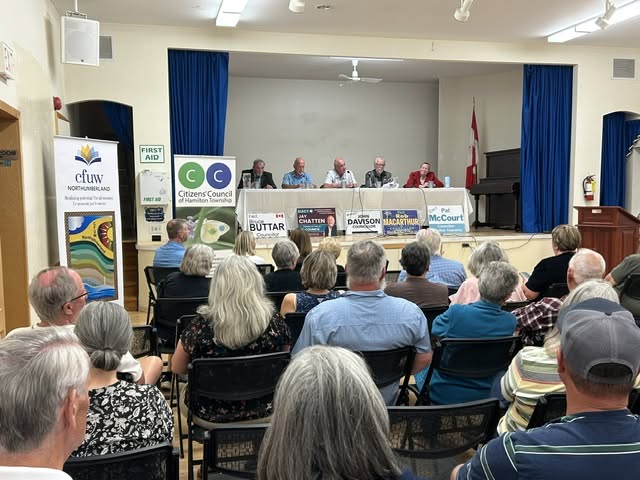
Community Awareness & Policy Frameworks: Mobilize women’s networks by passing formal policy resolutions on boys' educational gaps, raising the issue at election candidate debates, and co-publishing policy briefs with health and education coalitions.
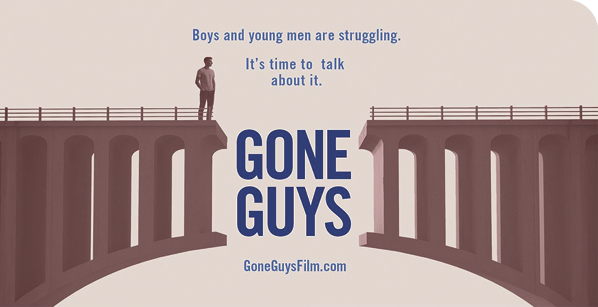
GONE GUYS DOCUMENTARY
Linda Chaim, a CFUW Club member, has taken it upon herself, and therefore not affiliated with CFUW, to provide the venue for the first Canadian screening of Gone Guys, a documentary about how society is failing boys. (Read more in the article below.)
The premier screening is taking place in Perth, Ontario on November 8th at the Studio Theatre, starting at 2:00 pm. If you are nearby or making a trip to the area, please consider attending. We need to start the conversation.
Sandra Shaw, President
|