Education | Action | Advocacy | | |
CFUW Ontario Council Special Edition Newsletter
Environment and Climate Change
| | | |
Welcome to CFUW Ontario Council’s Environment and Climate Change (ECC) Newsletter. We don’t have a Chair for our ECC Committee so to ensure that our Clubs and their members can receive some timely and topical articles, we have scoured newsletters, internet sites as well as our own Clubs’ newsletters for articles of interest.
Please let us know if you find this special newsletter edition of value. Write to us at: communications.cfuwontario@gmail.com. If it is not of value, consider volunteering to make Ontario Council’s ECC efforts the best they can be.
In this Issue
If you are having problems viewing this e-mail, click on the View as a Webpage link in the top right corner.
| | Microplastics: Where They Are and How to Avoid Them | | |
What are microplastics?
The term “microplastics” was dubbed by Richard Thompson, a biologist who noticed tiny, colorful particles in the sand when he was engaged in a beach clean-up on the Isle of Man in 1993. Microplastics are the result of a long-term breakdown of larger plastic items that have, one way or another, escaped proper disposal.
Continue reading ...
| | Climate Change Demands Stronger Drinking Water Regulations in Canada | | Submitted by Jane Watson, CFUW Georgetown | | |
Climate change is no longer a distant threat—it is a major crisis. Rising temperatures, extreme weather, and shifting precipitation patterns are already impacting Canada’s water sources, putting our drinking water quality at risk.
Despite this growing danger, Canada is one of only two countries in the developed world that lacks comprehensive national drinking water regulations.
Continue reading ...
| | |
Source: Alive Issue 510, April 2025
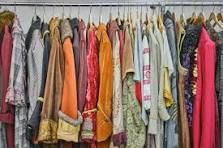
It may be wrinkle resistant, quick-dry and inexpensive but polyester is among the most environmentally costly fabrics. Its lifecycle looks something like the following:
| | |
- Crude oil extraction where chemicals and huge amounts of energy are used to process it into plastic
- Shedding of microplastics which occurs during production, throughout us, and disposal
- Products that are non-biodegradable and not feasibly recyclable at end-of-life
But it’s made from water bottles!
Click here to continue reading this article.
| | |
New Habitat Protection Order Spells Trouble for
Sprawl Developers and Highway 413
| | |
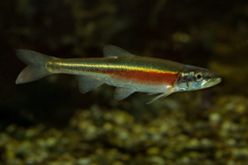
After more than 15 years of delays, federal laws now prohibit activities that would destroy the habitat of the endangered Redside Dace. That’s great news for Redside Dace, and very bad news for well-connected developers who’ve been planning sprawl subdivisions, warehouses, and taxpayer-funded highways through Dace habitats in the upper reaches of the Humber River, Carruthers Creek, Duffins Creek and Rouge River.
As required by the Endangered Species Act and the Redside Dace Recovery Strategy and Action Plan, the Critical Habitat of the Redside Dace (Clinostomus elongatus) Order: SOR/2025-4 prohibits anyone from doing anything that would destroy any of the habitat value of the mapped rivers, creeks and tributaries that Redside Dace depends on. Since the Humber River’s upper reaches and tributaries are identified as critical habitat in the Recovery Strategy, it’s now clearly illegal to build the parts of Highway 413 that cross them.
Continue reading ...
| | Ring of Fire - An Environmental Disaster Waiting to Happen? | | |
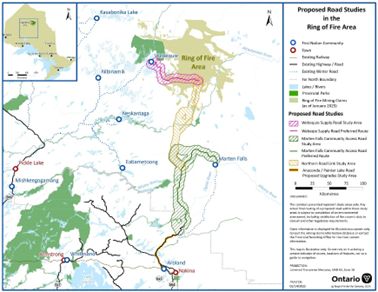
Neskantaga is one of nine communities comprising the Matawa Tribal Council, a coalition of First Nations whose territory and treaty lands overlap with the Ring of Fire: a 5,000-square-kilometre, crescent- shaped deposit of ancient volcanic rock. The area could be worth billions of dollars once the metals buried there—nickel, copper, platinum and others—are extracted to become EV batteries, wind turbines and semiconductors. The deposit has been heralded as Ontario’s answer to Alberta’s oilsands, a path to industrializing the north and the most promising mineral discovery in a century. But it’s all buried deep in the Hudson Bay Lowlands, one of the largest remaining roadless regions in North America. To get equipment in and ore out, permanent roads need to be built and connected to Ontario’s highway system.
Click here to continue reading this article.
| | |
Here are my favourite climate-related books from 2024
From EuroNews by Lottie Limb
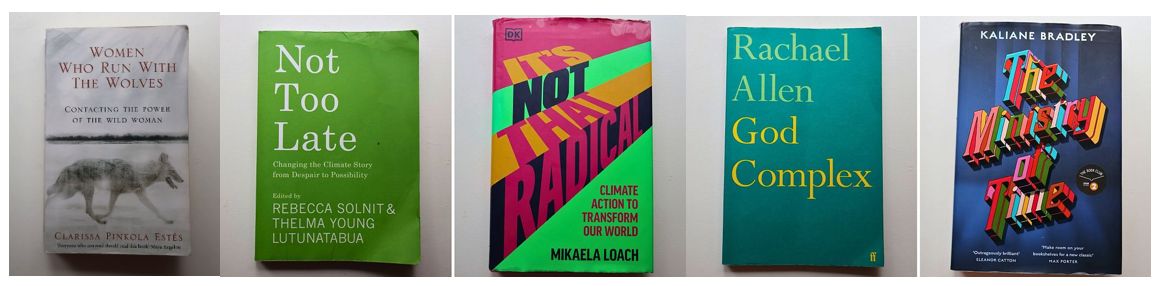
Looking for an inspiring climate read? Here are five books I mulled over in 2024 … I recommend a small collection of books from different genres and years. All have deepened my thinking on the climate crisis in some way, and all would make great companions in 2025 if you’ve not come across them yet.
In their different ways, they give hope that it’s not too late to heal or grow. They delve into pain to take us somewhere better and strengthen us for action.
| | Read the book list and reviews here. | | |
Please share your club's social media posts to
Ontario Council's Facebook and Instagram accounts!
| | | | |