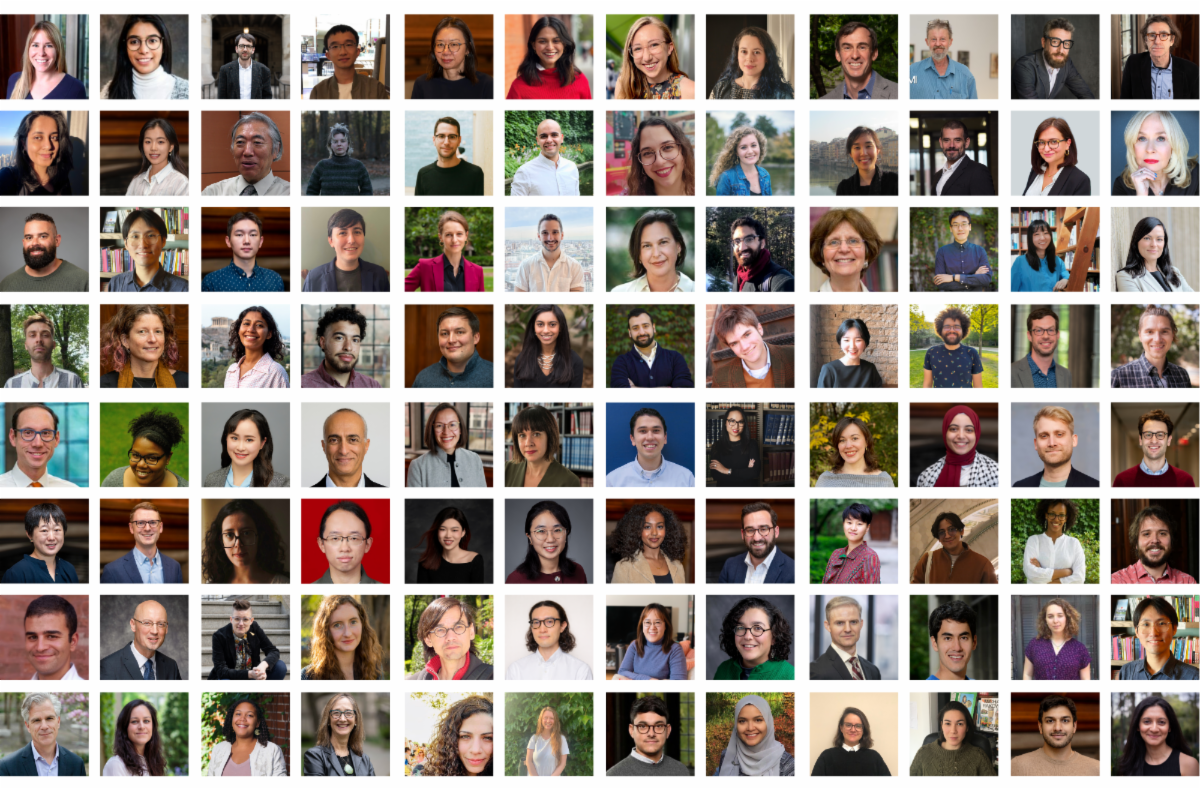
November 17 - December 7, 2026 | | CISSR celebrates 10 years! | | In November 2016, the Center for International Studies was renamed the Center for International Social Science Research and began a new mission of encouraging and supporting systematic research and analysis of major contemporary and historical topics in the international social sciences. | some of our nearly 250 faculty and student fellows | |
Call for Proposals:
Faculty Book Workshop and Monograph Enhancement Awards
| | |
CISSR invites University of Chicago faculty to apply for book workshop and monograph enhancement awards to support scholarly manuscripts in preparation for publication.
Book Workshops provide faculty an opportunity to improve their manuscripts through an intensive day-long workshop in which colleagues, editors, and other key readers gather to provide critical input and suggestions.
Monograph Enhancement Awards support scholarly book projects in several ways. Awards are intended to offset the costs of obligatory press subsidies, open access subvention fees, translations, indexing, permissions, cartographic services, and other expenses to aid in the completion of manuscripts.
All University of Chicago faculty are eligible, provided their manuscripts 1) focus on international, transnational, or global issues and 2) use social scientific methods.
The CISSR Faculty Board evaluates proposals based on fit with CISSR priorities, the impact of the manuscript, and scheduling considerations (in the case of workshops). Priority is given to tenure-track, junior faculty members and to faculty who are active participants in the CISSR community.
CISSR accepts applications on a biannual basis. The next deadline is December 1 at 11:59pm.
| | Around Town and Down the Road | | |
African Studies Workshop
Alternate Tuesdays, 5:30pm - 7:00pm, Foster Hall 107
November 17 (Social Science Research Building Tea Room, 2nd Floor): Elise Huysmans (University of Louvain)
December 1: Cassandra Mark-Thiesen (University of Regensburg)
| |
Comparative Politics Workshop
Wednesdays, 3:00pm - 4:20pm, Pick Hall, Room 105
November 18 Guillermo Trejo (University of Notre Dame)
| |
France/Francophone Workshop
Alternate Fridays, 12:30pm - 1:50pm, Social Sciences Tea Room, Room 201
TBA
| |
History and Theory of Global Capitalism
Select Wednesdays, 4:30pm - 6:00pm, Pick Hall 105
December 2: Alec Israeli
| |
Immigration Workshop
Alternate Mondays, 12:30pm - 1:45pm, Pick 105
December 9: Asad Asad (Stanford)
| |
Mexican Studies Seminar
Tuesdays, 1 PM, via Zoom
TBA
| |
Political Economy Workshop
Thursdays, 12:30pm -1:50pm, Harris Public Policy, Keller Center, Room 2112
Nov 19: Will Marble (Hoover Institution)
Dec 10: Stephanie Ternullo (Harvard University)
| |
Workshop on International Politics
Thursdays, 3:30 - 5:00 PM, Pick Hall 506
November 19: Minseon Ku (De Paul University)
December 3: Megan Maxwell (University of Chicago)
| | |
American Politics Workshop
Tuesdays, 12:30pm - 1:50pm, Pick 506
November 17: Adam Zelizer (University of Chicago)
December 1: Jacob Conway (University of Chicago)
| |
Current Ethnography and Social Theory Workshop
Select Tuesdays, 4:30-6:00pm, Haskell Hall 101
December 1: Uma Blanchard
| |
East Asia: Transregional Histories Workshop
Thursdays, 3:30 to 5:00 pm, CEAS 319 or John Hope Franklin Room, SSRB 224
November 19 (CEAS 319): Edward Kong
December 3 (John Hope Franklin Room, SSRB 224): Zhao Fang
| |
Gender and Sexuality Studies Workshop
Alternate Tuesdays, 5:00pm - 6:30pm, Center for the Study of Gender and Sexuality, Room 103
December 3 (Thursday, 12:30-2:00PM): Grace Lavery (Berkeley University)
| |
Institutions Workshop
Alternate Tuesdays, 5:00 – 6:30 pm, SSRB Tea Room
December 8: Taisu Zhang (Yale Law School)
| |
Latin American History Workshop
Alternate Thursdays, 4:30pm - 6:00pm, Pick Hall, Room 118
November 19: Sofía Ortiz Torres
December 3: Leonardo Derenze and Santiago Harvie
| |
Political Theory Workshop
Select Mondays, 3:30pm - 5:20pm, Foster Hall 107
November 30: James T. Sparrow (University of Chicago)
| | Strategies of Narrative Coherence: How Militias Justify Embracing State Power | |
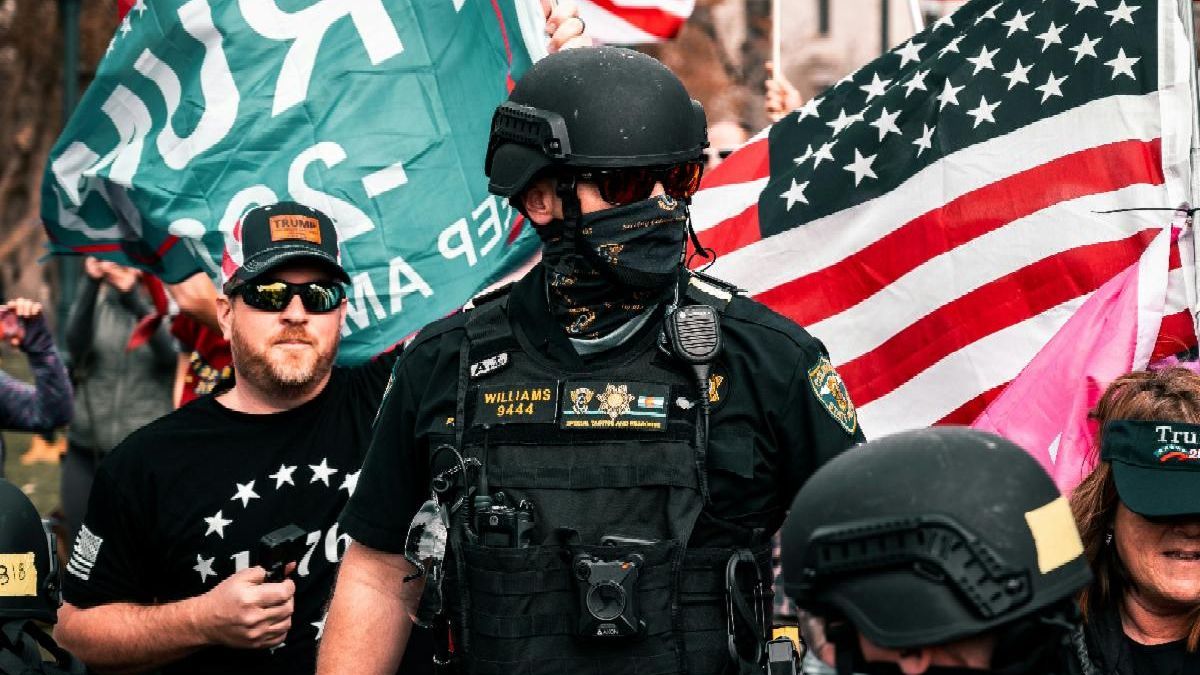
Ari Weil, Teaching Fellow in the Department of Political Science and 2025-26 CISSR Dissertation Fellow, explores efforts to create narrative coherence in anti-government movements when they align with the state. His article, “Strategies of Narrative Coherence: How Militias Justify Embracing State Power,” examines the case of the Oath Keepers, a militarized anti-government extremist social movement in the US that started in 2009. The article draws on the concept of narrative coherence to analyze how groups try to make their narratives logically consistent when their alignment shifts. Weil draws upon the literature to demonstrate that narratives give meaning to events and thus justify cooperation, and they help create a collective identity. By using the study of narratives in this article, he creates a framework with which to analyze strategies employed by the Oath Keepers. Weil used 137 official Oath Keepers online statements, comments by followers, and leaked emails to analyze how their narratives shifted after they began supporting Donald Trump. Weil conducts a computational analysis of the statements and a qualitative comparison of statements before and after the alignment with Trump, and he discusses how the Oath Keepers responded to narrative strategies. Through this analysis, Weil finds that the Oath Keepers employed narrative extension by adding Trump as a protagonist into their practice of using Revolutionary War references, and they employed semantic adjustments by changing the language of their narratives to avoid contradiction.
Read the full article here.
| Fixing the Huai River: Technology of Labor Formation in Maoist China, 1950-53 | |
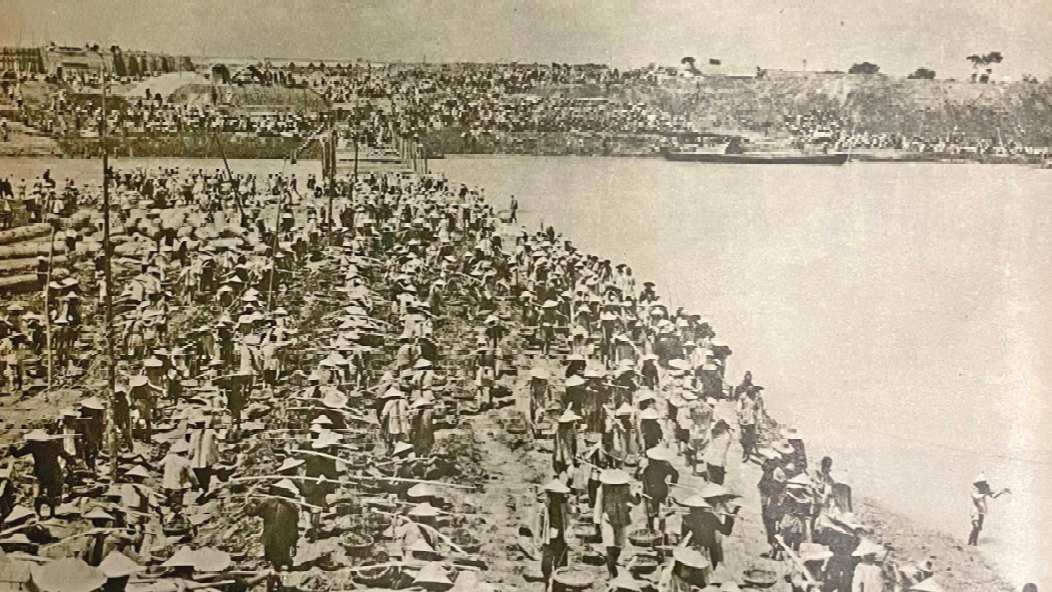
Yujie Li is an Assistant Professor at the University of Florida and a CISSR 2018-19 Lloyd & Susanne Rudolph Field Research Fellow. In this article, she examines the Huai River Control Project, the People’s Republic of China’s first major hydraulic project, to show how the state organized millions of peasant workers. In the 1930s, the Nationalist government’s efforts were blocked by local elites, and its engineers had little control over labor. The Communist Party, by contrast, used military-style mobilization and rural mutual aid teams to send more than two million peasants to dig and move soil, mostly by hand with shovels and baskets. Li argues that the key to this achievement was the “work methods” campaign. Using the “Zhu Huaishun Team” as a model, cadres encouraged peasants to “self-Taylorize”: to match digging techniques to soil types, streamline how they handed off loads, and reduce the time spent on “unproductive” tasks like cooking, grain fetching, and shopping. These methods were credited to peasants but were codified by cadres and spread through numbers and mnemonic rhymes. This allowed cadres to replace traditional labor foremen as “socialist managers.” Labor competitions, radio broadcasts, and cultural troupes presented the peasants’ daily work as a contribution to the nation and to socialist construction. Li concludes that the project reshaped not only the Huai River but also the peasants who built it. It created a new socialist labor force and a hierarchy between cadres and workers that became central to the everyday work in the Maoist era.
Read the full article here.
| |
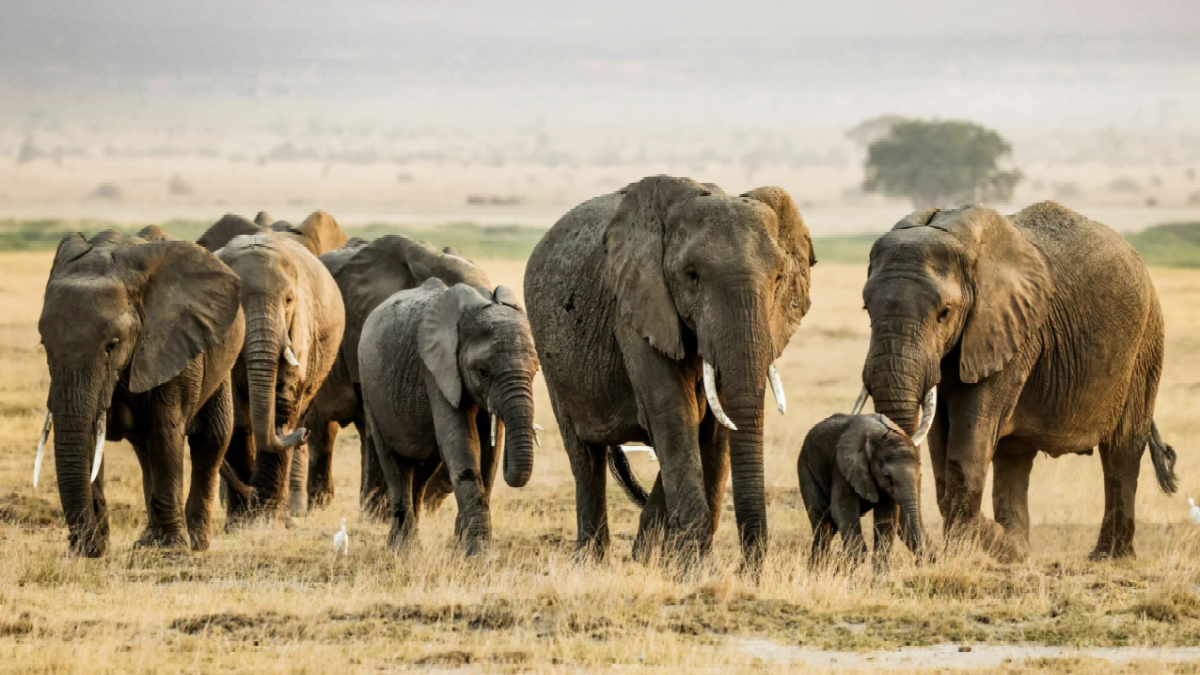
In this review, CISSR Faculty Board Member and 2020–21 Faculty Fellow Sarah Newman proposes an “animal archaeology.” She argues that the methods archaeologists use to study human prehistory can also be applied to the material traces left by animals, allowing scholars to understand animal histories without relying on human records. She develops this through three key concepts. In “Style,” she shows how changes in the materials and construction techniques of birds’ nests can tell us about bird histories. In Amsterdam, for example, layers of dated plastic packaging in coots’ nests record thirty years of the birds’ life in the city. In “Ruins,” she discusses North American beaver dams, some of which were repaired by generations of beavers and used for over a thousand years. As the fur trade nearly wiped out beavers, she suggests that ecologists today are studying “the ruins of a world built by beavers.” In “Historical Consciousness,” she compares elephants that keep returning to the bones of their dead with Neolithic people who kept the skulls of their ancestors. She also compares termite colonies in Brazil that rebuild on old mounds with Neolithic people who built new monuments on older sites. Newman stresses that her goal is not to replace humans with animals at the center, but to recognize both as agents of material change. She concludes that our own history is incomplete unless we consider how it connects with the pasts of other species.
Read the full review here.
| | | Grounding Empire Through Burial Grounds: Military Territorial Claims in Japan's Manchuria, 1904-1937 | |
Yuting Dong, CISSR Faculty Fellow and Assistant Professor of East Asian History, examines how the Japanese military maintained burial grounds in Manchuria to expand imperial control without engaging in military action after the Russo-Japanese War in 1905. Dong situates her work in the broader study of Japanese imperialism in the era of “informal empire” (before 1932), bringing in a new angle by emphasizing the role of the Kwantung Army and its collaboration with Mantetsu and Japanese settlers. Drawing on the social history of the military sector, she shows how the military deepened its control over society through various ways including institutional organizations, wartime campaigns, appeals to nationalism, and collaboration with religious institutions. The article also examines the military use of land and the social and political dynamics of the burial grounds in Manchuria. Dong explores the political and social history of the Japanese military’s control over burial sites as well as the response and challenge to such control. She delves into the history of the Japanese establishment of these burial grounds, the challenges to the Japanese imperial definition of burial grounds, and the dynamics between Chinese locals and Japanese settlers throughout the period of expanding Japanese control. Dong demonstrates the complicated relationships between the Japanese military and local Chinese actors, as well as the tensions between nation and empire, and how they shaped political perception of land.
Read the full article here.
| | Fugitive Sensing with Michele Friedner | |
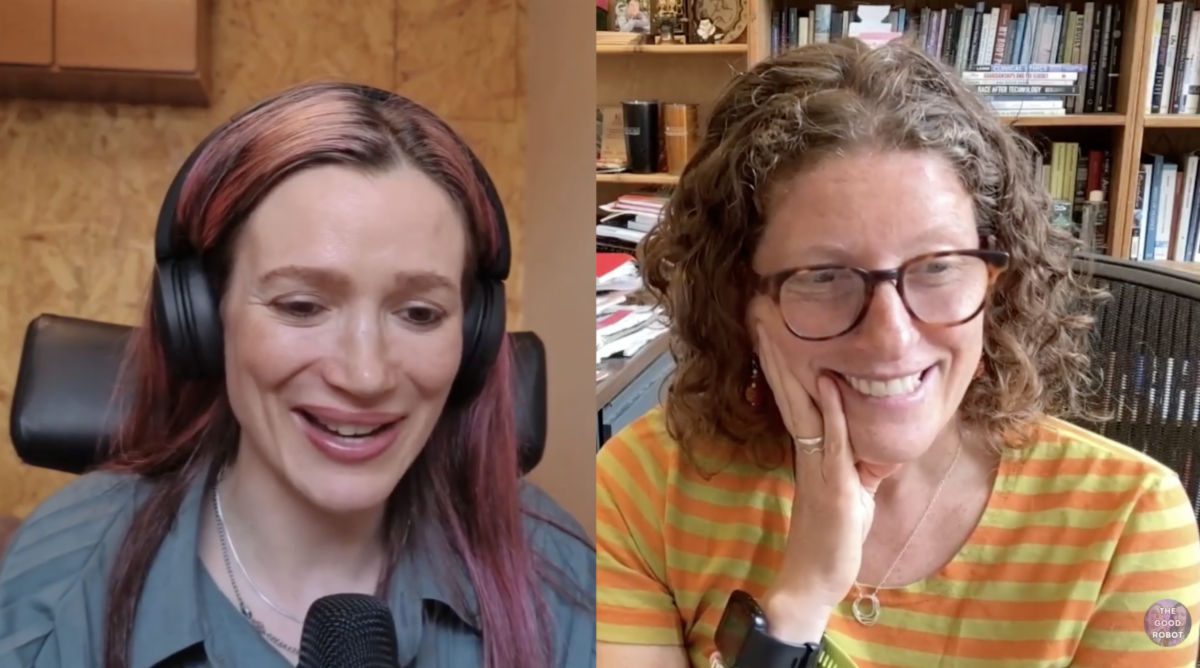
Michele Friedner is a CISSR Faculty Board Member and 2021–22 Book Workshop & Monograph Enhancement Fellow. On The Good Robot podcast, she discusses her book Sensory Futures: Deafness and Cochlear Implant Infrastructures in India, drawing on her research and own experience with cochlear implants. Since 2014, the Indian government has provided cochlear implants to children below the poverty line, hoping to turn deaf children into “productive, hearing citizens.” But Friedner shows what happens after the surgery. Children are taught not to use their hands or to read lips, and mothers are told to stop using touch and gestures and to narrate everything they do in spoken language. After three years of government support, families are left to deal with multinational companies on their own. Some describe the relationship as a “hostage situation,” or a marriage they can never leave. Friedner also describes a global “shadow economy” in which processors declared obsolete in the US are shipped to Pakistan and India, where they are still in use. She ends with moments of what she calls “fugitive sensing,” when mothers and children break the rules and connect in their own ways.
Watch the full podcast here.
| | | | |