October 20 - November 3, 2026 | | |
Faculty Research Fellowship Application -
due 11:59 pm on December 1, 2026.
The Center for International Social Science Research (CISSR) invites University of Chicago faculty members to submit proposals to join our cohort of research fellows for the 2027-2028 academic year.
CISSR provides up to $30,000 for faculty research projects at any stage of development. CISSR supports international, transnational, and global research projects that are empirical in nature. Projects should be theoretically informed and empirically grounded and should stand to benefit from critical dialogue across disciplinary, methodological, and geographic boundaries.
Our top priority for AY 2027-28 is to fund original data collection efforts. Proposals to host visiting scholars to advance collaborative research will be considered as secondary priority, and we will not be funding conferences during AY 2027-28.
The increase in maximum award reflects the rising costs of research, but we encourage applicants to think critically about their budgets and how much is actually needed. The board is seeking to fund many meritorious proposals, including those that do not seek the maximum amount and accepted applications may not be fully funded. Please ask for what you need.
University of Chicago faculty in any discipline or unit are welcome to apply. Priority will be given to projects led by junior faculty in the Division of the Social Sciences.
CISSR provides faculty fellows with administrative and outreach support.
Questions? Contact CISSR Assistant Director Dorothy Parsons at dparsons@uchicago.edu.
| | |
October 20th
Chicago Center on Democracy
What We Learn Not To See: Art, Memory, and Political Violence
5:00pm
Cobb Lecture Hall, Room 310
| |
October 21st
Romance Languages and Literatures
Left-Wing Terrorism in Italy During the “Years of Lead”: The Story of a Revolt Betrayed
5:00pm - 6:30pm
Classics Building, Room 20
| |
October 21st
International House
This Cursed Beautiful Land: Evan Gershkovich in conversation
5:30pm - 6:45pm
International House, Assembly Hall
| | |
October 20th
Seminary Co-op Bookstores, Center for East Asian Studies, & Franke Institute for the Humanities
East Asia by the Book! CEAS Author Talks ft. James Lin (University of Washington, Seattle)
5:00pm
Franke Institute for the Humanities Regenstein Library, Room S-102
| |
October 21st
Greenberg Center for Jewish Studies
Na’ama Rokem - Zionism in Translation: Encounters in the German-Hebrew Archive
5:00pm
Social Science Research, Tea Room
| |
October 22nd
Center for Latin American and Caribbean Studies
Manufacturing a Popular and Mass Media Visuality: The Case of Empresa Editora Zig-Zag in Chile
12:30pm - 1:50pm
Social Science Research, Tea Room
| |
October 29th
International House
A Conversation with former Ukrainian President Viktor Yushchenko
5:30pm - 6:45pm
International House
| | Around Town and Down the Road | | |
African Studies Workshop
Alternate Tuesdays, 5:30pm - 7:00pm, Foster Hall 107
October 27: Ernest Lee, University of Chicago
| |
Comparative Politics Workshop
Wednesdays, 3:00pm - 4:20pm, Pick Hall, Room 105
October 21: Erica Simmons (University of Wisconsin-Madison)
October 28: Jordan Gans-Morse (Northwestern University)
| |
Gender and Sexuality Studies Workshop
Alternate Tuesdays, 5:00pm - 6:30pm, Center for the Study of Gender and Sexuality, Room 103
October 20: Jean-Thomas Tremblay, York University
October 27: Estelle Ferrarese, Université Picardie Jules Verne
| |
Institutions Workshop
Alternate Tuesdays, 5:00 – 6:30 pm, SSRB Tea Room
October 20: Isaac Reed, Professor of Political and Social Thought and Sociology, University of Virginia
| |
Mexican Studies Seminar
Tuesdays, 1 PM, via Zoom
October 20: Eduardo Guerrero, Socio-Director, Lantia Intelligence, México
October 27: Carlos Pérez Ricart, CIDE, Mexico City
| |
Political Economy Workshop
Thursdays, 12:30pm -1:50pm, Harris Public Policy, Keller Center, Room 2112
October 22: Shiyan Cao (The University of Chicago)
October 29: Shahir Safi (New Economics School)
| | |
American Politics Workshop
Tuesdays, 12:30pm - 1:50pm, Pick 506
October 20: Anthony Fowler, University of Chicago
October 27: Marcel Roman, Harvard University
| |
France/Francophone Workshop
Alternate Fridays, 12:30pm - 1:50pm, Social Sciences Tea Room, Room 201
October 23: Rachel Tils, UChicago PhD Candidate, History
| |
History and Theory of Global Capitalism
Select Wednesdays, 4:30pm - 6:00pm, Pick Hall 105
October 21 (John Hope Franklin Room): Gary Herrigel
| |
Immigration Workshop
Alternate Mondays, 12:30pm - 1:45pm, Pick 105
November 9: Shima Sadaghiyan, PhD Student, Crown School of Social Work
| |
Latin American History Workshop
Alternate Thursdays, 4:30pm - 6:00pm, Pick Hall, Room 118
October 22: Juan Wilson
October 29 (5:00 PM): Samantha Payne, joint session with US History Workshop
| |
Political Theory Workshop
Select Mondays, 3:30pm - 5:20pm, Foster Hall 107
October 26: Marijn Nohlmans (University of Chicago)
November 2: Elaine Colligan (University of Chicago)
| |
Workshop on International Politics
Thursdays, 3:30 - 5:00 PM, Pick Hall 506
October 22: Rachel Metz (George Washington University)
October 29: Chris Tatsuoka (University of Chicago)
| | The Aerial Subarctic: Nunatsiavummiut Drone Photography | |
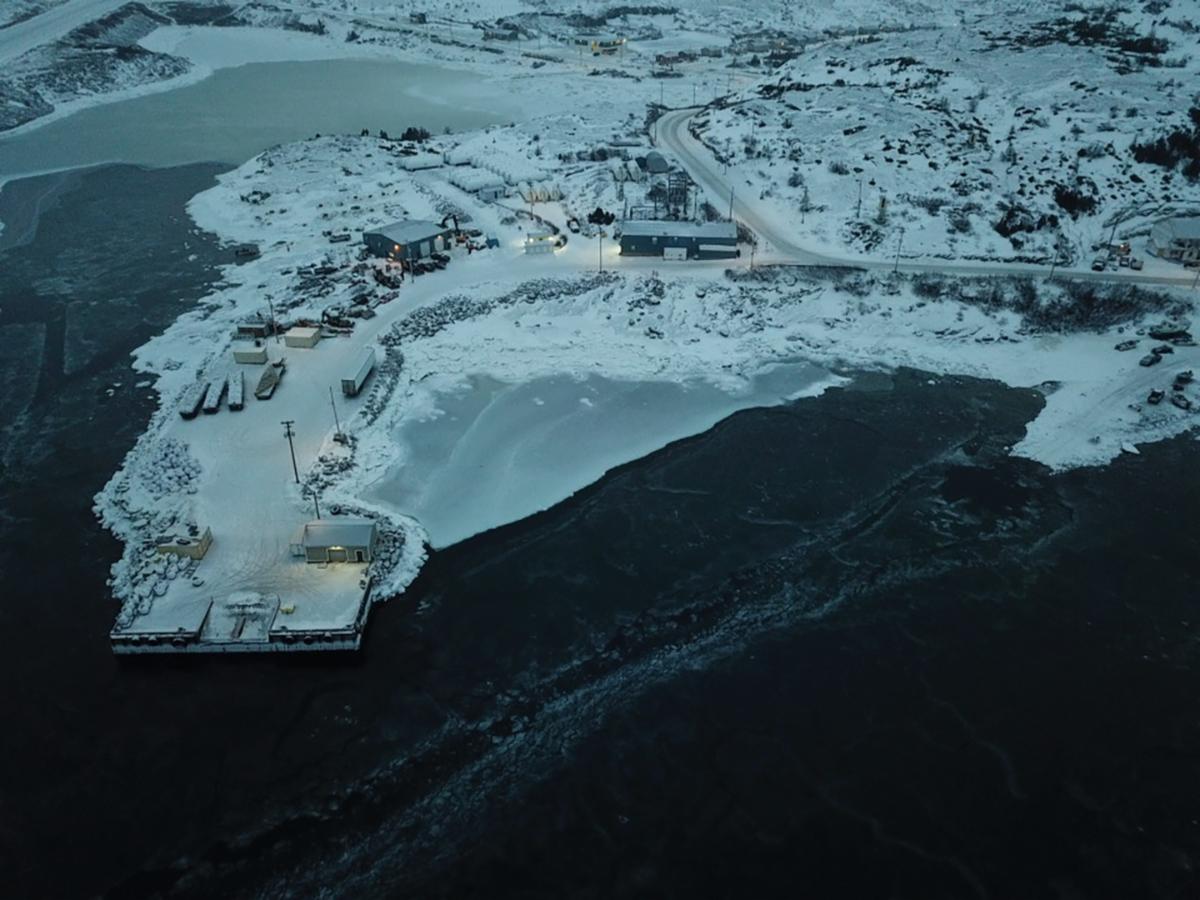
In this photo essay, CISSR 2023-24 Dissertation Fellow Emma Gilheany examines aerial perspectives and drone photography in Hopedale, Nunatsiavut, together with the Nunatsiavummiuk photographer Ryan Winters. The essay opens with the authors’ own experience of photographing the remains of a hilltop Cold War US radar base with a drone. Once a vantage point for watching for Soviet aircraft, the hilltop is now used by residents to assess ice conditions for travel and hunting. This redirection of the gaze, from militarized skies to Inuit lands, frames the essay’s broader concern of different aerial gaze perspectives. Archaeologists often rely on aerial images from outsiders, including declassified military satellite photographs and drone images taken by researchers during brief, mostly summer visits. These images, the authors argue, tend to present sites devoid of context and depict the circumpolar north as “a place of constant summer.” In contrast, Nunatsiavummiut drone photography is process-oriented, year-round, and community-facing. It records sea ice, wildlife, and community life, and circulates through social media as an open-ended local archive. Gilheany and Winters close by calling for more critical and collaborative visual research by archaeologists, urging them to reflect on whose gaze their work has followed and should follow in the future.
Read the full essay here.
| Cross-Cultural Variation in Noun Bias in Early Development | |
Marisa Casillas, CISSR 2024-25 Faculty Fellow and Assistant Professor of Comparative Human Development, and co-authors examine how noun bias is shaped by linguistic properties and other attributes. Noun bias refers to the preference for nouns observed in young children. Casillas and co-authors review literature of linguistic attributes of noun bias as well as methodological attributes and how they influence the magnitude of noun bias. Their study reviews five decades of noun bias research and employs a mixed-effects linear regression to assess the predictors of noun bias and a random forest analysis to assess the importance of individual attributes of noun bias. Casillas and co-authors found that the use of different methodologies had a straight-forward impact on noun bias, but the linguistic effects were not as clear. From their findings, they conclude that linguistic factors alone do not play a big role in predicting noun bias size, and they speculate that when linguistic factors do matter, their impact has the conceptual bias which underlies noun bias more generally. Casillas’ findings are inconsistent with the predominant line of research on noun bias, but she also acknowledges that despite the breadth of their data set it is skewed towards Indo-European languages and that wider variety in language could impact the results.
Read the full article here.
| Low-carbon Histories for Zero-Carbon Futures | |
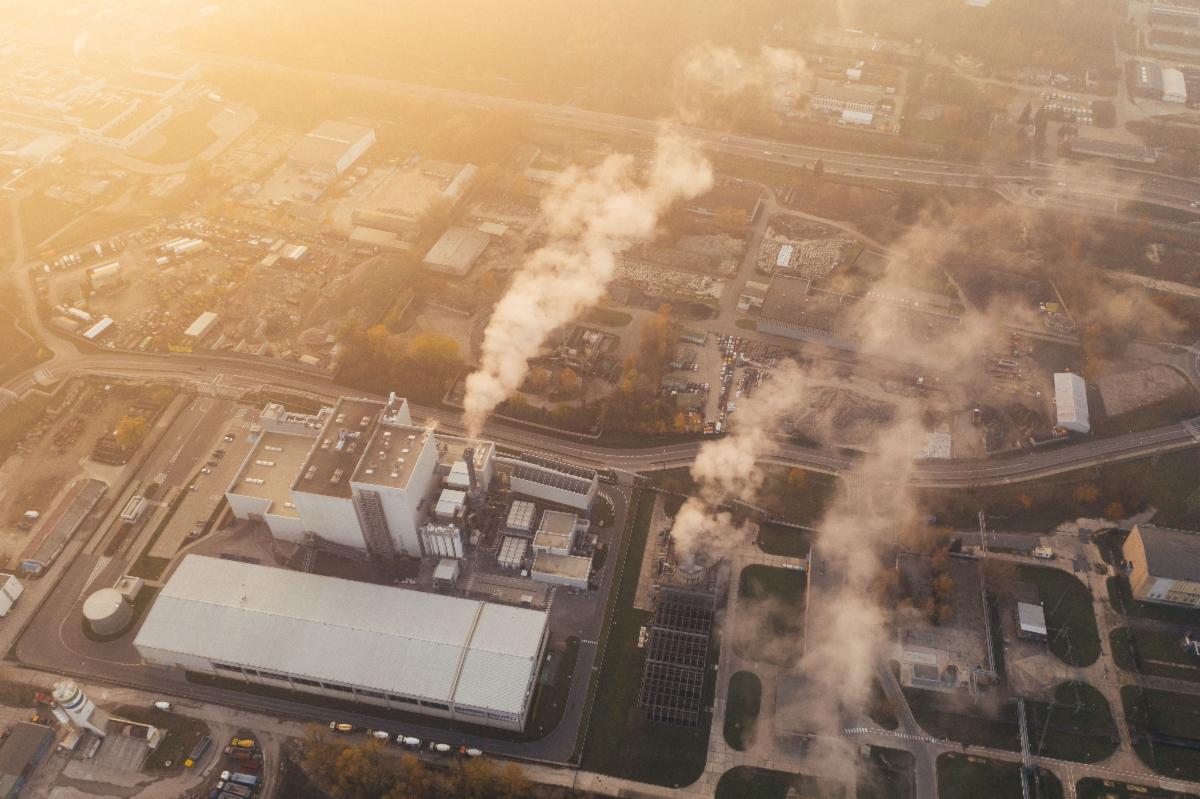
CISSR 2026-27 Faculty Fellow and Assistant Professor of History, Elizabeth Chatterjee and co-authors examine how histories of low-carbon energy technologies in the UK, Japan, and India can inform and expand discussions of modern transitions into decarbonization. Chatterjee and co-authors bring forward the stories of low-carbon pasts and recent fossil fuel dominance along with insights from energy geographies. They challenge the idea of energy transition, as historical evidence shows that the pattern is not so simple, and even today both fossil fuel consumption and low-carbon energies are rising simultaneously. They explore the temporal aspect of low-carbon energies as a form of understanding what distinguishes modern low-carbon energies from its precursors, and how this can be used to inform our modern-day conceptions of what constitutes as low-carbon. The local character of low-carbon energy generation and use is employed in different ways to advocate for alternative forms of economic organization and participatory governance. They argue, however, that the drive to scale these energies has made them centralized by governments and historically generated through sociopolitical negotiation. Finally, Chatterjee and her co-authors argue that focusing on community, that is how communities have led to innovation on low-carbon energies and how they’ve been sidelined in the process of energy transformation, gives a better understanding of energy and place. They center the temporal element of energy transformations and low-carbon energies to demonstrate how we can learn and reflect how to better our approach to achieving a zero-carbon future.
Read the full article here.
| Why Elected Leaders Subvert Democracy | |
In this article, CISSR 2025-26 Faculty Fellow Susan Stokes argues that the main threat to democracy today is not military coups, but erosion by elected leaders. When center-left political parties shifted their attention toward educated professionals and embraced globalization in the late twentieth century, lower-income voters were left without a party to represent them. This gave rise to the right-wing ethnonationalists, who combined economic grievance with hostility toward an “other.” In the Global South, left-populists who target the rich also weakened institutions. In her analysis with Eli Rau, Stokes finds that inequality is the strongest structural risk factor for democratic erosion. She argues that inequality fosters grievance, distrust of institutions, and partisan polarization. In polarized societies, to keep the other side out of power, voters tolerate their own leader’s attacks on institutions. Leaders also “trash-talk” institutions such as courts and the media, which lowers public confidence in them without provoking a backlash. Stokes also argues that backsliding can be resisted. Pro-democracy parties should win back working-class voters and use legislatures, courts, and local governments to slow erosion. Once back in power, they face a dilemma over whether to play “hardball.” Civil society and courts can push back, and voters can remove backsliders, as Brazil did with Bolsonaro. She concludes by urging that democratic rights must be exercised, or they will waste away.
Read the full article here.
| | | Anthropologist Ryan Cecil Jobson on what the Caribbean can tell us about the World | |
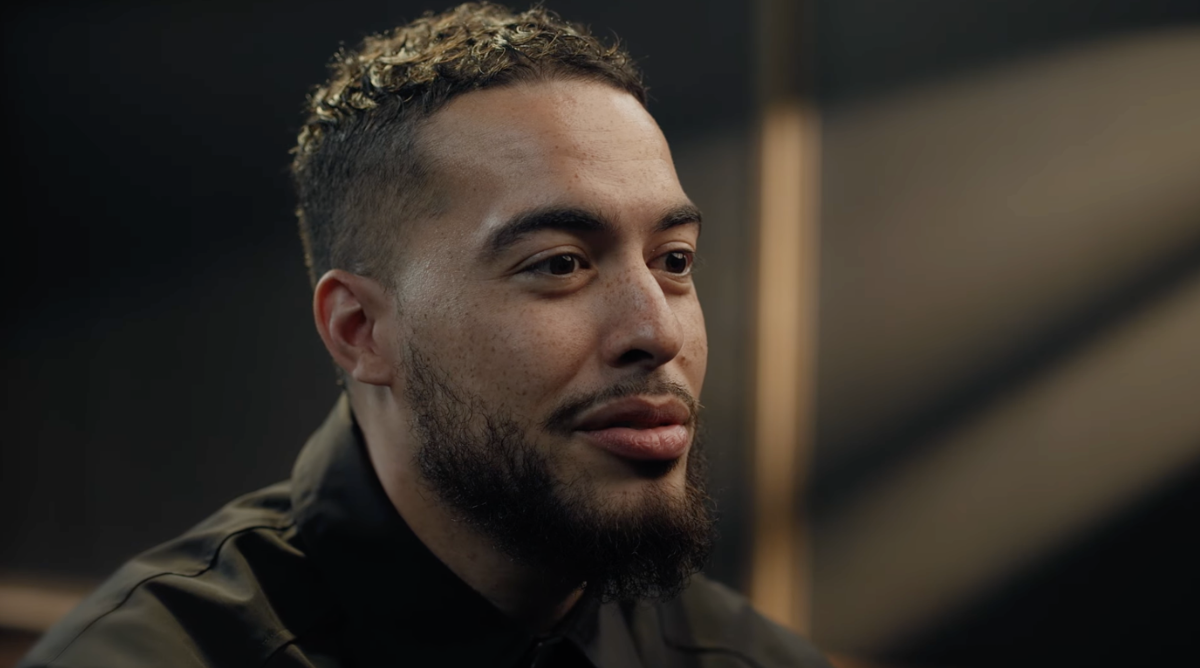
CISSR 2023-24 Book Fellow Ryan Cecil Jobson was recently featured in the “Meet a UChicagoan” series discussing his research on the relationship between natural resources and political power in the Caribbean. In his book, The Petro-state Masquerade: Oil, Sovereignty, and Power in Trinidad and Tobago, Jobson examines how governments and corporations maintain confidence in the petroleum industry even as resources decline. Jobson also reflects on the influence of Haitian anthropologist Michel-Rolph Trouillot, whose work helped make Jobson’s own approach to Caribbean anthropology possible. Trouillot challenged traditional views of small societies as isolated and unchanging, emphasizing the importance of the Caribbean and its distinctiveness as a political and cultural geography. To honor Trouillot’s legacy, Jobson co-curated an exhibition featuring his personal papers and archives, bringing his scholarship and contributions to a wider public.
Watch the full video here.
| | | | |