Early Intervention: Engaging Ideas |
Welcome to the
CIU20 Early Intervention Newsletter!
| |
April
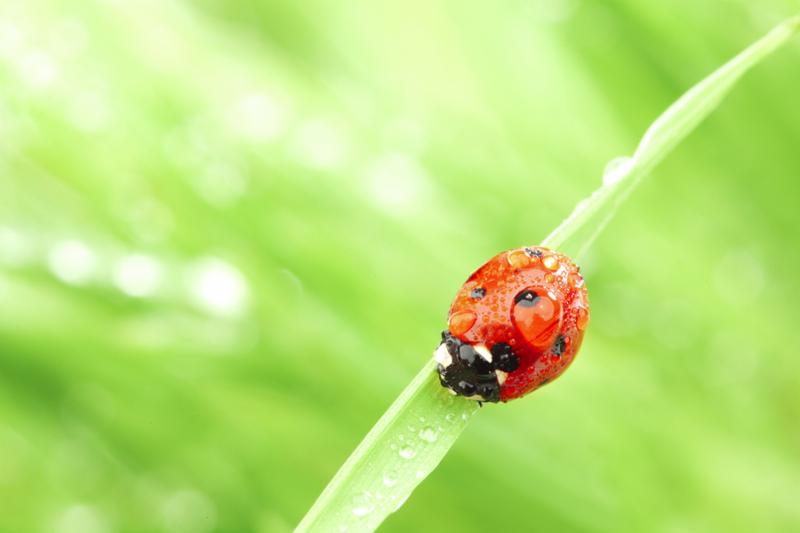
This month's theme is butterflies and insects!
| |
In this month's newsletter, we would like to share some butterfly- and insect-themed ideas and fun activities that your family may enjoy participating in and completing.
These are some suggestions for activities for you to try along with your child. We understand every child is at varying levels in the skill areas. If your child is not yet engaging in the activities independently, please use exposure, modeling, and/or shaping to modify and adapt the activities for your individual child.
| |
Activities to foster gross and fine motor skill development | |
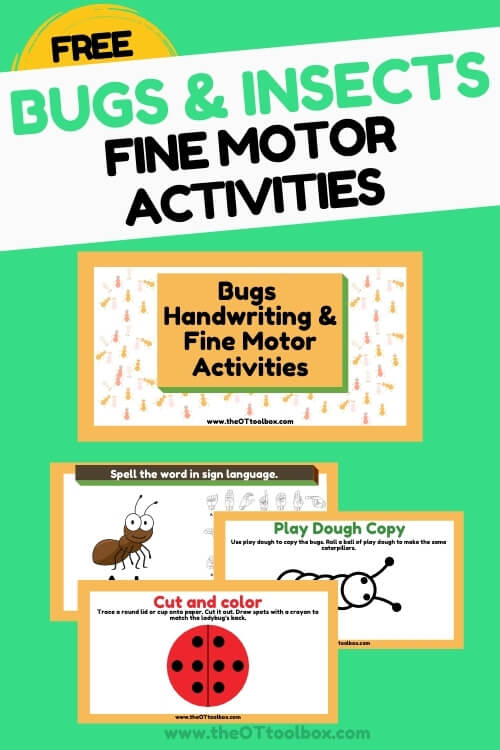
| Bug Fine Motor Activities - The OT Toolbox | | These bug fine motor activities include play dough activities, ladybug craft idea, and other ways to build hand strength with a bug theme. | | | |
Play dough builds intrinsic hand strength when children roll small balls of dough with their fingertips. This hand strengthening activity is a great one for building endurance, separation of the sides of the hand, and precision.
| |
| Butterfly Gross Motor Activities for Preschoolers and Up | | Are you looking for butterfly gross motor activities for preschoolers and older? This one page ZERO PREP activity has you covered. It will also work on motor planning, coordination, balance, and even fine motor skills too! You can download this... | | | |
Activities to help build language and communication | |
Bugs! Bugs! Bugs! Read Aloud Book
Strategies:
- Attention: Go on a picture walk! This is for those children who can not sit for a whole story. Talk about the pictures rather than reading all the words on the pages.
- Core Language: Have your Core Word Board out to allow your child to request for turning pages by saying/pointing to "turn" or to ask you to “look” by saying or pointing to "look."
- Receptive Language: Name different pictures on the page and encourage your child to point to each picture.
- Expressive Language: Ask your child “What’s this?” while pointing to pictures on the page.
- Engaging in the story: Use stuffed animals/objects (bugs)
| |
Five Green and Speckled Frogs Song
Strategies:
- Core Language: Play the song on youtube! Stop the song at various parts of the song to have your child use their Core Word Board to request “turn," “again,” “look,” or “go” to continue playing the song.
- Touch the icon for “eat” each time the song says “eating some most delicious bugs”.
- Receptive Language: Name different pictures on the page and encourage your child to point to each picture (frog, log, water, bugs)
- Expressive Language: Ask your child “What’s this?” while pointing to pictures on the page. ( frog, log, water, bugs)
| | |
Activity Bag
Gather items and place them in a bag (toy bugs, fly swatter, bug spray, bug catcher, grass/leaf, frog, magnifying glass, tweezers
Strategies:
- Core Language: Place the items in the bag, have your child request “look,” “more,” “want,” or “do,” to take items out of the bag.
- Receptive Language: Name different items from the bag and have your child point to the items you name when placed in a group of 3
- Expressive Language: As your child takes an item out of the bag, have them label the item, describe the item or state the function of the item (e.i, “What do you do with a ….?”
| | |
Out & About Activities
As you are outside taking a walk, you can do the following:
- Core Language: Go outside with a bug catcher and catch bugs. Have your child request to do it “again” or that they “want more”.
- Receptive Language: Name items you may see while walking and have your child point to them ( bridge, water, grass, trees, sticks, rocks, birds, bugs, fish, dogs, sun, clouds)
- Expressive Language: As you point to items, have your child label the item, describe the item or state the function of the item (e.i, “What do you do with..….? - a bug catcher, bug spray, fly swatter, sneakers, magnifying glass, bridge…etc.)
| |
Activities to help develop sensory and self-help skills | |
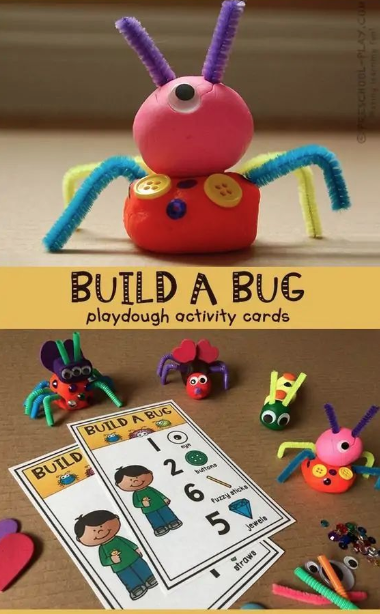
Things needed:
- Play dough
- google eyes
- pipe cleaners
- small buttons
Refer to the play dough image at the right to learn more of how to use the play dough
| |
|
|
Things needed:
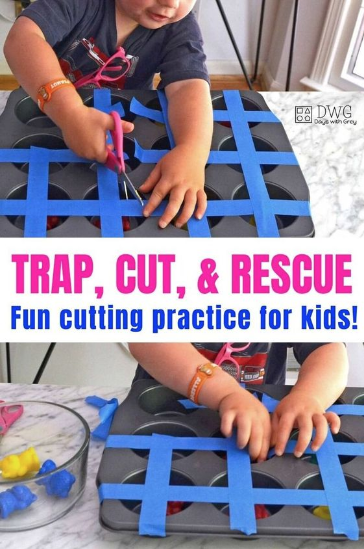
- cupcake tray
- masking or painter's tape
- small toy bugs
- children's scissors
Put one bug in each of the openings- use tape to tape over the holes. With supervision, allow your child to use scissors or rip the tape to rescue the bugs
| |
|
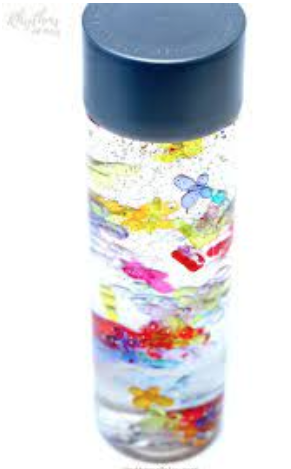
Materials:
- New or recycled water bottle or mason jar
- Goo Gone (optional)
- Plastic Butterfly Beads
- Gold glitter (optional)
- Clear liquid hand soap
- Super Glue
Directions:
- Clean the bottle and remove labels - use Goo Gone to remove stubborn glue
- Add water to the sensory bottle almost to the top
- Drop buttefly beads into the bottle
- Add glitter
- Pour in clear liquid hand soap
- Put the lid on and give it a shake to test it out
- Glue cap on
| |
|
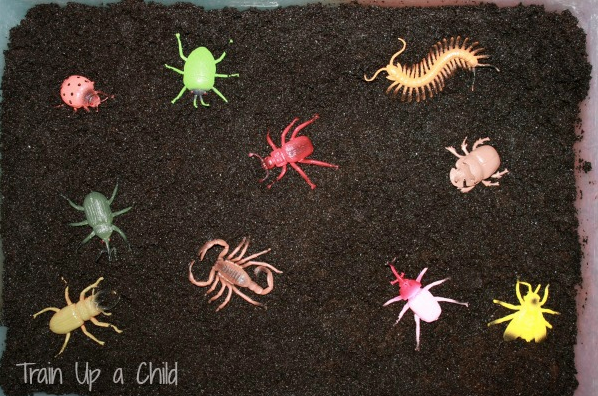
The best part about bugs is that they can be found right outside your door! Enjoy a nice day outside with your children! Allow them to dig and explore (and then enjoy a calming bath afterwards!). And for rainy days, or an indoor activity day, try one of the sensory experiences below. | |
Activities to help develop social and emotional skills | |
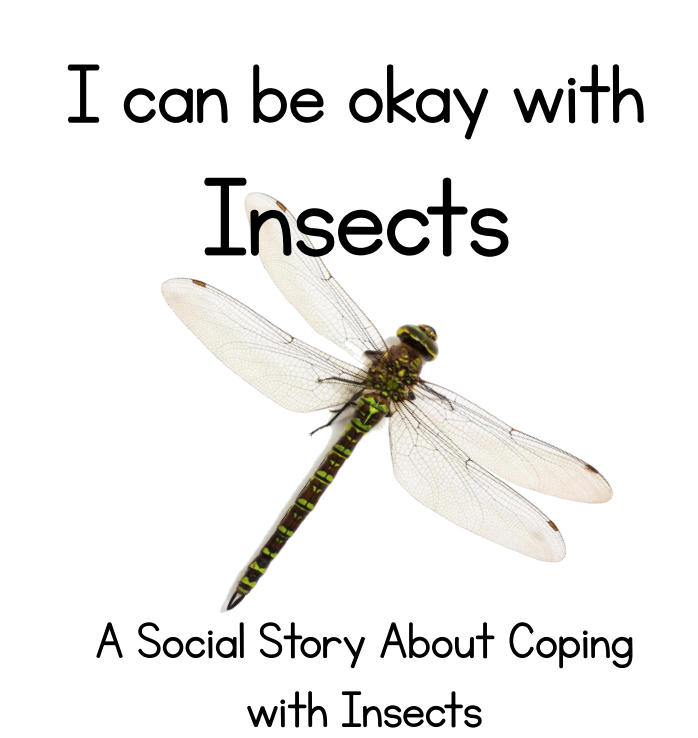
Social Story: I Can Be Okay With Insects | |
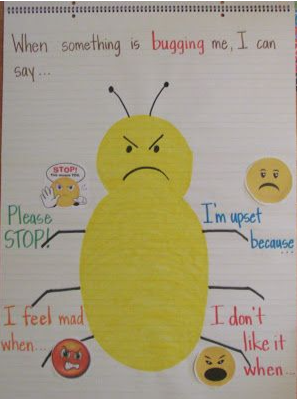
Read/listen to The Grouchy Ladybug and help your child identify and talk about something that makes them feel angry | |
Making a picture like this with your child to remind them to use their words, when they are feeling upset! | |
It's that time of the year when spiders seem to reappear a lot!!! Many children think its fun to kill spiders! Here is a cute book, teaching children the important job spiders do! | |
Activities to build cognitive skills | | |
|
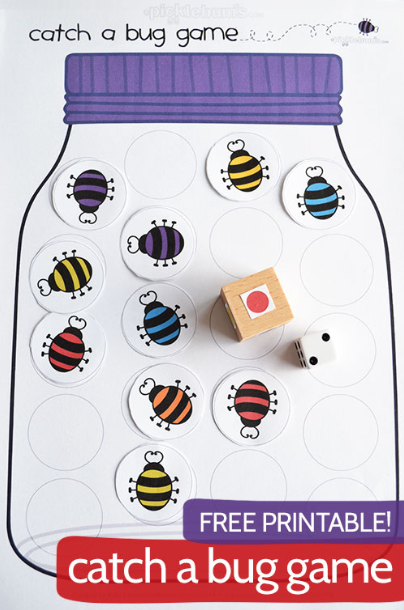
- Using the game boards and bugs provided or available at the link, ask your child to sort the different colored bugs into the correct jars.
- To make the game more challenging, give your child one jar.
- Place the provided colored dots on a block to make dice.
- Have your child roll the dice to determine which colored bug they should put in their jar.
- Have a sibling, parent or friend join the game to give your child an opportunity to work on waiting and taking turns.
| |
Read-Aloud Books from YouTube | |
Follow us on our social media channels to learn more about the resiliency of #AmazingIU20Kids and creative approaches to learning that our #AmazingIU20Staff have implemented! | |
At Colonial IU 20, we believe in RELATIONSHIPS that support student growth, RESPONSIVENESS to stakeholders crucial needs, RESULTS demonstrated through effective services and programs, and INNOVATION to improve student outcomes. | |
Colonial IU 20 provides educational, administrative, and management services to 13 school districts and 3 career and technical centers in Northampton, Monroe, and Pike Counties. As one of the community’s largest employers and contributors, the 1,400 full and part-time staff at CIU 20 provides direct and indirect services to 79,000 public school children; 9,000 non-public school children; and 7,000 professional staff in our service region of 1,200 square miles. | | | | |