Sustainability Commission
The Sustainability Commission’s next meeting is Monday June 8
th
starting at 5 pm. All are welcome! To view the agenda, watch the meeting live, or submit an electronic comment, please visit:
www.chulavistaca.gov/boards
and see the Sustainability Commission under Teleconference Meetings. If you have difficulty using eComment, please email your comment to:
MRodriguez@chulavistaca.gov
|
|
Climate Action Challenge 2016 Greenhouse Gas Presentation
More community members are joining the Chula Vista Climate Action Challenge and we now have more than 250 homes signed up to reduce carbon emissions. There is also a new “Hilltop High Community Group” that you can join. If you have not created your account, or would like to start your own community group in the challenge, it is easy at:
www.cvclimatechallenge.com
.
Please join Chula Vista Climate Action Challenge members this Saturday June 6
th
at 2:00 PM for an online presentation (meeting information below) of the 2016 Greenhouse Gas Inventory, a conversation about the challenge and the carbon reducing actions members are taking in their homes. Learn about progress and setbacks the City is seeing in reaching our climate goals.
Want to dial in from a phone?
+1.408.419.1715
|
|
SDG&E Offers Bill Discount Programs To Help Customers In Need
SDG&E Encourages its Customers Impacted by the COVID-19 Pandemic to find out if they qualify for Bill Savings of 30% or more and Other Available Assistance
With the coronavirus pandemic causing financial hardships for many individuals and families in the region, San Diego Gas & Electric (SDG&E) is encouraging those in need to
apply online
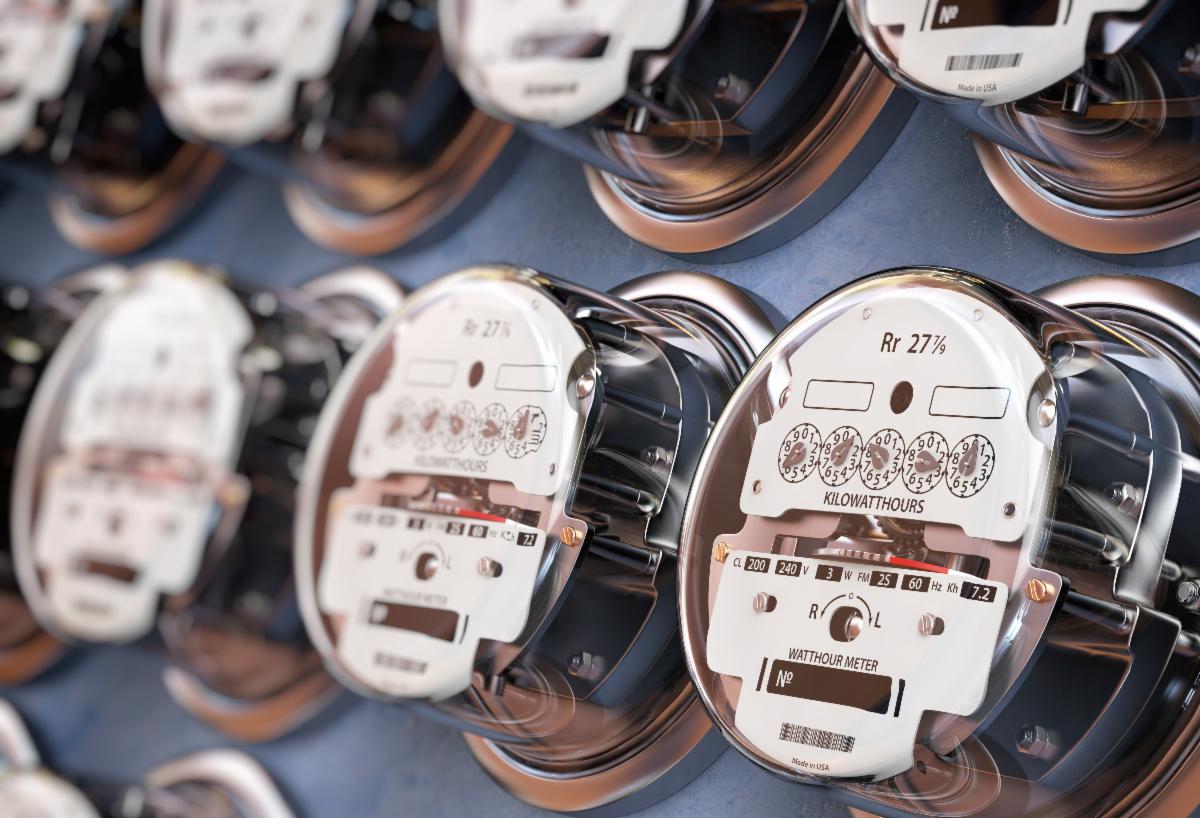
for bill discount programs, which can save 30% or more off their utility bill. Many people who previously couldn’t take advantage of these income-based programs may now qualify due to lost wages – even if they’re receiving unemployment benefits. These programs include:
- California Alternate Rates for Energy (CARE): Provides a 30% or more discount on SDG&E bills. Qualification is based on participation in certain public assistance programs or household income as of today. Apply at sdge.com/CARE.
- Family Electric Rate Assistance (FERA): If a customer doesn’t qualify for CARE, they may qualify for FERA, which provides income-qualified households of three or more with a reduced electric rate (18% discount) on their monthly bill. Learn more at sdge.com/FERA.
- Low-Income Home Energy Assistance Program (LIHEAP): A federally funded program that helps low-income households with their energy bills. Find details on sdge.com/LIHEAP.
SDG&E urges customers who are struggling to pay their utility bill to call its Customer Contact Center at 1-800-411-7343 to learn about flexible payment options.
|
|
Business Energy Efficiency Strategies
Many businesses in the region are starting to re-open due to COVID-19 restrictions being slowly lifted. Being more energy efficient can help with reducing utility bills, which may help budgets of businesses, large and small, stretch even further. Paying attention to simple things may have a big impact in the long run. With this in mind, here are two strategies to make your business more energy efficient.
Acquire Energy Saving Business Equipment
If your business is making changes to be more energy efficient, one solution would be to acquire energy-saving business equipment. Depending on what niche you're in, this could include equipment such as a paper-saving printer, efficient desk lamps, water heaters, refrigeration equipment and other similar items. The SDG&E marketplace is a great resource to shop for equipment.
https://marketplace.sdge.com/.
Power Down All Electronics When The Doors Close
Electricity savings add up over time and every little bit helps. After closing times, many businesses leave their lights on and other appliances running. Making a simple change such as powering down all non-essential electronics after the doors close can make a big difference in utility bills. For more tips and strategies please visit:
https://www.buildings.com/.
|
|
Food Waste Worsens Amid COVID-19 Pandemic - Tips On How To Curb Waste In Your Kitchen
The Department of Agriculture says 30% to 40% of food goes to waste in the United States and unfortunately the figure is likely higher because of the coronavirus pandemic. Some farmers have resorted to dumping milk and plowing over crops because the universities, schools and restaurants that normally purchase large quantities of food are closed.
Dana Gunders, Executive director of
ReFED
explains that people are throwing out less food in their homes, but more food is going to waste throughout the supply chain. One part of the supply chain produces food for consumers, while the other caters to big businesses and organizations. She adds that to solve the problem our government is buying a lot of this extra food and sending it to food pantries.
Some restaurants are buying large quantities of ingredients such as yeast and flour, and then bagging it up to sell to customers. This creative solution serves as an added revenue stream. The challenges caused by the coronavirus pandemic made the supply chain more flexible. New business relationships are forming and transportation companies that typically work in the for-profit sector are entering the non-profit space. Plus, online marketplaces are allowing businesses to post extra food for people to purchase or ask for a donation.
Consumers are making fewer but larger trips to the grocery store during the pandemic, which makes it easy to adopt practices that can help reduce waste at home.
|
|
Plan your meals better.
Think through what you want to eat and need to buy. Those who plan meals have dramatically less food go to waste and when you buy an ingredient where you won't use the whole amount in one meal, try to think a few meals ahead when you can use the rest.
Learning to store food better also reduces waste
. Put items in the correct packages and freeze what you’re not ready to use. Use by dates indicate the freshness of the food, not when the food goes bad or that it can make consumers sick.
|
|
Food Resources For Chula Vistans
The Covid 19 pandemic has drastically increased the need for food in Chula Vista. Families and seniors affected by the COVID-19 crisis and in need of food have the following food distribution resources available to them:
Community Through Hope
, 436 C Street, Chula Vista, 91910
Distribution on Tues & Thurs 8:00-10:00 am
Life Christian Center/Life Acts
, 7015 Alamitos Avenue, San Diego, 92154, (619) 585-3638. Distribution on Saturdays 9:00-11:00 am
Lutheran Social Services - Project Hand
, 580 Hilltop Drive, Chula Vista, 91910 Distribution on Mondays, Wednesdays & Fridays from 9:00 am - 2:00 pm
South Bay Community Services
,
Every Tuesday, 2 – 4 p.m., Castle Park Middle School – 160 Quintard Street
Chula Vista, 91911
Every Wednesday, 2 – 4 p.m., Loma Verde Recreation Center – 1420 Loma
Lane, Chula Vista, 91911
Every Thursday, 8:30 – 9:30 a.m., Castle Park Elementary School – 25 Emerson Street Chula Vista, 91911
South Bay Pentecostal
, 395 D Street, Chula Vista, 91910 Distribution on 1
st
Friday of the month, 9:00 a.m. – 12:00 p.m.
Special home delivery option in Chula Vista, call (619) 585-0600. Leave your name and phone number. They will call back the same day to set up a delivery appointment. This is only if you are homebound and cannot make it to the distribution.
The following agencies distribute food as well. Please contact prior to attending.
Salvation Army
, 648 Third Ave, (619) 422-7027,
Shadow Mountain Community Church
, 960 5
th
Ave, (619) 915-7256
St Rose of Lima
, 278 Alvarado, (619) 427-7637
Templo Evangelico Marantha
, 494 E Street, (619) 213-9370
Chula Vista Schools also have food distribution for students and their families:
Chula Vista School District
, (
619) 425-9600, CVESD.org search Covid 19
Sweetwater Union High School District
, (619) 691-5500,
www.sweetwaterschools.org
Additional information can be found at:
Feeding San Diego (feedingsandiego.org)
San Diego Food Bank (sandiegofoodbank.org)
2-1-1 San Diego connects you with community, health and disaster services through a free, 24/7 phone service and searchable database. Dial 2-1-1 or go to
211sandiego.org
to search their database
|
|
Consumers Can Make A Difference
In the manufacturing of consumer products, almost all are produced where at the end of their useful life they are discarded. It is important to recognize this is a byproduct of design methodology that does not consider the total lifecycle of a product or material. In the name of consumer and manufacturer convenience, valuable “resources” are discarded instead of reused, repaired or recycled. Most often resources are not recovered for use as raw materials for new products. Of course, many are recycled including aluminum cans, metal cans, glass and plastic beverage containers and paper products including cardboard. However, millions and millions of products along with plastic packaging, including those designed for a single use, are not designed to be recyclable or reused to produce new products.
There is significant work to be done to encourage producers and retailers to take responsibility for products and packaging that are not safe or suitable for landfilling. Currently, many packaging items (film plastics and polystyrene) have no markets in the region, therefore much gets landfilled or ends up in the environment as trash. As a coastal community, it is important to realize that over 30 percent of roadside litter is plastic and plastic bags which are among the top three items found littered on beaches and in storm drains and waterways. Clean Water Act policies prohibit these materials from entering our storm drain systems. Plastic also breaks down into smaller pieces, which can end up in the food chain.
Producer responsibility programs could have “take-back” elements where producers are responsible for the full life of the products and packaging. Many citizens consider producer responsibility as essential for protecting the environment. This “take back” could include developing markets for these “resources” for reuse or recycling. Consumer voices are powerful. As with many environmental movements, it takes the efforts of citizen consumers to make a difference and have an impact by using social media combined with sending emails directly to upper management of producers and customer service departments stating the need for them to take responsibility for the full life cycle of products to protect the health of our precious environment, is one impactful way to help. For more information on producer responsibility visit the California Product Stewardship Council at
www.calpsc.org
.
|
|
CLEAN Business - Rainbow Stone
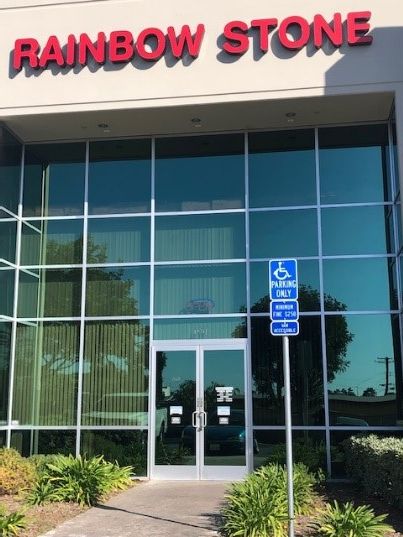
Rainbow Stone, a Chula Vista CLEAN Business, provides customers with custom-cut countertops for kitchens, bathrooms and other uses. They have a dedicated staff that offers courteous professional assistance in helping to design kitchens and bathrooms. As a CLEAN Business, they exhibit sustainable practices and are energy efficient throughout their facility. LED lights are installed throughout the office showroom, restrooms and the employee kitchen. The warehouse also has LED lights, but they barely need to turn them on due to daylighting. Huge windows light up the warehouse throughout the day. They only turn the warehouse lights on during the winter months when days are shorter. They typically turn them on, when needed, around 3 pm. Rainbow Stone also has water-conserving low-flow faucets and toilets in its restrooms. Rainbow Stone has participated in the City’s Blue Bin Recycling Program and received blue recycling bins for the office and showroom at no cost. Having the bins increases their ability to recycle. Rainbow Stone is located at 3541 Main Street and the phone number is (619) 585-9888.
|
|
Summer Gleaning
Gleaning means to gather. I Love to Glean is a new non-profit organization serving the Chula Vista and South Bay region. Programs support food recovery that include a residential backyard produce gleaning and community wide “Glean Ups”.
For backyard produce gleanings, volunteers are scheduled to pick produce from backyards and bring the produce to local feeding kitchens and food distribution agencies. Some of these agencies include South Bay Pentecostal Church, Life Christian Center/Life Acts and South Bay Food Pantry.
The first Chula Vista “Glean Up” is scheduled Saturday, June 27, 2020 from 10am-2pm at South Bay Pentecostal Church. A Glean Up is where residents pick their own fruit trees and either bring the fruit to the drop off location or pre-schedule to have the produce picked up by volunteer drivers. The produce is disbursed to local feeding agencies.
To find out how you can help and get involved by donating your produce, volunteering to pick or haul, or donate directly in other ways to this effort please go to www.ilovetoglean.org or call (619) 598-4912.
To find other organizations that glean in San Diego County please go to www.sandiegogleaners.org.
|
|
Safe Battery Storage And Disposal
We all generate used batteries from common household items such as remotes and flashlights. But when you remove those old batteries, how do you dispose of them? In California, it is illegal to dispose of used batteries in the trash. They should not be placed in your recycling cart either, because they cannot be sorted out. The contents inside batteries can leak and damage the environment and have the potential to create a fire hazard if not properly managed.
Touching a battery’s positive and negative terminals to a conductor (such as metal) allows energy to flow out of the battery. This concept makes household items like flashlights function, but if the terminals are connected to an item with low resistance, the flow of current can cause a fire. Batteries can be especially dangerous when disposed of together in your trash or recycling cart, creating the potential to cause a fire in trash/recycling collection vehicles or at sorting facilities. The best way to prevent a fire is to place a piece of electrical tape over the terminals of old batteries before taking them to a household hazardous waste facility for recycling. New batteries should be stored securely in their original packaging, not tossed loosely into a spare drawer or cabinet where they can contact one another or metal objects. If batteries must be stored loose, place a piece of electrical tape over the terminals until you are ready to use them.
If you have old batteries, recycle them at the South Bay Household Hazardous Waste Facility at no charge. The facility is located at 1800 Maxwell Road in Chula Vista and is open on Wednesdays and Saturdays from 9 am to 1 pm. Only Chula Vista, Imperial Beach, National City and unincorporated County of San Diego residents are permitted to use this facility. Call (619) 691-5122 with any questions
.
|
|
Republic Services Announces National Nonprofit Partners For $3 Million Small Business Revitalization Effort
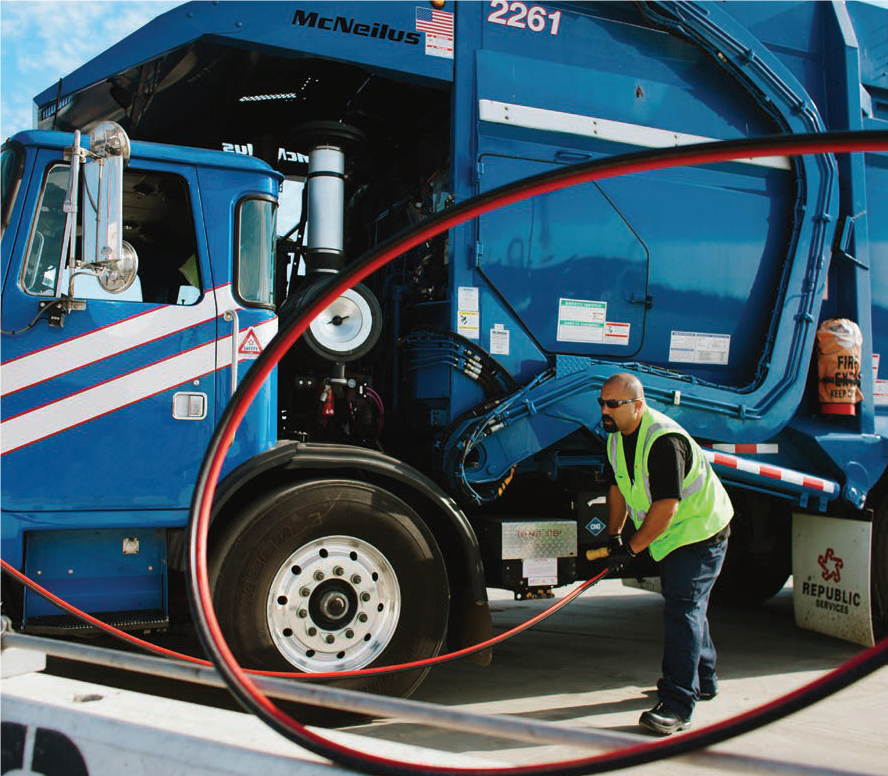
Republic Services, Inc. announces that it will partner with three national nonprofit organizations on a $3 million effort to help revitalize locally owned small businesses across America that have been disrupted by the COVID-19 pandemic. The Republic Services Charitable Foundation is providing $1 million grants to longstanding partners Rebuilding Together, Habitat for Humanity International and NeighborWorks America as part of the Company’s $20 million Committed to Serve initiative.
“Small businesses are the economic engines of our local communities, and they are the cornerstone of strong and vibrant neighborhoods,” said Jon Vander Ark, president. “Independently owned shops and restaurants have faced unprecedented challenges during this time. This support is a natural expansion of our charitable mission of restoring and revitalizing neighborhoods where we live and work to include those local businesses that serve as key staples of the community.”
The Committed to Serve grants will strengthen Republic’s partnership with the three national nonprofits, whose work the Republic Services Charitable Foundation already supports through its National Neighborhood Promise program. Through National Neighborhood Promise, the foundation has funded 47 unique projects positively impacting 1 million residents.
With this additional funding, Rebuilding Together, Habitat for Humanity International and NeighborWorks America will grant funds to their affiliates across the country, which will identify locally owned and operated businesses in need of critical repair, renovation or support to stay in business and thrive following the COVID-19 pandemic. These projects will be selected by September, and could include surrounding business infrastructure, business corridors and landscaping, as well as repairs and investment supporting the small business itself.
Republic Services launched its Committed to Serve initiative in April to support its 28,000 frontline employees, its customers and its communities. Since that time, the Company has invested $17 million back into the communities it serves through meals for its employees and their families bought from independently owned restaurants and through gift cards to employees to be spent locally.
For more information, visit RepublicServices.com
|
|
|
|
|
|
|