Sustainability Commission
The Sustainability Commission’s next meeting is Monday August 10th starting at 5 pm. All are welcome! To view the agenda, watch the meeting live, or submit an electronic comment, please visit: www.chulavistaca.gov/boards and see the Sustainability Commission under Teleconference Meetings. If you have difficulty using eComment, please email your comment to: MRodriguez@chulavistaca.gov
Climate Change Working Group Online Meeting
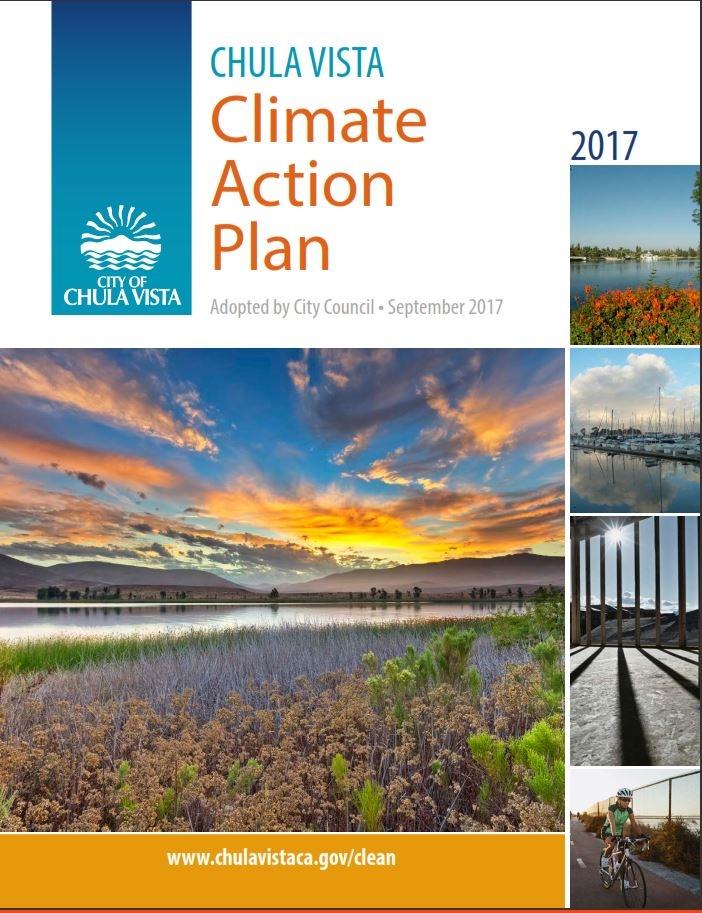
The Climate Change Working Group will be holding its second meeting of 2020 on August 19th from 3-5 pm. Due to Covid-19 restrictions, this meeting will take place online. Anyone interested in attending can access the link to view the meeting or make comments at www.chulavistaca.gov/boards. The commenting period will be open shortly after the agenda is published and will remain open through the meeting. After regularly meeting through 2018 and 2019, the working group will be voting on climate action recommendations that will be presented to City Council. The draft recommendations include potential measures to support building and vehicle decarbonization, alternative transportation and reducing waste. Some action may be delayed or modified due to Covid-19 but the goals remain to reduce carbon emissions and continue to City’s sustainability leadership. For more information, including previous presentations, please visit: chulavistaca.gov/climate-action-plan.
Summer Sustainability Series - Happening Now!
Our Summer Sustainability Series is in full swing! Have you attended a session yet? Join the City of Chula Vista for an interactive web series on a variety of local sustainability programs and learn how you can incorporate sustainable living tips into your daily life. This web series features sustainability experts and provides exciting ideas that will help you help preserve our natural habitats, make your home more energy efficient and irrigate your yard more effectively. And so much more! For more information or to register for the upcoming webinars, check this website. Recordings will be updated there after each event. Upcoming sessions include the following:
 
  • August 6: Reduce Waste, Reduce Your Carbon Footprint 
  • August 13: Create a Lush NatureScape While Conserving Water
  • August 20: Clean Energy @ Home
  • August 27: Composting 101 & Other Best Practices for Gardening at Home
  • September 10: Going Electric in Chula Vista
  • September 17: Food Waste Solutions at Home and in Your Everyday Life
  • September 24: Check it out - Sustainability at the Library!
 
Webinars are free and open to everyone. Just click the link above for all the information and to complete your registration. We hope you can join us! 
Tips To Help Reduce Summer Energy Bills
San Diego Gas & Electric (SDG&E) is offering tips and resources to help its customers reduce energy bill spikes that could occur due to hot weather and an increase in working from home and homeschooling during the pandemic.

If you’d like to lower your energy use and bills this summer, here are a few tips you can consider.

  1. If you are on a Time-of-Use (TOU) pricing plan, shift some of your energy use to lower-cost hours outside of the 4 p.m. – 9 p.m. peak period. If you don’t know which pricing plan you’re on, visit sdge.com/myaccount
  2. When streaming content, choose the smallest device that makes sense for the number of people watching
  3. Turn down the thermostat on your water heater a few degrees because gas or electricity are needed to heat your water
  4.  Make sure you check your AC filter every 1-2 months. Dirty filters cause your system to work harder to keep you cool, wasting energy
  5. Get more energy-saving tips at sdge.com/summer

SDG&E has payment assistance programs that can help residents save on their monthly bills. These programs are available to those who meet income eligibility criteria and include; the California Alternate Rates for Energy (CARE) program, the Family Electric Rate Assistance (FERA) and LIHEAP, the federally funded Low-Income Energy Assistance Program. More information is available at sdge.com/assistance. Customers who are concerned about higher summer bills can enroll in a Level Pay Plan to smooth out the monthly cost fluctuations. Learn more at sdge.com/LPP. If you need more time to pay your bill, Call SDG&E’s Customer Contact Center at 1-(800)411-7343 to make payment arrangements. 
Republic Services Diverts 1.7 Billion Pounds Of Food And Yard Waste From Landfill
Company Is Taking the Lead in Composting With 11 Facilities in 5 States

With 11 compost facilities in five states, Republic Services is doing its part to help divert yard and food waste away from landfills and to contribute to the circular economy.

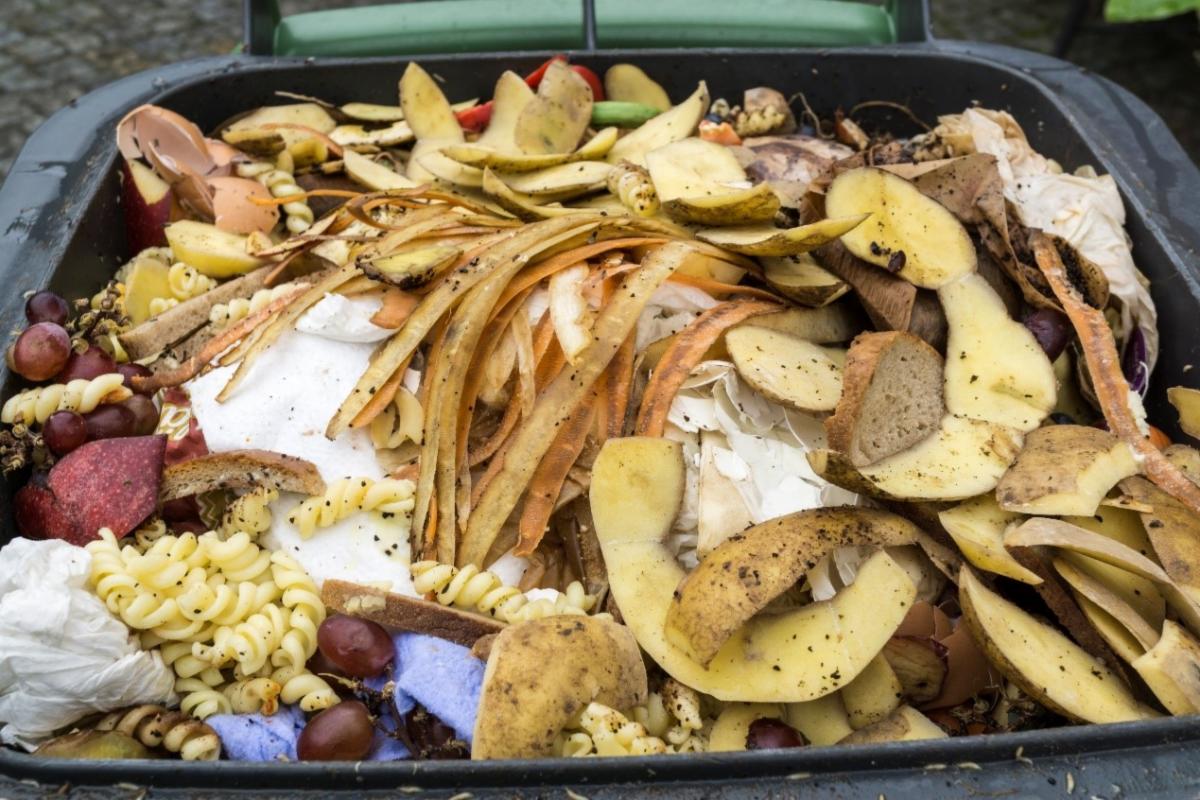
Yard and food waste currently make up about 30 percent of the municipal solid waste that’s sent to landfills, according to the Environmental Protection Agency. However, by diverting this material to compost facilities, that waste can be recycled into a nutrient-rich soil amendment that helps plants grow.

Republic Services processed 1.7 billion pounds of yard and food waste at its organics facilities last year, creating more than 275,000 tons of compost. This compost is marketed and sold to landscapers, golf courses and farmers, as well as residential customers.

Many of Republic’s composting facilities are technologically advanced, using mechanical aeration to speed up the biological process and reduce odors. The facility at the Otay Landfill in Chula Vista is a unique example – it’s completely off the grid, using solar-powered fans and a cover technology that requires little energy consumption and traps odors, dust and emissions. The Otay facility is one of six in California, where there is a greater demand due to legislation mandating the diversion of organic waste from landfills.
“Organics diversion is being debated across the country, and legislation is driving this material out of landfills,” said Chris Seney, director of organics operations. “Organics is an emerging industry with an enormous amount of opportunity, and Republic Services is proud to be taking the lead.”
Pandemic Energy Efficiency Treasure Hunt
Have you been cooped up in your home for the last few months and seen your energy bill go up significantly? If so, here is an idea to consider if you have children and want them to have a little fun during a home-schooling break. Have them participate in an energy efficiency treasure hunt! The treasure hunt will require you to create a list with three headers that read: room, number of outlets, and number of outlets being used. The first child back with the most rooms completed wins.

Why a treasure hunt? You get to find out exactly how many outlets in your home are being used and your children have fun while learning something. Why plugs? Plugs are attached to device and devices require electricity to operate. Some of these devices do not always need to be connected. A phone charger, for example, can be unplugged when not actively in use. Devices you want to easily disconnect, like gaming consoles, televisions that aren’t frequently used and non-essential equipment, can be plugged into a smart power strip. Smart power strips are quick and easy way to start saving money while making your household a little more energy efficient. Smart power strips can cut power off and save energy since they are able to detect when a device is in standby mode.

When the energy efficiency treasure hunt is completed and the winner is crowned, you can then explain to them what plug load is (the energy used by products that are powered utilizing an ordinary outlet) and how it impacts your home, especially for items that are not in use. You’re teaching your kids the basics of a home energy audit and how it works!
SB 1383: A Revolution For Organic Waste
The regulations for Senate Bill 1383 (SB 1383), the short-lived Climate Pollutants Reduction Act that was signed into law in September 2016, will fundamentally change the way California manages organic waste. On January 21, 2020, after several years of research, data analysis and stakeholder meetings — and drafting, rewriting and fine-tuning — the California Department of Resources Recycling and Recovery (CalRecycle) sent a first of its kind rulemaking package to the Office of Administrative Law (OAL) for official approval.

OAL returned the regulations to CalRecycle in mid-March for clarifying non-substantive changes. None of the new revisions will change the scope of the regulations. The department will hold a 15-day public comment period after the changes are made. It will also post both a clean version of the updated regulations and a “rainbow” version showing the version that was sent to OAL in January with color-coded edits. Once these rules have the green light, the CalRecycle will begin to support stakeholders through the implementation process.

What Is SB 1383?
SB 1383 requires a 50 percent reduction in organic waste disposal from 2014 levels by 2020 and a 75 percent reduction by 2025. That will require the diversion of up to 27 million tons of organic waste by 2025 to reduce greenhouse gas emissions. In addition, SB 1383 requires that not less than 20 percent of edible food that is currently disposed be recovered for human consumption by 2025.

As monumental as it was that SB 1383 was signed into law, the real work lies ahead with implementation. CalRecycle’s regulations describe what needs to be done by local governments, businesses, residents and nonprofits to accomplish this task.
Previously enacted laws set the stage for a 75 percent reduction in organic material from landfills by 2025.

Breaking New Ground — Edible Food Recovery
No other government in the world has created SB 1383’s legal mandate to recover edible food previously sent to landfills to give to people in need. According to the California Association of Food Banks, 1 in 8, or 4.6 million, Californians are food insecure, including 1 in 5 children. At the same time, more than 5.5 million tons of food waste are disposed in California landfills each year, according to CalRecycle’s 2014 waste characterization study. In 2018, CalRecycle began tracking how much potentially donatable food is disposed; that information is expected to be available in mid-2020.

The 1383 requirements for local governments, food generators and food recovery groups to achieve this 20 percent food recovery goal include the following:
  • Commercial edible food generators must recover for human consumption the maximum amount of their edible food that they would otherwise dispose of in landfills by making written agreements with food recovery organizations or services to accept this food instead.
  • Local governments must consult with food recovery organizations and services to implement edible food recovery programs and ensure adequate capacity exists to recover that food.
  • Food recovery groups must follow rules for recordkeeping and reporting.

For the food recovery aspect of the regulations, CalRecycle established the following two-tiered implementation structure:
  • “Tier One” food generators — supermarkets and large grocery stores, food services providers, food distributors and wholesale food vendors — must comply beginning January 1, 2022.
  • “Tier Two” food generators — large restaurants, hotels with an on-site food facility and 200 or more rooms, health facilities with an on-site food facility and 100 or more beds, large venues and large events, state agencies with large cafeterias and local educations agencies with on-site food facilities — have until January 1, 2024 to comply.

Legal Requirements for Diverting Organics
SB 1383 stipulates how waste generators and local governments must operate to keep organic material out of landfills. These requirements include the following:
Jurisdictions must provide collection service automatically to all generators (also known as universal service). At this time, most of the state’s jurisdictions already have residential organics collection service for green waste, and many are in the process of adding food waste collection service (often commingled in the same cart) to help the state meet SB 1383’s organics diversion benchmarks.

All organic waste generators, both residents and businesses, as well as non-local entities and local education agencies, are required to participate in organic material collection programs.

Jurisdictions must adopt enforceable ordinances to ensure that all residential and commercial generators are compliant. Penalties for noncompliance can be assessed by CalRecycle beginning in 2022.

Jurisdictions must procure eligible recovered organic waste products. Jurisdictions can comply with the requirements through the procurement and use of compost, mulch and various forms of bioenergy derived from recycling organic waste.

Outreach & Education Campaign
CalRecycle is launching a $15 million, three-year recycling outreach campaign to educate local governments and California residents on the importance of recycling, including organics and addressing contamination in recycling bins. CalRecycle has contracted with Runyon Saltzman (RSE), a marketing and communications agency, to manage the campaign.

Aspects include the following:
  • RSE will use community-based social marketing techniques to research and determine the local barriers to recycling in individual communities and will work with local governments on messaging to overcome those barriers and improve recycling area by area.

  • Messaging will be translated as needed to reach targeted communities, as determined by the research findings.

  • The agency will provide materials that local governments can modify for their own use.

RSE will hold one or two webinars to teach local governments how to use and modify the materials for their own recycling programs. It also will offer assistance and respond to questions for the duration of its contract.

Costs and Benefits
On average, residents of single-family homes can expect a $2 to $4 increase on their monthly collection bill, or about a 10% percent average increase. The state will need an estimated 50 to 100 new organic material recycling facilities to process and recover up to 27 million tons of organic waste annually by 2025.

How will Californians benefit in return for their efforts and expense? Benefits include:
  • Equivalent of 1.7 million cars taken off the road in GHG reductions
  • permanent green jobs, and 3,000 temporary construction jobs
  • 10,000 refuse trucks or 7,500 buses powered by renewable fuel
  • 700,000 acres a year of agricultural and parkland with improved soil health and ability to sequester climate change-causing carbon
  • 10.4 billion to $12 billion in avoided health impacts, like respiratory illnesses and premature deaths — especially for sensitive groups such as children, the elderly and people with chronic heart or lung disease

Reducing organic waste will take a unified effort by local governments, businesses and California residents. By diverting organic material from landfills, we’ll help reduce the dangerous impacts climate change has on our weather, forests, homes and ocean. At the same time, we’ll use that material to feed people in need, power our vehicles and improve soil for agriculture.