Members of the public are invited to attend the January monthly meeting of the Sustainability Commission at 5:00 pm on Monday January 14th in room 103, Building A at City Hall. There will be a presentation about the Autonomous Vehicle technologies being tested and deployed in the City of Chula Vista. The Sustainability Commission meets the second Monday of each month and more information can be found
here.
|
|
TEDxChulaVista Talk About Conservation - Now Online
At last year’s TEDxChulaVista event at Southwestern College, City Conservation staff member Cory Downs gave a talk about how communities can use play to help promote a cleaner environment and now you can view that talk online. You can view videos of all twenty one performers, including kids and artists, at
www.TEDxChulaVista.com
.
There were a lot of great talks about refugees, animation and many more inspiring topics so there is something for everyone. Cory’s talk was focused on the City’s effort to create a website and program that will tap into people’s competitive spirit and encourage them to learn about and take actions that can reduce greenhouse gas emissions. By utilizing the collective strengths of the community, we can all achieve more and help preserve our community for future generations. You can go to his talk directly at
https://youtu.be/-fW7tSUVSvk
.
We are also happy to announce that there has been progress made on bringing the program he talked about to the Chula Vista community. The effort will be called the Chula Vista Climate Action Challenge and will be launching in time for South Bay Earth Day in early April. We hope that once the web page goes live you will all join the challenge and help share your commitment and stories of action with your community. Stay tuned for more information in a future CLEAN newsletter article.
|
|
Save the Date!
Save the Date for South Bay Earth Day on Saturday, April 6, 2019 at Memorial Park! Learn to reduce your impact on the environment at this zero-waste event packed with hands-on green activities, Fix-it-Clinic, and “Learn to” workshops that cover a wide range of topics. This free event welcomes all-ages! More info at
chulavistaca.gov/south-bay-earth-day.
|
|
Citywide LED Light Bulb Retrofit - Saving On Utility Bills!
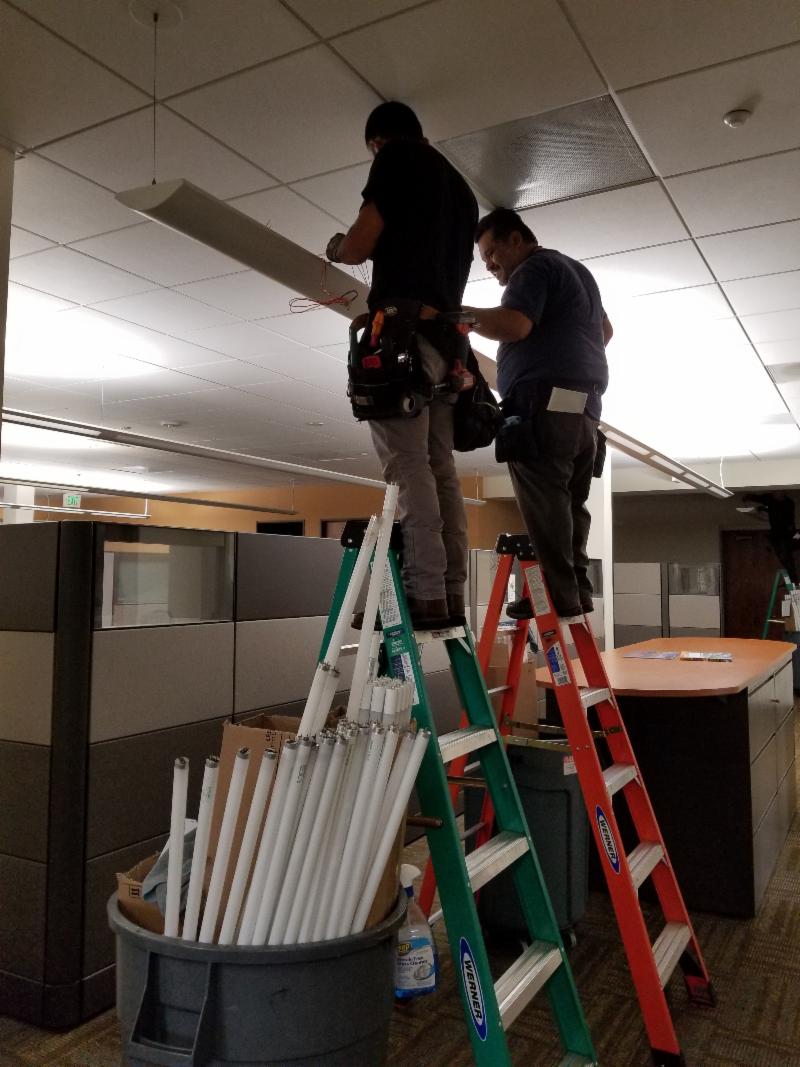
If you’ve been to your local library or recreation center recently you may have seen workers changing out old light bulbs for new, more efficient LED light bulbs. City of Chula Vista staff have been hard at work looking at various ways to save on utility bills and one of the best choices was a lighting retrofit, replacing our old florescent lighting with newer, more efficient technology.
The LED lighting technology uses a fraction of the energy that was being used with the fluorescent bulbs. The old light bulbs were 32 watts each and the new light bulbs are 12 watts each, which means we are reducing 2/3 of the energy used for lighting. This retrofit began just a few months ago but we have already begun seeing energy savings at some of our facilities. In total, the City is replacing approximately twenty thousand light bulbs and the majority of these lights are linear bulbs, more commonly known as tube lighting.
Overall the City will have an expected annual savings over 1.5 million kilowatt hours, which translates to a huge savings on utility bills. The good news is you can also save energy that will impact your monthly energy bill by following this example for your own home or business. You may not save as much as the City of Chula Vista, but the impacts will be felt on your monthly SDG&E bill. A variety of bulb options can be found at your local hardware store, lighting retailer or online. And if you’d like to try out LED bulbs at home before purchasing them, you can check them out for free, like a book, at any of the Chula Vista Library branches in their Energy Lounge. For more questions about this you can contact Conservation staff at (619) 409-3893.
|
|
New CLEAN Business Participant - Super Welding of Southern California
The City of Chula Vista welcomes Super Welding of Southern California as the newest participant in the CLEAN Business Program. Super Welding provides a variety of welding, machining and fabrication services for maritime, commercial and industrial sectors using advanced technologies. At their facility in Chula Vista they have implemented numerous sustainable practices to conserve energy and water. Super Welding participated in SDG&E’s Business Energy Solutions program to specifically determine strategies and technologies they can apply to become energy efficient and cut down on their energy costs. The company’s facility is undergoing the process to becoming a zero net energy facility where the goal is to only use electricity they self-produce. A solar power system is being installed to meet this objective. Energy efficient lighting and other technologies are also being applied. Super Welding recycles all spent and unused waste materials from its welding and fabrication activities. They implement source reduction measures especially the purchase of reusable items for business activities. For more information on the CLEAN Business Program and to find other CLEAN businesses, check this link
chulavistaca.gov/clean-business.
|
|
Want To Save Energy At Home This Winter?
There are many steps you can take that will help reduce your overall energy costs. The more efficient your home is, and the less energy transferred from inside to outside, the less energy it’ll take to keep your home comfortable.
Check out these winter energy-savings tips:
- Sunshine is your friend! Open the curtains and blinds on west- and east-facing windows during the day to allow sunshine and warmth into your home. Then close your curtains at night to insulate your home from the winter night chill.
- Check your insulation. Insulation is like the winter coat for your house. The heavier it is, the warmer it will be. If your home is poorly insulated, it may be time to add some eco-friendly insulation. Add insulation blankets to the attic floor or wrap your water heater in fiberglass insulation.
- Seal leaks. Find vulnerable areas of your home where cold air gets in and warm air escapes like unsealed doors and windows. Seal leaks with weather stripping and ensure seals around ducts are in good condition. Cover unused fireplaces to prevent passage of air through the flue.
- Install a programmable thermostat. Set the unit to run at one temperature when you’re home and awake, another while you’re sleeping, and another when you’re not home.
- Keep those toes warm. Switch to underfloor heating which uses radiant heating to warm the entire room from the ground up. Heat travels upward which makes a floor heater more efficient than a heater with ducts placed near the ceiling.
|
|
FREE Recycling Containers For Chula Vista Businesses
Want to save your business money while helping the environment?
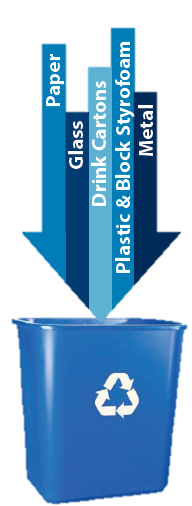
The City of Chula Vista’s Recycling Program is here to help your business reduce waste by increasing your recycling collection. The program offers Chula Vista businesses FREE recycling containers of varying size, recycling posters, delivery and employee training.
Who can apply
?
Any Chula Vista Businesses that occupies a commercial property. This program is not available to home-based businesses.
How to apply:
Visit
www.chulavistaca.gov/clean
where you’ll find the
Free Recycling Containers
application on the front page of the website and simply complete and submit the form on-line. If you prefer a paper application please contact Martie Solomon, Recycling Specialist at (619) 409-5844
or email
environmentalservices@chulavistaca.gov.
Advantages of recycling at your business:
- Your clients want you to be green – Attract new customers, enhance your chances of winning contracts and improve customer loyalty by demonstrating your environmental responsibility through recycling efforts.
- Possible reduction in disposal costs – Recycling can help you reduce the volume of material you’re putting in the trash. Less trash, lower cost. Why throw away your money?
- Environmental benefits – Recycling keeps valuable, recyclable resources away from the landfill which mean fewer natural resources are extracted, resulting in less harm to the environment.
Don't trash a good thing, recycle it!
For more information and questions about FREE recycling containers for Chula Vista businesses, please contact environmentalservices@chulavistaca.gov or call 619-409-5844.
|
|
Environmental Services Staff To Visit Local Businesses
City of Chula Vista’s Environmental Services staff will soon visit local businesses to help them be kinder to the environment by recycling more and help the City achieve the state goal to recycle 75% of material sent to the landfill by 2020, or perhaps even reach zero waste status! Staff will also assist businesses to “right-size” their trash and recycling services to find potential costs savings, find options to avoid food waste by connecting them with food rescue organizations and to assist with general inquiries about their collection service. Overall efforts to keep waste from entering the landfill helps reduce greenhouse gas (GHG) emissions, primarily methane which is produced during decomposition of organic materials. As an added benefit, organic waste diverted from landfill disposal is actually composted and used to enrich soils. Environmental Services staff will focus on businesses that generate 4 cubic yards or more of commercial solid waste. Visits include surveying and evaluating waste contents and quantities in various carts and dumpsters at each business. The goal is for businesses to increase recycling, reduce solid waste that goes to landfills and find the right service levels and costs for businesses to help their bottom line. For more information or if you would like to request an evaluation of your collection services at your business, please contact (619) 691-5122 or email
environmentalservices@chulavistaca.gov.
|
|
Becoming A "Zero Waste" City Requires Collaboration
The United States generates an average of 262 million tons of municipal solid waste each year and the majority is sent to landfills. Waste generation is, in fact, increasing faster than any other environmental pollutant so how do we tackle this challenge? For certain governments and corporations, the solution may lie in adopting "zero waste" goals. Most sustainable cities around the nation support renewable energy projects, water efficiency programs and "zero waste" is consistently top of mind. Important to mention is that many of the world’s larger corporations have led the way to implement policies that increase diversion away from landfills and minimize environmental effects all while helping their bottom line. As pressure for sustainability initiatives continues to rise, consumers have pushed more businesses and legislators to act. Unfortunately, some are struggling with implementation and goal setting due to an international crackdown on recycling requirements. In 2017, China banned the import of various scrap materials, including recyclables so while institutions are committed to increasing sustainability, the current waste infrastructure can't support or store the large influx of recycling. To achieve widespread change across the public and private sectors, and create the domestic infrastructure needed to sustainably adapt to the international waste landscape, citizens must work together to reduce waste from individual households to corporate policies and comprehensive regulatory change.
Here’s how we ALL can lead the charge to "zero waste"
Governments
Cities, states and even the federal government can serve as the driving force behind significant waste reduction. Mayors of the world’s largest cities have risen to the challenge, issuing bold public commitments to minimizing waste generation and increasing diversion away from landfills. San Francisco, for instance, has pledged to reduce its disposal to landfill and waste-to-energy 50% by 2030, while New York City has committed to achieving "zero waste" by 2030. These commitments can have an impact that spans beyond their local communities. As businesses make the operational changes to become compliant, many are looking to expand these policies at facilities outside of regulated regions.
Corporate initiatives
One example of public policy driving business change is the recent elimination of single-use products like plastic straws, utensils and bags around the greater Seattle area as well our neighbors to the north, San Diego and other coastal north county cities. This movement can be tracked across industries, restaurants, coffee shops, airlines and even cruise ships. Companies are making changes not only to meet regulatory requirements, but to meet customer and employee expectations and achieve cost savings along the way. The first step for businesses undergoing widespread policy changes is understanding their current waste stream to identify potential action areas. For instance, some nationwide casual dining chains have conducted series of waste audits and found that many single-use products given to customers are consistently thrown away without being used. After recognizing the major environmental impact of this waste, leadership made a bold decision to re-negotiate packaging options with their vendors. The strategic choice to reduce the number of single-use products bought and given to each customer produced profound change and at the local level, stores began diverting more waste away from landfills and saw waste hauling costs decline. The increased awareness also provides opportunities for creative diverting. For example, California’s mandatory commercial organics recycling law requires food establishments to find disposal alternatives to local landfills. Operators can find alternative value, such as donating it to local farms for animal feed or compost. This mindset will help companies in the food and bev
erage industry lead the charge toward a circular economy.
The consumer
The current political and social networking-focused landscape gives consumers a greater voice when advocating for sustainable legislation and corporate policy. One group that’s been particularly active are millennials. A 2015 study conducted by Nielsen found that 66% of millennials were willing to pay extra for sustainable products and that number continues to grow. As they are projected to overtake baby boomers as the nation's largest generation, their purchasing decisions have a major effect on the economy. With this mindset, consumers must continue to hold government and corporations accountable for sustainable growth. While we’ve seen a rise of "zero waste" initiatives, full adoption by cities won't be possible until we all make the active choice to commit to bold sustainability goals. As more governments and corporations continue setting ambitious sustainability goals, it will be critical to develop a holistic strategy that goes beyond energy and water reduction to also include waste programs.
|
|
|
|
|
|
|